Whole Eggs
The eggs are cracked directly over the prepared tomato mixture rather than being fully scrambled into it.
- Role: Main ingredient
- Method: Cracked over the sauce
- Finish: Gently set under a lid






Yumurta Tiridi is one of the traditional foods associated with Yalova. Yalova Municipality includes it among the dishes that reflect the province’s long-established culinary culture, alongside foods such as Papara, Pavli, Tavuklu Mantı and Yumurta Dolması.
One documented Yalova recipe presents Yumurta Tiridi as a simple pan dish made with eggs, onion, tomatoes, cooking fat, sweet red pepper, salt and a little water. The onion is browned first, tomatoes are cooked down, the mixture is seasoned and loosened with water, and the eggs are then cracked directly over the top and cooked under a lid.
Whole eggs are cracked over the cooked tomato-and-onion base and gently set in the pan.
Softened onion and cooked tomatoes create the savoury foundation of the documented Yalova version.
Sweet red pepper and salt give the dish warmth without overwhelming its home-style character.
The finished dish is taken directly from the pan and traditionally enjoyed while the eggs and sauce are warm.
Essential information about one of Yalova’s traditional egg-based local dishes.
Yumurta Tiridi is listed by Yalova Municipality among the province’s traditional foods.
Open Yalova on Google MapsEggs are the defining ingredient in the documented Yalova preparation.
Tomatoes and onion are slowly cooked together before the eggs are added.
The tomato mixture is simmered gently and the eggs are finished under a lid.
Yumurta Tiridi reflects the practical, home-style character of Yalova’s diverse culinary landscape.
Yumurta Tiridi appears in official presentations of Yalova gastronomy as one of the province’s traditional dishes. Yalova Municipality places it within a broader food culture shaped by Balkan, Black Sea and Anatolian culinary influences and by the long history of migration into the region.
A documented recipe published under the name “Yumurta Tiridi (Yalova)” uses five eggs, one onion, five tomatoes, cooking fat, sweet red pepper and salt. The method is notably straightforward and depends on careful pan cooking rather than complicated preparation.
In this version, finely sliced onion is browned in fat before peeled, chopped tomatoes are added. Once the tomatoes cook down, the mixture is seasoned and a small amount of water is added. The eggs are then cracked directly over the top, the pan is covered, and the dish cooks briefly until the eggs set.
Modern online descriptions sometimes use the same name for a bread-based tirit containing eggs, bread, garlic or tomato paste. Because published descriptions are not fully consistent, this page treats the older documented Yalova egg-and-tomato recipe as the primary reference while acknowledging that household and modern versions may differ.
Its identity comes from eggs cooked over a soft tomato-and-onion base with restrained seasoning and a warm, rustic presentation.
The eggs are cracked directly over the prepared tomato mixture rather than being fully scrambled into it.
Peeled, chopped tomatoes are cooked until much of their moisture reduces and their flavour becomes concentrated.
Onion is cooked in fat until lightly coloured, creating the savoury foundation of the dish.
Sweet red pepper adds colour and gentle warmth without making the dish aggressively spicy.
The documented recipe uses solid cooking fat to soften and brown the onion before the tomatoes are added.
A small amount of water is added after seasoning so the tomato base can simmer gently before the eggs go in.
Covering the pan helps the eggs set from the gentle trapped heat without requiring vigorous stirring.
Yumurta Tiridi is best served directly after cooking, while the sauce is warm and the eggs remain tender.
A documented Yalova recipe uses a concise ingredient list: 5 eggs, 1 onion, 5 tomatoes, 2 spoonfuls of cooking fat, sweet red pepper and salt, together with approximately half a glass of water during cooking. This simple combination creates a satisfying dish with very few ingredients.
The defining ingredient, cracked directly into the tomato-and-onion mixture near the end of cooking.
Provides the savoury base and is cooked first until softened and lightly coloured.
Peeled and chopped tomatoes form the soft, juicy foundation under the eggs.
Used to cook the onion and carry the flavours of the tomatoes and pepper.
Adds gentle warmth, colour and a familiar Anatolian seasoning note.
Seasoning is intentionally simple so the egg, onion and tomato remain dominant.
A small amount is added so the tomato mixture can simmer briefly before the eggs are introduced.
Recipe note: Some modern websites describe a bread-based Yumurta Tiridi with additional ingredients such as garlic, tomato paste and stale bread. Those versions should be treated as variations rather than automatically assumed to be identical to the documented Yalova egg-and-tomato recipe.
The documented preparation is simple but depends on timing. The onion is softened first, the tomatoes are cooked until concentrated, and the eggs are added only after the sauce has briefly simmered.
In the documented Yalova version, the eggs are not cooked alone. They sit over a carefully prepared tomato-and-onion base that gives the dish most of its moisture, colour and savoury depth.
Cooking the onion before the tomatoes develops sweetness and a deeper savoury flavour.
The tomatoes are allowed to cook until their excess liquid decreases and the flavour becomes more concentrated.
A little water prevents the reduced tomato base from becoming too dry before the eggs are added.
The sauce remains simple enough to support rather than overpower the flavour of the eggs.
The eggs are cracked directly onto the cooked tomato mixture and the pan is covered. This allows the whites to firm while the eggs remain recognisable as individual eggs rather than disappearing into a fully scrambled mixture.
Yumurta Tiridi is fundamentally a one-pan preparation. The flavour develops in stages: onion first, tomatoes second, seasoning and water next, and eggs last. Keeping the heat moderate to low protects the tomato base from scorching and gives the eggs time to set gently.
A broad surface makes it easier to distribute the eggs over the tomato mixture without crowding.
The onion needs time to soften before the wet tomatoes are introduced.
Allowing some moisture to evaporate prevents the final dish from becoming watery.
Once the eggs are added, controlled heat and a lid are more important than vigorous cooking.
The documented Yalova version is savoury and comforting. Sweetened cooked onion and ripe tomato create a soft, slightly tangy base, while the eggs add richness and body. Sweet red pepper contributes warmth and colour without turning the dish into a strongly spicy preparation.
Eggs give the dish its satisfying texture and make a simple ingredient list feel substantial.
Five tomatoes in the documented recipe produce a distinctly soft and savoury tomato base.
Slowly cooked onion adds natural sweetness that balances the tomato acidity.
Sweet red pepper provides warmth and colour while keeping the overall profile approachable.
The documented recipe instructs that Yumurta Tiridi should be served hot immediately after the eggs finish cooking. The dish works naturally as a rustic breakfast, brunch or simple home meal, although published Yalova material does not restrict it to one particular time of day.
Published descriptions of Yumurta Tiridi are not completely uniform. The older documented Yalova recipe is a tomato, onion and egg pan dish, while some modern tourism and food pages describe versions containing stale bread, garlic, tomato paste or additional peppers.
Eggs are cooked over onion and tomatoes with sweet red pepper, salt, fat and a little water.
Some newer descriptions include stale or loaf bread and present the dish more literally as a bread-based tirit.
Garlic appears in some modern versions, although it is absent from the documented Yalova recipe used as the primary reference here.
Some contemporary descriptions use tomato paste in addition to or instead of fresh tomatoes.
Hot pepper may be added for more heat, while the documented recipe specifies sweet red pepper.
Household preference can affect whether the yolks remain soft or are cooked through more completely.
Because the ingredient list is short, flavourful tomatoes make a noticeable difference.
The documented method removes the skins, producing a smoother sauce around the eggs.
Allow it to soften and lightly colour before adding the tomatoes.
Cook the tomatoes long enough to concentrate the sauce before adding the measured water.
Mix salt and red pepper evenly into the tomato base while it is still easy to stir.
Eggs become rubbery if cooked too aggressively once they are cracked into the pan.
Covered cooking helps the whites set without needing to flip or heavily stir the eggs.
The dish is at its best before the eggs overcook in the residual heat of the pan.
Yalova Municipality includes Yumurta Tiridi among the foods that represent the province’s traditional gastronomy. The municipality describes Yalova cuisine more broadly as a meeting point of Balkan, Black Sea and Anatolian influences, enriched by migration and by a strong culture of seasonal home cooking.
Yumurta Tiridi appears by name in Yalova Municipality’s gastronomy presentation.
The documented recipe relies on familiar household staples rather than elaborate preparation.
Its one-pan method and short cooking time fit naturally within practical everyday cooking.
A published regional recipe records the dish specifically under Yalova, helping preserve one clear local version.
For Yalova Municipality’s overview of the city’s gastronomy, see Yalova Gastronomy .
Yumurta Tiridi is closely connected with home-style cooking and may not appear permanently on every restaurant menu. If tasting it is important to your visit, ask esnaf lokantaları, breakfast venues and traditional restaurants whether a local Yumurta Tiridi is available that day.
Use the Turkish name “Yumurta Tiridi” when checking menus or speaking with restaurant staff.
Because recipes vary, confirm whether the restaurant serves the tomato-and-egg style or a bread-based version.
Some versions may use hot pepper even though the documented recipe uses sweet red pepper.
Traditional dishes can appear as rotating daily specials rather than permanent menu items.
Its appeal comes from simple ingredients and careful cooking rather than elaborate plating.
The tomato base should be cooked down rather than tasting like raw chopped tomato.
Published versions differ, so confirm whether bread is part of the restaurant’s preparation.
If you have a strong preference for soft or firm yolks, mention it before the dish is cooked.
The documented version relies on sweet red pepper and salt rather than a long spice list.
The eggs and tomato sauce are most appealing immediately after leaving the pan.
Even where bread is not cooked into the dish, it makes a natural table accompaniment for the tomato base.
Compare it with Yumurta Dolması, Papara, Pavli and Tavuklu Mantı to see the range of Yalova home cooking.
The documented Yalova recipe contains egg and cooking fat, while modern variations may introduce bread, garlic, tomato paste or other ingredients. Because versions differ, always confirm the exact preparation if you have allergies or dietary restrictions.
Egg is the defining ingredient and is not optional in a traditional Yumurta Tiridi.
The older recipe specifies solid cooking fat, but the exact type used by a restaurant or household can differ.
The documented Yalova recipe contains no bread, while some modern versions do, so gluten status must be confirmed.
Sweet red pepper is documented, but some modern versions may use hot pepper.
This information describes published versions of Yumurta Tiridi only. It should not be treated as a guarantee that every restaurant or household uses identical ingredients, fats, bread or preparation surfaces.
A strong Yumurta Tiridi photograph should make the dish immediately recognisable as a rustic egg preparation over a rich tomato-and-onion base. The eggs should remain visually distinct, while the tomatoes should look soft, glossy and naturally cooked down.
A wider composition communicates that the eggs are cooked together over the sauce in one pan.
Do not hide the sauce beneath excessive garnish or bread.
The whites should look gently set rather than rubbery or artificially perfect.
Small softened onion pieces can remain visible within the tomato mixture.
Soft directional light highlights the shine of the tomatoes and the texture of the eggs.
A dark pan, simple ceramic plate or wooden table suits the traditional home-kitchen character.
A traditional-food stop can easily be combined with Yalova’s thermal heritage, museums, Atatürk landmarks and botanical attractions.
Explore the city’s history and local identity before discovering its regional cuisine.
Discover Yalova’s historic thermal waters, spa tradition and forest setting.
Add an important republican-era heritage stop to your Yalova itinerary.
Visit one of Yalova’s best-known Atatürk landmarks on the Marmara coast.
Explore one of Türkiye’s significant privately established botanical collections.
Continue with another distinctive Yalova attraction dedicated to miniature living trees.
Yumurta Tiridi belongs to a broader Yalova food culture shaped by egg dishes, vegetable preparations, pastries, stuffed dishes, soups, sweets and regional agricultural products.
Discover another traditional Yalova egg dish made by refilling cooked egg whites with a seasoned yolk mixture.
Discover Yalova’s comforting stale-bread dish with broth, yogurt and butter.
Explore Yalova’s layered cabbage preparation with savoury household variations.
Discover Yalova’s thick cornmeal dish served with savoury toppings or butter and molasses.
Discover Yalova’s oven-browned mantı filled with chicken offal and rice and finished with chicken broth.
Explore Yalova’s savoury lamb preparation served in a baked puff-pastry shell.
Try Yalova’s vegetable-rich soup finished with a yogurt, flour and egg-yolk terbiye.
Discover coiled yufka pastry filled with spinach, white cheese and yogurt.
Explore a substantial stuffed sheep-rib preparation filled with seasoned meat-and-rice pilaf.
Finish with Armutlu’s spiral-fried syrup dessert, also known as Çatal Tatlısı.
Yumurta Tiridi is a traditional dish associated with Yalova. A documented Yalova recipe cooks eggs over a tomato-and-onion base seasoned with sweet red pepper and salt.
Yes. Yalova Municipality includes Yumurta Tiridi among the traditional foods highlighted in its official gastronomy presentation.
A documented Yalova recipe uses eggs, onion, tomatoes, cooking fat, sweet red pepper, salt and a small amount of water.
Not in the older documented Yalova recipe used as the primary reference for this page. Some modern online versions do include bread, so the exact preparation can vary.
The published Yalova recipe uses five eggs.
Yes. The documented recipe uses five tomatoes, which are peeled, chopped and cooked down before the eggs are added.
Yes. One onion is softened in cooking fat before the tomatoes go into the pan.
The documented recipe specifies sweet red pepper rather than a strongly hot chilli seasoning.
Onion is browned, tomatoes are cooked down, seasoning and water are added, and the mixture simmers briefly. The eggs are then cracked over the top and cooked under a lid.
The documented method cracks the eggs directly over the tomato base and cooks them covered rather than fully scrambling them into the sauce.
The documented method finishes the eggs for only a few minutes under a lid, long enough for the whites to set.
The documented version does not need to be hot. Sweet red pepper provides colour and mild warmth, although household versions may use hotter seasoning.
Expect rich egg, soft tomato, sweet cooked onion and gentle red-pepper warmth in a simple savoury pan dish.
The documented recipe contains no meat, but the type of cooking fat should be confirmed if you follow a strict vegetarian diet.
No. Egg is the defining ingredient of the dish.
The documented egg-and-tomato Yalova recipe contains no wheat ingredient, but some modern bread-based versions do. Always confirm the exact recipe before ordering.
It suits breakfast, brunch or a simple home meal, but official Yalova material does not restrict the dish to a single meal period.
Yes. Published modern descriptions differ from the older documented Yalova recipe, especially regarding bread, garlic and tomato paste.
Ask traditional restaurants, breakfast venues and esnaf lokantaları and confirm availability in advance, because the dish may not be a permanent menu item.
The strongest hero image should show several gently cooked eggs resting in a rustic red tomato-and-onion sauce, ideally in a traditional-looking pan. The composition should feel authentic, warm and appetising rather than overly styled.
This reveals both the egg surfaces and the depth of the tomato base.
Several visible eggs make the dish read immediately as a shared pan preparation.
Small tomato and onion pieces should remain visible instead of becoming a perfectly smooth puree.
Golden yolks provide a strong visual contrast with the red tomato base.
Side light gives depth to the eggs and brings out the gloss of the tomato sauce.
For a hero image based on the documented Yalova recipe, keep the main focus on eggs, tomato and onion rather than a bread-heavy presentation.
Turn a traditional-food stop into a wider journey through Yalova’s thermal landscapes, museums, Atatürk heritage and local flavours.
Pair your food journey with two of the province’s characteristic cultural and wellness attractions.

Explore Yalova’s history, social memory and local identity before continuing into the province’s traditional cuisine.
Discover Yalova City Museum
Discover Yalova’s historic mineral waters and spa culture as part of a wider route combining regional food, nature and heritage.
Discover Termal Hot SpringsCombine Yalova city, Termal, Atatürk heritage, gardens, countryside and regional-food stops in a personalised route.

Create a personalised day combining Yalova city, Termal, Atatürk heritage, botanical gardens, waterfalls and local cuisine.
Request a Private Journey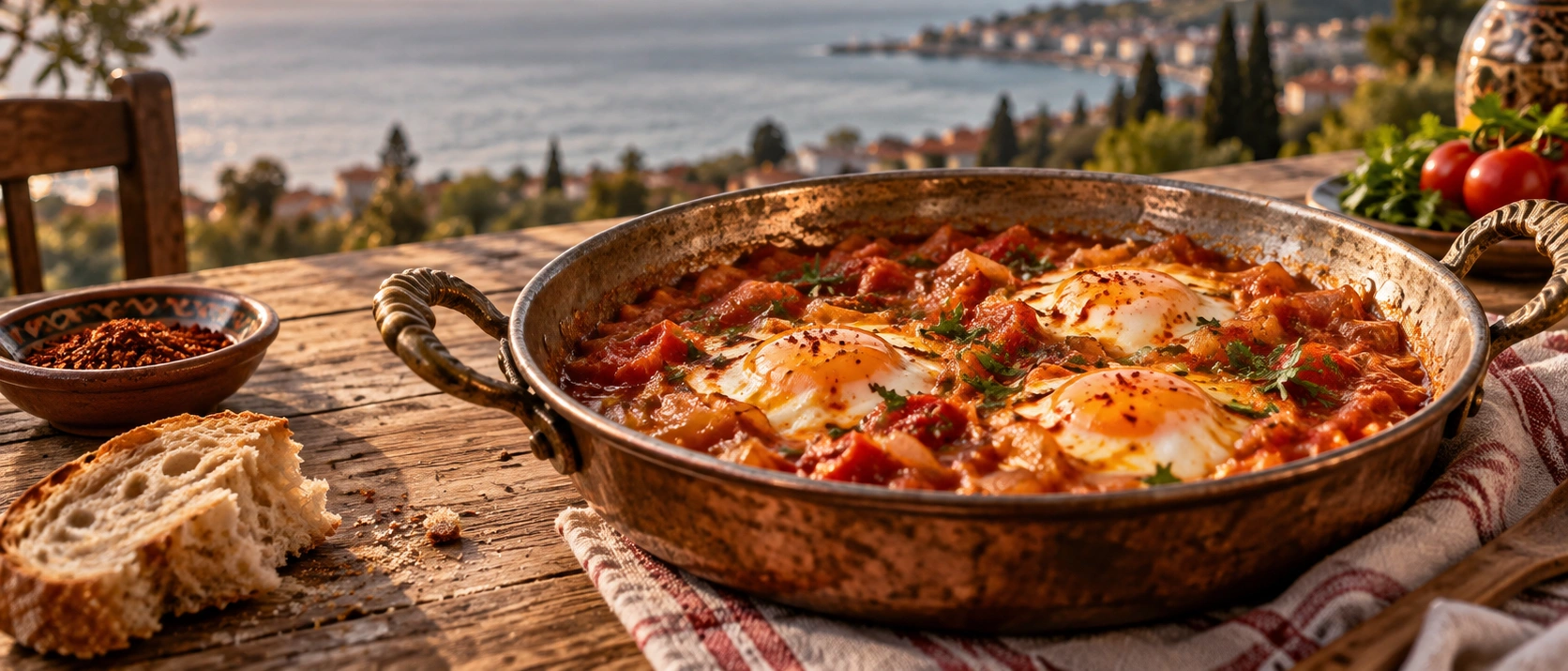
Build a food-focused route around Yumurta Tiridi, Yumurta Dolması, Pavli, Papara, Kaçamak, Tavuklu Mantı and other regional specialities.
Ask About Custom Options