Soft Dough
The traditional method combines eggs, yogurt, oil, baking soda and salt into a soft, workable dough before resting.
- Texture: Soft and pliable
- Resting: About 20 minutes
- Cover: Damp cloth






Cennet Küngü, also known as Çatal Tatlısı, is one of the traditional sweets documented in Yalova cuisine. Its preparation is immediately recognisable: a soft dough is rested, rolled, cut into long strips and wound into a spiral around a fork while frying in hot oil. The freshly fried pastry is then transferred into cooled syrup and finished with walnuts.
What makes the dessert especially meaningful is its connection with Armutlu. The Yalova Provincial Directorate of Culture and Tourism records that after an engagement ceremony, the bride’s family traditionally takes Cennet Küngü to the groom’s family as ağız tatlılığı — literally a gesture of “sweetness of the mouth,” symbolising goodwill and sweet relations between the two families.
Long strips of dough are turned around a fork while frying, creating the dessert’s distinctive spiral form.
The dough is fried in hot oil rather than baked, giving the finished sweet a crisp and layered texture.
The hot fried spirals are placed directly into syrup that has been boiled and allowed to cool.
The dessert is traditionally taken from the bride’s family to the groom’s family after an engagement.
Essential information about one of Armutlu’s most distinctive traditional sweets.
Cennet Küngü is documented in Yalova cuisine and has a specific engagement tradition connected with Armutlu.
Open Armutlu on Google MapsThe official Yalova culinary source also identifies Cennet Küngü as Çatal Tatlısı, or “Fork Dessert.”
Long dough strips are wrapped and turned around a fork in hot oil to form golden spirals.
In Armutlu, it is traditionally brought by the bride’s family to the groom’s family after the engagement ceremony.
A spiral-fried dessert becomes part of a family tradition built around hospitality, engagement and good wishes.
Cennet Küngü is officially documented among the traditional dishes and sweets of Yalova. It is also named Çatal Tatlısı, a title that reflects the unusual shaping technique used during frying.
The dessert begins as a soft dough made with eggs, yogurt, oil, baking soda and salt. After resting, it is rolled to a moderate thickness and cut into long strips. Instead of simply dropping the strips into oil, one end is attached to a fork and the fork is rotated as the pastry fries, creating a compact spiral.
The finished pastry is removed from the hot oil and placed directly into cooled syrup made from sugar, water and lemon juice. Walnut is added when the pieces are arranged for serving, giving the dessert a nutty finish against the crisp, syrup-coated dough.
Its strongest cultural association is with Armutlu district. According to the official Yalova source, after an engagement ceremony the bride’s family traditionally carries Cennet Küngü to the groom’s family as ağız tatlılığı. The phrase conveys the wish that conversation, relations and the new connection between families should remain sweet.
That tradition gives Cennet Küngü an identity beyond its recipe. It is not simply a dessert associated with a place; it is a food linked to an important social moment in family life.
Its character comes from long dough ribbons, fork-assisted spiral shaping, deep frying, cooled syrup and a walnut finish.
The traditional method combines eggs, yogurt, oil, baking soda and salt into a soft, workable dough before resting.
The rested dough is rolled without making it excessively thin and then cut into elongated ribbons.
One end of the strip is held on a fork while the other is controlled by hand and the fork is rotated during frying.
The spiral takes shape directly in the pan as the dough fries and becomes golden and crisp.
Sugar, water and lemon juice are boiled for approximately ten minutes and then cooled before the fried pieces are dipped.
Once arranged on the serving plate, the centres of the spiral sweets are traditionally sprinkled with walnut.
In Armutlu, Cennet Küngü has traditionally been connected with the period immediately after an engagement.
The traditional gift carries a symbolic wish for pleasant words, goodwill and sweet relations between the families.
The Yalova Provincial Directorate of Culture and Tourism records Cennet Küngü with five eggs, one glass of yogurt, one glass of vegetable oil, baking soda and salt. The syrup is prepared with one kilogram of sugar, one kilogram of water and the juice of half a lemon. Walnut is used for serving. The preparation instructions also require enough flour to form the dough, although the official ingredient list does not give a fixed flour quantity.
The official recipe lists five eggs as part of the rich pastry dough.
One glass of yogurt contributes softness and body to the dough.
One glass of oil is incorporated into the dough, with additional oil used for frying.
A small amount of baking soda helps shape the texture of the fried pastry.
A little salt balances the sweet syrup and rich dough.
Use enough flour to create the soft, workable dough described in the traditional method.
The syrup uses equal weights of sugar and water with the juice of half a lemon.
Walnut is sprinkled into the centres of the finished spirals before serving.
Recipe note: the official Yalova page provides exact quantities for the eggs, yogurt, oil and syrup but does not state a measured quantity of flour. The flour should therefore be added gradually until the dough reaches the soft consistency described in the method.
The traditional method depends on timing and shaping. The syrup is prepared and cooled first, the dough is rested under a damp cloth, and the long strips are formed into spirals directly in the frying pan with the help of a fork. The freshly fried pastry then goes immediately into the cooled syrup.
The fork is not simply a serving utensil in this recipe; it is the defining shaping tool. A long strip of dough is introduced into the hot oil with one end attached to the fork. As the pastry begins to fry, the fork is rotated around itself, winding the dough into a spiral while the remaining strip is guided by hand.
The dough must be long enough to wrap progressively around the fork as it cooks.
Placing one end on the fork gives control over the first turn of the spiral.
The spiral is formed during frying rather than being fully shaped beforehand.
Holding the remaining strip helps it feed gradually into the spiral without tangling.
The official method specifies that the syrup should be boiled and then allowed to cool before frying begins. Each spiral comes directly from the hot oil and is transferred immediately into the cooled syrup. This temperature contrast helps the syrup coat and penetrate the pastry while preserving more of the fried structure than a prolonged soak in hot syrup would.
The official Yalova culinary record preserves an important social detail: in Armutlu, Cennet Küngü is traditionally prepared after an engagement ceremony and taken by the bride’s family to the groom’s family as ağız tatlılığı.
The custom is associated with the period following the engagement ceremony.
The sweet is traditionally prepared or carried by the bride’s side of the new family connection.
The dessert is taken to the groom’s family as a gesture of goodwill and hospitality.
The expression evokes sweetness in words and relations, making the dessert part of a symbolic social exchange.
For visitors, this is one of the most interesting aspects of Cennet Küngü: the recipe can be understood not only through ingredients and technique, but also through the role food plays in marking relationships and important family occasions.
Cennet Küngü is sweet, crisp-edged and syrupy, with a rich fried-pastry character softened by the sugar-and-lemon syrup. The yogurt-and-egg dough gives more body than a very thin phyllo-style pastry, while walnut adds a dry, nutty contrast to the syrup-coated spiral.
The cooled sugar syrup coats the freshly fried pastry with a clear, traditional sweetness.
Deep frying gives the ridges and outer turns of the spiral a noticeable crunch.
Syrup penetrates the warm pastry so the inside becomes more tender than the outer surface.
Walnuts balance the sweetness with a slightly earthy, nutty flavour and extra texture.
After the spiral pastries have been fried and dipped in syrup, they are arranged on a serving plate and walnut is sprinkled into their centres. The spiral shape should remain clearly visible; it is one of the dessert’s most distinctive visual features.
It needs time to cool before the hot fried spirals are ready.
The official source describes the dough by texture rather than giving a fixed flour weight.
About twenty minutes of covered resting makes the dough easier to roll and shape.
The traditional method specifically says the dough should not be opened excessively thin.
Similar widths help the spirals fry at a similar rate and look more consistent.
The shaping takes place over hot oil, so use a steady hand and keep fingers well away from the pan.
Keep rotating the fork as the pastry fries so the spiral develops evenly.
The traditional method transfers the hot pastry directly from the oil into cooled syrup.
Yalova’s food culture reflects household traditions shaped by Anatolian, Balkan and Black Sea influences and by generations of migration around the Marmara region. Cennet Küngü fits naturally into this varied culinary picture: it is handmade, festive, strongly tied to family hospitality and built from familiar pantry ingredients transformed through a distinctive local technique.
Cennet Küngü has its own recipe page on the Yalova Provincial Directorate of Culture and Tourism website.
It is also listed among the notable sweets in broader presentations of Yalova gastronomy.
The official source specifically preserves an engagement custom associated with Armutlu district.
The fork-shaped spiral is memorable, but the dessert’s social role is equally important to its local identity.
Cennet Küngü is part of Yalova’s documented food heritage, but it is a traditional household-style sweet rather than a dessert that can be assumed to appear on every restaurant menu. If tasting it is important to your visit, ask restaurants, guesthouses, local bakeries, home-style kitchens or regional-food producers in Armutlu specifically for “Cennet Küngü” or “Çatal Tatlısı” and confirm availability in advance.
Ask for “Cennet Küngü” and “Çatal Tatlısı,” since both names are used in the official Yalova record.
Home-style producers and locally focused kitchens are especially relevant for traditional occasion foods.
A traditional version should be formed as spiral strips during frying and then dipped in cooled syrup.
The dessert’s strong association with family occasions means it may be made to order rather than every day.
The engagement tradition gives the dessert cultural meaning beyond its ingredients.
The alternative name may help when speaking with local cooks or producers.
The coiled shape created with a fork is the clearest visual sign of the traditional method.
This is not an oven-baked pastry; the dough develops its colour and texture in hot oil.
The fried pieces are dipped into a sugar, water and lemon syrup while still hot.
Walnut is a traditional finishing element and should remain visible in the centre.
Combine a food stop with Armutlu’s coast, thermal culture and surrounding Marmara landscapes.
Compare Cennet Küngü with Yalova Sütlüsü and Termal Tatlısı to see three very different local dessert traditions.
Traditional Cennet Küngü contains wheat flour, eggs, yogurt and walnuts. It is therefore not vegan, not egg-free, not dairy-free and not gluten-free in its documented form. It is also deep-fried in oil and soaked in sugar syrup.
The dough is made with wheat flour.
The official Yalova recipe lists five eggs.
Yogurt is one of the principal dough ingredients.
Walnut is used as the traditional garnish.
This information describes the documented Yalova preparation and should not be treated as a guarantee of ingredients, frying oils, substitutions or cross-contact practices used by every restaurant, bakery or household.
A strong photograph should make the dessert’s structure immediately recognisable. The most informative presentation shows several individual golden spirals from a three-quarter angle, with the curved layers clearly visible, a light syrup gloss on the surface and chopped or crushed walnuts gathered in the centres.
The fork-created coil is the dessert’s most distinctive visual characteristic.
Visible fried ridges communicate crispness even after the syrup is added.
The traditional garnish adds both visual contrast and an important recipe detail.
A controlled sheen should show that the pastry is syrup-coated without making it look soggy.
Ceramic plates, linen, wood or a simple tea setting suit the dessert’s household character.
The photograph should emphasise individual coils rather than making the dessert resemble layered pastry.
Cennet Küngü can be part of a wider day exploring Armutlu’s coastal setting, local heritage and Yalova’s thermal and cultural attractions.
Explore the district most closely associated with the engagement tradition of Cennet Küngü.
Continue your Yalova journey with historic thermal waters, spa culture and forest surroundings.
Add an important republican-era heritage stop to a wider Yalova itinerary.
Explore the province’s history and local identity before diving deeper into its culinary heritage.
Visit one of Yalova’s best-known Atatürk landmarks on the Marmara coast.
Discover one of the province’s most important botanical collections and green landscapes.
Cennet Küngü belongs to a much wider Yalova food story. The province’s cuisine includes syrup and milk desserts, pastries, soups, stuffed dishes, meat specialities, honey and locally important agricultural products.
Discover a crêpe-based local dessert filled with apple marmalade and pistachio.
Try Yalova’s chilled milk-soaked layered pastry dessert.
Explore Yalova’s unusual oven-browned mantı filled with chicken offal and rice and finished with chicken broth.
Discover boiled egg halves filled with a yolk, bread and parsley mixture, coated in egg and fried.
Explore a substantial stuffed sheep-rib preparation filled with seasoned meat-and-rice pilaf.
Discover Yalova’s coiled yufka pastry with spinach, white cheese and yogurt.
Try Yalova’s vegetable-rich soup finished with a yogurt, flour and egg-yolk terbiye.
Explore a geographically indicated forest honey connected with Yalova’s chestnut woodlands.
Cennet Küngü is a traditional Yalova syrup dessert made from strips of dough that are shaped into spirals around a fork while frying, dipped in cooled syrup and served with walnuts.
The Yalova Provincial Directorate of Culture and Tourism also calls it Çatal Tatlısı, meaning “Fork Dessert.”
A fork is used as the shaping tool. One end of a long dough strip is attached to the fork and the fork is rotated in the hot oil to form a spiral.
Yes. The official Yalova culinary record specifically describes a traditional engagement custom in Armutlu involving Cennet Küngü.
After the engagement ceremony, the bride’s family traditionally takes Cennet Küngü to the groom’s family as ağız tatlılığı, a gesture associated with sweetness, goodwill and pleasant relations.
The official recipe lists five eggs, one glass of yogurt, one glass of vegetable oil, baking soda and salt, together with enough flour to form the dough.
The official preparation says the dough portions should rest under a damp cloth for about twenty minutes.
No. The official method specifically says it should be rolled without making it excessively thin.
The rolled dough is cut into long strips. One end is placed on a fork and the fork is turned while the strip fries, creating a spiral.
No. The traditional Yalova method fries the shaped dough in hot oil.
The official recipe uses one kilogram of sugar, one kilogram of water and the juice of half a lemon.
The official method gives a boiling time of approximately ten minutes before the syrup is left to cool.
The syrup is prepared first and allowed to cool. The hot fried pastry is then transferred directly into the cooled syrup.
Yes. Walnut is traditionally sprinkled into the centres of the spiral pastries before serving.
The documented recipe does not contain meat or fish, but it does contain eggs and yogurt.
No. The traditional dough contains both eggs and yogurt.
No, not in its traditional form, because the dough is made with wheat flour.
Yes. Walnut is part of the traditional serving method.
Ask local restaurants, home-style kitchens, guesthouses or traditional-food producers specifically for Cennet Küngü or Çatal Tatlısı. Availability can vary because it is strongly associated with household and special-occasion cooking.
Its combination of fork-shaped spiral frying, immediate dipping into cooled syrup, walnut garnish and the engagement tradition preserved in Armutlu makes it especially distinctive within Yalova cuisine.
The strongest hero image should show Cennet Küngü as a clearly recognisable traditional spiral dessert: several golden coiled pastries arranged on a ceramic plate, their layered turns visible, lightly glossy with syrup and finished with walnut in the centres.
This angle shows both the height of the spiral and the walnut-filled centre.
A group of spirals communicates the repetitive hand-shaped technique better than a single isolated pastry.
The fried texture should remain visible despite the syrup coating.
Walnut provides useful visual contrast against the golden dough.
Soft directional light helps reveal the ridges, syrup sheen and crisp texture.
Keep garnishes restrained so the traditional spiral remains the clear subject.
Turn a traditional-food stop into a wider journey through Armutlu and Yalova’s Marmara landscapes, thermal heritage and local culture.
Pair Cennet Küngü with the district most closely connected to its engagement tradition and one of Yalova’s signature thermal experiences.
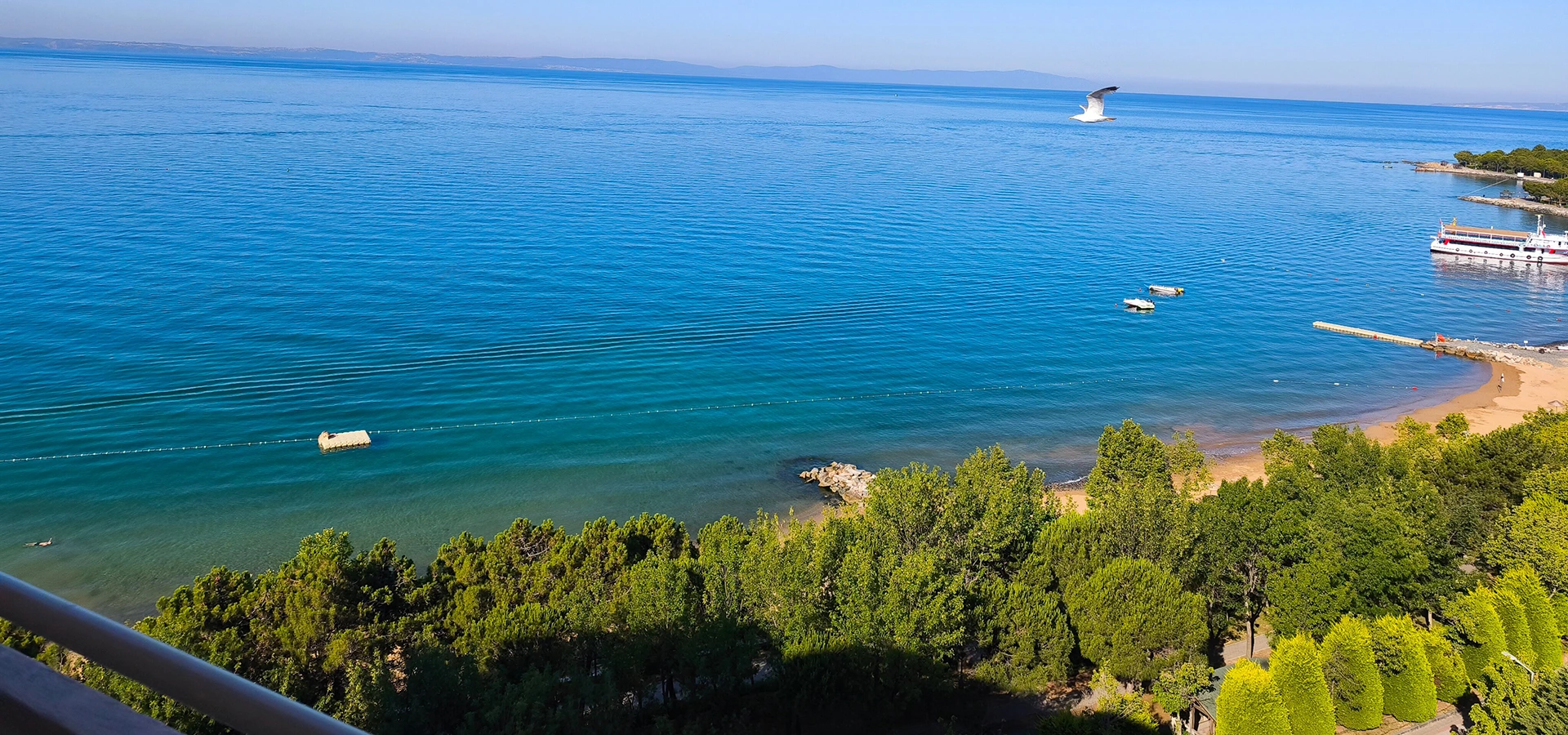
Explore the Yalova district specifically associated with Cennet Küngü’s engagement tradition, together with its coast, local atmosphere and surrounding landscapes.
Discover Armutlu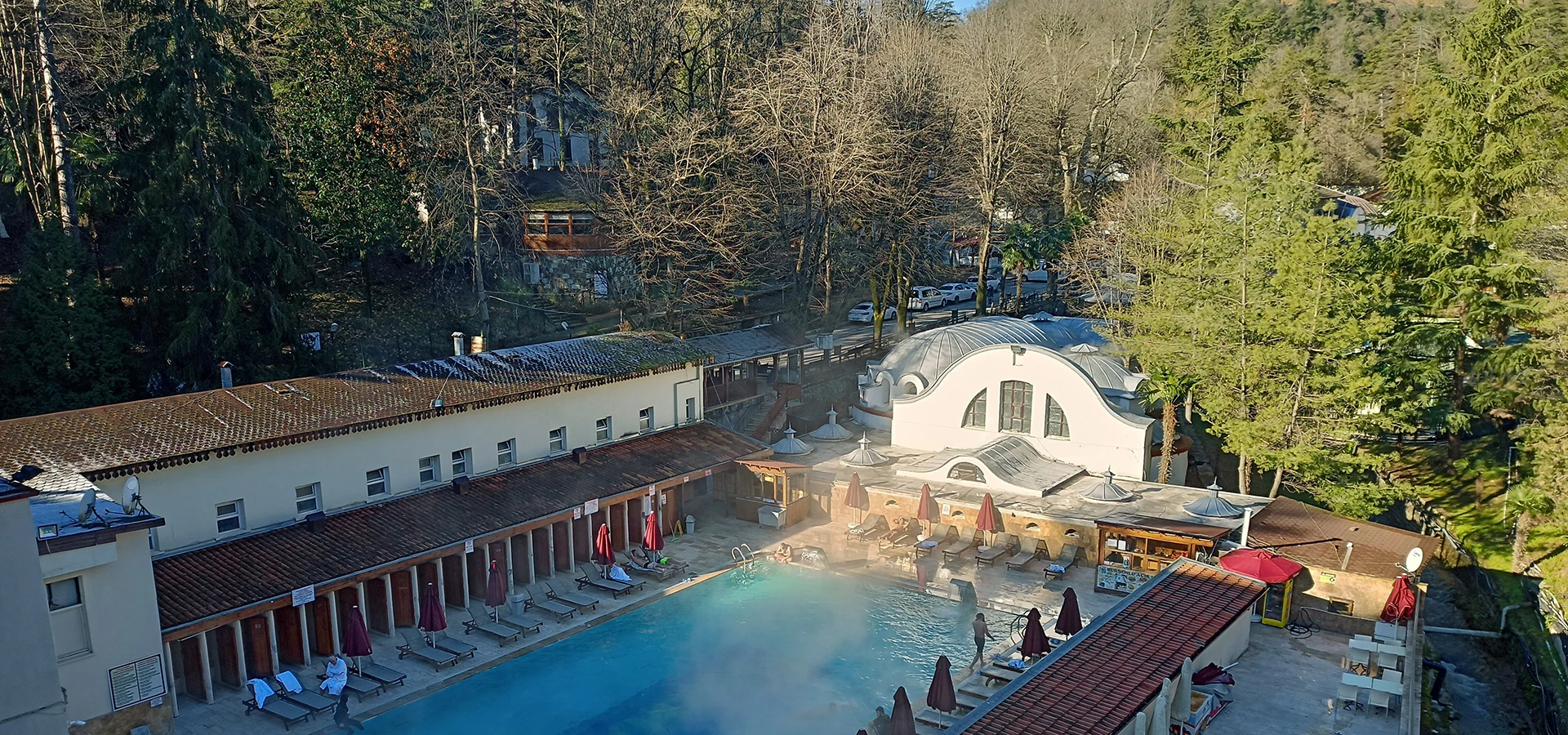
Explore Yalova’s historic mineral waters and spa culture as part of a broader journey combining regional food, nature and heritage.
Discover Termal Hot SpringsCombine Armutlu, Yalova city, Termal, Atatürk heritage, gardens, countryside and regional-food stops in a personalised route.

Create a personalised day combining Armutlu, Yalova city, Termal, Atatürk heritage, botanical gardens, waterfalls and local cuisine.
Request a Private Journey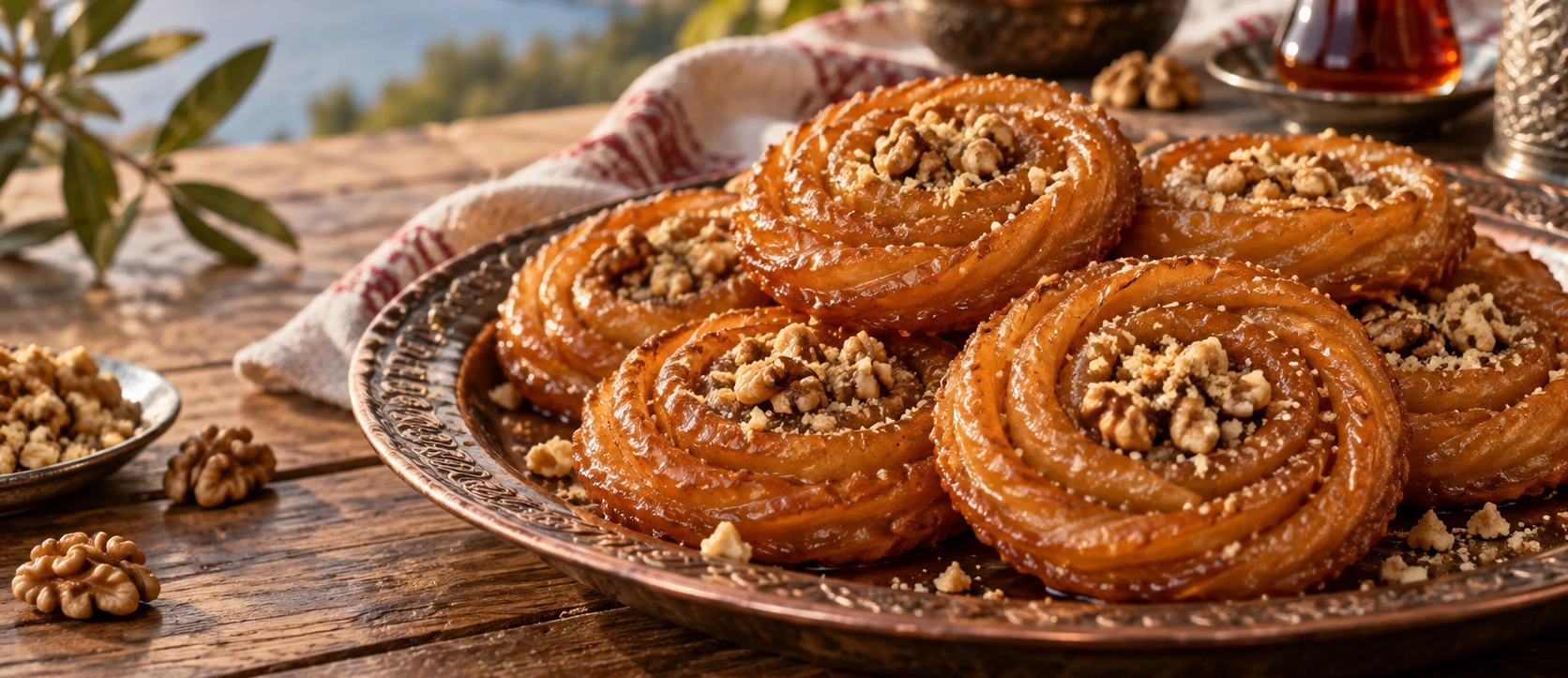
Build a food-focused route around Cennet Küngü, Yalova Sütlüsü, Termal Tatlısı, Tavuklu Mantı, Yumurta Dolması, Böğür and other regional specialities.
Ask About Custom Options