White Cabbage
White-cabbage leaves are softened before being arranged around the filling.
- Role: Main outer layer
- Preparation: Boiled or softened
- Texture: Tender and foldable





Pavli is one of the traditional foods specifically associated with Yalova. Yalova Municipality includes it among the city’s characteristic dishes and describes it simply as a local preparation made with cabbage.
Other published Yalova sources describe Pavli more specifically as a dish built from boiled white-cabbage leaves. Some versions are presented as a substantial minced-meat preparation served in slices with yogurt, while another documented recipe layers cabbage around a yogurt, cornmeal, flour, egg and herb mixture, with minced meat optional. That variation is typical of a dish preserved through household cooking rather than one rigid restaurant formula.
Tender white-cabbage leaves form the characteristic outer layers of the dish.
The leaves are arranged around a savoury filling and folded into a compact pan-cooked form.
Published recipes differ in the amount of minced meat and in the exact composition of the filling.
Pavli is commonly described as being cut into portions before it reaches the table.
Essential information about one of Yalova’s best-known cabbage-based local dishes.
Pavli is named by Yalova Municipality among the city’s prominent traditional foods.
Open Yalova on Google MapsBoiled white-cabbage leaves are the defining base in published descriptions of Pavli.
One documented recipe layers the dish in a greased pan and cooks it gently on both sides.
Pavli is commonly described as being sliced into portions and may be served with yogurt.
Pavli reflects the cabbage, herbs and practical pan-cooking techniques found in Yalova’s diverse culinary landscape.
Pavli appears in official and educational presentations of Yalova food culture as one of the province’s notable traditional dishes. Yalova Municipality lists it alongside Yaprak Pidesi, Milföylü Yalova Kebabı, Termal Çorbası, Papara, Tavuklu Mantı and Ispanaklı Yalova Böreği.
The municipality describes Yalova cuisine more broadly as a meeting point of Balkan, Black Sea and Anatolian culinary traditions, shaped by the region’s migration history. Pavli belongs to this wider local food landscape, although the available official material does not assign the dish to one single ethnic or geographic origin.
The most consistent description is simple: Pavli is prepared with boiled cabbage leaves. A Ministry of National Education publication on Yalova likewise identifies boiled cabbage leaves as the dish’s defining feature.
Beyond that common base, recipes vary. Some food references describe a white-cabbage preparation with a generous minced-meat filling, sliced for service and often topped with yogurt. Another locally focused recipe combines yogurt, cornmeal, flour, egg, spring onion, parsley and dill, and treats minced meat as optional.
For visitors, that variation is part of understanding Pavli correctly: it is best viewed as a traditional cabbage-layered preparation with household versions, rather than a recipe whose filling must always follow one exact formula.
Its identity comes from tender cabbage leaves, a savoury centre, compact layering and a sliced presentation.
White-cabbage leaves are softened before being arranged around the filling.
Rather than forming many small individual rolls, one documented method lines a pan with cabbage and encloses the filling inside.
Several descriptions emphasise minced meat, although one detailed recipe records it as optional.
A documented recipe uses spring onion, parsley and dill to give the filling freshness and aroma.
One published local recipe uses both cornmeal and wheat flour as part of the inner mixture.
Yogurt appears both within one documented filling and as a serving accompaniment in other descriptions.
One recipe cooks Pavli over low heat and turns it so that both sides cook.
The finished dish is commonly described as being portioned into slices rather than served as loose cabbage leaves.
There is no single fixed ingredient list in the official municipal description. However, a published Yalova recipe gives a useful household framework built around 20–25 cabbage leaves, spring onion, parsley, dill, yogurt, cornmeal, flour, egg, vegetable oil and seasonings, with minced meat included according to preference.
The essential component and the part of Pavli most consistently identified across Yalova sources.
Adds fresh onion flavour to the documented herb mixture.
Finely chopped parsley contributes freshness and colour.
Dill gives the filling a fragrant herbal note.
Used in one recorded filling and also described elsewhere as a topping or accompaniment.
One documented recipe uses cornmeal to add body to the filling.
These help bind the mixture in the detailed pan-cooked version.
Common in several descriptions, but the amount and even its inclusion can vary by recipe.
Salt, black pepper and red pepper flakes are included in one published recipe.
Used to grease the pan and, when meat is included, to sauté it before assembly.
Recipe note: Because published descriptions differ, the safest way to understand Pavli is to treat cabbage as essential and the exact filling as variable. A meat-rich version and a herb-and-cornmeal version can both appear under the same local name.
A detailed published recipe uses a straightforward pan method. The cabbage leaves are softened first, the filling is mixed separately, and the dish is assembled in a greased pan so that the cabbage encloses the centre before slow cooking.
Across the available Yalova sources, cabbage is the most consistent identifying ingredient. Official material names Pavli as a cabbage preparation, while educational material describes it specifically as being made from boiled cabbage leaves.
Boiling or blanching makes the leaves flexible enough to line and close around the filling.
White cabbage provides a gentle vegetable flavour that works with herbs, yogurt and meat.
The leaves create the outer structure without requiring pastry or a separate dough.
When the finished Pavli is sliced, the cabbage and filling can form an attractive layered cross-section.
The filling is the part of Pavli that varies most between published descriptions. Some sources describe the dish primarily as white cabbage with a generous minced-meat filling. A separate Yalova recipe uses a mixture of yogurt, cornmeal, flour, egg and herbs and lists minced meat as optional.
One detailed recipe instructs the cook to assemble Pavli in an oiled pan and cook it slowly over low heat, turning the whole preparation so that both sides cook. This produces a dish that can hold together well enough to be sliced.
A light coating of oil helps prevent the cabbage from sticking during the long, gentle cooking process.
Slow cooking gives the centre time to set without scorching the outer leaves.
The documented method cooks both sides, so the dish needs to be handled gently when turned.
A short rest can make a layered dish easier to portion cleanly after cooking.
Pavli is fundamentally savoury, with the mild sweetness of cooked cabbage balanced by herbs, pepper and whichever filling is used. Meat-rich versions are fuller and more substantial, while yogurt and fresh herbs can give the dish a lighter, tangier character.
Properly softened cabbage should be easy to cut and pleasant to eat.
Black pepper, red pepper flakes, herbs and optional meat build the main flavour profile.
Spring onion, parsley and dill provide freshness in the herb-based documented recipe.
The combination of warm cabbage and a substantial filling gives Pavli classic home-cooking character.
Published descriptions commonly say that Pavli is sliced before serving. Yogurt may accompany the dish, particularly in meat-focused versions, creating a cool contrast with the warm cabbage and filling.
The available sources show that Pavli is not documented with one universally fixed recipe. That makes it important to distinguish between core identity and household variation: cabbage is central, while the filling can change.
Several popular descriptions present minced meat as a major filling ingredient.
One detailed recipe combines cornmeal, flour, egg, yogurt, spring onion, parsley and dill.
The same detailed recipe allows 100–150 grams of minced meat according to preference.
Other descriptions place yogurt over or alongside the sliced finished dish.
Salt, black pepper and red pepper flakes can be adjusted according to household taste.
The number of cabbage layers and quantity of filling can affect how thick each finished slice becomes.
Use cabbage leaves that are large enough to line the pan and fold over the filling.
Soften the leaves enough to bend without cooking them until they fall apart.
Very thick central ribs can make the leaves difficult to fold and may cook unevenly.
Fine chopping helps spring onion, parsley and dill distribute evenly through the filling.
In the documented version using meat, the mince is lightly cooked before it is mixed into the filling.
Low heat reduces the risk of scorching the cabbage before the centre has cooked through.
If following the two-sided pan method, use a plate or flat lid to support the Pavli while turning it.
Allowing the dish to settle can help preserve the layered shape.
Yalova Municipality places Pavli firmly within the city’s local gastronomy. The municipality describes Yalova cuisine as a meeting point of Balkan, Black Sea and Anatolian influences, enriched by migration and by the province’s vegetable-focused, seasonal home cooking.
Pavli appears by name on Yalova Municipality’s official gastronomy page.
The defining ingredient is consistent even when the filling changes from one recipe to another.
Its flexible filling and pan technique are characteristic of recipes preserved through everyday household cooking.
Its layered, sliced form separates Pavli visually from many individually rolled cabbage dishes.
For Yalova Municipality’s overview of the city’s gastronomy, see Yalova Gastronomy .
Pavli is strongly associated with local and household cooking, so it may not appear every day on standard restaurant menus. If tasting it is important to your visit, ask esnaf lokantaları, traditional restaurants and home-style kitchens whether Pavli is available that day.
Use the name “Pavli” when checking local menus or asking restaurant staff.
Ask whether the restaurant’s version is meat-rich or based more heavily on herbs and cornmeal.
Yogurt may be incorporated into the recipe, served on top or omitted depending on the version.
Traditional foods may appear as rotating daily specials rather than permanent menu items.
The leaves should be soft enough to cut easily rather than crisp like raw cabbage.
A sliced portion may reveal a clear contrast between cabbage and the savoury centre.
Published recipes genuinely vary, especially in the amount of minced meat and the filling base.
If you do not eat meat, confirm the recipe because some versions contain substantial minced meat.
Yogurt can appear inside the recipe or at serving, depending on the preparation.
One detailed recipe contains wheat flour, so Pavli should not automatically be assumed gluten-free.
The texture and aroma are most appealing when the cabbage and filling are freshly cooked.
Compare Pavli with Papara, Yaprak Pidesi and other traditional dishes to see the variety of Yalova cuisine.
Pavli cannot be assigned one single allergen profile because recipes vary. The detailed version documented by a Yalova local-food source includes yogurt, wheat flour and egg, while other descriptions emphasise minced meat. Always confirm the ingredients of the exact preparation you are being served.
One published recipe includes wheat flour, so the dish should not be assumed gluten-free.
Yogurt appears in a documented filling and may also be served with the finished dish.
Egg is used as a binding ingredient in one detailed recipe.
Many descriptions use minced meat, although a meat-free household version is also possible.
This information describes published versions of Yalova Pavli only. It should not be treated as a guarantee that every restaurant or household uses identical ingredients, seasonings or preparation surfaces.
A strong Pavli photograph should make the dish immediately recognisable as a layered cabbage preparation. The cabbage leaves should remain visible around a compact savoury centre, with a clean sliced edge that shows the structure.
A sliced portion communicates the layered construction more clearly than an uncut pan.
The pale green cabbage should frame the filling rather than disappear beneath heavy garnish.
The leaves should look tender and handmade, not artificially smooth or perfectly uniform.
If showing a version served with yogurt, use a modest spoonful that does not hide the layers.
Soft side lighting brings out the folds in the cabbage and the texture of the filling.
Pavli should look like genuine regional home cooking rather than a highly engineered fine-dining dish.
A traditional-food stop can easily be combined with Yalova’s thermal heritage, museums, Atatürk landmarks and botanical attractions.
Explore the city’s history and local identity before discovering its regional cuisine.
Discover Yalova’s historic thermal waters, spa tradition and forest setting.
Add an important republican-era heritage stop to your Yalova itinerary.
Visit one of Yalova’s best-known Atatürk landmarks on the Marmara coast.
Explore one of Türkiye’s significant privately established botanical collections.
Continue with another distinctive Yalova attraction dedicated to miniature living trees.
Pavli belongs to a broader Yalova food culture shaped by vegetables, meat dishes, pastries, stuffed preparations, soups, sweets and regional agricultural products.
Discover Yalova’s comforting stale-bread dish with broth, yogurt and butter.
Discover Yalova’s thick cornmeal dish served with savoury toppings or butter and molasses.
Explore Yalova’s savoury lamb preparation served in a baked puff-pastry shell.
Explore thin beef wrapped around a mushroom-and-onion filling and finished with tomato.
Try Yalova’s vegetable-rich soup finished with a yogurt, flour and egg-yolk terbiye.
Discover coiled yufka pastry filled with spinach, white cheese and yogurt.
Explore a substantial stuffed sheep-rib preparation filled with seasoned meat-and-rice pilaf.
Discover Yalova’s oven-browned mantı filled with chicken offal and rice and finished with chicken broth.
Finish with Armutlu’s spiral-fried syrup dessert, also known as Çatal Tatlısı.
Explore Yalova’s tangy okra dish with miniature rice meatballs and tomato-paste broth.
Pavli is a traditional Yalova dish built around softened or boiled cabbage leaves arranged with a savoury filling and commonly served in sliced portions.
Yes. Yalova Municipality includes Pavli among the characteristic dishes highlighted in its official gastronomy presentation.
Cabbage is the most consistently documented ingredient, with educational sources specifically referring to boiled cabbage leaves.
Published food descriptions commonly refer to white cabbage.
Yes. Yalova educational material describes Pavli as being made from boiled cabbage leaves, and softening the leaves also makes them easier to fold.
It often can. Several descriptions emphasise minced meat, while one detailed local recipe lists 100–150 grams as optional.
It may. One documented recipe includes yogurt in the filling, while other descriptions mention yogurt as a topping or accompaniment.
One detailed Yalova recipe includes cornmeal, but the available sources do not establish it as mandatory in every household version.
One published recipe uses wheat flour together with cornmeal and egg as part of the filling.
A documented recipe uses spring onion, parsley and dill.
One documented method layers the ingredients in a greased pan and cooks the dish slowly on both sides.
Not exactly. Some descriptions compare it with sarma, but Pavli can be assembled as a larger layered preparation that is sliced after cooking rather than as many individual rolls.
Published descriptions commonly mention slicing it into portions, and some versions are served with yogurt.
It can be in a meat-free variation, but many published descriptions include minced meat. Always confirm the exact recipe before ordering.
Not automatically. A documented recipe includes yogurt and egg, so you would need a specifically adapted version.
Not automatically. One detailed recipe contains wheat flour, so the ingredients need to be checked carefully.
Expect tender cooked cabbage with a savoury filling, fresh herbal notes and, depending on the version, the richness of minced meat and the tang of yogurt.
It does not have to be. One recipe includes red pepper flakes, but the heat level can be adjusted.
Yes. The published sources differ considerably in their fillings, so household and restaurant versions should be expected to vary.
Ask traditional restaurants, esnaf lokantaları and home-style kitchens and confirm availability in advance, because Pavli may not be a permanent daily menu item.
The strongest hero image should show a rustic, neatly sliced Pavli with tender pale-green cabbage wrapped around a visible savoury filling. If yogurt is included, it should support the composition without hiding the cabbage layers.
This reveals both the top of the dish and the layered cut surface.
A clean slice immediately explains the dish’s compact layered construction.
Use soft pale-green leaves with realistic folds and slight variation in colour.
The centre should read clearly as a savoury mixture rather than an indistinct paste.
Soft directional light adds depth to the cabbage folds and filling texture.
Keep the presentation believable and regional, with simple tableware and restrained garnish.
Turn a traditional-food stop into a wider journey through Yalova’s thermal landscapes, museums, Atatürk heritage and local flavours.
Pair your food journey with two of the province’s characteristic cultural and wellness attractions.

Explore Yalova’s history, social memory and local identity before continuing into the province’s traditional cuisine.
Discover Yalova City Museum
Discover Yalova’s historic mineral waters and spa culture as part of a wider route combining regional food, nature and heritage.
Discover Termal Hot SpringsCombine Yalova city, Termal, Atatürk heritage, gardens, countryside and regional-food stops in a personalised route.

Create a personalised day combining Yalova city, Termal, Atatürk heritage, botanical gardens, waterfalls and local cuisine.
Request a Private Journey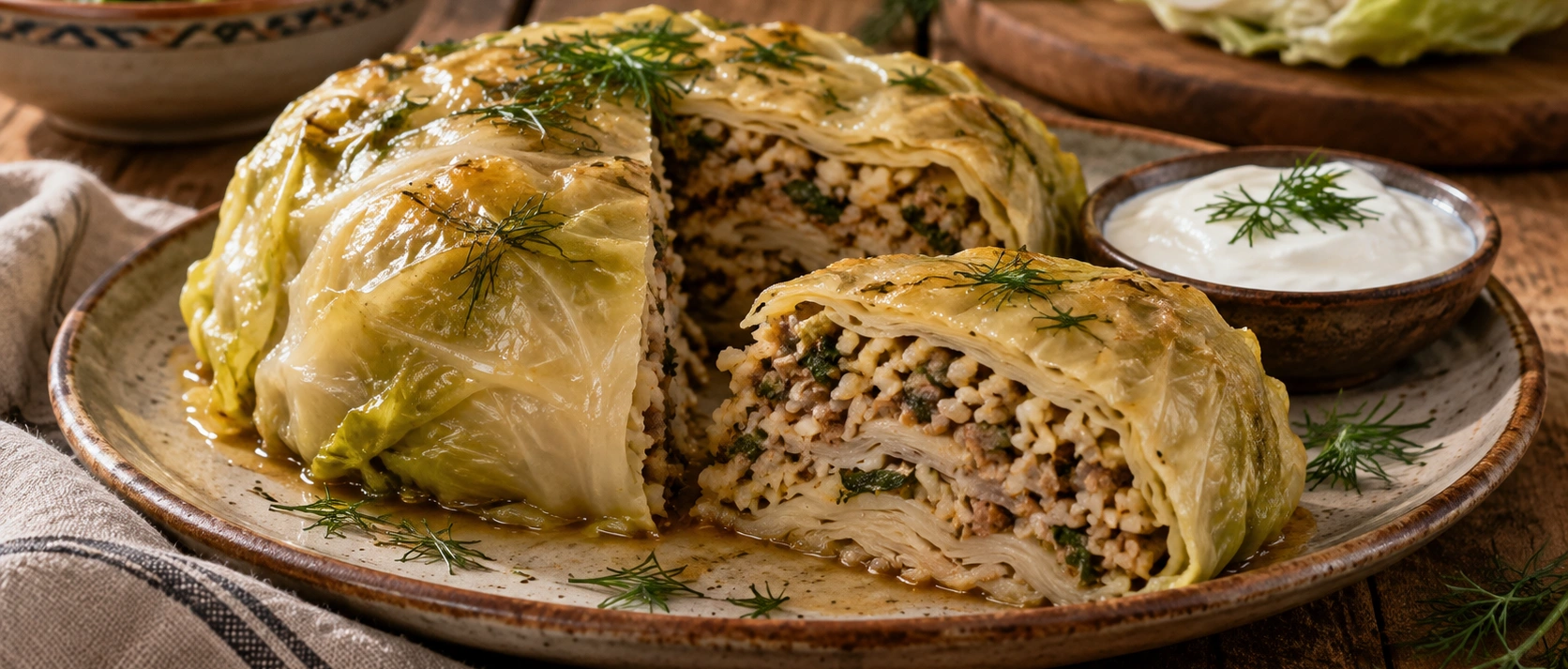
Build a food-focused route around Pavli, Papara, Kaçamak, Milföylü Yalova Kebabı, Termal Çorbası, Tavuklu Mantı and other regional specialities.
Ask About Custom Options