Corn Flour
Corn flour is the central ingredient and gives Kaçamak its characteristic colour, flavour and body.
- Amount: 500 g
- Role: Main starch
- Cooking: Added to boiling water






Kaçamak is one of the traditional dishes officially documented by the Yalova Provincial Directorate of Culture and Tourism. At its heart is a simple combination of corn flour and water, cooked until the mixture reaches a thick, halva-like consistency.
What makes the Yalova preparation distinctive is the way it is finished and served. The hot cornmeal base can be topped with butter, tomato paste, white cheese and pul biber. The official recipe also records a sweeter alternative in which the Kaçamak is finished with plain butter and molasses.
The official recipe uses half a kilogram of corn flour cooked in eight glasses of water.
The mixture is cooked and stirred until it reaches the dense consistency described in the official recipe as similar to halva.
Butter, tomato paste, white cheese and pul biber form the documented savoury finish.
Kaçamak can also be served with plain butter and molasses for a sweet-savory variation.
Essential information about Yalova’s traditional cornmeal dish.
Kaçamak is included in the official culinary collection of the Yalova Provincial Directorate of Culture and Tourism.
Open Yalova on Google MapsThe official Yalova recipe uses 500 grams of corn flour as the foundation of the dish.
Butter, tomato paste, white cheese and pul biber are added after the cornmeal base is plated.
The official recipe also suggests serving Kaçamak with plain butter and molasses.
A humble cornmeal dish becomes a memorable local speciality through texture, toppings and traditional serving.
Kaçamak belongs to the group of dishes officially presented as part of Yalova’s local culinary heritage. Its ingredient list is straightforward, but the preparation depends on achieving the right dense texture and serving it while hot.
In the documented Yalova method, eight glasses of water are heated in a pot. Once the water boils, the corn flour is poured into the centre without being scattered across the surface. The cook then opens several small channels through the flour mixture so that it can breathe while cooking.
After roughly ten minutes, the mixture is stirred and cooked until it develops the thick consistency described by the official source as helva kıvamı — a halva-like texture. It is then transferred spoonful by spoonful to the serving plate.
The standard savoury finish combines butter and tomato paste with white cheese and pul biber. The official recipe also records another way of eating Kaçamak: the plated cornmeal is topped with plain butter and molasses.
Yalova’s official recipe specifically notes that Kaçamak is enjoyed hot, especially at breakfast together with tea, giving this regional dish a strong connection with the morning table as well as traditional home cooking.
Its identity comes from corn flour, a thick cooked texture, simple seasoning and contrasting savoury or molasses-based toppings.
Corn flour is the central ingredient and gives Kaçamak its characteristic colour, flavour and body.
The official recipe begins by heating eight glasses of water until boiling.
The cornmeal is cooked and stirred until it becomes dense enough to be transferred to the plate in spoonfuls.
Butter is part of both the savoury and molasses-serving styles recorded in the official recipe.
Tomato paste brings colour and savoury depth to the standard Yalova serving.
White cheese is scattered over the hot Kaçamak as part of the documented savoury finish.
Red pepper flakes add colour and gentle spice to the savoury presentation.
The official recipe allows Kaçamak to be served with butter and molasses instead of the savoury toppings.
The Yalova Provincial Directorate of Culture and Tourism records Kaçamak with 500 g corn flour, 8 glasses of water, half a tea glass of vegetable oil, two dessert spoons of salt, one tablespoon of tomato paste, 100 grams of butter, 100 grams of white cheese, one teaspoon of molasses and enough pul biber.
Half a kilogram forms the body of the dish.
Eight glasses are heated to boiling before the corn flour is added.
Half a tea glass is added to the cooking water.
Two dessert spoons are included in the water according to the official recipe.
One tablespoon is used in the savoury finish.
One hundred grams provide richness when the Kaçamak is served.
One hundred grams are added over the hot cornmeal in the savoury version.
Red pepper flakes are added according to taste.
One teaspoon appears in the official ingredient list for the alternative serving style.
Recipe note: the official Yalova preparation describes both a savoury serving with butter, tomato paste, cheese and pul biber and a molasses version finished with plain butter and molasses.
The traditional method is built around a very simple sequence, but the order matters. The corn flour is placed in boiling water without being spread around, briefly cooked with openings made through the mixture, and then stirred until thick.
The standard serving described by Yalova’s official recipe turns the plain cornmeal base into a more layered dish with four simple finishing ingredients: butter, tomato paste, white cheese and pul biber.
Butter melts over the hot cornmeal and adds richness to the otherwise simple base.
The savoury tomato element adds both colour and deeper flavour.
Crumbled or distributed over the top, white cheese adds a salty dairy contrast.
Red pepper flakes bring a final touch of colour and gentle heat.
Yes. The official Yalova recipe explicitly states that Kaçamak can also be eaten with molasses. For this version, the cooked Kaçamak is placed on the plate, plain butter is drizzled over it and molasses is added on top.
Yalova’s official recipe specifically notes that Kaçamak is eaten especially at breakfast together with tea. Its warm, filling cornmeal base makes it quite different from lighter breakfast items, while the cheese, butter and pepper toppings fit naturally into a Turkish breakfast setting.
The best texture is experienced while the cornmeal and butter are still warm.
Tea is specifically mentioned in the official Yalova recipe as a traditional accompaniment.
Butter, tomato paste, white cheese and pul biber make a substantial savoury plate.
The butter-and-molasses version offers a contrasting way to enjoy the same cornmeal base.
The cornmeal itself gives Kaçamak a warm, grain-forward flavour and a dense, comforting texture. In the savoury version, butter adds richness, tomato paste brings depth, white cheese adds saltiness and pul biber contributes mild spice. The molasses version shifts the profile toward a buttery sweetness.
The flavour of cooked corn remains the foundation of the dish.
Butter softens and enriches the dense cornmeal base.
Tomato paste and white cheese create the classic savoury contrast.
Molasses transforms the topping profile without changing the basic Kaçamak preparation.
Kaçamak is transferred from the pot to a serving plate by spoonfuls once it has reached its thick final consistency. It is then topped according to the chosen serving style and brought to the table hot.
The corn flour enters only after the water has reached the boil.
The official method specifically says to pour it into the centre without spreading it across the pot.
Create five or six openings with a spoon as described in the traditional method.
The official recipe gives approximately ten minutes before the final stirring stage.
The key visual cue is a thick, halva-like consistency rather than a loose porridge.
Kaçamak is intended to be eaten hot after the toppings are added.
Butter, tomato paste, white cheese and pul biber define the documented savoury version.
For the alternative presentation, use butter and molasses instead of the savoury finish.
The Yalova Provincial Directorate of Culture and Tourism includes Kaçamak in its official presentation of the province’s cuisine alongside Milföylü Yalova Kebabı, Termal Sarma, Termal Tatlısı, Termal Çorbası, Ispanaklı Yalova Böreği, Böğür, Yumurta Dolması, Tavuklu Mantı, Cennet Küngü and Ekşili Köfteli Bamya.
Kaçamak has a dedicated recipe page on Yalova’s official provincial culture and tourism website.
The recipe is built around corn flour, water and simple pantry ingredients rather than a long ingredient list.
The official recipe specifically associates Kaçamak with breakfast and tea.
Both savoury and molasses-based finishes are part of the documented Yalova preparation.
For the official Turkish recipe, see the Yalova Provincial Directorate of Culture and Tourism .
Kaçamak belongs to Yalova’s documented regional cuisine, but traditional dishes are not necessarily prepared every day in every restaurant. If tasting it is important to your visit, ask local restaurants, breakfast venues and home-style kitchens specifically for “Kaçamak” and confirm availability before travelling only for the dish.
Use the Turkish name “Kaçamak” when checking whether the dish is available.
The official recipe’s breakfast connection makes traditional breakfast settings especially relevant.
Confirm whether the serving is savoury with cheese and tomato paste or finished with molasses.
Regional dishes may be offered seasonally or as changing daily preparations rather than permanent menu items.
This is much denser than a soup and is intended to hold its shape when spooned onto the plate.
The official preparation specifically recommends hot service.
The flavour and body of corn flour should remain central even after toppings are added.
Butter, tomato paste, white cheese and pul biber make up the documented classic finish.
A butter-and-molasses version is also specifically included in the official recipe.
Tea is the traditional accompaniment mentioned by Yalova’s official source.
Kaçamak is particularly associated with the morning table in the Yalova recipe.
Use Kaçamak as an introduction to Yalova’s broader collection of regional dishes.
The documented Yalova recipe contains corn flour, water, vegetable oil, salt, tomato paste, butter, white cheese, pul biber and molasses. It contains no meat in the official preparation, but the standard savoury version contains dairy.
The official recipe does not include meat, poultry or fish.
Butter and white cheese are included in the documented savoury preparation.
Corn flour is the principal grain ingredient listed in the recipe.
Always confirm ingredients and cross-contact directly if you have an allergy, intolerance or strict dietary requirement.
This information describes the documented Yalova recipe only. It should not be treated as a guarantee that every restaurant or household uses identical ingredients, brands, equipment or preparation surfaces.
A strong photograph should make the dish immediately recognisable as a thick cornmeal preparation, not a thin soup or generic polenta. The plated spoonfuls should remain visible beneath the melted butter, tomato-paste finish, white cheese and pul biber.
The surface should look thick, soft and spoonable rather than runny.
White cheese should remain recognisable as part of the savoury topping.
The warm red-and-gold topping helps communicate the traditional savoury serving.
A light scatter of red pepper flakes gives an accurate visual finish.
Soft directional light can highlight the grain of the cornmeal and sheen of the butter.
Kaçamak should look like genuine traditional home cooking rather than an elaborate plated restaurant creation.
A traditional-food stop can easily be combined with Yalova’s thermal heritage, museums, Atatürk landmarks and botanical attractions.
Explore the city’s history and local identity before discovering its regional cuisine.
Discover Yalova’s historic thermal waters, spa tradition and forest setting.
Add an important republican-era heritage stop to your Yalova itinerary.
Visit one of Yalova’s best-known Atatürk landmarks on the Marmara coast.
Explore one of Türkiye’s significant privately established botanical collections.
Continue with another distinctive Yalova attraction dedicated to miniature living trees.
Kaçamak sits within a wider Yalova food tradition that includes meat dishes, soups, pastries, stuffed preparations, sweets and regional agricultural products.
Discover Yalova’s savoury lamb preparation served in a baked puff-pastry shell.
Explore thin beef wrapped around a mushroom-and-onion filling and finished with tomato.
Try Yalova’s vegetable-rich soup finished with a yogurt, flour and egg-yolk terbiye.
Discover coiled yufka pastry filled with spinach, white cheese and yogurt.
Explore a substantial stuffed sheep-rib preparation filled with seasoned meat-and-rice pilaf.
Discover Yalova’s oven-browned mantı filled with chicken offal and rice and finished with chicken broth.
Finish with Armutlu’s spiral-fried syrup dessert, also known as Çatal Tatlısı.
Explore Yalova’s tangy okra dish with miniature rice meatballs and tomato-paste broth.
Explore Yalova’s geographically indicated forest honey connected with chestnut woodlands.
Kaçamak is a traditional Yalova cornmeal dish made by cooking corn flour in water until thick and serving it hot with savoury toppings or butter and molasses.
Yes. It is officially documented in the culinary collection of the Yalova Provincial Directorate of Culture and Tourism.
The official Yalova recipe lists half a kilogram, or 500 grams, of corn flour.
The official recipe uses eight glasses of water.
Yes. Half a tea glass of vegetable oil is listed as being added to the water.
The official ingredient list gives two dessert spoons of salt, also added to the cooking water.
It is poured into the centre of the boiling water without being scattered around the pot.
The official method instructs the cook to open the mixture in five or six places with a spoon so that it can breathe during cooking.
The official method gives roughly ten minutes before the mixture is stirred to its final thick consistency.
The Yalova recipe describes the finished texture as “helva kıvamı,” meaning a dense, halva-like consistency.
Butter, tomato paste, white cheese and pul biber are the documented savoury toppings.
The official ingredient list gives 100 grams of butter.
The official recipe lists 100 grams of white cheese.
Pul biber is included as a topping, but the quantity is given simply as enough according to taste.
Yes. The official Yalova recipe explicitly gives a version served with plain butter and molasses.
Yes. Yalova’s official recipe specifically notes that it is eaten especially at breakfast.
The official recipe mentions tea as a traditional accompaniment, particularly at breakfast.
The official Yalova recipe does not contain meat, although it does use butter and white cheese.
Not in the documented serving style because butter and, in the savoury version, white cheese are used. A restaurant or household variation would need to be checked separately.
Ask locally focused restaurants, traditional breakfast venues and home-style kitchens for Kaçamak and confirm availability in advance, as regional dishes may not be prepared every day.
The strongest hero image should clearly show thick spoonfuls of warm cornmeal Kaçamak with a traditional savoury topping of butter and tomato paste, visible white cheese and a restrained scattering of pul biber.
This shows both the height of the spooned cornmeal and the toppings across the surface.
The dish should look dense and soft, not watery or soup-like.
Visible pieces of white cheese help communicate the documented savoury presentation.
A warm red-gold topping gives the image an appetising and authentic visual focus.
Soft window-style light works well with the golden cornmeal and melted butter.
Keep the styling simple, rustic and home-style rather than adding greens or decorations not connected with the dish.
Turn a traditional-food stop into a wider journey through Yalova’s thermal landscapes, museums, Atatürk heritage and local flavours.
Pair your food journey with two of the province’s characteristic cultural and wellness attractions.

Explore Yalova’s history, social memory and local identity before continuing into the province’s traditional cuisine.
Discover Yalova City Museum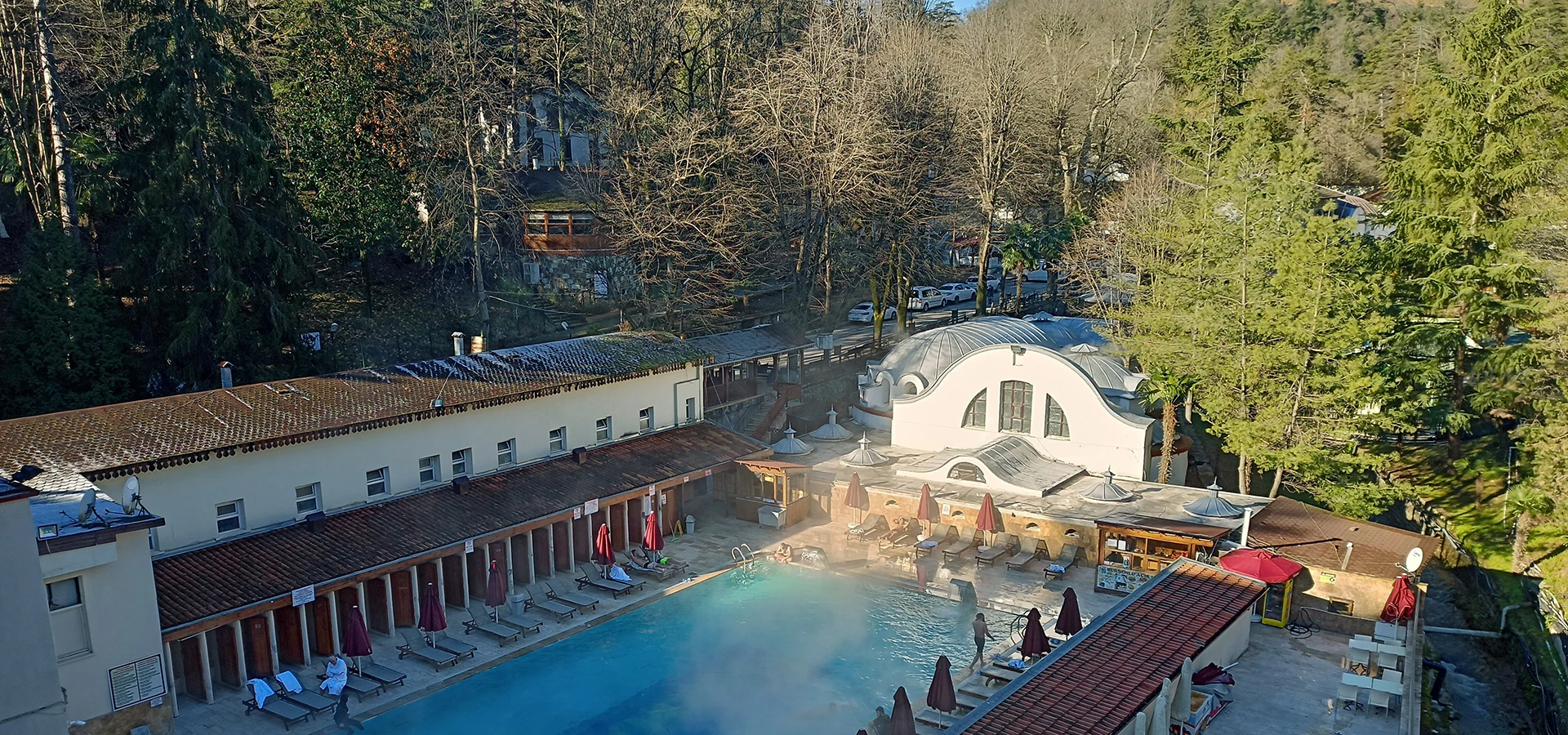
Discover Yalova’s historic mineral waters and spa culture as part of a wider route combining regional food, nature and heritage.
Discover Termal Hot SpringsCombine Yalova city, Termal, Atatürk heritage, gardens, countryside and regional-food stops in a personalised route.

Create a personalised day combining Yalova city, Termal, Atatürk heritage, botanical gardens, waterfalls and local cuisine.
Request a Private Journey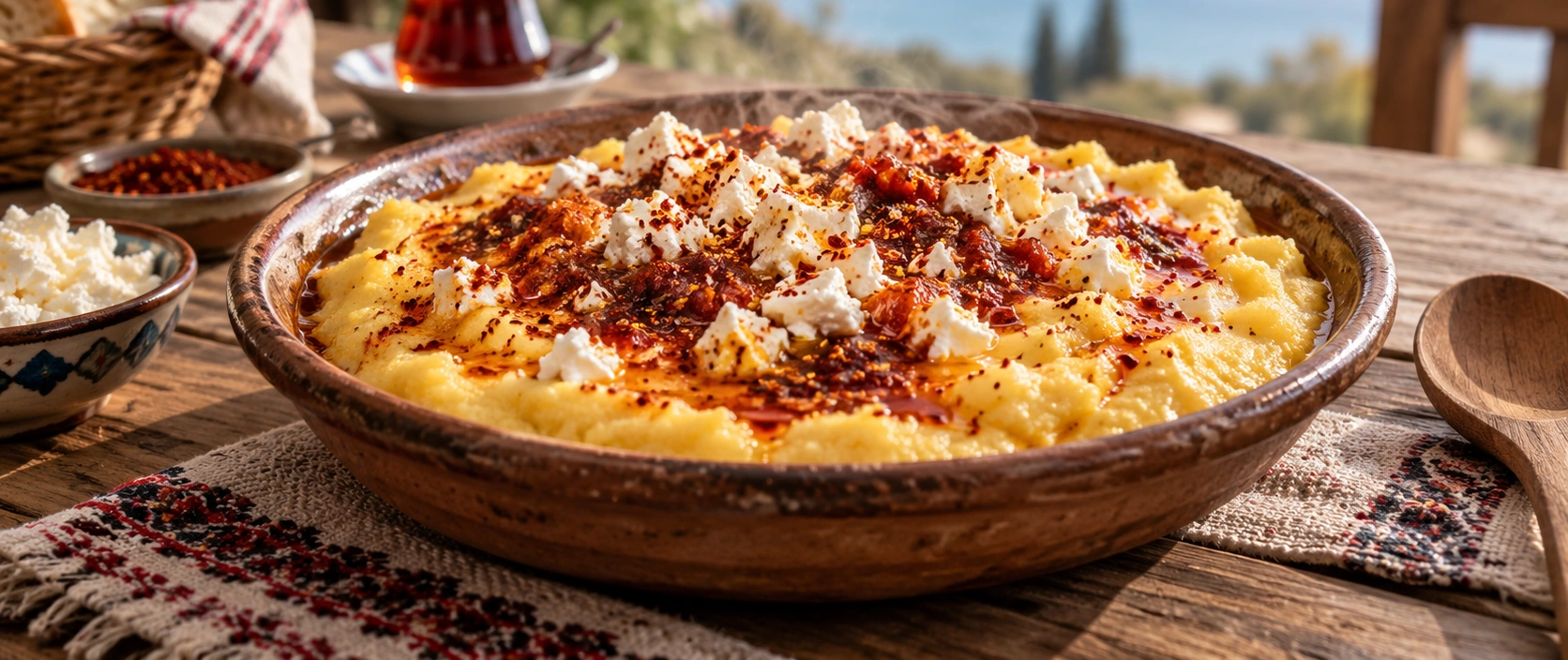
Build a food-focused route around Kaçamak, Milföylü Yalova Kebabı, Termal Çorbası, Tavuklu Mantı, Cennet Küngü and other regional specialities.
Ask About Custom Options