Private Bilecik Gastronomy Discovery
Explore Bilecik's traditional soups, pastries, savoury dishes, agricultural products and culinary heritage on a flexible private food-focused route.
Request This Tour





Ovmaç Soup, known locally as Ovmaç Çorbası, is one of the traditional dishes associated with Bilecik Province in northwestern Türkiye.
Its defining feature is remarkably simple: flour-based dough is rubbed and crumbled by hand into small, irregular pieces before being cooked directly in a hot broth.
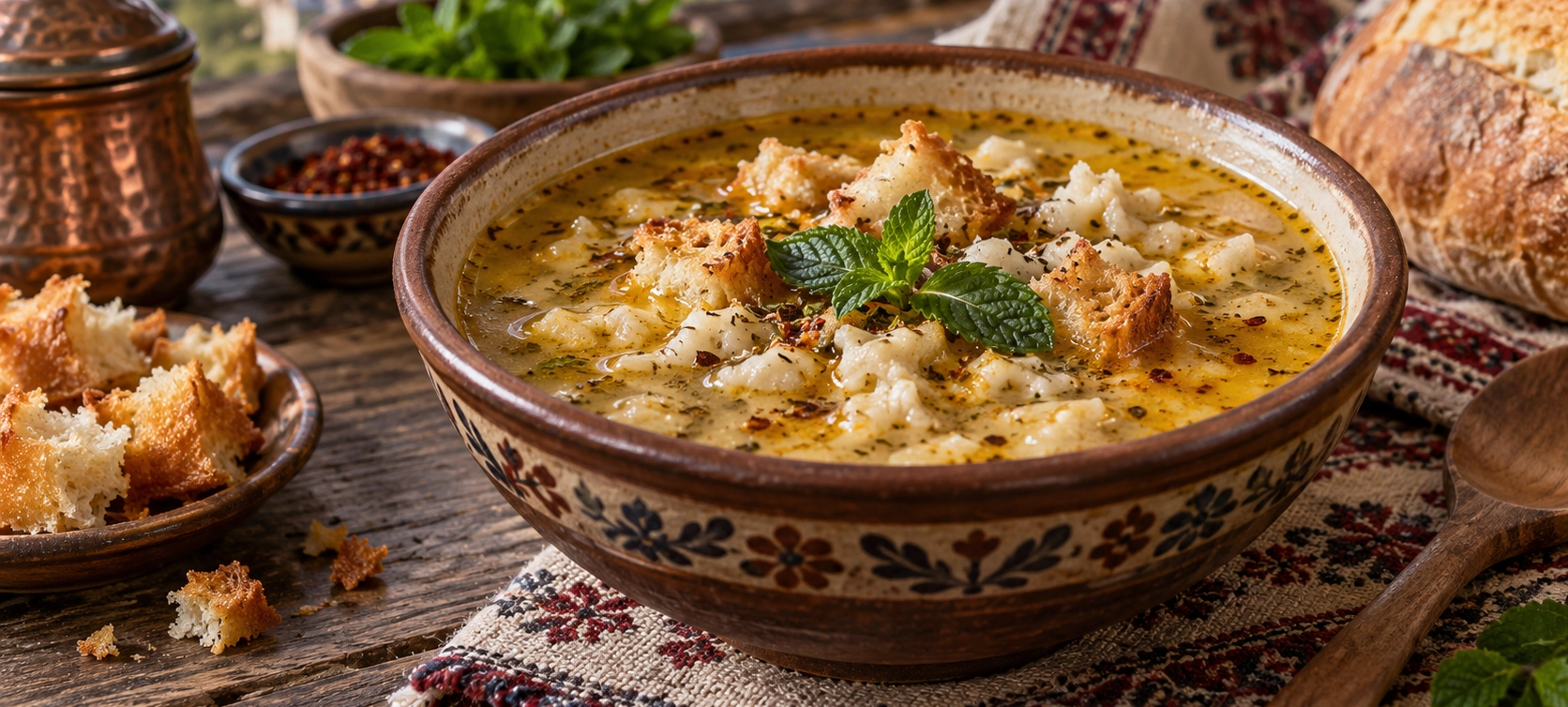
Bilecik's provincial culinary records describe the soup as being prepared with small lumps of dough cooked in meat broth and traditionally served with plenty of mint and fried stale bread.
The dish reflects an important characteristic of Bilecik cuisine — transforming basic pantry ingredients into filling foods through careful hand preparation rather than elaborate ingredients.
Warm, rustic and deeply connected with home cooking, Ovmaç Soup offers travellers a taste of the quieter side of Anatolian gastronomy.
Ovmaç Soup is recorded among the characteristic foods of Bilecik Province.
Small pieces of flour dough are formed by rubbing the mixture between the hands.
The small dough pieces are traditionally cooked directly in flavourful meat broth.
Plenty of mint and pieces of fried stale bread provide the traditional finishing touch.
Essential information about one of Bilecik's traditional handmade dough soups.
Bilecik Province in northwestern Türkiye.
Open Bilecik on Google MapsA traditional broth-based soup containing small handmade dough pieces.
Flour dough rubbed by hand into small irregular pieces known as ovmaç.
Mint and fried pieces of stale bread add aroma, texture and character.
Flour, broth and handwork come together in one of Bilecik's most comforting traditional soups.
Bilecik cuisine has long been shaped by a strong dependence on grains and handmade dough foods. Bread, yufka, mantı, erişte, kuskus, pastries and soups all occupy important places within the province's traditional food culture.
Ovmaç Soup belongs naturally to this culinary landscape. Instead of using factory-made pasta or noodles, the cook transforms flour and a small amount of liquid into tiny pieces of dough by hand.
The Provincial Directorate of Culture and Tourism includes Ovmaç Soup among Bilecik's characteristic dishes and describes it as a soup in which small dough lumps are cooked in meat broth.
The traditional serving is equally distinctive: generous mint contributes freshness and aroma while pieces of fried stale bread introduce a contrasting crisp texture.
The technique also reflects an older kitchen philosophy in which very little was wasted. Flour became hand-shaped soup noodles, broth provided nourishment, and yesterday's bread could be transformed into a valuable garnish.
For visitors exploring Bilecik's gastronomy, Ovmaç Soup provides an excellent example of how modest ingredients and practical household techniques can create a dish with a clear regional identity.
Ovmaç Soup is a traditional flour-and-broth soup whose most distinctive element is its small handmade pieces of dough.
Rather than rolling the dough into a sheet and cutting uniform noodles, the flour mixture is rubbed, crumbled or pinched between the hands. This produces small irregular pieces that cook directly in the soup.
Flour forms the foundation of the small handmade pieces that give the soup its identity.
The dough is worked between the hands rather than cut into perfectly regular noodles.
The traditional Bilecik description places the dough pieces directly into nourishing meat broth.
Mint gives the finished soup a fresh herbal aroma that balances the rich broth.
Small pieces of crisped bread add another layer of texture to the bowl.
The soup represents practical Anatolian cooking based on familiar ingredients and manual preparation.
The defining ingredient is produced by hand immediately from flour rather than using packaged pasta.
The small pieces do not need to be identical; their handmade appearance is part of the dish's character.
The dough absorbs flavour as it cooks directly inside the soup.
Soft cooked dough and crunchy fried bread create two very different textures in the same bowl.
Mint cuts through the richness of the broth and gives the soup a recognisable finishing aroma.
The use of basic flour and leftover bread reflects the practical traditions of the regional kitchen.
Bilecik's official regional description focuses on the basic components of the dish rather than prescribing one fixed household recipe with precise quantities.
Household interpretations can differ, and published versions may contain additional ingredients. The defining Bilecik identity, however, remains the combination of hand-prepared ovmaç pieces, broth and the traditional mint-and-bread finish.
The preparation can be understood in three stages: making the small ovmaç dough pieces, cooking them in broth and preparing the traditional garnish.
The hand-forming technique is the heart of the soup. The objective is not to produce one large dough mass, but many small pieces that can cook quickly and evenly in the broth.
The flour begins relatively dry so the mixture remains crumbly enough to form small pieces.
Too much water at once can turn the flour into ordinary bread dough.
The traditional movement creates the characteristic irregular granules.
Small pieces cook more evenly and are pleasant to eat directly from a spoon.
Variation in size reinforces the handmade appearance and rustic identity of the dish.
Freshly prepared ovmaç pieces can be transferred directly into the simmering broth.
Because the ingredient list is relatively simple, the quality and flavour of the broth strongly influence the final character of the soup.
Bilecik's documented description specifically identifies meat broth as the cooking base.
The small dough pieces absorb some broth as they cook, becoming savoury from within.
A small amount of flour released during cooking can give the broth a lightly fuller consistency.
A well-seasoned broth reduces the need for an excessive number of additional spices.
Moderate heat allows the dough pieces to cook without breaking apart aggressively.
The warm broth helps explain why the soup feels particularly suited to cooler weather.
The final garnishes are not merely decorative. Mint and crisp bread create the aroma and textural contrast that distinguish Bilecik's documented presentation.
Mint gives a fresh herbal note to a soup dominated by warm broth and flour-based dough.
The fragrance of mint helps lift the heavier savoury character of the broth.
Older bread gains new life when transformed into a crisp soup garnish.
Crisp bread contrasts beautifully with the tender ovmaç pieces.
Adding the bread late helps preserve some of its crunch before it absorbs the broth.
The garnish reflects a kitchen culture in which bread was valued and rarely allowed to go to waste.
Ovmaç Soup has a mild, savoury flavour built primarily around broth, wheat and mint rather than strong spice or complicated sauces.
The meat broth gives the soup its principal depth and comforting character.
The ovmaç pieces bring the gentle cereal flavour of cooked flour.
Mint provides the most noticeable herbal element in the traditional presentation.
The fried bread contributes warm roasted flavours in addition to crunch.
The basic version allows the broth and handmade dough to remain clearly identifiable.
The overall taste is simple, satisfying and deeply connected with everyday regional cooking.
The handmade pieces soften during cooking while retaining enough body to be noticeable on the spoon.
The naturally uneven pieces create a more rustic texture than machine-cut pasta.
Flour from the dough can lend the liquid a gentle body as the soup cooks.
The traditional bread garnish provides a crunchy element when freshly added.
The bread gradually absorbs broth, changing from crisp to soft as the bowl is eaten.
The small pieces make the soup substantial while remaining easy to eat.
Official descriptions of Bilecik cuisine emphasise the continuing importance of traditional eating patterns and the particularly strong place occupied by grain foods and handmade dough preparations.
Ovmaç Soup fits naturally beside the province's mantı, homemade noodles, yufka, börek, pilaf dishes and other flour-based specialities.
Flour and cereals have historically formed an important foundation of everyday meals in the region.
Many Bilecik dishes depend on manual rolling, kneading, cutting or shaping techniques.
Traditional families have prepared foods such as noodles, couscous, tarhana and breads themselves.
The use of stale bread in Ovmaç Soup reflects a practical approach to valuable food resources.
Warm soups and substantial dough dishes fit naturally into the province's cooler-season table.
Ovmaç Soup adds an approachable everyday dish to Bilecik's broader gastronomic identity.
Turkish cuisine includes many soups containing grains, noodles, legumes and dough, but the preparation technique gives Ovmaç Soup its own personality.
The dough does not need to be rolled into sheets and sliced into long strips.
Ovmaç pieces are intentionally small enough to distribute throughout the broth.
The technique celebrates irregular handmade pieces rather than uniform pasta.
The dough cooks directly in the liquid and becomes part of the soup rather than a separate accompaniment.
Bilecik's fried stale-bread garnish introduces a distinctive second grain texture.
The traditional generous use of mint provides freshness to an otherwise earthy, savoury bowl.
The soup is at its most comforting when served steaming from the pot.
Mint can be scattered generously over the bowl for aroma and colour.
Fried stale bread is traditionally placed over or alongside the soup.
A smaller bowl can begin a multi-course meal of Bilecik specialities.
Its combination of broth and dough also makes the soup satisfying enough for a modest meal.
A small serving works beautifully before kapama, kebab or another substantial local dish.
Follow the soup with a substantial regional rice-and-meat dish.
A chicken-and-rice tray dish provides another traditional main-course option.
A small piece of leek-filled börek continues the theme of handmade dough traditions.
Fresh vegetables provide a crisp and refreshing contrast to the warm flour-based soup.
Finish the meal with one of Bilecik's rich walnut-filled desserts.
Molasses and walnut flavours provide a rustic regional ending to the meal.
Ovmaç Soup forms part of Bilecik's culinary heritage, but traditional regional dishes are not necessarily prepared every day in every restaurant. Availability can depend on the establishment, season and menu.
Using the Turkish name is the easiest way to ask specifically for the traditional dish.
Restaurants specialising in Bilecik dishes are the most logical places to enquire.
Traditional soups may sometimes appear as a rotating daily special rather than a permanent menu item.
Local hotel teams may know nearby restaurants or home-style establishments serving regional food.
Festivals and regional gastronomy events can provide opportunities to taste less-commercialised recipes.
Private groups interested in local cuisine can ask whether traditional dishes can be prepared specifically.
A traditional bowl should reveal small, clearly handmade pieces rather than ordinary packaged pasta.
The mint should contribute a distinct fresh aroma without completely dominating the broth.
Eat some of the bread while it remains crisp and compare it with pieces that have absorbed the broth.
Traditional preparation is associated with meat broth, but individual kitchens can make their own adaptations.
Family recipes can differ, making conversation with the cook part of the gastronomic experience.
Try mantı, börek or other Bilecik flour-based specialities to understand the wider regional tradition.
Linga, Cevizli Büzme or Pazaryeri Halva makes a natural conclusion to a local meal.
A Bilecik and Söğüt journey can connect local cuisine with the region's important Ottoman heritage.
Photograph the finished soup while visibly hot to communicate its comforting character.
Use a spoon or close crop to show the small handmade dough pieces clearly.
Capture flour being rubbed between the hands to tell the story behind the technique.
Fresh green mint against the warm-coloured broth creates an attractive visual contrast.
Show the browned bread pieces before they disappear beneath the broth.
Simple earthenware, woven textiles and traditional table details reinforce the regional atmosphere.
Ovmaç Soup is only one part of a remarkably varied Bilecik food tradition containing soups, handmade dough dishes, rice dishes, meat preparations, fermented drinks, agricultural products and traditional sweets.
A substantial rice-and-meat preparation representing another side of home-style regional cooking.
A leek-filled pastry demonstrating Bilecik's strong handmade dough tradition.
A handmade dough speciality associated with Bozüyük and filled with lentils.
A traditional fermented grain drink with a very different texture and flavour profile.
A traditional sweet combining a simple cooked batter with molasses and walnuts.
A rich walnut-filled pastry representing the sweeter side of Bilecik's flour-based cuisine.
Follow the soup with one of Bilecik's satisfying rice-and-meat traditions.
Explore a traditional chicken-and-rice tray dish from Bilecik Province.
Continue through Bilecik's handmade dough tradition with a savoury leek-filled pastry.
Compare Ovmaç Soup with another handmade regional dough speciality.
Add a traditional meat dish to a broader Bilecik gastronomic journey.
Finish with a rustic regional sweet featuring molasses and walnuts.
Discover one of Bilecik's rich walnut-filled pastry traditions.
Explore a traditional fermented grain drink associated with Pazaryeri.
Add another traditional Bilecik sweet to your regional food discovery.
Explore the archaeological and cultural history of the province alongside its culinary traditions.
Combine a regional food experience with one of Bilecik's important historical landmarks.
Add a peaceful countryside and waterside break to your Bilecik itinerary.
Connect Bilecik's food heritage with one of the region's most significant Ottoman historical sites.
Continue exploring the historic landscapes around Söğüt.
Discover another layer of Söğüt's Ottoman architectural and civic heritage.
Ask us to combine Bilecik cuisine, Söğüt, Ottoman heritage and countryside into a private itinerary.
Ovmaç Soup is a traditional soup containing small handmade pieces of flour dough cooked directly in broth.
Yes. It is included among the characteristic regional foods listed by Bilecik's Provincial Directorate of Culture and Tourism.
The name is associated with the hand-rubbing technique used to turn dampened flour into small irregular dough pieces.
They are small pieces of handmade flour dough, somewhat comparable in appearance to very rustic tiny dumplings or coarse couscous.
Not in the usual sense. The dough is generally rubbed or crumbled by hand instead of rolled and cut into conventional noodles.
Bilecik's official regional description identifies meat broth as the liquid in which the dough pieces are cooked.
Mint adds a fresh herbal aroma that contrasts with the savoury broth and wheat-based dough.
The bread adds crunch and reflects a traditional kitchen practice of finding useful ways to serve bread that is no longer fresh.
It can be placed over the soup when serving, where it gradually absorbs the broth while retaining some crispness at first.
It is savoury and comforting, with the flavours of broth and wheat supported by aromatic mint and toasted bread.
The soup combines tender handmade dough pieces with warm broth and, when freshly served, crisp pieces of fried bread.
The basic Bilecik description does not depend on strong chilli heat. Household variations may season the soup differently.
No. Regional and household recipes vary across Türkiye, so versions outside Bilecik may contain different broths, vegetables, dairy or seasonings.
The traditional Bilecik description uses meat broth. Travellers with dietary restrictions should therefore confirm the preparation before ordering.
The documented Bilecik version uses meat broth and should not automatically be considered vegetarian.
Yes. Traditional ovmaç is made from wheat flour and therefore contains gluten.
The basic Bilecik description does not define dairy as an essential component, but individual restaurant and household recipes may differ.
It can be enjoyed throughout the year, although its hot broth and comforting texture make it particularly appealing in cooler weather.
No. Traditional dishes may not appear on every daily menu, so asking regional restaurants in advance is advisable.
Continue with Bilecik Kapama, Pırasalı Börek, Huris Tepsi, Bozüyük Lentil Ravioli, Linga Dessert and Cevizli Büzme.
Yes. It fits naturally into a food journey combining Bilecik city, Söğüt, regional dishes, local products and Ottoman heritage.
The strongest visual sequence should show the transformation from simple flour and broth into a warm regional soup filled with handmade texture.
Begin with flour on a rustic table to emphasise the simplicity of the ingredients.
Show the characteristic hand movement that creates the small ovmaç pieces.
Photograph the irregular pieces spread over a wooden board before cooking.
Capture the ovmaç falling into a steaming pot for an engaging preparation image.
Show the two traditional finishing elements ready beside the serving bowl.
End with a close-up showing dough pieces, mint, crisp bread and rising steam.
Combine Bilecik's traditional cuisine with Ottoman heritage, village culture, local agricultural products and peaceful countryside on a private journey designed around your interests.
Custom-designed private journeys with flexible timing, private transportation and opportunities to explore regional food traditions, historical sites, agricultural landscapes and lesser-known corners of Bilecik Province.
Explore Bilecik's traditional soups, pastries, savoury dishes, agricultural products and culinary heritage on a flexible private food-focused route.
Request This Tour
Combine Söğüt, Bilecik city and surrounding districts on a private route linking Ottoman history, local cuisine, village traditions and countryside landscapes.
Request This Tour