Private Early Ottoman Heritage Experience
Ask us about a tailor-made route combining Dursun Fakih Tomb, Ertuğrul Gazi Tomb, Kuyulu Mescit, Söğüt Museum and Sheikh Edebali Tomb in Bilecik.
Request a Custom Tour





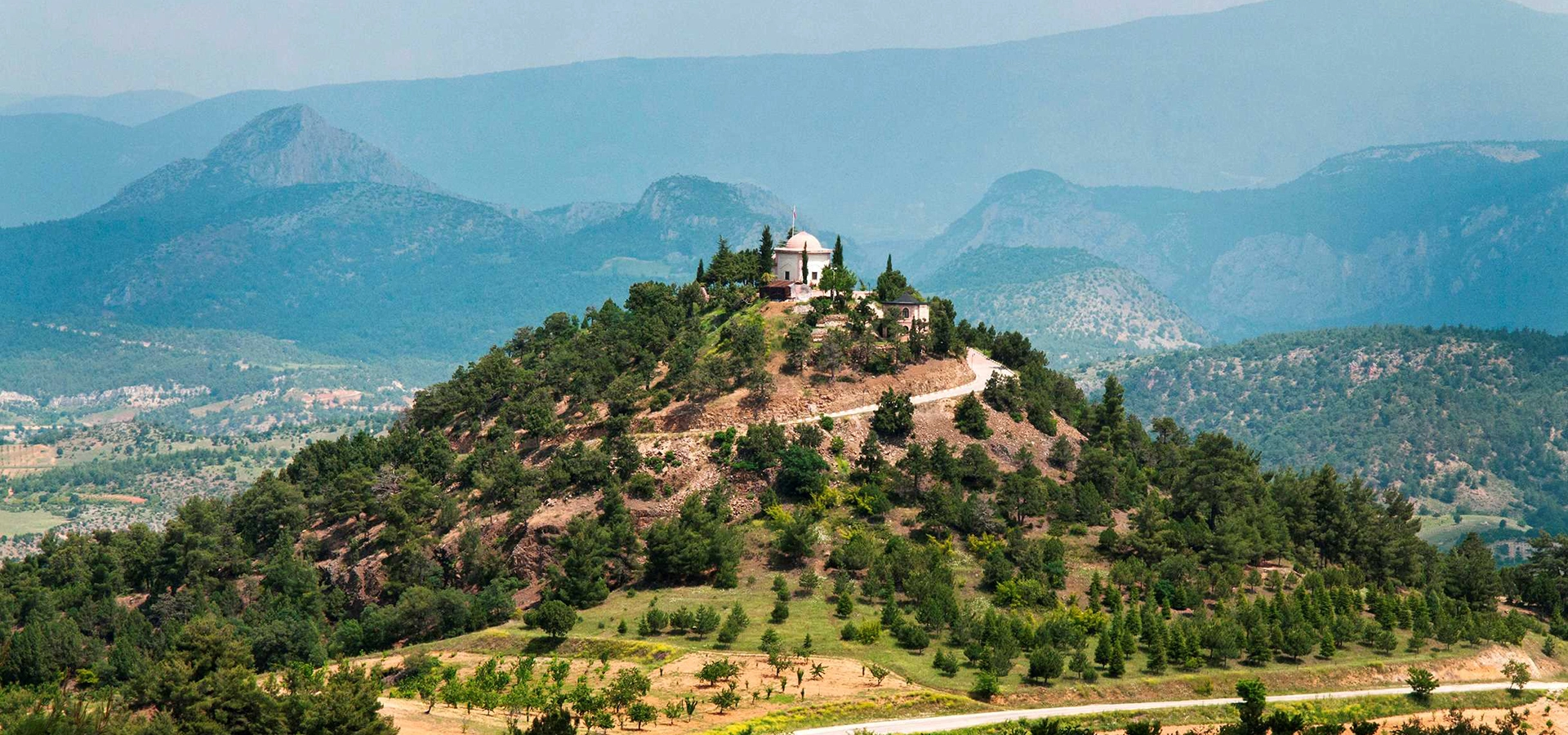
Dursun Fakih Tomb stands near Küre Village in Söğüt, Bilecik Province, on a prominent hill overlooking the countryside between Söğüt and Bilecik. The site is dedicated to Dursun Fakih, an early Ottoman scholar, jurist, imam and poet who was closely connected with both Sheikh Edebali and Osman Gazi.
Dursun Fakih was from the Karaman region and studied tafsir, hadith and Islamic jurisprudence under Sheikh Edebali. He later married one of Edebali's daughters, becoming his son-in-law and a close member of the same family circle as Osman Gazi. Early Ottoman sources remember him above all as the man who delivered the first Friday sermon in Osman Gazi's name at Karacahisar.
That sermon became one of the most symbolic episodes in Ottoman foundation history. In later historical memory, the public reading of the khutba in Osman Gazi's name was interpreted as a sign of political independence and sovereign authority. Dursun Fakih was also appointed as a judge and imam in Karacahisar and is commonly described by official Bilecik sources as the first imam-hatib and first kadı of the Ottoman state.
The hilltop memorial near Küre is today one of the most important faith-and-history stops in the Söğüt region. However, there is an important scholarly detail that visitors should know: while local official tourism sources call the Küre monument the Dursun Fakih Tomb, the TDV Encyclopaedia of Islam describes the Küre site as one of the tomb-memorials attributed to him, while identifying a grave within the Sheikh Edebali complex in Bilecik as his burial place. This guide preserves both traditions rather than presenting an uncertain detail as settled fact.
The site is especially rewarding when combined with Ertuğrul Gazi Tomb, Ertuğrul Gazi Kuyulu Mescit, Söğüt Ertuğrul Gazi Museum and Sheikh Edebali Tomb in Bilecik. Together, these places create one of the strongest early Ottoman heritage routes in Türkiye.
Dursun Fakih is remembered for delivering the first Friday sermon in Osman Gazi's name at Karacahisar.
He studied tafsir, hadith and fiqh under Sheikh Edebali and served as a judge and imam.
The Küre memorial stands on a commanding hill approximately 550 metres above sea level.
The site connects visitors directly with the religious and legal institutions of the earliest Ottoman period.
Essential information for visiting the Dursun Fakih memorial near Küre in Söğüt.
Near Küre Village, Söğüt district, Bilecik Province.
Open on Google MapsHilltop tomb-memorial and faith-tourism site dedicated to Dursun Fakih.
Dursun Fakih, early Ottoman scholar, jurist, imam and poet.
Studied tafsir, hadith and fiqh under Sheikh Edebali.
Judge and imam at Karacahisar; traditionally described as the first Ottoman kadı and imam-hatib.
Delivered the first Friday sermon in Osman Gazi's name after the conquest of Karacahisar.
Approximately 550 metres above sea level.
Prominent wooded hill overlooking the countryside between Söğüt and Bilecik.
Private car, taxi or private driver; the memorial is outside central Söğüt.
The Küre site is officially promoted as his tomb, while scholarly reference literature describes it as an attributed makam.
Dursun Fakih stands at the intersection of religious learning, law, public authority and the political symbolism of the early Ottoman frontier.
The earliest Ottoman polity did not develop through military conquest alone. A functioning state also required religious leadership, courts, legal interpretation, public worship and institutions capable of organizing newly controlled towns. Dursun Fakih belongs to this less visible but essential side of Ottoman foundation history.
His close relationship with Sheikh Edebali placed him within one of the most influential spiritual and intellectual circles associated with Osman Gazi. As a student trained in Qur'anic commentary, hadith and Islamic law, Dursun Fakih represented the learned class that could translate political authority into religious and judicial administration.
His role at Karacahisar is therefore particularly important. He was not remembered simply as a preacher. He was associated with the Friday sermon, congregational prayer, judgeship and the organization of Islamic civic life within a newly conquered settlement.
For this reason, the Dursun Fakih memorial adds an important dimension to a visit to Söğüt. Ertuğrul Gazi Tomb represents dynastic memory; Sheikh Edebali represents spiritual counsel and learning; and Dursun Fakih represents the emergence of law, worship and public legitimacy in the Ottoman foundation narrative.
Historical information about Dursun Fakih is limited, but major reference works agree on several important points. He was from the Karaman region and became a student and follower of Sheikh Edebali.
Under Edebali he studied tafsir, hadith and fiqh, the disciplines required for religious teaching, legal judgment and interpretation. He also completed his spiritual training within Edebali's circle.
Dursun Fakih later married one of Sheikh Edebali's daughters. This made him Edebali's son-in-law and placed him in the same extended family network as Osman Gazi, who was also connected to Edebali through marriage traditions preserved in Ottoman sources.
The TDV Encyclopaedia records that Dursun Fakih accompanied Osman Gazi during campaigns and served as an imam for the warriors. His career therefore belonged to a frontier environment in which scholarship, religious service and political expansion were closely connected.
The relationship between Dursun Fakih and Sheikh Edebali is central to understanding his place in early Ottoman history. Edebali was not simply a teacher from whom Dursun Fakih attended a few lessons. The sources describe a much deeper connection involving education, spiritual discipleship and family ties.
Dursun Fakih studied religious sciences under Edebali and became his son-in-law. This placed him inside the learned and spiritual network that surrounded the Ottoman frontier principality during its formative years.
After Sheikh Edebali's death, the TDV Encyclopaedia states that Dursun Fakih succeeded to his position and carried out fatwa-related duties. That detail shows that his importance did not end with the first khutba at Karacahisar. He continued to function as a religious authority within the developing Ottoman environment.
For travelers interested in this relationship, the strongest historical pairing is the Küre memorial with Sheikh Edebali Tomb in Bilecik. On exceptionally clear days, local official sources even note that the Sheikh Edebali complex can be seen from the Dursun Fakih hill, approximately 14.5 kilometres away as the crow flies.
Dursun Fakih's best-known historical role is connected with Karacahisar, a fortified settlement in the Eskişehir region that became one of Osman Gazi's important early conquests. Following the conquest, Dursun Fakih was appointed to religious and judicial responsibilities there.
The TDV Encyclopaedia records that Osman Gazi appointed him kadı of the town and imam of the mosque converted from a church. It was there that Dursun Fakih delivered a Friday khutba in Osman Gazi's name.
In Islamic political tradition, the naming of a ruler in the Friday sermon could function as an important public expression of authority. For that reason, later Ottoman historical memory interpreted Dursun Fakih's sermon as a visible sign of Osman Gazi's independent sovereignty.
Official Bilecik and Söğüt sources strongly emphasize this interpretation and describe the sermon as an announcement of Ottoman independence. The event has therefore become one of the symbolic scenes used to explain the transformation of a frontier principality into an independent political power.
A Friday khutba is a sermon delivered as part of the congregational Friday prayer. In medieval Islamic political culture, the ruler in whose name the khutba was read could be understood as the recognized holder of political authority in that place.
That is why Dursun Fakih's sermon occupies such a prominent place in Ottoman foundation narratives. It was not remembered only for its religious content. It was remembered because it publicly linked religious ceremony with Osman Gazi's authority.
Later Ottoman historians therefore viewed the episode as one of the symbolic signs of independence, alongside conquest, territorial control and the establishment of legal administration. Whether approached as strict constitutional history or as foundation memory, the scene illustrates how political legitimacy was communicated in the medieval Islamic world.
The khutba was delivered during the principal weekly congregational prayer.
Naming a ruler in the sermon could signal recognition of his political authority.
The famous sermon is associated with one of Osman Gazi's major early fortified conquests.
Later tradition treated the event as a milestone in the emergence of an independent Ottoman polity.
The title fakih itself refers to someone learned in Islamic jurisprudence. Dursun Fakih's historical role fits that title closely. He was not only associated with preaching but with the legal and religious organization of conquered territory.
At Karacahisar, his appointment as kadı placed him in a position responsible for judicial and legal matters. His parallel role as imam connected him with public worship and the religious life of the settlement.
Official Bilecik sources therefore describe him as the first imam-hatib and first kadı of the Ottoman state. The phrase is part of modern official heritage interpretation and explains why his memorial is treated as a major foundation-era destination.
For travelers, this is what distinguishes Dursun Fakih from many other personalities commemorated in Söğüt. His story is less about dynastic genealogy and more about the institutions that allowed a frontier principality to govern, judge and organize communal life.
Dursun Fakih is also important in the history of Turkish literature. A work known as Gazavatname is attributed to him, and the TDV Encyclopaedia identifies it as the principal literary work associated with his name.
The poem is significant less for providing reliable early Islamic history than for its place in Old Anatolian Turkish literary culture. It belongs to the broad tradition of heroic religious narratives that circulated among Turkish-speaking Muslim communities in Anatolia.
The surviving text is a mesnevi of roughly 640 couplets, with manuscript copies recorded in Istanbul and Konya collections. Its story centers on legendary battles involving the Prophet Muhammad's companions and the ruler Mukaffa.
The TDV Encyclopaedia notes that the episodes are not found in authoritative Islamic historical sources. The work is therefore best understood as religious-heroic literature designed to strengthen communal devotion and martial-religious enthusiasm, rather than as a documentary chronicle.
The work is valued as an early example of Turkish literary language in Anatolia.
The poem is composed in a rhymed narrative form widely used in classical Islamic literatures.
The length varies slightly between manuscript traditions.
The text combines legendary warfare, conversion and devotional themes.
Official Bilecik and Söğüt heritage pages commonly state that Dursun Fakih died in 1327. This date is widely repeated in local cultural interpretation and visitor information.
The TDV Encyclopaedia is more cautious. It places him as having died after 726 AH / 1326 and explicitly notes that his exact death date is not certain. Some sources indicate that he lived for a period after succeeding Sheikh Edebali in religious duties.
For a travel guide, the safest approach is therefore to state that Dursun Fakih died in the late 1320s according to local tradition, while acknowledging that scholarship does not regard the exact year as securely established.
In official local tourism language, the hilltop building near Küre is called Dursun Fakih Türbesi — Dursun Fakih Tomb. That name is well established in Söğüt and Bilecik tourism and is the name visitors will see on signs and navigation systems.
Academic reference literature adds an important complication. The TDV Encyclopaedia states that Dursun Fakih's grave is within the Sheikh Edebali lodge and tomb complex in Bilecik, where several members of Edebali's family and circle are buried.
The same scholarly source says that two additional tomb-memorials or makam graves are attributed to Dursun Fakih: one at Karacahisar and another on a hill near Küre in Söğüt. This means the Küre monument is best understood as a major commemorative and devotional site associated with him, even though the precise location of his physical burial is treated differently by different traditions.
This distinction does not reduce the importance of the site. Makam tombs are a familiar part of Anatolian religious geography, and a memorial can preserve historical memory, local devotion and cultural identity even when the question of physical burial remains uncertain.
The Küre memorial occupies one of the most dramatic settings among the early Ottoman heritage sites around Söğüt. Official local sources place it on a hill at approximately 550 metres elevation, with broad views across surrounding rural and forested land.
The elevated position gives the memorial a sense of separation from the town-centre monuments of Söğüt. Visitors leave the dense historic core and move into a quieter landscape of roads, fields, wooded slopes and distant ridges.
On clear and haze-free days, Söğüt Municipality and Bilecik Governorate sources state that it is possible to see the Sheikh Edebali Tomb in Bilecik from the hill. The two sites are given as approximately 14.5 kilometres apart in a straight line.
That visual relationship is especially meaningful because Dursun Fakih was Edebali's student and son-in-law. The landscape therefore creates a rare opportunity to connect two foundation-era personalities not only through history but through geography.
The present Küre memorial is a compact domed shrine building set within a landscaped hilltop enclosure. Its appearance is simple and devotional rather than monumental in scale.
The entrance is approached by steps and framed by a small projecting portico. The exterior is light-colored, with red-toned roof covering and mature coniferous trees that strongly shape the atmosphere of the site.
Inside, the memorial space centers on a covered symbolic sarcophagus, with carpets, calligraphic decoration and devotional furnishings creating the character of a religious memorial interior.
Visitors should be careful not to assume that the present building dates directly from Dursun Fakih's lifetime. The official tourism sources consulted for this page identify the site and its historical association but do not provide a securely documented construction date for the current structure.
The present memorial is covered by a central domed roof form.
A small projecting entrance creates a formal transition into the shrine.
Steps lead to the entrance, reinforcing the building's hilltop ceremonial character.
The interior focuses on a cloth-covered memorial sarcophagus.
Cypress and pine-like trees create shade and a quiet devotional atmosphere.
The current building should not be presented as a surviving fourteenth-century structure without stronger documentation.
Dursun Fakih Tomb is not experienced only as a historical monument. Many visitors arrive to pray, recite verses, reflect on the Ottoman foundation period or pay respect to a figure regarded as an important scholar and spiritual leader.
That means the interior should be approached differently from an ordinary museum. Keep conversation quiet, avoid blocking people who are praying, and do not treat the sarcophagus as a prop for posed photographs.
Modest clothing is appropriate inside the shrine. If local signs request shoes to be removed before entering, follow the posted practice. Photography should always remain secondary to the devotional character of the space.
The interior is a place of prayer and reflection.
Modest clothing is the safest choice for a functioning devotional memorial.
Give priority to visitors who are praying or reciting quietly.
Observe any posted instructions at the entrance regarding footwear.
Bright flash photography can be intrusive inside the small shrine space.
Keep respectful distance from the memorial and interior furnishings.
The strongest photographs at Dursun Fakih Tomb often come from the relationship between the shrine and its landscape. Unlike many Söğüt monuments surrounded by streets and buildings, this memorial is visually isolated on a wooded hill.
Begin with a wider exterior composition that includes the trees, entrance steps and dome. Then walk around the landscaped area to capture the building against the surrounding ridges and countryside.
Morning and late-afternoon light usually gives the hill more depth than strong midday sun. In mist or light cloud, the site can take on a very different atmosphere, with the shrine appearing almost separated from the surrounding landscape.
Inside, photograph only when it does not disturb other visitors. A wide image showing the sarcophagus within the room is usually more informative than intrusive close-ups of people praying.
Include the entrance portico, steps and dome in one complete architectural frame.
Move farther back to show how the memorial sits above the surrounding landscape.
Use cypress and pine branches to create natural frames around the shrine.
On clear days, record the open view toward the wider Bilecik countryside.
Photograph quietly and avoid flash, especially when other people are praying.
Low light can emphasize the dome, trees and contour of the hill.
Dursun Fakih Tomb lies outside central Söğüt near Küre Village. Unlike the cluster of monuments around Söğüt's historic centre, this site requires a separate road journey and should be planned as a deliberate detour.
The hilltop compound includes the memorial building and surrounding landscaped space. A visit is usually straightforward, but access to the interior can depend on local opening arrangements, maintenance or religious activity.
No consistently published official ticket price or fixed daily visiting schedule was identified in the principal government tourism pages consulted for this guide. For that reason, visitors should avoid relying on unofficial websites that promise exact opening hours without a current source.
For most travelers, 20–30 minutes is enough to visit the interior respectfully, walk around the hilltop area and take photographs. Those interested in the landscape or in quiet reflection may wish to remain longer.
The memorial can be reached by road to the hilltop area, so visitors do not need to make a long mountain hike to reach the site. Anadolu Agency reported road improvement works on the access route in 2021.
The entrance to the shrine itself is approached by steps. That can create a barrier for visitors using wheelchairs or those with limited mobility, especially if no temporary assistance or alternative access is available on the day.
The surrounding courtyard and parking surfaces may also include slopes, paving transitions and uneven edges typical of hilltop landscaped sites. Conditions can change after maintenance or landscaping work.
Visitors with significant mobility requirements should treat the exterior viewpoint as potentially easier than interior access and confirm current arrangements locally whenever step-free entry is essential.
Official Söğüt and Bilecik sources give clear road directions. Travel along the Bilecik–Söğüt road and turn toward Küre Village around the 20th kilometre point. From the Küre junction, the memorial is approximately 2 kilometres farther on the hill road.
The official coordinates published by Söğüt Municipality are approximately 40°04'51.21" N, 30°08'13.73" E. These correspond to roughly 40.0810, 30.1371 in decimal format.
Because the site is outside Söğüt's walkable historic centre, private car, taxi or private driver is the most convenient choice. It works especially well as a stop between Söğüt and Bilecik rather than as a stand-alone excursion.
The road climbs toward the hilltop, so winter weather, heavy rain or local road works can affect driving conditions. Allow extra time in poor weather and avoid assuming that rural roads will feel the same as urban streets.
Search “Dursun Fakih Türbesi, Küre, Söğüt, Bilecik.”
Approx. 40.0810 N, 30.1371 E.
The memorial is about 2 km from the Küre turn on the Bilecik–Söğüt road.
The simplest option for combining the memorial with Söğüt and Bilecik.
Useful if you are staying in Söğüt but do not have your own vehicle.
Ideal for a full early Ottoman heritage route across Söğüt and Bilecik.
A quick stop of 15 minutes can be enough to enter the memorial, view the sarcophagus and take one or two exterior photographs. However, that does not leave much time to appreciate the hilltop setting.
Allow around 20–30 minutes for a more comfortable visit including the interior, exterior architecture, landscape and a short period of quiet reflection.
If the weather is clear and you want to look toward Bilecik or photograph the countryside, 30–45 minutes can be worthwhile.
The memorial makes most sense within a half-day or full-day early Ottoman route that also includes Söğüt centre and the Sheikh Edebali complex in Bilecik.
Quick interior visit and exterior photograph.
Best balance for the shrine, hilltop setting and respectful visit.
Useful for photography, viewpoints and a slower devotional visit.
Combine the memorial with the principal monuments of central Söğüt.
Add Bilecik and Sheikh Edebali Tomb for a broader foundation-era route.
Begin in central Söğüt at Ertuğrul Gazi Tomb, the town's most important dynastic memorial. Then visit Söğüt Ertuğrul Gazi Museum and Kuyulu Mescit to deepen the foundation-era context.
From Söğüt, drive toward Küre and climb to Dursun Fakih Tomb. Spend time first with the exterior and landscape before entering the memorial quietly.
Inside, remember that the importance of Dursun Fakih lies not only in the memorial itself but in his connection with religious scholarship, the first khutba, judicial administration and the formation of Ottoman institutions.
After Küre, continue toward Bilecik and finish at Sheikh Edebali Tomb. This creates a particularly meaningful sequence because it reconnects Dursun Fakih with his teacher, father-in-law and spiritual guide.
Because Dursun Fakih Tomb lies between the heritage landscapes of Söğüt and Bilecik, it works naturally as part of a wider route rather than an isolated visit. The following places help explain different sides of the Ottoman foundation story.
Visit Söğüt's principal dynastic memorial associated with Osman Gazi's father and the remembered beginnings of the Ottoman line.
Explore one of Söğüt's most evocative religious sites connected with early Ottoman foundation traditions.
See ethnographic material and displays that place Söğüt's Ottoman memory within the wider culture of the region.
Continue to the spiritual teacher, father-in-law and mentor most closely associated with Dursun Fakih's education.
Jump forward more than six centuries and compare foundation-era memory with Söğüt's richly decorated late Ottoman urban heritage.
See one of the strongest monuments from Söğüt's late imperial transformation under Sultan Abdülhamid II.
Explore the educational and civic side of late Ottoman Söğüt in contrast with its medieval foundation narrative.
Continue through the province for Ottoman monuments, War of Independence sites, museums, historic towns and natural landscapes.
It is easy to reduce early Ottoman history to a sequence of warriors, battles and conquests. Dursun Fakih reminds visitors that conquest alone does not create a durable political order.
Newly controlled towns required judges, imams, legal interpretation, public prayer, charitable institutions and networks of learned people. The story of Dursun Fakih makes these institutional foundations visible.
His famous khutba also demonstrates the importance of public symbolism. A sermon in the name of a ruler could communicate political authority in a way that a modern visitor might associate with flags, constitutions or official proclamations.
Seen together with Sheikh Edebali and the Söğüt monuments, Dursun Fakih helps transform the foundation story from heroic legend into a broader historical question: how did a frontier community create the religious, legal and administrative habits of a state?
Dursun Fakih was an early Ottoman scholar, jurist, imam and poet associated with Osman Gazi and Sheikh Edebali.
Historical reference works describe him as Karamanlı, meaning from the Karaman region of Anatolia.
He studied under Sheikh Edebali, learning tafsir, hadith and Islamic jurisprudence.
Yes. Sources state that he married one of Sheikh Edebali's daughters and became his son-in-law.
He belonged to the same extended family and spiritual circle around Sheikh Edebali and served in religious and judicial roles under Osman Gazi.
He is best known for delivering the first Friday khutba in Osman Gazi's name at Karacahisar.
Later Ottoman tradition interpreted the khutba as a public sign of Osman Gazi's independent political authority.
The exact dating is presented differently in the sources. Local official pages often give 28 September 1299, while the TDV Encyclopaedia connects the event with the conquest of Karacahisar in 1289.
Official Bilecik heritage sources describe him as the first kadı of the Ottoman state. TDV confirms that Osman Gazi appointed him kadı at Karacahisar.
Yes. He served as an imam and is traditionally described as the first Ottoman imam-hatib.
A poetic work known as Gazavatname is attributed to him and is important in the history of Old Anatolian Turkish literature.
Local official tradition commonly gives 1327, while the TDV Encyclopaedia states that the exact date is uncertain and places his death after 1326.
The well-known memorial is near Küre Village in Söğüt district, Bilecik Province, on a hill close to the Bilecik–Söğüt road.
Local official sources call it his tomb, but the TDV Encyclopaedia describes the Küre site as an attributed makam grave and identifies a grave within the Sheikh Edebali complex in Bilecik.
The memorial stands on a hill at approximately 550 metres elevation.
Official local sources state that on clear, haze-free days it may be visible. The two sites are given as about 14.5 km apart in a straight line.
Take the Bilecik–Söğüt road, turn toward Küre around the 20th kilometre, and continue roughly 2 km toward the hilltop memorial.
Söğüt Municipality publishes approximately 40°04'51.21" N, 30°08'13.73" E, or about 40.0810, 30.1371 in decimal form.
A car, taxi or private driver is the most convenient choice because the memorial is outside central Söğüt.
Allow around 20–30 minutes for the shrine, exterior and hilltop setting.
No reliable current official ticket information was published in the principal government heritage pages checked for this guide. Verify locally if this is important for your visit.
Fixed official visiting hours were not consistently published in the main government sources consulted. Interior access may vary, especially very early or late in the day.
The site is reachable by road, but the visible shrine entrance is approached by steps. Do not assume fully step-free interior access.
Because it is a devotional memorial, choose modest, respectful clothing and follow any local instructions at the entrance.
Photography should be discreet and secondary to prayer. Avoid flash and never photograph worshippers intrusively.
Yes, especially for travelers interested in early Ottoman history, Islamic legal institutions, foundation-era personalities and quiet hilltop landscapes.
Continue to Sheikh Edebali Tomb in Bilecik or return to Söğüt for Ertuğrul Gazi Tomb.
Allow visitors who come for prayer to use the memorial without disturbance.
Maintain respectful distance from the memorial and its coverings.
Treat the interior as a devotional religious space rather than an ordinary museum room.
Observe any local request to remove shoes before entering carpeted areas.
Never photograph people praying without permission.
Keep litter out of the wooded hilltop area and use designated parking and paths.
Respect local devotion while remembering that scholarship treats the Küre burial identification with caution.
Combine the memorial with Söğüt and Bilecik rather than treating it as a quick roadside photograph.
Combine Dursun Fakih Tomb with Ertuğrul Gazi, Sheikh Edebali and the monuments of Söğüt through a private itinerary designed around early Ottoman history, culture and faith heritage.
Follow the relationships between warrior leadership, spiritual guidance, religious scholarship and the first institutions of the Ottoman state.
Ask us about a tailor-made route combining Dursun Fakih Tomb, Ertuğrul Gazi Tomb, Kuyulu Mescit, Söğüt Museum and Sheikh Edebali Tomb in Bilecik.
Request a Custom Tour
Discover Söğüt, Bilecik city, early Ottoman memorials, museums, War of Independence landscapes, historic towns and natural attractions throughout the province.
View Bilecik GuideConnect Dursun Fakih with the dynastic and spiritual figures who shaped the same historical landscape.
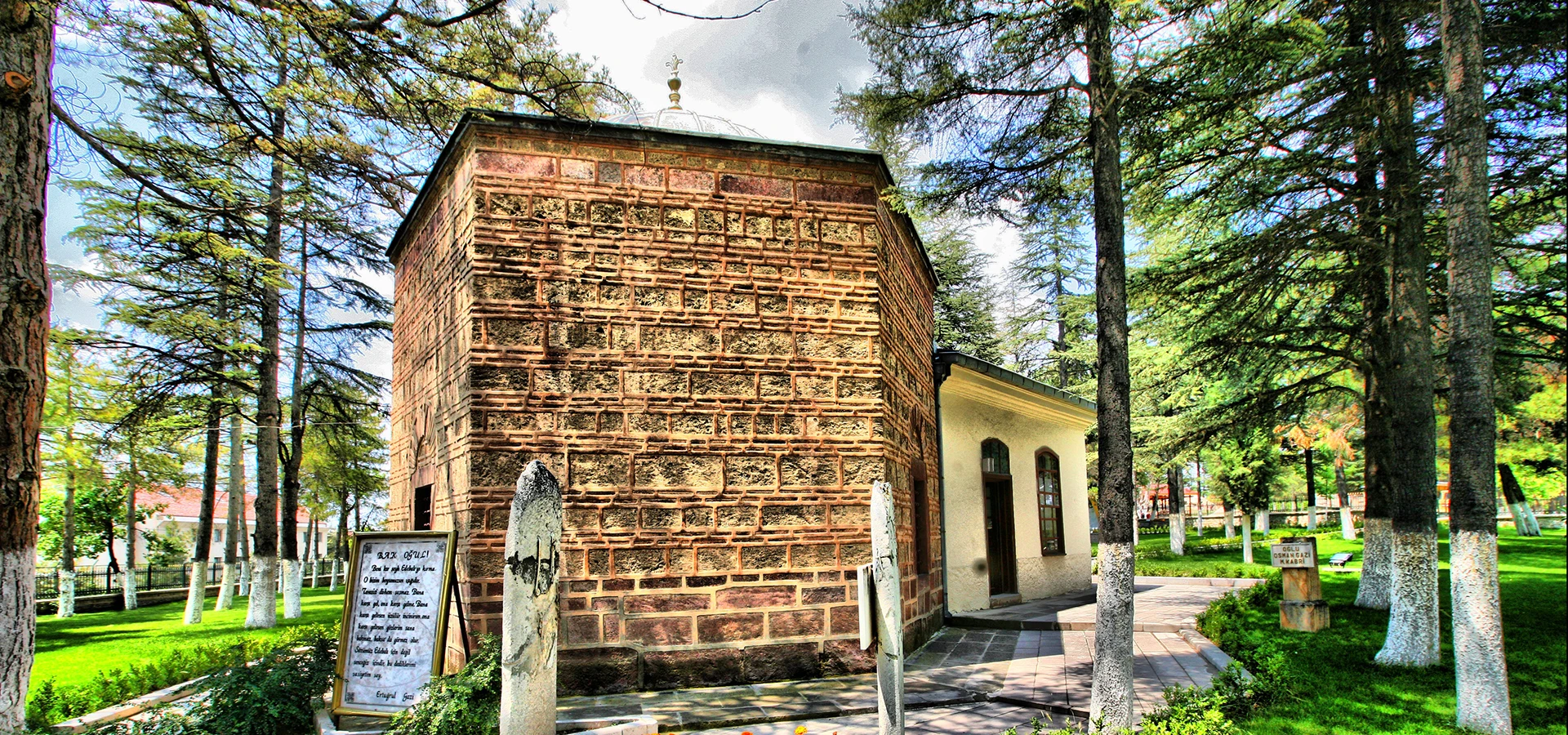
Explore the principal dynastic memorial associated with Osman Gazi's father and Söğüt's foundation-era identity.
Explore Ertuğrul Gazi Tomb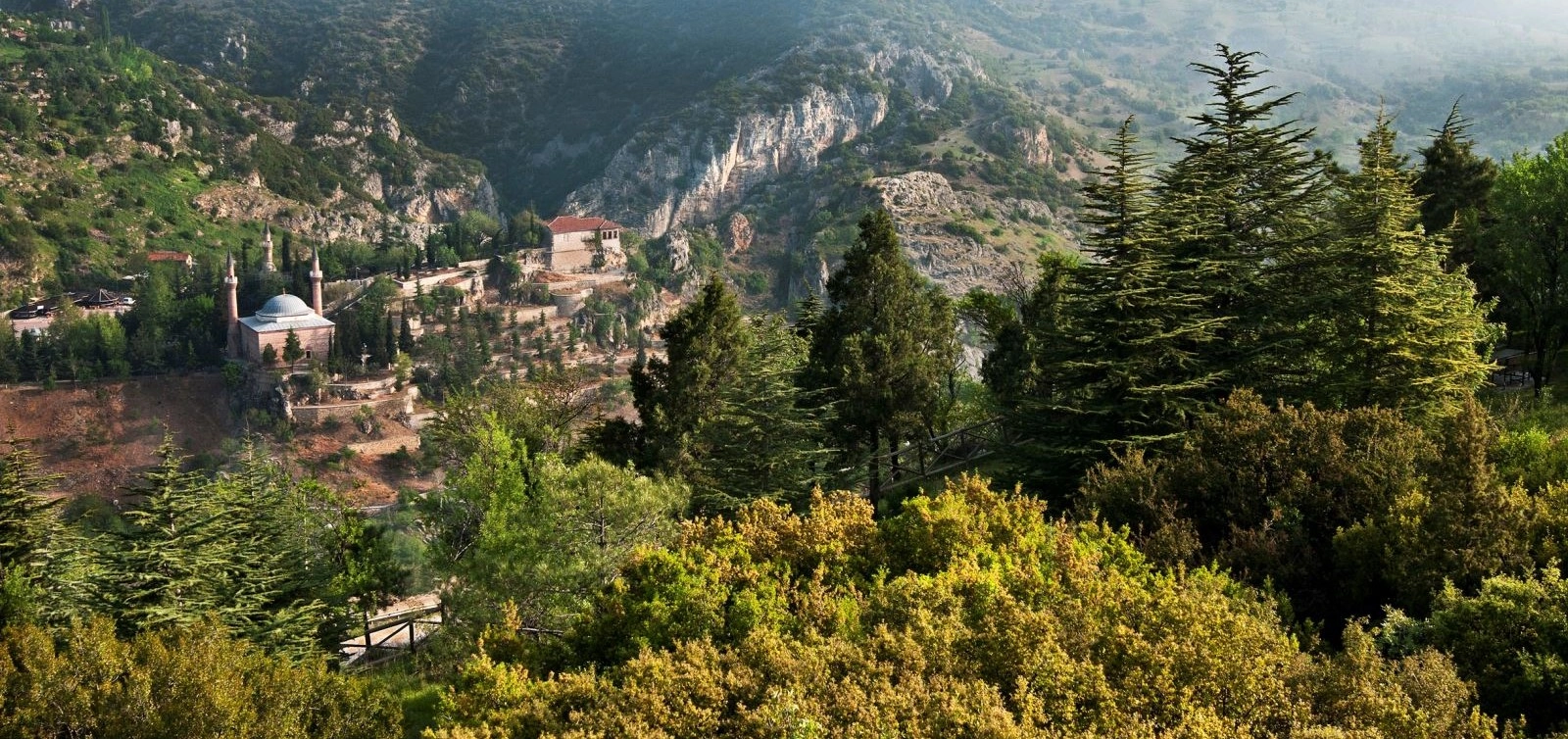
Visit Dursun Fakih's teacher, father-in-law and one of the most influential spiritual figures in the Ottoman foundation narrative.
Explore Sheikh Edebali Tomb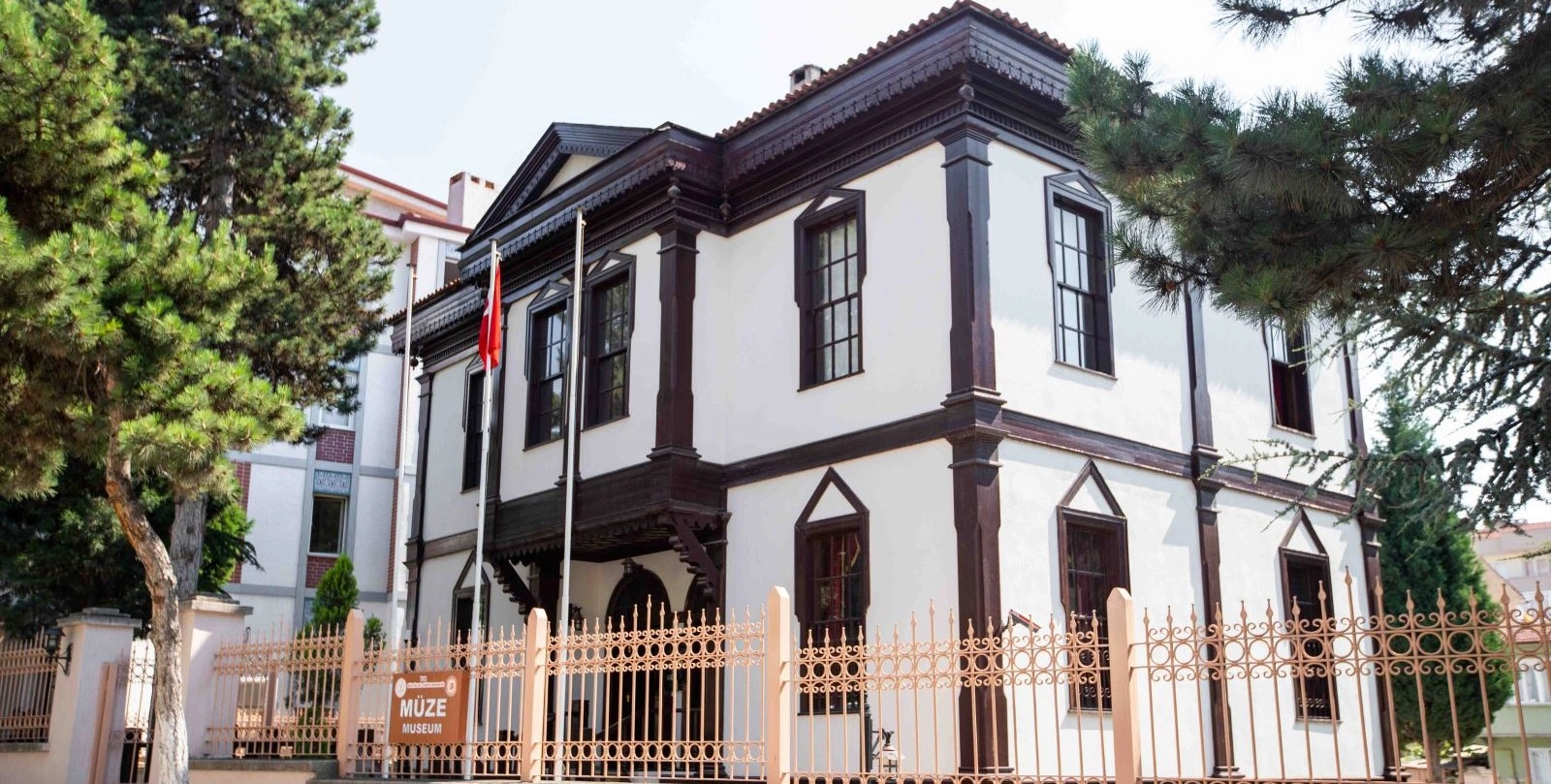
Broaden the visit with local ethnography, historical displays and the cultural memory of Söğüt and its surroundings.
Explore Söğüt Museum