Private Bilecik Gastronomy Discovery
Explore Bilecik's regional dishes, traditional restaurants, agricultural products and culinary heritage on a flexible private food-focused route.
Request This Tour





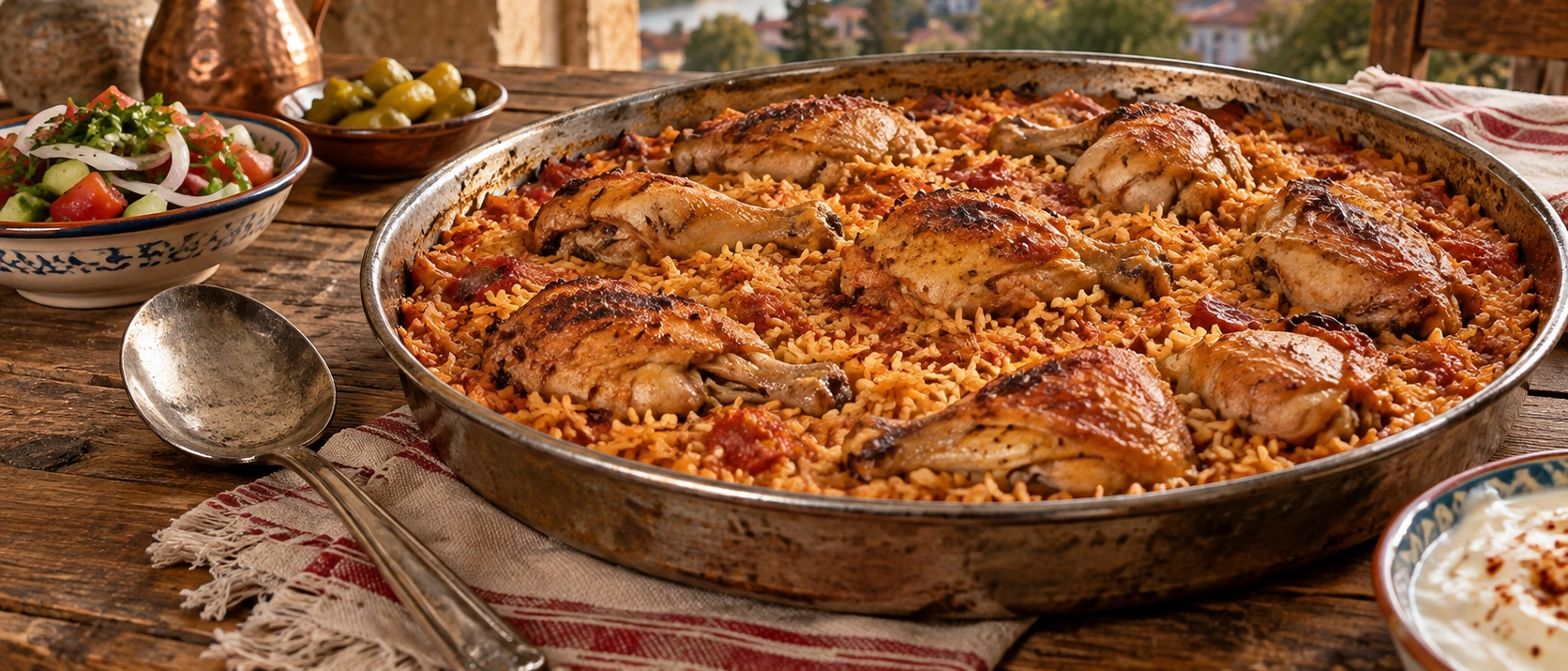
Huris Tepsi is a traditional dish associated with Bilecik Province, built around tender chicken, rice, onion, tomato paste and red pepper.
Its preparation moves through two stages. First, onion, tomato paste and red pepper are sautéed with fat before chicken is added and cooked with enough water to create a flavourful cooking liquid.
Rice is then spread across a tray and moistened with the chicken cooking liquid. After a short initial cooking stage, the chicken mixture is transferred over the rice and the complete tray is finished in the oven.
This method allows the rice to absorb the savoury juices of the chicken while the oven brings the two components together into a single shared dish.
Türkiye's Culture Portal records the recipe from the Bilecik Governorship Provincial Yearbook, 2005, preserving a useful written reference for this regional speciality.
Huris Tepsi is especially well suited to generous family-style dining: a large tray, a fragrant layer of rice and pieces of chicken served together at the centre of the table.
Huris Tepsi is documented as part of Bilecik's regional culinary tradition.
Chicken fillet and rice form the heart of this filling tray meal.
The rice receives flavour from the liquid created while the chicken cooks.
The assembled tray is baked and then rested before serving.
Essential information about one of Bilecik's traditional chicken-and-rice dishes.
Bilecik Province, northwestern Türkiye.
Open Bilecik on Google MapsChicken fillet, cooked with onion, tomato paste and red pepper.
Rice is spread across a tray and flavoured with the chicken cooking liquid.
Pot cooking followed by tray assembly and an oven finish.
A practical tray meal in which chicken, rice and cooking juices are brought together in the oven.
Huris Tepsi belongs to the wider collection of dishes associated with the traditional cuisine of Bilecik.
A written recipe is preserved on Türkiye's Culture Portal, where the source is identified as the Bilecik Governorship Provincial Yearbook published in 2005.
The documented preparation is straightforward but carefully sequenced. Onion, tomato paste and red pepper are sautéed first, chicken is added, and water is used to cook the meat and create a savoury liquid.
The rice is not treated as an entirely separate side dish. Instead, it is spread directly into the tray and receives liquid from the chicken preparation, allowing it to absorb flavour before the remaining ingredients are assembled on top.
The oven stage completes the dish, joining the rice and chicken into a single tray meal rather than two separately cooked components.
Modern descriptions of Huris Tepsi frequently associate it with crowded family tables and shared dining, a serving style that suits the generous tray format particularly well.
Huris Tepsi is a Bilecik-style tray dish made with chicken fillet, rice, onions, tomato paste, red pepper and cooking fat.
The chicken mixture begins in a pot, where the onions and seasonings are cooked before water is added. The resulting broth-like cooking liquid is then used to flavour the rice arranged in the tray.
After the cooked chicken mixture is added over the rice, the tray is placed in the oven. The dish is rested before service so the rice and juices can settle together.
The documented recipe uses 500 g of chicken fillet as its main protein.
One and a half cups of rice create the absorbent base of the tray.
Diced onions are sautéed at the beginning of the preparation.
Tomato paste gives the cooking liquid colour and savoury depth.
Ground red pepper adds warmth, colour and aroma.
The final oven stage brings the chicken and flavoured rice together.
The chicken is first cooked in a pot before the meal is completed in a tray.
The rice is moistened with the chicken cooking liquid instead of being prepared independently.
The assembled tray is baked so the flavours can merge and the rice can finish cooking.
Chicken, onion, tomato paste and red pepper create a familiar, deeply savoury combination.
The large tray format naturally suits family-style and communal dining.
The Culture Portal preserves the dish through a recipe sourced to Bilecik's 2005 provincial yearbook.
The documented preparation uses a short ingredient list, relying on the cooking method to develop flavour rather than a large number of additions.
Chicken provides the main protein and creates the cooking liquid used to flavour the rice.
Rice forms the base of the tray and absorbs the savoury chicken juices.
Diced onion gives sweetness and depth to the tomato-and-pepper base.
A spoonful of paste gives colour, body and concentrated tomato flavour.
Red pepper brings colour and a gentle warm-spice character.
The historical written recipe specifies margarine for the initial sautéing stage.
Türkiye's Culture Portal lists the following quantities for its documented Bilecik recipe.
The recipe's character comes from how these ingredients are handled: the onion and paste are sautéed, the chicken creates a seasoned cooking liquid, and that same liquid is used to prepare the rice before the tray goes into the oven.
The traditional method follows a clear progression from sautéing to simmering, tray assembly, oven cooking and resting.
The documented recipe uses 500 g of chicken fillet. Its role extends beyond the meat itself because the liquid created during cooking becomes an essential flavouring for the rice.
A lean, tender cut forms the main protein component of Huris Tepsi.
The chicken is cooked briefly with the onion, tomato paste and red pepper before water is added.
Water allows the chicken to cook while drawing flavour into the liquid.
The resulting cooking liquid is transferred to the rice in the tray.
The chicken receives a second cooking stage after it is assembled over the rice.
Chicken and rice are presented as one complete tray dish.
Rice is central to the identity of Huris Tepsi. The documented recipe specifies 1.5 cups of rice, spread directly across the tray before the chicken mixture is added.
An even layer helps the rice absorb liquid consistently across the tray.
The rice receives cooking liquid from the chicken pot, giving it more flavour than plain water alone.
The traditional method gives the rice a short cooking stage before final assembly.
The rice completes its cooking beneath and around the chicken mixture.
Tomato, onion, pepper and chicken flavours become integrated into the grains.
A short rest after baking helps the rice settle before serving.
A small group of strongly flavoured ingredients gives Huris Tepsi its colour and savoury character: diced onion, tomato paste and ground red pepper.
Two medium onions are cut into cubes and sautéed at the beginning of the recipe.
One tablespoon provides concentrated tomato flavour and colour.
Red pepper warms the flavour profile and deepens the reddish tone of the dish.
Cooking these ingredients in fat before adding water gives the base a fuller aroma.
The flavours travel into the rice through the chicken cooking liquid.
The dish relies on a compact seasoning profile rather than many competing spices.
The word tepsi means tray, and the final assembly is what gives the dish its most recognisable form.
The tray creates a broad surface where the rice can cook relatively evenly.
The chicken mixture is poured over the rice after the rice has received cooking liquid.
The oven finishes both components together and reduces excess liquid.
Juices move through the tray and season the rice beneath the chicken.
The completed tray can be served directly as a generous centrepiece.
The format naturally supports shared meals and larger tables.
Huris Tepsi has a comforting savoury profile led by chicken and rice, with onion sweetness, concentrated tomato flavour and the warmth of red pepper.
Chicken juices and tomato paste form the main savoury backbone.
Cooked onions bring natural sweetness without turning the dish sugary.
Paste gives the rice and chicken a deeper, concentrated tomato note.
Ground red pepper contributes warmth and aroma.
The rice carries the flavour of the liquid in which the chicken cooked.
The combination resembles the satisfying character of home-style chicken and rice, enriched by oven cooking.
The chicken is simmered before its final oven stage, helping it remain tender.
Well-prepared rice should absorb flavour while retaining a pleasant pilaf-like texture.
The oven stage helps the rice take up the cooking liquid rather than leaving a soupy tray.
Diced onion melts into the tomato-and-chicken base.
Paste and cooking liquid coat and season the rice rather than remaining as a separate sauce.
A short resting period helps the final texture stabilise before service.
What distinguishes Huris Tepsi is the way the two main components are connected throughout the cooking process.
The rice uses the liquid produced while the chicken cooks.
The rice and chicken are combined before the meal is finished.
The final baking stage brings the flavour and texture of the dish together.
Tomato paste and red pepper give the chicken liquid a distinctive colour and savoury intensity.
Chicken and rice arrive at the table as one tray rather than as separate preparations.
The preparation is documented as part of Bilecik's traditional food culture.
Huris Tepsi fits naturally into the generous shared-table character often associated with Anatolian home cooking. The tray format makes it practical for serving several people at once.
Secondary descriptions of the dish commonly connect it with crowded family meals and special gatherings, while the official Culture Portal preserves the more formal written recipe.
A large tray makes the dish especially suitable for shared family meals.
Chicken and rice can be portioned directly from the same tray.
The short ingredient list and practical method give the dish a strong home-kitchen character.
Written documentation helps preserve a local recipe beyond individual households.
Chicken, rice, onion and tomato create a familiar and satisfying combination.
The dish sits alongside the province's meat dishes, soups, dough foods, drinks and sweets.
The traditional written method specifically notes that the dish is rested before serving.
Allow the tray to settle briefly so the rice can finish absorbing moisture.
The tray itself makes a natural centrepiece for the table.
Each portion should include both chicken and the seasoned rice beneath it.
The dish is most appealing while the rice remains fragrant and the chicken tender.
A fresh salad can provide contrast to the warm rice-and-chicken tray.
A cool glass of ayran is a natural optional accompaniment to a savoury rice meal.
Because Huris Tepsi already combines a protein and a rice base, side dishes can stay light.
Tomato, cucumber, greens and herbs add freshness to the plate.
Plain yoghurt offers a cool, creamy contrast to the warm red-pepper and tomato flavours.
Ayran complements the rice and chicken without competing with the dish.
A small serving of pickles can add bright acidity and crunch.
Parsley or seasonal herbs can lighten the rich savoury aroma.
Finish with Cevizli Büzme, Pazaryeri halva or another regional dessert.
Huris Tepsi is a regional home-style speciality, so travellers should not assume that it will appear on every restaurant menu every day. Local restaurants serving Bilecik cuisine, regional gastronomy events and advance arrangements are the best places to ask.
Use the regional name when asking restaurants, hotels or local guides about availability.
Restaurants highlighting regional dishes are more likely to recognise the preparation.
Tray dishes may be easier to arrange with notice, especially for a group.
The traditional version should connect the rice directly with the chicken cooking liquid.
Food festivals and regional events can be good opportunities to encounter traditional dishes.
Local tourism professionals may know which kitchens are currently preparing Huris Tepsi.
The dish is especially enjoyable when ordered for a table rather than as an isolated plate.
The key detail is how strongly the grains have absorbed the chicken and tomato flavours.
The two-stage cooking method should leave the meat cooked through without drying it excessively.
Warm service keeps the rice fragrant and the chicken juices expressive.
Yoghurt, ayran or a fresh salad is enough to complete the meal.
Local cooks may have household variations while preserving the chicken-and-rice tray idea.
Continue with Kapama, oven kebab, quail kebab, boza and regional sweets.
Pair a regional meal with Bilecik, Söğüt, Osmaneli or nearby countryside attractions.
Photograph the entire baked tray with golden rice and chicken clearly visible.
Capture the grains where they have absorbed the reddish chicken cooking liquid.
Show tender chicken pieces resting over the rice.
Photograph the savoury base while the onion, paste and pepper are being sautéed.
Show the key moment when chicken cooking liquid is added to the rice-filled tray.
Place the finished tray at the centre of a warm family-style table setting.
Bilecik's food culture includes meat dishes, soups, handmade dough foods, rice-based meals, fermented drinks, sweets and agricultural products from the province's districts.
Huris Tepsi contributes a particularly approachable chicken-and-rice tradition, linking pot cooking with the communal character of a large oven tray.
A regional rice-and-meat dish with a different preparation and flavour profile.
A protected meat speciality shaped by slow oven cooking.
A geographically indicated Bilecik dish combining quail with vegetables.
A dough-based regional speciality filled with lentils.
A traditional fermented grain drink associated with Pazaryeri.
A syrupy walnut pastry that offers a sweet finish to a Bilecik meal.
Compare Huris Tepsi with another Bilecik speciality combining rice and meat.
Continue with a protected Bilecik meat dish shaped by oven cooking.
Discover another regional dish based on poultry and traditional preparation.
Explore one of Bilecik's distinctive dough-based local dishes.
Discover a traditional fermented grain drink associated with Pazaryeri.
Finish your regional food journey with one of Pazaryeri's traditional sweets.
Continue with a syrupy walnut pastry from Bilecik's sweet tradition.
Explore one of southern Bilecik's characteristic agricultural products.
Explore the province's archaeological and cultural history before or after your meal.
Visit one of Bilecik's important historical landmarks on a city-centre route.
Add a peaceful waterside and countryside stop to your gastronomy journey.
Continue toward Osmaneli for another layer of Bilecik's cultural landscape.
Combine regional cuisine with the early Ottoman landscapes around Söğüt.
Ask us to combine Bilecik cuisine, Ottoman heritage, villages and countryside into a private itinerary.
Huris Tepsi is a traditional Bilecik tray dish made with chicken fillet, rice, onions, tomato paste, red pepper and cooking fat.
It is associated with Bilecik Province in northwestern Türkiye.
The documented Culture Portal recipe uses 500 g of chicken fillet.
The written recipe specifies 1.5 cups of rice.
The documented preparation uses tomato paste and ground red pepper together with onion and cooking fat.
Two medium onions are diced and sautéed with the fat, tomato paste and red pepper.
It is first sautéed with the onion-and-paste base, then cooked with enough water to cover it.
Part of that liquid is added to the rice in the tray so the grains absorb the flavour of the chicken and seasonings.
Not completely. It is spread in the tray, receives chicken cooking liquid, has a short initial cooking stage and then finishes in the oven.
Yes. After the chicken mixture is added over the rice, the assembled tray is finished in the oven.
Yes. The documented method notes that the cooked dish is rested before it is served.
It includes a pilaf-like rice base, but the complete dish is a combined chicken-and-rice tray preparation rather than plain rice served separately.
The Culture Portal documents it as a traditional Bilecik dish, but the source used for this page does not identify it as a registered geographical indication.
The Culture Portal cites the Bilecik Governorship Provincial Yearbook, 2005.
Yes. Its tray format makes it naturally suited to family-style and shared-table service.
Ayran is a simple optional pairing, while water and other non-alcoholic table drinks also work well.
Continue with Bilecik Kapama, Bilecik Oven Kebab, Bilecik Quail Kebab, Pazaryeri Boza and Cevizli Büzme Dessert.
Yes. A food-focused Bilecik journey can combine regional dishes with Ottoman heritage, local products, villages and countryside attractions.
The strongest visual sequence should show how a simple chicken preparation becomes a complete tray meal: the onion-and-paste base, the chicken simmering, cooking liquid meeting the rice, final tray assembly and the warm baked dish arriving at the table.
Show the complete oven-baked dish with chicken arranged over richly coloured rice.
Arrange chicken fillet, rice, onions, tomato paste and red pepper before cooking.
Capture the first aromatic stage in the pot.
Show the chicken cooking in the reddish liquid that will later flavour the rice.
Photograph the defining moment when the cooking liquid is poured over the rice.
Finish with the tray in the centre of a welcoming table with simple regional accompaniments.
Combine Bilecik's traditional cuisine with Ottoman heritage, village culture, local agricultural products and peaceful countryside on a private journey designed around your interests.
Custom-designed private journeys with flexible timing, private transportation and opportunities to explore regional food traditions, historical sites, agricultural landscapes and lesser-known corners of Bilecik Province.
Explore Bilecik's regional dishes, traditional restaurants, agricultural products and culinary heritage on a flexible private food-focused route.
Request This Tour
Combine Bilecik city, Söğüt, Bozüyük, Pazaryeri, Osmaneli, İnhisar and the surrounding countryside on a private route linking history, local cuisine, landscapes and village culture.
Request This Tour