Private Bilecik Gastronomy Discovery
Explore Bilecik's protected dishes, traditional restaurants, agricultural products and culinary heritage on a flexible private food-focused route.
Request This Tour





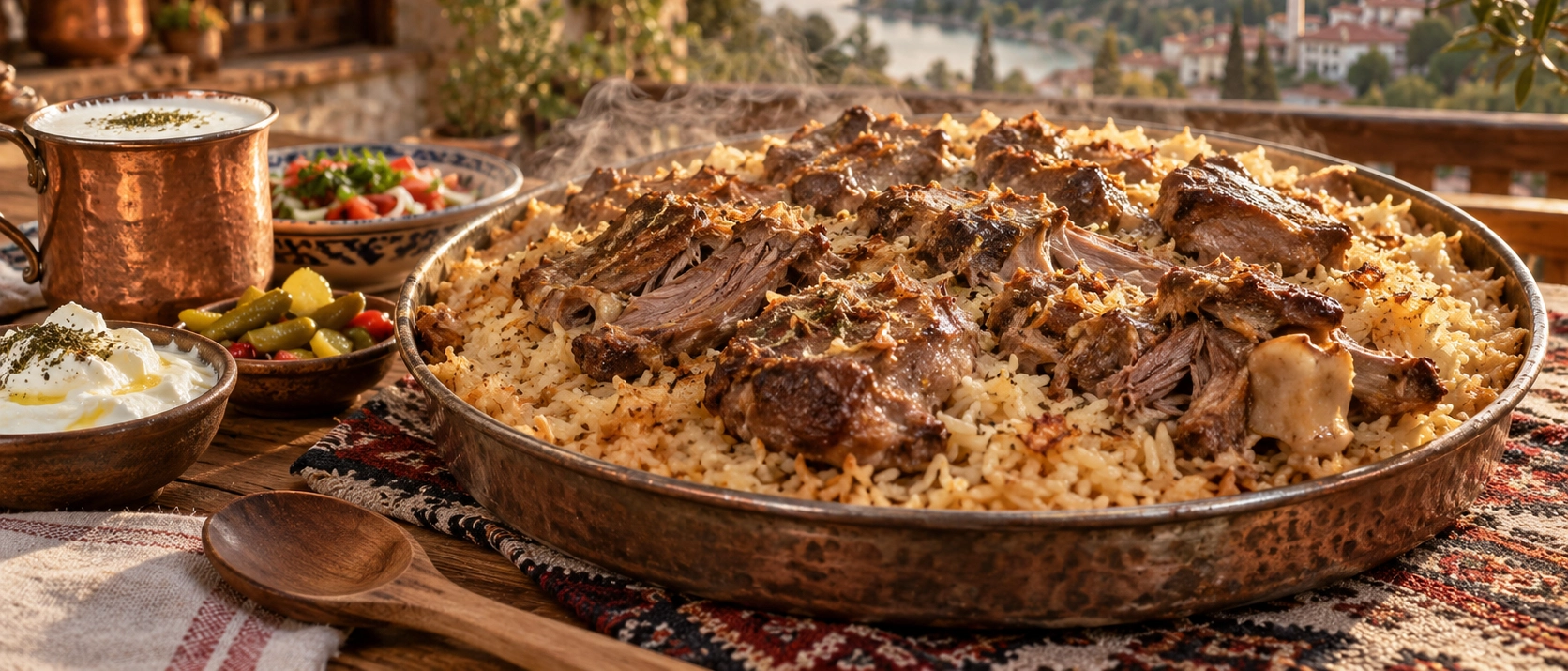
Bilecik Kapaması is one of the characteristic main dishes of Bilecik Province, bringing together rice, tender meat, meat broth and butter in a covered oven-baking method designed to preserve moisture and flavour.
The preparation may use beef, lamb or chicken. The meat is first prepared and simmered until tender, while the resulting broth is reserved and later used to cook the rice.
Rice and meat therefore pass through separate preparation stages before meeting in the baking tray. The rice is spread evenly across the base, the tender meat is arranged over it, and broth, butter, salt and optional spices are added.
The tray is then tightly covered before being placed in the oven. This enclosed cooking environment allows steam to remain inside, helping the rice cook evenly while protecting the meat from drying out.
Bilecik Kapaması received Turkish geographical-indication registration in 2025, formally recognising its relationship with Bilecik's culinary heritage, preparation technique and traditions of communal dining.
Served both at ordinary meals and at weddings, holidays, festivals and gatherings, Bilecik Kapama is much more than rice topped with meat. It represents a regional way of transforming a few straightforward ingredients into a generous dish intended to be shared.
Bilecik Kapaması became a registered Turkish geographical indication in December 2025.
The broth produced while preparing the meat becomes one of the principal flavour sources for the rice.
The baking vessel is covered tightly so steam remains inside while the rice and meat finish cooking.
Kapama appears on family tables as well as at weddings, holidays, festivals and guest gatherings.
Essential information about one of Bilecik Province's protected traditional main dishes.
Bilecik Province, northwestern Türkiye.
Open Bilecik on Google MapsOven-baked rice with tender beef, lamb or chicken and meat broth.
Bilecik Kapaması – geographical-indication registration no. 1797.
Rice and meat are combined in a covered tray and finished in the oven with steam retained inside.
A shared rice-and-meat dish shaped by broth, careful cooking and Bilecik's tradition of hospitality.
Bilecik Kapaması belongs to the broad family of Anatolian dishes in which meat, grain, broth and slow or enclosed cooking come together to create a substantial meal for several people.
What distinguishes the protected Bilecik preparation is the sequence. The meat and rice do not simply begin cooking together. The meat is first browned and simmered until tender, producing a flavoursome broth.
The rice is separately cleaned, washed and soaked before being arranged in an oven tray. The cooked meat is distributed over it and the reserved broth returns to the dish as the liquid that cooks and flavours the rice.
Covering the baking vessel is another important part of the method. Trapped steam helps soften the rice while protecting the already tender meat from losing too much moisture.
In Bilecik, kapama has long belonged both to everyday cooking and to communal occasions. It may be prepared for weddings, religious holidays, festivals, family gatherings and the welcoming of guests.
This combination of cooking technique, local reputation and social tradition was formally recognised when Bilecik Kapaması received geographical-indication registration in 2025.
Bilecik Kapaması is a traditional main dish made by combining rice with tender beef, lamb or chicken and then finishing the ingredients together in the oven with broth, butter, oil, salt and optional spices.
The word kapama is associated with covered cooking. In this regional preparation, the baking vessel is tightly closed during the final oven stage, creating a moist environment in which the rice can absorb the cooking liquid.
The result combines separate grains of rice with tender pieces of meat and the concentrated savoury flavour of the broth produced during the meat-cooking stage.
Rice forms the substantial base of the dish and absorbs the broth during oven cooking.
The protected preparation allows chopped or bone-in beef or lamb as well as chicken.
The liquid produced while simmering the meat is reserved and used to flavour the rice.
Butter adds richness and rounds out the straightforward meat-and-rice flavour profile.
The tray is tightly covered so steam stays inside while the dish finishes cooking.
Salt is essential, while mint, cumin, red pepper flakes and black pepper may be added optionally.
The regional identity of Bilecik Kapama was formally recognised when Bilecik Kapaması received Turkish geographical-indication registration on 5 December 2025.
The registration identifies the characteristic combination of meat, rice, broth, butter, oil and seasoning together with the sequence through which the ingredients are prepared and baked.
The protected specification also connects the reputation of the dish with the experience required to prepare the meat correctly, cook the rice to the desired consistency and manage the covered oven stage.
Because of this recognised link with the province, the registered specification requires the production stages of Bilecik Kapaması to take place within Bilecik Province.
The meat is cooked first, while the rice is separately washed and soaked before both components meet in the baking tray.
The meat broth is preserved and becomes the liquid that gives the rice much of its savoury character.
The tray is sealed during baking so steam helps cook the rice while keeping the meat moist.
Butter is added before baking, giving the rice a fuller aroma and rounded finish.
The dish depends primarily on rice, meat and broth rather than an elaborate spice mixture.
The balance of liquid, rice texture, tender meat and baking time is central to a successful kapama.
Bilecik Kapama demonstrates how relatively few ingredients can produce a deeply savoury result when broth, fat, rice and meat are handled carefully.
Rice provides the base of the finished dish and absorbs the seasoned meat broth in the oven.
Chopped or bone-in beef is one of the meat options recognised by the protected recipe.
Lamb can be used for a richer and characteristically meaty version of the dish.
Chicken is also permitted, with its cooking liquid becoming chicken broth for the rice.
The cooking liquid provides the moisture needed for the rice during oven baking.
Butter provides richness and an aromatic finish.
Liquid oil is used as part of the preparation and helps prevent sticking.
Salt seasons both the rice and meat while allowing their natural flavours to remain prominent.
Mint is an optional aromatic addition in the registered reference preparation.
Optional cumin can add a warm earthy note to the meat and rice.
Pul kırmızıbiber may be used for colour and restrained warmth.
A small amount of black pepper may provide a gently aromatic finish.
The geographical-indication specification provides the following average quantities for a six-person preparation of Bilecik Kapaması.
The protected method depends on a clear sequence: prepare the meat and broth, prepare the rice, assemble both components in a tray, cover the vessel and complete the cooking in the oven.
The protected recipe gives cooks flexibility in the choice of meat while maintaining the same essential cooking principle: the meat is prepared first and its cooking liquid becomes part of the rice.
Beef can provide a deep savoury broth and substantial pieces of tender meat.
Lamb produces a richer flavour and pairs naturally with buttered rice.
Chicken creates a lighter variation while still following the traditional broth-and-rice technique.
The registered specification allows chopped and/or bone-in meat depending on the preparation.
The first cooking stage should soften the meat before it enters the oven.
The cooking liquid is not discarded; it becomes one of the most important flavour components of the rice.
Rice is not simply a side dish in Bilecik Kapama. It is the foundation of the entire preparation, absorbing meat broth, butter and seasoning while cooking beneath the meat in the covered tray.
The registered reference recipe specifies 400 g of rice for a six-person preparation.
The rice is cleaned and washed before soaking.
Soaking prepares the grains before they enter the baking tray.
An even layer encourages consistent absorption of broth across the tray.
The rice takes on much of the flavour developed during the meat-cooking stage.
Correct liquid and covered cooking help produce grains that remain pleasantly separated rather than becoming overly soft.
One of the most important details in Bilecik Kapama is the reuse of the liquid in which the meat has been cooked.
Instead of preparing rice with plain water alone, the reserved broth carries meat flavour directly into the grains during the final oven stage.
The broth develops naturally as beef, lamb or chicken simmers until tender.
The meat is separated while the cooking liquid is kept for later use.
As the rice absorbs liquid in the oven, it also absorbs the savoury character of the meat.
Broth and butter combine to give the finished rice its characteristic richness.
The amount of liquid must be sufficient to cook the grains without leaving the final dish watery.
The registered guidance allows more hot water to be added if the rice requires additional cooking.
The covered baking stage is one of the defining technical features of the dish. Once the rice, meat, broth and butter have been assembled, the tray is sealed before entering the oven.
A tight cover keeps moisture within the cooking vessel.
The moist environment helps prevent already-cooked meat from becoming dry.
Steam and hot broth work together to soften the grains throughout the tray.
The technique supports the desired rice texture when liquid and timing are correctly controlled.
Keeping the vessel closed retains much of the aroma generated by meat, butter and broth.
The official preparation places the covered tray into a preheated oven at around 200°C.
Fat performs both practical and flavour-building roles in Bilecik Kapama. The registered formulation combines butter with sunflower oil and/or olive oil.
The official six-person reference quantity includes 50 g of butter.
Sunflower oil, olive oil or a combination of the two may be used.
Fat on the base of the baking vessel helps reduce sticking.
Butter melts into the broth and rice during oven cooking.
Fat gives the savoury cooking liquid a smoother and more complete mouthfeel.
The richness complements the meat without requiring an elaborate sauce.
Bilecik Kapama does not depend on a large collection of spices. Its central flavours come from meat, broth, rice and butter, with seasoning used to support rather than dominate them.
Salt is the essential seasoning in the protected reference preparation.
Optional mint can introduce a familiar herbal Anatolian aroma.
Optional cumin can deepen the savoury and earthy character of the meat.
Pul kırmızıbiber may provide restrained warmth and colour.
A small quantity of black pepper gives a gently aromatic finish.
The protected recipe leaves most spices optional so the central meat-and-rice character remains clear.
Bilecik Kapama is built around savoury depth rather than strong spice. The rice carries the flavour of the meat broth while butter adds richness and the tender meat gives each serving a substantial centrepiece.
Meat broth gives the rice considerably more character than plain-water cooking.
Melted butter adds richness without turning the dish into a heavy sauce-based preparation.
The flavour of beef, lamb or chicken remains central to the eating experience.
Optional spices support the dish while allowing the broth and meat to remain dominant.
The broth-soaked grains create a familiar and satisfying pilaf-like foundation.
Covered baking brings meat, broth, rice and butter together into a unified aroma.
The meat has already been cooked until soft before entering the oven.
Correct soaking, liquid control and covered baking help the rice remain pleasantly distinct.
The rice should absorb the broth rather than remain surrounded by excess liquid.
Steam inside the covered vessel helps retain moisture in both rice and meat.
The rice should be fully cooked while retaining enough structure to avoid becoming mushy.
Even distribution of meat across the tray helps every serving include both rice and meat.
Meat and rice appear together in many cuisines, but Bilecik Kapama is defined by a particular preparation sequence and covered oven technique.
The meat is cooked before being arranged over rice for the final stage.
The liquid produced while cooking the meat becomes an integral part of the rice.
The registered process includes soaking the cleaned rice for approximately 30 minutes.
The components are united in an oven-suitable vessel rather than completed only on the stovetop.
Steam retention is an important element of the registered cooking method.
The Bilecik name, preparation and reputation are formally recognised through geographical-indication registration.
Kapama occupies a place on the everyday table, but its generous tray-style preparation also makes it particularly well suited to occasions when many people gather together.
The combination of rice and meat makes kapama a complete and satisfying shared main course.
The protected description records the dish among foods associated with wedding gatherings.
Bayram meals provide another traditional setting for generous shared dishes such as kapama.
Local celebrations help present regional dishes to new generations and visitors.
Kapama can be prepared when guests are welcomed to the table.
A large baking tray naturally encourages a style of dining centred on sharing.
The cultural importance of kapama comes not only from how it tastes but also from how it is served. A large tray containing both rice and meat provides a practical way to feed families and groups from a single central preparation.
This makes the dish naturally suited to hospitality. The same qualities that make it useful for a family dinner — generous portions, warm service and familiar ingredients — also make it appropriate for guests and important gatherings.
The tray format produces multiple portions from one coordinated preparation.
Rice and meat together create a dish substantial enough to sit at the centre of a meal.
Hot service reinforces the aromas of butter, broth and freshly baked rice.
Yoghurt, ayran and pickles can complete the table without competing with the main dish.
Its shared format makes kapama appropriate for weddings, holidays and festival meals.
Its continued preparation keeps a recognisable Bilecik cooking tradition active rather than simply remembered.
The geographical-indication guidance recommends serving and eating Bilecik Kapaması while hot.
Warm service keeps the rice soft, the meat tender and the butter-and-broth aroma vivid.
The cool yoghurt drink can provide a refreshing contrast to the warm savoury dish.
Plain yoghurt may be served alongside the rice and meat.
Turşu provides acidity and crunch beside the rich broth-flavoured rice.
Parsley, tomato, onion or red kapya pepper may be used decoratively when serving.
Mint and red pepper flakes may also appear as finishing garnishes.
Because kapama already combines meat, rice, butter and broth, accompaniments can remain simple and refreshing.
A classic yoghurt drink offers freshness alongside the savoury rice.
Cool yoghurt provides gentle acidity without overwhelming the meat.
Pickled vegetables introduce acidity and texture between rich mouthfuls.
A straightforward tomato, cucumber and herb salad can add freshness to the table.
Onion may be offered as a simple garnish or accompaniment.
Continue the meal with regional products such as Pazaryeri halva or Osmaneli quince-based sweets.
Bilecik Kapaması is a regional speciality rather than a dish that travellers should expect to find on every menu every day. Traditional restaurants, regional food events and places specialising in Bilecik cuisine are natural places to ask.
Using the full Turkish name helps distinguish the protected Bilecik preparation from other dishes called kapama.
Restaurants focusing on Bilecik cooking are more likely to recognise the traditional preparation.
The protected preparation may use beef, lamb or chicken, so versions can differ noticeably.
The traditional method uses the meat's cooking liquid to flavour the rice.
Festivals and gastronomy events can provide opportunities to encounter regional food traditions.
Guides and hotel teams may know which restaurants are currently preparing traditional Bilecik dishes.
Kapama is designed to be enjoyed warm, when the broth and butter aromas remain at their strongest.
Look for tender grains that have absorbed broth without becoming excessively soft or watery.
A lamb version can taste quite different from beef or chicken while still following the protected method.
The yoghurt drink provides a cool and refreshing contrast.
Turşu gives the meal extra acidity and crunch.
A traditional version should emphasise tender meat, broth-flavoured rice and covered oven cooking.
Continue with quail kebab, oven kebab, ekşili kesme soup, boza and local sweets.
Bilecik's gastronomy is easy to combine with Ottoman heritage, Söğüt and the province's countryside.
Photograph the freshly baked rice with tender meat distributed across the surface.
Show individual grains glistening lightly with broth and butter.
A close view of the cooked meat helps communicate the dish's hearty character.
Capture the reserved meat broth being added to the rice before the tray is covered.
Photograph the preparation immediately before it enters the oven to explain the kapama technique visually.
Pair the finished dish with ayran, yoghurt, pickles and simple tableware for a regional dining scene.
Bilecik's culinary landscape brings together meat dishes, soups, handmade dough foods, fermented drinks, sweets, orchard fruits and locally grown agricultural products.
Kapama fits naturally into this wider food culture because it represents one of the province's most direct combinations of meat, grain, broth and shared-table cooking.
A protected regional meat dish based on slow oven cooking and broth.
Another geographically indicated Bilecik speciality centred on meat and oven preparation.
A protected lentil-and-noodle soup distinguished by sour plum and cornelian cherry.
A distinctive chickpea-filled dough dish belonging to Bilecik's home-cooking traditions.
A traditional fermented grain drink associated with the Pazaryeri district.
Pomegranate and quince traditions reveal another side of the province's agricultural identity.
Discover another protected Bilecik meat speciality shaped by slow oven cooking and rich broth.
Continue with a geographically indicated regional dish prepared with quail and vegetables.
Taste Bilecik's distinctive lentil-and-noodle soup soured with plum and cornelian cherry.
Explore the unusual agricultural heritage that has made Pazaryeri an important hop-growing area.
Discover a traditional fermented grain drink closely connected with Bilecik's Pazaryeri district.
Continue your regional food journey with one of Pazaryeri's traditional sweets.
Explore one of the characteristic agricultural products of southern Bilecik Province.
Finish with a fruit-based speciality inspired by Osmaneli's quince-growing tradition.
Explore the archaeological and cultural history of the province before or after discovering its cuisine.
Visit one of Bilecik's important historical landmarks as part of a city-centre itinerary.
Add a peaceful countryside and waterside stop to your gastronomy journey.
Combine regional food culture with an important historical stop in Bozüyük.
Continue toward Söğüt and the landscapes associated with the formative period of Ottoman history.
Ask us to combine Bilecik cuisine, Ottoman heritage, villages and countryside into a private itinerary.
Bilecik Kapaması is a traditional Bilecik main dish combining rice with beef, lamb or chicken, broth, butter, oil, salt and optional spices before being finished in a covered baking vessel.
It is associated specifically with Bilecik Province in northwestern Türkiye.
Yes. It received Turkish geographical-indication registration on 5 December 2025.
The registration number is 1797.
Bilecik Kapaması is registered as a mahreç işareti.
The registration holder is the Bilecik Chamber of Commerce and Industry.
The protected preparation allows beef, lamb or chicken. The meat may be chopped and/or bone-in depending on the version.
The registered six-person reference preparation specifies approximately 600 g of meat.
The official six-person ingredient guide uses 400 g of rice.
The liquid produced when the meat is cooked is reserved and then used to cook and flavour the rice during the final oven stage.
Yes. The registered method calls for cleaned and washed rice to remain in water for approximately 30 minutes before being drained.
The covered vessel traps steam, helping the rice cook while keeping the meat tender and reducing moisture loss.
The geographical-indication method places the covered dish in a preheated oven at approximately 200°C.
The registered method gives an average oven time of approximately 30 minutes, although additional time may be required if the rice has not fully cooked.
Salt is included in the reference recipe. Mint, cumin, red pepper flakes and black pepper may also be used optionally.
It does not need to be strongly spicy. The principal flavours come from meat, broth, rice and butter, while spices are optional supporting elements.
It is recommended to be served hot, with optional accompaniments such as ayran, yoghurt or pickles.
Optional garnishes include parsley, tomato, onion, red kapya pepper, mint and red pepper flakes.
It can appear at ordinary meals as well as weddings, religious holidays, festivals and occasions when guests are welcomed.
An even layer allows broth and heat to reach the grains consistently and helps produce balanced portions across the tray.
The registered method allows a little more hot water to be added and the oven cooking time to be extended if necessary.
Yoghurt is not one of the core ingredients of the protected kapama itself, but it may be served alongside the finished dish.
Continue with Bilecik Oven Kebab, Bilecik Quail Kebab, Bilecik Ekşili Kesme Soup, Pazaryeri Boza and Pazaryeri Halva.
Yes. A Bilecik food journey can combine regional dishes with traditional products, Ottoman heritage, village landscapes and countryside experiences.
Bilecik combines protected regional dishes, soups, handmade dough foods, fermented drinks, sweets and fruit-growing traditions with an important historical and rural landscape.
The strongest visual sequence should explain the preparation as well as the finished dish: tender meat produces the broth, rice is prepared separately, both meet in a tray, and the covered oven stage brings everything together.
Show a wide traditional baking tray filled with golden broth-cooked rice and generous pieces of meat.
Capture tender meat cooking in a pot before it is separated from its broth.
Show washed rice draining after its soaking stage to introduce the preparation sequence.
Photograph the cooked meat being arranged evenly over the rice.
Capture hot meat broth pouring over the rice immediately before the tray is covered.
Finish with steaming kapama beside ayran, yoghurt or pickles on a simple Bilecik-style table.
Combine Bilecik's traditional cuisine with Ottoman heritage, village culture, local agricultural products and peaceful countryside on a private journey designed around your interests.
Custom-designed private journeys with flexible timing, private transportation and opportunities to explore regional food traditions, historical sites, agricultural landscapes and lesser-known corners of Bilecik Province.
Explore Bilecik's protected dishes, traditional restaurants, agricultural products and culinary heritage on a flexible private food-focused route.
Request This Tour
Combine Bilecik city, Söğüt, Bozüyük, Pazaryeri, Osmaneli, İnhisar and the surrounding countryside on a private route linking history, local cuisine, landscapes and village culture.
Request This Tour