Private Söğüt Ottoman Heritage Experience
Ask us about a tailor-made route combining Hamidiye İdadisi, Hamidiye Mosque, Çelebi Mehmet Mosque, Söğüt Museum, Kuyulu Mescit and Ertuğrul Gazi Tomb.
Request a Custom Tour





Hamidiye İdadisi stands in Söğüt, Bilecik Province, one of the most symbolically important towns in Ottoman dynastic memory. Built during the reign of Sultan Abdülhamid II, the school formed part of a wider late Ottoman effort to connect modern state institutions with Söğüt’s identity as the ancestral landscape of the dynasty.
Official cultural sources date the building to 1905. Academic research based on Ottoman documentation records that the school was nearing completion in the summer of that year and was formally opened under the name Hamidiye İdadisi on 29 October 1905. The building therefore belongs to the final years of Abdülhamid II’s reign and to a period when education was one of the empire’s most visible areas of modernization.
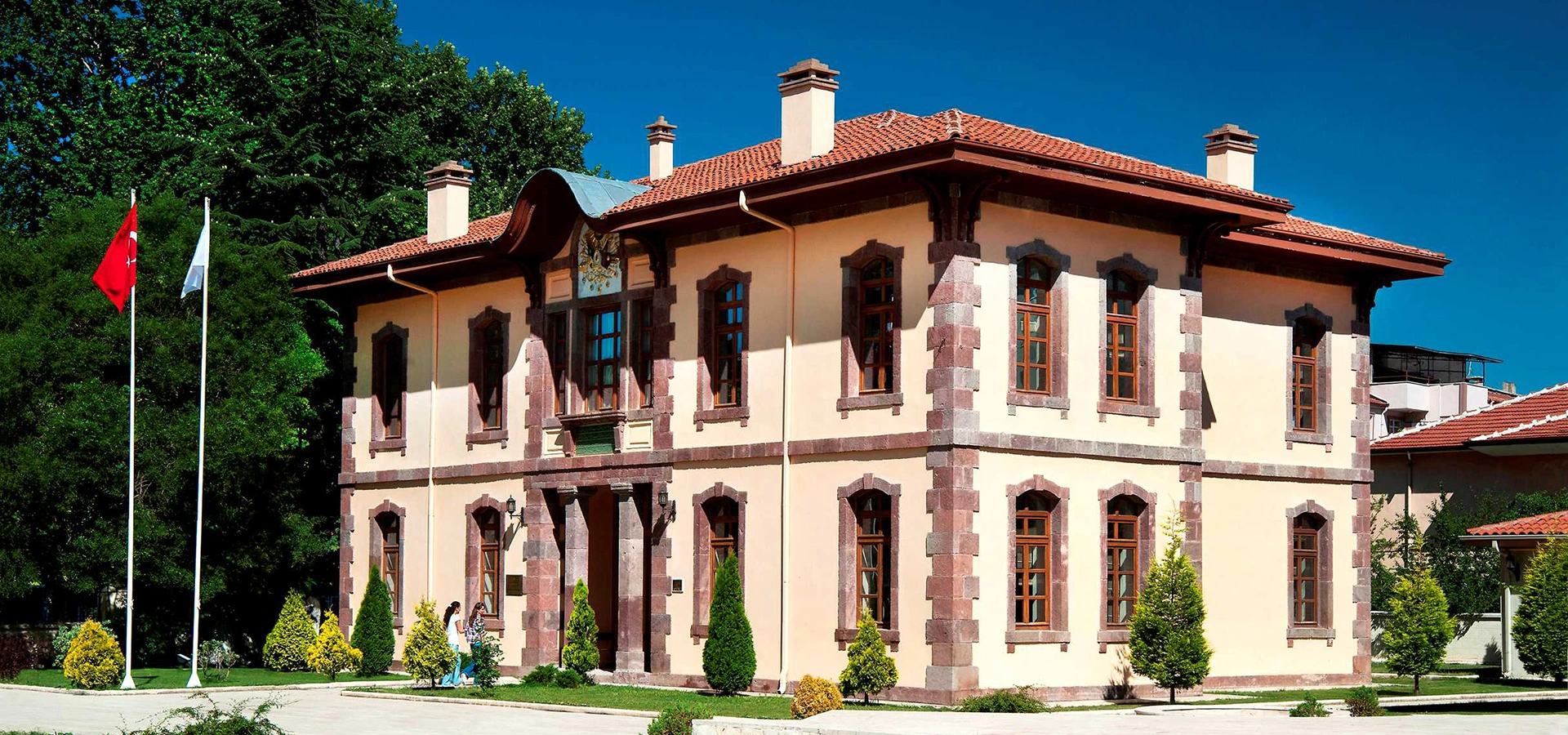
Architecturally, Hamidiye İdadisi is a two-storey masonry building constructed from red cut stone. Its exterior has an inverse-T form, the entrance is on the south side, the windows use depressed arches and the lower and upper storeys repeat essentially the same plan. Historic documentation also records timber interior elements and wooden ceilings decorated with geometric patterns.
The most striking ceremonial detail is above the entrance: a marble Ottoman imperial coat of arms, which immediately identifies the school as an official institution of the late imperial period. A historic inscription and the building’s carefully composed façade make Hamidiye İdadisi one of Söğüt’s clearest examples of how education, architecture and dynastic symbolism were brought together.
Today the building serves as Söğüt İlçe Halk Kütüphanesi — Söğüt District Public Library. It was restored with Ministry support in 2008 and, after a later restoration campaign, the library was formally reopened in March 2024. For the strongest historical context, combine the school with nearby Hamidiye Mosque, Çelebi Mehmet Mosque, Söğüt Ertuğrul Gazi Museum and Ertuğrul Gazi Tomb.
Sultan Abdülhamid II’s school opened as Hamidiye İdadisi in the final years of the Ottoman Empire.
The warm masonry visually links the school with nearby Hamidiye Mosque and the wider imperial precinct.
A marble Ottoman coat of arms crowns the entrance and gives the façade its strongest ceremonial accent.
The restored school remains in civic use today as Söğüt District Public Library.
Essential information about Sultan Abdülhamid II’s historic school and present-day library in Söğüt.
Kayhan Mahallesi, Ertuğrul Gazi Caddesi, central Söğüt, Bilecik.
Open on Google MapsLate Ottoman idadi, broadly comparable to a secondary or high-school institution.
Built and opened in 1905; formally named Hamidiye İdadisi on 29 October 1905.
Sultan Abdülhamid II.
Two-storey masonry construction with distinctive red cut-stone exterior walls.
Inverse-T exterior form with largely matching lower- and upper-floor plans.
Main entrance on the south façade, emphasized by historic stone and marble details.
A marble Ottoman coat of arms is positioned above the entrance.
Söğüt İlçe Halk Kütüphanesi — Söğüt District Public Library.
Restored in 2008; the library reopened after a further restoration on 27 March 2024.
This is not simply an attractive old school. It is a carefully placed imperial institution that links modern education with Söğüt’s dynastic symbolism.
By the late nineteenth century, education had become one of the Ottoman state’s most important modernization projects. New schools were opened across the empire and new levels of education were organized to prepare students for administration, professional life and further study.
At the same time, Sultan Abdülhamid II gave Söğüt exceptional symbolic attention. The town was celebrated as the homeland associated with Ertuğrul Gazi and the beginnings of the Ottoman dynasty. Restoring older monuments and adding new state buildings allowed the government to connect the empire’s medieval foundation narrative with the institutions of a modernizing state.
Hamidiye İdadisi sits directly at that intersection. It represented state-sponsored education, late Ottoman public architecture and dynastic commemoration within the same monument. Its presence beside Hamidiye Mosque made that message even stronger.
The result is one of the most historically useful buildings in Söğüt for understanding Abdülhamid II’s period. The school shows that the government did not treat the town only as a place of tombs and memories; it also placed a modern educational institution in the landscape of Ottoman origins.
The Ottoman term idadi changed meaning over time, but by the later nineteenth century it became associated with a level of modern secondary education. Idadis formed part of the broader educational reforms that accelerated after the Tanzimat period.
These schools differed from traditional religious education institutions. They belonged to a new state system in which curricula, administration and educational levels were increasingly organized through the central government. In broad visitor-friendly terms, an idadi can be understood as a late Ottoman secondary or high-school institution, although the exact equivalence with modern schooling should not be pushed too literally.
Academic research on Ottoman idadis emphasizes that their buildings did not follow one rigid architectural template. Across provinces and districts, school architecture combined Western-influenced public-building forms, classical elements and local materials. Hamidiye İdadisi is an excellent provincial example of that late Ottoman eclectic approach.
Sultan Abdülhamid II ruled from 1876 to 1909. His reign is closely associated with the expansion of schools, communications, transport networks and other state institutions across the empire. Education was not only a practical investment; it was also a way to strengthen administrative capacity and reinforce loyalty to the state.
Idadis were part of this broader educational landscape. They trained students in a setting shaped by new curricula and a more centralized school system, and their substantial public buildings made the presence of the state visible far beyond Istanbul.
Söğüt gave this educational policy an additional historical meaning. Building a modern school in the town associated with Ertuğrul Gazi allowed Abdülhamid II’s government to connect the future of Ottoman education with the remembered birthplace of the dynasty.
That is why Hamidiye İdadisi should be read together with Hamidiye Mosque. The mosque represented religious and imperial patronage; the school represented public education. Together they created a powerful late Ottoman statement in the heart of Söğüt.
Official cultural documentation dates Hamidiye İdadisi to 1905 and attributes its construction to Sultan Abdülhamid II. The school is consistently associated with the same imperial development program as nearby Hamidiye Mosque.
Academic research using Ottoman-era documentation gives a more precise sequence. A record dated 22 June 1905 indicated that the idadi in Söğüt was expected to be completed later that summer. The project was framed in the special symbolic context of Ertuğrul Gazi and Söğüt.
The school was then formally opened under the name Hamidiye İdadisi on 29 October 1905 by imperial authorization. Its inscription also identifies the year H.1323, corresponding to the same 1905 construction campaign.
This gives the building an unusually well-defined place in Söğüt’s late Ottoman history: it was not an older structure later converted into a school, but a purpose-built educational institution created at the beginning of the twentieth century.
Hamidiye İdadisi is a two-storey masonry building with a hipped roof and a carefully ordered exterior. Its architecture belongs to the wider family of late Ottoman public buildings in which symmetry, strong entrances and regular window rhythms communicated institutional authority.
The building’s most distinctive visual feature is its red cut-stone masonry. The same warm material appears in nearby Hamidiye Mosque, helping the two monuments read as related parts of the same imperial landscape.
Cultural inventory documentation describes the building’s exterior outline as an inverse-T plan. The south-facing entrance leads into a structure whose lower and upper floors repeat broadly the same organization.
Inside, wood is an important material. Historic descriptions identify timber elements in the interior and wooden room ceilings decorated with geometric patterns. This combination of strong stone exteriors and warmer timber interiors is part of the building’s character.
The school rises over two principal floors beneath a hipped roof.
Carefully worked red masonry gives the building its unmistakable visual identity.
Official heritage documentation describes the building’s exterior outline as a reversed or inverse T.
The principal entrance is positioned on the south side of the building.
The windows are recorded with low, depressed arch forms characteristic of the façade.
Wooden interior elements and decorated ceilings soften the monumental stone exterior.
The cultural inventory describes Hamidiye İdadisi as having the same general plan on both main floors. This repeated arrangement reflects the practical needs of a school building while preserving a disciplined exterior composition.
Historic documentation records three rooms on the eastern side and two on the western side on each floor. The result is not a palace-like sequence of ceremonial interiors, but a functional institutional plan designed around teaching and administration.
The building’s inverse-T exterior outline is especially useful when viewing it from outside. Instead of reading the façade as a flat rectangle, look for the way the central and projecting sections create depth, rhythm and a clear hierarchy around the entrance.
The red cut stone is the feature most visitors notice first. Its warm tone distinguishes the school from many pale-stone Ottoman monuments and gives it a strong visual relationship with Hamidiye Mosque.
Because the blocks are carefully cut and laid in regular courses, the masonry communicates the order and discipline expected of a state institution. The building is decorative without depending on heavy surface ornament.
The windows are described in heritage documentation as basık kemerli — depressed or low-arched. Their repeated rhythm across both storeys helps unify the façades and creates a strong horizontal order beneath the hipped roof.
For photography, late-afternoon side light can reveal the stone joints and the depth of the window surrounds particularly well. The red masonry also becomes visually richer when compared directly with the neighbouring late Ottoman buildings.
Red stone gives the school a distinctive appearance that changes noticeably with sunlight.
Precisely laid stone blocks reinforce the building’s disciplined public-institution character.
Repeated depressed-arch windows create continuity across the two floors.
The red stone visually ties the school to Hamidiye Mosque and the surrounding Abdülhamid-era setting.
Above the principal entrance, Hamidiye İdadisi preserves one of its most important visual statements: a marble Ottoman imperial coat of arms. It turns the doorway from a simple functional entrance into a ceremonial marker of state patronage.
The coat of arms belongs to the symbolic language of the late Ottoman state. On a school building in Söğüt, it carried an especially strong message: modern public education was being presented under direct imperial authority in the town celebrated as the dynasty’s ancestral home.
The entrance area also preserves a historic inscription panel. Academic research identifies the inscription with Sultan Abdülhamid II and the H.1323 / 1905 construction of the school. The calligraphy is therefore not simply decoration; it is documentary evidence built into the architecture.
Visitors should examine the entrance slowly. The combination of red stone, pale marble, imperial symbolism and inscription is one of the strongest architectural compositions in the building.
Although the exterior is defined by masonry, heritage documentation emphasizes that wood is an important part of the interior construction. This produces a different atmosphere once inside the building.
The room ceilings are recorded as being made of timber and decorated with geometric patterns. These details are easy to overlook if attention remains focused only on the imperial coat of arms outside.
The interiors are also valuable because the building is still in active civic use. Rather than experiencing an empty monument, visitors may encounter a historic Ottoman educational building functioning again as a place of reading, study and public knowledge.
Any interior visit should respect library users. Keep voices low, avoid photographing readers without permission and follow staff guidance regarding areas open to visitors.
Wooden interior elements contrast with the heavy stone exterior shell.
Historic descriptions record wooden room ceilings decorated with geometric forms.
Former school spaces now support the building’s role as a public library.
The building continues to serve education and learning more than a century after its opening.
Hamidiye İdadisi is best understood as part of a broader late Ottoman setting often described as the Hamidiye Külliyesi or Hamidiye complex. The historic grouping includes Hamidiye Mosque and other public buildings associated with the same period of imperial investment in Söğüt.
The most immediate comparison is with Hamidiye Mosque. Both monuments use warm red stone and both were created under Sultan Abdülhamid II. The school and mosque therefore form a powerful architectural pair.
Their functions were different but complementary. The mosque represented religious life and imperial patronage; the idadi represented modern education and the administrative reach of the state. Seen together, they show how Abdülhamid II’s government shaped Söğüt as more than a memorial town.
The wider historic area also includes the building associated with Darüleytam, an institution connected with the care and education of orphans. Together these monuments make the Hamidiye area one of the richest places in Söğüt for understanding late Ottoman public architecture.
After opening in 1905, Hamidiye İdadisi became part of the educational system serving Söğüt and its surrounding region. Its history quickly became entangled with the political and economic difficulties of the empire’s final decade.
By 1915, during the First World War, the school faced the possibility of closure. Historical research records concerns over low enrolment and operating costs and a proposal to redirect students elsewhere.
Local resistance to closure was strongly tied to Söğüt’s symbolic importance. The argument was not only that the town needed a school, but that removing an imperial educational institution from the place associated with Ertuğrul Gazi would carry a deeper dynastic and cultural meaning.
The episode is important because it reveals that Hamidiye İdadisi was never an ordinary provincial building. From the beginning, its educational function and its location in Söğüt were closely connected in the public imagination.
Like many historic school buildings, Hamidiye İdadisi continued to serve changing public needs after the Ottoman period. Its long institutional life is part of the reason the building remains meaningful to Söğüt today.
Modern reporting records that the building served as a Health Vocational High School between 1992 and 2001. This continued the site’s educational role in a new form many decades after the original idadi system had disappeared.
In 2008, the historic building was restored with support from the Ministry of Culture and Tourism and was placed in service as the Söğüt District Public Library. This adaptive reuse allowed the structure to continue serving learning and public access rather than becoming an empty monument.
A later restoration campaign was completed before the library’s formal reopening on 27 March 2024. The event took place during the 60th Library Week program and confirmed the building’s continuing role in Söğüt’s civic life.
Today the building houses Söğüt İlçe Halk Kütüphanesi. The official Bilecik Provincial Directorate of Culture and Tourism lists the library at Kayhan Mahallesi, Ertuğrul Gazi Caddesi, Hamidiye İdadisi No:30/2, Söğüt.
This is an unusually appropriate reuse. A building constructed for education in 1905 still serves reading, study and public access to knowledge more than a century later. The function has changed from formal Ottoman secondary schooling to a modern library, but the intellectual purpose remains remarkably continuous.
Visitors should remember that this is not a conventional museum. Interior access follows the library’s operating arrangements and may vary for public holidays, events, restoration work or administrative reasons.
If seeing the interior is important to your itinerary, confirm current opening information before traveling. The official cultural directorate lists the Söğüt District Public Library telephone as +90 (228) 361 52 53.
Hamidiye İdadisi is one of the most rewarding late Ottoman buildings to photograph in Söğüt because its story can be read directly from the façade: red stone, regular windows, a strong entrance and imperial symbolism.
Begin with a frontal view of the main entrance, keeping enough space above the doorway to include the marble Ottoman coat of arms. Then move to an oblique angle to reveal the building’s inverse-T massing and the depth of the projecting sections.
Side light is particularly effective for the cut-stone surface. Early morning or late afternoon can reveal masonry texture, window arches and façade relief that appear flatter in overhead midday light.
A wider composition that includes Hamidiye Mosque can be especially valuable because it shows the school as part of the broader Abdülhamid-era architectural ensemble rather than as an isolated monument.
Center the south entrance and keep the imperial coat of arms visible above it.
Use an oblique angle to make the inverse-T massing easier to read.
Side lighting reveals the cut masonry and the depth of the window surrounds.
A moderate telephoto view can isolate the marble imperial emblem without distorting the façade.
Include Hamidiye Mosque in wider contextual photographs when possible.
Inside the library, ask before photographing people or working spaces.
Hamidiye İdadisi stands in central Söğüt on Ertuğrul Gazi Caddesi. Its location makes it easy to include in a walking route through the town’s principal Ottoman heritage sites.
The exterior can be appreciated quickly, but anyone interested in architecture should allow enough time to examine the entrance, imperial arms, windows and relationship with the nearby mosque. For a focused visit, 20–30 minutes is usually sufficient for the exterior and, when permitted, a short interior look.
Because the building functions as a public library, interior access follows current library hours and rules. Do not assume that every part of the historic building is open for sightseeing.
Hamidiye İdadisi is protected cultural heritage, but it is also a functioning public library. Good visitor behaviour therefore protects both the historic building and the people using it today.
Remember that readers may be studying in rooms originally designed as classrooms.
Seek permission before photographing readers, staff or occupied interior spaces.
Do not touch the inscription, marble coat of arms, decorated ceilings or historic masonry.
Some rooms may be reserved for library operations rather than sightseeing.
Keep the main doorway and circulation areas clear for library users.
Avoid flash indoors unless staff explicitly confirms that it is acceptable.
Do not move library materials or historic-looking furniture simply to improve a photograph.
Opening arrangements can change for events, maintenance or official holidays.
The building’s position in central Söğüt makes the exterior relatively easy to include in a town itinerary. Visitors can appreciate the main façade, red stone and imperial entrance without needing a long approach walk.
However, historic steps, thresholds, door widths and internal circulation may create difficulties for some visitors with reduced mobility. Restoration work can also alter the practical entrance arrangements over time.
Because the building is a working public library, visitors who need step-free access should confirm the best current entrance and interior accessibility arrangements with library staff before arrival.
Hamidiye İdadisi stands in Söğüt district centre, Bilecik Province. Official cultural information places it on Ertuğrul Gazi Caddesi, in the same historic area as Hamidiye Mosque.
For navigation, search for “Hamidiye İdadisi, Söğüt, Bilecik” or “Söğüt İlçe Halk Kütüphanesi.” The official library address is listed as Kayhan Mahallesi, Ertuğrul Gazi Caddesi, Hamidiye İdadisi No:30/2.
Its central location makes the building easy to combine with other Söğüt heritage sites. Travelers touring the wider province will find private car, taxi or private driver the most flexible options, especially when continuing to Bilecik city or other districts.
Search “Hamidiye İdadisi, Söğüt, Bilecik” or “Söğüt İlçe Halk Kütüphanesi.”
The central location works well for a walking route through Söğüt’s historic core.
Best for combining Söğüt with Bilecik city and other heritage sites across the province.
Useful for short transfers from accommodation or the outer areas of Söğüt.
A comfortable choice for a full-day Ottoman heritage itinerary through Söğüt and Bilecik.
Visit Hamidiye Mosque immediately before or after the school to understand the shared imperial program.
For a quick exterior look, 10–15 minutes may be enough to see the red stone, entrance, Ottoman coat of arms and overall school architecture.
Allow around 20–30 minutes if you want to walk around the building, study the façade carefully and enter the library when visitor access is appropriate.
A half day in Söğüt is ideal for combining Hamidiye İdadisi with Hamidiye Mosque, Çelebi Mehmet Mosque, Söğüt Museum and the Ertuğrul Gazi monuments.
A full day works well if you are continuing into Bilecik city or adding other heritage sites across the province.
Quick exterior view and photographs of the imperial entrance.
Exterior architecture plus a possible library interior visit.
Combine the school with Söğüt’s principal historic monuments.
Add Bilecik city and further Ottoman heritage across the province.
Begin at the south entrance façade. Look first at the overall symmetry and then move your attention upward to the marble Ottoman coat of arms and historic inscription.
Walk around the exterior to understand the inverse-T massing, repeated windows and red cut-stone construction. Corner views make the building’s plan much easier to read than a single frontal view.
If the library is open and visitor access is appropriate, enter quietly and look for the contrast between the heavy stone exterior and the timber interior details, including decorated wooden ceilings where visible.
Afterward, walk to Hamidiye Mosque and compare the material palette of the two monuments. Seeing mosque and school together is essential to understanding Abdülhamid II’s transformation of this part of Söğüt.
Then continue toward Söğüt Ertuğrul Gazi Museum, Ertuğrul Gazi Kuyulu Mescit and Ertuğrul Gazi Tomb to compare late Ottoman commemoration with the town’s much earlier foundation traditions.
Hamidiye İdadisi gains much more meaning when placed within Söğüt’s wider sequence of Ottoman monuments. Several important sites can be combined easily in the same half-day or full-day itinerary.
Compare the school with Abdülhamid II’s red-stone mosque built as part of the same late Ottoman transformation of Söğüt.
See a much older Ottoman religious foundation and compare early dynastic heritage with Abdülhamid-era commemoration.
Add local ethnography and town history to the architectural story of the Hamidiye monuments.
Explore a small monument linked by tradition with the earliest Ottoman settlement memory in Söğüt.
Visit the principal memorial associated with Ertuğrul Gazi and the dynasty’s remembered beginnings.
Continue beyond Söğüt to early Ottoman monuments, museums, historic towns and natural attractions across the province.
Söğüt is most famous for traditions connected with the thirteenth-century world of Ertuğrul Gazi and the beginnings of the Ottoman dynasty. Hamidiye İdadisi, however, belongs to 1905 — more than six centuries later.
That chronological distance is the key to understanding the school. Abdülhamid II’s government was not simply preserving a medieval landscape; it was actively adding modern institutions to a place loaded with dynastic memory.
An idadi was therefore a perfect building type for this message. It represented education, bureaucracy, modernization and the future, while its location in Söğüt connected those ideas to the empire’s remembered beginning.
Hamidiye İdadisi can thus be read as both a school from Ottoman history and a building about Ottoman historical identity. Its architecture shows how the late empire used public institutions to tell a story about continuity between origin, dynasty and modern state.
It is a late Ottoman secondary-school building in Söğüt, commissioned during the reign of Sultan Abdülhamid II and opened in 1905.
It stands in central Söğüt, Bilecik Province, on Ertuğrul Gazi Caddesi in Kayhan Mahallesi.
Official heritage sources attribute the building to Sultan Abdülhamid II.
The building dates to 1905.
Academic research based on Ottoman documentation records its formal opening under the Hamidiye İdadisi name on 29 October 1905.
In the late Ottoman educational system, an idadi was a form of modern secondary education, broadly comparable to a secondary or high-school level institution.
No. Although some tourism databases categorize it loosely as a medrese, historically it was a state idadi school, part of the modern Ottoman educational system.
The building is constructed in red cut stone with important timber elements in the interior.
It has two main storeys beneath a hipped roof.
Official heritage documentation describes its exterior as an inverse-T plan.
Heritage records state that the lower and upper floor plans are essentially the same.
The principal entrance is on the south side of the building.
A marble Ottoman imperial coat of arms forms the most prominent decorative feature above the doorway.
Yes. A historic inscription associated with Sultan Abdülhamid II and the H.1323 / 1905 construction is documented above the entrance area.
Heritage documentation describes the windows as depressed or low-arched.
Yes. Historic descriptions note timber interiors and wooden ceilings decorated with geometric forms.
The school and Hamidiye Mosque were built under Abdülhamid II and form part of the same late Ottoman architectural setting in Söğüt.
The term is used for the historic grouping of Hamidiye İdadisi, Hamidiye Mosque and associated late Ottoman public buildings in the same area.
Yes. Historical research records that the school faced possible closure in 1915 during the difficult conditions of the First World War.
Modern reporting states that it served as a Health Vocational High School from 1992 to 2001.
A major restoration was completed with Ministry support in 2008. The public library later reopened after another restoration on 27 March 2024.
It serves as Söğüt İlçe Halk Kütüphanesi — Söğüt District Public Library.
Interior access follows current library hours and staff guidance. It is a working public institution rather than a conventional museum.
The building functions as a public library rather than a ticketed museum. Visitors should follow any current local access rules.
Allow around 20–30 minutes for the exterior, architectural details and a possible interior visit.
Yes, especially for travelers interested in Abdülhamid II, Ottoman education, late Ottoman architecture and the history of Söğüt.
Continue to Hamidiye Mosque, Çelebi Mehmet Mosque, Söğüt Ertuğrul Gazi Museum and Ertuğrul Gazi Tomb.
Search for “Hamidiye İdadisi, Söğüt, Bilecik” or “Söğüt İlçe Halk Kütüphanesi.”
The building remains an active place of reading, study and public service.
Historic architecture does not change the quiet atmosphere expected inside a library.
Do not make identifiable photographs of readers or staff without permission.
Never touch, lean on or place objects against the marble coat of arms or inscription area.
Avoid touching historic ceilings, doors, trim or other timber surfaces.
Do not block the south doorway or circulation routes while taking photographs.
Current operational instructions always take priority over general sightseeing advice.
Appreciate the building not only as a monument but as a public institution still serving Söğüt.
Combine Hamidiye İdadisi with Söğüt’s dynastic monuments and Bilecik’s early Ottoman heritage through a private itinerary designed around your interests and travel pace.
Explore the places where early Ottoman memory and Abdülhamid II’s late imperial vision meet in the same historic town.
Ask us about a tailor-made route combining Hamidiye İdadisi, Hamidiye Mosque, Çelebi Mehmet Mosque, Söğüt Museum, Kuyulu Mescit and Ertuğrul Gazi Tomb.
Request a Custom Tour
Discover early Ottoman monuments, Söğüt, museums, historic towns, War of Independence landscapes and natural attractions throughout Bilecik Province.
View Bilecik GuideConnect the 1905 school with monuments that preserve both Söğüt’s early Ottoman heritage and its late imperial reinterpretation.
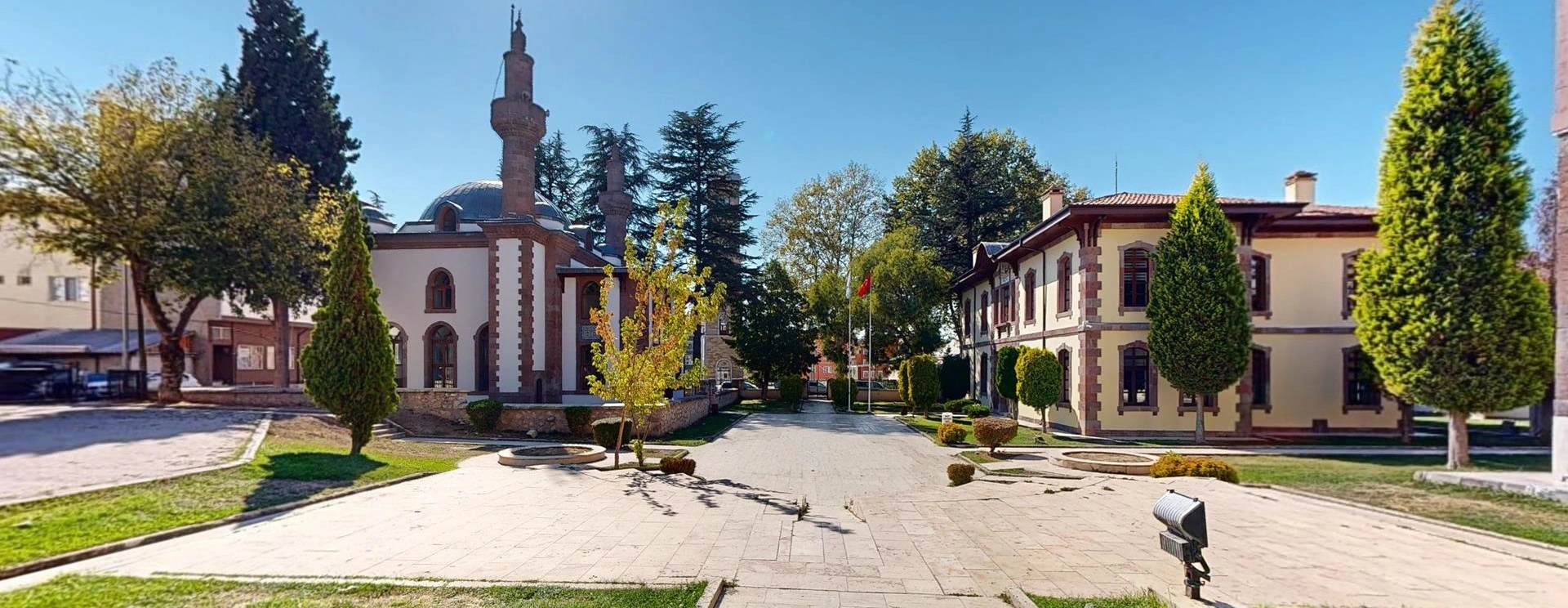
See the twin-minaret red-stone mosque built under Sultan Abdülhamid II and understand its direct relationship with the nearby school.
Explore Hamidiye Mosque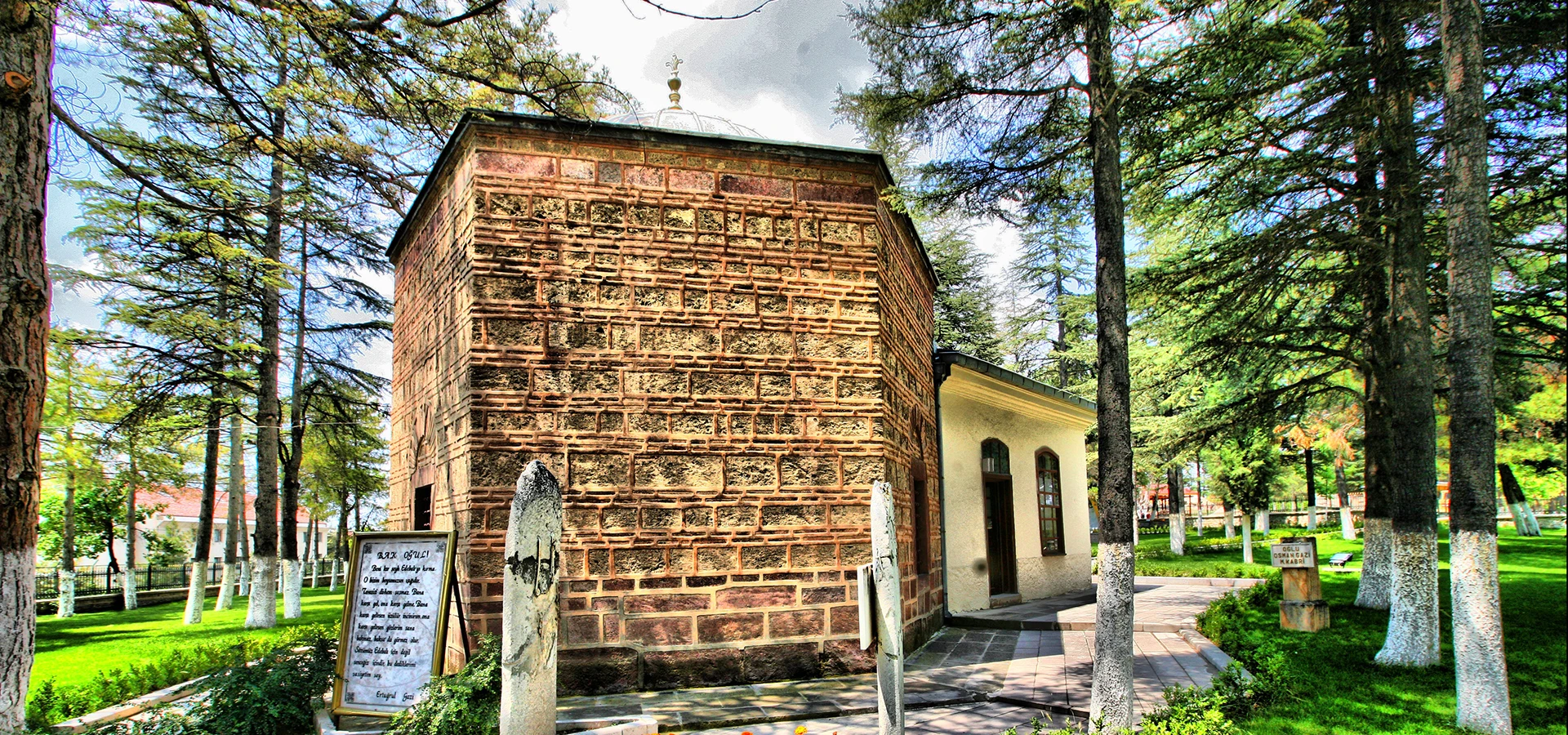
Continue to Söğüt’s principal memorial monument associated with Ertuğrul Gazi and the remembered origins of the Ottoman dynasty.
Explore Ertuğrul Gazi Tomb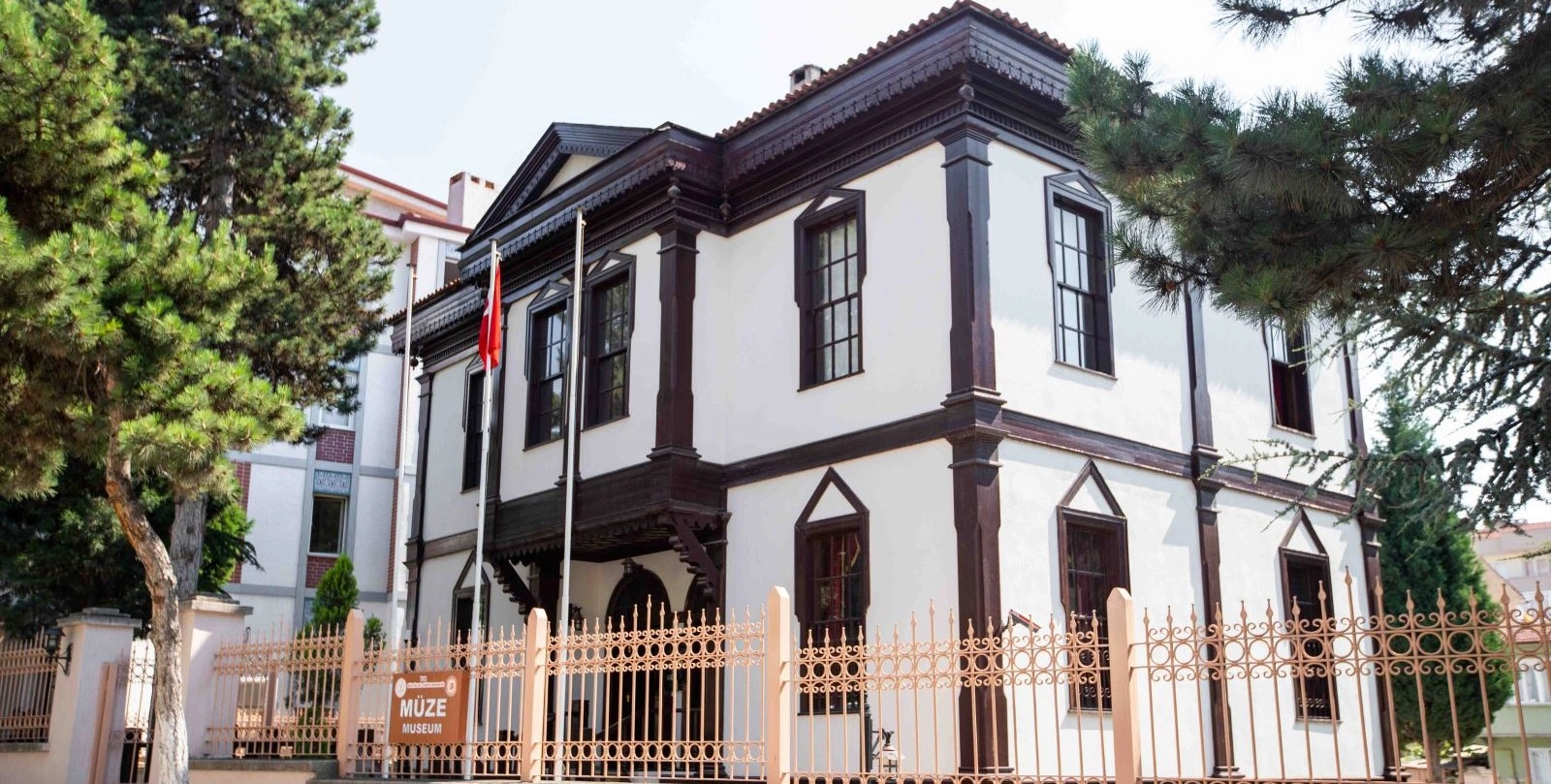
Explore ethnographic collections and the local identity of the town at the heart of the Ertuğrul Gazi story.
Explore Söğüt Museum