Private Bilecik Gastronomy Discovery
Explore Bilecik's regional pastries, savoury dishes, traditional restaurants, agricultural products and culinary heritage on a flexible private food-focused route.
Request This Tour





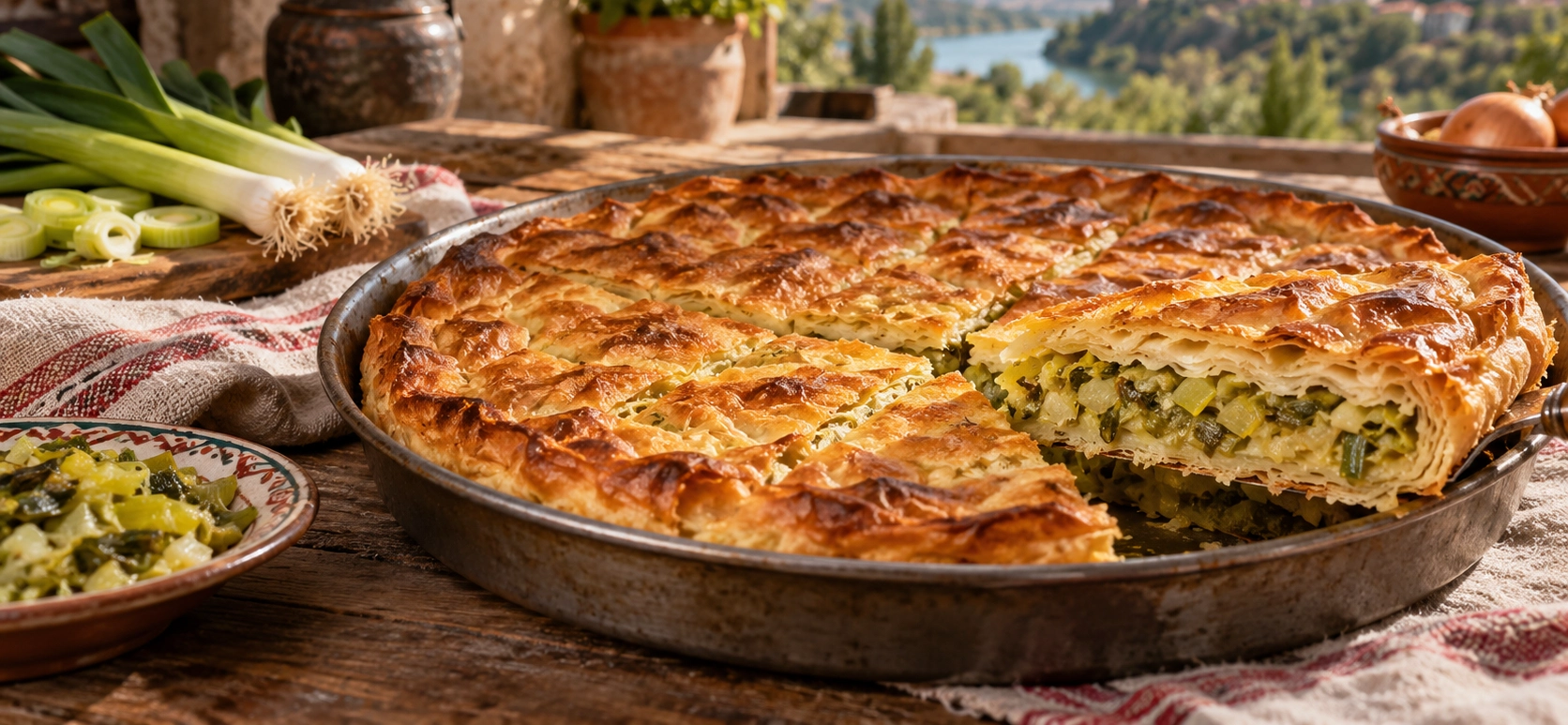
Pırasalı Börek is one of the traditional pastry dishes documented in Bilecik Province, where handmade dough foods remain an important part of regional cuisine.
The dish brings together a soft flour dough and a savoury filling of finely chopped leeks and onions, lightly cooked with oil and seasoned with red pepper and salt.
What makes the Bilecik version especially interesting is its construction. Small pieces of dough are opened, brushed with oil, layered and arranged in a tray before the leek filling is enclosed between the lower and upper pastry layers.
A thin final sheet is placed over the top, while the outer edge is turned inward to create a rounded, ring-like border before the börek is baked.
The result is a deeply comforting regional pastry: tender and savoury in the centre, lightly crisp at the edges and filled with the mellow sweetness that develops when leeks and onions are cooked together.
Pırasalı Börek is officially documented among the traditional foods of Bilecik.
Finely chopped leeks and onions form the savoury heart of the börek.
The pastry is built from small pieces of soft dough that are opened and layered by hand.
The assembled tray is baked until the pastry is cooked through and attractively coloured.
Essential information about one of Bilecik's traditional vegetable-filled pastries.
Bilecik Province in northwestern Türkiye.
Open Bilecik on Google MapsFinely chopped leeks cooked together with onion.
A savoury oven-baked börek made with hand-prepared dough.
Salt and powdered red pepper add warmth without overpowering the vegetables.
A simple vegetable filling becomes a memorable local dish through hand-opened dough, careful layering and oven baking.
Bilecik cuisine has a strong tradition of hamur işi — handmade dough foods and pastries. Regional food records include many forms of yufka, mantı, börek and baked dough dishes alongside meat, grain and vegetable preparations.
Pırasalı Börek belongs naturally to this culinary landscape. Rather than relying on an elaborate filling, it uses the familiar flavours of leek and onion and gives them character through slow sautéing, soft handmade dough and a layered tray-börek technique.
Türkiye's Culture Portal records a Bilecik recipe based on flour, leek, onion, vegetable oil, a small amount of milk, powdered red pepper and salt.
The method reflects traditional household cooking: the filling is prepared first and allowed to cool, the dough is divided into small pieces, and the börek is then assembled in layers in a baking tray.
This is not a modern puff-pastry shortcut. Its identity comes from preparing the dough by hand and building the pastry gradually before it goes into the oven.
For travellers interested in regional gastronomy, Pırasalı Börek is a useful reminder that some of Türkiye's most revealing dishes are not restaurant showpieces but foods connected with everyday family kitchens.
Pırasalı Börek is a savoury Turkish pastry filled mainly with cooked leeks and onions. In the Bilecik preparation documented by Türkiye's Culture Portal, the filling is enclosed between layers of handmade dough and the entire tray is baked.
Although leek börek appears in different parts of Türkiye and the Balkans, the Bilecik page is best understood through its own documented ingredient list and assembly method rather than as a generic version.
Flour, milk and salt are worked into a soft dough suitable for opening into small rounds.
Leeks are finely chopped so they soften evenly and distribute well through the börek.
Onions are cooked with the leeks to add sweetness and savoury depth.
Powdered red pepper gives the vegetable filling warmth and colour.
The dough is opened in small pieces, oiled and arranged in layers in the baking tray.
The completed börek is baked until the pastry is set and the surface develops appetising colour.
The filling allows the mild, sweet and earthy character of cooked leek to remain the main flavour.
The traditional method begins with flour-based dough rather than packaged pastry sheets.
Small dough rounds are opened, oiled and stacked to create the pastry structure.
Red pepper and salt support the vegetable filling without masking it.
The outer edge is turned inward, giving the finished börek a distinctive rounded border.
The dish represents the practical, filling and ingredient-conscious character of regional family cooking.
Türkiye's Culture Portal documents a straightforward ingredient list that keeps the focus on fresh leeks, onion and handmade dough.
The modest ingredient list is part of the dish's appeal. The quality of the leeks, the softness of the dough and careful baking matter more than a long list of additions.
The traditional method can be understood in three stages: preparing the vegetable filling, preparing and layering the dough, and assembling the börek for baking.
A successful Pırasalı Börek starts with a filling that is flavourful but not watery. Leeks naturally contain moisture, so the traditional method cooks them before the börek is assembled.
Thinly sliced leeks soften quickly and prevent large fibrous pieces from dominating the pastry.
Onion reinforces the gentle sweetness that develops as the leeks soften.
Oil carries flavour and softens the vegetables while also supporting the layered pastry.
Salt and red pepper are enough to keep the filling recognisably leek-forward.
Cooling protects the dough from becoming soft before the börek reaches the oven.
A filling that is too wet can make the lower pastry layers heavy instead of tender and layered.
The dough method gives this börek much of its regional character. Instead of rolling one enormous sheet, the preparation divides the dough into many smaller pieces that are opened individually.
The dough should remain supple enough to roll without tearing.
Dividing the dough creates manageable pieces and supports the layered structure.
The traditional method opens the small portions into compact rounds before stacking.
A light coating of oil helps keep adjacent sheets distinct as they bake.
The leek filling is enclosed between two groups of prepared dough.
A final upper layer helps close the pastry and creates a continuous baked surface.
Assembly is where the individual components become a true tray börek. The aim is to distribute dough, oil and filling evenly so each slice contains both pastry and vegetables.
Use a baking tray large enough for the dough to spread without creating an excessively thick centre.
Arrange roughly half of the prepared dough layers as the lower section of the börek.
Distribute the cooled leek mixture across the surface so every portion receives filling.
Cover the vegetables with the remaining prepared dough pieces.
Finish with a thin sheet that helps create a neat upper surface.
The turned edge adds structure and gives the finished tray a traditional handmade appearance.
Baking brings together the vegetable filling and the layered dough. The goal is a fully cooked centre, a lightly crisp surface and edges with deeper colour.
Consistent oven heat helps the lower and upper layers cook at a similar pace.
The rolled border often colours before the centre and is a useful visual indicator during baking.
The lower pastry should be cooked rather than remaining doughy beneath the filling.
The top should develop gentle browning and a baked aroma.
A short rest allows steam to settle and makes the börek easier to portion neatly.
The filling is especially aromatic when the pastry is warm but no longer scorching hot.
The flavour profile is gentler than meat-filled börek and more vegetable-forward than cheese-filled versions. The leek becomes soft and mildly sweet while onion, oil and red pepper provide depth.
Cooking softens the sharp raw character of leek and brings out its subtle sweetness.
Cooked onion deepens the savoury flavour of the filling.
Powdered red pepper adds colour and gentle warmth rather than aggressive heat.
The baked pastry contributes nutty, cereal-like flavours around the vegetable centre.
Oil between the dough layers gives richness without changing the filling into a heavy cheese or meat mixture.
The overall character is rustic, familiar and deeply suited to a traditional regional table.
Oil between the handmade dough sheets helps create separation rather than one dense mass.
The pre-cooked filling should be tender enough to bite through easily.
The filling keeps the interior succulent without turning it into a wet pie.
The turned pastry border can become slightly crisper and more deeply baked.
The finishing sheet provides a delicate baked surface over the softer layers below.
After a brief rest, the tray can be cut into practical portions for sharing.
Leek is more than a filler here. It determines the aroma, moisture and seasonal character of the entire börek.
Leeks are related to onions and bring a softer, greener flavour to the filling.
Gentle cooking transforms leek into a noticeably sweeter and more rounded vegetable.
Leeks release water as they cook, making proper filling preparation important.
Finely sliced pieces collapse into the filling and distribute easily between dough layers.
Leek dishes feel especially at home during the cooler months when the vegetable is widely used in Turkish kitchens.
The leek keeps the pastry satisfying while giving it a lighter identity than many meat-filled versions.
Bilecik's official regional-cuisine overview notes the continuing importance of traditional eating patterns and identifies grain-based foods and pastries as a major part of the local table.
The province is known for a wide range of handmade preparations including yufka-based foods, mantı, baked pastries, soups, meat dishes and sweets.
Homemade pastry and bread techniques remain an important part of the province's culinary identity.
Regional dishes often build flavour from flour, vegetables, grains, legumes and familiar pantry staples.
Many Bilecik foods are associated with recipes prepared at home rather than only in commercial kitchens.
Pırasalı Börek adds a vegetable-filled pastry to a cuisine that also includes meat and grain-based dishes.
A leek-filled börek offers a different experience from richer walnut desserts and substantial meat dishes.
Tasting several local dishes together gives visitors a better picture of Bilecik than relying on one famous speciality.
Türkiye has many börek traditions, but fillings, dough methods, shapes and baking techniques vary significantly from region to region. Bilecik's documented leek version has its own combination of features.
The main flavour comes from leeks and onion rather than white cheese or kaşar.
There is no need for minced meat to create a satisfying and savoury centre.
The documented Bilecik method begins with flour and handmade dough.
The dough is divided into multiple small pieces before being assembled into the tray.
The outer pastry is turned inward to create a rounded border around the börek.
Leek remains recognisable because the recipe does not bury it under many herbs, cheeses or spices.
Warm service highlights the aroma of baked dough, leek and onion.
The tray format makes it easy to portion the börek for family-style sharing.
A moderate portion can work naturally as part of a broad Turkish breakfast or brunch.
Börek is also well suited to an afternoon table with tea and other savoury snacks.
With yoghurt, salad or ayran, a larger slice can become a simple meal.
Smaller pieces can be served alongside other Bilecik specialities for a broader food experience.
Black tea is one of the most natural companions to a warm savoury pastry.
The cool yoghurt drink balances the warmth and oiliness of baked börek.
A spoonful of yoghurt adds freshness without competing with the leek filling.
Tomato, cucumber and greens can turn a slice of börek into a complete light meal.
A small amount of acidity provides contrast to the soft pastry and sweet cooked leeks.
For a strongly regional tasting, visitors can explore Bilecik's boza tradition separately during the same journey.
Pırasalı Börek is a traditional regional food, but visitors should not assume every restaurant or bakery prepares the Bilecik version daily. Asking specifically for the local preparation is the best approach.
Using the regional name helps distinguish it from generic leek pastries.
Restaurants presenting Bilecik cuisine are more likely to recognise traditional local dishes.
Traditional pastry makers may prepare leek börek seasonally or on particular days.
Local accommodation teams can often point travellers toward neighbourhood food specialists.
Regional food festivals and cultural events can be excellent places to encounter less-commercialised dishes.
For private groups, asking in advance may make a traditional tray preparation easier to organise.
A handmade version should show real pastry layers rather than feel like a single dense bread crust.
The filling should taste clearly of leek and onion rather than being dominated by cheese or heavy seasoning.
The pastry and vegetables are most aromatic when served warm.
Turkish tea is a simple way to enjoy the börek without distracting from its flavour.
Household and bakery versions may vary, so local explanations can add valuable culinary context.
Compare it with Bilecik's mantı, kapama accompaniments and other traditional pastries.
Linga, Cevizli Büzme or Pazaryeri Halva creates a natural dessert finish to the meal.
Bilecik and Söğüt make it easy to connect regional cuisine with important Ottoman heritage sites.
Photograph the complete baked börek before cutting to show its shape and rolled outer edge.
Use a side angle to reveal the leek filling between the dough layers.
Show the green-and-gold vegetables before they are covered by the upper pastry.
Capture several small rounds of dough being rolled on a floured surface.
Photograph oil being brushed between the handmade dough pieces.
Serve the finished börek with Turkish tea, a linen cloth and simple regional tableware.
Bilecik's food culture rewards travellers who explore beyond a single speciality. Savoury pastries, meat dishes, mantı, fermented drinks, fruit products and traditional sweets can all appear within the same regional journey.
A substantial rice-and-meat dish representing another side of the province's home-style cooking.
A traditional chicken-and-rice tray preparation that contrasts with the vegetable-filled börek.
A regional handmade dough dish associated with Bozüyük and filled with lentils.
A fermented grain drink with a completely different texture and culinary history.
A molasses-and-walnut sweet that provides a rustic regional dessert after börek.
A richer walnut-filled pastry for travellers who want to continue into Bilecik's dessert traditions.
Continue with one of Bilecik's filling rice-and-meat traditions.
Discover a traditional chicken-and-rice tray dish from the province.
Compare another handmade dough tradition using a very different savoury filling.
Add a traditional meat dish to a broader Bilecik gastronomy experience.
Finish with Bilecik's traditional molasses-and-walnut sweet.
Continue with a syrupy walnut pastry from Bilecik's sweet tradition.
Explore a fermented grain drink strongly associated with Bilecik's local food culture.
Discover another traditional sweet from the Pazaryeri district.
Explore the archaeological and cultural background of the province before or after your food stop.
Combine regional cuisine with one of Bilecik's important historical landmarks.
Add a relaxed countryside walk or lakeside break to your Bilecik day.
Connect Bilecik gastronomy with one of the region's most significant Ottoman heritage sites.
Continue through the historic landscapes around Söğüt.
Discover another layer of Söğüt's later Ottoman civic and architectural history.
Ask us to combine Bilecik cuisine, Söğüt, Ottoman heritage and countryside into a private itinerary.
Pırasalı Börek is a savoury Turkish pastry filled with leeks. The Bilecik version documented by Türkiye's Culture Portal also uses onion, oil, milk, red pepper and salt.
Yes. Türkiye's Culture Portal lists Pırasalı Börek under Bilecik's traditional cuisine.
The main filling is finely chopped leek cooked with onion and seasoned with powdered red pepper and salt.
The documented Bilecik recipe does not list cheese. Its filling is centred on leeks and onion.
The documented recipe does not include meat.
Yes. The documented method prepares a soft dough from flour, milk and salt and divides it into small pieces for opening and layering.
The Culture Portal recipe lists 1 kg of leeks for 750 g of flour.
They are finely chopped and cooked together with onion before the filling is cooled and added to the pastry.
Powdered red pepper is the principal spice listed in the documented recipe, together with salt.
Yes. After the filling and dough layers are assembled in a tray, the börek is baked in the oven.
The documented Bilecik method starts from flour and prepares the dough by hand rather than specifying packaged yufka.
It is savoury, mildly sweet from the cooked leeks and onions, gently peppery and rich with baked dough and oil.
A good version combines tender vegetable filling with layered pastry and slightly firmer baked edges.
Not necessarily. Red pepper adds warmth and colour, but the dish does not need to be hot or chilli-forward.
It can be enjoyed throughout the day, especially at breakfast, brunch, tea time or as a light meal.
Turkish tea and ayran are both natural pairings.
The documented ingredient list contains no meat, though travellers with dietary restrictions should still confirm ingredients with the cook or restaurant.
Yes. The documented recipe includes a small amount of milk, so it is not dairy-free as written.
The Culture Portal ingredient list for the Bilecik version does not list eggs.
No. It is a traditional regional dish and availability may vary, so asking in advance is sensible.
Continue with Bilecik Kapama, Huris Tepsi, Bozüyük Lentil Ravioli, Linga Dessert and Cevizli Büzme.
Yes. It fits naturally into a route combining Bilecik city, Söğüt, regional food traditions and Ottoman heritage.
The strongest visual sequence should show the dish changing from simple leeks and handmade dough into a deeply golden regional tray pastry.
Begin with whole leeks on a rustic kitchen table to establish the main ingredient immediately.
Show finely sliced leeks and onions ready for the pan.
Capture steam rising as the vegetables soften with oil and red pepper.
Photograph small dough rounds being opened by hand on a floured surface.
Show the prepared dough layers and the leek filling before the upper pastry is added.
End with a warm cut slice showing both the vegetable centre and handmade pastry layers.
Combine Bilecik's traditional cuisine with Ottoman heritage, village culture, local agricultural products and peaceful countryside on a private journey designed around your interests.
Custom-designed private journeys with flexible timing, private transportation and opportunities to explore regional food traditions, historical sites, agricultural landscapes and lesser-known corners of Bilecik Province.
Explore Bilecik's regional pastries, savoury dishes, traditional restaurants, agricultural products and culinary heritage on a flexible private food-focused route.
Request This Tour
Combine Söğüt, Bilecik city and surrounding districts on a private route linking Ottoman history, local cuisine, village traditions and countryside landscapes.
Request This Tour