Private Söğüt & Bilecik Heritage Experience
Ask us about a tailor-made journey combining Ertuğrul Gazi Tomb, Söğüt's historic monuments, Ottoman foundation heritage and selected Bilecik sites.
Request a Custom Tour





Ertuğrul Gazi Tomb is one of the most important historical and symbolic sites in Söğüt, Bilecik Province. It is traditionally identified as the burial place of Ertuğrul Gazi, father of Osman Gazi, who founded the Ottoman dynasty.
Söğüt occupied a frontier position in northwestern Anatolia during the 13th century and became closely associated with Ertuğrul Gazi, his followers and the early environment from which the Ottoman principality emerged. For visitors interested in the beginnings of Ottoman history, the tomb is therefore much more than a single monument: it is a place where dynastic memory, local tradition and centuries of commemoration come together.
The exact construction history of the monument is complex. Official cultural sources state that an open grave was first arranged by Osman Gazi, and that the site was later transformed into a mausoleum during the reign of Mehmed I (Çelebi Mehmed). The structure subsequently underwent major restorations, including work under Sultan Mustafa III in the 18th century and Sultan Abdülhamid II in the late 19th century.
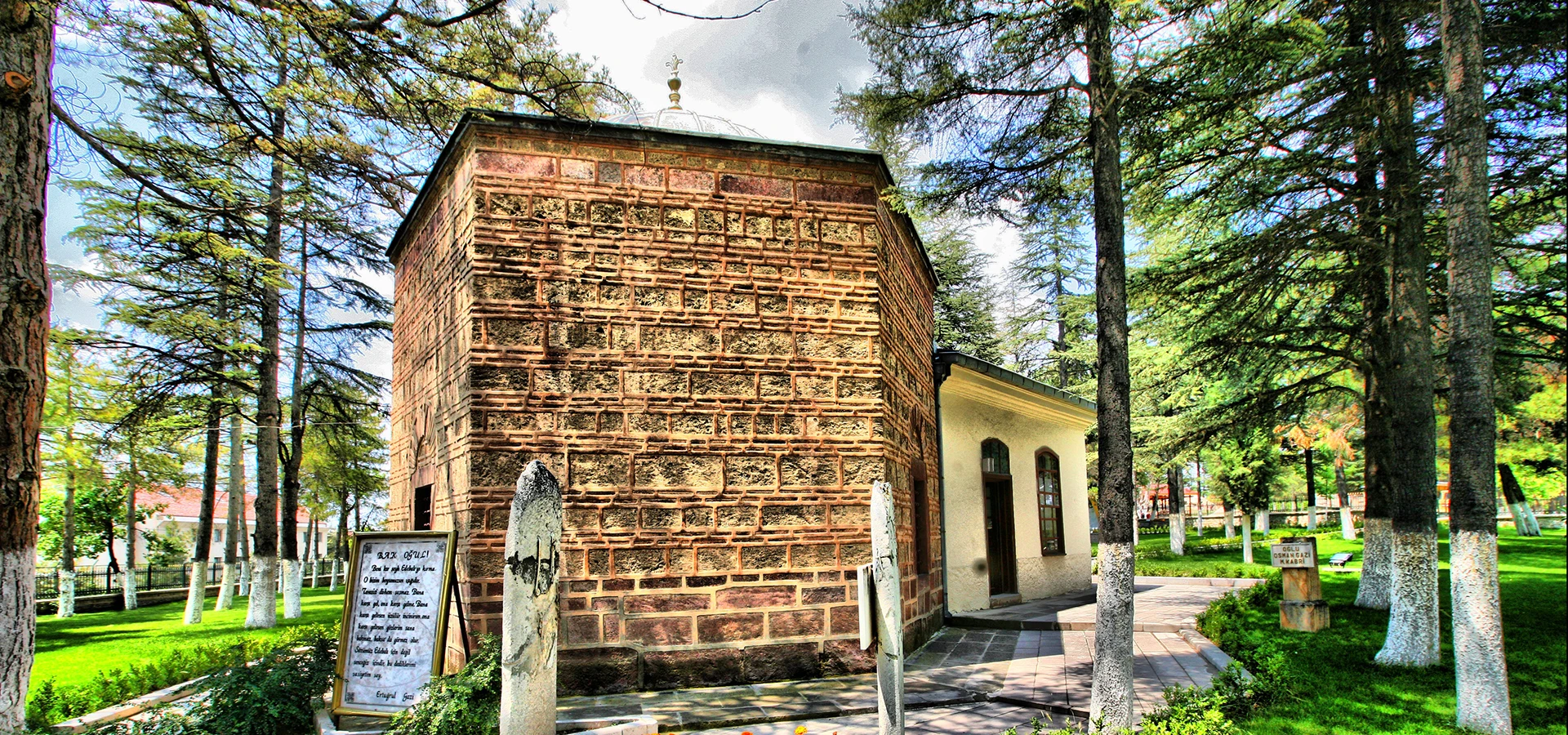
The present tomb is a hexagonal, domed structure with a rectangular entrance section. Its walls combine stone and brick masonry, while the surrounding burial area contains graves and memorial graves associated with Ertuğrul Gazi's family, companions and figures remembered in early Ottoman tradition.
The site also remains part of a living tradition. Söğüt hosts the long-established Ertuğrul Gazi Commemoration and Söğüt festivities, which bring visitors, Yörük communities and cultural groups to the district each year.
A visit can easily be combined with Söğüt Ertuğrul Gazi Museum, Ertuğrul Gazi Kuyulu Mescit, Hamidiye Mosque, Çelebi Mehmet Mosque and other early Ottoman heritage sites across Bilecik Province.
Ertuğrul Gazi is remembered as the father of Osman Gazi, founder of the Ottoman dynasty.
The tomb stands in the town most closely associated with the frontier community from which the early Ottoman principality developed.
The present monument has a distinctive hexagonal plan, a domed roof and a rectangular entrance section.
Annual ceremonies in Söğüt continue a long tradition of remembering Ertuğrul Gazi and the region's Yörük heritage.
Essential information for visiting one of Söğüt's most significant Ottoman heritage sites.
Söğüt district, Bilecik Province, Türkiye.
Open on Google MapsHistoric mausoleum, burial complex and major cultural memorial site.
The tomb is traditionally identified as the burial place of Ertuğrul Gazi, father of Osman Gazi.
Originating in the late medieval period and substantially altered through later Ottoman restorations.
Hexagonal domed mausoleum with a rectangular entrance and stone-and-brick masonry.
A respectful historical, cultural and memorial visit in the heart of Söğüt's Ottoman heritage landscape.
The tomb is one of the principal places through which Söğüt remembers the generation before the formal rise of the Ottoman state.
Ertuğrul Gazi occupies a central place in the traditional narrative of Ottoman origins. He is remembered as the father of Osman Gazi and as the leader of the frontier community that established itself in the Söğüt region before Osman's principality expanded into a new political power.
For that reason, the tomb became an important dynastic and cultural memorial. Later Ottoman rulers repeatedly repaired and reshaped the monument, showing that Söğüt continued to matter as a symbolic place of beginnings even centuries after the imperial capital had moved far away.
The monument is also significant because it reflects the way historical memory develops over time. The surviving structure is not simply an untouched 13th-century building. Its present appearance is the result of successive Ottoman restorations and commemorative interventions, especially during the reign of Sultan Abdülhamid II.
The surrounding burial ground strengthens this sense of collective memory. Graves and memorial graves connected with Ertuğrul Gazi's family and companions create a setting in which the visitor encounters not only one historical figure, but an entire remembered community associated with the early Ottoman frontier.
Today, Ertuğrul Gazi Tomb remains one of the strongest reasons to visit Söğüt. It provides a meaningful starting point for exploring the district's museums, mosques, fountains and other monuments connected with both the early Ottoman period and later Ottoman efforts to preserve the dynasty's founding memory.
Ertuğrul Gazi is best known as the father of Osman Gazi, whose name gave the Ottoman dynasty and state its name. Ottoman historical tradition associates Ertuğrul with the Kayı branch of the Oghuz Turks and with the Seljuk frontier zone of northwestern Anatolia.
Later Ottoman narratives describe Ertuğrul and his community moving into the region and using Söğüt as a winter settlement while spending summers in the uplands around Domaniç. This frontier environment placed the community close to Byzantine territories and other Turkish principalities.
The surviving historical evidence for Ertuğrul's life is limited. Detailed narratives were written generations after his lifetime, and some episodes differ between later chronicles. For this reason, modern historical writing distinguishes between what can be supported directly and what belongs to the later Ottoman narrative tradition.
What is clear is that Ertuğrul became a central figure in the dynasty's memory. By the Ottoman imperial period, his tomb in Söğüt had become an established place of commemoration and dynastic legitimacy, and the site received repeated royal attention.
His death is commonly placed around 1281–1282, although other dates also appear in historical literature. The uncertainty is a reminder that the earliest phase of Ottoman history was recorded less fully than later centuries.
Ertuğrul's strongest historical identification is as the father of Osman, founder of the Ottoman dynasty.
Later Ottoman sources connect Ertuğrul and his followers with the Kayı branch of the Oghuz Turks.
Söğüt became the main place associated with Ertuğrul's community and the formative environment of the early Ottoman principality.
Much of the detailed narrative about Ertuğrul comes from Ottoman chronicles written after his lifetime.
His death is generally placed in the late 13th century, often around 1281–1282.
Over later centuries, Ertuğrul became a powerful symbol of Ottoman origins, frontier leadership and dynastic continuity.
The earliest form of Ertuğrul Gazi's burial place is not known in complete architectural detail. Official cultural information states that Osman Gazi first arranged an open grave for his father.
The site was later developed into a mausoleum during the reign of Mehmed I, also known as Çelebi Mehmed. This transformed the grave into a more formal dynastic memorial.
A major restoration took place in the 18th century under Sultan Mustafa III. Official records describe this intervention as extensive enough to change the earlier appearance of the monument. As a result, the structure seen today should not be interpreted as a perfectly preserved late-13th-century building.
The tomb received another important restoration in 1886 during the reign of Sultan Abdülhamid II. Abdülhamid's period was especially important for the symbolic development of Söğüt, when the Ottoman court placed renewed emphasis on the dynasty's origins and its connection with Ertuğrul Gazi.
Fountains were added near the entrance to the burial ground during later works, and in the early 20th century the surroundings were reorganized to create a broader ceremonial area. This helped accommodate the large gatherings that developed around the commemoration of Ertuğrul Gazi.
Official tradition states that Osman Gazi first established an open grave for his father at Söğüt.
The burial place was later transformed into a formal mausoleum during the reign of Mehmed I.
Sultan Mustafa III ordered major work that substantially changed the earlier form of the monument.
Sultan Abdülhamid II sponsored another major restoration of the tomb complex.
The area around the tomb was later opened and reorganized to support commemorative gatherings.
The present site reflects centuries of rebuilding, remembrance and Ottoman dynastic interest.
The mausoleum is built on a regular hexagonal plan and is covered by a dome. Unlike some later monumental Ottoman mausoleums, its architectural scale remains relatively restrained.
A rectangular entrance section projects from the main body of the tomb. The domed central space contains the symbolic sarcophagus associated with Ertuğrul Gazi.
The walls are constructed using a combination of stone and brick. Official architectural descriptions note alternating masonry courses, a building technique widely encountered in different forms of Ottoman architecture.
Windows bring natural light into the interior. The result is a quiet, focused space in which the sarcophagus remains the central visual element rather than elaborate decoration.
Because the tomb underwent major restorations, visitors should read its architecture as a historical palimpsest: a monument whose visible form carries the imprint of later Ottoman centuries as well as the memory of the medieval burial place.
The main burial chamber has a distinctive six-sided form.
A single dome covers the principal mausoleum chamber.
A rectangular entrance space leads visitors into the tomb.
The walls combine masonry materials that give the exterior a characteristic Ottoman appearance.
Windows in the mausoleum walls illuminate the interior and the symbolic sarcophagus.
The architecture visible today reflects extensive Ottoman-era interventions rather than a completely untouched medieval structure.
The visit does not end at the mausoleum itself. The surrounding hazire, or burial ground, contains graves and memorial graves associated with figures remembered as members of Ertuğrul Gazi's family and his circle.
Official cultural sources identify the nearby grave of Halime Hatun, traditionally remembered as Ertuğrul Gazi's wife, as well as the grave of Savcı Bey. An Osman Gazi makam grave — a commemorative or symbolic grave rather than Osman's actual burial place — is also found within the complex.
The surrounding memorial landscape also includes names connected with early Ottoman tradition, including Dündar Bey, Akçakoca, Konur Alp, Karamürsel, Abdurrahman Gazi, Hasan Alp and Saltuk Alp, among others.
Visitors should understand that the historical status of individual graves and associations can vary. The complex is best approached as a landscape of remembrance, preserving the way Ottoman society and later generations commemorated the people linked with the dynasty's beginnings.
Move slowly through the burial area, read any available inscriptions or interpretation, and remember that the site remains a place of respect as well as historical interest.
A grave identified with Halime Hatun, traditionally remembered as Ertuğrul Gazi's wife, stands near the mausoleum.
The burial area also contains a grave associated with Ertuğrul Gazi's son Savcı Bey.
A symbolic memorial grave for Osman Gazi is present; his actual tomb is in Bursa.
Names associated with early frontier warriors and companions appear throughout the surrounding commemorative landscape.
The complex presents a broader remembered community rather than a single isolated burial.
Treat the entire burial ground as a memorial and religious-cultural space.
The reign of Sultan Abdülhamid II was especially important in shaping the modern appearance and ceremonial meaning of Ertuğrul Gazi Tomb.
The mausoleum was restored in 1886, and the surrounding complex received additional attention. Fountains and inscriptions from the late Ottoman period help visitors recognize that the tomb was actively maintained as a place of imperial memory.
In the early 20th century, properties around the tomb were expropriated and the setting was reorganized to create a larger ceremonial gathering space. This supported the commemorations associated with Karakeçili and Yörük communities.
Abdülhamid's interest in Söğüt should be understood within a wider late-Ottoman effort to emphasize dynastic origins, continuity and loyalty. The tomb therefore became not only a historical burial place but also a carefully cultivated symbol of the dynasty's long history.
Visitors can see this late-Ottoman layer throughout Söğüt. Nearby monuments such as Hamidiye Mosque also date from the Abdülhamid II period and help explain why the town contains such a visible concentration of commemorative architecture.
Söğüt's historical importance did not end with the Ottoman foundation period. The district also experienced occupation and destruction during the Turkish War of Independence.
According to Söğüt Municipality's historical account, the town was occupied at different periods between 1921 and 1922, and parts of Söğüt were burned and damaged.
The same local source records that Ertuğrul Gazi Tomb was fired upon and damaged during the occupation and identifies marks on the tomb's shutters as traces associated with that period.
This gives the monument another layer of meaning. It became connected not only with the remembered beginning of the Ottoman dynasty, but also with Söğüt's experience during the final years of the empire and the struggle that preceded the foundation of the Republic of Türkiye.
When viewing old woodwork, inscriptions or repaired elements, avoid treating every mark as self-explanatory. The site's interpretation is strongest when architectural evidence is read together with documented local history.
One of the most distinctive aspects of Ertuğrul Gazi Tomb is that it remains the focal point of a living commemorative tradition.
For generations, Yörük and Karakeçili communities have visited Söğüt to remember Ertuğrul Gazi. The annual events are commonly known as the Ertuğrul Gazi Commemoration and Söğüt festivities and traditionally take place in September.
The celebrations have included ceremonies, traditional clothing, folk performances, equestrian displays and other expressions of Yörük cultural identity. The exact program can vary from year to year.
Festival days create a completely different experience from an ordinary visit. The town can become extremely busy, with large crowds gathering around the tomb and ceremonial areas. Visitors specifically seeking a quiet historical experience may prefer another date.
Those who want to see the site as part of its living cultural tradition, however, may find the annual commemoration one of the most memorable times to visit Söğüt. Always check the current year's official dates and program before planning around the festival.
Söğüt hosts a long-established annual commemoration associated with Ertuğrul Gazi.
Karakeçili and other Yörük communities have played a central role in sustaining the commemorative tradition.
The events traditionally take place in September, but current official dates should always be confirmed.
Programs may include cultural performances, processions, equestrian traditions and memorial activities.
Festival periods can be exceptionally busy around the tomb and throughout central Söğüt.
Visit during the festival for living culture, or outside the event period for a quieter historical visit.
Study the compact hexagonal form, dome, entrance section and alternating masonry of the restored Ottoman structure.
Enter quietly and observe the central symbolic sarcophagus and the restrained character of the burial chamber.
Look for inscriptions and additions connected with the major restoration campaigns that shaped the present complex.
Later Ottoman works around the entrance help illustrate how the site was developed as a formal commemorative landscape.
Visit the nearby grave identified with Halime Hatun, one of the best-known figures in the traditional family narrative.
See the symbolic memorial grave for Osman Gazi while remembering that his actual mausoleum is in Bursa.
Walk through the wider burial area and explore the names associated with Ertuğrul's remembered frontier circle.
The open areas around the tomb reflect the site's later role as a gathering place for annual commemorations.
A visit to Ertuğrul Gazi Tomb is generally quiet, reflective and relatively compact. The main mausoleum itself does not require a long time to see, but understanding the surrounding burial ground and historical context makes the experience much richer.
Begin by walking around the exterior. The hexagonal form is easiest to understand from outside, and the surrounding open space helps place the monument within its later ceremonial setting.
Enter the tomb calmly and allow other visitors space for prayer or reflection. This is an active place of remembrance, so the atmosphere is different from a conventional archaeological museum.
After leaving the mausoleum, spend time among the surrounding graves and memorials. Reading the names and comparing them with the wider story of early Ottoman history helps transform the visit from a quick photograph into a more meaningful historical experience.
The tomb is best experienced as part of a wider walking or driving route through Söğüt. The nearby museum, mosques and Ertuğrul Gazi Kuyulu Mescit reveal how different periods of Ottoman history overlap within a relatively small district.
Enough for a brief visit to the mausoleum if you are passing through Söğüt.
Recommended for the tomb interior, exterior architecture and surrounding burial area.
Allow this if you want to read inscriptions, examine the graves carefully and photograph the complex.
Combine the tomb with nearby monuments and a walk through central Söğüt.
Add Söğüt Ertuğrul Gazi Museum, Hamidiye Mosque, Çelebi Mehmet Mosque and Kuyulu Mescit.
Continue toward Dursun Fakih Tomb and Bilecik city for a broader early Ottoman heritage route.
Ertuğrul Gazi Tomb can be visited throughout much of the year, but the character of the experience changes with season, weather and special events.
Spring is especially pleasant for combining the tomb with a longer walk around Söğüt. Mild temperatures make it comfortable to explore several heritage sites in the same day.
Summer can be warm during the middle of the day. Morning visits are usually more comfortable for walking and photography.
September is culturally significant because Söğüt's annual Ertuğrul Gazi commemorations traditionally take place during this period. Expect a much busier town and check current official event dates before traveling specifically for the festivities.
Autumn outside the main event period often combines mild weather with softer light, while winter can offer a very quiet and atmospheric visit if road and weather conditions are suitable.
For photography and a more contemplative atmosphere, early morning and late afternoon are generally the best choices.
Mild weather makes it easy to combine the tomb with several other Söğüt heritage sites.
Visit earlier in the day for cooler temperatures and gentler light.
The annual commemoration period offers living culture but can bring very large crowds.
Comfortable temperatures and softer seasonal light suit a historical walking itinerary.
A quieter atmosphere can be rewarding, but check weather and road conditions.
Usually the best time for a calmer visit, especially outside festival periods.
The strongest exterior photographs usually show the hexagonal mausoleum within its wider commemorative setting rather than isolating only the doorway.
A standard or moderately wide lens works well for the tomb exterior. Move around the building to show the dome, masonry pattern and relationship between the mausoleum and surrounding graves.
Morning and late-afternoon light can give the stone and brick surfaces greater texture. Overcast conditions can also work well because they reduce harsh contrast around the pale walls and burial stones.
Inside the tomb, photography should always be secondary to respect for the memorial atmosphere. Avoid flash, loud staging or blocking visitors who have come to pray or pay their respects. Observe any photography restrictions displayed on site.
The surrounding graves and inscriptions can add valuable historical detail, but photograph them sensitively. Avoid treating the burial ground as a theatrical backdrop or climbing onto memorial elements for a better angle.
Use an angled viewpoint to make the tomb's six-sided plan easier to read.
Frame the dome together with the rectangular entrance to show the monument's layered form.
Side lighting can reveal the texture and alternating masonry of the exterior walls.
Wider compositions can show how the mausoleum relates to the surrounding graves and ceremonial area.
If photography is permitted, work discreetly and avoid flash around visitors and the sarcophagus.
Never move objects, cross barriers or use graves as posing platforms.
Ertuğrul Gazi Tomb is located in Söğüt district, Bilecik Province, along Ertuğrul Gazi Caddesi near the town's ceremonial area.
The monument is an important historical, memorial and cultural tourism site. Visitors should dress and behave respectfully, especially inside the mausoleum and around the burial ground.
Because access arrangements, restoration work and event-related restrictions can change, check current local information if your visit depends on a specific opening time or special access requirement.
During the annual Ertuğrul Gazi commemoration, road access, parking and pedestrian movement around the tomb can be very different from normal days. Allow extra time and follow local traffic instructions.
For a fuller understanding of the site, continue to Söğüt Ertuğrul Gazi Museum, where ethnographic material connected with Söğüt and regional Yörük culture helps place the tomb within a broader cultural context.
The tomb lies within a developed urban heritage area rather than at the end of a remote hiking route, making it relatively straightforward to include in a visit to Söğüt.
The wider ceremonial area provides open space around the monument, but the exact surfaces, thresholds and access routes within the historic complex can vary.
Visitors who require fully step-free access should verify current conditions before making a special journey, particularly if they need direct access into the mausoleum interior.
Historic grave markers, narrow passages and uneven surfaces may require extra care. Wet or winter weather can also make paving more slippery.
During major ceremonies, accessibility can be affected by crowds, temporary barriers, traffic controls and altered pedestrian routes. Visitors with mobility concerns may find ordinary weekdays easier than festival periods.
The tomb is reached within Söğüt rather than by a demanding rural trail.
The wider ceremonial area provides relatively generous space around the mausoleum.
Entrance details and older surfaces may present challenges for some visitors.
Confirm current conditions if wheelchair or fully step-free access is essential.
Large commemorations can make movement and parking significantly more difficult.
Rain, frost or snow can make outdoor paving and cemetery areas slippery.
The tomb is located in Söğüt, Bilecik Province. For digital navigation, search for “Ertuğrul Gazi Türbesi, Söğüt” to avoid confusion with similarly named memorials elsewhere.
Söğüt is connected by road with Bilecik, Bozüyük and the wider northwestern Anatolian road network. A private car or organized tour is the most flexible option if you plan to combine several heritage sites in one day.
Once in Söğüt, the tomb is one of the district's principal landmarks and can be combined with central monuments without a long journey between each stop.
A strong local route includes Söğüt Ertuğrul Gazi Museum, Hamidiye Mosque, Çelebi Mehmet Mosque and Ertuğrul Gazi Kuyulu Mescit.
For a longer regional itinerary, continue toward Dursun Fakih Tomb and then to Bilecik city for Şeyh Edebali Tomb.
Use navigation for Ertuğrul Gazi Türbesi in Söğüt and follow local signs toward the ceremonial area.
Söğüt can be reached by road from the provincial center and works well as a dedicated heritage excursion.
Road access also makes Söğüt easy to combine with Bozüyük and other destinations in southern Bilecik Province.
A private vehicle and guide are useful if you want to connect Söğüt with Bilecik's wider Ottoman foundation sites.
Expect altered parking and traffic arrangements during major annual commemorations.
Use the full name “Ertuğrul Gazi Türbesi Söğüt” for the most reliable digital search.
Begin outside the mausoleum and take a few minutes to study the hexagonal plan, dome and entrance section. Understanding the exterior shape makes the interior easier to interpret.
Enter quietly and visit the symbolic sarcophagus associated with Ertuğrul Gazi. Keep your visit respectful and allow space for people who have come for prayer or remembrance.
Next, walk through the surrounding burial and memorial area. Look for the graves associated with Halime Hatun and Savcı Bey, the Osman Gazi makamı, and other names preserved in the commemorative landscape.
Continue into central Söğüt for Söğüt Ertuğrul Gazi Museum. Its ethnographic collections provide useful context for regional Yörük life and the cultural traditions associated with Söğüt.
Then visit Hamidiye Mosque and Çelebi Mehmet Mosque to compare late-Ottoman and earlier Ottoman architectural layers within the same town.
Finish with Ertuğrul Gazi Kuyulu Mescit, traditionally associated with Ertuğrul Gazi's early presence in the area. If you have more time, extend the journey to Dursun Fakıh and Bilecik city.
The tomb is the natural starting point for exploring Söğüt and the wider Ottoman foundation landscape of Bilecik. See our complete Bilecik visitor guide for more monuments, museums, villages and historical routes across the province.
Explore regional ethnography, Yörük culture, traditional textiles, weapons, coins and historical objects in a restored early-20th-century building.
Visit the Kuyulu Mescit, traditionally associated with Ertuğrul Gazi and rebuilt on its historical foundations during the Abdülhamid II period.
See one of Söğüt's finest late-Ottoman monuments, built for Sultan Abdülhamid II and known locally for its two minarets.
Explore an important multi-domed Ottoman mosque built in the early 15th century and later restored during the imperial period.
Continue toward Küre to visit the hilltop tomb associated with the scholar remembered as an important figure in early Ottoman religious and legal history.
Continue to Bilecik city and explore the memorial complex of Şeyh Edebali, one of the most important spiritual figures in Ottoman foundation tradition.
Discover Ottoman foundation heritage, War of Independence sites, historic towns, museums, mosques and countryside across the province.
It is located in Söğüt district, Bilecik Province, Türkiye, near the town's ceremonial area.
Ertuğrul Gazi is remembered as the father of Osman Gazi, founder of the Ottoman dynasty.
The mausoleum in Söğüt is the long-established and officially recognized burial place traditionally identified with Ertuğrul Gazi.
His death is commonly placed around 1281–1282, although other dates also appear in historical literature.
The burial place has medieval origins, but the visible monument was altered and restored repeatedly during later Ottoman centuries.
Official cultural sources state that Osman Gazi first arranged an open grave and that the site was later transformed into a mausoleum during the reign of Mehmed I.
Yes. Major interventions are associated with Sultan Mustafa III and Sultan Abdülhamid II.
The mausoleum has a distinctive hexagonal plan and is covered by a dome.
The interior contains the symbolic sarcophagus associated with Ertuğrul Gazi in a relatively restrained domed chamber.
The surrounding burial ground includes graves and memorial graves associated with members of his family and figures remembered in early Ottoman tradition.
Yes. A nearby grave within the complex is officially identified with Halime Hatun, traditionally remembered as Ertuğrul Gazi's wife.
No. The complex contains an Osman Gazi makamı, or symbolic memorial grave. Osman Gazi's actual tomb is in Bursa.
They are long-established annual commemorative events connected with Ertuğrul Gazi, Yörük heritage and Söğüt's place in Ottoman foundation history.
They traditionally take place in September. Check the current year's official schedule because exact dates and programs can change.
Yes. The annual commemoration can attract very large crowds, so expect heavier traffic, parking controls and a much busier atmosphere.
Allow around 30–45 minutes for the tomb and burial area, or longer if you want to study the site in detail.
Follow current on-site rules. If photography is permitted, avoid flash and work discreetly so you do not disturb visitors who are praying or paying their respects.
The site is in a developed urban area, but visitors requiring fully step-free access should confirm current entrance and surface conditions before traveling.
Combine the tomb with Söğüt Ertuğrul Gazi Museum, Kuyulu Mescit, Hamidiye Mosque and Çelebi Mehmet Mosque.
Yes. A private vehicle makes it practical to combine Söğüt with Bilecik city and other Ottoman foundation heritage sites in one full-day itinerary.
No. Much of the detailed narrative about his life comes from Ottoman sources written after his lifetime, so historians distinguish between documented evidence and later tradition.
Söğüt Municipality records that the tomb was fired upon and damaged during the occupation of the area in the early 1920s.
Early morning is usually best for a quieter atmosphere, comfortable walking and softer photographic light.
The mausoleum is a memorial and religious-cultural site, so choose clothing appropriate to the setting.
Speak quietly inside the tomb and around visitors who may be praying or reflecting.
Respect barriers, textiles and memorial objects within the mausoleum.
Do not sit, stand or place belongings on grave markers or memorial structures.
Observe all posted restrictions and avoid flash or intrusive portrait sessions inside the tomb.
Stay on appropriate walkways and avoid crossing protected burial areas.
Take all litter with you or use designated waste bins around the visitor area.
During commemorations, follow event staff instructions and give ceremonial participants appropriate space.
Combine Ertuğrul Gazi Tomb, Söğüt's Ottoman monuments, regional museums, Dursun Fakıh and Şeyh Edebali through a private itinerary designed around your historical interests.
Follow the earliest chapters of Ottoman history through Söğüt and Bilecik with a flexible private route.
Ask us about a tailor-made journey combining Ertuğrul Gazi Tomb, Söğüt's historic monuments, Ottoman foundation heritage and selected Bilecik sites.
Request a Custom Tour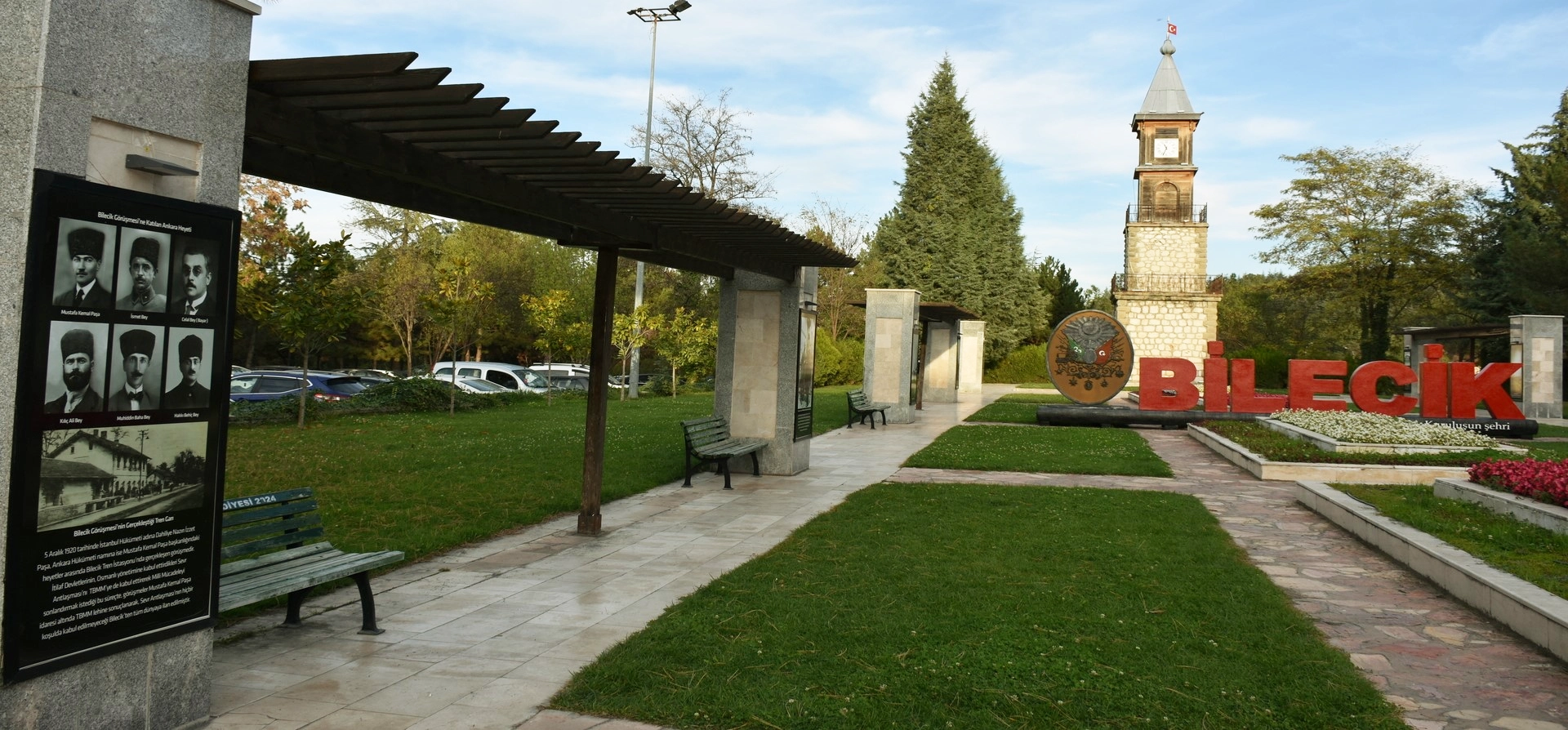
Discover Ottoman foundation sites, historic towns, museums, mosques, War of Independence heritage and countryside across the province.
View Bilecik GuideConnect Ertuğrul Gazi's memorial in Söğüt with museums, mosques and spiritual figures associated with the beginnings of the Ottoman story.
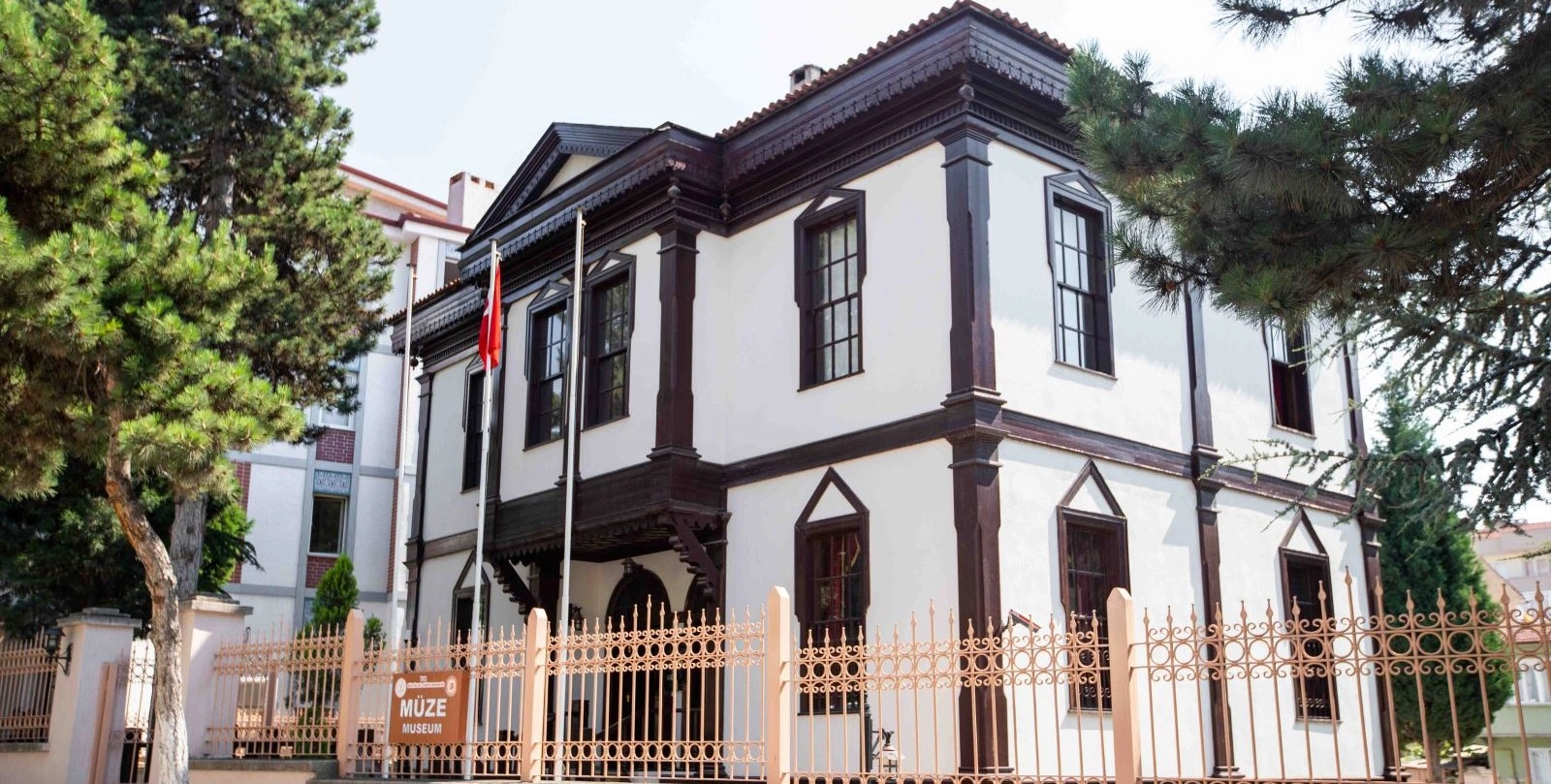
Explore Söğüt's ethnographic collections, Yörük culture, textiles, historic objects and regional material heritage.
Explore the Museum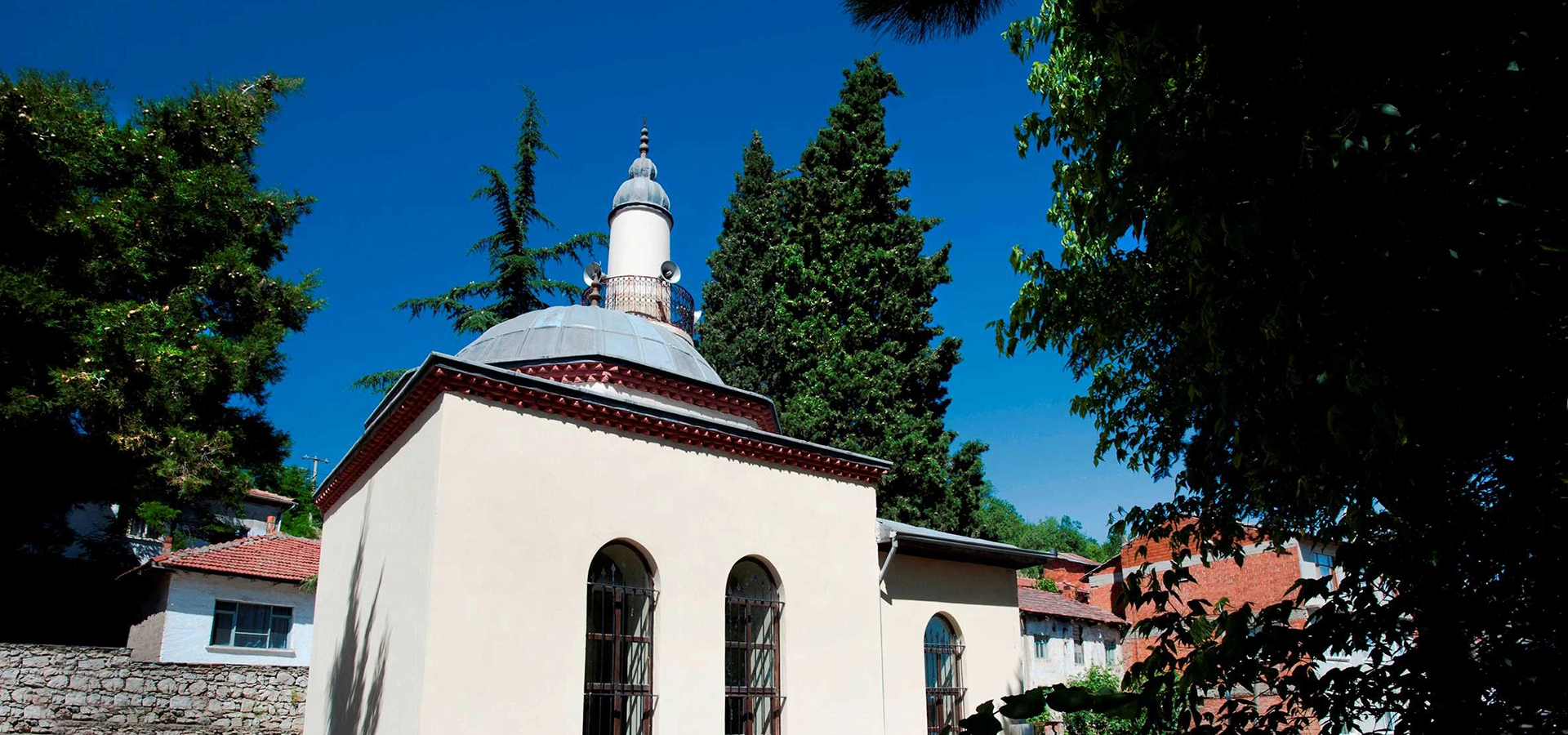
Visit the historic Kuyulu Mescit, traditionally linked with Ertuğrul Gazi and reconstructed during the Abdülhamid II period.
Explore Kuyulu Mescit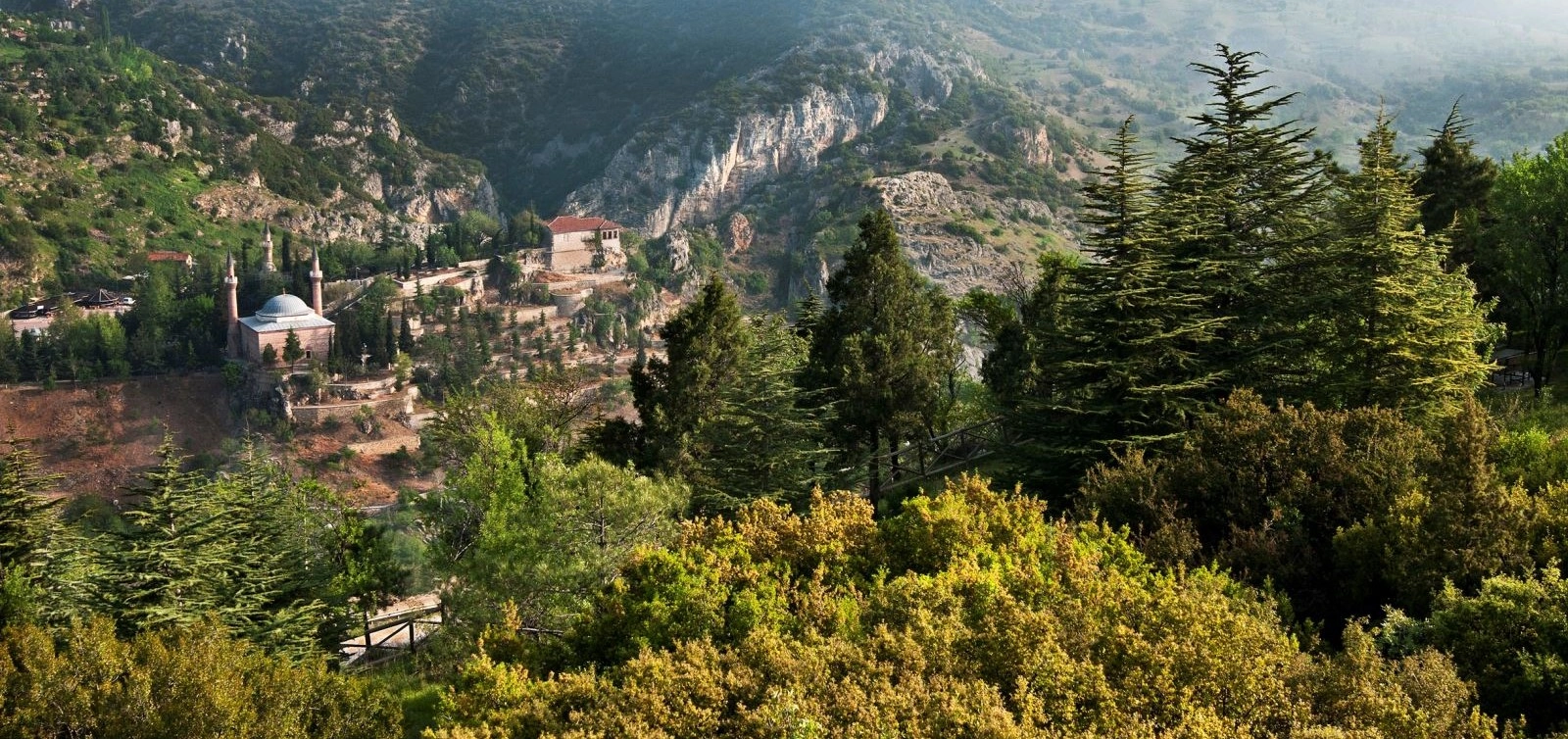
Continue to Bilecik and explore the memorial complex associated with one of the most important spiritual figures in Ottoman foundation tradition.
Explore Şeyh Edebali Tomb