Roman, Byzantine & Ottoman Archaeology in Yalova

Yalova Archaeopark – Open-Air Archaeology Guide

Discover ancient stone monuments, funerary remains and architectural fragments
preserving centuries of Yalova’s history beside the Raif Dinçkök Cultural Center.

Explore Yalova Archaeopark

Yalova Archaeopark – Ancient History in the Modern City

The Yalova Archaeopark, known in Turkish as Yalova Arkeopark, is a small archaeological exhibition area where stone monuments and other finds connected with Yalova's long history are displayed in an accessible urban setting.

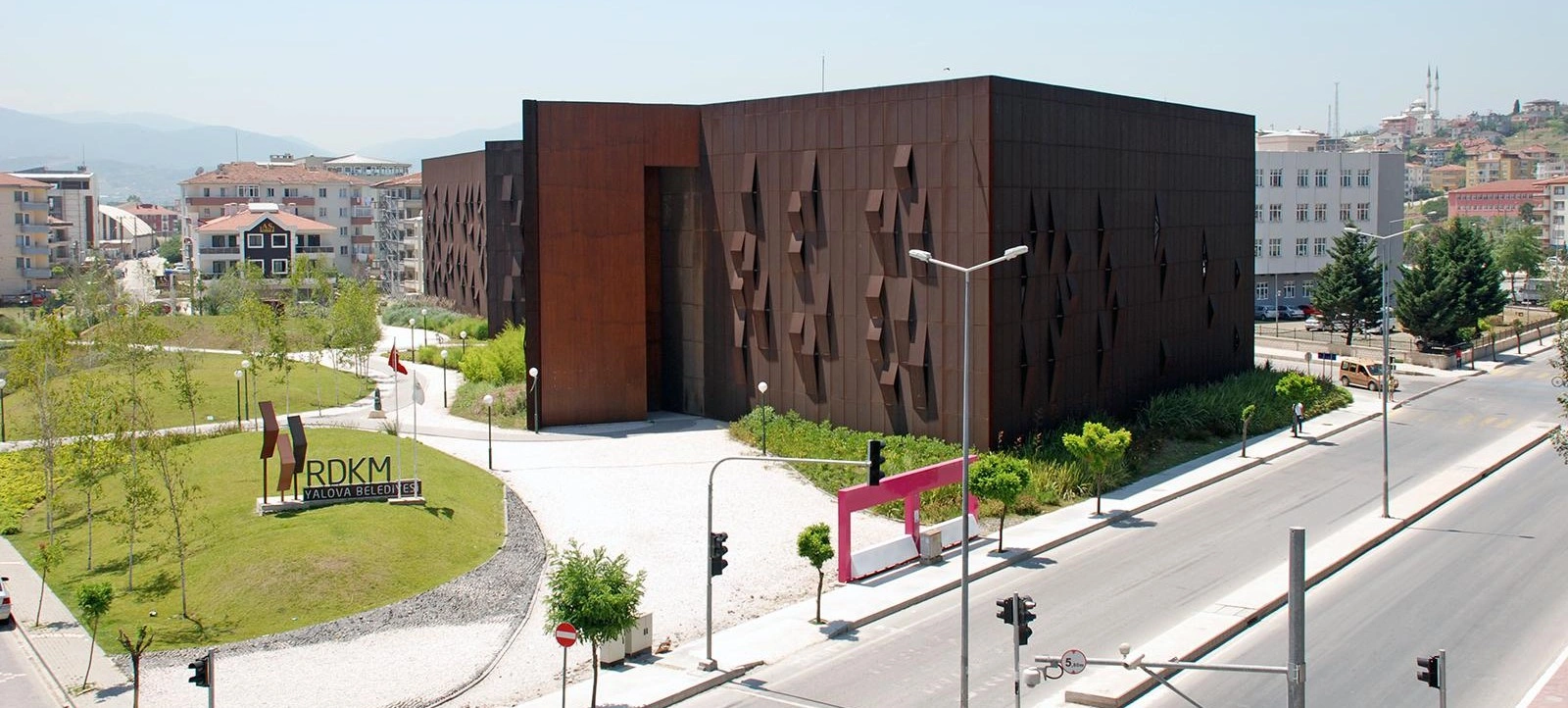
Today the Archaeopark is associated with the Raif Dinçkök Cultural Center, usually abbreviated as RDKM. Archaeological objects are displayed in the grounds of the cultural centre, with Yalova Municipality describing a collection representing the Roman, Byzantine and Ottoman periods.

Visitors can encounter funerary monuments, stone architectural elements, columns, carved blocks and other archaeological material that once belonged to different parts of Yalova. Rather than entering a reconstructed ancient settlement, you are exploring a curated collection of archaeological objects brought together from around the province.

The Archaeopark also tells an interesting museum story. Its collection developed from the former Yalova Open-Air Museum, which opened in 2003. The museum later became known as Arkeopark, and its archaeological objects were eventually transferred to the grounds of RDKM, where they form the exhibition visitors see today.

Roman

Funerary stones, architectural fragments and other remains represent Yalova's Roman-period past.

Byzantine

The collection continues the story through the centuries when the region formed part of the Byzantine world.

Ottoman

Later material reflects the continuing importance of Yalova during the Ottoman period.

2003

The collection's predecessor, Yalova Open-Air Museum, opened to visitors on 29 October 2003.

Know Before You Go

Yalova Archaeopark – Quick Facts

Essential information for discovering Yalova's open-air archaeological collection.

📍

Location

Within and beside the grounds of Raif Dinçkök Cultural Center in central Yalova.

Search on Google Maps
🏛️

Type

Archaeological collection and open-air museum-style exhibition.

🏺

Main Periods

Roman, Byzantine and Ottoman.

🪦

What You See

Funerary monuments, carved stonework, columns and architectural fragments.

📅

Collection History

The former Yalova Open-Air Museum opened on 29 October 2003.

🔤

Arkeopark Name

The former open-air museum became known as “Arkeopark” in 2014.

🎭

Current Setting

The collection is now displayed at the Raif Dinçkök Cultural Center complex.

🌤️

Display Style

Archaeological objects are presented in both outdoor and associated indoor exhibition settings.

⏳

Suggested Time

Allow approximately 30–45 minutes for the archaeological displays.

ℹ️

Opening Information

Confirm current access arrangements locally, particularly for any indoor exhibition areas.


A Small Collection with a Big Historical Story

Why Visit Yalova Archaeopark?

The Archaeopark reveals a side of Yalova that can easily remain hidden beneath the modern city.

Yalova is often associated with thermal springs, Atatürk, the Marmara coastline and the city's twentieth-century development. The Archaeopark introduces a much older story: the communities that lived in and around Yalova centuries before the modern city existed.

Its archaeological objects help visitors move through several historical periods without travelling to a remote excavation site. Roman stone monuments, Byzantine remains and material from the Ottoman centuries demonstrate how long people have occupied and travelled through this part of the Marmara region.

The setting is also unusual. Ancient stone objects stand beside one of Yalova's best-known examples of contemporary architecture, the Raif Dinçkök Cultural Center. The contrast between archaeology and modern design makes the Archaeopark visually distinctive.

Most importantly, the collection gives archaeological finds that might otherwise remain in storage or scattered around the province a public setting where visitors can examine them at close range.

What Exactly Is Yalova Archaeopark?

The word Archaeopark can sometimes describe an archaeological site where ancient structures remain in their original location. Yalova Archaeopark is somewhat different.

It functions primarily as an archaeological exhibition area. Many of the stone objects displayed here were discovered at different locations around Yalova and were later brought together for protection, documentation and public presentation.

This means visitors should not expect excavated streets, ancient house foundations or a complete buried settlement. Instead, the experience resembles an open-air archaeological museum, where individual objects reveal different chapters of regional history.

This distinction makes the Archaeopark particularly useful as an introduction to Yalova's archaeology. A visitor can study funerary monuments, architectural stonework and carved fragments before continuing to archaeological locations elsewhere in the province.

The History of Yalova Archaeopark

The roots of today's Archaeopark lie in the Yalova Open-Air Museum. The museum was established to bring together archaeological objects discovered in different parts of Yalova and provide them with a dedicated public exhibition area.

Official approval for the creation of the open-air museum was granted in 2002, and the museum opened to visitors on 29 October 2003. Its original location was in the city centre around the Yaşar Okuyan Boulevard and Sanat Sokağı area.
The collection included objects associated with the Roman, Byzantine and Ottoman periods. By the end of 2005, local heritage records stated that catalogue information had been prepared for 46 archaeological objects then belonging to the collection.

In 2014, the open-air museum became known as Arkeopark. The new name emphasised the archaeological identity of the collection and its role as an outdoor heritage attraction.

The collection was subsequently transferred from its former location to the grounds of the Raif Dinçkök Cultural Center. Today, Yalova Municipality presents the Archaeopark and RDKM together as a combined destination where archaeology, modern architecture and cultural activities meet.

What Can You See at Yalova Archaeopark?

The most visually striking elements of the Archaeopark are its large stone archaeological objects. These are particularly suited to outdoor display because their scale allows visitors to examine features that can be difficult to appreciate behind museum glass.

The collection includes or has historically included funerary stones, column elements, architectural blocks, carved stone fragments and other archaeological material connected with settlements and cemeteries around Yalova.

Municipal photographs of the current Archaeopark also show large stone funerary monuments and carved relief pieces displayed with information panels. These objects help demonstrate that Yalova was part of a much wider Roman and Byzantine cultural landscape around the Sea of Marmara.

Not every object belongs to the same location, century or archaeological context. The Archaeopark should therefore be read as a collection representing the wider region, rather than as the remains of one single ancient settlement.

Types of Archaeological Objects to Look For

Funerary Stelae

Stone grave markers can preserve carved figures, decorative motifs or inscriptions connected with the deceased.

Sarcophagi

Large stone burial containers are among the most immediately recognisable forms of Roman funerary archaeology.

Columns

Column shafts, capitals and bases can reveal the architectural character of buildings that have otherwise disappeared.

Architectural Blocks

Carved blocks may once have formed doorways, walls, public buildings, religious structures or monumental tombs.

Relief Carvings

Look for figures, symbols and decorative designs cut into the surface of stone monuments.

Inscribed Stones

Where inscriptions survive, they can provide names, titles, religious formulas or other clues to the people behind the monument.

Column Capitals

The decorated upper sections of columns can help archaeologists identify architectural traditions and approximate periods.

Reused Stonework

Some ancient building stones survived because later communities reused them in newer structures.

The Roman Heritage of Yalova Archaeopark

Roman-period material forms an important part of the archaeological story represented in Yalova. The region lay within the network of settlements, roads, coastal routes and thermal landscapes surrounding the eastern Sea of Marmara.

Stone funerary monuments are particularly useful for understanding the Roman period. A grave stele or sarcophagus was not simply a container for burial; it could communicate family identity, social position, religious beliefs and ideas about remembrance.

Architectural fragments can tell a different story. Columns, capitals and carved blocks suggest the presence of buildings whose complete structures may no longer survive. Even an isolated fragment can therefore become evidence for a much larger ancient environment.

When examining Roman objects at the Archaeopark, look carefully at the quality of the stone, tool marks, inscriptions, human figures, vegetal decoration and geometric motifs. Small details can reveal how much craftsmanship was invested in monuments nearly two thousand years ago.

Byzantine Yalova and the Archaeopark

After the Roman Empire's political transformation, Yalova remained within the cultural and strategic landscape of the Byzantine or Eastern Roman world for many centuries.

Its position near Constantinople, the Gulf of İzmit and the routes leading into north-western Anatolia made the wider region important for travel, communication, military movement and settlement.

Byzantine-period archaeological material can sometimes be more difficult for casual visitors to identify than monumental Roman sculpture. Architectural fragments, carved crosses, stone blocks and reused building elements may appear modest, yet they can preserve important evidence for medieval settlement and religious life.

The Archaeopark is therefore a useful reminder that Yalova's history did not move directly from antiquity to the Ottoman period. Between them lies a long Byzantine chapter that shaped the cultural landscape of the Marmara region.

Ottoman Heritage at Yalova Archaeopark

The archaeological story represented by the collection continues into the Ottoman period. By this time, Yalova formed part of a different political and cultural world, yet older settlement patterns, roads, water sources and strategic locations often continued to influence human activity.

Ottoman material within an archaeological collection also demonstrates an important principle: archaeology does not end with the ancient world. Objects and structures from the last several centuries can also provide evidence for daily life, religious practice, settlement and regional identity.

Travellers interested specifically in Ottoman Yalova can continue from the Archaeopark to Rüstem Pasha Mosque, one of the city's most important surviving Ottoman architectural monuments.

Grave Stelae and Funerary Archaeology

Among the most informative categories of archaeological stonework are grave stelae. These upright monuments marked burials and sometimes carried inscriptions, portraits, family scenes or symbolic imagery.

A funerary stone can provide archaeologists with unusually personal information. Names may survive, family relationships may be mentioned, and clothing or household imagery can suggest social identity.

Even when an inscription is damaged or impossible for a modern visitor to read, the shape of the monument is worth examining. Pediments, niches, figures, wreaths and banquet scenes were all part of the visual vocabulary used in ancient funerary commemoration.

This makes the Archaeopark much more than a collection of old stones. Each funerary monument once represented a real person, family or community that wished to preserve a memory.

Understanding Yalova's Wider Archaeological Landscape

The objects at the Archaeopark come from a province whose archaeological heritage extends far beyond the modern city centre. Research, surveys and excavations in different parts of Yalova continue to reveal evidence for ancient and medieval occupation.

Among the best-known archaeological projects in the province is Çobankale near Altınova, where excavation has provided important evidence for Byzantine, Seljuk and Ottoman history.

The Hersek area has also attracted archaeological investigation connected with ancient settlement and the historical landscape surrounding the Gulf of İzmit. Elsewhere, historic churches, fortifications and isolated finds demonstrate how densely layered the region is.

Visiting Yalova Archaeopark first can therefore provide useful context. The collection introduces the kinds of objects archaeologists use to reconstruct the past before travellers continue to larger sites elsewhere in the province.

The Former Yalova Open-Air Museum

Before the collection reached its current location at RDKM, Yalova's archaeological objects were displayed in a dedicated Open-Air Museum in the city.

The project received approval in March 2002, and the museum officially opened on 29 October 2003. Its purpose was to gather archaeological material discovered around Yalova that had previously been kept in different places.

The collection was organised with assistance from museum specialists and included archaeological material representing Roman, Byzantine and Ottoman history. Older descriptions also mention models associated with historic locations around Yalova.

This earlier museum represents an important stage in the development of heritage awareness in the city. Instead of viewing archaeological finds only as isolated objects, the open-air museum brought them together to tell a larger regional story.

Why Is It Called “Arkeopark”?

In 2014, the former Yalova Open-Air Museum began to be identified by the name Arkeopark.

The name combines the Turkish form of “archaeology” with the idea of a park: an accessible outdoor space where archaeological heritage can be encountered outside the conventional museum-gallery environment.

The concept suits the collection particularly well because many of its objects are large stone monuments that can be viewed from several directions and appreciated in natural light.

Today the name remains useful, although the current Archaeopark should be understood in connection with RDKM and its surrounding cultural complex rather than only with the former Open-Air Museum location.

Raif Dinçkök Cultural Center and the Archaeopark

The present Archaeopark is closely associated with Raif Dinçkök Cultural Center, one of Yalova's principal contemporary cultural buildings.

RDKM was designed by Emre Arolat Architects and was created through the support of the Akkök Group. The cultural centre opened in 2011 and has since hosted theatre, concerts, exhibitions, conferences and other cultural activities.

Yalova Municipality describes the complex as occupying approximately 10,000 square metres, with exhibition, foyer and outdoor spaces integrated into the design.

The Archaeopark gives this modern cultural complex an additional historical dimension. Visitors can move visually from weathered archaeological stone to striking contemporary architecture within the same cultural environment.

The Contrast Between Archaeology and Modern RDKM

One of the most interesting features of the current Archaeopark is not an individual artefact, but the contrast between the objects and their surroundings.

Ancient stone monuments were created according to the architectural, religious and commemorative traditions of earlier societies. Behind them stands a twenty-first-century cultural building with an intentionally contemporary architectural language.

Seen together, the two environments demonstrate that cities are never products of a single period. Yalova contains ancient archaeology, Ottoman monuments, Republican architecture and contemporary cultural buildings within the same evolving urban landscape.

For photographers in particular, this juxtaposition can produce some of the most interesting compositions at the Archaeopark.

Highlights of Yalova Archaeopark

The Large Stone Monuments

Begin with the largest funerary and architectural pieces to understand the scale of ancient stoneworking.

Carved Reliefs

Look carefully for surviving human figures, symbols, floral forms and geometric decoration.

Funerary Stones

Remember that these objects once marked individual burials and were created to preserve memory.

Column Elements

Examine bases, shafts and capitals for clues to vanished buildings.

Inscriptions

Even when the language cannot be read, the arrangement and survival of ancient lettering are worth observing.

Tool Marks

Close inspection can reveal how stone surfaces were cut, shaped and decorated by ancient craftsmen.

RDKM Architecture

Step back and see how archaeological objects interact visually with the contemporary cultural centre.

Information Panels

Use any labels beside the objects to identify period, function and archaeological context when available.

How to Read the Archaeological Objects

Archaeological stonework can appear difficult to understand at first. Unlike pottery or jewellery, large stone fragments may no longer make their original function immediately obvious.

Begin by asking what shape the object has. A rectangular block with a carved niche may be funerary; a circular piece may belong to a column; a carefully moulded block may have formed part of an architectural façade.

Next, look for decoration. Figures, crosses, wreaths, leaves, geometric bands and inscriptions can all provide information about date, function or cultural identity.

Finally, notice damage and reuse. Broken edges, weathering and secondary cuts can reveal what happened to an object after its original building or monument disappeared. The life of an archaeological object often continued for centuries after it was first created.

Conservation at an Open-Air Archaeological Display

Stone may appear permanent, but archaeological stonework is vulnerable to water, temperature changes, biological growth, pollution and physical contact.

Outdoor display therefore requires an ongoing balance. Visitors benefit from seeing monuments in natural light and from several directions, while heritage managers must protect the surfaces from gradual deterioration.

Carved decoration and inscriptions are particularly important. Once a shallow letter, face or decorative line has eroded away, the archaeological information it contained may be impossible to recover.

For this reason, visitors should avoid climbing, sitting, leaning or placing objects on archaeological stones, even when the monument appears extremely solid.

Where Is Yalova Archaeopark?

The current Archaeopark is located at the Raif Dinçkök Cultural Center complex in Yalova Merkez.

This location differs from the Archaeopark's original Open-Air Museum setting. Older travel information may still direct visitors toward the former museum area, so travellers should search for Raif Dinçkök Kültür Merkezi – RDKM when planning a current visit.

Its urban location makes the Archaeopark easy to combine with other cultural attractions in Yalova. A dedicated archaeological excursion is not necessary; the site works naturally as part of a broader city itinerary.

City Yalova
District Yalova Merkez
Current Setting Raif Dinçkök Cultural Center grounds
Site Type Archaeological open-air collection and cultural exhibition
Main Focus Roman, Byzantine and Ottoman archaeological heritage
Best Combined With RDKM, İbrahim Müteferrika Paper Museum and central Yalova attractions

How Much Time Do You Need at Yalova Archaeopark?

Yalova Archaeopark is not a large archaeological site, so most travellers can explore the principal outdoor displays in around 30 minutes.

Visitors interested in Roman funerary archaeology, stone carving, inscriptions or architectural history may prefer approximately 45 minutes to examine individual objects more carefully.

If indoor archaeological displays are accessible during your visit, or if you also want to explore exhibitions or architecture at RDKM, allow one hour or longer.

20 Minutes

Enough for a quick look at the principal outdoor archaeological objects.

30–45 Minutes

Ideal for most travellers who want to examine the collection properly.

About 1 Hour

Better if indoor displays are accessible or you are especially interested in archaeology.

Longer Visit

Combine the Archaeopark with RDKM exhibitions and nearby cultural attractions.

Best Time to Visit Yalova Archaeopark

The outdoor character of the Archaeopark means that weather and daylight have more influence on the experience than at a conventional indoor museum.

Morning and late afternoon can be particularly pleasant, especially during the warmer months. Low directional sunlight can also make inscriptions and shallow relief carving easier to see because small shadows emphasise the depth of the stone surface.

Around midday in summer, the exposed outdoor areas can feel considerably warmer. Bring water, sun protection and a hat if you plan to combine the Archaeopark with a longer walking route.

During rain, the stone can become slippery and fine carved details may be harder to inspect comfortably. For the best experience, choose a dry day when possible.

Yalova Archaeopark Opening Hours and Admission

The Archaeopark's current setting is closely connected with Raif Dinçkök Cultural Center, and access arrangements can depend on municipal operations, events, maintenance and the use of indoor cultural spaces.

Current municipal information describes the Archaeopark as a visitor attraction but does not publish a separate, permanent Archaeopark timetable on the attraction page.

For this reason, travellers making a special journey should confirm current visiting hours locally, particularly if they want to see any archaeological material displayed indoors.

The outdoor collection may be easier to view than indoor spaces, but temporary restrictions, special events or conservation work can always affect access.

Photography at Yalova Archaeopark

The Archaeopark offers interesting opportunities for archaeological and architectural photography.

For archaeological objects, side lighting is often more useful than direct frontal sunlight. Shadows passing across inscriptions, carved figures and decorative mouldings can reveal details that appear almost invisible under flat light.

A wider composition can include both the archaeological monuments and the contemporary architecture of RDKM, creating a visual contrast between different periods of Yalova's history.

Avoid touching or moving archaeological objects for a photograph, and follow any current signs concerning photography in indoor exhibition areas.

Visiting Yalova Archaeopark with Children

An open-air archaeological collection can work especially well for families because children are not required to remain inside a conventional museum gallery for a long period.

Try turning the visit into a simple observation game. Ask children to find a carved person, a column, an inscription, a geometric shape or a stone that appears to have belonged to a building.

Older children can also think about archaeological interpretation: What was the object originally used for? Was it part of a grave, a building or a monument? Why is only part of it preserved?

Children should nevertheless be reminded that the stones are real archaeological objects rather than playground equipment. Climbing or sitting on them can cause damage.

Accessibility at Yalova Archaeopark

The Archaeopark's location within a modern cultural complex makes the general approach more convenient than many remote archaeological sites.

Outdoor displays can normally be viewed without the steep slopes, rocky trails or long walking distances associated with large ruins.

However, the exact arrangement of objects, paths, temporary exhibitions and indoor access can change. Visitors using wheelchairs or anyone requiring completely step-free access should confirm current arrangements with RDKM before making a dedicated visit.

For visitors with limited mobility, even viewing part of the archaeological collection from the surrounding circulation areas can provide a worthwhile introduction to Yalova's ancient heritage.

How to Get to Yalova Archaeopark

The easiest way to locate the Archaeopark is to navigate to Raif Dinçkök Kültür Merkezi in Yalova Merkez.

Travellers already staying in central Yalova can reach the wider area by taxi, local public transport or as part of a longer urban walk, depending on their starting point.

If arriving by private vehicle, use current navigation for RDKM and follow local parking arrangements around the cultural centre.

Do not rely entirely on older map references for “Yalova Açık Hava Müzesi,” because those can refer to the collection's former exhibition location.

By Taxi

Ask for “Raif Dinçkök Kültür Merkezi” or “RDKM.”

By Public Transport

Use local services serving the surrounding central districts and RDKM area.

By Car

Navigate to RDKM and use current surrounding parking arrangements.

On Foot

Possible as part of a longer city walk for travellers already exploring central Yalova.

Suggested Yalova History & Archaeology Route

Begin at Yalova Archaeopark to explore archaeological material representing Roman, Byzantine and Ottoman periods.

Continue to the İbrahim Müteferrika Paper Museum for a very different part of the city's cultural history connected with Ottoman paper production and printing.

Then visit Yalova City Museum to place the archaeology within the wider development of Yalova from the earliest periods to the modern city.

Add Rüstem Pasha Mosque for surviving Ottoman architecture, before finishing near the Marmara waterfront and 17 August Earthquake Memorial for one of the most important chapters of contemporary Yalova history.

1. Yalova Archaeopark Begin with Roman, Byzantine and Ottoman archaeological objects
2. İbrahim Müteferrika Paper Museum Discover Yalova's connection with Ottoman paper-making and printing
3. Yalova City Museum Place the archaeological material within the complete history of the city
4. Rüstem Pasha Mosque See one of central Yalova's most important surviving Ottoman monuments
5. 17 August Earthquake Memorial Continue the story into one of the defining events of modern Yalova

Continue Exploring Archaeology Around Yalova Province

For travellers with a strong archaeological interest, Yalova Archaeopark works best as an introduction rather than the end of the journey.

Continue east toward Çobankale, an important fortified archaeological site whose excavations have revealed evidence connected with the Byzantine, Seljuk and Ottoman periods.

Nearby Altınova and the Hersek region also preserve important layers of ancient and medieval history, while Kara Kilise in Çiftlikköy offers another glimpse of Yalova's historic religious landscape.

Together, these locations demonstrate that Yalova Province contains far more archaeological heritage than might be expected from its small geographical size.

Yalova Archaeopark or Yalova City Museum?

The Archaeopark and Yalova City Museum complement each other, but they offer very different visitor experiences.

At the Archaeopark, the emphasis is on original archaeological objects: stone monuments, architectural elements and physical material surviving from earlier periods.

The City Museum provides a broader narrative. It helps explain Yalova's archaeology, urban development, social history and twentieth-century identity using a more conventional museum interpretation.

If time allows, visit both. The City Museum provides the historical framework, while the Archaeopark allows you to stand directly beside the physical evidence.

Practical Tips for Visiting Yalova Archaeopark

Navigate to RDKM

Use Raif Dinçkök Cultural Center rather than relying on old Open-Air Museum map locations.

Check Current Access

Confirm arrangements locally if seeing indoor archaeological displays is important to you.

Visit in Good Light

Morning or late-afternoon side light can make inscriptions and relief carving easier to see.

Read the Labels

Object labels can transform an unidentified stone into a meaningful archaeological monument.

Do Not Climb

Large archaeological blocks may look durable, but their carved surfaces are vulnerable to damage.

Combine Your Visit

Add Yalova City Museum and other central heritage attractions for a stronger historical context.

Responsible Visiting at Yalova Archaeopark

Do Not Touch Carvings

Repeated touching can gradually damage fragile carved surfaces and inscriptions.

Never Climb on Monuments

Archaeological stonework is cultural heritage, not outdoor seating or playground equipment.

Keep the Area Clean

Use designated bins and never leave food, drinks or rubbish beside archaeological objects.

Respect Barriers

Any ropes, protective areas or temporary restrictions are there to protect the collection.

Photograph Carefully

Do not move labels, stones or protective material simply to improve a photograph.

Report Damage

If you notice vandalism or obvious new damage, inform staff at the cultural centre.

Frequently Asked Questions About Yalova Archaeopark

What is Yalova Archaeopark?

Yalova Archaeopark is an archaeological exhibition area and open-air museum-style collection displaying historical stone objects associated with Yalova.

Where is Yalova Archaeopark?

The current Archaeopark is associated with the Raif Dinçkök Cultural Center – RDKM in Yalova Merkez.

Is Yalova Archaeopark an ancient city?

No. It is primarily a collection of archaeological objects gathered from different locations, rather than a single excavated settlement preserved in situ.

What periods are represented at Yalova Archaeopark?

Yalova Municipality identifies archaeological material from the Roman, Byzantine and Ottoman periods.

What can I see at Yalova Archaeopark?

Visitors can examine stone funerary monuments, columns, architectural fragments, carved blocks and other archaeological objects connected with Yalova's history.

Are there Roman artefacts at Yalova Archaeopark?

Yes. Roman-period archaeological material forms an important part of the collection.

Are there Byzantine artefacts?

Yes. The collection also represents the Byzantine period, reflecting Yalova's long history within the Eastern Roman world.

Does the collection include Ottoman objects?

Yes. Municipal descriptions state that Ottoman-period archaeological material is also represented.

When did Yalova Archaeopark open?

The collection's predecessor, Yalova Open-Air Museum, opened on 29 October 2003.

Why is it called Arkeopark?

The former Yalova Open-Air Museum began using the Arkeopark name in 2014, emphasising its identity as an outdoor archaeological exhibition space.

Was Yalova Archaeopark always at RDKM?

No. The collection was originally displayed at Yalova's former Open-Air Museum and was later transferred to the Raif Dinçkök Cultural Center grounds.

What is RDKM?

RDKM stands for Raif Dinçkök Kültür Merkezi, one of Yalova's main contemporary cultural centres. It opened in 2011.

Who designed the Raif Dinçkök Cultural Center?

RDKM was designed by Emre Arolat Architects.

How much time should I allow?

Most travellers should allow approximately 30–45 minutes for the archaeological collection. Allow longer if you also explore RDKM exhibitions.

What is the best time to visit?

Morning and late afternoon are particularly pleasant for the outdoor displays, with directional light often making carved stone details easier to see.

Is Yalova Archaeopark outdoors?

A significant part of the experience is outdoors. Yalova Municipality also refers to archaeological material presented in both open-air and indoor settings.

What are the opening hours?

Current access can depend on the operation of Raif Dinçkök Cultural Center, events and municipal arrangements. Confirm current visiting hours locally if you are making a special journey.

Is there an entrance fee?

Current municipal information does not clearly publish a separate permanent Archaeopark admission policy. Check the latest local information before visiting.

Can I take photographs?

The outdoor collection is well suited to photography. Follow any current signs or staff guidance, especially for indoor exhibition areas.

Can children visit Yalova Archaeopark?

Yes. The open-air format can be particularly suitable for families, although children should never climb or sit on archaeological monuments.

Is Yalova Archaeopark suitable for wheelchair users?

Its urban cultural-centre setting is generally more convenient than a remote archaeological site, but visitors requiring completely step-free access should confirm current arrangements.

Is Yalova Archaeopark the same as Yalova Open-Air Museum?

They represent different stages in the history of the same archaeological collection. The earlier Open-Air Museum opened in 2003, later became known as Arkeopark, and its objects were subsequently transferred to the RDKM setting.

What should I visit nearby?

Good cultural combinations include İbrahim Müteferrika Paper Museum, Yalova City Museum, Rüstem Pasha Mosque and 17 August Earthquake Memorial.

Where can I see a larger archaeological site in Yalova Province?

Travellers particularly interested in archaeology should also consider Çobankale near Altınova, where major archaeological excavation and research have taken place.

Is Yalova Archaeopark worth visiting?

For travellers interested in Roman archaeology, Byzantine history, stone monuments or the deeper history of Yalova, the Archaeopark is a useful and easily accessible cultural stop.

Private Yalova History & Archaeology Experiences

A private Yalova itinerary can connect the Archaeopark with Roman and Byzantine heritage, Ottoman monuments, city museums, Atatürk landmarks and archaeological sites throughout the province.

Custom Yalova Archaeology & Heritage Experience

Explore several layers of Yalova's history, from archaeological stone monuments and Byzantine sites to Ottoman heritage and the modern city.

Yalova Turkey archaeology museums hot springs forests and travel guide

Explore Yalova

Discover Yalova's complete story through archaeology, Ottoman monuments, museums, Atatürk heritage, thermal springs, waterfalls, forests, wetlands and the Marmara coast.

View Yalova Guide