From Research Crop to Regional Symbol
The Story of Kiwi in Yalova
How experimental cultivation developed into one of Yalova’s defining fruit industries.
Yalova’s climate, fertile horticultural areas, access to irrigation, and long tradition of fruit growing created favourable conditions for experimenting with kiwifruit. The province already had strong agricultural research and nursery expertise, making it a natural place to test a crop that was still relatively unfamiliar in Türkiye during the late twentieth century.
Official agricultural sources date organised kiwi studies in Türkiye to 1988, coordinated by specialists from the Atatürk Horticultural Central Research Institute in Yalova. The first kiwi orchard in the province was established in 1991 in Subaşı, Altınova, helping demonstrate that commercial production could succeed under local conditions.
As growers gained experience, kiwi orchards spread through suitable parts of Yalova. Training, orchard-support projects, irrigation systems, pruning knowledge, pollination management, crop thinning, cold storage, and marketing all contributed to the development of a specialised local production culture.
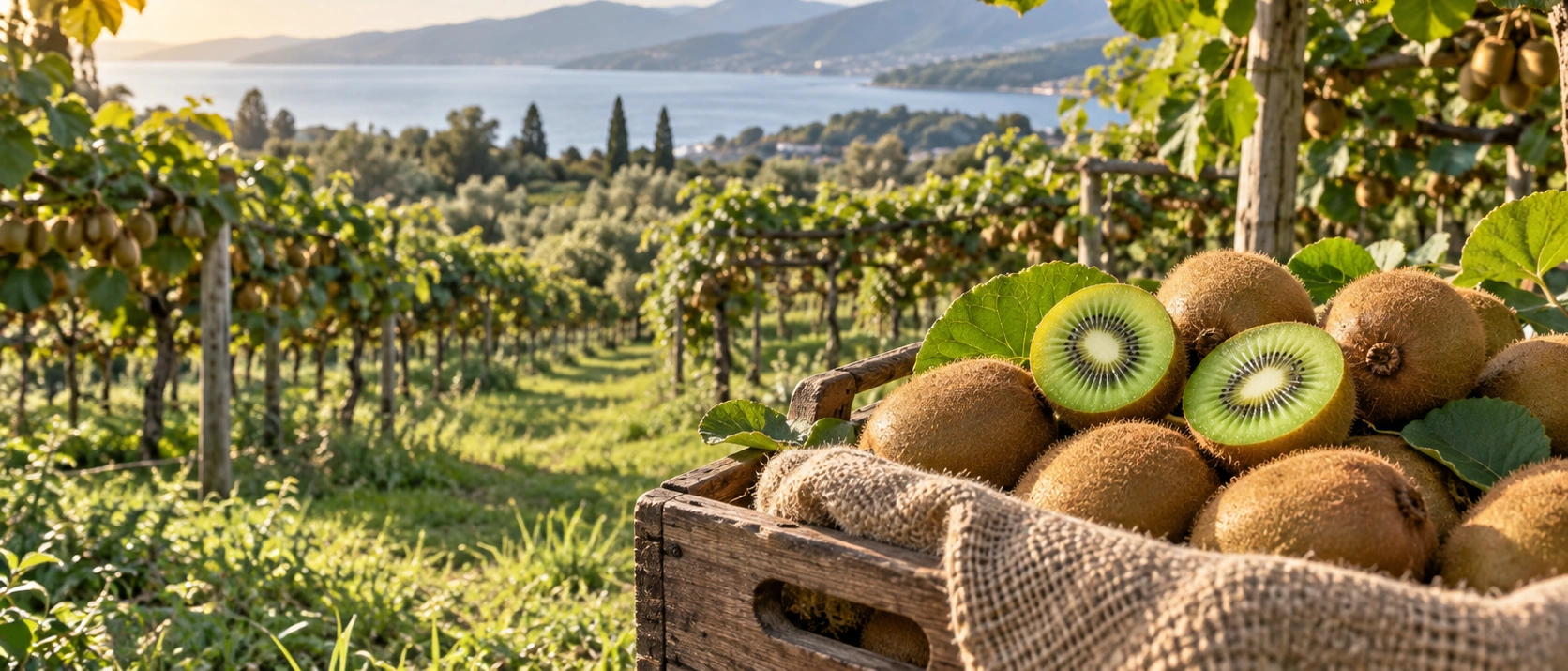
Yalova Kiwi became especially associated with the Hayward cultivar, appreciated for fruit size, flavour, productivity, market acceptance, late ripening, and storage life. The province’s growers also developed strong expertise in handling the fruit after harvest, allowing the crop to remain commercially available long after it leaves the orchard.
This relationship was formally recognised in 2021, when Yalova Kivisi was registered as a geographical indication with the status of menşe adı, or designation of origin. Today, kiwi remains an important part of Yalova’s agricultural identity alongside aronia, ornamental plants, nursery production, persimmons, vegetables, and other fruit crops.