Private Bilecik Food Discovery
Explore traditional regional dishes, local food stories, markets and agricultural products on a flexible private route.
Request This Tour





Kaçamak is a traditional cornmeal preparation recorded among the regional foods of Bilecik Province in northwestern Türkiye. Its ingredient list could hardly be simpler: cornmeal and water.
The traditional Bilecik method begins by bringing water to a boil and adding cornmeal. The mixture is stirred and cooked until it becomes a dense, firm mass rather than a loose porridge.
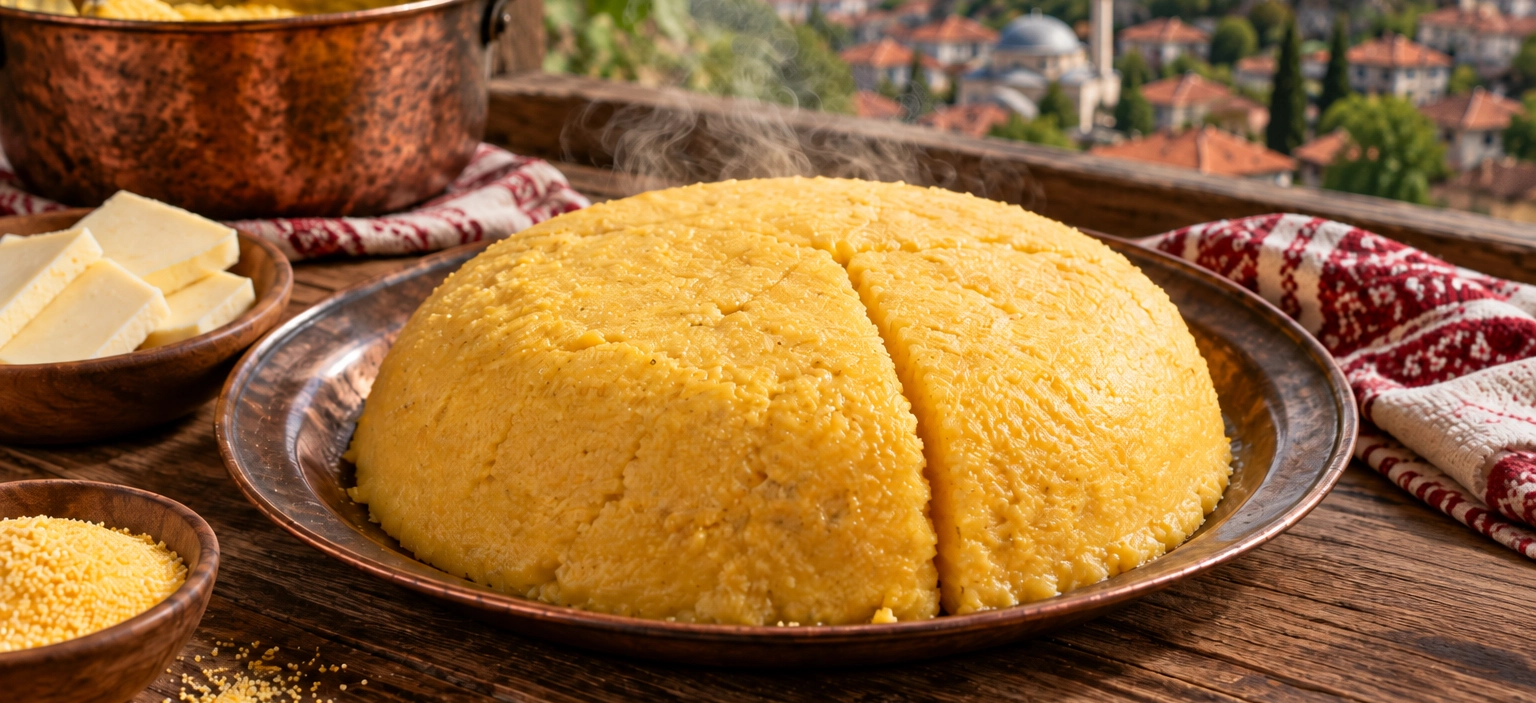
The cooked Kaçamak is then turned directly from its pot onto a serving plate. One of the most memorable details of the traditional preparation is the way it can be portioned: rather than using an ordinary kitchen knife, the firm cornmeal mass is cut with thread.
Bilecik's documented recipe also notes that the finished dish may be decorated or served with slices of kaşar cheese if desired.
For travellers exploring Bilecik through its cuisine, Kaçamak demonstrates an important side of Anatolian food culture: a filling regional dish does not need a long ingredient list. Technique, grain and texture can be enough to create a food tradition remembered across generations.
Recorded by Türkiye's official Culture Portal as part of the traditional cuisine of Bilecik.
The documented recipe relies on just two basic ingredients for the main preparation.
Kaçamak is cooked until dense enough to hold its shape when turned out of the pot.
The traditional serving technique uses thread to divide the firm cornmeal preparation into portions.
Essential information about one of Bilecik's most straightforward traditional grain dishes.
Bilecik Province in northwestern Türkiye.
Open Bilecik on Google MapsCornmeal forms the entire grain base of the traditional recipe.
Water is used to cook the cornmeal into a dense, cohesive preparation.
The finished Kaçamak can be divided into portions using thread.
An uncomplicated cornmeal preparation that reflects the grain-based character of Bilecik's traditional kitchen.
Traditional cuisine in Bilecik has long placed an important emphasis on grain-based foods. The province's official tourism information describes cereals as an important part of local eating traditions and records numerous handmade dough and grain preparations.
Kaçamak fits naturally into this wider culinary landscape. Instead of requiring meat, elaborate sauces or numerous seasonings, it transforms cornmeal and boiling water into a substantial cooked dish.
The official Culture Portal recipe is particularly valuable because it preserves not only the ingredients but also the serving method. The cooked cornmeal is turned from the pot onto a plate and then cut using thread.
That detail reveals something important about traditional cooking. Texture determines technique: Kaçamak becomes sufficiently firm after cooking that it can hold its shape and be portioned cleanly.
The recipe is therefore both simple and distinctive. Its identity comes less from the number of ingredients and more from how those ingredients are cooked, shaped and served.
Kaçamak is a dense cooked cornmeal dish. In the traditional Bilecik recipe, cornmeal is added to boiling water and mixed until the preparation develops a thick, dough-like consistency.
It is then cooked thoroughly so that the cornmeal hydrates and the mixture becomes firm enough to maintain its form outside the cooking pot.
Finely ground corn provides the flavour, colour and body of the dish.
Hot water hydrates and cooks the cornmeal until the grains bind together.
The mixture is cooked far beyond the consistency of a thin soup or sauce.
The finished mass takes on the shape of the vessel before being turned onto a plate.
Traditional thread cutting creates individual portions without crushing the soft cornmeal structure.
Türkiye's official Bilecik recipe notes that kaşar cheese may be added if desired.
One of the most remarkable characteristics of Kaçamak is its minimal ingredient list. The traditional Bilecik preparation published by Türkiye's Culture Portal requires only cornmeal and water for the basic dish.
Cornmeal gives Kaçamak its golden-yellow colour, grain aroma and characteristic dense structure. As it cooks in boiling water, the dry meal gradually absorbs moisture and binds into a cohesive mass.
Because there are so few ingredients, the flavour and texture of the cornmeal remain immediately noticeable. Kaçamak is therefore an excellent example of a dish in which the grain itself is the centre of attention.
Corn naturally gives the dish its warm yellow appearance.
The cooked cornmeal provides a mild, earthy and recognisably cereal-based flavour.
During cooking, the cornmeal hydrates and expands into a thick mixture.
Continued cooking allows the mixture to become firm enough to hold its shape.
The absence of complicated seasoning keeps the flavour profile focused on the grain itself.
Kaçamak demonstrates how basic grains can form substantial dishes in regional home cooking.
The traditional method begins by bringing the water to a boil. Cornmeal is then added and stirred so that it combines with the hot water.
The mixture must continue cooking until it becomes thoroughly cooked and develops the firm consistency that distinguishes Kaçamak from a thin cornmeal porridge.
Texture is perhaps the most important characteristic of Kaçamak. The official preparation specifically describes the cornmeal and water as forming a firm dough-like mass.
That firmness is necessary because the cooked dish must survive being turned out of the pot and then divided into portions.
The mixture is considerably thicker than a soup or loose cornmeal porridge.
Proper cooking allows the cornmeal to hold together as a single mass.
Although firm enough to slice, the cooked grain remains tender rather than becoming bread-like.
Once inverted, the preparation naturally reflects the form of its cooking vessel.
The traditional thread-cutting method depends on the mixture reaching the correct consistency.
The combination of warm grain and simple preparation gives Kaçamak the character of traditional home cooking.
One of the most interesting details recorded in Bilecik's traditional Kaçamak recipe is the use of thread for cutting.
After the cooked cornmeal is inverted onto its serving plate, a length of thread can be passed through the soft but firm mass to separate it cleanly into portions.
The technique is especially suited to foods that are firm enough to retain their shape but soft enough that pressure from a heavy knife could compress or distort the surface.
Thread cutting is specifically recorded in the official Bilecik preparation.
A taut thread can pass through the cornmeal mass without dragging heavily across the surface.
The method helps keep the inverted mound visually intact during portioning.
A neat cut reveals the dense but tender interior of the cooked cornmeal.
The moment the thread passes through Kaçamak creates an especially distinctive culinary image.
The serving technique is almost as memorable as the short ingredient list itself.
The official Culture Portal recipe notes that Kaçamak can be decorated with slices of kaşar cheese according to preference.
Kaşar introduces a richer dairy character to an otherwise extremely simple grain dish. When placed onto warm Kaçamak, the cheese may soften slightly from the retained heat of the cooked cornmeal.
Cheese is not required for the basic Kaçamak preparation.
Kaşar adds a savoury dairy flavour beside the mild cornmeal.
Cheese placed on freshly cooked Kaçamak can soften against the warm surface.
Pale cheese provides a visual contrast with the golden cornmeal base.
Traditional Kaçamak has a deliberately straightforward flavour profile. With only cornmeal and water forming the basic preparation, the natural taste of cooked corn remains at the centre.
The principal flavour comes from the warm cereal character of cooked cornmeal.
The documented recipe does not depend on a complicated mixture of spices or sauces.
The substantial texture makes the dish feel considerably richer than its short ingredient list suggests.
Optional kaşar adds saltiness, dairy richness and additional aroma.
Because the recipe is so simple, the quality and flavour of the cornmeal remain noticeable.
Its appeal lies in simplicity, texture and the connection with regional home cooking.
Bilecik's official provincial tourism information describes grain products as an important part of traditional local nutrition and notes the continuing role of handmade breads, pastries, noodles and other flour- and grain-based foods.
Kaçamak adds cornmeal to this wider culinary picture. Its simplicity reflects the resourceful logic of many regional kitchens: transform a basic stored grain into a warm and substantial dish with very little additional equipment or ingredients.
Bilecik's traditional food culture includes a particularly strong range of grain and dough preparations.
The technique requires an ordinary pot, boiling water and careful stirring rather than elaborate equipment.
Kaçamak demonstrates how regional dishes can develop identity through method rather than complexity.
Knowing when the mixture has cooked and thickened sufficiently is an important part of the preparation.
Turning the pot onto a plate and cutting with thread gives the dish a memorable finishing ritual.
Kaçamak adds another layer to Bilecik's diverse collection of savoury dishes, grain foods and traditional sweets.
Many memorable regional foods are built from a surprisingly limited pantry. In Kaçamak, the cooking process itself creates the transformation.
Dry cornmeal begins as a loose grain product. Boiling water, stirring and sustained heat change it into a single, cohesive preparation that can be shaped and portioned.
Only the essentials are required to create the traditional base.
Correct hydration and sufficient cooking determine the final success of the dish.
Travellers can immediately see how grain, water and heat create the finished food.
A simple recipe places greater importance on achieving the correct consistency.
Once thoroughly cooked, Kaçamak is transferred in a particularly simple way: the cooking pot is inverted directly over the serving plate.
Properly prepared Kaçamak should be cohesive enough to come away as a recognisable mass rather than immediately spreading across the plate.
A loose mixture will not reproduce the characteristic inverted presentation.
The serving dish should provide enough room for cutting and arranging portions.
Controlled turning helps keep the cooked cornmeal together.
The pot-shaped mound is part of the visual identity of the traditional presentation.
Traditional serving begins immediately after the Kaçamak has been turned onto its plate. The firm cornmeal mass is portioned with thread and may then be accompanied by kaşar cheese.
Warm Kaçamak best displays the soft interior created during cooking.
The inverted pot shape provides useful context before the dish is divided.
Try the traditional method rather than immediately using a knife.
Cheese is an optional addition specifically mentioned in the traditional Bilecik recipe.
Kaçamak does not require elaborate plating to communicate its regional character.
The mild corn aroma and dense texture are central to the experience.
Kaçamak does not fit neatly into the familiar categories used by many international travellers. It is not bread, because the Bilecik recipe is not baked into a loaf. It is also much firmer than an ordinary liquid porridge.
The easiest way to understand it is as a firm cooked cornmeal preparation whose texture allows it to be moulded by the cooking pot and cut into portions after cooking.
The traditional recipe cooks the cornmeal in water rather than baking it as bread.
Kaçamak is cooked until sufficiently thick to stand on the plate.
There are no rolled sheets, fillings or pastry layers in the traditional preparation.
Its defining identity comes from cornmeal, hydration, heat and texture.
Traditional dishes with very simple home-style preparation may not appear on every restaurant menu every day. Travellers interested in Kaçamak should ask specifically by its Turkish name when exploring Bilecik.
Restaurants specialising in local Bilecik cuisine are natural places to ask about Kaçamak.
The Turkish name is short and easy to show or mention when asking locally.
Some traditional preparations survive most strongly through household and community food traditions.
Local hotel teams may know restaurants currently serving regional dishes.
A local guide can help identify traditional food stops during a wider Bilecik itinerary.
Kaçamak is best understood as one element within the much wider culinary heritage of Bilecik Province.
Traditional Kaçamak should be firm enough to remain shaped on the plate.
If possible, see the moment the pot is inverted over the serving plate.
The unusual cutting method is one of the most memorable parts of the documented preparation.
Tasting a small piece without additions makes the natural cornmeal flavour easier to understand.
Compare the simple cornmeal base with the richer savoury version suggested by the traditional recipe.
A clean thread-cut portion reveals the dense interior particularly well.
Continue with Kapama, Papaz Yahnisi, Oven Kebab, Pazaryeri Boza and traditional desserts.
Local preparation details can turn a very simple dish into an especially interesting food story.
Photograph the yellow cornmeal as it is added to the steaming water.
Capture the moment the mixture becomes thick enough for the spoon to leave visible tracks.
The instant the cooking pot is turned onto the plate tells the preparation story immediately.
A close photograph of the thread passing through Kaçamak is one of the strongest possible images.
Show the clean interior texture after one piece has been separated.
Photograph optional cheese against the golden surface for additional colour and texture.
Kaçamak represents only one corner of Bilecik's varied traditional table. The province's cuisine includes meat dishes, rice preparations, handmade doughs, fermented drinks, orchard products, vegetables and syrup desserts.
A distinctive regional meat and onion stew associated with the province's savoury cuisine.
A substantial regional rice-and-meat preparation representing another style of home cooking.
A slow-cooked meat speciality for travellers exploring the province's richer savoury dishes.
A walnut-filled, hand-gathered syrup pastry that contrasts dramatically with Kaçamak's simplicity.
A fermented grain drink associated with Pazaryeri and another expression of Bilecik's grain traditions.
Pomegranate, quince, peppers, watermelon and other produce broaden Bilecik's regional food identity.
Move from simple cornmeal cooking to one of Bilecik's elaborate walnut-filled syrup pastries.
Discover one of the province's distinctive savoury meat dishes.
Continue through Bilecik cuisine with a filling rice-and-meat preparation.
Compare Kaçamak's ingredient simplicity with Bilecik's slow-cooked meat traditions.
Continue exploring Bilecik's grain culture through a traditional fermented drink.
Add one of Bilecik's regional sweets to your food journey.
Explore one of the agricultural products connected with Bilecik's seasonal kitchen traditions.
Discover the fruit-growing heritage of another important Bilecik district.
Add archaeological and cultural context to a day exploring regional food traditions.
Combine Bilecik's culinary heritage with an important historical landmark.
Continue toward Söğüt to explore places connected with early Ottoman history.
Extend the journey toward the landscapes associated with the Battles of İnönü.
Combine Ottoman architecture with the agricultural and culinary traditions of the Sakarya Valley.
Ask us to combine local cuisine, Ottoman heritage, villages and countryside into a private itinerary.
The traditional preparation described on this page is based principally on Türkiye's official Culture Portal entry for Kaçamak – Bilecik. The portal records the cornmeal-and-water recipe, the firm cooking method, inversion onto the serving plate, thread cutting and optional kaşar garnish.
The Culture Portal identifies its original reference as the Bilecik Governorship Provincial Yearbook, 2005.
Kaçamak is a traditional cornmeal dish made by cooking cornmeal in boiling water until it forms a firm, dough-like mass.
Yes. Türkiye's official Culture Portal records Kaçamak – Bilecik as part of the province's traditional cuisine.
The documented traditional recipe uses 2 glasses of cornmeal and 2 glasses of water.
Cornmeal is added to boiling water and stirred until a firm mixture forms. It is then cooked thoroughly before serving.
The cornmeal absorbs the cooking water and thickens until the finished preparation can hold its shape outside the pot.
Traditional Bilecik Kaçamak is turned out of the cooking pot directly onto a serving plate.
Yes. Cutting the finished cornmeal mass with thread is specifically mentioned in the traditional Bilecik recipe.
Thread passes cleanly through the soft but firm cornmeal mass and helps preserve its shape while portions are separated.
Not in the traditional Bilecik recipe documented by Türkiye's Culture Portal. The grain ingredient listed is cornmeal.
No meat is listed in the documented basic recipe, which consists of cornmeal and water.
Cheese is optional. The official recipe notes that slices of kaşar cheese may be added if desired.
No. Traditional Bilecik Kaçamak is a cooked cornmeal preparation rather than a baked loaf.
No. It is cooked to a dense consistency that allows it to maintain its shape when placed on a serving plate.
Its characteristic warm yellow or golden appearance comes naturally from the cornmeal used in the preparation.
The traditional version has a mild grain-focused corn flavour. Optional kaşar cheese adds a richer savoury element.
Its ingredient list is extremely simple, but proper stirring and cooking are important for achieving the characteristic firm texture.
Availability can vary because traditional home-style dishes may not be prepared daily. Ask restaurants or local guides specifically for Kaçamak.
Travellers can continue with Bilecik Kapama, Papaz Yahnisi, Oven Kebab, Cevizli Büzme Tatlısı, Pazaryeri Boza and other regional dishes and products.
Kaçamak is unlikely to impress because of expensive ingredients or elaborate decoration. Its importance lies somewhere more interesting: it shows how local cooking transforms the simplest pantry ingredients into a dish with its own texture, serving ritual and regional identity.
For culinary travellers, these modest foods can reveal as much about traditional life as more elaborate restaurant dishes. Kaçamak connects grain, household cooking and inherited technique in an immediately understandable way.
The short recipe provides a useful contrast with Türkiye's more elaborate regional dishes.
Pot inversion and thread cutting create a preparation process worth seeing in person.
The dish helps travellers understand the importance of cereals in traditional Bilecik foodways.
Few travellers forget a dish whose traditional preparation ends by cutting it with a piece of thread.
A strong visual sequence should concentrate on the transformation of the grain: dry yellow cornmeal, boiling water, thick stirring, the finished mixture leaving the pot, thread cutting and the final serving plate.
Begin with a close-up of golden cornmeal in a traditional kitchen setting.
Show the wooden spoon working through the increasingly thick mixture.
Capture the pot being lifted away from the mound of freshly cooked Kaçamak.
Focus tightly on the hands positioning the thread beneath or across the cornmeal mass.
Photograph one freshly separated piece beside the remaining mound.
Finish with an optional serving showing pale cheese against the warm golden cornmeal.
Combine traditional Bilecik dishes with Ottoman heritage, agricultural landscapes, markets, villages and lesser-known cultural sites on a private journey designed around your interests.
Custom-designed private journeys with flexible timing, private transportation and opportunities to explore regional cuisine, local products, historical monuments and the quieter corners of Bilecik Province.
Explore traditional regional dishes, local food stories, markets and agricultural products on a flexible private route.
Request This Tour
Combine Bilecik city, Söğüt, Osmaneli, Bozüyük and surrounding countryside on a private route linking early Ottoman heritage, regional cuisine and traditional products.
Request This Tour