Private Bilecik Gastronomy Discovery
Explore Bilecik's protected dishes, traditional restaurants, agricultural products and culinary heritage on a flexible private food-focused route.
Request This Tour





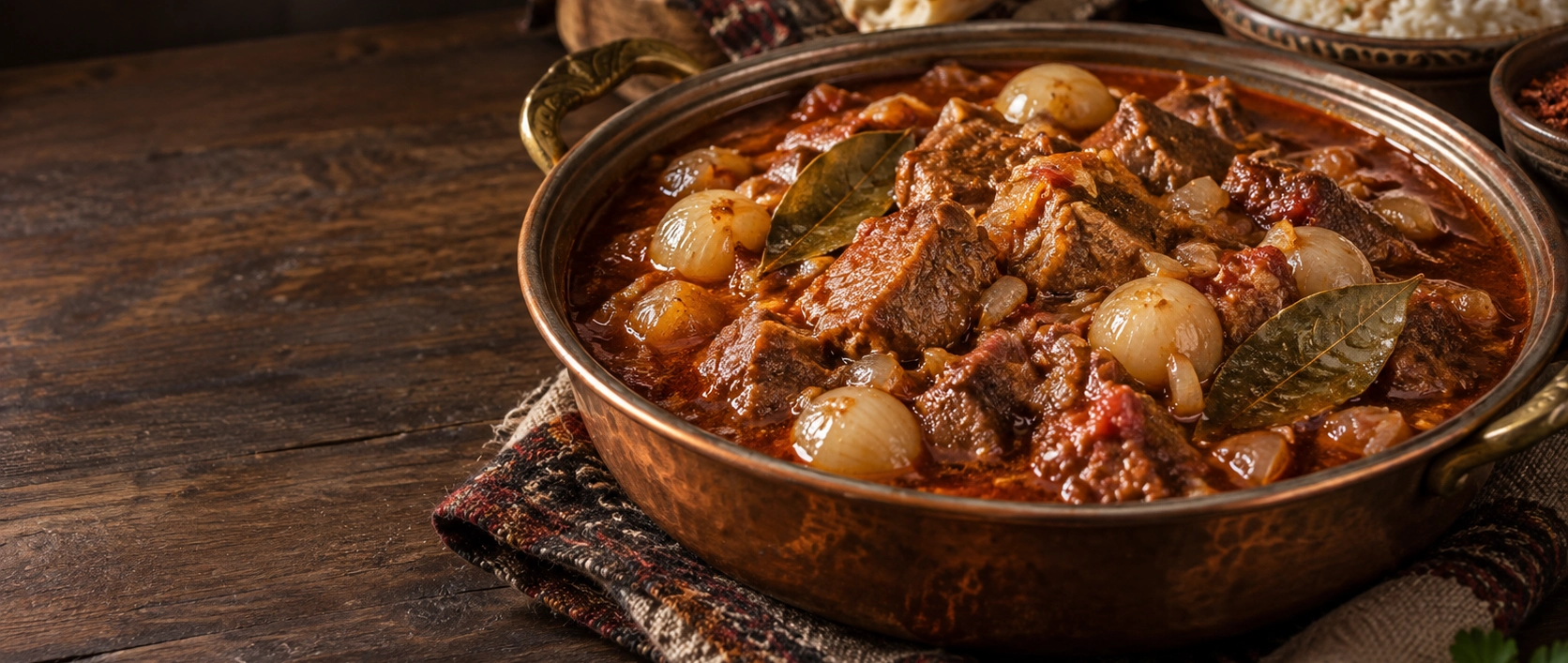
Bilecik Papaz Yahnisi is a traditional meat stew associated with Bilecik Province and described in its geographical-indication specification as a dish carried from the Ottoman period to the present day.
Its most distinctive flavour comes from the meeting of sweet and sour. Grape vinegar provides acidity, while honey softens and balances the sauce around tender red meat, onions, tomato, garlic and warm spices.
The protected preparation uses chopped red meat — preferably lamb — together with dry onion and/or pearl onion. The meat is browned first, the onions and garlic are sautéed, and the remaining ingredients are added before the stew is slowly cooked under a closed lid.
Allspice, black pepper and bay leaf give the stew a warm aromatic character, while tomato and tomato or pepper paste add body and depth to the cooking liquid.
Bilecik Papaz Yahnisi received Turkish geographical-indication registration in December 2025, formally recognising its connection with Bilecik's culinary heritage and the skill required to balance its ingredients.
Served hot at ordinary meals as well as weddings, holidays, festivals and guest gatherings, the dish represents a particularly expressive side of Bilecik cuisine: rich meat, softened onions and a carefully controlled sweet-sour sauce.
Bilecik Papaz Yahnisi became a registered Turkish geographical indication on 16 December 2025.
Grape vinegar and honey create the defining contrast at the centre of the dish.
The registered recipe uses chopped red meat and specifically notes lamb as the preferred choice.
After browning and sautéing, the stew cooks under a closed lid for about 45 minutes.
Essential information about one of Bilecik Province's protected traditional meat dishes.
Bilecik Province, northwestern Türkiye.
Open Bilecik on Google MapsSweet-and-sour red-meat stew with onions, tomato, garlic, vinegar, honey and spices.
Bilecik Papaz Yahnisi – geographical-indication registration no. 1806.
A carefully balanced combination of grape vinegar and honey.
A meat-and-onion stew defined by the meeting of savoury, sweet, sour and aromatic flavours.
The official geographical-indication description presents Bilecik Papaz Yahnisi as a dish that has been carried from the Ottoman period into the present day.
Its identity is not based on meat alone. The stew depends on the way red meat, onions, tomato, garlic, vinegar, honey and spices are combined so that no single element overwhelms the others.
The sweet-sour contrast is particularly important. Grape vinegar supplies acidity, while honey contributes sweetness and helps create the rounded flavour that distinguishes the Bilecik preparation.
The technique also matters. The meat must be browned properly, the onions cooked sufficiently, and the vinegar, honey, spices and cooking liquid kept in balance while the stew develops under a closed lid.
In Bilecik, Papaz Yahnisi is associated not only with ordinary meals but also with weddings, religious holidays, festivals and occasions when guests are welcomed.
This combination of long-standing reputation, regional culinary practice and preparation skill was formally recognised through geographical-indication registration in December 2025.
Bilecik Papaz Yahnisi is a traditional stew in which chopped red meat, preferably lamb, is cooked with onion and/or pearl onion, tomato, garlic, vinegar, honey, butter, oil, tomato or pepper paste and aromatic spices.
The dish is especially notable for its sweet-and-sour flavour structure. Vinegar brings brightness and acidity, honey adds measured sweetness, and the meat, onions and tomato provide the savoury foundation.
Unlike a dry meat preparation, Papaz Yahnisi is cooked with hot water under a closed lid until the meat becomes tender and the sauce develops a harmonious consistency.
The protected recipe uses chopped red meat and identifies lamb as the preferred choice.
Dry onion and/or pearl onion form one of the largest vegetable components of the stew.
Vinegar gives the dish its characteristic sour and bright dimension.
Honey balances the vinegar and contributes to the distinctive sweet-sour profile.
Fresh tomato together with tomato and/or pepper paste gives colour, body and savoury depth.
Allspice, black pepper and bay leaves add fragrance without masking the central meat-and-onion character.
The regional identity of the dish was formally recognised when Bilecik Papaz Yahnisi received Turkish geographical-indication registration on 16 December 2025.
The protected specification identifies both the characteristic ingredient combination and the production method as important to the dish's recognised identity.
Particular skill is required in browning the meat correctly, cooking the onions sufficiently and balancing vinegar, honey, spices, salt and cooking liquid.
Because of the recognised reputation link with the province, the specification requires all production stages of Bilecik Papaz Yahnisi to take place within Bilecik Province.
The combination of grape vinegar and honey is the most distinctive flavour signature of the stew.
The registered specification uses red meat and specifically identifies lamb as the preferred choice.
Dry onions and/or pearl onions become soft, sweet and deeply integrated into the sauce.
Fresh tomato and tomato or pepper paste add savoury depth and body to the cooking liquid.
Allspice, black pepper and bay leaves create a rounded, gently aromatic background.
Meat browning, onion texture, liquid control and sweet-sour balance all depend on careful cooking.
The protected recipe builds the stew from meat, onions, tomato, fats, vinegar, honey and a restrained but characteristic group of spices.
One kilogram of chopped red meat is used in the six-person reference recipe; lamb is preferred.
A total of 500 g of dry onion and/or pearl onion gives the stew sweetness and body.
Fresh tomato contributes moisture, colour and natural acidity.
Vinegar is essential to the dish's defining sour note.
Honey balances the vinegar and helps create the sweet-sour character.
Garlic joins the onions during the sautéing stage and deepens the savoury base.
Butter contributes richness and supports browning and aroma.
Liquid oil works with the butter during the initial cooking stage.
Paste reinforces colour, savoury depth and sauce consistency.
Allspice provides warm, rounded aromatic notes.
Black pepper brings gentle pungency and fragrance.
Bay leaves perfume the cooking liquid during the covered simmer.
The geographical-indication specification provides the following average quantities for a six-person preparation of Bilecik Papaz Yahnisi.
The protected method follows a clear sequence: brown the meat, cook the onions and garlic, add the tomato-based ingredients, vinegar, honey, spices and water, then simmer the stew under a closed lid until the meat is tender.
Meat is the centre of Bilecik Papaz Yahnisi, and the protected recipe calls for 1 kg of chopped red meat for six portions, with lamb specifically identified as the preferred choice.
Lamb naturally suits the sweet-sour sauce and is the preferred meat named in the protected specification.
The meat is cut into pieces suitable for browning and slow cooking in the stew.
The meat is sautéed in butter and liquid oil before the onions and sauce ingredients are added.
The covered cooking stage allows the meat to soften while absorbing the flavours around it.
Rendered meat juices combine with butter, tomato, onions and spices to form the heart of the sauce.
The stew is considered ready when the meat has softened and the sauce has reached a harmonious consistency.
Onions are not a minor flavouring in this recipe. The registered six-person guide uses 500 g of dry onion and/or pearl onion, making them one of the defining components of the dish.
Chopped dry onion is sautéed after the meat and helps create the body of the sauce.
Whole pearl onions may be used and provide small, sweet, tender pieces throughout the finished stew.
As onions soften they contribute sweetness that supports the honey-vinegar balance.
Correct cooking should soften the onions while allowing whole pearl onions to remain visually recognisable.
Whole garlic joins the pearl onions during the sautéing stage and deepens the savoury aroma.
With 500 g in the official six-person recipe, onions are central rather than decorative.
The sweet-and-sour identity of Bilecik Papaz Yahnisi comes especially from the combination of vinegar and honey.
Neither ingredient is intended to dominate. The culinary skill lies in allowing acidity, sweetness, meat, onion, tomato and spice to support one another.
The official six-person reference recipe uses 100 ml of vinegar.
Honey provides measured sweetness and rounds the sharpness of the vinegar.
Vinegar cuts through the richness of meat, butter and cooking juices.
Honey works with the natural sweetness of well-cooked onions.
Fresh tomato and paste help connect sour, sweet and savoury elements.
The protected description specifically emphasises careful use of vinegar, honey and spices.
Tomato gives the stew colour, moisture and savoury depth. The official six-person reference combines 300 g of fresh tomato with 50 g of tomato and/or pepper paste.
Grated or chopped tomato adds moisture and a natural sweet-acidic base.
Tomato paste reinforces colour and savoury concentration.
Pepper paste may be used instead of or together with tomato paste.
The combination helps the cooking liquid become more cohesive as the stew simmers.
Tomato contributes acidity without replacing the distinct role of vinegar.
Its natural sweetness helps the honey feel integrated rather than separate.
The spice profile is compact but distinctive. Allspice, black pepper and bay leaf provide the aromatic background for the meat, onions, tomato, vinegar and honey.
The official recipe uses 5 g of allspice for six portions, adding warm and rounded fragrance.
Five grams of black pepper contributes gentle heat and savoury aroma.
Three bay leaves perfume the cooking liquid during the slow covered simmer.
Ten grams of salt seasons the ingredients and helps the sweet-sour structure read clearly.
The seasoning profile is aromatic rather than chilli-driven.
The protected description specifically identifies balanced spice use as part of the required cooking skill.
Bilecik Papaz Yahnisi combines several flavour directions at once: deep savoury meat, sweet onion and honey, bright vinegar, tomato richness and warm aromatic spice.
Browned red meat, tomato paste, garlic and cooking juices form the savoury foundation.
Honey and softened onions contribute controlled sweetness.
Vinegar gives the stew its characteristic tang and prevents the sauce from becoming flat.
Butter and red meat give the cooking liquid body and depth.
Allspice, black pepper and bay leaves provide warm fragrance.
The finished dish should taste integrated, with no single sweet, sour or spicy element overwhelming the rest.
The approximately 45-minute covered cooking stage is designed to soften the meat.
Chopped onions become part of the sauce while pearl onions can remain as tender whole pieces.
The liquid should surround and coat the ingredients without turning the dish into a thin soup.
Fresh tomato and paste give the cooking liquid substance and colour.
Covered cooking helps retain moisture while the flavours combine.
When prepared correctly, meat, onions and sauce come together without losing their individual character.
Meat stews are common across Anatolia, but the protected Bilecik preparation is distinguished by a particular ingredient balance and cooking sequence.
The defining sweet-sour contrast comes from using both ingredients together.
Dry and/or pearl onions are a major part of the recipe rather than a small aromatic addition.
The protected reference specifies red meat and identifies lamb as the preferred choice.
Fresh tomato is reinforced with tomato and/or pepper paste for a richer sauce base.
The aromatic profile includes allspice, black pepper and bay leaf.
The Bilecik name, ingredients, preparation method and reputation are formally recognised by geographical indication.
Bilecik Papaz Yahnisi belongs both to ordinary dining and to the more ceremonial side of local food culture. The protected description specifically records its service at important social occasions.
The stew can be enjoyed as a substantial everyday main course.
Papaz Yahnisi is among the dishes associated with wedding gatherings in the protected description.
Bayram tables provide another setting for the dish.
Regional festivals help keep local culinary traditions visible and shared.
The stew may be prepared when visitors are welcomed to the table.
A large pot of slowly cooked meat and onions naturally suits communal service.
The cultural value of Papaz Yahnisi comes not only from its recipe but also from the occasions on which it is shared. A generous stew that can be served with pilaf, bread or pide fits naturally into Bilecik's tradition of welcoming people around a table.
The balance of meat, onions, sauce and warming spices makes it substantial enough to stand at the centre of a meal while still pairing easily with simple accompaniments.
The six-person reference recipe reflects a dish suited to family and group dining.
One kilogram of meat in the official recipe creates a substantial centrepiece.
Hot service keeps the meat tender and the sweet-sour aromas vivid.
Pilaf, bread and pide are specifically mentioned as optional accompaniments.
The dish is connected with weddings, holidays, festivals and guest hospitality.
Continued preparation keeps an Ottoman-era Bilecik food tradition active in the present.
The geographical-indication guidance recommends serving and eating Bilecik Papaz Yahnisi while hot.
Warm service keeps the sauce aromatic and the meat at its most tender.
Rice pilaf can provide a mild base for the rich sweet-sour stew.
Fresh bread is well suited to the sauce and is specifically mentioned as an optional accompaniment.
Pide offers another traditional way to complete the meal.
Parsley, tomato, onion or red kapya pepper may be used decoratively at service.
Mint and red pepper flakes may also be used as optional finishing garnishes.
Because the stew already combines meat, onion, tomato, honey, vinegar, butter and spices, accompaniments can remain simple and help carry the sauce.
A mild pilaf complements the rich sauce without competing with the sweet-sour balance.
Bread is ideal for collecting the tomato, onion and meat juices from the plate.
Soft pide offers a traditional and satisfying accompaniment.
A fresh seasonal salad can lighten a rich meat-focused meal.
Although not part of the official service specification, ayran can offer a cool contrast to the stew.
Continue the meal with Pazaryeri halva or Osmaneli quince-based sweets.
Bilecik Papaz Yahnisi is a regional speciality rather than a dish that travellers should expect to find on every menu every day. Traditional restaurants, regional gastronomy events and places specialising in Bilecik cooking are natural places to ask.
Using the full protected name helps distinguish the Bilecik version from other regional dishes also called papaz yahni.
Places focusing on Bilecik cuisine are more likely to know the protected preparation.
The registered recipe uses red meat and specifically prefers lamb.
A traditional Bilecik version should clearly unite vinegar and honey rather than tasting only sweet or only sour.
Festivals and gastronomy events can provide opportunities to encounter protected regional dishes.
Guides and hotel teams may know which restaurants are currently preparing Bilecik Papaz Yahnisi.
The stew is designed to be enjoyed warm, when the meat is tender and the aromatic sauce is at its best.
The most interesting versions keep honey, vinegar, tomato and spice in harmony.
Whole pearl onions can provide both visual character and sweet, tender bites.
Rice provides a neutral base that allows the sauce to remain the focus.
Fresh bread or pide makes it easier to enjoy the richly flavoured cooking liquid.
A traditional version should emphasise browned meat, well-cooked onions and a controlled vinegar-honey balance.
Continue with Bilecik Kapama, oven kebab, quail kebab, boza and regional sweets.
Bilecik gastronomy can easily be paired with Ottoman heritage, Söğüt, Osmaneli and the province's countryside.
Photograph the finished stew with tender meat and pearl onions visible in the glossy sauce.
Arrange vinegar and honey beside onions, garlic, tomato and spices to explain the dish's flavour structure.
Capture whole pearl onions glistening among the pieces of meat.
Show the red meat developing colour in butter and oil before the remaining ingredients are added.
Photograph the tomato-rich sauce coating meat and onions to communicate texture and depth.
Pair the finished stew with pilaf, bread or pide in a warm Bilecik-style dining scene.
Bilecik's culinary landscape brings together meat dishes, soups, handmade dough foods, fermented drinks, sweets, orchard fruits and locally grown agricultural products.
Papaz Yahnisi adds a particularly distinctive sweet-sour meat tradition to this wider food culture, combining Ottoman-era culinary memory with a formally protected local recipe.
A protected rice-and-meat dish finished with broth and butter.
A geographically indicated regional meat dish based on slow oven cooking.
Another protected Bilecik speciality centred on meat and careful oven preparation.
A regional sour lentil-and-noodle soup associated with Bilecik food culture.
A fermented grain drink closely connected with the Pazaryeri district.
Pomegranate and quince traditions reveal another side of the province's agricultural identity.
Discover a protected Bilecik rice-and-meat dish prepared with broth, butter and covered oven cooking.
Continue with another protected Bilecik meat speciality shaped by slow oven cooking.
Taste a geographically indicated regional dish prepared with quail and vegetables.
Explore Bilecik's distinctive sour lentil-and-noodle soup.
Discover a traditional fermented grain drink associated with Pazaryeri.
Continue your regional food journey with one of Pazaryeri's traditional sweets.
Explore one of the characteristic agricultural products of southern Bilecik Province.
Finish with a fruit-based speciality inspired by Osmaneli's quince-growing tradition.
Explore the archaeological and cultural history of the province before or after discovering its cuisine.
Visit one of Bilecik's important historical landmarks as part of a city-centre itinerary.
Add a peaceful countryside and waterside stop to your gastronomy journey.
Continue toward Osmaneli to explore the district's layered historical and cultural landscape.
Continue toward Söğüt and the landscapes associated with early Ottoman history.
Ask us to combine Bilecik cuisine, Ottoman heritage, villages and countryside into a private itinerary.
Bilecik Papaz Yahnisi is a traditional Bilecik meat stew made with chopped red meat, onions, tomato, vinegar, honey, garlic, butter, oil, paste and warm spices.
It is associated specifically with Bilecik Province in northwestern Türkiye.
Yes. It received Turkish geographical-indication registration on 16 December 2025.
The registration number is 1806.
Bilecik Papaz Yahnisi is registered as a mahreç işareti.
The registration holder is the Bilecik Chamber of Commerce and Industry.
The protected recipe uses chopped red meat and specifically identifies lamb as the preferred choice.
The registered six-person reference preparation specifies approximately 1 kg of chopped red meat.
The official six-person ingredient guide uses 500 g of dry onion and/or pearl onion.
Its defining flavour comes especially from the combination of vinegar and honey.
The official six-person reference recipe lists 100 ml of vinegar.
The official six-person reference recipe lists 50 g of honey.
The protected reference recipe includes allspice, black pepper and bay leaves, together with salt.
Yes. The official recipe uses fresh tomato plus tomato paste and/or pepper paste.
The geographical-indication method gives an average cooking time of approximately 45 minutes after the ingredients are combined.
Yes. After the main ingredients, seasonings and hot water are added, the pot is covered and the stew cooks until the meat softens.
Yes. The protected method says the stew should be checked occasionally and the water quantity increased if necessary.
It is recommended to be served hot, optionally with pilaf, bread or pide.
Optional garnishes include parsley, tomato, onion, red kapya pepper, mint and red pepper flakes.
It can appear at ordinary meals as well as weddings, religious holidays, festivals and occasions when guests are welcomed.
No. The protected Bilecik version has its own specified ingredient balance, preparation method and recognised geographical identity.
The official description emphasises proper browning of the meat, sufficient cooking of the onions and a balanced use of vinegar, honey and spices.
Continue with Bilecik Kapama, Bilecik Oven Kebab, Bilecik Quail Kebab, Pazaryeri Boza and Pazaryeri Halva.
Yes. A Bilecik food journey can combine regional dishes with Ottoman heritage, traditional products, villages and countryside experiences.
Bilecik combines protected regional meat dishes, soups, dough foods, fermented drinks, sweets and fruit-growing traditions with an important historical landscape.
The strongest visual sequence should explain the flavour structure as well as the finished dish: meat browns first, onions and garlic soften, vinegar and honey create the signature balance, and the covered simmer brings everything together.
Show tender meat and pearl onions in a glossy reddish-brown sauce.
Arrange lamb or other red meat with onions, garlic, tomato, vinegar, honey, bay leaves and spices.
Capture the first stage when the meat develops colour in butter and oil.
Show chopped onion, pearl onion and garlic entering the pot.
Photograph the two signature ingredients being added to the sauce.
Finish with steaming Papaz Yahnisi beside pilaf, bread or pide on a simple traditional table.
Combine Bilecik's traditional cuisine with Ottoman heritage, village culture, local agricultural products and peaceful countryside on a private journey designed around your interests.
Custom-designed private journeys with flexible timing, private transportation and opportunities to explore regional food traditions, historical sites, agricultural landscapes and lesser-known corners of Bilecik Province.
Explore Bilecik's protected dishes, traditional restaurants, agricultural products and culinary heritage on a flexible private food-focused route.
Request This Tour
Combine Bilecik city, Söğüt, Bozüyük, Pazaryeri, Osmaneli, İnhisar and the surrounding countryside on a private route linking history, local cuisine, landscapes and village culture.
Request This Tour