Private Bilecik Gastronomy Discovery
Explore Bilecik's protected dishes, traditional restaurants, local agricultural products and culinary heritage on a flexible private food-focused route.
Request This Tour





Bilecik Oven Kebab, officially protected in Türkiye under the names Bilecik Fırın Kebabı and Bilecik Fırın Eti, is one of the most distinctive traditional meat dishes of Bilecik Province.
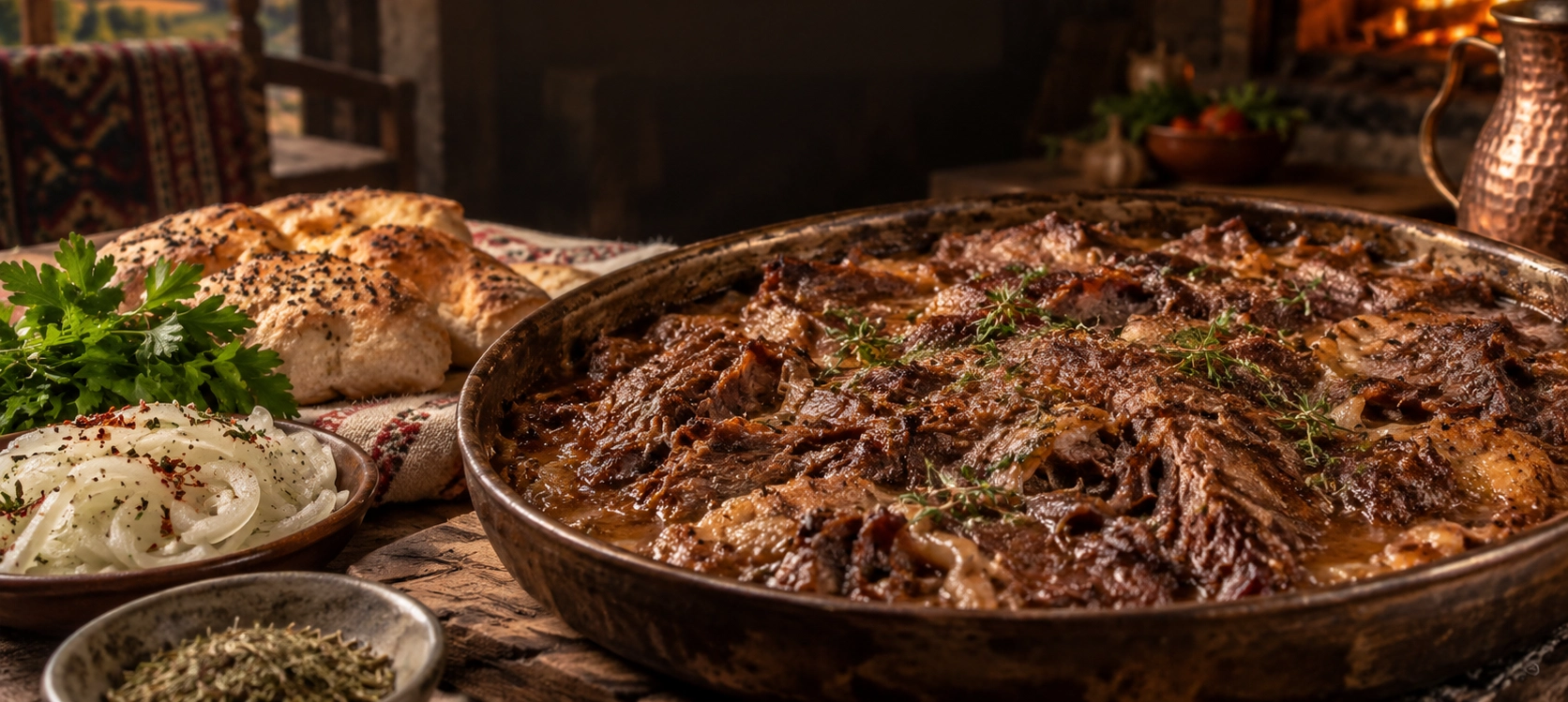
Its preparation is very different from kebabs cooked quickly over charcoal or on a grill. Young beef from the leg is first cooked with onion, then simmered slowly with sourdough village bread and water until tender. The cooked meat is cooled, sliced into exceptionally thin strips and arranged in trays.
The reserved cooking broth is then poured back over the sliced meat and the tray is placed uncovered in the oven. During this final stage the upper surface darkens, the broth concentrates and the edges of the tender meat begin to break apart.
A restrained amount of thyme is added after baking, and the dish is traditionally served hot with fresh pide or village bread. Finely sliced onion and parsley may accompany it.
Bilecik Fırın Kebabı / Bilecik Fırın Eti received Turkish geographical-indication registration in 2025, formally recognising the distinctive preparation method and the dish's long connection with the culinary culture of Bilecik.
This complete guide explores its history, geographical-indication status, traditional ingredients, selection of beef, use of sourdough bread, long simmering method, thin slicing, oven finishing, flavour, texture, serving traditions, visitor tips and its place within the wider gastronomy of Bilecik.
Bilecik Fırın Kebabı / Bilecik Fırın Eti became a registered Turkish geographical indication in August 2025.
The registered preparation uses the leg meat of cattle approximately two to three years old.
The beef is simmered for approximately two and a half to three hours before being sliced.
Thinly sliced beef is covered with reserved broth and baked uncovered until deeply browned.
Essential information about one of Bilecik Province's distinctive traditional meat dishes.
Bilecik Province, northwestern Türkiye.
Open Bilecik on Google MapsBeef leg from cattle approximately two to three years old.
Bilecik Fırın Kebabı / Bilecik Fırın Eti – registration no. 1760.
Sautéed, slowly simmered, thinly sliced and finally baked with broth.
A regional meat tradition shaped by slow cooking, local restaurant culture and shared tables.
Bilecik Oven Kebab belongs to a culinary culture in which carefully cooked meat dishes have traditionally been associated with hospitality, celebrations, family gatherings and communal meals.
The dish has particularly strong associations with İnhisar, a district in southern Bilecik Province. Local culinary accounts describe a tradition in which this slowly cooked meat dish was once closely associated with Kurban Bayramı, or the Feast of Sacrifice.
Bilecik Chamber of Commerce and Industry also records a well-known local account connecting the spread of the dish in commercial restaurants with a cook remembered as Aşçı Hasan, Hasan Tüzün.
According to this local story, Hasan Tüzün had been supplying food to a road-construction worksite decades ago. When the site unexpectedly closed, he needed a way to cook and preserve the meat that remained. The resulting preparation developed into a dish he continued to serve in his restaurant.
Over time the preparation became sought after beyond its original setting. Although changing economic conditions mean that it may not be cooked every day in local restaurants, it remains strongly associated with large gatherings, celebrations and regional gastronomy.
Its established reputation and unusual production sequence eventually led to official geographical-indication protection, formally recognising Bilecik Fırın Kebabı / Bilecik Fırın Eti as part of the culinary heritage of Bilecik Province.
Bilecik Fırın Kebabı / Bilecik Fırın Eti is a beef dish prepared through several consecutive cooking stages rather than a single grilling or roasting process.
Large pieces of young beef leg are cooked with onion before sourdough village bread, salt and hot water are added. The meat is then simmered slowly until extremely tender.
After cooking, the meat is removed from its broth, cooled and sliced into strips only a few millimetres thick. Those slices are arranged on trays, covered almost to their surface with the reserved broth and baked uncovered.
The registered recipe uses the leg meat of cattle approximately two to three years old.
Sliced onion is lightly browned before the beef is added.
Village sourdough bread is added during simmering to contribute body and flavour to the cooking liquid.
The beef cooks slowly for approximately two and a half to three hours.
Cooked meat is sliced into approximately 3–4 mm strips before the oven stage.
The reserved meat broth is returned to the sliced beef before its final baking.
The regional identity of the dish was formally recognised when Bilecik Fırın Kebabı / Bilecik Fırın Eti received Turkish geographical-indication registration on 15 August 2025.
The geographical indication recognises not merely the ingredients but the complete production sequence: cooking the beef with onion, long simmering with sourdough bread, cooling, thin slicing, arranging the meat on trays, adding the reserved broth and completing the dish in the oven.
Because the reputation of Bilecik Fırın Kebabı is connected with Bilecik's culinary traditions and production skills, the protected preparation stages are required to take place within Bilecik Province.
Beef from approximately two-to-three-year-old cattle provides a tender base suited to prolonged cooking.
The meat is first sautéed, then simmered and finally baked rather than being cooked in one continuous method.
Sourdough village bread is incorporated during simmering, giving body and flavour to the cooking liquid.
The cooked beef is cut into 3–4 mm slices before being arranged in trays.
The flavourful broth from the long cooking stage is reserved and reused during baking.
Thyme is added carefully at the end so that the taste of the beef remains dominant.
One of the remarkable qualities of Bilecik Oven Kebab is its relatively short ingredient list. Its depth of flavour comes primarily from meat quality, onions, slow cooking, concentrated broth and careful oven finishing rather than from a complicated mixture of spices.
The protected method specifies beef leg from cattle approximately two to three years old.
Onion forms the aromatic foundation of the first cooking stage.
A piece of village sourdough bread is added to the simmering liquid.
Salt seasons the meat and broth without overwhelming their natural flavour.
A small amount of thyme is scattered over the finished meat after baking.
Oil is heated in the cooking vessel before the onions and beef are sautéed.
Boiled drinking water is added for the long simmering stage.
The cooking liquid is preserved and later poured over the thin beef slices before baking.
The geographical-indication specification provides the following principal ingredient quantities for approximately twenty portions.
The defining character of Bilecik Fırın Kebabı comes from its sequence of preparation. Each stage changes the meat in a different way before it reaches the final oven.
Meat selection is central to the registered identity of Bilecik Fırın Kebabı. The specification calls for the leg meat of cattle approximately two to three years old.
The protected preparation specifically identifies relatively young beef.
The beef comes from the leg, a cut suitable for long, controlled cooking.
Bone and tough sinewy portions are removed before the meat is cut.
The raw beef is initially divided into approximately 4–5 cm pieces.
Slow simmering transforms the relatively substantial pieces into tender meat suitable for very thin slicing.
The restrained seasoning allows the natural flavour of the meat and its broth to dominate.
One of the most unusual details in Bilecik Oven Kebab is the addition of ekşi mayalı köy ekmeği, or sourdough village bread, during the long simmering stage.
Rather than being served only beside the meat, a substantial slice of bread becomes part of the cooking process itself.
The bread is divided into several pieces and placed directly into the cooking vessel.
As it breaks down, the bread increases the substance of the cooking liquid.
Sourdough brings a subtle fermented character to the rich meat broth.
The use of village bread connects the dish with home-style and rural food traditions.
The enriched cooking liquid later becomes part of the oven-finishing process.
The bread largely disappears into the liquid rather than remaining as visible slices beneath the meat.
Before the long simmer begins, Bilecik Oven Kebab develops its first layer of flavour in a hot cooking vessel.
Cooking oil is heated before the onions are added.
The onions are cooked for several minutes until they begin to colour.
The cubed beef is added directly to the cooked onion.
As the beef cooks, it produces its own liquid and begins to tenderise.
A modest amount of water can be introduced if the meat requires additional moisture to complete this stage.
This first stage creates the aromatic base before bread and hot water are introduced.
Once the initial cooking is complete, sourdough bread, salt and boiled drinking water are added. The meat then cooks slowly for approximately two and a half to three hours.
The extended cooking time is essential for producing meat that can later be sliced extremely thinly.
The official method describes adding enough boiled drinking water to cover the meat.
The bread gradually integrates with the cooking liquid during the simmer.
Beef, onion and bread combine to create the liquid required for the later oven stage.
The prolonged cooking transforms the beef before the cooling and slicing stage begins.
The cooking liquid is not discarded because it is essential to the final identity of the dish.
The slow-cooked beef does not go directly from the pot to the oven. It first rests until it has cooled sufficiently to be sliced cleanly.
The cooked pieces are carefully separated from the liquid.
The official method allows the beef to cool toward room temperature before slicing.
A sharp knife or traditional cleaver can be used for cutting the tender meat.
The meat is cut remarkably thin for a slow-cooked beef dish.
The narrow pieces are spread in trays ready to receive their broth.
Thin slicing creates more surface area to absorb concentrated broth and develop colour in the oven.
The last stage transforms the simmered beef into fırın kebabı. Reserved broth is poured around the thin meat slices before the tray is baked uncovered.
The same deeply flavoured liquid created during simmering is returned to the meat.
The broth reaches approximately 2–3 mm below the upper surface of the arranged slices.
The registered preparation specifies an oven temperature of approximately 180°C.
The tray remains uncovered while the final colour and texture develop.
The upper sections of the meat become distinctly browned during baking.
By the end of baking, some of the upper meat begins to separate because of its tenderness and heat exposure.
Once the beef leaves the oven, thyme is scattered over the finished dish. Although thyme is strongly associated with many Anatolian meat dishes, the Bilecik preparation uses it with restraint.
The thyme is applied to the finished oven-baked meat.
The registered reference recipe gives a measured amount rather than an unrestricted garnish.
Warm meat releases the herbal fragrance of the thyme immediately before serving.
Too much thyme can create an unpleasantly bitter or astringent taste.
The herb should complement the beef and concentrated broth rather than dominate them.
The restrained use of herbs reflects the straightforward character of the registered recipe.
Bilecik Oven Kebab has a concentrated meat flavour created through long simmering and the reuse of its own broth. Onion provides sweetness, sourdough bread enriches the cooking liquid and the final oven stage develops deeper roasted notes.
Long cooking concentrates the natural savoury character of the meat.
Onions soften completely and provide a subtle underlying sweetness.
The same broth created during simmering flavours the meat again in the oven.
Uncovered baking creates darker, more intensely flavoured upper edges.
The village bread contributes body and subtle complexity without turning the dish into a bread-heavy preparation.
A light thyme finish adds fragrance without hiding the flavour of the beef.
The extended simmering stage softens the beef before it ever enters the oven.
Cutting the meat into 3–4 mm strips produces a delicate final texture.
The broth keeps much of the sliced meat succulent during baking.
The exposed top develops deeper colour and slightly firmer roasted edges.
Correctly cooked meat is tender enough that some upper pieces begin to separate during the final baking.
The concentrated broth around the meat gives every serving a moist, savoury finish.
Travellers often associate the word kebab with skewered or charcoal-grilled meat. Bilecik Fırın Kebabı represents a very different branch of the broad Anatolian kebab tradition.
The beef is cooked in a vessel and later in a tray rather than threaded onto skewers.
Its defining cooking stages rely on simmering and oven baking.
The meat is tenderised over hours rather than cooked quickly over direct heat.
The dish preserves and reuses its cooking broth instead of producing a dry grilled result.
The beef is cooked in substantial pieces before being cut into very thin strips.
This unusual technique further distinguishes Bilecik's protected preparation.
The character of Bilecik Fırın Kebabı reflects a cuisine in which patience, meat quality, bread traditions and communal dining are closely connected.
Local accounts particularly associate the dish with the culinary traditions of İnhisar.
The dish has historical associations with special occasions and large gatherings.
Local cooks helped carry the preparation from household and festive settings into commercial kitchens.
The registered reference recipe for twenty portions reflects its suitability for shared meals.
Sourdough bread is not merely an accompaniment but part of the cooking technique itself.
Its geographical indication provides an official framework for maintaining the dish's regional identity.
Slow-cooked beef appears throughout Türkiye, but the protected Bilecik preparation is identified by a specific combination of ingredients and cooking stages.
Young beef leg, onion, sourdough bread, long simmering, thin slicing, broth and oven baking define the method.
Meat cooked entirely in the oven follows a different production sequence.
A stew normally remains in its cooking liquid rather than being cooled, sliced and rebaked.
Charcoal grilling does not reproduce the broth-rich tenderness of the Bilecik preparation.
The 3–4 mm slicing stage after simmering is one of the dish's most recognisable techniques.
The uncovered tray baking creates the browned surface that completes the regional dish.
Bilecik Fırın Kebabı is traditionally served hot, allowing diners to experience the contrast between its moist broth-infused meat and darker oven-browned surface.
The dish is at its best soon after leaving the oven.
Warm pide is a natural accompaniment for the rich meat and cooking juices.
Sourdough or other village-style bread may also be served alongside.
Thin onion slices can provide a crisp, sharp contrast to the slow-cooked meat.
Finely chopped fresh parsley may accompany the dish for colour and freshness.
The concentrated juices from the tray are an important part of the serving experience.
Although the dish is ideally consumed immediately after baking, the registered specification also gives guidance for short-term storage when immediate consumption is not possible.
Fresh service preserves the contrast between broth-rich meat and browned oven edges.
The registered specification permits storage at approximately +4°C for up to three days.
At approximately -18°C, the prepared dish may be kept for up to one month according to the registered guidance.
Proper cooling, cold-chain storage and reheating practices are important for any cooked meat dish.
Bilecik Oven Kebab is a regional speciality and should not be expected on every restaurant menu. Its lengthy preparation and substantial meat requirement mean that some establishments may prepare it only on particular days or for larger groups.
Using the Turkish protected name helps distinguish the dish from generic oven-baked kebabs.
The geographical indication officially recognises Bilecik Fırın Eti as an alternative name.
Because preparation takes several hours, calling ahead is advisable.
Restaurants specialising in Bilecik cuisine are more likely to prepare the regional version.
The district has a particularly strong cultural association with the history of the dish.
Authentic Bilecik style should involve slow simmering, thin slicing and a final oven stage with broth.
Traditional preparation requires hours, so advance notice can improve your chances of finding it freshly made.
Ask specifically for Bilecik Fırın Kebabı or Bilecik Fırın Eti.
The registered serving tradition recommends enjoying the finished meat while hot.
The concentrated cooking juices are central to the flavour rather than merely a sauce added at the end.
Fresh pide or village bread works especially well with the rich meat juices.
The delicate 3–4 mm cut is one of the distinctive visual and textural features of the dish.
Continue with chickpea mantı, quail kebab, Pazaryeri boza, halva and local fruit products.
This is the kind of regional dish best enjoyed without rushing, particularly when freshly prepared for a group.
Photograph the entire tray just after baking to capture its dark, uneven roasted surface.
Use a tight frame to show the delicate fibres and thin cut of the slow-cooked beef.
Capture the reserved cooking liquid being poured over the arranged meat before baking.
Show the cook cutting cooled beef into narrow 3–4 mm strips.
Include village bread, fresh onion and parsley to communicate the traditional serving style.
A freshly baked tray with visible steam communicates warmth and immediacy.
Bilecik Oven Kebab belongs to a regional food landscape where slow-cooked meats sit beside handmade dough dishes, fermented grain drinks, sweets, orchard produce and distinctive agricultural products.
A protected quail dish combining meat, vegetables and oven cooking.
A geographically indicated chickpea-filled mantı baked before being softened with broth.
A traditional fermented grain drink closely connected with the Pazaryeri district.
A local sweet representing another branch of Bilecik's regional food heritage.
A celebrated fruit from the warmer southern valleys of Bilecik Province.
The quince-growing tradition connects Bilecik cuisine with the province's productive orchard landscapes.
Discover another geographically indicated Bilecik meat dish prepared with quail, vegetables and an oven finish.
Explore the province's distinctive chickpea-filled mantı prepared through baking and broth absorption.
Explore the unusual agricultural landscape that has made Pazaryeri an important hop-growing centre.
Discover a traditional fermented grain drink closely associated with Bilecik's Pazaryeri district.
Add a traditional local sweet to your Bilecik gastronomy journey.
Discover another handmade regional dough dish rooted in Bilecik home cooking.
Continue through İnhisar's culinary landscape with one of its characteristic agricultural products.
Finish the journey with a fruit-based speciality inspired by Osmaneli's quince-growing tradition.
Explore the archaeological and cultural history of the province before or after discovering its cuisine.
Visit one of Bilecik's important historical landmarks as part of a city-centre itinerary.
Add a peaceful countryside and waterside stop to your gastronomy day.
Travel toward the district particularly associated with the local history of Bilecik Fırın Kebabı.
Continue toward Söğüt for an introduction to the region's early Ottoman heritage.
Ask us to combine Bilecik cuisine, İnhisar, Ottoman heritage, villages and countryside into a private itinerary.
Bilecik Oven Kebab is a traditional beef dish in which beef leg is cooked with onion, slowly simmered with sourdough village bread, cooled, thinly sliced, covered with its own broth and finished in the oven.
Its protected names are Bilecik Fırın Kebabı and Bilecik Fırın Eti.
Yes. Bilecik Fırın Kebabı / Bilecik Fırın Eti received Turkish geographical-indication registration on 15 August 2025.
The registration number is 1760.
It is registered as a mahreç işareti.
The registration holder is the Bilecik Chamber of Commerce and Industry.
The protected geographical boundary is Bilecik Province.
The registered method uses beef leg from cattle approximately two to three years old.
After being cleaned of bone and tough tissue, the meat is cut into pieces measuring approximately 4–5 cm on a side.
The onion is cooked first and creates an aromatic, lightly sweet base for the beef.
Yes. Approximately one 180–200 g slice of sourdough village bread is incorporated into the long simmering stage in the registered twenty-portion recipe.
It contributes flavour and increases the body of the cooking liquid that is later used in the oven stage.
The registered production method describes a simmering period of approximately 2.5–3 hours.
Cooling makes the extremely tender cooked beef easier to cut into the thin strips required for the final preparation.
The cooked beef is sliced into approximately 3–4 mm strips.
No. The broth is reserved and later poured over the sliced beef before baking.
The broth is added until its level reaches approximately 2–3 mm below the upper surface of the meat.
The registered method specifies approximately 180°C.
The sliced meat and broth are baked uncovered for approximately 25–30 minutes.
The upper surface becomes dark brown and the extremely tender upper pieces begin to break apart slightly.
Yes. A measured amount of thyme is added after baking.
The registered description specifically notes that excessive thyme can make the taste unpleasantly bitter or astringent, so it should be used carefully.
It is generally served hot with fresh pide or village bread and may be accompanied by fresh onion and parsley.
No. Its distinctive character comes from cooking, simmering and a final oven stage rather than charcoal grilling.
Yes. Local culinary accounts particularly associate the traditional history of the dish with Bilecik's İnhisar district.
Bilecik Chamber of Commerce and Industry records a local account associating the spread of the restaurant version of the dish with Hasan Tüzün, remembered locally as Aşçı Hasan.
Not necessarily. Because it requires prolonged preparation and significant quantities of meat, availability can vary between restaurants and days.
The registered specification allows the prepared dish to be stored at approximately +4°C for up to three days or at -18°C for up to one month when necessary.
Continue with Bilecik Quail Kebab, Bilecik Nohutlu Mantı, Pazaryeri Boza and Pazaryeri Halva.
Yes. It can be combined with İnhisar, Bilecik's other protected dishes, agricultural products, villages and historical attractions as part of a province-wide food journey.
Bilecik combines protected meat dishes, handmade dough foods, traditional sweets, fermented drinks and distinctive agricultural products with Ottoman heritage and rural landscapes.
The strongest visual story should show that Bilecik Fırın Kebabı is not simply roasted meat. Its transformation from large beef pieces to long-simmered meat, fine slices and a broth-filled oven tray is what makes the preparation distinctive.
Show the freshly baked beef with its deep brown surface, glistening juices and visible steam.
Photograph large cubes of clean beef leg beside sliced onion before cooking.
Show rustic village bread being added to the slow-cooking pot to explain the unusual ingredient.
Capture a cook using a sharp knife or cleaver to cut the tender beef into delicate strips.
Photograph the rich reserved broth being poured around the arranged meat before baking.
Serve the finished kebab with village bread, pide, fresh onion and parsley on a simple Anatolian table.
Combine Bilecik's traditional cuisine with Ottoman heritage, İnhisar, village culture, local agricultural products and peaceful countryside on a private journey designed around your interests.
Custom-designed private journeys with flexible timing, private transportation and opportunities to explore regional food traditions, historical sites, agricultural landscapes and lesser-known corners of Bilecik Province.
Explore Bilecik's protected dishes, traditional restaurants, local agricultural products and culinary heritage on a flexible private food-focused route.
Request This Tour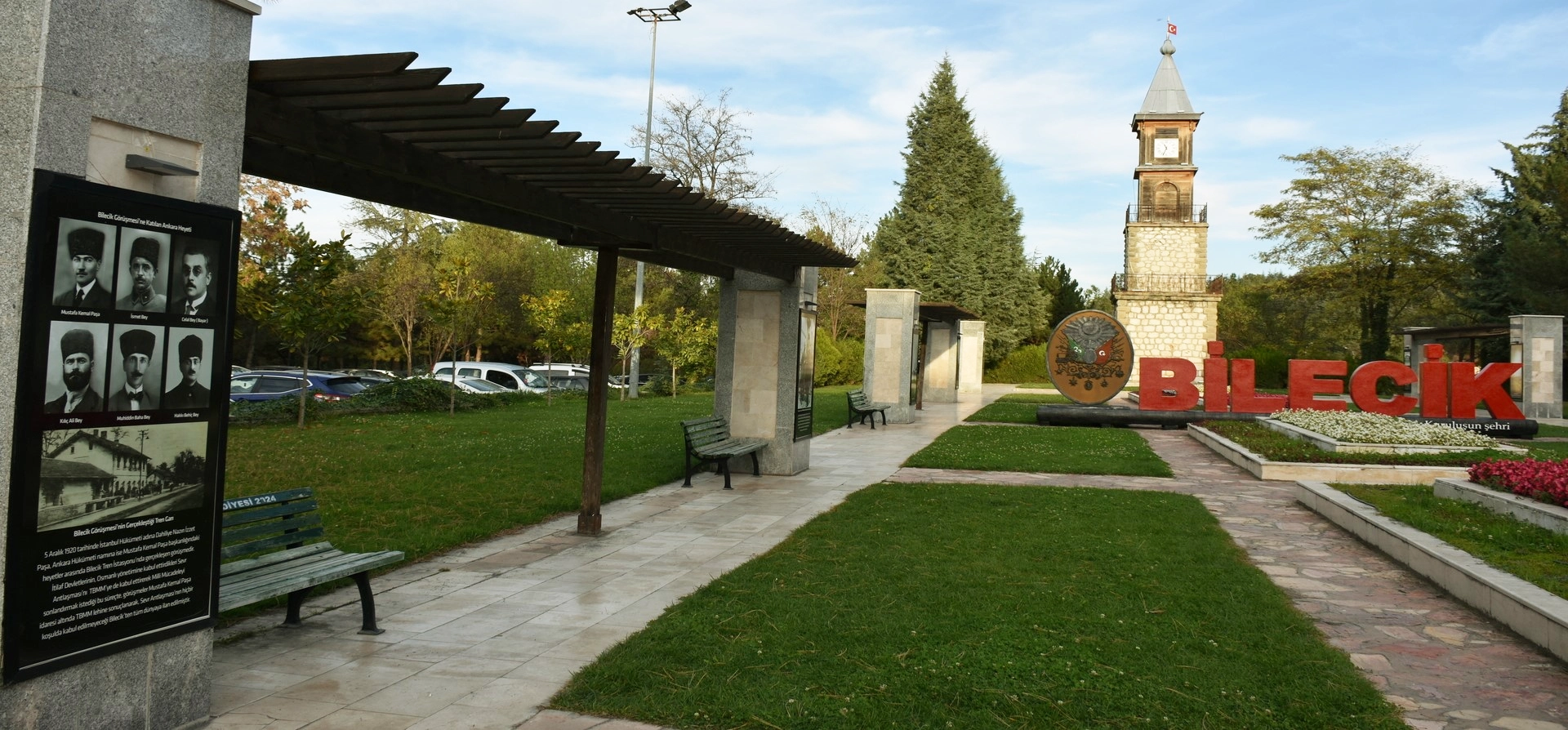
Combine Bilecik city, İnhisar, Söğüt, Bozüyük, Pazaryeri, Osmaneli and the surrounding countryside on a private route linking history, local cuisine, landscapes and village culture.
Request This Tour