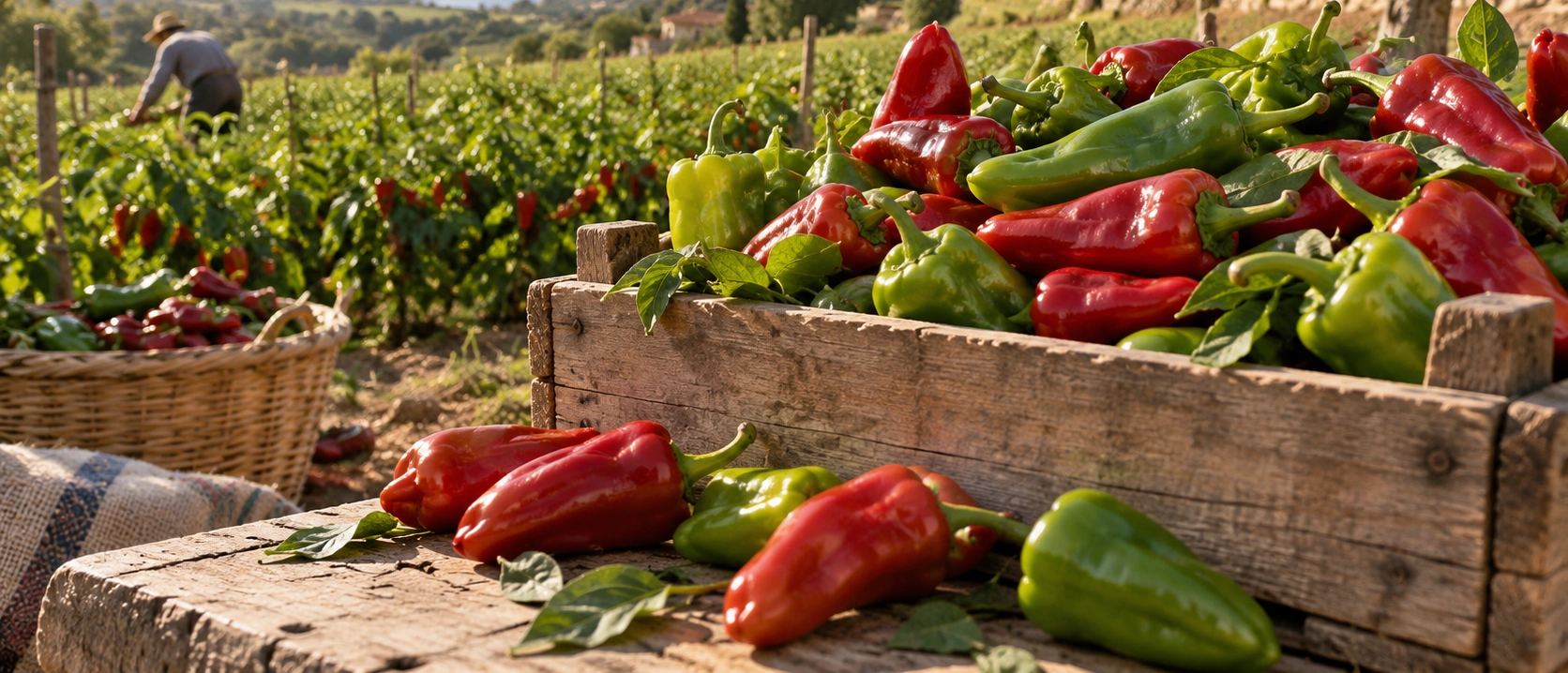
Private Bilecik Food & Farm Discovery
Explore seasonal produce, protected regional foods, village landscapes and local culinary traditions on a flexible private route.
Request This Tour





Bilecik Kamber Biberi / Bilecik Gavata Biberi is a traditional agricultural product of Bilecik Province, cultivated in the Sakarya Basin and associated with local food traditions that reach back to the Ottoman period.
Its fruit is immediately recognisable: round and slightly flattened, smooth-skinned and glossy, usually measuring around 5–8 cm across. As it ripens, the colour changes from bright green to a rich dark red.
The flavour changes with maturity too. Green fruits are described in the protected specification as slightly hot, while fully red fruits develop a noticeably sweeter aroma.
The pepper's thin skin and full interior make it especially suitable for pickling and stuffing. It is also used for roasting and in traditional preparations such as pickles with tomato sauce.
Bilecik Kamber Biberi / Bilecik Gavata Biberi received Turkish geographical-indication registration as a Menşe Adı – Designation of Origin on 1 June 2026, registration no. 1863.
For travellers interested in local food, this is more than a vegetable. It is a seasonal expression of Bilecik's fertile river valleys, inherited seed culture, village agriculture and traditional home cooking.
Registered as a Turkish designation of origin on 1 June 2026 under registration no. 1863.
Typical fruits measure about 5–8 cm across, 3–5 cm high and 50–70 g in weight.
The glossy fruit changes colour as it matures, with flavour moving from slightly hot to sweeter.
Its structure suits pickling, stuffing, roasting and other traditional Bilecik preparations.
Essential information about one of Bilecik Province's most distinctive protected agricultural products.
Selected areas of Bilecik Province in northwestern Türkiye.
Open Bilecik on Google MapsKamber biberi, gavata or kavata biberi, and locally “domates biberi”.
Bilecik Kamber Biberi / Bilecik Gavata Biberi – registration no. 1863.
Round, slightly flattened, glossy fruit that ripens from green to dark red.
A heritage crop kept alive through local seed, village agriculture and the kitchens of the Sakarya Basin.
The official geographical-indication specification describes Bilecik Kamber Biberi / Bilecik Gavata Biberi as a traditional Bilecik product that has survived from Ottoman culinary culture into the present.
For generations, the pepper has been associated with settlements in the Sakarya Basin, where mild conditions, alluvial soils and a long agricultural season support its distinctive growth cycle.
Locally it is known by several names, including kavata biberi and domates biberi, a reference that makes sense when you see its rounded, tomato-like silhouette.
The crop became less common in some areas over time, but revival projects in Bilecik helped return attention to inherited seed, village-scale production and the pepper's culinary value.
Its preservation is closely connected with local growers who save seed from one season for the next, continuing a cycle in which the crop is reproduced from previous harvests rather than treated simply as an anonymous commercial vegetable.
This relationship between plant, place, cultivation method and reputation was formally recognised when the product was registered as a Turkish designation of origin in June 2026.
Bilecik Kamber Biberi / Bilecik Gavata Biberi is identified in the protected specification as Solanum aethiopicum, a traditional fruiting plant of the Solanaceae family cultivated in Bilecik.
Its fruit is compact, round and lightly flattened, with a smooth glossy surface. A typical fruit measures approximately 5–8 cm in diameter, 3–5 cm in height and 50–70 g in weight.
The fruit is harvested at different stages according to its intended use. Green examples have a slight heat, while mature red fruits are sweeter and more aromatic.
The fruit is rounded and slightly flattened rather than long and pointed like many familiar peppers.
The surface is smooth, bright and visually striking, especially during the green-to-red ripening stage.
The interior is described as full and homogeneous, giving the fruit a substantial feel in the kitchen.
Each fruit generally contains a relatively small number of yellowish-white seeds.
When harvested green, its flavour is characteristically slightly hot.
With full red maturity, the flavour becomes sweeter and particularly well suited to regional cooking.
The product's regional identity was formally protected when Bilecik Kamber Biberi / Bilecik Gavata Biberi received Turkish geographical-indication registration on 1 June 2026.
A designation of origin places particularly strong emphasis on the link between a product and its geographical environment. In this case, the protected identity covers the pepper's fruit characteristics, specified production method and recognised growing area.
For food travellers, the registration offers a useful clue: the name does not simply describe a style of pepper, but a crop whose protected identity is tied to particular parts of Bilecik Province.
Its rounded, lightly flattened form gives it an appearance closer to a miniature tomato than a long pepper.
Green fruit is slightly hot, while red maturity brings a sweeter and more rounded aroma.
The skin is smooth and glossy, while the fruit remains substantial enough for several cooking techniques.
It works fresh, pickled, stuffed, roasted, fried or prepared in tomato-based preserves.
The registered production method begins with seed retained from the previous year's crop.
Its designation of origin formally connects the product with specific growing areas of Bilecik.
One of the easiest ways to recognise Bilecik Kamber Biberi is by its round and slightly flattened profile, smooth skin and pronounced colour change during ripening.
Bilecik Kamber Biberi changes noticeably as it ripens. Colour is not simply cosmetic; it also signals a shift in flavour and helps cooks choose the fruit for different preparations.
Young fruits are bright green and glossy.
The protected description characterises the green fruit as slightly hot.
Green harvest may begin roughly 50–60 days after planting under the registered production cycle.
As the fruit reaches full maturity it develops a dark, attractive red colour.
The mature red fruit is described as sweeter in aroma and flavour.
Full red maturity is generally reached around 70–80 days after planting.
The flavour profile is closely tied to maturity. Green fruit has a gentle hot edge, while the red-ripe fruit becomes sweeter and more aromatic.
The heat is described as mild rather than aggressively spicy.
Ripening softens the flavour profile and brings forward sweetness.
Raw fruit retains the clean, juicy quality expected from a freshly harvested regional crop.
Its body and flavour make it especially natural in vinegar-based pickles.
Roasting and frying concentrate its aroma while softening the flesh.
The compact round form creates an attractive vessel for traditional fillings.
The geographical-indication specification links the pepper with the mild microclimate of the Sakarya Basin, where long growing conditions and fertile soils help shape the fruit.
Summers are warm, seasonal rainfall is concentrated more heavily in cooler months, and well-drained alluvial soils provide a productive base for the plant.
The protected description notes that winter temperatures generally remain above severe cold levels.
Summer temperatures in the described microclimate generally fall around the mid-20s to 30 °C range.
River-basin soils are described as fertile, well drained and rich in organic matter.
Loamy soils rich in potassium and phosphorus support root development and fruit formation.
Moisture during early development and drier summer conditions form part of the local growing pattern.
The registered description connects local climate and soils with the fruit's sweet and lightly hot flavour profile.
The protected geographical boundary covers Osmaneli, Gölpazarı and İnhisar districts, together with Çaltı village in Söğüt district.
A fertile district on the Sakarya River with a strong orchard and vegetable-growing tradition.
An agricultural district where village landscapes remain central to local food production.
A small Sakarya Valley district known for intensive fruit and vegetable cultivation.
The protected boundary also includes Çaltı village within Söğüt district.
For travellers, these districts offer a chance to understand the pepper within the landscapes that produce it: river valleys, farms, village markets and small-scale seasonal agriculture.
The registered production method begins with seeds obtained from the previous year's harvest. After drying, the seed is stored in cool, dry and dark conditions until the next growing cycle.
Saving seed links one growing season directly with the next.
Damaged, cracked or discoloured seeds are removed before sowing.
Dried seeds are kept in conditions intended to preserve germination quality.
Seed preparation begins before the field season so seedlings are ready after frost danger has passed.
Growers must judge seed quality, soil readiness, irrigation and harvest timing throughout the season.
The continuity of the crop depends on cultivation knowledge as much as on the fruit itself.
The protected method describes a seasonal cycle beginning with seed preparation and soil work, followed by transplanting, irrigation, care and repeated summer harvesting.
Seed sowing and seedling preparation generally begin as spring approaches.
Strong seedlings can be transplanted once conditions are suitable and frost risk has receded.
Flowering usually follows several weeks after planting.
Fruit set follows flowering as warm conditions become established.
The principal harvest period begins, with green fruit available first.
Harvest continues through summer into early autumn as fruits reach green or red maturity.
The plant is generally compact and around 50–70 cm in height.
Sturdy branches support the weight of the round fruits during the growing season.
The stem is described as dark green and durable.
Leaves are dark green, glossy and oval-lance shaped.
The root system spreads through the upper soil and anchors the plant effectively.
White individual flowers appear before fruit set in late spring and early summer.
The pepper's round shape, relatively thin skin and full flesh make it unusually versatile. It can be eaten fresh or transformed through pickling, stuffing, frying and roasting.
Freshly harvested fruit can be eaten raw, allowing the difference between green and red stages to be appreciated.
Pickling is one of the most characteristic uses, especially when the fruit is firm and freshly harvested.
The compact shape creates a natural cavity for rice, herbs or other traditional fillings.
Roasting softens the flesh and brings forward deeper sweet vegetable aromas.
The fruit can be fried as part of simple seasonal vegetable plates.
The protected description specifically mentions traditional pickle preparations with tomato sauce.
Pickling is closely associated with Kamber Biberi because the fruit has enough structure to hold its shape while absorbing the sharp, aromatic flavours of a pickle brine or sauce.
The registered specification recommends processing peppers intended for pickling very soon after harvest.
The rounded shape creates an attractive whole or halved pickle.
The relatively thin outer layer allows brine and sauce flavours to integrate efficiently.
Different maturity stages can bring different visual and flavour effects to preserves.
Traditional local use includes Kamber pepper preserved with tomato sauce.
Pickling allows a summer crop to continue appearing on the table well beyond harvest.
The fruit's round, bowl-like form gives cooks an obvious culinary opportunity: remove the top, clear the small seed cavity and fill the pepper as a compact seasonal dolma.
The shape naturally holds rice, herbs, meat or other fillings.
The flattened profile helps the pepper sit neatly in a baking or cooking dish.
Individual fruits create attractive single portions.
The 3–4 mm flesh thickness is substantial enough for heat while remaining tender when cooked.
Red-ripe peppers can create a striking contrast with rice and herb fillings.
Stuffing transforms the local crop into a full dish rather than a simple accompaniment.
Roasting and frying are straightforward ways to highlight the pepper's flesh and sweetness, especially once the fruit has turned red.
Whole fruits can be roasted until the exterior softens and the flesh becomes more aromatic.
Halving exposes more surface area and makes it easy to season or fill the fruit.
Frying creates a soft interior and concentrated vegetable flavour.
Simple Anatolian-style accompaniments can allow the pepper itself to remain the focus.
Tomato naturally complements the pepper's sweet, ripe character.
Roasted or fried peppers can become part of a larger spread of seasonal regional dishes.
The registered production method places the main harvest between July and September, with fruit picked according to the desired maturity stage.
Green fruit can be harvested roughly 50–60 days after planting.
Fully mature red fruit is generally ready around 70–80 days after planting.
Regular collection at roughly 7–10 day intervals encourages continued fruit production.
Fruit may be picked by hand or with cutting tools while avoiding damage to the plant.
Late summer is the best time for travellers to encounter the freshest crop in its growing region.
Green and red fruits can be selected according to taste, texture and intended recipe.
Fresh peppers are best kept cool, dry and well ventilated. The protected specification also gives guidance for cold storage and rapid processing of fruit intended for pickles.
Fresh fruit benefits from cool storage away from excessive heat and direct sun.
Air movement helps reduce excess surface moisture during storage.
The registered method allows storage at approximately 4–8 °C for longer keeping.
Fruit intended for pickling should be processed very soon after harvest for best quality.
The glossy skin is attractive, so careful handling protects both appearance and storage quality.
Pickling, sauces and cooked preparations extend the culinary life of the summer harvest.
The geographical-indication specification records a characteristic range of moisture, sugar, fibre and phenolic compounds for the fruit. These values are useful for describing the product, but they should not be read as medical or nutritional advice.
Kamber Biberi sits at the point where Bilecik's agricultural and culinary identities meet. It is grown as a seasonal crop, sold and exchanged fresh, and transformed in home kitchens into dishes and preserves that extend beyond the harvest season.
Its historic associations, multiple local names and continued seed-saving tradition make it especially interesting for travellers looking beyond restaurant menus to understand how regional food is actually produced.
The crop belongs to a landscape of small farms, river valleys and seasonal field work.
Pickling and sauce preparations carry the pepper from summer into the rest of the year.
Its shape naturally connects it with one of Anatolia's most familiar home-cooking techniques.
Seed retained from previous harvests underlines continuity between generations of growers.
Registration has given formal recognition to a crop already rooted in local knowledge.
The pepper offers a direct way to connect gastronomy with Bilecik's agricultural landscapes.
Kamber Biberi is a seasonal agricultural product, so availability changes through the year. The best opportunities are during the summer and early-autumn harvest period.
July through September is the key period for encountering newly harvested fruit.
Produce markets and village sellers are natural places to look for seasonal Bilecik-grown peppers.
Ask for “Bilecik Kamber Biberi” or “Bilecik Gavata Biberi” when searching for the registered product.
Osmaneli, Gölpazarı, İnhisar and the protected Söğüt growing area provide the strongest geographical context.
Outside the fresh season, pickles and other preserved preparations may be easier to encounter.
Guides, restaurants and accommodation teams may know which markets or producers currently have the crop.
If both are available, taste the two maturity stages to understand the shift from slight heat to sweetness.
The round, slightly flattened form is one of the easiest visual clues.
Fresh fruit should show the smooth glossy skin characteristic of the variety.
Pickling is one of the most representative ways to experience Kamber Biberi in the local kitchen.
The round fruit makes an especially attractive local interpretation of dolma.
Combine food discovery with the agricultural and historical landscapes of the Sakarya Valley.
Pair the pepper story with Kapama, oven kebab, Papaz Yahnisi, boza and local fruit traditions.
A regional crop is most meaningful when tasted at the time and place where it is actually harvested.
Photograph fruits at several stages of ripeness to show the natural colour transformation.
A market basket filled with glossy round fruits immediately communicates shape and abundance.
Show the compact plant with fruit still attached among dark green leaves.
Cut one fruit open to reveal the thick flesh, compact interior and relatively small seed quantity.
Capture glass jars, vinegar, tomato and freshly harvested peppers during preserving season.
A finished dolma-style preparation tells the story from field product to regional dish.
Bilecik's food culture is built from the meeting of agriculture and home cooking: meat dishes, soups, fermented drinks, sweets, orchard fruits, vegetables and grains all contribute to the province's culinary identity.
Kamber Biberi adds a protected vegetable tradition to that picture and gives travellers a reason to explore food beyond finished dishes alone.
A protected sweet-and-sour meat stew combining vinegar, honey, onions, tomato and warm spices.
A protected rice-and-meat dish associated with Bilecik's substantial home cooking.
A regional meat speciality shaped by slow oven cooking.
A traditional fermented grain drink from another corner of Bilecik Province.
A characteristic agricultural product from one of the Kamber pepper's protected growing districts.
Local fruit traditions show the wider agricultural richness of the Sakarya Valley.
Discover Bilecik's protected sweet-and-sour meat stew with vinegar, honey and onions.
Continue with a protected rice-and-meat dish prepared with broth and butter.
Explore another protected regional speciality centred on slow-cooked meat.
Compare Kamber Biberi with another pepper tradition from Bilecik Province.
Discover the fruit-growing identity of one of the pepper's protected districts.
Continue through the Sakarya Valley with another seasonal local agricultural product.
Try a traditional fermented grain drink associated with Pazaryeri.
Finish your regional food journey with one of Bilecik's traditional sweets.
Combine agricultural discovery with Osmaneli's layered architectural and cultural heritage.
Explore Ottoman heritage while travelling through one of the protected growing districts.
Continue toward Söğüt and the landscapes associated with early Ottoman history.
Explore the district through its pomegranate and vegetable-growing traditions.
Add the province's archaeological and cultural history to your gastronomy route.
Ask us to combine local agriculture, food, Ottoman heritage, villages and countryside into a private itinerary.
It is a traditional Bilecik crop with round, slightly flattened fruits that ripen from glossy green to dark red.
The protected name is registered as Bilecik Kamber Biberi / Bilecik Gavata Biberi, so both names are officially recognised together.
Locally the product may also be called kavata biberi or domates biberi.
Yes. It received Turkish geographical-indication registration on 1 June 2026.
The registration number is 1863.
It is registered as a Menşe Adı – Designation of Origin.
The registration holder is the Bilecik Chamber of Commerce and Industry.
The registered geographical boundary covers Osmaneli, Gölpazarı and İnhisar districts and Çaltı village in Söğüt district.
The fruit is round and slightly flattened, often giving it a tomato-like appearance.
Typical fruits are approximately 5–8 cm in diameter, 3–5 cm high and 50–70 g.
It begins bright green and turns dark red as it reaches full maturity.
Green fruit is described as slightly hot; after turning red it develops a sweeter flavour.
It is used fresh and is particularly suitable for pickling, stuffing, roasting, frying and tomato-sauce pickle preparations.
The registered production cycle places the main harvest between July and September.
Green harvest is generally around 50–60 days after planting under the registered cultivation cycle.
Full red maturity is generally reached around 70–80 days after planting.
Yes. The protected production method begins with seeds obtained from the previous year's harvest.
Fresh fruit should be kept in cool, dry and ventilated conditions. The specification also allows cold storage at approximately 4–8 °C.
Yes. Pickling is one of the product's characteristic uses, and peppers intended for pickling should be processed very soon after harvest.
Yes. Its compact, round form and cooking-friendly flesh make it particularly suitable for stuffed-pepper preparations.
Continue with İnhisar Pomegranate, Osmaneli Watermelon, Çukurören Pepper and Bilecik Hops.
Look for Bilecik Papaz Yahnisi, Bilecik Kapama, Bilecik Oven Kebab and Bilecik Quail Kebab.
Yes. A seasonal route can combine markets and agricultural landscapes with regional food, Ottoman heritage and village culture.
The strongest visual sequence should show the crop as a journey: seed and field, green fruit, red ripening, harvest, market display and finally a traditional kitchen preparation.
Show rows of compact green plants against the agricultural landscape of Bilecik.
Capture the glossy young fruit while still attached to the plant.
Photograph fruits at several colour stages on the same plant or in the same harvest basket.
Show the pepper being picked to connect the product with growers and manual harvest.
Use a low-angle or overhead shot of freshly harvested round peppers in natural light.
Finish with jars, stuffed peppers or roasted fruit to connect agriculture with Bilecik food culture.
Combine Bilecik's protected products with Ottoman heritage, village culture, local markets and the landscapes of the Sakarya Valley on a private journey designed around your interests and the season.
Custom-designed private journeys with flexible timing, private transportation and opportunities to explore regional foods, local agricultural products, historical sites and lesser-known corners of Bilecik Province.
Explore seasonal produce, protected regional foods, village landscapes and local culinary traditions on a flexible private route.
Request This Tour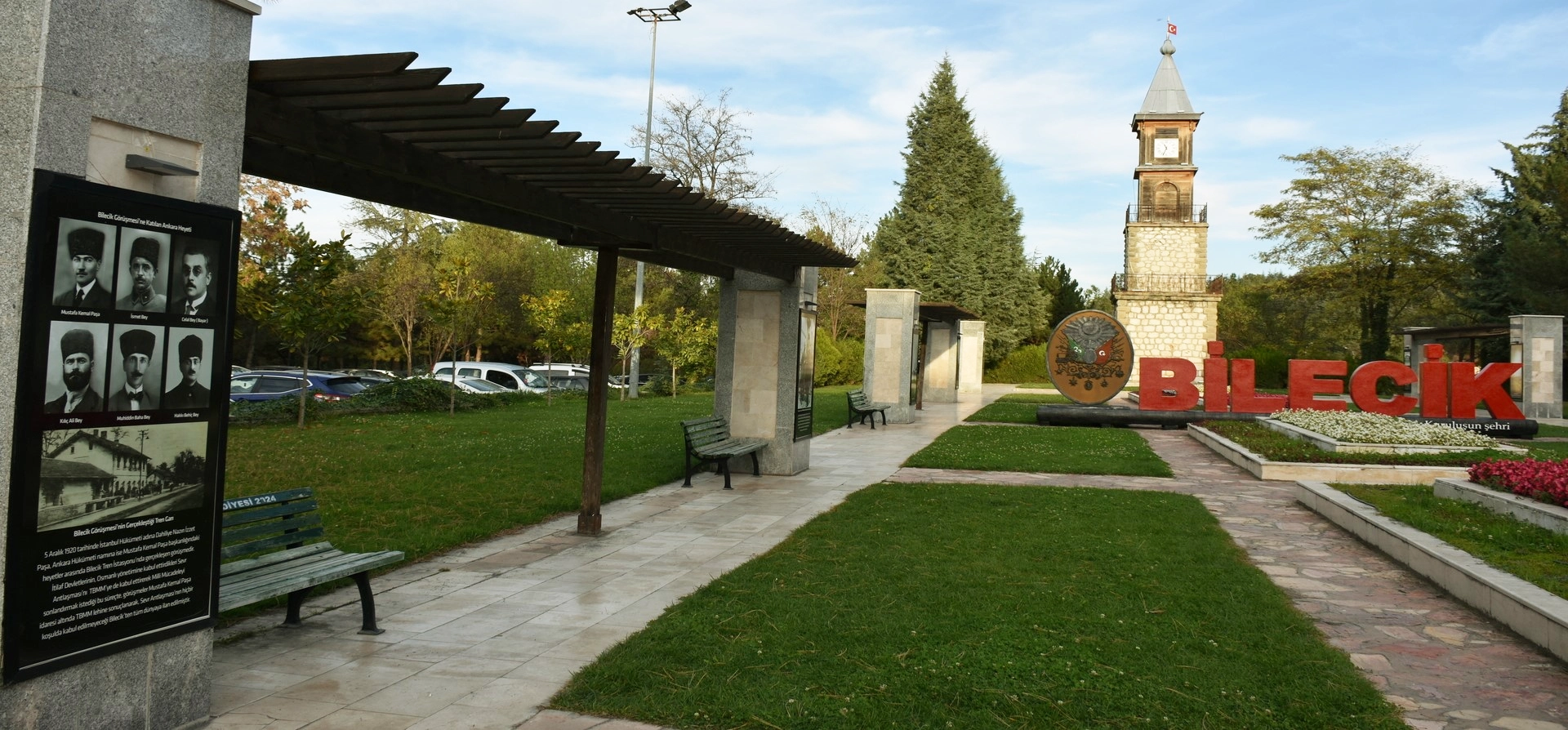
Combine Bilecik city, Söğüt, Osmaneli, İnhisar, Gölpazarı and surrounding countryside on a private route linking history, local cuisine and agriculture.
Request This Tour