Private Osmaneli Heritage Experience
Ask us about a tailor-made route combining Rüstem Pasha Mosque, historic Osmaneli houses, Hagios Georgios Church and the surrounding heritage district.
Request a Custom Tour





Rüstem Pasha Mosque stands in the historic centre of Osmaneli in Bilecik Province, within the traditional townscape once known as Lefke. It is also widely known locally as Ulu Cami or Cami-i Kebir — the Great Mosque.
The mosque belongs to the 16th-century Ottoman period and is associated with Rüstem Pasha, the powerful grand vizier and son-in-law of Sultan Süleyman the Magnificent. Modern official tourism material attributes the building to Yüzgeç Mehmet Pasha, described as a craftsman or master associated with the architectural circle of Mimar Sinan.
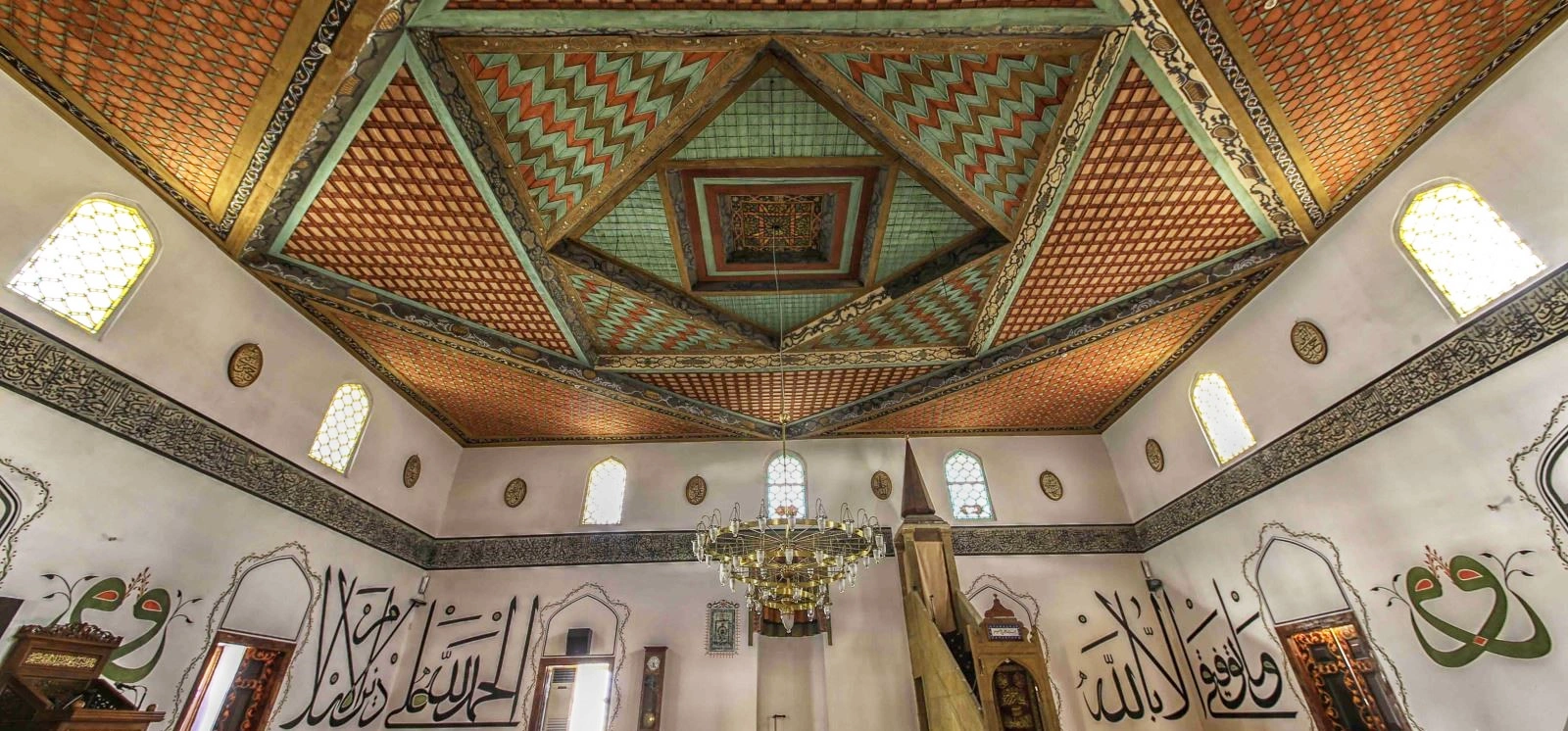
What immediately distinguishes the mosque from many famous classical Ottoman monuments is its roof. Instead of being dominated by a monumental masonry dome, the prayer hall preserves an extraordinary painted timber ceiling associated with the kırlangıç — interlocking or corbelled — roofing tradition. Its geometric forms, richly decorated woodwork and unusual structural character make the interior one of the most memorable historic spaces in Osmaneli.
The mosque is also closely connected with the landscape itself. Local Lefke stone was used prominently in the building, especially around the façades, entrance, portico and minaret. This warm-toned stone is part of the architectural identity of historic Osmaneli.
Inside, visitors should look for the long Fetih Sura calligraphic band, large calligraphic inscriptions, the women’s gallery, painted wooden surfaces and, on the qibla side, a remarkable tile panel depicting the Kaaba, generally dated to the seventeenth century.
One important historical question needs special care: published sources give different construction dates. An official cultural inventory records 1516, many modern local accounts use 1542, while an inscription associated with the building carries AH 972, approximately 1564–1565. Older academic literature also connects the mosque with this later date. For that reason, this guide treats the mosque securely as a 16th-century monument without forcing the evidence into one unquestioned construction year.
Rüstem Pasha Mosque is particularly rewarding when explored together with Osmaneli’s historic houses and Hagios Georgios Church. Together they reveal the architectural depth of one of Bilecik Province’s most atmospheric historic towns.
One of Osmaneli’s principal Ottoman monuments and the traditional Great Mosque of the town.
Local stone connects the mosque directly with the historic architecture and geological character of old Lefke.
The richly decorated wooden roof is among the mosque’s most distinctive and historically valuable features.
A seventeenth-century tile panel depicting the Kaaba is one of the most fascinating details inside the prayer hall.
Essential information for visiting Osmaneli’s historic Ulu Cami.
Historic centre of Osmaneli, Bilecik Province.
Open on Google MapsHistoric Ottoman mosque and active place of worship.
Associated with Grand Vizier Rüstem Pasha, son-in-law of Sultan Süleyman the Magnificent.
16th century. Published sources give different precise construction dates.
Official tourism material attributes the mosque to Yüzgeç Mehmet Pasha, associated with Mimar Sinan’s architectural circle.
Stone masonry prominently using locally associated Lefke stone.
Painted timber ceiling incorporating an unusual interlocking kırlangıç-type construction.
Calligraphy, painted timberwork, geometric decoration and a historic Kaaba tile panel.
A surviving repair tradition and inscription connect major work with Keskinzade Hacı Ali Ağa in 1779.
Approx. 40.35903 N, 30.01214 E.
20–40 minutes, longer for architecture and photography enthusiasts.
Visit respectfully and avoid interrupting congregational prayer.
The mosque is important not only as a place of worship but as one of the best surviving witnesses to historic Osmaneli.
Historic Osmaneli developed along important regional routes connecting northwestern and central Anatolia. Its older name, Lefke, still survives in discussions of local architecture, particularly through the stone traditionally called Lefke stone.
Rüstem Pasha Mosque stands at the centre of this historical landscape. As the town’s traditional Ulu Cami, it represented more than a neighborhood prayer space. A Great Mosque was also a focus of communal life, Friday worship and urban identity.
Architecturally, the mosque is especially important because it does not rely on the monumental central-dome formula most visitors associate with the great imperial mosques of sixteenth-century Istanbul. Its character is instead defined by stone walls, a broad prayer hall and an extraordinary timber roof system.
This makes Rüstem Pasha Mosque valuable for understanding the diversity of Ottoman architecture. Provincial and regional buildings did not simply imitate imperial monuments. They could combine local materials, inherited Anatolian building traditions and classical Ottoman design principles in highly individual ways.
The building is therefore one of the most rewarding monuments in Bilecik Province for travelers interested in vernacular materials, timber construction, Islamic calligraphy and the architectural history of Ottoman Anatolia.
The monument is most commonly presented today as Rüstem Pasha Mosque — Rüstem Paşa Camii, after its patron.
Historic and local usage also preserves the names Ulu Cami and Cami-i Kebir. Both essentially identify it as the Great Mosque or principal congregational mosque of Osmaneli.
The title is significant. It reflects the building’s role within the historic urban hierarchy rather than simply giving it another tourist name. The mosque served generations of residents as one of the town’s central religious institutions.
The modern name emphasizing the building’s association with its Ottoman patron.
The traditional Turkish term meaning Great Mosque.
An Ottoman-era expression likewise meaning the principal or great mosque.
The modern town name; the settlement was historically widely known as Lefke.
Rüstem Pasha was one of the most powerful statesmen of the reign of Sultan Süleyman I — Süleyman the Magnificent. He rose through the Ottoman administrative system and served as grand vizier.
His marriage to Mihrimah Sultan, the daughter of Süleyman and Hürrem Sultan, also placed him within the imperial family network.
Rüstem Pasha became an important architectural patron. The best-known monument bearing his name is the celebrated Rüstem Pasha Mosque in Istanbul, but buildings and foundations associated with him existed in several parts of the empire.
The Osmaneli mosque should therefore be understood within the broader Ottoman system of patronage and charitable foundations, through which officials financed mosques, caravanserais, bridges, baths, schools, fountains and other public works.
The precise construction date of the Osmaneli mosque is surprisingly complicated. Several dates appear repeatedly in official, academic and local publications.
Türkiye’s official cultural inventory lists 1516 as the construction year. The Bilecik Governorate has likewise published this date.
Other local histories and modern reports identify 1542 as the date of the mosque, and this date is also displayed in some modern interpretation connected with the building.
A further piece of evidence is especially important: an inscription associated with the entrance carries the date AH 972, corresponding approximately to 1564–1565 CE. Older scholarly literature discussing Anatolian timber roofing also refers to the Osmaneli Rüstem Pasha Mosque with this dating.
The later date is additionally compatible with traditions that some parts of the mosque were completed after Rüstem Pasha’s death, although the exact sequence of construction still requires caution.
Current Türkiye Culture Portal material identifies the architect as Yüzgeç Mehmet Pasha, described in local sources as a kalfa associated with Mimar Sinan. The name also appears as Yüzgeç Mehmet Ağa in some publications.
Older official descriptions are slightly more cautious, stating that the mosque is thought to have been constructed by one of Mimar Sinan’s pupils or assistants.
The difference matters because architectural attribution should ideally rest on contemporary documentation rather than repeated local tradition alone.
For visitors, the most responsible formulation is therefore that the mosque is traditionally and officially attributed to Yüzgeç Mehmet Pasha within the broader architectural circle of Mimar Sinan.
Modern Osmaneli preserves a remarkably atmospheric traditional town centre, with historic houses, religious monuments and narrow streets reflecting several periods of Anatolian urban history.
The settlement was historically known as Lefke, a name that remains closely connected with both the history of the town and the building stone used in local architecture.
Rüstem Pasha Mosque occupied an important position within this urban fabric. Its role as Ulu Cami placed it at the heart of religious and communal life.
A visit becomes much more meaningful if travelers do not treat the mosque as an isolated monument. Walk through the surrounding streets, observe the traditional houses, and continue toward Hagios Georgios Church to experience the multicultural architectural landscape of historic Osmaneli.
The mosque has a nearly square rectangular plan, creating a broad, unified prayer hall. Published descriptions emphasize its substantial stone masonry, while architectural accounts differ slightly in how they describe the balance between cut stone, rubble masonry and brick.
The exterior is relatively restrained. The southern, eastern and western façades are organized principally through the wall surfaces and rows of windows rather than through elaborate sculptural decoration.
The northern entrance side is more ceremonial. Here, a five-arched portico forms the son cemaat yeri, or final congregation area, in front of the main prayer hall.
The most dramatic contrast appears after entering. Instead of a vast masonry dome, visitors encounter a decorated timber ceiling whose geometric construction gives the space a completely different character from Istanbul’s great imperial mosques.
The resulting architecture feels simultaneously monumental and intimate: massive stone walls surround a warm interior dominated by timber, color, calligraphy and craftsmanship.
One of the most frequently emphasized characteristics of Rüstem Pasha Mosque is the use of local Lefke stone.
The stone is associated directly with Osmaneli’s old name and forms part of the historic material identity of the settlement. Its tones are particularly attractive around the entrance arches, portico, structural elements and minaret.
Local stone reduced the distance between a monumental Ottoman commission and the landscape in which it stood. The building was not simply imposed on Osmaneli: its material fabric was connected with the region itself.
At the entrance, contrasting stone colors are used decoratively, turning the doorway into one of the best places to examine the masonry at close range.
The mosque’s northern façade is fronted by a five-bay arched portico, traditionally called the son cemaat yeri.
This covered area serves as an architectural transition between the public space of the town and the sacred interior of the mosque. It also provides additional sheltered space associated with congregational prayer.
The arches rise from masonry supports, while timber elements reinforce and cover the portico. Decorative treatment of the wooden surfaces introduces visitors to the craftsmanship that becomes even more impressive inside.
From a photographic point of view, the repeated arches are among the mosque’s strongest exterior compositions. Try photographing diagonally along the arcade rather than only directly from the front.
The entrance is framed by contrasting stonework that creates a visually distinctive arch before the wooden doors.
Published architectural descriptions record alternating light and darker stones around the doorway, giving the entrance a stronger decorative character than the relatively restrained side façades.
An inscription associated with the entrance includes the date AH 972, one of the key pieces of evidence in the debate over the chronology of the building.
Because this corresponds approximately to 1564–1565, the inscription should be noticed not merely as decoration but as an important historical document within the fabric of the mosque.
The timber ceiling is arguably the most extraordinary feature of Rüstem Pasha Mosque.
Its construction is associated with the kırlangıç or interlocking timber tradition, in which wooden members progressively overlap or step inward to organize the roof structure and its central composition.
This type of timber construction has deep roots in Anatolian and wider Central Asian building traditions. The Osmaneli mosque is frequently cited in architectural scholarship discussing early surviving Ottoman examples of timber interlocking ceilings.
Geometric divisions, colored surfaces and patterned timberwork transform the ceiling into both a structural system and a work of decorative art.
The effect becomes clearer if you stand approximately in the centre of the prayer hall and look directly upward. From there, the relationship between the nested geometric forms can be understood far better than from the doorway.
The prayer hall is relatively broad and visually open, allowing the eye to travel easily toward the mihrab and qibla wall.
Windows arranged along the outer walls provide natural light, while the white wall surfaces create a calm background for the darker timber, calligraphic inscriptions and furnishings.
At the entrance side, a women’s gallery or mahfil occupies the upper level. Its wooden construction strengthens the connection between the architecture of the roof and the interior furnishings.
The atmosphere differs strongly from heavily tiled or marble-covered imperial mosques. Here, the most powerful decorative materials are wood, painted ornament, calligraphy and selected ceramic details.
Calligraphy is one of the defining decorative elements of the interior.
A major inscription band carries passages from Surah al-Fath — the Fetih Sura along large sections of the interior walls. Its placement creates a continuous visual rhythm around the prayer hall.
Other large calligraphic compositions occupy spaces between windows and on wall surfaces. Published descriptions mention inscriptions including “Vav,” “Ali,” “Muhammed,” “Elhamdülillah” and “Hû.”
These inscriptions are not merely decorative lettering. Within Ottoman mosque architecture, calligraphy transforms religious text, sacred names and devotional expressions into part of the visual architecture.
Take time to look upward around the wall surfaces rather than concentrating only on the mihrab. Many of the most interesting details are positioned above normal eye level.
Near the mihrab side of the mosque is a historic ceramic panel depicting the Kaaba. Official cultural descriptions generally date the work to the 17th century.
The panel shows the sacred sanctuary at Mecca within a decorative composition. Its imagery connects the local prayer space in Osmaneli symbolically with the direction and spiritual centre of Islamic worship.
The panel is especially valuable because pictorial representations of Mecca, Medina and sacred architecture formed an important but relatively specialized category of Ottoman religious art.
Look carefully at the frame and surrounding ornament rather than viewing the panel only from a distance. Its scale makes close observation especially rewarding.
The mosque’s minaret stands at the northwestern corner near the meeting point between the prayer hall and entrance portico.
Its lower structure is built in stone, while the shaft rises toward a single balcony. The şerefe is visually emphasized by its decorated transition, and the minaret terminates beneath a conical cap.
Local accounts connect completion of the minaret with a later phase of construction after the death of Rüstem Pasha. That story should be treated as local historical tradition rather than presented as an independently documented construction sequence.
For exterior photography, include the minaret together with the portico and surrounding historic houses. This provides a much stronger sense of place than an isolated telephoto view of the tower.
Historic monuments survive not because they remain untouched, but because generations repeatedly repair them. Rüstem Pasha Mosque is a clear example.
A major repair is associated with Keskinzade el-Hac Ali Ağa in 1779. The repair is documented through an inscription connected with the mosque.
This eighteenth-century intervention demonstrates that the building was already being treated as an important religious monument centuries after its original foundation.
Later repairs continued during the Republican period, meaning that visitors today see a historic structure containing multiple phases of conservation and renewal.
Rüstem Pasha Mosque has undergone restoration and conservation work in the modern period.
Recent published accounts identify 2011 as an important restoration campaign carried out with the involvement of the Bursa Regional Directorate of Foundations and local authorities.
Conservation is particularly important here because the building combines materials with very different needs: stone masonry, historic timber, painted surfaces, calligraphy and ceramic decoration.
The survival of the wooden roof is especially remarkable. Timber structures are vulnerable to moisture, fire, insect activity, structural movement and inappropriate later repairs.
Visitors should therefore understand the mosque not simply as an old building, but as a continuously maintained heritage structure that remains in active religious use.
Rüstem Pasha Mosque remains an active mosque. For local residents, its primary purpose is worship rather than tourism.
Visitors are generally most comfortable exploring historic mosques outside the main congregational prayer periods. If prayer is beginning, wait quietly or return afterward.
Remove shoes where required before entering the carpeted prayer hall. Use the shelves provided, and avoid leaving footwear in doorways.
Choose modest clothing. Shoulders and knees should be covered, and women may be asked to cover their hair within the prayer space.
Photography should remain discreet. Never photograph worshippers at close range without permission, and avoid flash, loud conversation and prolonged posing in front of the mihrab.
Follow the local arrangement before stepping onto the prayer carpets.
Modest clothing is appropriate inside an active mosque.
Give priority to the congregation and return after worship if necessary.
The interior is a sacred space even when no formal prayer is taking place.
Flash can disturb worshippers and adds little to the experience of the historic interior.
Respect the privacy of worshippers and local residents.
The mosque provides very different photographic opportunities outside and inside.
From the exterior, focus on the five-arched portico, stone entrance, minaret and relationship with Osmaneli’s historic houses. The building is most expressive when photographed as part of the old town rather than isolated from it.
Inside, the wooden ceiling should be the main subject. A wide lens is useful, but avoid excessive distortion by keeping the camera as level as possible.
Stand beneath the centre of the roof and photograph vertically upward to reveal the nested geometric construction. Then move toward the edges of the prayer hall to include the ceiling, gallery and calligraphic band in one frame.
The Kaaba tile panel is better photographed from relatively close range, provided access is permitted and worship is not being disturbed.
Use the repeated arches to create depth and rhythm in exterior compositions.
Photograph close details showing the variations in local masonry.
Stand centrally and photograph upward to capture the geometric structure.
Use a wider frame to show how the inscriptions interact with windows and architecture.
Photograph respectfully and without interfering with people using the prayer hall.
Include neighboring houses and streets to place the mosque within old Osmaneli.
The mosque stands within central historic Osmaneli, making it one of the easiest major heritage sites in the district to include in a walking visit.
It remains a functioning place of worship, so access should be planned around religious activity rather than treated like entry to a museum.
No regular tourist ticketing system is published by the principal official tourism sources consulted for this guide. Visitors should therefore treat the site primarily as an active historic mosque rather than a ticketed attraction.
For most visitors, 20–30 minutes is enough to appreciate the portico, interior, timber ceiling, calligraphy and Kaaba tile panel. Architecture enthusiasts may easily spend 40 minutes or longer.
The mosque’s location in central Osmaneli means visitors do not need to undertake a long hike or rural approach.
However, historic religious buildings can include stone thresholds, changes in floor level, steps and narrow transitions that may affect visitors with limited mobility.
The prayer hall also requires visitors to remove shoes before entering carpeted areas, which can create an additional practical issue for some travelers.
No sufficiently detailed current official accessibility specification was identified for this guide. Anyone requiring guaranteed wheelchair or step-free access should confirm current conditions locally before making a special journey.
The mosque is located in Osmaneli town centre and is straightforward to reach once you arrive in the district.
The Bilecik Governorate publishes coordinates of approximately 40°21'32.51" N, 30°00'43.70" E, equivalent to approximately 40.35903, 30.01214.
From Bilecik city, Osmaneli lies roughly 32 kilometres away by road according to the Governorate’s visitor information.
Once in the historic centre, the best approach is usually to continue on foot. This allows you to combine the mosque naturally with the historic houses of Osmaneli and other nearby monuments.
Search “Rüstem Paşa Camii, Osmaneli, Bilecik.”
Approx. 40.35903 N, 30.01214 E.
Osmaneli is approximately 32 km from Bilecik according to official provincial information.
Convenient for combining Osmaneli with Bilecik, Vezirhan and Söğüt.
Once in the historic centre, several important Osmaneli sights can be explored together.
Useful for a wider heritage route through northern Bilecik Province.
A quick 15-minute visit is enough to see the façade, enter the prayer hall and look at the wooden ceiling.
For most travelers, allow 20–30 minutes. This gives enough time to examine the portico, entrance masonry, ceiling, calligraphy, Kaaba panel and minaret without rushing.
Architecture, photography or Ottoman-history enthusiasts should allow around 30–45 minutes.
The real advantage of the mosque is its location. A visit can easily become part of a one- to three-hour walking exploration of historic Osmaneli.
Quick exterior and interior visit.
Ideal for most travelers.
Better for architecture and detailed photography.
Add nearby historic streets and traditional Osmaneli houses.
Explore the wider Osmaneli heritage district in depth.
Begin at Rüstem Pasha Mosque. Spend time beneath the entrance portico before going inside, then concentrate on the wooden ceiling, calligraphy and Kaaba tile panel.
Continue into the historic residential streets of Osmaneli. The traditional houses reveal a very different architectural scale, with timber construction, projecting upper floors and streets shaped by everyday urban life.
Next visit Hagios Georgios Church. The contrast between the Ottoman mosque, traditional Muslim neighborhoods and the surviving Orthodox church creates one of the most interesting heritage experiences in Bilecik Province.
If time allows, continue through the old centre toward other mosques, local streets and viewpoints that reveal the relationship between historic Lefke and the surrounding Sakarya landscape.
The mosque becomes even more rewarding when placed within the wider historical landscape of Osmaneli and Bilecik.
Walk through traditional streets lined with timber-framed houses and discover the domestic architecture of old Lefke.
Explore Osmaneli’s surviving Orthodox architectural heritage and the multicultural history of the town.
Continue toward Vezirhan to explore the architecture of Ottoman road travel and caravan trade.
Compare another important sixteenth-century Ottoman mosque in Bilecik Province with the timber-roofed Rüstem Pasha Mosque.
Continue into Bilecik city and explore one of the province’s most important early Ottoman memorial sites.
Extend your journey to Söğüt and the symbolic landscape of Ottoman foundation history.
Discover Ottoman monuments, historic towns, museums, War of Independence sites and natural landscapes across the province.
Travelers exploring Bilecik Province can make an especially interesting comparison between Rüstem Pasha Mosque in Osmaneli and Kasımpaşa Mosque in Bozüyük.
Both belong to the sixteenth-century Ottoman architectural world, yet their interiors and structural character are very different.
Kasımpaşa Mosque is associated directly with Mimar Sinan and expresses a more recognizably classical Ottoman architectural language.
Rüstem Pasha Mosque, by contrast, is especially memorable for its timber roof, local Lefke stone and regional construction tradition.
Seeing both monuments demonstrates why Ottoman architecture should never be reduced to a single formula. The empire contained imperial, provincial, regional and local building traditions operating at the same time.
Rüstem Pasha Mosque is a useful reminder that heritage buildings do not always have perfectly simple biographies.
A tourist sign may provide one date, a cultural inventory another, a local tradition another, and an inscription may introduce further evidence.
Rather than hiding these differences, they should be used to explain how architectural history is reconstructed. Researchers compare inscriptions, archival records, construction techniques, stylistic evidence, foundation documents and later repair records.
The mosque itself also changed through time. The eighteenth-century repair and later restoration campaigns became part of its physical history.
The most useful visitor question is therefore not simply “What year was this built?” but also: “Which parts belong to which phases, and how has the building survived for centuries?”
Rüstem Pasha Mosque is in the historic centre of Osmaneli in Bilecik Province, Türkiye.
No. This is the historic Rüstem Pasha Mosque in Osmaneli, Bilecik. The famous tiled mosque in Istanbul is a different monument.
Yes. It is traditionally known as Ulu Cami and also Cami-i Kebir, reflecting its role as Osmaneli’s historic Great Mosque.
The mosque was commissioned in connection with Rüstem Pasha, grand vizier and son-in-law of Sultan Süleyman the Magnificent.
It is a 16th-century Ottoman mosque, but published dates differ. Official and local sources variously use 1516 and 1542, while an inscription associated with the building carries AH 972, approximately 1564–1565.
The historical sources and later inventories do not agree. For that reason, the safest description is simply 16th century unless the dating debate is explained.
Current official tourism material attributes the mosque to Yüzgeç Mehmet Pasha, described as a master associated with the architectural circle of Mimar Sinan. Older official descriptions are somewhat more cautious.
The Osmaneli mosque is not generally presented as a direct Mimar Sinan work. It is traditionally attributed to Yüzgeç Mehmet Pasha, associated with Sinan’s circle.
Lefke stone is a locally associated building stone used prominently in historic Osmaneli architecture. Lefke was the historic name of Osmaneli.
The mosque preserves an exceptional painted wooden ceiling incorporating an interlocking kırlangıç-type construction, one of its most important architectural features.
It refers to a traditional timber construction system in which wooden members overlap or step inward to form a geometric roof composition.
Published descriptions emphasize the survival and historical importance of the mosque’s historic timber roof. Like the rest of the monument, it has also been protected through restoration and maintenance.
One of the most important features is a broad inscription containing Surah al-Fath — the Fetih Sura, together with additional large calligraphic compositions.
It is a historic tile panel depicting the Kaaba at Mecca, generally dated to the seventeenth century.
An important historical repair is associated with Keskinzade Hacı Ali Ağa in 1779. The building also underwent later restoration campaigns.
Modern reports identify 2011 as an important restoration campaign involving the Bursa Regional Directorate of Foundations and local authorities.
Yes. It remains an active mosque and should be visited respectfully.
Historic mosques in Türkiye can generally be visited respectfully by non-Muslim travelers when access is available, but worship always takes priority. Avoid entering during congregational prayer if possible.
Yes, before entering the carpeted prayer area visitors should follow the mosque’s footwear rules and local instructions.
Wear modest clothing appropriate to an active mosque. Women may be asked to cover their hair inside the prayer hall.
Photography should normally be quiet and discreet. Do not photograph worshippers without permission, and avoid flash during religious activity.
No regular tourist ticketing system was identified in the main official tourism sources consulted for this guide. The building functions primarily as an active mosque rather than a ticketed museum.
Because the building is an active mosque, visitor access is connected with daily religious use rather than conventional museum hours. Daytime visits outside prayer periods are the most practical.
Allow around 20–30 minutes for a comfortable visit, or 30–45 minutes if you are particularly interested in architecture and photography.
Use approximately 40.35903 N, 30.01214 E.
Yes. It is especially rewarding for travelers interested in Ottoman architecture, historic timber construction, Islamic calligraphy and traditional Osmaneli.
Continue with Historic Osmaneli Houses and Hagios Georgios Church for a broader understanding of the town.
Pause sightseeing when congregational worship is taking place.
Follow local instructions before stepping onto carpeted prayer surfaces.
Remember that the mosque remains an active religious space.
Do not touch, lean against or interfere with historic painted wooden surfaces.
Historic ceramic surfaces are vulnerable to repeated physical contact.
Quiet natural-light photography is more appropriate inside the mosque.
Never photograph people at prayer without explicit permission.
Support the preservation of Osmaneli by spending time in the wider historic district rather than making only a brief photo stop.
Combine Rüstem Pasha Mosque with Osmaneli’s historic houses, churches, Ottoman road monuments and the wider cultural heritage of Bilecik Province through a private tailor-made itinerary.
Explore the architectural story of old Lefke through mosques, traditional houses, religious heritage and historic streets.
Ask us about a tailor-made route combining Rüstem Pasha Mosque, historic Osmaneli houses, Hagios Georgios Church and the surrounding heritage district.
Request a Custom Tour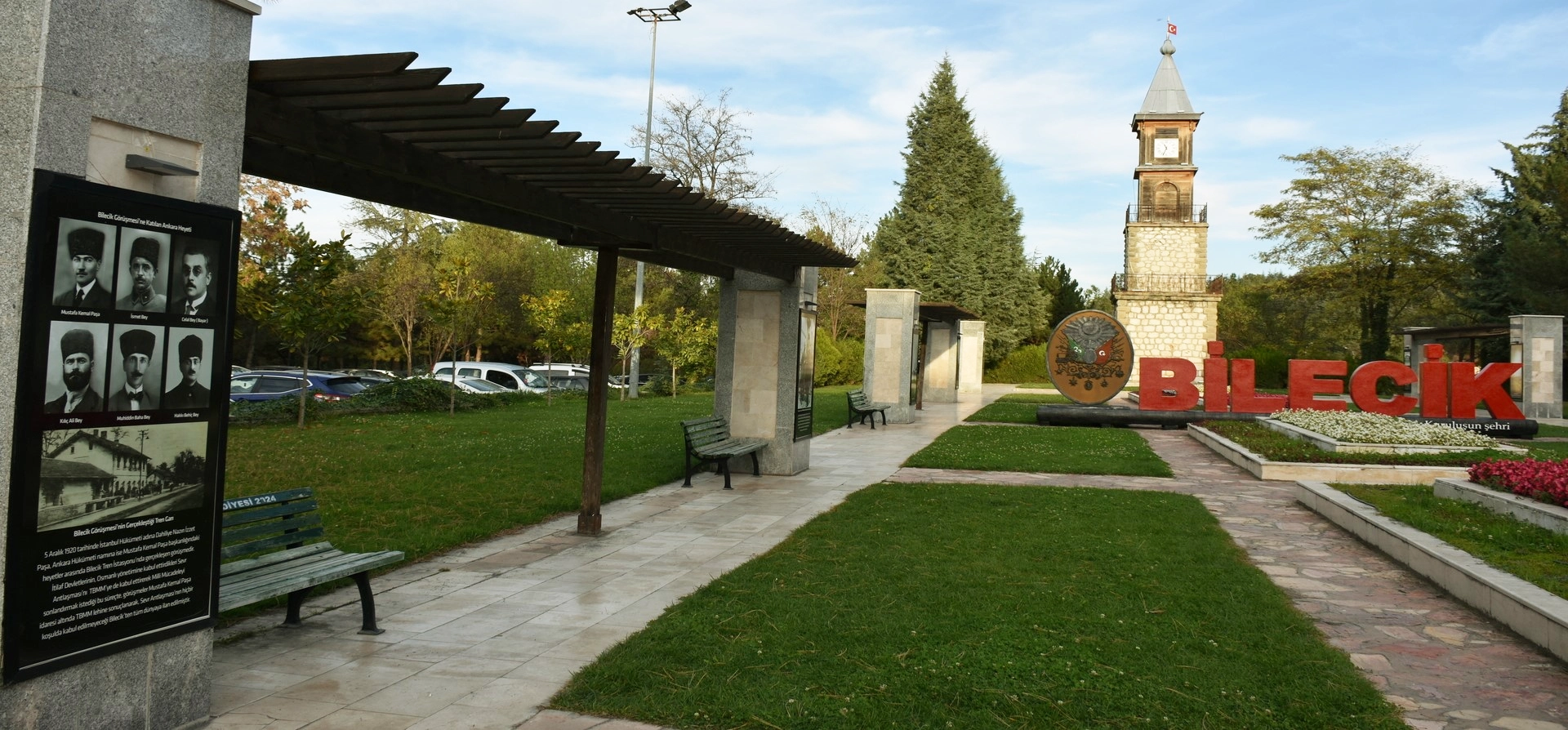
Discover Osmaneli, Söğüt, Bozüyük, Bilecik city, Ottoman foundation sites, historic towns, museums and natural landscapes throughout the province.
View Bilecik GuideConnect Osmaneli’s sixteenth-century architecture with the broader Ottoman and cultural landscape of the region.
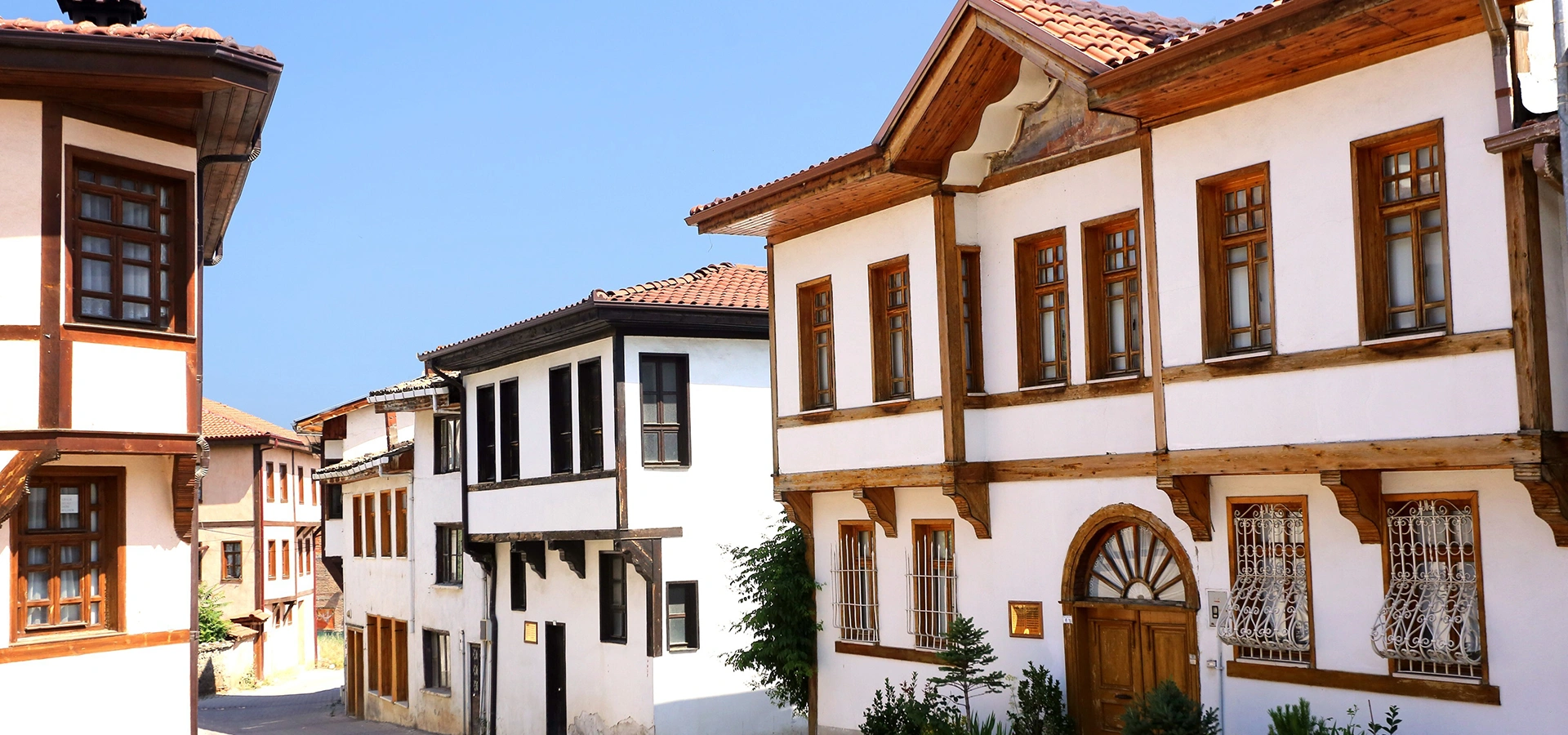
Walk through old Lefke and discover traditional streets, timber-framed houses and the domestic architecture surrounding the mosque.
Explore Historic Osmaneli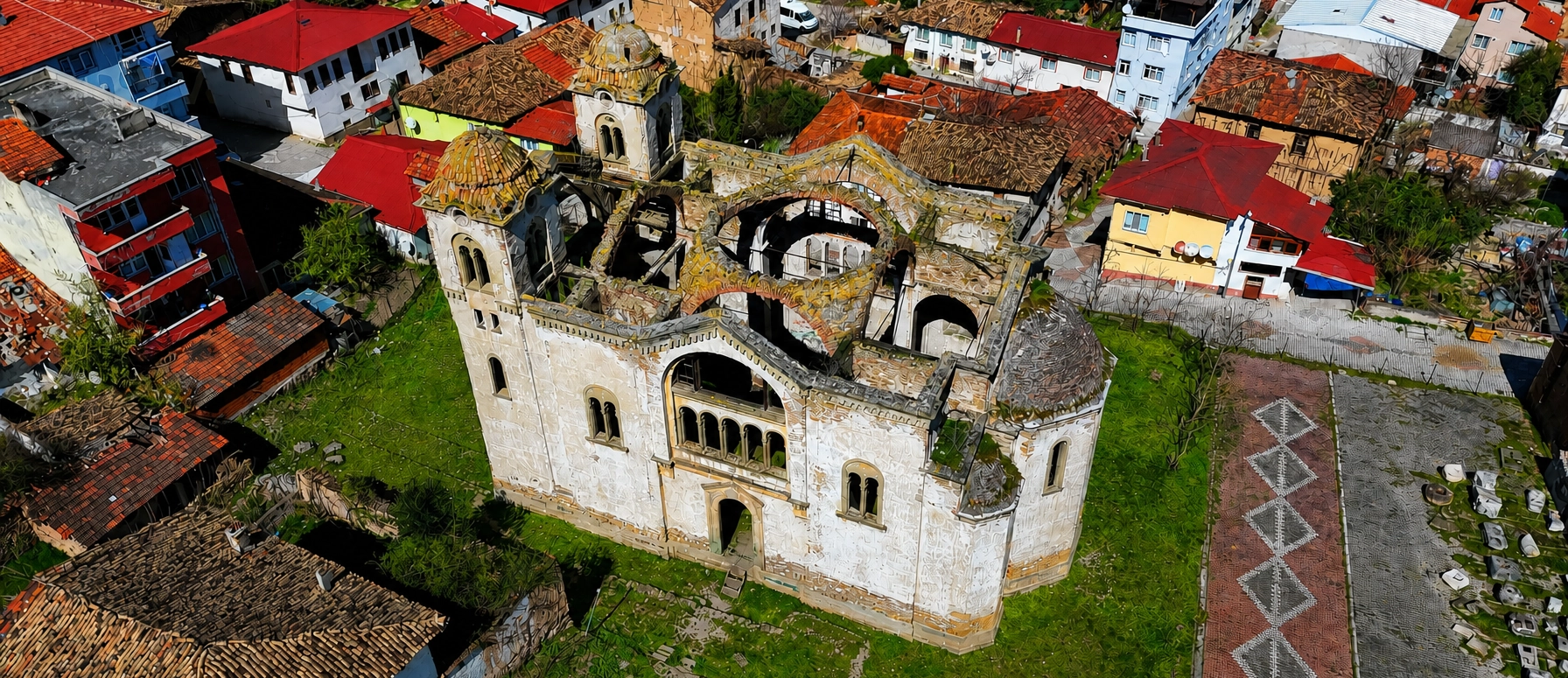
Explore another side of Osmaneli’s religious and architectural heritage through the town’s historic Orthodox church.
Explore Hagios Georgios Church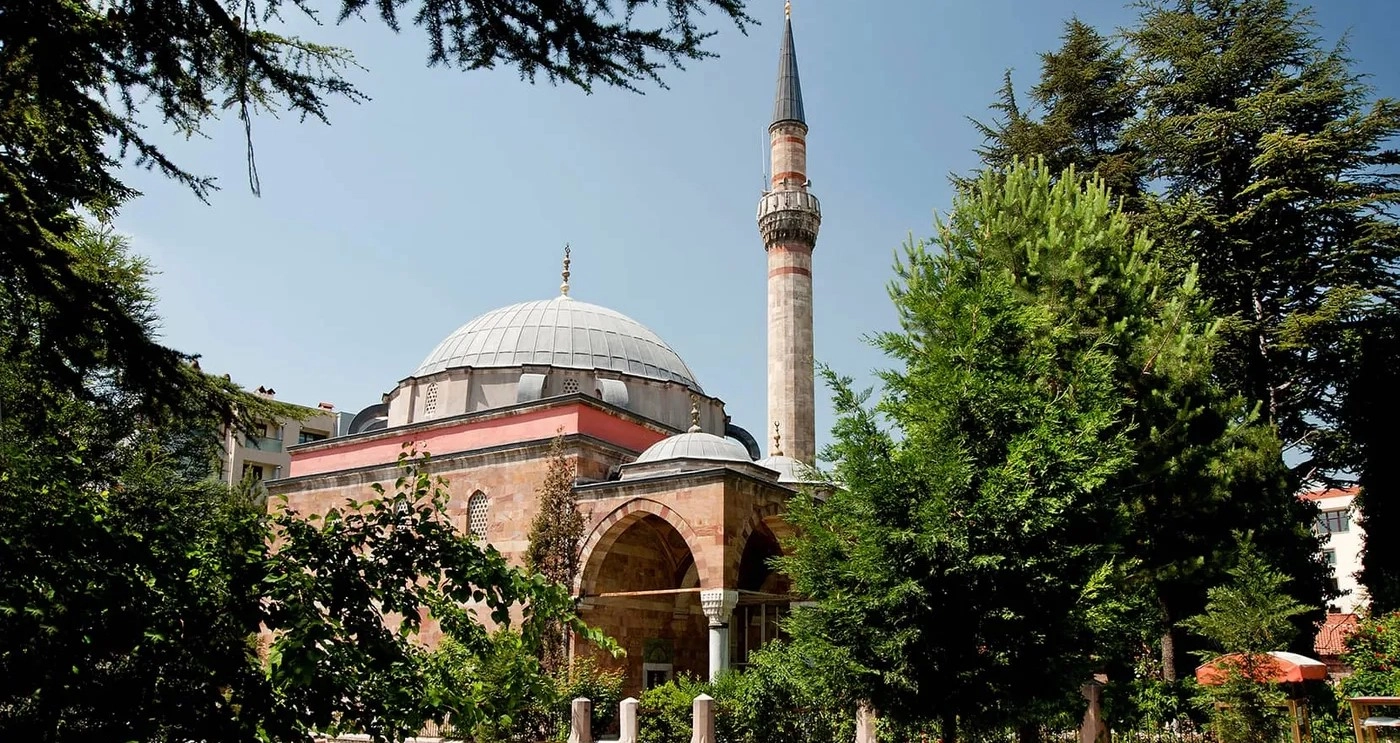
Compare Osmaneli’s timber-roofed Ulu Cami with another major sixteenth-century Ottoman religious monument in Bilecik Province.
Explore Kasımpaşa Mosque