Private Pazaryeri Hops & Rural Discovery
Explore Pazaryeri’s distinctive hop-growing landscape, seasonal agriculture, local food products and village life on a flexible private route.
Request This Tour





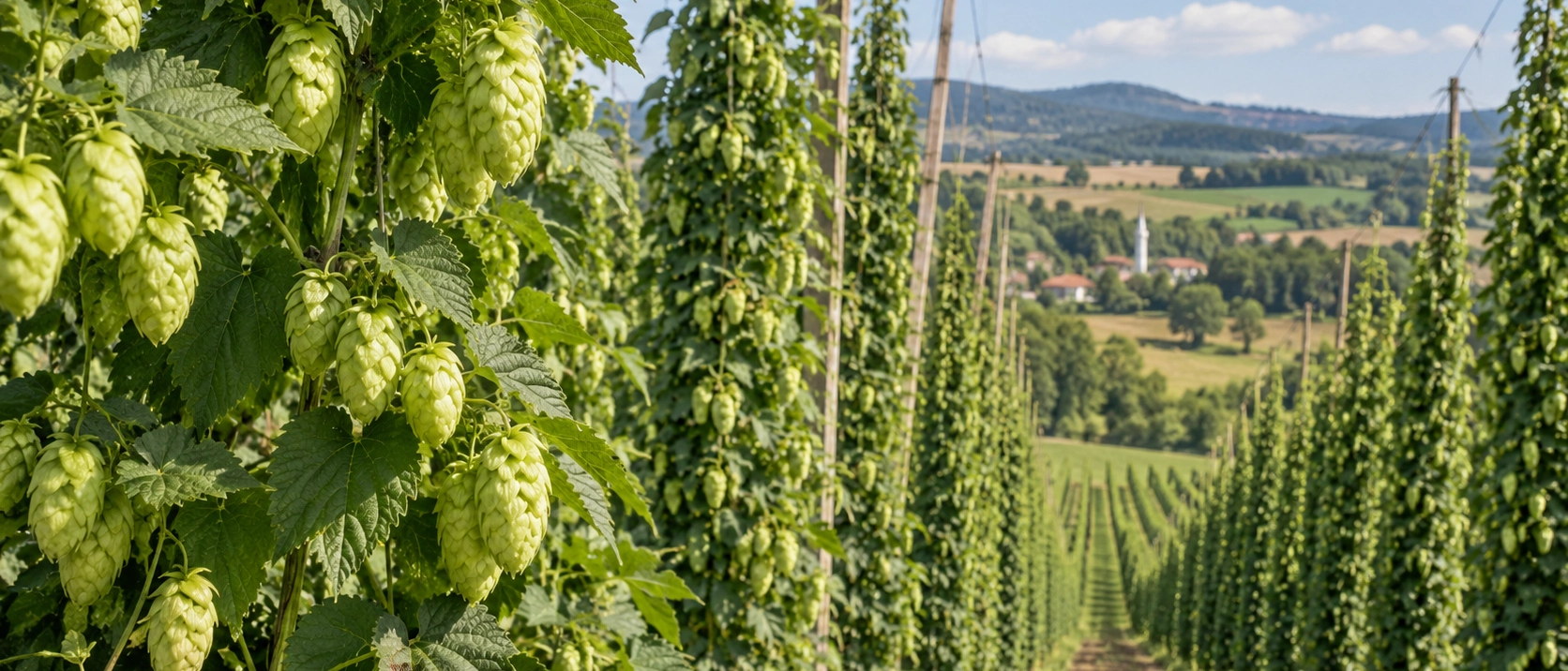
Bilecik Hops, known in Turkish as Bilecik Şerbetçiotu, are one of the most distinctive agricultural products of Bilecik Province. The crop is especially associated with Pazaryeri district, where tall hop gardens, suspended support systems and pale-green cones create an agricultural landscape unlike almost anywhere else in Türkiye.
The hop plant, Humulus lupulus, is a perennial climbing species. Its commercially valued female flower clusters develop into cone-like structures rich in aromatic and bitter compounds. After harvest, these cones are dried and processed for industrial use, particularly in the beverage sector, while hops also have applications in food, pharmaceutical, cosmetic and other industries.
Hop cultivation has become deeply connected with Pazaryeri’s rural economy. Local production developed during the second half of the twentieth century and has continued through generations of growers, supported by specialised knowledge about trellising, training, harvesting and rapid post-harvest processing.
The product’s regional importance received formal recognition when Bilecik Şerbetçiotu was registered as a Turkish geographical indication in 2020. The registration covers hops associated with Bilecik and recognises the relationship between the product, regional production experience and local growing conditions.
This complete guide explores the history of hop cultivation in Bilecik, the botanical characteristics of the plant, Pazaryeri’s growing landscape, hop varieties, seasonal cultivation, harvest, drying and processing, aroma and bitterness, agricultural economics, geographical-indication status, photography, visitor tips and nearby places to combine with a rural Bilecik journey.
Pazaryeri is nationally recognised as Türkiye’s principal and distinctive hop-growing area.
Bilecik Şerbetçiotu has been registered as a Turkish geographical indication since 2020.
The tall climbing plants reach harvest maturity toward the end of summer, with work continuing into September.
Hop cultivation reflects generations of specialised knowledge, family farming and rural production in Pazaryeri.
Essential information about Bilecik Şerbetçiotu and its connection with Pazaryeri.
Pazaryeri district, Bilecik Province, Türkiye.
Open Pazaryeri on Google MapsHumulus lupulus, a perennial climbing plant in the hemp family.
Bilecik Şerbetçiotu – Turkish geographical indication registration no. 614.
Generally late July or August through September, depending on variety and season.
How a climbing industrial crop became one of Pazaryeri’s strongest agricultural symbols.
Hop cultivation in Türkiye has a particularly strong relationship with Pazaryeri. Trials and organised production developed during the second half of the twentieth century, and by the 1970s the crop had become established as an important source of agricultural income for local families.
Hops require a very different field structure from many other crops. Instead of low rows close to the ground, hop gardens use tall posts, overhead wires and hanging strings that allow vigorous shoots to climb several metres during the growing season. This creates one of Bilecik’s most visually distinctive agricultural landscapes.
Over time, growers developed practical experience in spring preparation, stringing, training the shoots, crop care, determining harvest maturity and moving freshly harvested cones quickly to processing facilities. This accumulated knowledge became part of the product’s regional identity.
Hop growing also became linked with cooperative and contract-based agricultural systems. Buyers and processing facilities created a production chain in which fresh cones could be received, dried and prepared for later industrial use.
The importance of this agricultural tradition was formally recognised when Bilecik Şerbetçiotu received geographical-indication registration on 30 November 2020. The protected product name now represents both the crop itself and the regional knowledge that developed around its cultivation.
Hops are the female flower clusters of Humulus lupulus, a vigorous perennial climbing plant. The underground root system survives from year to year, while new shoots emerge each spring and grow rapidly upward around strings or other supports.
The underground crown survives between seasons even though the above-ground growth is cut back after harvest.
Hop shoots climb around suspended strings and can create tall green walls during summer.
Commercial production focuses on the cone-like female flower clusters that contain the plant’s valued compounds.
The cones contain substances that contribute bitterness, aroma and other functional characteristics.
Once spring growth begins, well-established plants can develop rapidly under suitable conditions.
Hops require trellises, careful training and prompt processing after harvest, making them unlike ordinary field crops.
Pazaryeri has become synonymous with hop cultivation in Türkiye. Local climate, soils, farming experience, established processing infrastructure and decades of specialised production knowledge have allowed the district to maintain a distinctive relationship with the crop.
Generations of local growers have accumulated practical knowledge about training, harvest timing and crop management.
The district’s environmental conditions support the seasonal growth cycle required by commercial hop gardens.
Nearby facilities help growers move harvested cones rapidly from the field into drying and processing.
Hop cultivation has historically provided an important seasonal income source for many households in the district.
Tall hop gardens have become an agricultural symbol strongly associated with Pazaryeri.
Official agricultural reporting regularly identifies Pazaryeri as Türkiye’s distinctive hop-production centre.
Bilecik Şerbetçiotu is registered by the Turkish Patent and Trademark Office as a mahreç işareti, a type of geographical indication used for products whose reputation, characteristics or production tradition are associated with a defined geographical area.
The registration describes Bilecik hops as products obtained from fresh cones of Humulus lupulus grown in Bilecik and subsequently dried and prepared in forms such as pellets or bales. For travellers, the registration is important because it confirms that hops are not simply an unusual crop grown in the area; they are part of Bilecik’s recognised agricultural heritage.
Hop shoots climb high into the support system, creating dense vertical columns of foliage.
The leaves are broad, textured and often divided into several pointed lobes.
Mature female flowers form light green, layered cones that resemble small papery ornaments.
Inside the cone are yellow resinous glands known as lupulin, associated with characteristic hop aroma and bitterness.
A mature hop garden is immediately recognisable by its tall posts, wires and descending strings.
The fields change dramatically from bare spring support structures to dense green summer corridors.
Official agricultural sources have reported several hop cultivars in Pazaryeri. Cultivar choice matters because different types can vary in aroma profile, bittering potential, yield, maturation time and agronomic behaviour.
A locally important cultivar name frequently listed in official reports from the district.
An internationally known hop cultivar also reported among the varieties cultivated around Pazaryeri.
One of the named varieties appearing in local production records and harvest reports.
A cultivar grown within Pazaryeri’s hop-production system and listed by agricultural authorities.
A variety carrying the district’s own name and reflecting the crop’s close association with place.
Harvest timing and final industrial characteristics can differ, so growers manage each cultivar according to its needs.
A hop field is sometimes called a hop garden because its infrastructure resembles a carefully engineered outdoor framework. Strong posts and overhead wires support long strings that descend toward individual plants. Growers then train the young shoots around these strings so the plants can climb toward the light.
Hop plants naturally seek height, so trellises allow vigorous growth without spreading across the ground.
Vertical growth helps distribute leaves and flowering branches through the canopy.
Organised rows help airflow pass through the crop, an important part of managing dense foliage.
The support system creates defined rows and plant lines for seasonal field operations.
Posts, wire and strings represent a significant investment compared with ordinary low-growing crops.
The towering structures make Pazaryeri’s hop fields especially interesting for agricultural photography.
The hop harvest generally takes place in late summer. Agricultural reports describe varieties reaching maturity from the end of July into August, with harvesting continuing through August and, in some seasons, into September. Timing depends on cultivar, weather and cone maturity.
Growers monitor colour, texture, aroma and internal development before deciding when to harvest.
Harvest involves bringing the mature climbing growth down from the tall support system.
The valuable cones are removed from stems and leaves before further processing.
Fresh hops contain substantial moisture and are best moved promptly to drying facilities.
The harvest concentrates a large amount of labour into a relatively short period.
Harvest is the moment when the crop’s agricultural and economic importance is most visible across the district.
Commercial hop production focuses on the female flower cones. Beneath their overlapping bracts are small yellow lupulin glands containing resins and essential oils. These compounds are responsible for many of the characteristics that make hops valuable to industry.
These compounds are especially important for bitterness when hops are used in brewing.
Volatile aromatic compounds contribute herbal, floral, spicy, resinous or other hop aromas.
The yellow material visible inside mature cones contains many of the plant’s commercially valued compounds.
Heat, oxygen, moisture and poor storage can reduce aromatic quality after harvest.
Varieties differ in chemical composition, aroma and industrial suitability.
Picking too early or too late can influence yield, aroma and processing quality.
Freshly harvested hop cones are highly perishable because they contain considerable moisture. Rapid drying is therefore one of the most important post-harvest steps. Local processing systems help stabilise the crop so that its valuable compounds can be preserved for later industrial use.
Hops are best known internationally for providing bitterness, aroma and flavour to beer production.
Hop-derived materials can appear in specialised food and flavouring applications.
Compounds found in hops have long attracted interest in pharmaceutical and botanical research.
Hop extracts may be incorporated into selected cosmetic and personal-care formulations.
The plant also appears in some traditional botanical preparations, though uses and claims should be evaluated product by product.
Pazaryeri has explored additional hop-themed products as part of efforts to increase local agricultural value.
In brewing, hops are valued because they contribute several characteristics at once. Their bitter compounds balance the sweetness created from malt, while aromatic oils can add floral, herbal, spicy, earthy, resinous, citrus-like or other sensory notes depending on the cultivar and processing method.
Hop resins provide bitterness that helps balance malt-derived sweetness.
Essential oils create many of the distinctive aromatic characteristics associated with different hop varieties.
The timing and method of hop use can influence the final flavour profile of a brewed product.
Hop compounds can contribute to sensory structure and foam characteristics in brewing.
Hops historically became valued partly because some of their compounds can help inhibit undesirable microorganisms.
Different varieties are selected according to the balance of aroma, bitterness and processing requirements desired.
Hop cultivation is more than an unusual agricultural curiosity. For decades it has supported farming households, seasonal labour, processing activities and cooperative structures in and around Pazaryeri.
The crop has historically provided an important source of agricultural income for local growers.
Training, maintenance and harvest create periods of concentrated work throughout the growing season.
Contract-based purchasing has played an important role in connecting growers with processors and industrial buyers.
Local cooperative structures have supported processing, purchasing and organisation within the production chain.
Drying and processing facilities create additional economic activity beyond work carried out directly in the fields.
The geographical indication gives Bilecik another recognised agricultural product around which local identity can develop.
The area planted with hops and the annual harvest can change considerably from one season to another. Weather, water availability, production costs, grower decisions, market demand and crop performance all influence the scale of cultivation.
Heat, rainfall, spring conditions and summer moisture can influence vegetative growth and cone development.
Hops produce a large amount of summer vegetation and therefore require careful water management.
Labour, support systems, crop care and processing make hops a relatively specialised agricultural investment.
Contract conditions and industrial demand affect how much land growers choose to maintain in production.
Even established gardens can produce different yields in different seasons.
Visitors, researchers and buyers should consult the latest agricultural statistics rather than assuming older acreage figures remain unchanged.
Spring fieldwork begins and young shoots are trained onto strings as the trellis system comes back to life.
The crop begins creating tall green walls, making the structure of the hop garden easy to understand.
Dense foliage and developing flowers make midsummer one of the most attractive times for agricultural photography.
Peak harvest atmosphere often begins, with mature cones and intensive field activity.
Some harvesting and processing may continue depending on cultivar and annual conditions.
Late July through August usually offers the strongest combination of tall plants, mature cones and harvest activity.
Bilecik’s hop landscape is primarily a working agricultural environment, not a conventional tourist attraction. The experience is most rewarding for travellers interested in rural culture, farming, photography, food production and lesser-known regional stories.
Hop gardens are private agricultural properties, so never enter fields without permission.
In season, the tall trellised fields can often be appreciated from public roads around the production area.
Late summer may offer glimpses of farmers cutting, collecting and transporting the crop.
The full agricultural cycle continues after the field, with drying and processing playing essential roles.
When appropriate, speaking with growers can reveal how specialised and labour-intensive hop cultivation really is.
Add local food, village culture and nearby natural landscapes to turn a short agricultural stop into a fuller visit.
July and August offer the best chance to see tall green plants and developing or mature cones.
Hop gardens are private working farms rather than public botanical gardens.
Harvest involves vehicles, cutting equipment and active farm work, so keep a safe distance.
Landscape photography is different from photographing people at close range while they work.
The crop has commercial value and should never be removed from plants without the grower’s permission.
Plant height, harvest timing and field appearance vary according to weather and agricultural schedules.
Pazaryeri boza and halva add a gastronomy dimension to the agricultural story.
A private vehicle makes it easier to explore villages and agricultural landscapes around the district.
Shoot upward through the rows to emphasise the extraordinary height of the support system.
Photograph mature cones closely enough to reveal their layered, papery structure.
Use the lines between rows to create strong perspective and depth.
With permission, hands holding freshly picked cones can communicate scale and agricultural labour.
Low evening light can make the translucent green leaves and cones especially photogenic.
Where access is permitted, drying and handling equipment adds an industrial-agriculture dimension to the story.
Hops are an industrial agricultural crop rather than an everyday table food, but they belong to a wider Pazaryeri landscape rich in distinctive local products. Combining hop fields with regional foods helps visitors understand the district as a living agricultural community rather than a single-product destination.
A traditional fermented grain drink and one of the district’s characteristic flavours.
A local sweet that offers an easy contrast with the agricultural and industrial story of hops.
Traditional pottery connects the district’s agricultural identity with long-established village craftsmanship.
Seasonal fruit, vegetables and other local products reinforce the rural character of the surrounding countryside.
The wider province includes pomegranate, quince, peppers, grain-based foods and many traditional home-cooked dishes.
The strongest itinerary combines what grows in the fields with the foods, villages and crafts shaped by the same landscape.
Discover the district’s traditional fermented grain drink and its place in local winter food culture.
Add one of the district’s traditional sweets to your rural gastronomy route.
Meet another side of Pazaryeri through a village known for its pottery tradition.
Continue exploring Bilecik’s agricultural identity through another locally recognised crop.
Balance an agricultural route with a distinctive savoury speciality from nearby Bozüyük.
Compare Pazaryeri’s hop fields with the warmer orchard landscape of the Middle Sakarya Valley.
Add a peaceful countryside stop to a day exploring Pazaryeri and its agricultural landscape.
Enjoy forest and waterside scenery in another quiet corner of the district.
Continue through rural Bilecik toward a nature stop in Yenipazar.
Combine the cultivated landscape of Pazaryeri with the higher natural scenery around Bozüyük.
Discover another cool upland landscape within easy reach of a broader Bilecik road trip.
Ask us to combine Pazaryeri, local food, village culture and Bilecik’s historical attractions in one private route.
Bilecik Hops are hop products associated with Humulus lupulus cultivated in Bilecik Province, especially around Pazaryeri, where hop growing has developed into an important local agricultural tradition.
Hops are called şerbetçiotu or şerbetçi otu in Turkish.
The crop is most strongly associated with Pazaryeri district and nearby villages.
Yes. Bilecik Şerbetçiotu was registered as a Turkish geographical indication on 30 November 2020 under registration number 614.
It is registered as a mahreç işareti.
The cultivated hop plant is Humulus lupulus.
Hop is perennial. Its underground crown survives from year to year, while new climbing shoots emerge each spring.
The plant naturally climbs, so growers use high posts, overhead wires and strings to support rapid vertical growth.
Commercial production focuses mainly on the mature female flower cones.
Lupulin is the yellow resinous material found inside hop cones. It contains many of the compounds responsible for hop bitterness and aroma.
Harvest generally begins in late summer. Depending on variety and season, work may start around late July or August and continue into September.
Official agricultural reports have listed Aroma, Brewers Gold, Ege, Erciyes and Pazaryeri among the varieties cultivated in the district.
The cones are separated from other plant material, dried to reduce moisture and then prepared for storage or further processing, including baling or pelletising.
Fresh cones contain significant moisture and can deteriorate rapidly, so prompt drying helps stabilise the crop and protect quality.
They are best known as a raw material in brewing, but hop-derived products also have applications in food, pharmaceutical, cosmetic and other industries.
They can provide bitterness, aroma, flavour and other functional characteristics, with the exact contribution depending on cultivar and processing.
No. Different cultivars can produce very different aromatic profiles, ranging from herbal and floral to spicy, resinous or other notes.
Hops are primarily an agricultural raw material rather than a snack food. Do not pick or consume crops from working farms without permission, and remember that very bitter flavour is normal.
Hop gardens are private working farms, so access should be arranged with the owner or an authorised local contact rather than assumed.
You can photograph views from public areas, but ask permission before entering private land or taking close photographs of farmers at work.
July and August are usually the most visually rewarding because the plants are tall and green and the cones are developing or reaching maturity.
Yes. August is commonly associated with active harvest, although exact timing changes according to the year, cultivar and weather.
No. Hop area and annual output can change substantially from year to year, so current agricultural reports should be used for up-to-date figures.
It has supported local farm incomes, seasonal employment, processing activity and a distinctive agricultural identity for decades.
Pazaryeri Boza and Pazaryeri Halva are useful additions to a local food route.
Kınık Pottery Village, Günyurdu Pond, Bozcaarmut Pond and nearby Bozüyük countryside can be combined with an agricultural road trip.
Yes. The crop is visually unusual, regionally important and closely linked with local rural history, but visits should always respect the fact that the fields are active farms.
The strongest photographs and videos do more than show a single hop cone. Try to connect the plant with the extraordinary vertical architecture of the field, the people who cultivate it and the late-summer rhythm of harvest.
Show the full height and repeating structure of the hop garden to establish a sense of place.
Use a close-up to reveal the layered bracts and pale-green colour of a mature cone.
Where a grower permits, an opened cone can reveal the yellow resinous material hidden inside.
Harvest and training scenes communicate the human knowledge behind the crop.
Pair agricultural scenes with drying or processing imagery to explain what happens after harvest.
Include village roads, fields and surrounding countryside so the crop is visually anchored in Bilecik.
Combine Bilecik’s distinctive hop-growing landscape with local food, pottery villages, countryside and regional heritage on a private journey designed around your interests.
Custom-designed private journeys with flexible timing, private transportation and opportunities to explore Pazaryeri’s agricultural landscape, local food traditions, village crafts and nearby natural attractions.
Explore Pazaryeri’s distinctive hop-growing landscape, seasonal agriculture, local food products and village life on a flexible private route.
Request This Tour
Combine Pazaryeri with Bilecik, Söğüt, Bozüyük or Osmaneli for a private journey linking agriculture, local flavours, landscapes and historical heritage.
Request This Tour