Large 5–15 kg Fruits
Osmaneli Watermelon is known for producing generously sized fruit.
- Weight: 5–15 kg
- Shape: Oval
- Growth: Vigorous






Osmaneli Watermelon, known locally as Osmaneli Karpuzu, is a geographically indicated watermelon grown in the Osmaneli district of Bilecik Province in northwestern Türkiye. Large, oval, striped green fruits with deep-red flesh have become one of the most recognisable symbols of the district’s summer agricultural landscape.
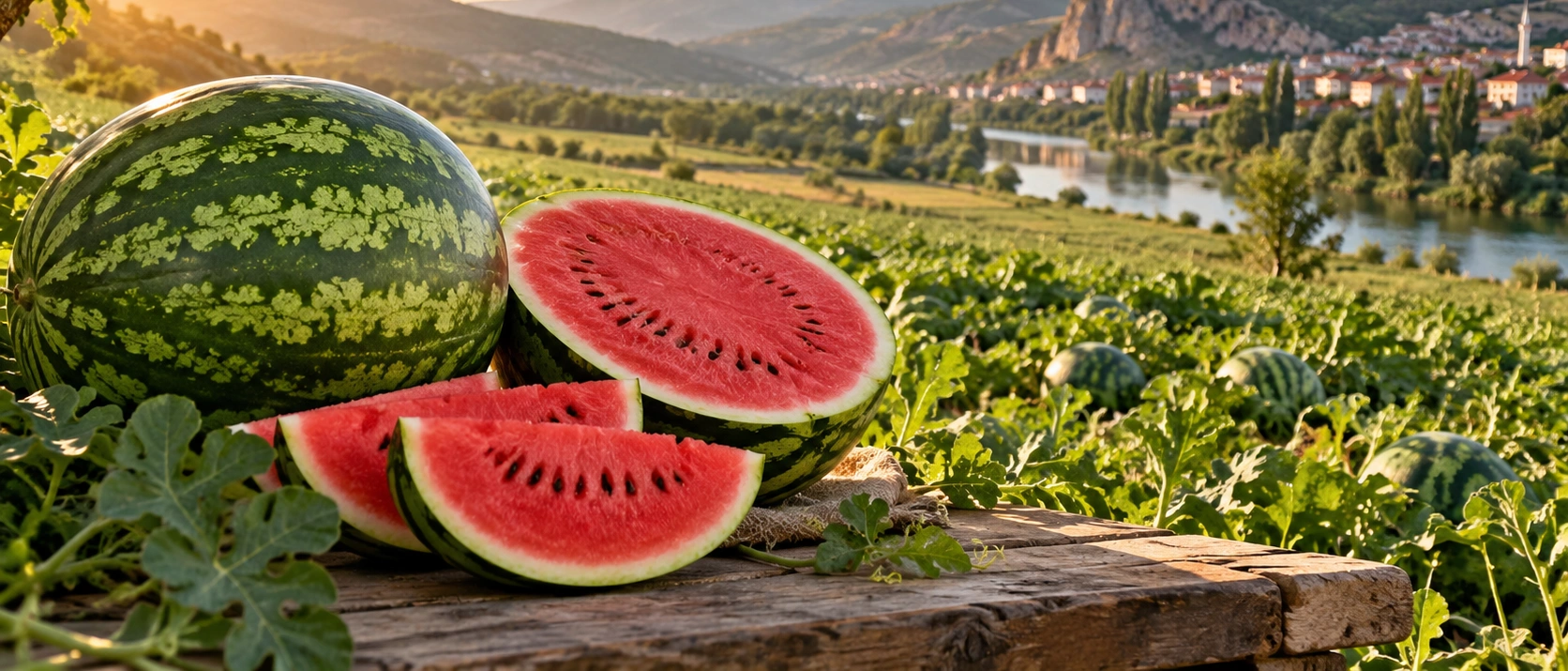
The registered product belongs to the Crimson Sweet watermelon type. A typical fruit weighs approximately 5–15 kg, has a relatively thin 3–5 mm rind, dark-red interior and a bright green exterior marked with contrasting darker stripes.
Its character is closely connected with Osmaneli’s growing environment. The district lies within a climatic transition zone influenced by Marmara, Central Anatolia and Mediterranean conditions, while watermelon fields occupy fertile alluvial soils rich in organic matter along the surrounding valleys.
Osmaneli Watermelon is officially protected in Türkiye as a Mahreç İşareti geographical indication under registration number 1261. The registered geographical boundary covers the entire Osmaneli district of Bilecik Province.
The main harvest generally begins during the first week of August and continues until approximately the second week of September. Earlier plantings may begin producing fruit from the third week of July, making midsummer and late summer the best period for travellers who want to encounter the watermelon at its freshest.
This guide explores Osmaneli Watermelon’s protected status, physical characteristics, agricultural landscape, soils, planting system, irrigation, ripening, traditional harvest season, local reputation, Medetli production area, buying tips, tasting advice and ways to combine this regional product with the historical attractions of Osmaneli.
Osmaneli Watermelon received geographical-indication protection in 2022.
The protected specification defines Osmaneli Watermelon as a notably large watermelon.
Ripe fruit has a characteristic dark-red interior beneath its striped green rind.
The principal harvest runs from early August into the second week of September.
Essential information about one of Osmaneli’s best-known protected agricultural products.
Osmaneli district, Bilecik Province, Türkiye.
Open Osmaneli on Google MapsProtected Crimson Sweet-type watermelon.
Approximately 5–15 kg per fruit.
Mahreç İşareti registration number 1261.
From fertile river-valley fields to summer markets, watermelon has long been part of Osmaneli’s agricultural identity.
Osmaneli Watermelon has a long-established reputation within the district. Watermelon cultivation developed into an important part of the local agricultural economy and became closely associated with the summer harvest season.
The official geographical-indication specification records the product’s longstanding reputation and notes that watermelon festivities connected with harvest time have been organised in the district since the 1940s.
The crop benefits from Osmaneli’s combination of warm summers, relatively small summer day-and-night temperature differences, fertile alluvial soils and controlled irrigation. Together, these conditions support the development of large fruit with characteristic colouring, texture and sweetness.
Watermelon farming also shapes the seasonal rhythm of the countryside. Fields prepared during late autumn and winter are planted during spring, carefully irrigated through the growing period and harvested during the hottest part of the year.
Osmaneli’s connection with watermelon was formally recognised when the product received geographical-indication protection in 2022, safeguarding the name and the relationship between the fruit and its production area.
Size, colour, rind, flesh and growing characteristics distinguish the registered Osmaneli Watermelon.
Osmaneli Watermelon is known for producing generously sized fruit.
The surface is bright green with characteristic darker green markings.
Cutting the fruit reveals the intense red colour associated with ripe Osmaneli Watermelon.
The protected specification defines the fruit’s soluble-solids range.
Broad leaves and vigorous vines help shelter developing fruit from intense summer sunlight.
The main crop reaches maturity during Osmaneli’s warmest part of the year.
Osmaneli Karpuzu is officially registered by the Turkish Patent and Trademark Office as a geographical indication. Its registration protects the product’s name, defined characteristics, production relationship and reputation within Osmaneli.
The official protected Turkish name is Osmaneli Karpuzu.
The geographical-indication registration number is 1261.
Osmaneli Watermelon received protection in 2022.
The geographical-indication application number is C2020/257.
The application was filed on 14 September 2020.
It is registered as a Mahreç İşareti.
The registration holder is Osmaneli Municipality.
The protected geographical boundary is the Osmaneli district of Bilecik.
Under the registered specification, all main cultivation stages must take place within the geographical boundary, while seed production, seedling preparation and grafting may take place outside it.
The protected name and geographical-indication emblem are used according to Turkish geographical-indication regulations, helping visitors and buyers distinguish the registered regional product from watermelons grown elsewhere.
Osmaneli Watermelon is a Crimson Sweet-type watermelon cultivated within Osmaneli district according to the conditions defined in its geographical-indication specification.
Unlike a processed regional speciality, Osmaneli Watermelon reaches the consumer as freshly harvested fruit.
The registered product is based on watermelon belonging to the Crimson Sweet group.
A mature protected watermelon normally falls within the 5–15 kg weight range.
The fruit is characteristically oval rather than strongly elongated.
A mature fruit reveals rich dark-red flesh beneath the striped green rind.
The protected name connects the watermelon directly with Osmaneli’s landscape and farming tradition.
Osmaneli lies within a climatic transition zone where different regional influences meet. Warm summers, valley agriculture and fertile soils provide favourable conditions for watermelon production.
Osmaneli is influenced by climatic characteristics associated with several neighbouring regions of Türkiye.
Fruit development is completed primarily during July and August.
Relatively limited temperature variation during key fruit-development months forms part of the registered growing environment.
Watermelon fields benefit from fertile alluvial soils found within the district.
Reliable irrigation supports fruit development through Osmaneli’s comparatively dry summer period.
Generations of farming experience connect the crop with Osmaneli’s rural economy and seasonal life.
The protected specification places particular importance on the fertile alluvial soils of Osmaneli. These fields form an essential part of the geographical relationship behind the product.
Osmaneli Watermelon is cultivated in the district’s productive alluvial agricultural lands.
The registered cultivation environment specifies soil with a pH between approximately 6 and 8.
Productive fields are characterised by soils rich in organic material.
Adequate potassium supports fruit growth and development during the season.
Suitable calcium availability forms part of the productive soil environment described for the crop.
Field preparation improves aeration and drainage before the spring planting season.
The agricultural cycle begins months before the first watermelons appear. According to the registered method, soil preparation starts around the end of November and continues into December.
The main planting period generally begins during the first week of May and continues until around the third week of May. Earlier cultivation may begin in April when growers take additional measures against cold weather.
The registered production method uses grafted and certified watermelon seedlings.
Seedlings are ready for planting after reaching suitable development and leaf growth.
Plant density is controlled to provide adequate growing space for vigorous vines.
Plants are spaced approximately 85–90 cm apart along each row.
Wide spacing between rows accommodates the strong spreading growth of the watermelon vines.
Planting is preferably completed during cooler parts of the day to reduce stress on young plants.
Some Osmaneli growers plant earlier during April to bring part of the harvest forward. Because spring temperatures can still be low, young plants require protection.
Early plantings may begin during the second half of April.
Young seedlings can be covered with low tunnel structures to provide protection from cold conditions.
Protective coverings are ventilated as temperatures rise and plants become established.
Early production can move the first harvest into approximately the third week of July.
Staggered planting extends the period in which locally grown watermelon reaches consumers.
The timing of early planting varies with seasonal temperature and frost risk.
Although watermelon contains a high percentage of water, irrigation is not simply a matter of giving plants as much water as possible. The registered production method emphasises controlled irrigation according to the crop’s stage of development.
Watermelon cultivation requires repeated field work between planting and harvest. Weed control, soil management, plant nutrition and observation all contribute to producing sound fruit.
The registered method generally includes several rounds of hoeing before the vines spread across the field.
The first cultivation takes place shortly after planting to break the surface crust and control weeds.
Care is taken not to damage the plant crown, roots or developing shoots during field work.
Mechanical disturbance is avoided after flowering and vine development become advanced.
Healthy foliage eventually covers much of the developing fruit.
The vigorous leaf canopy helps protect watermelons from excessive direct sunlight.
Osmaneli Watermelon is a vigorous crop with substantial nutritional requirements. Fertiliser application is therefore adjusted according to soil analysis and plant-development stage.
Fertiliser requirements should be determined from the condition of individual fields.
Well-rotted animal manure forms part of field preparation before planting.
Nitrogen supports vigorous vegetative development during the initial growth period.
Phosphorus receives greater emphasis during flowering and fruit set.
Potassium becomes particularly important while fruits enlarge and mature.
The aim is healthy vine development without excessive vegetative growth at the expense of fruit.
The registered growing cycle lasts approximately 85–100 days. During that period, small spring seedlings become sprawling plants capable of supporting several very large watermelons.
Osmaneli Watermelon develops a strong stem and spreading vine system.
Large foliage supports photosynthesis while shading developing fruit.
Flowers develop as spring moves into the warmer early-summer growing period.
A healthy plant typically supports approximately two to three fruits.
July is particularly important as developing watermelons increase rapidly in size.
Colour, sugar development and maturity continue as the crop approaches the August harvest.
Experienced growers do not judge watermelon maturity using size alone. Several visual and physical clues indicate that a fruit has reached the correct stage for harvest.
Some growers establish protected early plantings when weather conditions allow.
The principal watermelon planting period takes place during the first weeks of May.
Vines develop quickly and flowering becomes increasingly important.
Fruits enlarge rapidly, and the earliest crops may begin reaching harvest maturity late in the month.
This is the heart of the Osmaneli Watermelon harvest and the best month for visitors interested in the crop.
Main-season harvesting continues into approximately the second week of September.
The appeal of Osmaneli Watermelon comes from the classic combination people look for in peak-season watermelon: a high-moisture interior, refreshing sweetness, vivid colour and crisp fresh-fruit character.
With approximately 91–92% moisture, the fruit is naturally refreshing during hot summer weather.
The registered specification records total sugar values around 7.3–7.5%.
Ripe fruit develops the rich red interior associated with Osmaneli Watermelon.
Local producers and consumers value the fruit for its characteristic watermelon aroma and flavour.
The fruit is at its most memorable when eaten during the local harvest season.
A chilled slice makes an especially refreshing stop during a summer journey through Osmaneli.
One important characteristic described in the protected specification is the watermelon’s ability to remain suitable for storage when handled correctly.
Harvested fruit can be stored for approximately one month under suitable conditions.
A cool environment helps slow deterioration after harvesting.
The registered specification recommends dry storage rather than damp surroundings.
Impact and rind damage can shorten the storage life of large watermelon fruit.
Once cut, watermelon should be refrigerated and consumed much sooner.
Travellers will experience the strongest connection with the region by tasting fruit during the local harvest.
When buying watermelon in Osmaneli during summer, start by asking specifically for Osmaneli Karpuzu. The geographical indication identifies fruit associated with the protected production area and specification.
Medetli, one of the villages within Osmaneli district, is particularly associated with commercial watermelon cultivation. Its fields regularly appear in reports about Osmaneli’s summer watermelon harvest.
In 2026, Bilecik Provincial Directorate of Agriculture and Forestry continued a Good Agricultural Practices project in Medetli under the title “Toprakta İz Bırak, Geleceğe İyilik: İyi Tarımlı Osmaneli Karpuzu”.
The programme includes education designed to strengthen producers’ knowledge of good agricultural practices.
The project promotes agricultural methods intended to support long-term production quality.
Good Agricultural Practices place emphasis on traceability and responsible production methods.
Strengthening the reputation of Osmaneli Watermelon is an important goal of current agricultural work.
Watermelon cultivation remains an important seasonal activity for farmers and agricultural workers.
Medetli demonstrates that Osmaneli Watermelon is not merely a historic name but an actively cultivated regional product.
Watermelon production is deeply connected with Osmaneli’s summer agricultural economy. Harvest requires growers, seasonal agricultural workers, buyers, transporters and local traders to work within a relatively concentrated period.
The harvest creates employment for agricultural workers during the peak summer period.
Fruit harvested in Osmaneli is distributed beyond the district to larger consumer markets.
Osmaneli’s location gives producers access to major population centres across northwestern Türkiye.
Commercial buyers often purchase substantial quantities during the concentrated harvest period.
Geographical-indication status gives the product an additional identity in the marketplace.
The watermelon has become one of the agricultural products most strongly associated with Osmaneli.
The relationship between Osmaneli and watermelon reaches beyond cultivation. According to the geographical-indication registration, watermelon festivities associated with harvest time have existed in the district since the 1940s.
The watermelon season has long been recognised as an important moment in Osmaneli’s agricultural calendar.
Celebrating the crop reinforces its association with local producers and rural communities.
The history of local celebration forms part of the evidence connecting the protected name with Osmaneli.
Watermelon events naturally correspond with the district’s peak harvesting season.
The tradition shows how a simple fresh fruit can become part of local cultural heritage.
Summer visitors can experience Osmaneli when both its agricultural fields and historic town are especially lively.
Fresh Osmaneli Watermelon needs very little preparation. During harvest season, the best approach is often simply to chill the fruit, cut it open and allow its colour, aroma and juiciness to speak for themselves.
Cooling the watermelon makes it especially refreshing during Osmaneli’s hot summer weather.
Traditional wedge-shaped slices are ideal for enjoying the fruit outdoors or at a family table.
Fresh fruit allows visitors to experience the characteristic flavour without other ingredients competing with it.
Watermelon can form part of a relaxed Turkish summer breakfast alongside cheese and bread.
Its refreshing character makes watermelon a natural companion to countryside excursions and summer picnics.
For the strongest regional experience, choose fruit from local producers or sellers during harvest season.
August falls at the heart of the principal watermelon harvest.
Use the protected local name when shopping at markets or roadside produce stands.
A whole watermelon may weigh 5–15 kg, so consider your transport plans before buying one.
Protected fruit has an oval form and contrasting green striping.
Summer watermelon fields provide a completely different visual side of historic Osmaneli.
Taste local watermelon before or after exploring Osmaneli’s Ottoman streets and monuments.
Once a watermelon has been sliced, refrigerate the remaining fruit promptly.
Buying locally during harvest connects your visit directly with Osmaneli’s living agricultural economy.
Osmaneli’s identity is shaped by both agriculture and history. Fertile fields surrounding the historic town produce fruit and vegetables, while the old centre preserves architectural traces of the district’s Ottoman and multicultural past.
Watermelon represents Osmaneli’s productive summer landscape and farming economy.
Quince is another fruit associated with the district and contributes to local confectionery traditions.
The district is also known for a geographically indicated quince-based Turkish delight.
Local markets provide an opportunity to see the diversity of crops grown in the surrounding agricultural landscape.
Harvest season brings freshly picked produce into local shops, markets and roadside selling points.
Protected agricultural products help connect present-day farming with regional identity and tourism.
Osmaneli Watermelon can become part of a broader day exploring historic streets, Ottoman monuments, religious heritage and countryside landscapes around the district.
Walk among traditional houses and historic streets that preserve the architectural character of old Osmaneli.
Explore one of the most important surviving reminders of Osmaneli’s historic Greek Orthodox community.
Discover an important Ottoman monument associated with the architectural heritage of historic Osmaneli.
Combine agricultural landscapes with scenic walks through the countryside surrounding the historic town.
Explore the broad agricultural landscape that helps define Osmaneli’s geography and rural character.
During summer, look for seasonal fruit and vegetables at markets and roadside selling points around the district.
Osmaneli Watermelon, or Osmaneli Karpuzu, is a geographically indicated Crimson Sweet-type watermelon cultivated in Osmaneli district of Bilecik Province.
Its protected geographical boundary is Osmaneli district in Bilecik Province, Türkiye.
Yes. Osmaneli Karpuzu is officially registered as a Turkish geographical indication.
Its geographical-indication registration number is 1261.
Osmaneli Karpuzu is registered as a Mahreç İşareti.
The geographical-indication registration holder is Osmaneli Municipality.
The geographical-indication application was filed on 14 September 2020.
The official application number is C2020/257.
The product received geographical-indication registration in 2022.
The registered product is a Crimson Sweet type of watermelon.
The protected specification gives a typical fruit weight of approximately 5–15 kg.
The fruit is characteristically oval.
Its rind is green with darker-green markings, while the ripe interior is dark red.
The protected specification gives a rind thickness of approximately 3–5 mm.
The registered specification gives soluble solids of approximately 8.1–8.4 °Brix and total sugar around 7.3–7.5%.
The registered range is approximately 91–92% moisture.
Main-season planting generally takes place from the first to the third week of May.
Yes. Earlier plantings can be established in April with additional cold protection.
The vegetation period described in the protected specification is approximately 85–100 days.
The principal harvest normally begins during the first week of August.
Main-season harvesting normally continues until approximately the second week of September.
Early-planted fruit may begin reaching harvest maturity from approximately the third week of July.
It is associated with organic-matter-rich alluvial soils with a pH of approximately 6–8.
Yes. The registered production system uses irrigated agriculture, with drip irrigation used to deliver water in a controlled way.
Excessive irrigation close to maturity can contribute to fruit cracking and deterioration, so water is carefully controlled before harvest.
The registered description states that a plant typically sets approximately two to three fruits.
Signs include changes in rind appearance, yellowing of the ground-contact patch and drying of the tendril near the fruit stem.
The registered specification states that whole harvested fruit may be kept for approximately one month in suitable cool and dry conditions.
August is the safest choice because it falls in the middle of the main local harvest.
Medetli is an important watermelon-producing village within Osmaneli district. Watermelons grown there form part of the wider Osmaneli Watermelon production tradition.
Yes. Agricultural authorities have implemented Good Agricultural Practices projects with watermelon producers in Medetli village.
Yes. The geographical-indication specification records watermelon harvest festivities in the district dating back to the 1940s.
During the summer harvest, locally grown watermelon may be found through produce sellers, markets and agricultural selling points around Osmaneli.
Combine a food stop with Osmaneli Historic Houses, Hagios Georgios Church, Rüstem Pasha Mosque and countryside walks around the district.
Osmaneli Watermelon offers excellent opportunities for agricultural and food photography. The strongest images connect the brilliant red interior of the fruit with the green fields and rural landscape where it is grown.
Photograph a freshly opened watermelon to capture the contrast between green rind and dark-red flesh.
Use low viewpoints to show watermelons lying among broad green vines across the summer fields.
Capture the scale of the fruit as a ripe watermelon is lifted from the field.
Stacks of freshly harvested green-striped fruit communicate the scale of Osmaneli’s summer crop.
Focus closely on the moisture, colour and texture of a freshly cut slice.
Include agricultural fields, hills or village scenery to connect the fruit visually with its geographical origin.
Combine Osmaneli’s protected agricultural products with Ottoman heritage, traditional houses, religious monuments and countryside landscapes on a private journey designed around your interests.
Custom-designed private journeys with flexible timing, private transportation and opportunities to discover seasonal Osmaneli Watermelon, local produce, historic streets, traditional architecture and the agricultural landscapes surrounding the town.
Combine Osmaneli’s local produce and protected foods with its traditional houses, Rüstem Pasha Mosque, historic streets and other cultural landmarks on a flexible private journey.
Request This Tour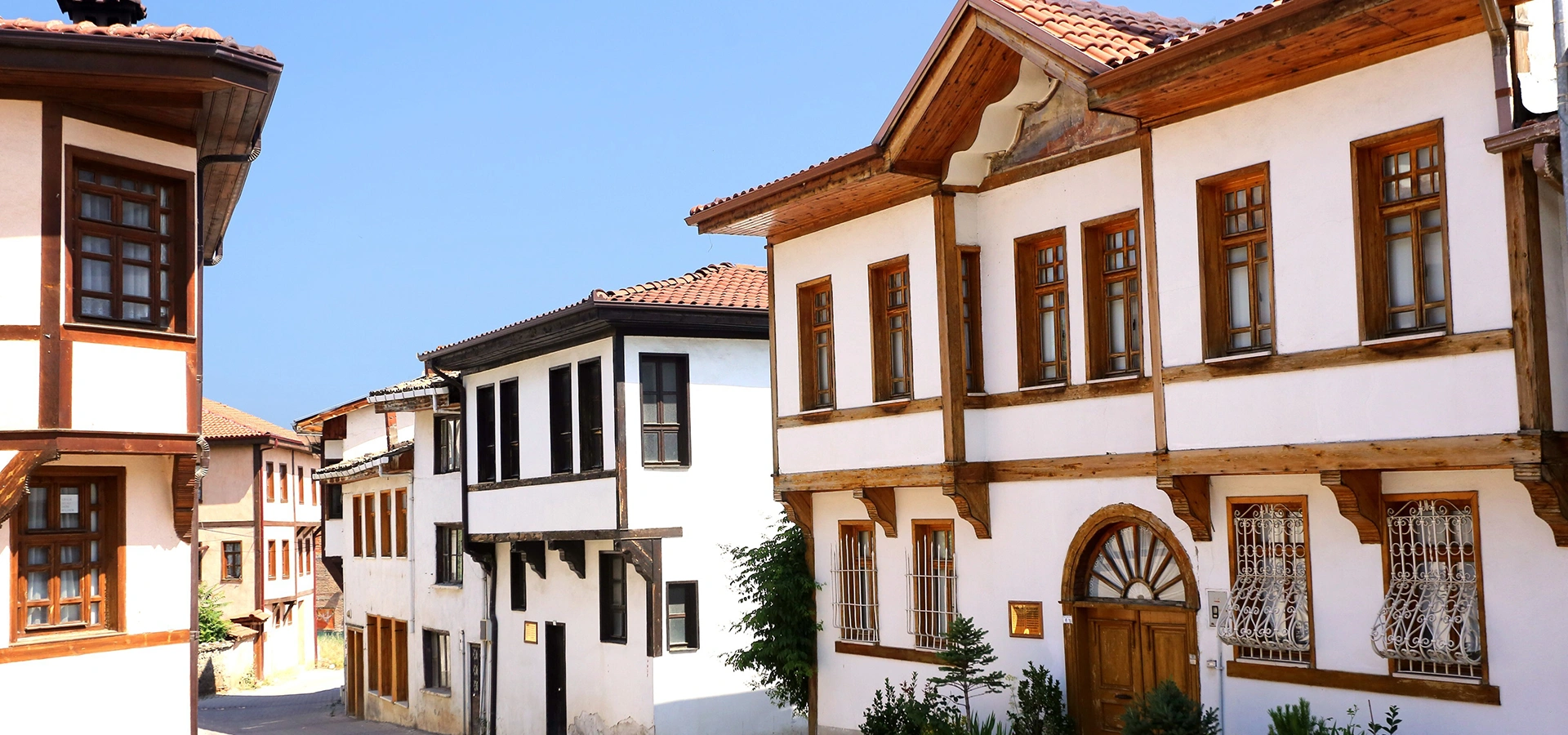
Explore the agricultural landscapes surrounding Osmaneli, seasonal produce, village scenery and nature while discovering how geography has shaped one of Bilecik’s most distinctive farming districts.
Request This Tour