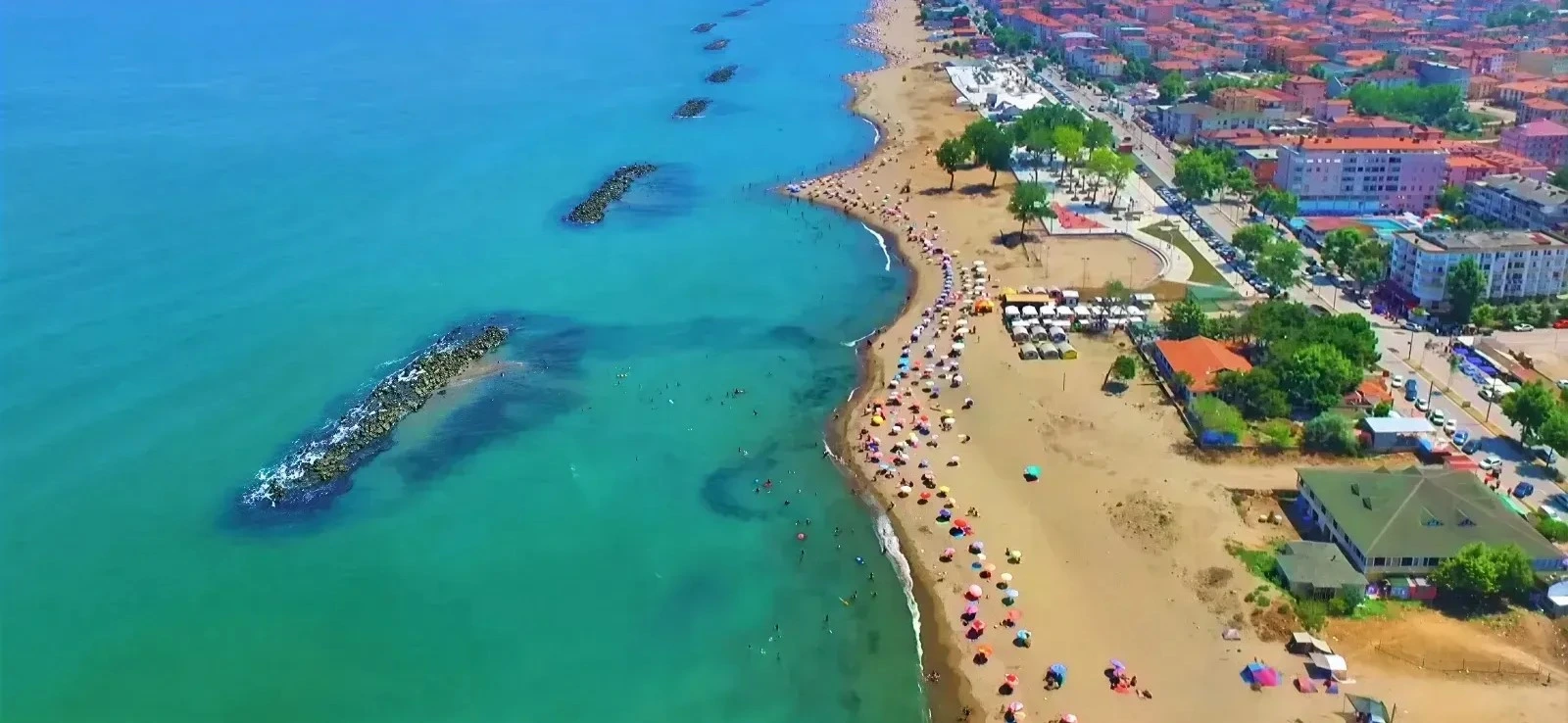
Private Karasu Beach & Northern Sakarya Tour
Ask us about a tailor-made route focused on Karasu Beach, Acarlar Floodplain Forest, Maden Deresi, local food and Black Sea scenery.
Request a Custom Tour




Karasu Beach, known locally as Karasu Sahili, stretches along the Black Sea coast of northern Sakarya and is one of the province's best-known summer destinations. Its broad sandy shoreline, open sea views and long coastal atmosphere make it very different from Sakarya's lakes, forests and inland valleys.
Official provincial tourism information describes Karasu's coastline as approximately 20 kilometres long, placing it among the notable extended sandy shores of Türkiye's Black Sea region. The beach is especially busy in summer, when visitors arrive for swimming, sunbathing, walking, cycling, food and evening life along the coast.
Karasu is more than one single beach entrance. The coastline includes different public swimming areas, promenade sections and organised beach zones, including Sahil Park and 32 Evler, both of which have received Blue Flag recognition in recent seasons. Because Blue Flag awards are renewed annually, current certification should always be checked for the season of your visit.
The Black Sea, however, must always be treated with respect. Karasu can experience strong waves and rip currents, particularly during windy or rough conditions. Swim only in designated areas, follow the beach-flag system and use lifeguarded zones whenever available.
For travelers exploring Sakarya, Karasu works especially well with nearby nature destinations such as Acarlar Floodplain Forest and Maden Deresi, creating an easy combination of sea, wetland and forest landscapes.
Karasu's sandy Black Sea shoreline extends for approximately 20 kilometres.
The coast is known for broad stretches of fine sand and open Black Sea views.
Karasu Beach is a public coastal destination with free-access sections along the shore.
Restaurants, cafés, accommodation and evening activity become especially lively in summer.
Essential information for visiting Sakarya's long Black Sea coastline.
Karasu district on the Black Sea coast of northern Sakarya Province.
Open on Google MapsApproximately 20 km of broad sandy Black Sea shoreline.
Open Black Sea conditions with changing waves, currents and seasonal water temperatures.
Swimming, beach time, sunset walks, cycling, cafés and summer evenings.
The main coastline is public, with free-access beach sections and separate paid services where offered.
Use designated swimming areas and always obey lifeguards and beach warning flags.
A long sandy coastline gives Sakarya a completely different landscape from its inland lakes, forests and historic towns.
Karasu Beach is important because it represents Sakarya's strongest connection with the Black Sea. While much of the province is known for freshwater lakes, fertile plains, forested mountains and river valleys, Karasu opens directly onto a vast maritime horizon.
The coast is unusually extensive. Official tourism information gives a shoreline of approximately 20 kilometres, allowing Karasu to offer both lively central beach areas and quieter stretches farther from the busiest promenade zones.
Its wide sandy character also gives the coast a sense of space. Even when the central sections become crowded during July and August, the overall shoreline feels much larger than a compact resort beach.
Karasu is also an excellent starting point for exploring northern Sakarya. Within the wider region, visitors can move from the Black Sea to flooded woodland at Acarlar, or continue toward forest streams and waterfalls at Maden Deresi.
Karasu's defining feature is its long, open and sandy shoreline. Rather than being enclosed by cliffs or a bay, the coast faces directly onto the Black Sea, giving visitors a broad horizon and constantly changing water conditions.
The sand is generally fine and the beach is wide in many sections. The landscape changes according to wind, waves, season and coastal maintenance, so the exact width and shape of the shoreline can vary from year to year.
The central coast has a more developed resort atmosphere, with promenade areas, cafés, restaurants, accommodation and public spaces. Farther along the shoreline, the setting can become quieter and feel more natural.
Karasu is known for a long sandy shore rather than a rocky or pebble beach.
The coast faces directly onto the Black Sea, creating wide sea views and dramatic skies.
Sea conditions can change quickly depending on wind, weather and offshore currents.
The busiest areas combine beach access with walking spaces, food and summer entertainment.
Moving away from the main central beach can reveal calmer stretches of the long coastline.
Clouds, changing weather and large open skies create excellent coastal photography conditions.
Karasu should not be imagined as one single, clearly bounded beach. The coastline contains several public-use areas, neighbourhood access points and organised sections.
Among the best-known sections are Karasu Sahil Park and 32 Evler. Both have appeared in Türkiye's Blue Flag programme in recent years, and the wider Karasu coast continues to be developed for public recreation and swimming.
Because Blue Flag recognition, lifeguard coverage and designated swimming zones can change from season to season, visitors should rely on current signs, lifeguard instructions and official local information when choosing exactly where to swim.
One of Karasu's principal public beach areas, close to the lively central promenade and visitor facilities.
A well-known public beach section along the Karasu coast with organised summer swimming use.
Best for visitors who want easy access to cafés, restaurants, accommodation and evening activity.
Longer stretches away from the centre can feel quieter, but services and lifeguard coverage may be more limited.
Always choose areas officially marked for swimming rather than entering the sea at an isolated point.
Beach services, certification and safety arrangements may change each summer season.
Swimming is one of Karasu's main attractions, but the Black Sea is not a swimming environment that should be underestimated. Conditions can shift rapidly, even on a day that begins calm.
Local authorities repeatedly warn visitors about rip currents, known in Turkish as çeken akıntı. These currents can move swimmers away from the shore and become especially dangerous during windy, stormy or strongly wavy conditions.
The safest choice is to swim only in officially designated, lifeguarded areas and to follow the colour flags, announcements and instructions given on the beach. If swimming is prohibited, do not enter the water.
Choose designated swimming zones with active lifeguard supervision whenever possible.
Beach flags and official announcements indicate whether conditions are suitable for swimming.
Strong currents can carry swimmers away from shore, particularly when the sea is rough.
If caught in a rip current, avoid exhausting yourself by swimming directly against it; signal for help and move sideways when possible.
Never rely only on water depth or calm-looking shallows when supervising children.
If the Black Sea is strongly wavy or authorities warn against swimming, enjoy the beach from shore instead.
Karasu is easy to enjoy because the coast offers simple, unstructured pleasures: a long walk, time on the sand, a swim in safe conditions, food by the sea or an evening watching the light change over the Black Sea.
Enjoy the Black Sea from officially designated and lifeguarded areas when conditions are safe.
The long shoreline is ideal for relaxed morning or evening walks beside the sea.
Karasu's flatter coastal environment makes cycling an enjoyable way to explore the seaside area.
Evening light over the water and beach creates a beautiful end to a summer day.
Choose from cafés, casual restaurants and other food options concentrated around the busier coastal sections.
Waves, clouds, wide sand and changing coastal light offer strong landscape compositions.
Visit the area where the Sakarya River reaches the Black Sea for a different waterside atmosphere.
Pair the beach with nearby wetland forest for one of northern Sakarya's strongest nature combinations.
For many visitors, the Karasu experience continues long after leaving the water. The central coastal zone has developed into a social space where people walk, cycle, meet friends and spend summer evenings outdoors.
Official tourism information specifically highlights walking and cycling as popular activities along the beachfront. The promenade atmosphere is most energetic during the summer season, particularly around sunset and after dark.
If you prefer a quieter experience, visit early in the morning. The combination of cooler air, fewer people and soft light makes the coast especially pleasant before the main daytime activity begins.
Early hours are cooler, quieter and ideal for long walks beside the Black Sea.
The central coast becomes lively after sunset, especially during the peak summer months.
A bicycle can be an enjoyable way to cover more of the long, relatively flat seaside area.
Combine your walk with cafés, snacks or a relaxed dinner around the busier coastal sections.
Even when swimming conditions are poor, the waterfront remains attractive for walking and enjoying the coastal atmosphere.
Expect the central promenade to be busiest on warm weekends and during July and August.
Karasu offers a very different photographic mood from inland Sakarya. The visual language here is built around open horizon, waves, wet sand, cloud systems and the changing colour of the Black Sea.
The coast can be especially photogenic when weather is unsettled. Dark cloud formations, white breaking waves and shafts of sunlight can transform the beach within minutes.
Early morning offers soft light, quieter beaches and a peaceful coastal atmosphere.
Evening skies can create warm reflections across wet sand and the western horizon.
Use the movement of surf and foam to create dynamic Black Sea compositions.
The long beach works beautifully for images that emphasize distance and scale.
Cloud-heavy weather can produce some of the most dramatic photographs, even when swimming is unsafe.
Summer evening lights and activity create a completely different urban-seaside mood.
Karasu can be visited throughout the year, but the experience changes dramatically with the seasons. For swimming and full beach services, summer is the principal period. For walking, photography and a quieter coastline, spring and autumn can be excellent.
The summer season begins to build, with warmer weather and fewer crowds than peak July and August.
One of the busiest months for swimming, family holidays and evening activity along the coast.
Warm weather and peak holiday demand create a lively resort atmosphere, especially on weekends.
Early September can remain pleasant while crowds often begin to ease after the main school-holiday period.
Excellent for coastal walking and photography, though sea conditions may be cool or rough.
The beach becomes quiet and atmospheric, with powerful waves and dramatic weather but little conventional beach activity.
Enough for a short promenade walk and a quick look at the Black Sea if you are passing through Karasu.
Good for a relaxed beach walk, café stop and time beside the sea without planning a full beach day.
Ideal for swimming in safe conditions, lunch and a long walk along the coast.
Best for a classic summer beach day with swimming, sun, meals and an evening promenade.
Stay overnight if you want both a relaxed beach day and the lively summer evening atmosphere.
Combine Karasu Beach with Acarlar Floodplain Forest, Maden Deresi or Yenimahalle.
Unlike remote natural beaches, the central Karasu coastline has substantial visitor infrastructure. Provincial tourism information notes the availability of food and drink, accommodation, shopping and entertainment along the beach area.
The exact level of facilities varies by beach section. Central areas are generally the most convenient, while quieter stretches can have fewer services, less shade and more limited lifeguard coverage.
Food and drink options are widely available around the developed central seaside sections.
Hotels, pensions and seasonal accommodation options are available throughout Karasu.
Basic beach supplies, groceries and other services are easy to find in the town and coastal area.
Promenade and recreation areas make the central shoreline suitable for spending time even when not swimming.
Seasonal lifeguard services operate in designated swimming areas; coverage should not be assumed along the entire coast.
Beach equipment, showers, toilets and seasonal concessions can vary by section and year.
Karasu is a public coastal destination rather than a single gated attraction. There is no one entrance, one ticket office or one fixed opening schedule for the entire shoreline.
Provincial tourism information describes Karasu Beach as public and free to access, while individual businesses and optional beach services may charge separately.
The beach can be visited in every season, but swimming arrangements, lifeguard coverage and safe-use zones are seasonal and depend on current weather and sea conditions.
Karasu's beauty comes from its direct exposure to the Black Sea, but that same geography can create hazardous swimming conditions. The coast is known for strong wave action and the possibility of rip currents.
A rip current does not pull a swimmer straight downward. Instead, it can carry a person away from the beach toward deeper water. Trying to overpower the current by swimming directly back to shore can quickly cause exhaustion.
Officially supervised swimming areas provide the best level of seasonal safety support.
If swimming is prohibited or the sea is declared unsafe, do not enter the water.
Even experienced swimmers should avoid entering open Black Sea water alone.
If caught in a rip current, conserve energy, signal for help and avoid fighting directly against the flow.
When able, moving sideways across the current can help you leave its strongest channel before returning toward shore.
Keep children within immediate reach around breaking waves and never depend only on inflatable toys.
Do not swim near harbour entrances, breakwaters or other areas where currents and vessel movement create additional risk.
A beach that was calm yesterday may be unsafe today, so always assess the sea again when you arrive.
Accessibility varies along Karasu's long coastline. The developed central areas offer the easiest access to roads, parking, promenades, food and other services, while more natural beach sections may require crossing deep or uneven sand.
Visitors with limited mobility should prefer organised public beach areas and check current facilities before travelling, especially if they require accessible toilets, beach access mats or specialised support.
Developed seaside areas generally provide the easiest walking surfaces and access to nearby services.
Deep sand can be difficult for wheelchairs, walking aids and visitors with reduced mobility.
Parking options vary by beach section and become more limited during busy summer weekends.
Check the current services of organised beach sections before relying on specialised accessibility equipment.
Promenade areas are much easier than soft beach sand for strollers.
Visitors needing additional support should generally select the main managed public beach areas.
Karasu lies on the northern edge of Sakarya Province, where the district meets the Black Sea. The town is approximately 45–50 kilometres from central Sakarya, depending on the route and starting point.
Road access is straightforward, and official tourism information notes that the beach can be reached by asphalt road throughout the year. A private vehicle offers the greatest flexibility for exploring different sections of the long coastline and nearby attractions.
Public transport also connects Karasu with Sakarya, although local connections between the town centre, specific beach sections and outlying nature sites should be checked according to the current season and timetable.
Expect roughly 45–50 km by road from the Adapazarı area to Karasu.
Best for combining the beach with Acarlar Floodplain Forest, Maden Deresi or other northern Sakarya sights.
Karasu is connected with Sakarya by road transport, but local beach connections vary.
Warm weekends can bring heavy traffic and parking demand around the central coast.
The principal approach is by paved road, making Karasu accessible outside the summer season as well.
Search for your specific destination such as Karasu Sahil Park rather than relying only on the general name Karasu.
Begin in the morning with a walk along the coast while the air is cooler and the central beach is quieter. Stop for breakfast or coffee near the promenade before choosing a designated swimming area.
If sea conditions are safe, spend the late morning and early afternoon swimming and relaxing on the sand. Take a break during the strongest midday sun for lunch or a café stop.
Later in the day, return to the promenade for another walk or short cycle ride. If you still have energy, continue toward Yenimahalle, where the Sakarya River reaches the Black Sea, or plan a nature extension to nearby Acarlar.
End the day with dinner near the coast and an evening walk as the beach becomes more social and lively.
Karasu works especially well as part of a wider day or short break focused on northern Sakarya's wetlands, forest valleys and Black Sea landscapes. See our complete Sakarya visitor guide for more ideas.
Explore flooded woodland, wetland ecology, walking platforms and one of Sakarya's most distinctive natural environments.
Leave the coast for a cool forest valley with streams, waterfalls, walking routes and traces of historic mining activity.
Combine Black Sea scenery with a peaceful inland lake, forest paths and a relaxed picnic atmosphere.
Add history to your route with one of Anatolia's most impressive surviving Early Byzantine bridges.
Compare the open Black Sea with Sakarya's famous mountain-framed freshwater lake and lakeside scenery.
Travel inland to discover traditional Ottoman houses, historic streets and one of Sakarya's most atmospheric towns.
Karasu Beach is located in Karasu district of Sakarya Province, on Türkiye's Black Sea coast.
Karasu is approximately 45–50 kilometres from central Sakarya, depending on your exact starting point and route.
Official provincial tourism information describes the Karasu coastline as approximately 20 kilometres long.
Yes. Karasu is known for a broad, fine sandy shoreline rather than a primarily pebble or rocky coast.
The coastline includes public, free-access beach areas. Optional private services, food, parking or beach equipment may be charged separately.
Yes, when current sea conditions are safe and the area is open for swimming. Use designated, lifeguarded zones and obey all warning flags.
Karasu can be enjoyable for swimming, but the Black Sea may develop strong waves and dangerous rip currents. Safety depends on daily conditions and the exact beach section.
Yes. Local authorities specifically warn that rip currents can occur along Black Sea beaches, especially in windy, stormy or strongly wavy weather.
Stay as calm as possible, avoid exhausting yourself by swimming directly against the current, signal for help and move sideways, parallel to the shore, when you can escape the strongest flow.
Seasonal lifeguard services operate at designated swimming areas. Do not assume the entire 20-kilometre coastline is supervised.
The flags communicate current swimming conditions. Always follow the instructions of lifeguards and local authorities, and never enter the sea when swimming is prohibited.
Families can enjoy the beach, but children require very close supervision because waves and currents can change quickly. Choose organised, lifeguarded sections.
For swimming, June through early September is the principal season. For walking and photography, spring and autumn can be equally rewarding.
The central coast can become very busy during July and August, especially on warm weekends. Morning visits are generally quieter.
Yes. The beach remains accessible for walks and photography, although the weather can be cold, windy and rough, and most summer services are reduced.
Yes. The developed coastal areas have many food and drink options, especially during the summer season.
Yes. Karasu has hotels, pensions and other seasonal accommodation options near the coast and in the town.
Yes. Walking is one of the easiest and most enjoyable activities along Karasu's long shoreline.
Yes. Cycling is popular along the flatter coastal areas and promenade sections. Use appropriate paths and respect pedestrians.
Karasu has beach sections that have received Blue Flag recognition, including Sahil Park and 32 Evler in recent seasons. Because the award is renewed annually, check the current official list for the year of your visit.
The coastline itself can be visited throughout the year, but organised swimming services and lifeguard coverage are seasonal.
Bring sun protection, water, a hat, swimwear, a towel and footwear suitable for hot sand. Also check current sea conditions before swimming.
Yes. Evening light across the sea, clouds and wet sand can be very beautiful, and the promenade becomes especially lively after sunset.
Yes. The long shoreline, breaking waves, wide skies, cloud systems and changing Black Sea light make it excellent for coastal photography.
Drone use depends on current Turkish aviation rules, local restrictions, crowd conditions and any nearby controlled areas. Check current regulations before flying.
Allow at least half a day for swimming, a meal and a coastal walk. A full day is ideal during summer.
Yes. Karasu is close enough to central Sakarya for an easy day trip, particularly if you travel by private vehicle.
Excellent nearby choices include Acarlar Floodplain Forest, Maden Deresi, and other destinations in our Sakarya visitor guide.
The Sakarya River reaches the Black Sea in the Yenimahalle area of Karasu, a scenic place for waterside walks, fishing boats and food stops.
Absolutely. The coast is also enjoyable for walking, cycling, photography, cafés, sea views and evening atmosphere.
Use bins where available and never leave plastic, food packaging or cigarette ends on the sand.
Do not leave oils, chemicals, food waste or other pollutants in the sea or drainage channels.
Swimming restrictions protect both visitors and rescue teams, so never ignore official warnings.
Enjoy the beach without creating unnecessary disturbance for nearby residents or other visitors.
Avoid driving, digging or trampling in sensitive vegetated dune areas where access is restricted.
Observe coastal birds and other wildlife from a distance and never feed or chase them.
Follow established beach entrances and avoid crossing private property to reach quieter shoreline sections.
Help keep Karasu's long coastline clean for residents, wildlife and future visitors.
Combine Karasu's Black Sea coastline with wetlands, forest waterfalls, historic landmarks and traditional towns through a private route designed around your interests.
Choose a relaxing coastal day in Karasu or create a private route combining the beach with Acarlar Floodplain Forest, Maden Deresi and other northern Sakarya landscapes.
Ask us about a tailor-made route focused on Karasu Beach, Acarlar Floodplain Forest, Maden Deresi, local food and Black Sea scenery.
Request a Custom Tour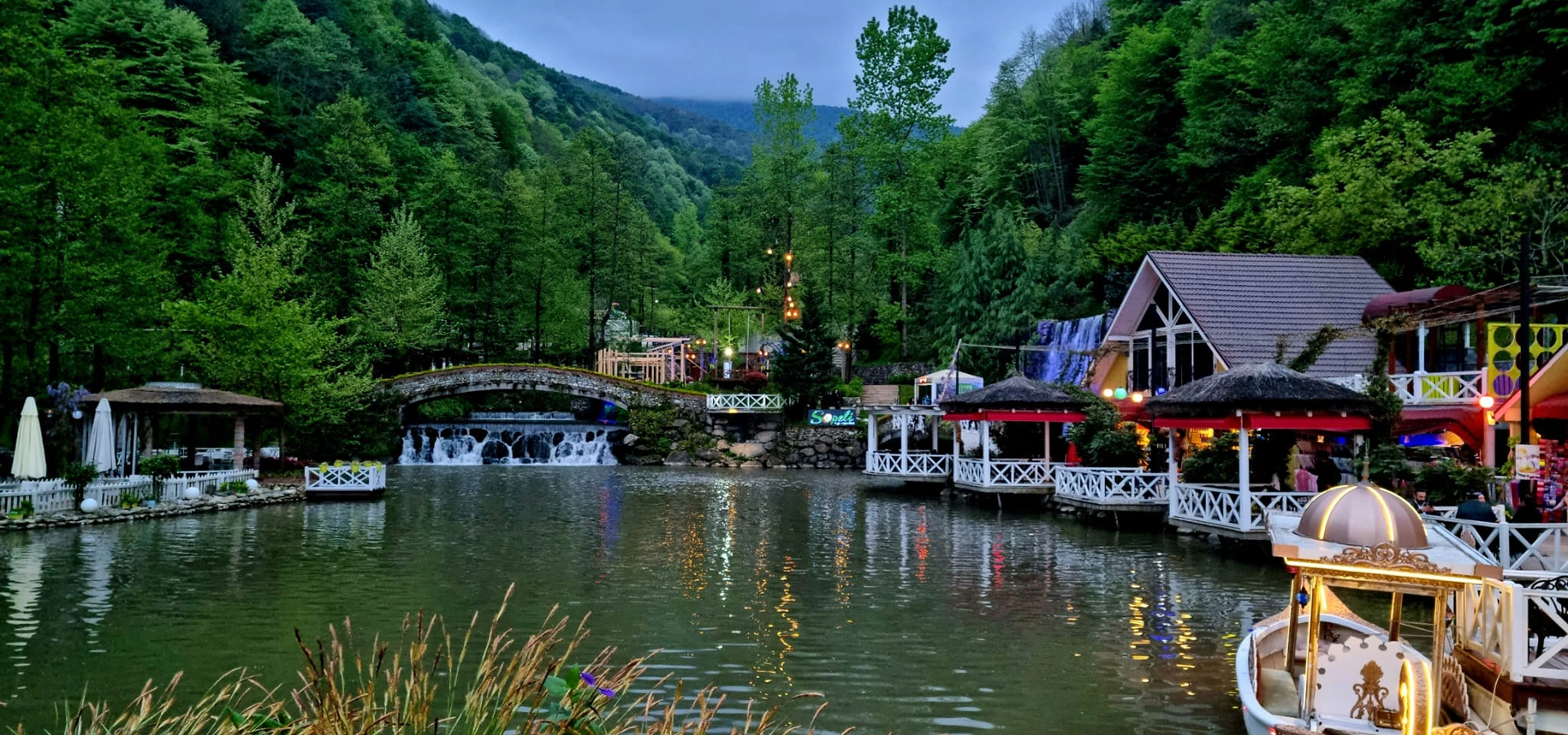
Discover Black Sea beaches, lakes, wetlands, waterfalls, Roman and Byzantine monuments, Ottoman towns and local food across Sakarya Province.
View Sakarya GuideConnect Karasu Beach with some of Sakarya's most memorable natural and cultural destinations.
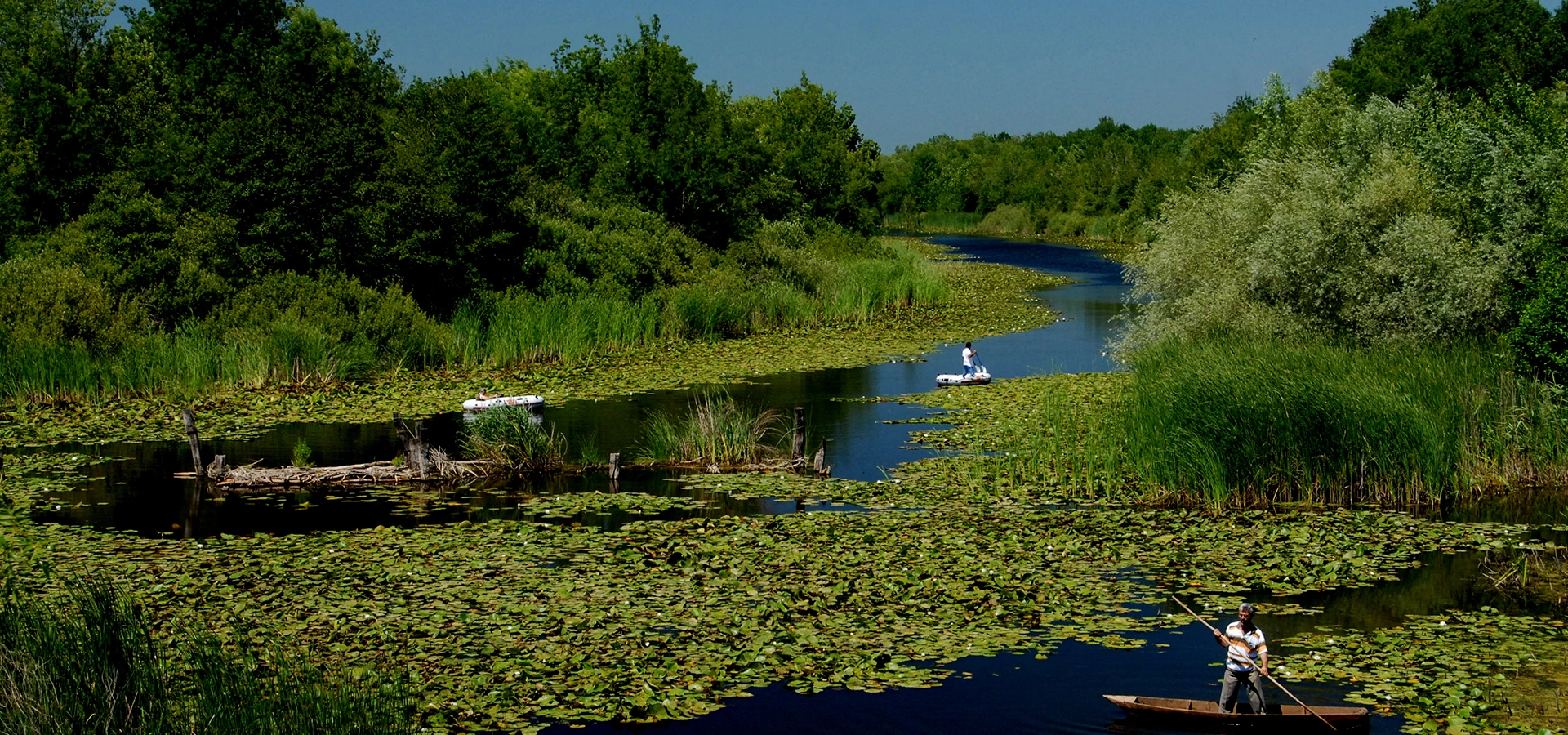
Combine the Black Sea with one of Sakarya's remarkable wetland forests, walking platforms and rich natural scenery.
Explore Acarlar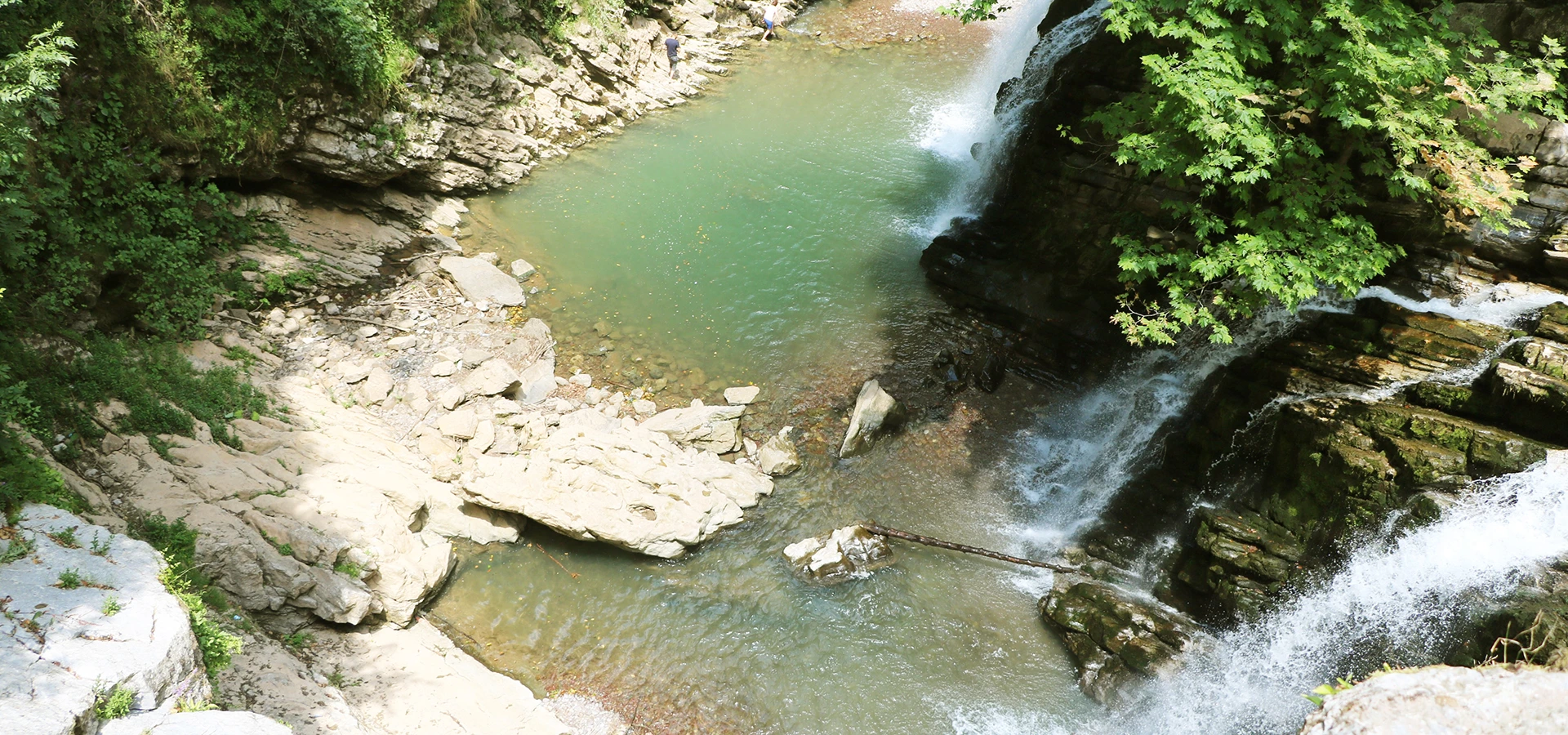
Trade the open coast for an atmospheric forest valley with streams, waterfalls and traces of historic mining.
Explore Maden Deresi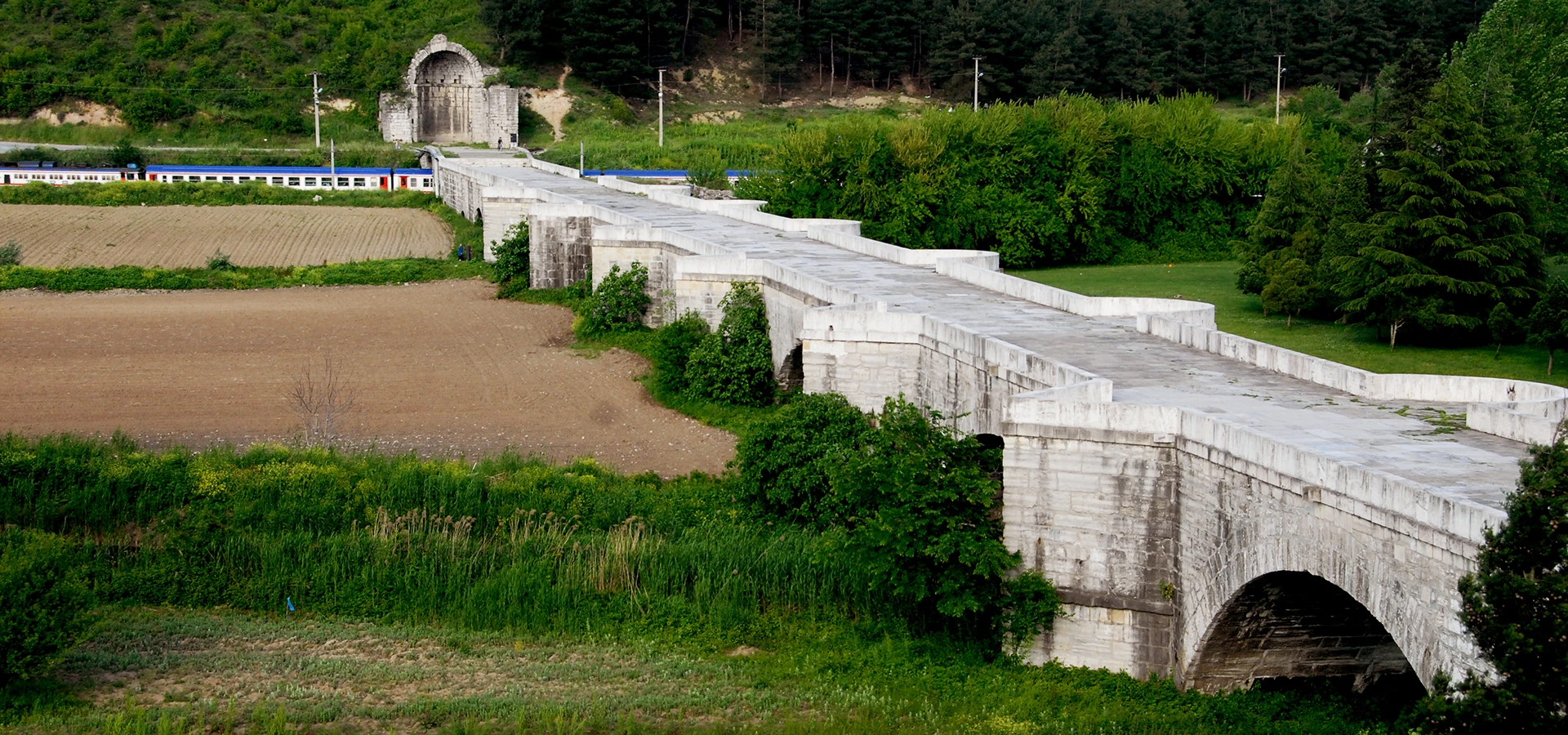
Add an important cultural stop with one of Anatolia's most impressive surviving Early Byzantine bridges.
Explore the Justinian Bridge