Private Taraklı Heritage Tour
Ask us about a tailor-made route focused on traditional houses, Yunus Paşa Mosque, historic streets, local food, photography and a relaxed pace.
Request a Custom Tour





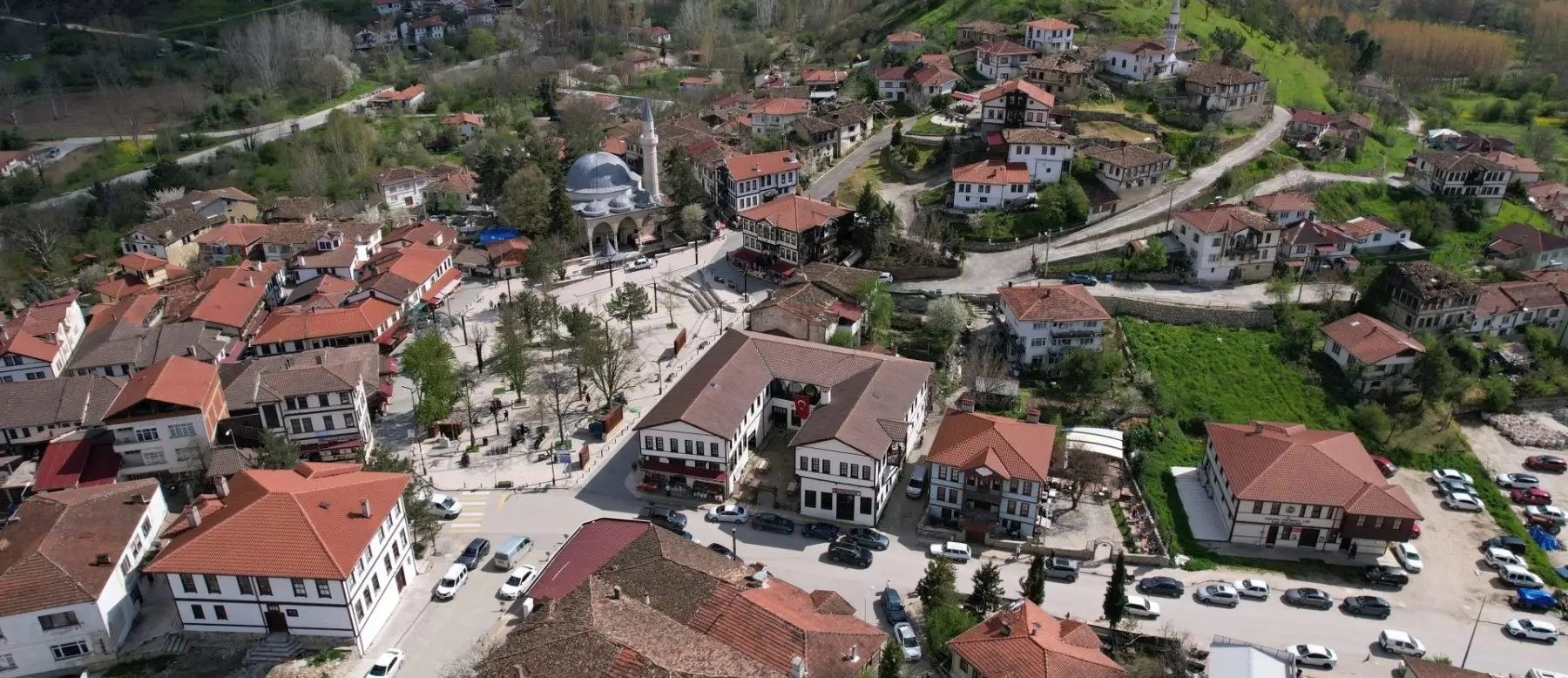
Taraklı is one of Sakarya's most distinctive historical destinations: a compact town of traditional houses, tiled roofs, narrow streets, old shops, mosques and green hills in the province's southeastern interior. Unlike a reconstructed heritage district, Taraklı still feels like a living town whose historic fabric developed around everyday neighborhood life.
The protected center is especially known for its late Ottoman houses, the Yunus Paşa Mosque, historic bath, old caravan-trade buildings, traditional craftsmanship and viewpoints above the town. Many surviving houses date mainly from the late 19th and early 20th centuries and preserve characteristic features of Ottoman-Turkish domestic architecture.
Taraklı also earned international recognition when it was selected in 2021 for the United Nations World Tourism Organization's Best Tourism Villages initiative, highlighting its cultural heritage, rural character and tourism potential.
The town joined the international Cittaslow network in 2011 and became widely associated with the idea of a "slow city." However, Taraklı is no longer listed among the current Türkiye members on the official Cittaslow International list, so the Cittaslow identity is best understood today as an important part of Taraklı's recent tourism history.
Walk among traditional timber-framed houses, old shops, courtyards and tiled roofs.
Visit Yunus Paşa Mosque, one of the town's most important early Ottoman monuments.
Discover a destination selected for UN Tourism's Best Tourism Villages initiative.
Enjoy the town best on foot, with time for architecture, food, photography and quiet streets.
Essential information for visiting Sakarya's best-known historic Ottoman town.
Southeastern Sakarya Province, in the forested interior of northwestern Türkiye.
Open on Google MapsProtected historic townscape with Ottoman houses, narrow streets, old shops and traditional neighborhood fabric.
Yunus Paşa Mosque, also known locally as Kurşunlu Camii because of its lead-covered dome.
Selected for the UN Tourism Best Tourism Villages initiative in 2021.
There is no general ticket for the historic town; individual attractions or facilities may have their own arrangements.
Allow 3–5 hours for the historic center, or a full day with viewpoints, local food and nearby countryside.
Taraklı brings together Ottoman architecture, traditional urban life, rural heritage and a remarkably intact small-town atmosphere.
The strongest reason to visit Taraklı is not a single monument but the townscape as a whole. Traditional houses, lanes, mosques, shops, gardens and surrounding hills still read together as one historic environment.
The historic center was registered as an urban conservation area in 1989. Its surviving houses are particularly important examples of Ottoman-Turkish civil architecture, with timber framing, projecting upper floors, enclosed family spaces and forms adapted to sloping streets and local climate.
Taraklı also preserves evidence of the old road networks that connected western and central Anatolia. Historic inns, market streets and craft traditions recall a period when merchants, travelers and caravans moved through the region.
Its international tourism recognition has added another layer to this identity. In 2021 Taraklı was included among the destinations selected in the UN Tourism Best Tourism Villages initiative, placing the town within a global conversation about heritage protection, rural tourism and sustainable local development.
For travelers using our guide to places to visit in Sakarya, Taraklı offers one of the province's strongest cultural contrasts to lakes, wetlands, rivers and the Black Sea coast.
Taraklı lies in a corridor that has linked northwestern Anatolia with the interior for centuries. Its location near historic east–west routes helped shape the settlement as a place of agriculture, craftsmanship, trade and travel.
The wider region came under Turkish and Ottoman control during the early centuries of Ottoman expansion. Over time, Taraklı developed the streets, religious buildings, houses, workshops and commercial structures that created the historic character visible today.
One of the most important written references comes from the 17th-century Ottoman traveler Evliya Çelebi. Local historical tradition records that the settlement was known as Yenice Tarakçı, a name associated with residents who produced wooden combs and boxwood spoons. The name gradually evolved into Taraklı.
The town's best-known monumental building is the Yunus Paşa Mosque, dated by official cultural inventory sources to 1516–1517. It stands close to the historic bath and old commercial center, demonstrating how religious, social and trading functions were concentrated within a walkable Ottoman town.
During the 19th and early 20th centuries, many of the traditional houses that now define Taraklı's appearance were built or rebuilt. Their timber-framed forms, tiled roofs and projecting upper stories remain among the town's most important heritage assets.
Taraklı developed within one of the regions connected with the early expansion of Ottoman rule in northwestern Anatolia.
Yunus Paşa Mosque was built during the reign of Sultan Selim I.
Evliya Çelebi recorded Taraklı and its woodworking traditions during his travels.
Many surviving houses and commercial structures reflect the late Ottoman period.
The historic center was registered as an urban conservation area.
Taraklı was selected for the UN Tourism Best Tourism Villages initiative.
The traditional houses are the heart of the Taraklı experience. Rather than standing as isolated monuments, they line lanes and slopes in groups, allowing visitors to understand how an Ottoman-era neighborhood functioned as a complete urban environment.
Many surviving houses date mainly from the late 19th and early 20th centuries. Typical features include timber-framed construction, plastered infill, stone ground levels, wooden windows, broad eaves, tiled roofs and upper floors that project above the street.
These projecting upper stories gave families more interior space while preserving narrow street widths below. They also created the layered streetscape that makes Taraklı especially rewarding for architectural photography.
Some buildings have been restored for accommodation, cafés, cultural use or tourism, while others remain private homes. This mixture is part of Taraklı's character, but it also means visitors should remember that the historic center is not an open-air museum.
Wooden structural systems are among the defining features of traditional Taraklı houses.
Upper stories extend over narrow lanes, creating depth, shade and distinctive street views.
Traditional pitched roofs contribute strongly to the town's historic silhouette.
Private outdoor spaces reflect the domestic and agricultural life of older neighborhoods.
Narrow lanes encourage walking and reveal architectural details that are easy to miss from a vehicle.
Many historic buildings remain homes or privately used properties, so respectful visiting is essential.
The Yunus Paşa Mosque is Taraklı's most important monumental landmark. Official cultural inventory records date the building to 1516–1517, during the reign of Sultan Selim I, and connect it with Grand Vizier Yunus Paşa.
The mosque is popularly known as Kurşunlu Camii — the "Lead-Covered Mosque" — because of the lead covering on its dome. Its compact square prayer hall, central dome, three-part portico and single minaret give it the clear proportions of an early classical Ottoman mosque.
The exterior is built in carefully cut stone, while the interior includes colored windows, calligraphy and painted decoration. The mosque remains an active place of worship, so visitors should dress respectfully, keep voices low and avoid entering during congregational prayer unless participating.
Some local and municipal tourism sources traditionally associate the mosque with Mimar Sinan. However, the official cultural inventory does not identify an architect. For that reason, it is more accurate to describe the building as a 16th-century Ottoman mosque associated with Yunus Paşa rather than present the Sinan attribution as certain.
1516–1517, according to official cultural inventory records.
Traditionally associated with Grand Vizier Yunus Paşa during Sultan Selim I's reign.
Kurşunlu Camii, referring to the lead-covered dome.
Square prayer hall with a central dome and a three-part domed portico.
An active mosque and one of Taraklı's most important visitor landmarks.
Entry is generally free; visit respectfully outside prayer times whenever possible.
Taraklı's historic commercial streets are an essential part of the town's identity. Small-scale shops and workshops developed around local agriculture, regional trade and the needs of travelers moving through the old road network.
The town's name is closely linked in local tradition with wooden comb-making. Evliya Çelebi's account is commonly cited in connection with the name Yenice Tarakçı, reflecting a community known for wooden combs, spoons and other crafted objects.
Although Taraklı's economy has changed, woodworking remains an important part of the story visitors encounter in local souvenirs, restored shopfronts and heritage interpretation. Look for locally made wooden objects rather than mass-produced products when possible.
The craft most strongly associated with the traditional explanation of the town's name.
Boxwood and other local woods were historically shaped into useful household objects.
Restored commercial streets help preserve the scale and rhythm of the historic bazaar.
Food, preserves, sweets and handmade items are better souvenirs when they genuinely come from local producers.
Take time to speak with shopkeepers and learn what is made locally rather than buying the first souvenir you see.
The bazaar remains part of everyday town life rather than functioning only for tourists.
Two structures help explain Taraklı beyond its houses: the historic hamam near Yunus Paşa Mosque and the Hacı Atıf Hanı, which reflects the town's former role on long-distance travel and trade routes.
Municipal sources date the historic bath broadly to the Ottoman period and describe its traditional sequence of bathing spaces. Its position close to the mosque underlines the compact organization of the old town center. Local tradition also preserves stories about the relationship between heat from the bath complex and the nearby mosque.
The Hacı Atıf Hanı is a two-story historic inn associated with Taraklı's position on old caravan routes. Official cultural descriptions date its surviving architectural form mainly to the late 19th or early 20th century. Its ground-floor commercial areas and upper accommodation spaces reflect the practical needs of merchants and travelers.
An Ottoman bathing complex close to Yunus Paşa Mosque in the historic center.
Its spaces preserve the logic of traditional heating, washing and social use in Ottoman towns.
A historic inn connected with the old commercial and caravan-route function of Taraklı.
The han combines lower commercial areas with upper rooms and timber architectural details.
Taraklı's inns and shops reflect its location on important historical routes across Anatolia.
Historic structures may not always be fully open inside; enjoy exterior views and follow local access rules.
For a broader understanding of Taraklı's setting, climb or drive toward the higher ground around Hisar Tepesi. The hill has long been associated with the strategic defense of the settlement, and municipal sources note the presence of historic remains including a water cistern.
From elevated points, the most memorable view is often not a single building but the relationship between the old town, its tiled roofs, mosque minaret, wooded slopes and surrounding valleys. This is especially attractive in the soft light of morning or late afternoon.
Another local landmark is the historic plane tree in Yusuf Bey Mahallesi. Municipal tourism material describes it as roughly seven centuries old, and it has become one of the symbolic natural features of Taraklı.
A high point associated with the historic defense and strategic position of the town.
Historic remains on the hill help reveal its former defensive and practical importance.
Look back over the tiled roofs, mosque and forested surroundings for one of Taraklı's best views.
A monumental tree in Yusuf Bey Mahallesi and a long-standing local symbol.
Late afternoon gives warm light to the old houses and surrounding green slopes.
Some slopes and old streets can be steep, uneven or slippery in wet weather.
Taraklı joined the international Cittaslow network in 2011 and became one of Türkiye's early destinations associated with the "slow city" movement. The idea suited Taraklı particularly well because of its small scale, traditional architecture, local food, walkable center and emphasis on preserving everyday heritage.
Visitors will still see Taraklı described in older tourism material as a current Cittaslow destination. However, by 2026 Taraklı does not appear on Cittaslow International's official current list of Türkiye members. For accurate travel information, it is better to describe the town as a former Cittaslow member whose slow-travel identity remains influential.
Taraklı's international heritage profile remains strong. In 2021, it was selected for the United Nations World Tourism Organization's Best Tourism Villages initiative, alongside Mustafapaşa in Cappadocia. The recognition highlighted cultural and natural resources, rural tourism and community-based development.
Taraklı joined the Cittaslow network and became nationally associated with slow-city tourism.
As of 2026, Taraklı is not listed among the current Türkiye members on Cittaslow International's official list.
Taraklı was selected for the UN Tourism Best Tourism Villages initiative.
Traditional architecture and small-scale local life remain central to the visitor experience.
The historic center rewards slow exploration rather than rushed sightseeing.
Choosing local food, crafts and accommodation helps keep tourism connected to the community.
Taraklı is best experienced as a walking destination. The major sights are important, but the quiet lanes, rooflines, small shops and changing views between houses are what give the town its atmosphere.
Explore lanes lined with timber-framed houses, projecting upper floors and tiled roofs.
Visit the 16th-century landmark at the monumental heart of the old town.
Browse old shop streets and look for genuinely local food and handcrafted products.
See the Ottoman bath complex close to Yunus Paşa Mosque.
Discover a historic inn recalling Taraklı's former role on caravan and commercial routes.
Climb toward the higher ground for wider views over the town and its forested surroundings.
Stop in Yusuf Bey Mahallesi to see one of Taraklı's symbolic natural landmarks.
Look for Uğut Tatlısı and Köpük Helvası, two flavors strongly associated with Taraklı.
Taraklı's food culture reflects the agricultural traditions of inland Sakarya. Two sweets in particular are strongly connected with the district: Uğut Tatlısı and Köpük Helvası.
Uğut Tatlısı is made from sprouted wheat and develops its natural sweetness through the preparation process rather than relying on ordinary added sweeteners. The wheat is germinated, crushed and cooked slowly until it becomes a dark, thick spread. Because the process takes time, it has traditionally been associated with special occasions and seasonal household preparation.
Köpük Helvası is another Taraklı specialty. It is prepared using soapwort root and a sweet mixture that develops a light, foamy texture, often served with tahini. Its distinctive consistency makes it very different from the denser sesame or flour halvas many travelers already know.
A traditional sweet spread based on sprouted wheat and slow cooking.
A foamy local sweet traditionally prepared with soapwort and served plain or with tahini.
Small-town breakfasts can include local cheese, preserves, bread, eggs and seasonal produce.
Look for preserves, dried foods, honey, walnuts and other products sourced from the surrounding countryside.
Choose products clearly identified with a producer or local shop rather than generic packaged souvenirs.
Traditional foods may not be available in every shop every day, especially outside busy visitor periods.
Taraklı is compact and straightforward to explore, but the old streets are not designed like a modern pedestrian district. Comfortable footwear and a little extra time make the visit much more enjoyable.
Begin around the historic square and Yunus Paşa Mosque before branching into the residential lanes.
Expect slopes, cobbles, uneven paving and occasional slippery surfaces after rain.
Some of the best architectural views appear in quieter side lanes away from the central square.
Many beautiful historic houses are still private residences; photograph from public streets unless invited inside.
Avoid prayer times when sightseeing and dress appropriately for an active place of worship.
Small shops and local producers may not always offer the same payment options as larger urban businesses.
Historic interiors such as the han or hamam may have variable access depending on restoration, use or local arrangements.
Taraklı works much better as a slow half-day or full-day stop than as a quick photo break.
Begin in the historic center around Yunus Paşa Mosque. Take time to examine the mosque from outside, then visit respectfully if it is open and no prayer is taking place.
Continue toward the nearby historic hamam and old commercial streets. From here, explore the bazaar slowly and look for local food products, woodworking traditions and restored shopfronts.
Walk toward Hacı Atıf Hanı and then turn into the quieter streets containing some of the town's best-preserved traditional houses. Do not follow only the main road — Taraklı's character is strongest in the side lanes.
Continue toward the historic plane tree in Yusuf Bey Mahallesi, then climb or drive toward Hisar Tepesi if conditions and access are suitable. Finish with tea, coffee or a meal in the historic center and try a local sweet before leaving.
There is no single entrance gate or ticket for Taraklı. The historic center is a living urban area that can be explored freely from public streets and squares.
Individual monuments have different conditions. Yunus Paşa Mosque remains an active religious building, while historic houses, the han, bath and other heritage properties may be privately used, restored, closed or accessible only at certain times.
The center is small enough to explore mainly on foot. A vehicle becomes more useful if you plan to visit viewpoints, thermal facilities, villages or natural attractions in the wider Taraklı countryside.
Taraklı can be visited throughout the year, but the experience changes significantly with the seasons because the town sits among hills and forests in inland Sakarya.
Fresh greenery, mild temperatures and flowering gardens make spring excellent for walking and photography.
Long daylight suits leisurely visits, although midday sun can make uphill walks more tiring.
Forest colors and warm roof tones make this one of the most atmospheric seasons for photography.
Cold weather, mist and occasional snow can transform Taraklı into a striking historic landscape.
Usually offer a quieter experience in the old streets and around the main square.
Soft light improves views of timber façades, tiled roofs and the surrounding hills.
Enough for Yunus Paşa Mosque, the main square and a short historic-street walk.
Add the bazaar, traditional houses, hamam, han and time for coffee or a local sweet.
A comfortable first visit including viewpoints, photography and a relaxed meal.
Best for slow exploration plus nearby countryside, thermal facilities or scenic drives.
Experience the historic streets after day-trippers leave and again in quiet morning light.
Combine Taraklı with Geyve, Pamukova, Sapanca or nearby Bolu heritage towns at a relaxed pace.
Taraklı is one of Sakarya's strongest architectural photography destinations. The visual interest comes from layers: timber façades, rooflines, projecting floors, street curves, mosque architecture and wooded hills.
Use narrow lanes to frame several historic houses at different distances in the same composition.
Look for windows, brackets, doors, eaves and structural timber rather than photographing only full façades.
Photograph the dome and minaret together with surrounding houses to show the mosque within its urban setting.
Hisar Tepesi and other high points reveal the pattern of red-tiled roofs against the green landscape.
Wet surfaces deepen roof and timber tones, but old paving can become slippery.
Avoid photographing directly into windows, courtyards or private family spaces without permission.
Taraklı's historic character also creates accessibility challenges. The old center includes slopes, irregular paving, narrow lanes and buildings constructed long before modern accessibility standards.
The area around the main center is generally easier than the steeper residential lanes.
Route conditions vary, so confirm accessible parking, ramps and toilet facilities with individual venues.
Possible in some central streets, but steps, cobbles and slopes can make side lanes difficult.
Old houses, hans and baths may include thresholds, stairs and narrow doorways.
A private vehicle can help connect the historic center with viewpoints and wider countryside stops.
Cafés and shaded stops make it easy to divide the walking route into shorter sections.
Taraklı lies in southeastern Sakarya, away from the province's main Istanbul–Ankara motorway corridor. The final approach is therefore slower and more rural than the journey to Sapanca or central Adapazarı.
Taraklı is roughly 60–65 km from central Sakarya; travel time depends on route, traffic and road conditions.
Most drivers travel east toward Sakarya before turning south into the Geyve–Taraklı corridor; allow generous time for traffic.
Continue toward the Sakarya interior and Geyve before reaching Taraklı through rural roads and valleys.
The easiest option if you want to combine Taraklı with Geyve, viewpoints, villages or thermal facilities.
Local and regional services may operate, but schedules can be limited compared with larger Sakarya destinations.
Check weather and road conditions before travelling during snow, ice or heavy rain.
Taraklı works well as part of a broader route through inland Sakarya. Use our complete Sakarya visitor guide to connect the town with river valleys, lakes, mountain landscapes and other historic settlements.
Explore the Sakarya River valley, local produce, historic sites and roads linking Taraklı with central Sakarya.
Continue through fertile agricultural landscapes and small settlements south of the main Sakarya basin.
Head into higher country for forest scenery, open landscapes and seasonal outdoor experiences.
The wider Taraklı district includes thermal-spring areas associated with rural wellness tourism.
Combine heritage in Taraklı with lakeside scenery, forests and mountain views in western Sakarya.
Continue into neighboring Bolu Province for another remarkable historic Ottoman town surrounded by hills.
Discover lakes, Byzantine bridges, wetlands, Black Sea beaches, rivers, plateaus and local food across the province.
Taraklı is a historic district in southeastern Sakarya Province in northwestern Türkiye.
It is best known for its traditional Ottoman houses, historic streets, Yunus Paşa Mosque, old bazaar, local food and well-preserved small-town atmosphere.
Yes. It is one of Sakarya's strongest heritage destinations and is especially rewarding for architecture, photography, slow travel and Ottoman urban history.
Many of the surviving houses date mainly from the late 19th and early 20th centuries, although the town itself has a much longer history.
Yes. The historic center was registered as an urban conservation area in 1989.
The main historic mosque is Yunus Paşa Mosque, also known as Kurşunlu Camii.
Official cultural inventory records date it to 1516–1517.
The name refers to the lead covering on its dome; "kurşunlu" means lead-covered.
Some local tourism sources associate the mosque with Mimar Sinan, but the official cultural inventory does not identify an architect. The attribution should therefore be treated as uncertain.
It remains an active mosque. Visitors may generally enter respectfully when access is open, preferably outside congregational prayer times.
No. There is no general admission ticket for the historic town. Individual facilities may have separate arrangements.
Yes. Taraklı joined the Cittaslow network in 2011 and became widely known in Türkiye as a slow-city destination.
As of 2026, Taraklı does not appear on Cittaslow International's official current list of Türkiye members, so it is more accurate to describe it as a former member.
Yes. Taraklı was selected for the UN Tourism Best Tourism Villages initiative in 2021.
Do not miss Yunus Paşa Mosque, the historic houses, old bazaar, historic hamam, Hacı Atıf Hanı, Hisar Tepesi and the historic plane tree.
Allow at least 3–5 hours for a relaxed first visit. A full day is better if you want viewpoints, local food and surrounding countryside.
Yes. Taraklı works well as a day trip from Sakarya and can also be reached from Istanbul, although traffic makes an early start advisable.
Yes. The historic center is best explored on foot, but expect slopes, uneven surfaces and narrow streets.
Hisar Tepesi is elevated ground above Taraklı associated with the town's historical defensive position and remains including a water cistern.
It is a historic inn linked with Taraklı's commercial and caravan-route past, with surviving architecture mainly associated with the late Ottoman period.
Look for Uğut Tatlısı and Köpük Helvası, two traditional sweets strongly associated with the district.
It is a traditional sweet made from sprouted wheat that develops its characteristic flavor through germination and slow cooking.
It is a light, foamy sweet traditionally prepared using soapwort and often served with tahini.
Spring and autumn are especially pleasant for walking and photography, while winter can be beautiful after snowfall.
Yes. Its timber houses, tiled roofs, mosque, narrow lanes and hillside viewpoints make it one of Sakarya's most photogenic heritage destinations.
Yes, but families with young children should take care on steep lanes, uneven paving and streets shared with local traffic.
Accessibility is limited by slopes, old paving, steps and historic building layouts. The central area is easier than many side streets, but advance planning is recommended.
Popular combinations include Geyve, Pamukova, Karagöl Plateau, Göynük and Sapanca Lake.
Local historical tradition, associated with Evliya Çelebi's account, links the name with craftspeople who made wooden combs and spoons; the settlement was known as Yenice Tarakçı before the name evolved into Taraklı.
Do not enter courtyards, gardens, doorways or houses unless they are clearly open to visitors.
Request permission before photographing residents closely, especially around homes and shops.
Do not climb on walls, lean equipment against fragile timber or remove material from old buildings.
Yunus Paşa Mosque is an active place of worship, not only a tourist attraction.
Choose locally operated cafés, accommodation, food producers and crafts where possible.
Low noise helps preserve the residential atmosphere that makes Taraklı special.
Combine Taraklı's Ottoman houses, Yunus Paşa Mosque, historic streets and local food with the landscapes and cultural heritage of wider Sakarya through a private route shaped around your interests.
Choose a focused half-day visit or a full-day private route combining architecture, photography, local food, countryside and nearby historical stops.
Ask us about a tailor-made route focused on traditional houses, Yunus Paşa Mosque, historic streets, local food, photography and a relaxed pace.
Request a Custom Tour
Discover historic towns, Ottoman and Byzantine heritage, lakes, wetlands, rivers, mountains, Black Sea landscapes and local food across Sakarya Province.
View Sakarya GuideConnect Taraklı with Sakarya's lakes, countryside, river valleys and mountain landscapes.
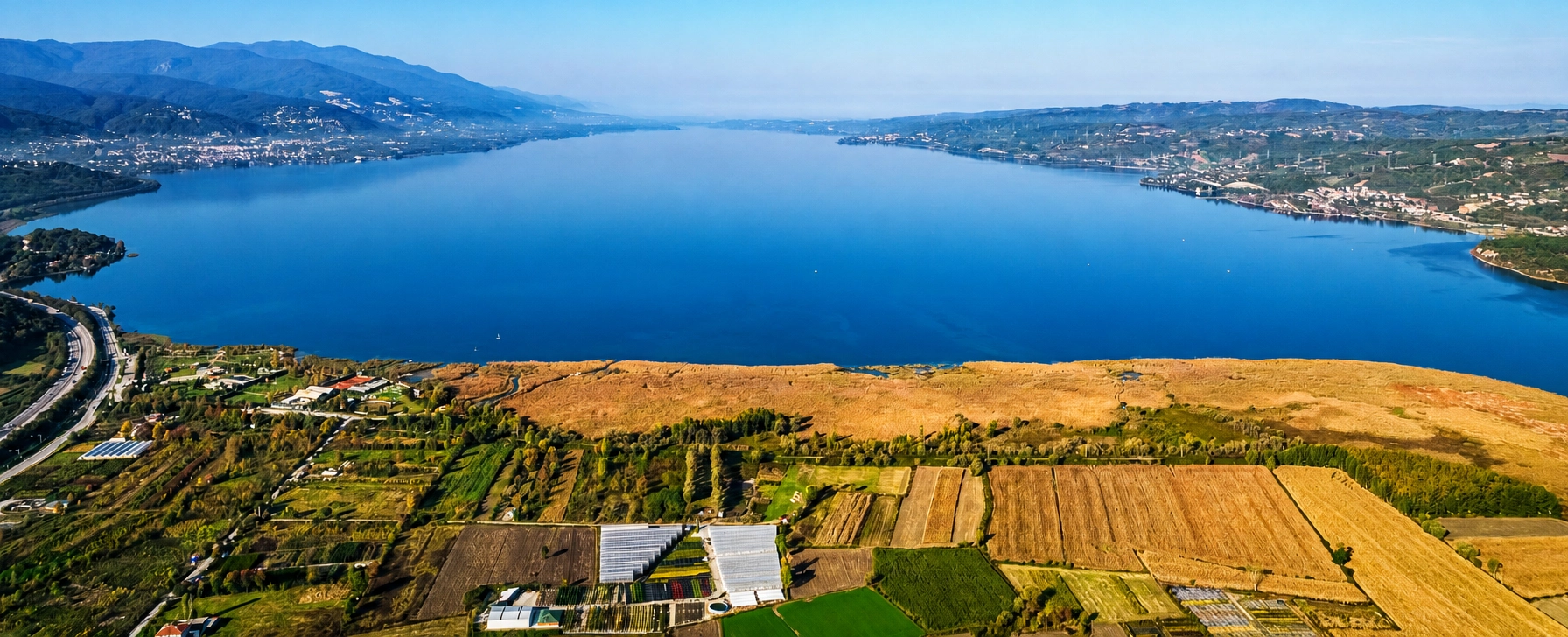
Continue west for freshwater scenery, forested mountains, lakeside walking and one of Sakarya's best-known natural escapes.
Explore Sapanca Lake
Continue to Byzantine bridges, lakes, floodplain forests, plateaus, river valleys and the Black Sea coast.
Continue Exploring Sakarya