Private Bozüyük Modern History Experience
Ask us about a tailor-made day combining Atatürk Mansion, Metristepe, the İnönü battle landscape and selected cultural sites in Bozüyük.
Request a Custom Tour





Atatürk Mansion, also widely called Atatürk Forest Mansion, stands in the wooded countryside of Bozüyük district in Bilecik Province, Türkiye. Today the site is associated with the forest landscape of Erikli Nature Park, roughly 22–25 kilometres from central Bozüyük depending on the route and reference point used.
The mansion is connected with Colonel Halil İbrahim Çolak, one of the military figures of the Turkish War of Independence and later a Bilecik deputy and industrial entrepreneur. Official local and tourism sources state that Çolak had the mansion built and that Mustafa Kemal Atatürk was hosted here during a visit to the Bozüyük area.
The best-documented official local account places Atatürk at the mansion on 10 June 1930. A historical study drawing on the 11 June 1930 issue of the newspaper Cumhuriyet likewise describes Atatürk visiting İbrahim Çolak's timber-factory area, resting and dining in a mansion on Güllüalan Hill.
However, visitors will encounter an important complication: the chronology recorded on the present building does not perfectly match the 1930 narrative. A conservation inventory transcribes the marble inscription on the existing structure as stating that a wooden mansion was built in 1936, that Atatürk visited in 1937, and that the building was later reconstructed by the Forestry Administration at two-thirds scale. This page therefore distinguishes between the historical tradition of Atatürk's 1930 visit and the later physical history of the present structure.
The mansion is especially rewarding when understood together with Bozüyük's wider twentieth-century landscape: the İnönü battlefields, Metristepe, the town's early Republican industrialization and the story of İbrahim Çolak. For a broader itinerary, combine the site with Metristepe Victory Monument, Kasım Pasha Mosque and our Bilecik visitor guide.
Official local sources record that Mustafa Kemal Atatürk was hosted at a forest mansion associated with İbrahim Çolak during his 1930 Bozüyük visit.
The site connects political history, military memory, forestry, industry and the social world of the young Turkish Republic.
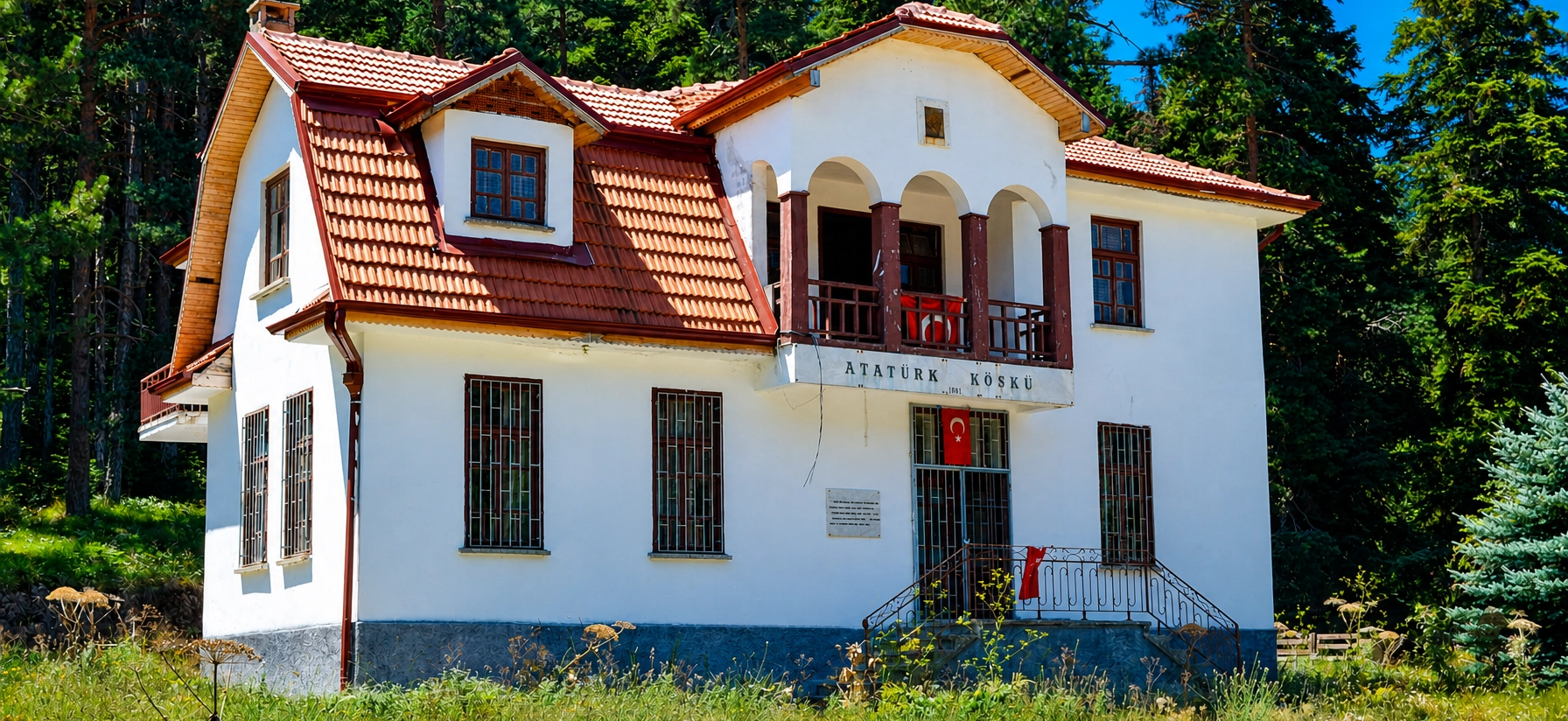
The present mansion is a two-storey structure with a mansard roof, red Marseille tiles and a strong visual relationship with the surrounding forest.
The mansion now forms part of a protected forest landscape used for walking, nature tourism, camping and outdoor recreation.
Essential information for visiting one of Bozüyük's most unusual combinations of Republican history and forest landscape.
Erikli Nature Park / Gülalan forest area, Bozüyük district, Bilecik Province, Türkiye.
Open on Google MapsA high forest landscape of pine, fir, oak and other woodland species, at roughly 1,330 metres elevation within Erikli Nature Park.
Historic mansion / forest lodge associated with early Republican history and protected cultural heritage.
Its connection with Mustafa Kemal Atatürk and Colonel Halil İbrahim Çolak.
Official sources place the site approximately 22–25 km from central Bozüyük; road distance varies by route.
Erikli Nature Park's official nature-tourism listing currently gives 10:00–19:00. Interior mansion access should be confirmed separately.
Nature walking, forest photography, the park viewpoint and a wider Bozüyük War of Independence itinerary.
Do not confuse this forest mansion with the Albay İbrahim Çolak Mansion in central Bozüyük, which is associated with the Bozüyük City Museum.
The mansion is important not simply as a building, but as a point where national history meets Bozüyük's local landscape.
At first sight, the mansion can seem like a quiet forest house. Its historical meaning becomes clearer when it is connected with the people and events that shaped the early Turkish Republic.
The building is linked with Colonel Halil İbrahim Çolak, a commander who served during the Turkish War of Independence and later became closely connected with Bozüyük's political and industrial development. His relationship with the district continued after the war through business activity, parliamentary service and investment.
The Atatürk connection gives the site national significance. Official local sources state that Atatürk was received here during his 10 June 1930 visit, while national cultural-tourism sources also identify the Bozüyük forest mansion as a place where he was hosted during his Bilecik travels.
The surrounding forest is equally important. The mansion was not designed as an urban monument standing in a square. It belonged to a landscape of woodland, timber production, rural roads and early Republican enterprise. That setting remains central to the experience today.
Bozüyük's location gave it strategic importance long before the Republic. The district lies on a major corridor connecting Central Anatolia, Eskişehir, Bursa and the Marmara region, making it a natural stopping and transit point for armies, officials, rail traffic and later road transport.
The area also carries powerful memories of the Turkish War of Independence. The First and Second Battles of İnönü were fought in the wider Bozüyük–İnönü landscape, and the ridges around Metristepe became symbols of the regular army's early victories.
By the 1920s and 1930s, Bozüyük was also becoming a place where the new Republic's industrial and economic ambitions could be seen. İbrahim Çolak's timber enterprises were part of that story, linking local forest resources with modern production and employment.
Atatürk's visits therefore belonged to a wider pattern: he travelled across the country observing infrastructure, production, local administration and the transformation of towns under the new Republic. Bozüyük sat directly within that national geography.
Bozüyük connects the Anatolian interior with Bursa and the Marmara region through a long-established transport route.
The district is surrounded by landscapes connected with the İnönü battles and the formation of the regular army.
Timber production became an important part of the local economy during the early Republican period.
The mansion belongs to an era when military leaders, deputies and entrepreneurs often participated directly in regional development.
Halil İbrahim Çolak (1880–1944) was a military officer, War of Independence commander, politician and businessman whose life became closely connected with Bilecik and Bozüyük.
During the National Struggle, he commanded mounted forces and later the 3rd Cavalry Division. He served in major campaigns including the Second Battle of İnönü, the Kütahya–Eskişehir fighting, the Battle of Sakarya and the Great Offensive. For his wartime service he received the Independence Medal with Red Ribbon.
After leaving active military service, Çolak returned to commercial life. He developed timber enterprises in Bozüyük, and by the early 1930s his timber factory had become a major industrial employer in the district. He also represented the region in parliament, first as an Ertuğrul deputy and later as a Bilecik deputy.
Understanding Çolak helps explain why the mansion is more than a simple vacation house. It reflects a generation whose members moved between military command, politics, entrepreneurship and local development during the Republic's formative decades.
Çolak served in important campaigns and commanded cavalry forces during the National Struggle.
He represented the region in the Turkish Grand National Assembly during several parliamentary terms.
His industrial activity helped connect the forest resources around Bozüyük with early Republican economic development.
Official local descriptions consistently identify him as one of Atatürk's fellow commanders and the patron of the forest mansion.
The most detailed historical account connected with the mansion concerns 10 June 1930. Bozüyük District Governor's Office records that Atatürk visited the district on that date and was hosted at the forest mansion built by İbrahim Çolak.
A modern academic study of Bozüyük history adds important detail by citing the 11 June 1930 issue of the newspaper Cumhuriyet. According to that account, Mustafa Kemal Paşa was met at İnönü station by İbrahim Çolak, accepted his invitation and travelled with his entourage toward the timber-factory area.
The account describes Atatürk resting and having breakfast at one of Çolak's hill residences before continuing to the Güllüalan area, where the timber factory welcomed the party with its whistles. It then records a meal in a mansion associated with the Güllüalan Hill site.
This evidence is important because it is close in date to the visit itself. It also shows that the mansion should be understood within a larger industrial and forest complex rather than as an isolated ceremonial monument.
Visitors researching Atatürk Mansion may notice that not every source gives the same construction or visit date. This is not something a responsible guide should silently smooth over.
The Bozüyük District Governor's Office, the Bilecik Provincial Directorate of Culture and Tourism and the Ministry of Culture's tourism portal connect Atatürk with the forest mansion in 1930. A historical study using a contemporary 1930 newspaper report also describes a Güllüalan mansion prepared for Mustafa Kemal Paşa.
By contrast, the official conservation inventory for the current building records the text of a marble inscription on the mansion. That inscription says the wooden mansion was built by İbrahim Çolak in 1936, that Atatürk came in 1937, and that the structure was later reconstructed by the Forestry Administration at two-thirds of the original scale.
The safest interpretation is therefore that the site's Atatürk tradition and the physical history of the present building have multiple phases. The exact relationship between the 1930 mansion described in contemporary sources and the later structure represented by the inscription should not be overstated without additional archival evidence.
The mansion's current appearance is defined by a compact two-storey composition set against dense forest. Its white exterior walls, deep red tiled roof and dark wooden openings create a strong contrast with the surrounding pines and firs.
The official cultural-property inventory describes the structure as ground floor plus one upper floor, covered by a mansard roof with Marseille tiles. The main elevation faces north.
A central entrance gives the façade a formal focus. The inventory records double-sided stairs with iron railings leading to the entrance, a double-leaf wooden door and rectangular wood-framed windows. The present façade also includes a recessed upper balcony area that emphasizes the central axis.
Older local descriptions frequently refer to Bulgarian architectural influence. Because the building has a documented reconstruction history, visitors should be careful not to assume that every visible detail survives unchanged from the first phase of construction.
The present building consists of a ground floor and one upper floor.
The broken-slope roof gives the mansion its most recognizable silhouette.
Red roof tiles create a strong visual contrast with the white walls and green forest.
A formal entrance composition, stairs and upper balcony organize the main façade.
Wooden doors and window framing preserve the character of a rural forest residence.
The current building should be read as a restored or reconstructed historic structure rather than assumed to be entirely original material.
The marble inscription recorded by the regional conservation inventory states that the mansion was reconstructed by the Forestry Administration in connection with the centenary of Atatürk's birth. The inscription describes the reconstruction as following the earlier architectural character at two-thirds scale.
The site was formally entered into the regional protection record in 2019, placing the mansion within the official cultural-heritage conservation framework.
Later public investment in Erikli Nature Park also affected the visitor environment. A 2021 Ministry of Agriculture and Forestry activity report states that structures within the park, including the Atatürk Mansion, were included in substantial construction works.
Further infrastructure and landscaping work was carried out in 2023. By 2024, official nature-park information listed Atatürk Mansion among the facilities within Erikli Nature Park together with the nature education center, service buildings, entrance control, viewpoint and visitor amenities.
Today, the mansion sits within the wider visitor landscape of Erikli Nature Park. The protected area was declared in 2018 and covers approximately 67.4 hectares.
Official nature-conservation information places the park at an average elevation of around 1,330 metres. The woodland includes black pine, Scots pine, fir, red pine, juniper and oak, giving the site a cooler mountain-forest atmosphere than central Bozüyük.
The forest setting changes the character of the visit. This is not simply a building to photograph and leave. A well-paced trip can combine the mansion with walking, forest scenery, photography and time at the park's viewpoint.
The park also supports wildlife. Official descriptions mention large mammals including bear, wolf, deer and wild boar. Visitors should therefore remain on appropriate routes, follow warning signs and avoid approaching wildlife.
Erikli Nature Park protects a substantial forest landscape around the historic site.
The park's elevation contributes to cooler conditions, snowier winters and a mountain-forest character.
Nature walking is one of the officially promoted activities within the park.
The mansion, forest canopy, seasonal snow and viewpoint offer strong landscape and architectural subjects.
The official park listing includes a designated tent-camping area; confirm current rules and tariffs before planning an overnight stay.
Stay alert in forested areas and follow local safety instructions, especially away from the main visitor facilities.
The location of the mansion in a forest district is not accidental. İbrahim Çolak's postwar business life was strongly connected with timber production in Bozüyük.
Historical research records that he established major timber operations after the War of Independence. By the early 1930s, his Bozüyük timber factory had become an important local employer and an example of industrial development using regional forest resources.
The 1930 visit account is particularly revealing because it links Atatürk's presence not only with a residence but also with the factory environment. The story therefore belongs as much to the history of economic modernization as to presidential travel.
When standing in the forest today, it is worth remembering that this landscape was once connected to production, transport, labor and industrial ambition. The mansion was part of that working world.
The Bozüyük highlands supplied timber and shaped the local economy.
İbrahim Çolak's timber enterprises became significant industrial operations in the district.
The factory system created jobs and linked rural forest production with a growing modern town.
Contemporary reporting places the timber-factory landscape directly within the story of the 1930 visit.
Bozüyük has two different historic properties connected with İbrahim Çolak, and online descriptions sometimes mix their histories, photographs and dates.
The page you are reading concerns the Atatürk Forest Mansion in the countryside, now associated with Erikli Nature Park and the Gülalan/Güllüalan forest area. This is the building connected with the tradition of Atatürk being hosted in the forest.
The Albay İbrahim Çolak Mansion in central Bozüyük is a different building. It was built as a family residence on a hill overlooking the town and is today associated with the Bozüyük City Museum and Archive.
If you are planning a history-focused day, visiting both can be useful. The forest mansion tells the story of Atatürk, timber country and rural Republican memory, while the city mansion helps explain İbrahim Çolak, his family and Bozüyük's urban history.
A visit to the mansion becomes much richer when paired with the nearby landscapes of the First and Second Battles of İnönü. These battles were among the most important early tests of the regular army organized by the Ankara government.
The ridges around Metristepe became especially symbolic after the Second Battle of İnönü in 1921. The victory strengthened the political and military position of the National Movement and entered the national memory of the War of Independence.
İbrahim Çolak himself served as a commander during this broader struggle. The forest mansion therefore connects a later peaceful Republican landscape with the wartime generation that helped establish the state.
For visitors interested in modern Turkish history, this relationship is one of the strongest reasons to make the journey: the mansion, Metristepe and the local memorials can be understood as different chapters of the same historical landscape.
Visit the ridge associated with the Second Battle of İnönü and one of the most important modern-history viewpoints in Bilecik.
Explore the wider landscape where the regular army fought major engagements in 1921.
Follow the story of a War of Independence commander who later became an industrialist and politician.
Use the mansion to connect battlefield history with the political and economic transformation that followed victory.
The mansion is highly photogenic because of the contrast between its pale façade and the dense forest immediately behind it. The red roof, central balcony and symmetrical front elevation are especially effective from the open ground in front of the building.
Spring and summer bring deep greens. Autumn adds warmer forest tones, while winter can completely transform the scene, with snow emphasizing the roofline and turning the mansion into a striking white-and-red composition.
For architectural photography, try to keep the camera level to avoid excessive vertical distortion. A slightly wider composition works well because the forest setting is part of the identity of the building, not merely a background.
If the interior is accessible during your visit, follow staff instructions before taking photographs. Do not assume that flash, tripods or unrestricted interior photography are permitted.
The central doorway, balcony and roofline create the strongest formal composition.
Include surrounding pines and firs to show why this is properly understood as a forest mansion.
Snow can create exceptionally strong architectural photographs, but check road conditions before traveling.
Mixed woodland colors soften the contrast between the mansion and its surroundings.
Look for the entrance stairs, wooden door, window frames, roof tiles and inscription area.
Follow any posted rules concerning interior access, drones, protected areas or photography.
The mansion is located within Erikli Nature Park, so practical access is connected with the operation of the protected area. The official nature-tourism listing currently gives park hours of 10:00–19:00.
However, park opening does not automatically guarantee access to every interior room of the mansion. If entering the building is essential to your visit, confirm current mansion access before making a special journey.
Nature-park tariffs, camping charges and service arrangements can change. Because these are operational details rather than permanent historical facts, check the current official park information before departure.
The nature park has been developed with visitor infrastructure including an entrance-control unit, viewpoint, nature education center, service facilities, buffet and camping area. Availability of individual services may be seasonal.
The site can be rewarding in every season, but late spring through autumn offers the easiest combination of road access, walking and forest photography.
Spring brings fresh forest growth and cooler walking temperatures. At roughly 1,330 metres elevation, seasonal change can arrive later than in lower parts of Bilecik.
Summer is excellent for combining the mansion with a picnic, forest walk or longer nature-park visit. The elevation and woodland can make the area feel cooler than surrounding urban centers.
Autumn is particularly attractive for photography. Winter can be beautiful when snow covers the mansion and surrounding forest, but road conditions and park access should be checked before setting out.
Fresh greenery, cool air and comfortable walking conditions.
Best for combining heritage sightseeing with longer outdoor time in Erikli Nature Park.
Excellent forest color and softer light for architectural and landscape photography.
Potentially spectacular snow scenes, but travel only after checking road and weather conditions.
Erikli Nature Park has modern visitor infrastructure, but the mansion itself is a historic-style structure in a sloping forest environment. Visitors should not assume that all areas offer step-free access.
The principal façade includes stairs leading to the entrance. Paths, gradients, weather and outdoor surfaces can also affect mobility, especially after rain, frost or snow.
If wheelchair access or reduced-mobility access is essential, contact the park administration before visiting and ask specifically about parking distance, path gradients and access to the mansion interior.
The mansion lies in the forested countryside of Bozüyük district. Official cultural-tourism material places it approximately 22 km from Bozüyük, while current nature-park information gives roughly 25 km. The difference reflects route and reference-point variation.
The Ministry of Culture tourism portal describes access from the Bozüyük–Bursa road, turning at the Muratdere Forest Depot junction and continuing for about 10 kilometres. Current nature-park information also places Erikli Nature Park around 10 kilometres from the main Bursa–Ankara highway corridor.
For navigation today, the most practical search terms are “Atatürk Köşkü Bozüyük” or “Erikli Tabiat Parkı Bozüyük”. Older sources may use the names Gülalan, Güllüalan, Camiliyayla or Çavuşyayla for the broader locality.
A private vehicle is the most flexible option. Public transport directly to a rural nature park should not be assumed, especially if you want to combine the mansion with Metristepe or other countryside sites.
Allow for roughly 22–25 km of driving depending on the route and starting point.
Official sources place the park around 10 km from the major Bursa–Ankara road corridor.
Search “Atatürk Köşkü Bozüyük” or “Erikli Tabiat Parkı Bozüyük.”
The easiest way to reach the mansion and combine it with other Bozüyük historical sites.
Check snow, ice and local road conditions before heading into the high forest area.
Do not be surprised if different maps or sources use Erikli, Gülalan/Güllüalan or Camiliyayla/Çavuşyayla.
If your only goal is to see the mansion exterior, read the inscription and take photographs, 30–45 minutes can be enough.
For a more meaningful visit, allow 1–2 hours. This gives you time to appreciate the forest setting, explore the main visitor area and understand how the mansion relates to the surrounding landscape.
A half day works especially well if you want to add a nature walk, viewpoint, picnic or other permitted activities inside Erikli Nature Park.
History-focused travelers can turn the trip into a full-day Bozüyük itinerary by combining the mansion with Metristepe, central Bozüyük and other War of Independence sites.
Exterior, photographs and a quick introduction to the site.
Mansion plus forest setting, visitor facilities and a relaxed walk.
Best for combining the mansion with nature-park activities and a picnic.
Combine Erikli Nature Park with Metristepe and a wider historical tour of Bozüyük.
Begin by approaching the mansion from the main visitor area and pause before the façade. Take in the relationship between the building and the forest before focusing on architectural details.
Next, examine the main elevation: the mansard roof, red tiles, wooden openings, entrance stairs and central balcony. Look for the inscription that records the later building tradition.
Spend a few minutes with the historical chronology. Remember that official sources preserve a 1930 Atatürk visit tradition while the present inscription records a 1936/1937 sequence. That tension is part of the site's modern historical record.
If the mansion interior is open, enter only through the permitted visitor route and follow any photography or conservation instructions.
Finish with time in Erikli Nature Park. A short forest walk or viewpoint stop helps reveal why the site was chosen for a retreat and how important the surrounding woodland is to the mansion's identity.
The mansion fits naturally into a route combining modern Turkish history, early Ottoman heritage and Bilecik's countryside. For wider planning, see our complete Bilecik visitor guide.
Visit the strategic ridge associated with the Second Battle of İnönü and one of Bilecik's most important modern-history memorials.
Explore one of Bozüyük's most important Ottoman monuments and the historic complex around it.
Learn more about local history in the restored Albay İbrahim Çolak Mansion in central Bozüyük.
Continue into the landscape of the First and Second İnönü battles and the National Struggle.
Explore archaeological and ethnographic collections covering the wider history of Bilecik Province.
Continue to Söğüt for one of the province's most important memorial sites associated with the origins of the Ottoman dynasty.
The mansion is in the forested countryside of Bozüyük district, Bilecik Province, today associated with Erikli Nature Park and the Gülalan/Güllüalan area.
Official sources give approximately 22–25 km, depending on the route and reference point.
Yes. Current official nature-park information lists Atatürk Mansion as one of the facilities and heritage values inside Erikli Nature Park.
Official local sources associate the mansion with Colonel Halil İbrahim Çolak, a War of Independence commander, deputy and businessman.
Official local and national tourism sources state that Atatürk was hosted at a Bozüyük forest mansion associated with İbrahim Çolak. The best documented local account places the visit on 10 June 1930.
The protected-building inventory records an inscription stating that a wooden mansion was built in 1936, that Atatürk visited in 1937 and that the building was later reconstructed. This differs from the 1930 chronology found in other official and historical sources.
The surviving sources are not fully consistent. It is safest to say that the Atatürk tradition is documented in 1930 sources, while the present building's inscription preserves a later 1936/1937 narrative.
The inscription recorded in the conservation inventory states that the mansion was later reconstructed by the Forestry Administration at two-thirds scale, so visitors should not assume that all visible fabric belongs to the first construction phase.
Local descriptions often refer to Bulgarian influence. The present building has a mansard roof, Marseille tiles, wooden openings and a central formal façade.
The conservation inventory describes the present structure as ground floor plus one upper floor.
It is a protected historic mansion within a nature park, but visitors should not assume a conventional museum operation with guaranteed daily interior access.
Interior access may depend on current park and site operations. If entering the mansion is important, confirm current access before traveling.
Erikli Nature Park's current official nature-tourism listing gives 10:00–19:00. Mansion interior hours should be checked separately.
Nature-park entrance, vehicle or camping tariffs can change. Check the current official Erikli Nature Park information before your visit.
The Ministry of Culture describes the route from the Bozüyük–Bursa road via the Muratdere Forest Depot junction, then approximately 10 km toward the site.
Search for “Atatürk Köşkü Bozüyük” or “Erikli Tabiat Parkı Bozüyük.”
Sources variously use Erikli, Gülalan/Güllüalan and Camiliyayla/Çavuşyayla for the surrounding forest locality. These names reflect different administrative or traditional references to the wider area.
No. The forest Atatürk Mansion and the urban Albay İbrahim Çolak Mansion are different buildings.
The restored city mansion is associated with the Bozüyük City Museum and Archive and tells a broader local-history story.
Halil İbrahim Çolak was a War of Independence commander, Bilecik-area deputy and industrial entrepreneur who developed important timber businesses in Bozüyük.
The mansion stood within a forest landscape closely connected with Çolak's timber enterprises. Contemporary reporting of Atatürk's 1930 visit also places the timber factory in the day's itinerary.
It is a 67.4-hectare protected forest area in Bozüyük district, declared a nature park in 2018.
Official park information mentions black pine, Scots pine, fir, red pine, juniper and oak among the area's woodland species.
Yes. Official information mentions large mammals such as bear, wolf, deer and wild boar. Follow park warnings and never approach wildlife.
Yes. Nature walking is one of the activities officially promoted in Erikli Nature Park.
The official park listing includes a tent-camping area. Check current reservation, fee and seasonal rules before planning an overnight stay.
Yes. The white façade, red roof and dark forest create excellent compositions, especially in autumn and snowy winter conditions.
Late spring through autumn offers the easiest access for walking. Winter can be beautiful but requires careful road and weather planning.
Allow 30–45 minutes for a quick exterior visit, or 1–2 hours to appreciate the mansion and surrounding nature park.
Do not assume full step-free access. The mansion entrance includes stairs, and forest gradients and surfaces can vary. Confirm current accessibility arrangements in advance.
Do not assume drone use is permitted in a protected nature area. Check current Turkish aviation rules and obtain any required park or site permission before flying.
Combine the mansion with Metristepe Victory Monument, central Bozüyük, Kasım Pasha Mosque and the wider İnönü battlefield landscape.
It combines Atatürk history, the story of a War of Independence commander, early Republican industry, protected architecture and a beautiful forest landscape in a single destination.
Do not touch, scratch, lean equipment against or interfere with historic architectural elements.
Enter only areas that are officially open and follow staff instructions concerning photography and movement.
Do not damage trees, collect plants or leave waste in the protected nature area.
Never light fires outside areas specifically permitted by the nature-park administration.
Wild animals should remain wild; feeding changes behavior and can create danger for both animals and visitors.
Forest conditions can change quickly. Follow signs and avoid entering closed or restricted zones.
The mansion is associated with Atatürk and the War of Independence generation; treat the site with appropriate respect.
A quieter visit protects wildlife and preserves the atmosphere of the forest.
At high elevation, conditions can be cooler and change faster than in central Bozüyük.
Use designated bins and leave picnic, camping and walking areas clean.
Combine Atatürk Mansion with the İnönü battlefields, Metristepe, Ottoman monuments and Bilecik's wider historical landscape through a private itinerary designed around your interests and travel pace.
Build a private route connecting Atatürk Mansion, Metristepe, central Bozüyük and the story of the War of Independence and early Republic.
Ask us about a tailor-made day combining Atatürk Mansion, Metristepe, the İnönü battle landscape and selected cultural sites in Bozüyük.
Request a Custom Tour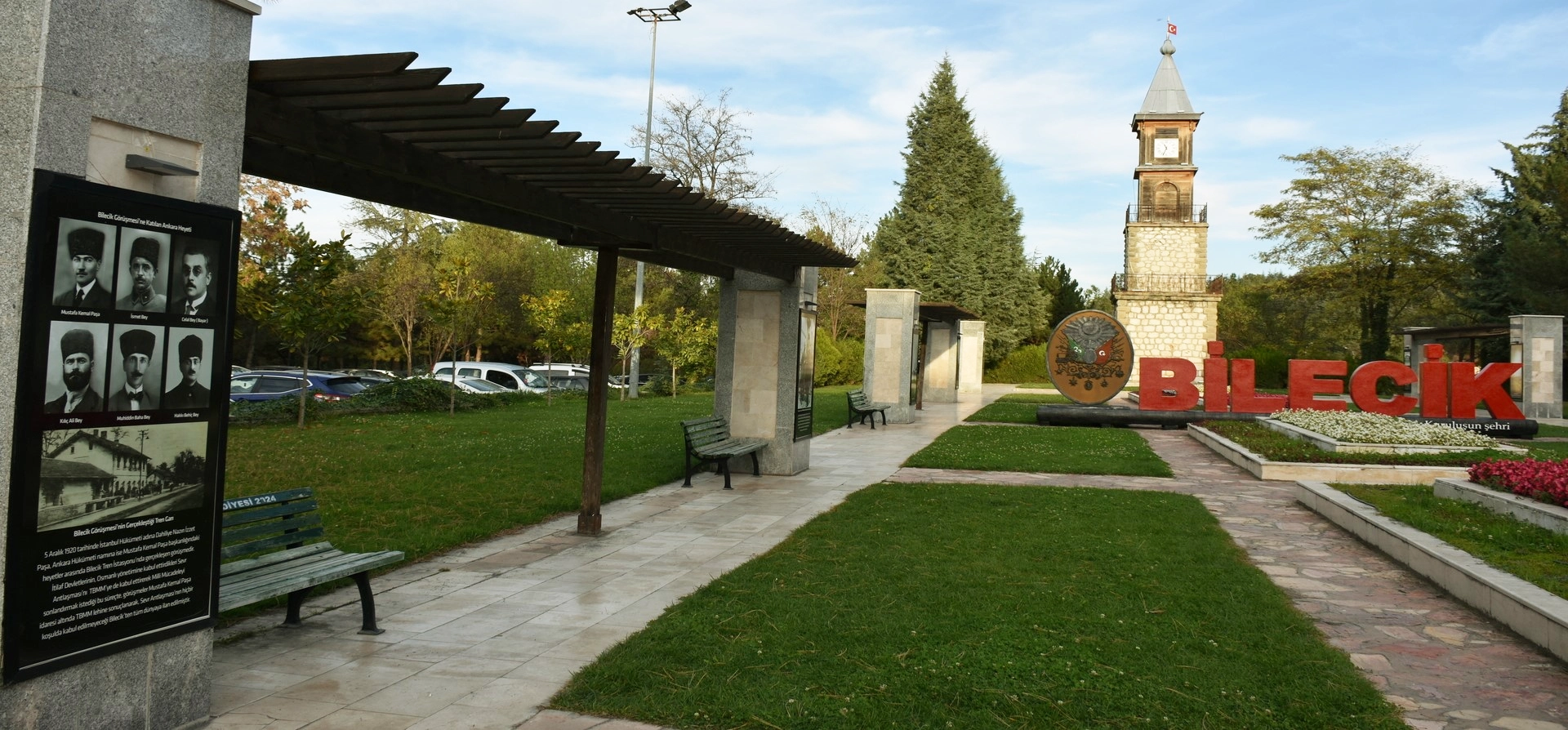
Discover Ottoman foundation history, War of Independence landscapes, museums, historic towns and natural areas across the province.
View Bilecik GuideConnect Bozüyük's Republican history with Ottoman heritage and the wider story of Bilecik Province.
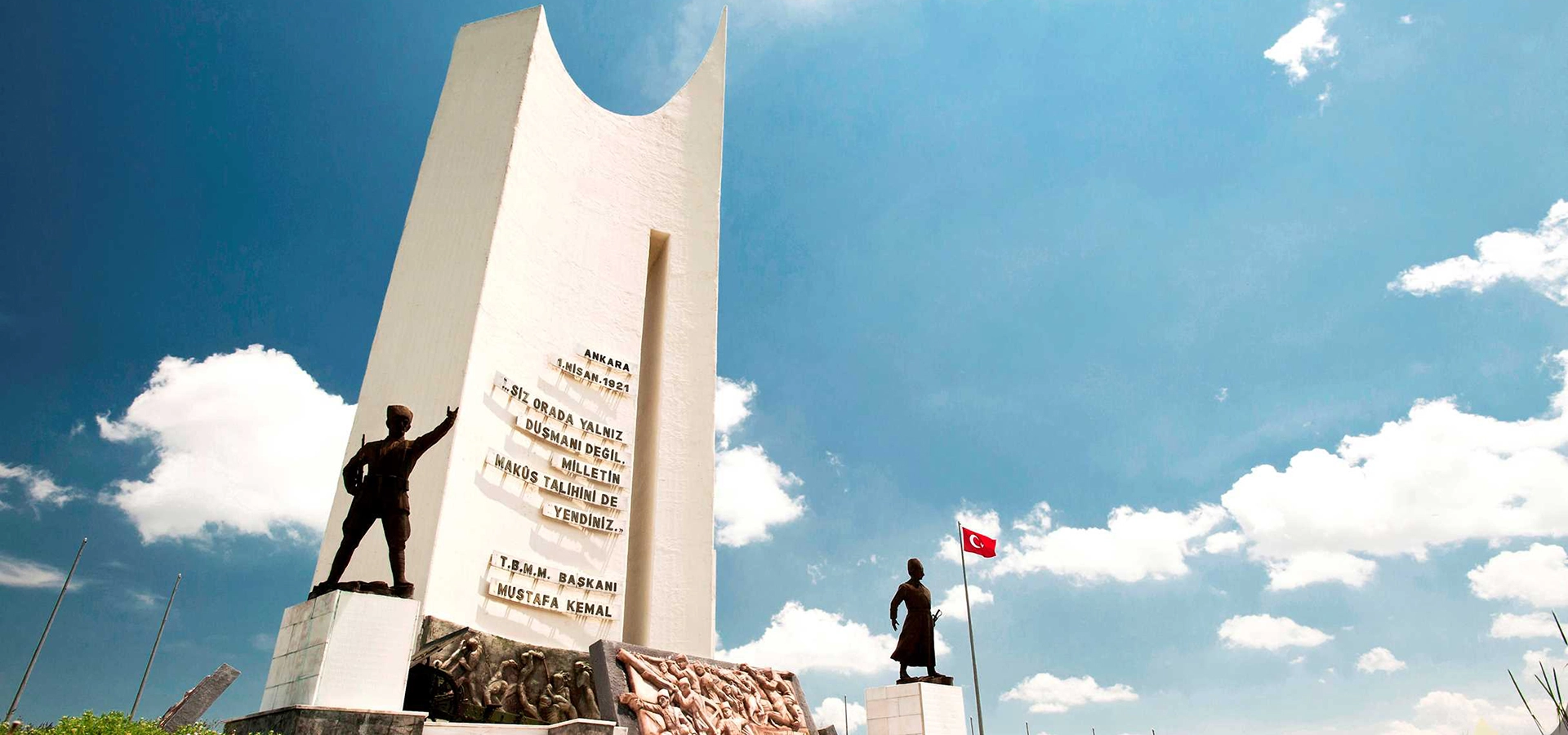
Stand above the battlefield landscape associated with the Second Battle of İnönü and the National Struggle.
Explore Metristepe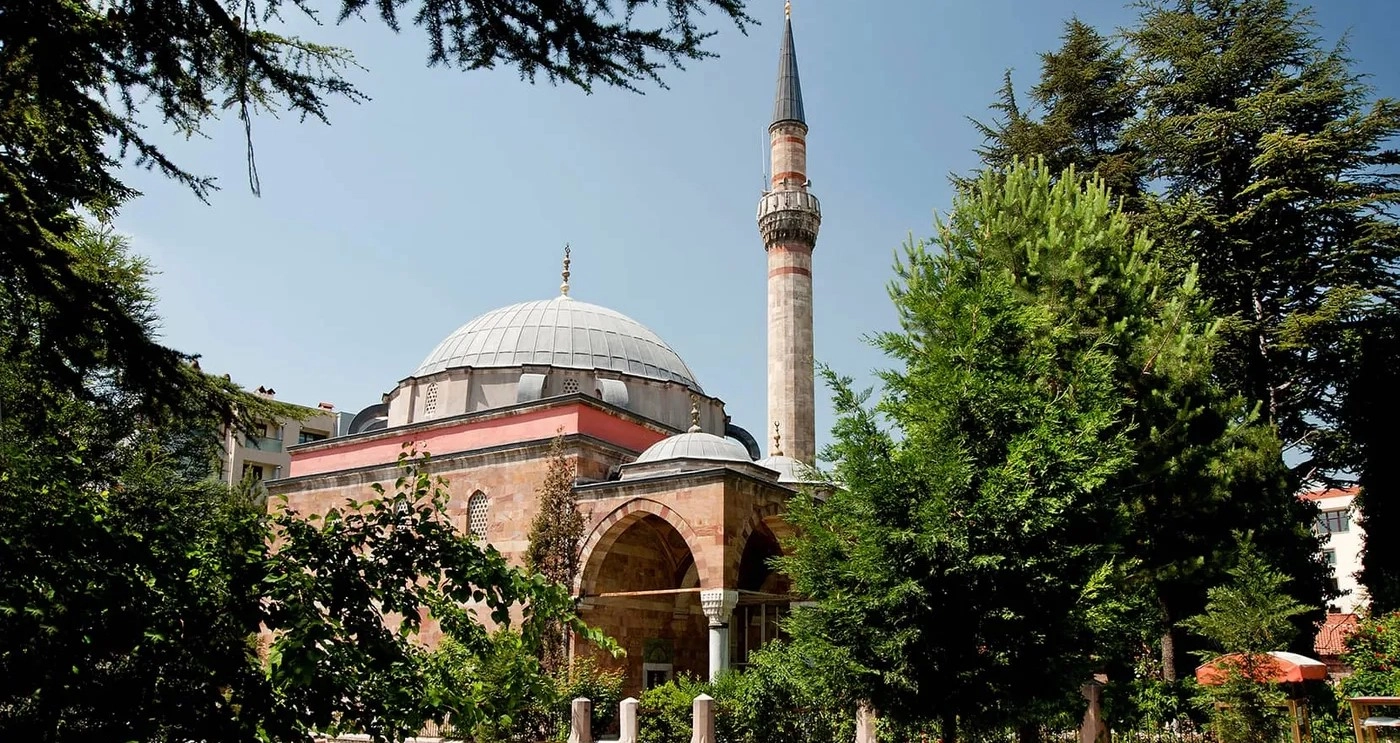
Discover one of Bozüyük's major Ottoman monuments and the historic urban core of the district.
Explore Kasım Pasha Mosque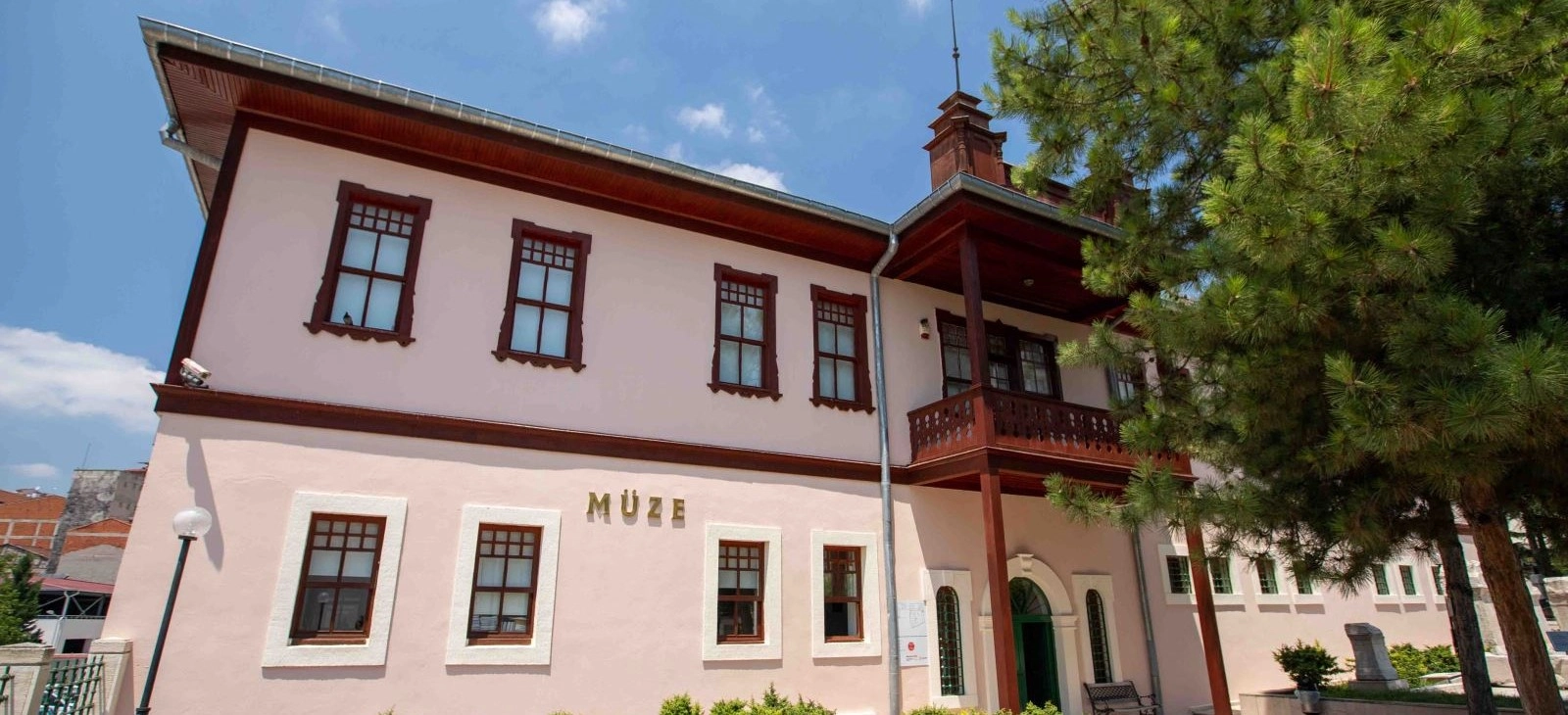
Explore archaeology, ethnography and the layered cultural history of Bilecik Province.
Explore Bilecik Museum