Private İnhisar Pomegranate & Food Discovery
Explore İnhisar’s pomegranate identity with seasonal fruit, regional sweets, local food stops and a flexible journey through the Sakarya Valley.
Request This Tour





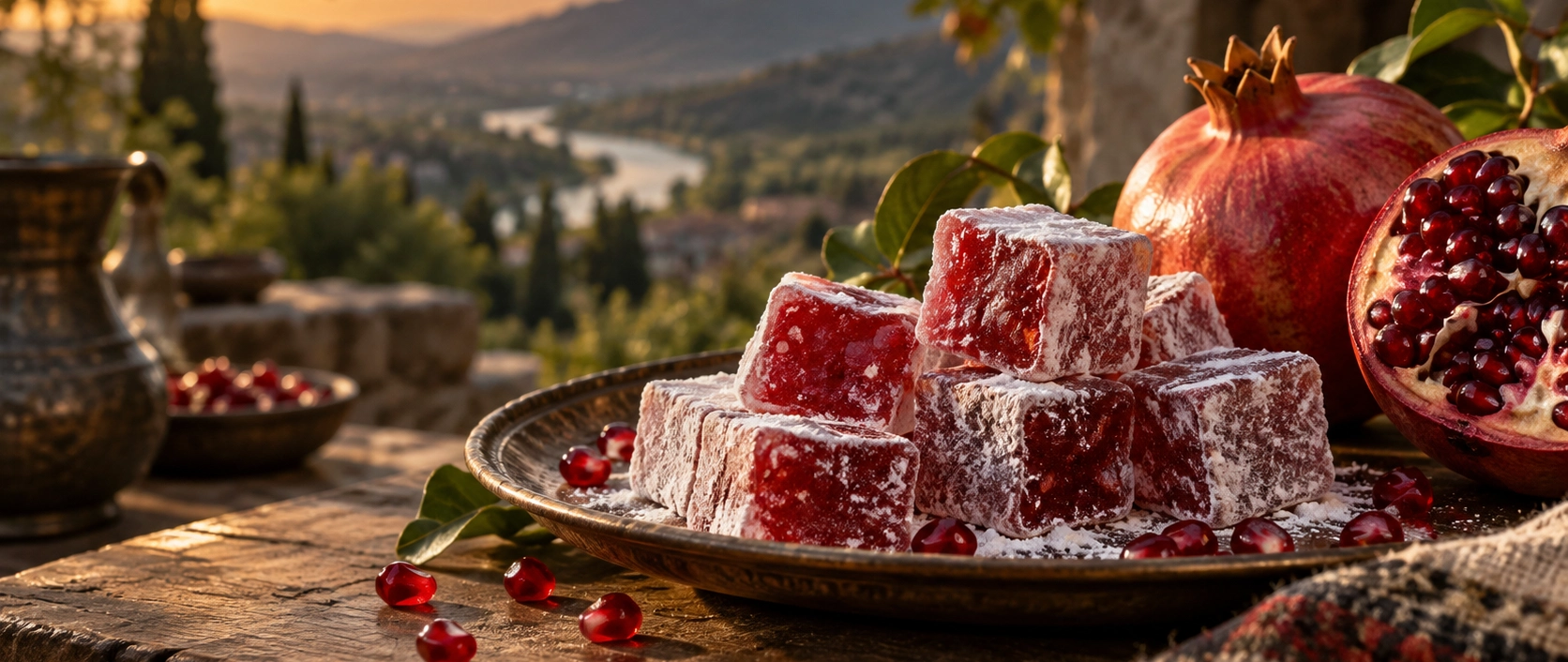
İnhisar Pomegranate Delight, known in Turkish as İnhisar Nar Lokumu, is a regional confection associated with the pomegranate-growing district of İnhisar in Bilecik Province. It brings together one of Türkiye’s best-known traditional sweets — Turkish delight, or lokum — with the district’s strong agricultural identity built around the sweet Deve Dişi pomegranate.
İnhisar lies in the Middle Sakarya Valley, where a relatively warm microclimate supports pomegranate orchards along the Sakarya River corridor. Fresh İnhisar pomegranates are especially associated with autumn, but transforming the fruit into products such as juice, jam, syrup-style preparations and pomegranate delight helps extend the district’s pomegranate identity beyond the harvest season.
Official and local tourism sources have promoted Nar Lokumu as a Bilecik travel souvenir, while reports from the early 2010s describe İnhisar’s efforts to develop and promote a branded pomegranate delight connected with the district’s locally grown fruit.
Recipes and production methods can vary by producer. Some versions may emphasise natural fruit flavour, juice or concentrate, while others may use flavourings, colourings, nuts or coatings. For this reason, travellers with allergies, dietary restrictions or specific ingredient preferences should always check the packaging or ask the producer directly.
This complete guide explores the story of İnhisar Pomegranate Delight, its connection with İnhisar Narı, flavour and texture, ingredients, general production stages, serving traditions, buying and storage tips, harvest culture, souvenir value, food photography ideas and ways to combine a tasting stop with a wider Bilecik journey.
A local sweet inspired by İnhisar’s famous pomegranate-growing tradition.
Lokum provides the soft, chewy base for a fruit-flavoured regional souvenir.
Pomegranate delight keeps the flavour and identity of the autumn harvest visible beyond the fresh-fruit season.
A useful stop for travellers exploring the province’s local sweets, fruits and rural products.
Essential information about this pomegranate-based regional sweet from Bilecik.
İnhisar district, Bilecik Province, Türkiye.
Open İnhisar on Google MapsFruit-flavoured Turkish delight, locally known as nar lokumu.
Inspired by İnhisar’s sweet pomegranate tradition and the local Deve Dişi type.
A regional sweet and practical food souvenir from Bilecik.
A confection created to carry İnhisar’s pomegranate identity beyond the autumn harvest.
İnhisar has long been associated with pomegranate cultivation in the Middle Sakarya Valley. The district’s warmer valley climate supports fruit growing, while the local Deve Dişi pomegranate is appreciated for its sweetness, large arils and generous juice.
Fresh pomegranates have a naturally seasonal rhythm. They are harvested mainly in autumn and, although suitable fruit can be stored, the strongest local market presence traditionally follows the harvest period. Processing the fruit into other products therefore offers a way to extend its economic and cultural value.
Pomegranate delight became one of the products used to represent this idea. Reports from the early 2010s describe efforts in İnhisar to develop and promote Nar Lokumu as a local branded sweet for visitors and wider markets.
The concept is simple but effective: combine the familiar soft texture of Turkish delight with the colour, aroma and identity of a fruit strongly associated with İnhisar. The result becomes more than a confection; it also functions as a compact edible symbol of the district.
Today, travellers may encounter different commercial or artisanal interpretations. Because individual recipes vary, the most authentic way to understand a particular product is to ask who made it, what kind of pomegranate ingredient is used and whether the delight is produced locally or made elsewhere for regional sale.
İnhisar Pomegranate Delight is a pomegranate-flavoured lokum associated with the food culture of İnhisar. Traditional lokum is a soft confection generally built around sugar, starch and water. In pomegranate versions, the base is combined with fruit-derived ingredients or flavourings that create a red or pink colour and a sweet-tart fruit character.
The confection belongs to the wider lokum tradition, known for a soft, elastic and gently chewy texture.
The defining flavour is inspired by the sweet and aromatic pomegranates associated with İnhisar.
Lokum is typically cut into bite-sized cubes or pieces that are easy to serve with tea or coffee.
Packaged pomegranate delight is easier to transport than fresh fruit and can represent İnhisar throughout the year.
Ingredients, fruit content, sweetness, coating and texture may differ significantly from one producer to another.
Nar lokumu is a confection inspired by the fruit; its flavour and nutritional profile should not be confused with eating fresh pomegranate arils.
The appeal of İnhisar Pomegranate Delight begins with the district’s reputation for pomegranate growing. İnhisar’s Deve Dişi-type pomegranates are known for their large arils, juicy structure and predominantly sweet flavour. This agricultural identity gives nar lokumu a clear sense of place.
İnhisar’s orchards occupy a warmer river-valley landscape within Bilecik Province.
The locally associated pomegranate is especially valued for sweetness and large, juicy arils.
Fresh pomegranate season creates the strongest visual and cultural connection with the district.
Pomegranate growing is closely tied to İnhisar’s agricultural economy and public identity.
The fruit can inspire juice, jam, syrup-style products, molasses-style preparations and confectionery.
For the complete orchard story, visit our İnhisar Pomegranate guide.
Lokum is one of Türkiye’s best-known traditional confections. Its characteristic texture comes from cooking sugar and starch into a smooth gel that can be flavoured, set, cut and coated. Over time, producers have created countless variations using rose, citrus, mint, nuts, spices and fruits.
Good lokum should feel soft and elastic rather than hard, brittle or excessively sticky.
It is normally served in modest bite-sized pieces because the confection is naturally sweet.
Fruit, flower, spice and nut varieties allow regional producers to create distinctive local interpretations.
Many lokum varieties are dusted with powdered sugar, starch or a combination that helps prevent sticking.
Some producers add pistachio, hazelnut, walnut or other nuts, though not every pomegranate delight contains them.
Boxes of lokum are commonly offered to guests, shared during visits or purchased as edible souvenirs.
There is no single universal recipe for İnhisar Pomegranate Delight, and commercial formulas may differ. However, a typical fruit-flavoured lokum follows a sequence in which sugar syrup and starch are cooked until they develop the desired body, then flavour and colour components are incorporated before the mixture is set and cut.
Ingredient lists can vary widely. Travellers should not assume that every package uses the same amount or form of pomegranate. Some products may focus on fruit juice or concentrate, while others may rely more heavily on flavourings, colouring or additional confectionery ingredients.
The primary sweetening ingredient in traditional lokum-style confectionery.
Creates the characteristic gel-like structure and soft chew of Turkish delight.
May include juice, concentrate, fruit preparation or flavouring depending on the recipe.
Powdered sugar or starch is often used around the pieces to reduce surface stickiness.
Some varieties may contain pistachio, hazelnut, walnut or other nuts.
Colourings, acidity regulators, aromas or preservatives may appear in some commercial products.
Allergy note: Always read the ingredient and allergen statement on the actual package. Products made in confectionery facilities may also have cross-contact warnings for nuts, milk, gluten-containing ingredients or other allergens even when those ingredients are not part of the basic recipe.
The exact flavour depends on the producer, but pomegranate lokum generally aims for a balance between the deep sweetness of Turkish delight and a brighter fruit note. Better-balanced examples avoid tasting purely sugary and retain enough pomegranate-like acidity or aroma to distinguish them from plain lokum.
Lokum is a confection, so sweetness remains the dominant taste.
Pomegranate can add gentle acidity that gives the sweet a fresher finish.
The interior should be tender, smooth and pleasantly chewy.
Fruit aroma becomes especially noticeable after the initial sweetness fades.
Nut-filled versions add texture and reduce the impression of uniform sweetness.
Some versions taste more natural and fruit-forward, while others are sweeter or more strongly flavoured.
Pomegranate varieties are commonly coloured in shades ranging from pale rose to ruby red.
Many versions are cut into small squares or rectangular bites for easy serving.
A light dusting helps keep individual pieces separate inside the box.
Plain fruit lokum can have a jewel-like, semi-translucent appearance when cut.
Some packages reveal pistachio, hazelnut or walnut pieces through the soft confection.
Regional souvenir boxes may use pomegranate imagery, red tones or references to İnhisar and Bilecik.
Historical reports from the early 2010s show that local authorities were actively looking for ways to increase the value and visibility of İnhisar’s pomegranate crop. Nar lokumu was one of the products developed and promoted for this purpose.
The idea helped keep pomegranate visible even when the fresh autumn harvest was no longer on market stalls.
Local reporting described the delight as a product that could be offered to guests visiting İnhisar.
The sweet was promoted not only as food, but as a way to associate the district directly with pomegranate culture.
Early reports described production as limited and promotional rather than large-scale industrial manufacturing.
Türkiye’s Culture Portal has listed Nar Lokumu among Bilecik’s travel souvenirs.
Modern versions may come from different producers, so branding and recipes should be checked individually.
A small cube of lokum provides a sweet contrast to the intense, unsweetened character of Turkish coffee.
Serve one or two pieces alongside black tea for a simple afternoon treat.
Lokum can be offered to guests as part of a traditional hospitality presentation.
Combine several varieties of lokum, dried fruit and nuts for a colourful tasting plate.
A small piece can work as a lighter finish than a large syrup-based dessert.
Keep the box sealed and neatly packaged if you plan to present it as a souvenir.
The classic pairing balances strong roasted coffee flavour with soft sweetness.
Unsweetened tea keeps the fruit notes clearer and prevents the pairing from becoming overly sweet.
Pistachios, walnuts or hazelnuts add savoury richness and textural contrast.
Dried apricots or figs can create a broader Anatolian-style sweet platter.
During harvest season, tasting fresh arils beside the delight makes the fruit-to-confection transformation easier to understand.
Plain water is often the best palate cleanser when comparing several lokum flavours.
Always follow the storage instructions printed on the package, because shelf life depends on the exact recipe, moisture level, packaging and whether the product contains nuts or other ingredients.
Close the package carefully after opening to reduce drying and unwanted odours.
Unless the manufacturer says otherwise, protect lokum from heat, direct sunlight and excessive humidity.
The confection can absorb surrounding aromas, especially after the package has been opened.
High temperatures can soften the texture and make the surface sticky.
Nut-filled versions are best enjoyed while both the confection and nuts still taste fresh.
The producer’s storage and best-before guidance should always take priority over general advice.
A sealed box is generally simpler to transport than several kilos of fresh pomegranates.
The flavour immediately connects the gift with İnhisar’s pomegranate-growing identity.
Small individual pieces make the sweet easy to offer to family, friends or colleagues.
Unlike fresh pomegranates, processed confectionery can represent the district outside harvest season.
Small boxes fit easily into a food-themed Bilecik souvenir collection.
The sweet can later be served at home with Turkish coffee as part of the travel memory.
Autumn is the most atmospheric time to connect nar lokumu with the fruit that inspired it. İnhisar’s pomegranate celebrations bring together growers, local foods and community activities during the harvest period.
October and November offer the strongest visual link between orchards, fresh fruit and processed pomegranate products.
Festival and market settings can be good places to discover regional food products and compare different presentations.
Tasting fresh pomegranate and nar lokumu on the same visit reveals two sides of İnhisar’s food identity.
Seasonal events may offer opportunities to speak directly with growers or local food sellers.
Red pomegranates, market displays and colourful sweet boxes create strong food-travel photographs.
Festival schedules can change each year, so always verify the current programme before planning a special trip.
Excellent for combining nar lokumu with active pomegranate harvest scenery.
Fresh fruit is still strongly connected with local markets and the wider harvest atmosphere.
Packaged delight offers a way to continue tasting the district’s pomegranate identity after harvest.
Look for packaged regional products even though fresh pomegranate season is far away.
Nar lokumu can still be an easy food souvenir, but keep packages away from excessive heat during travel.
Autumn provides the richest combination of fresh fruit, orchard scenery and regional confectionery.
Nar lokumu makes more sense after tasting the sweet, juicy pomegranate that gives İnhisar its agricultural identity.
Regional branding does not always mean local manufacture, so ask about the producer when authenticity matters.
Fruit content, nuts, colourings and flavourings differ among brands and batches.
If several versions are available, taste one before purchasing larger quantities as gifts.
October and November offer the best connection between nar lokumu and the pomegranate harvest.
Keep confectionery out of direct sun, especially during warm-weather road trips.
Turkish coffee is one of the easiest ways to enjoy the sweet without needing a formal dessert course.
Combine İnhisar with Osmaneli, Pazaryeri, Bozüyük and other districts for a broader regional gastronomy route.
Bilecik’s regional food identity includes fruits, grain-based drinks, traditional sweets, village dishes and locally recognised agricultural products. İnhisar Pomegranate Delight fits naturally into this landscape as a fruit-inspired confection that connects orchard agriculture with Turkish sweet-making traditions.
The fresh orchard fruit that provides the strongest regional identity behind nar lokumu.
Another example of Bilecik fruit being transformed into a travel-friendly sweet.
A fermented grain drink representing a completely different branch of the province’s food culture.
A traditional sweet with a different texture, production method and flavour profile from lokum.
A savoury local speciality showing the home-cooking side of Bilecik gastronomy.
A local agricultural product that highlights the diversity of Bilecik’s rural landscape.
Start with the fresh Deve Dişi pomegranate and discover the orchard story behind the sweet.
Compare two fruit-inspired Bilecik confections from different districts.
Continue exploring fruit agriculture along Bilecik’s warmer river valleys.
Taste a traditional fermented grain drink with a completely different texture and history.
Add another regional sweet to your Bilecik gastronomy journey.
Balance a sweet-focused route with one of Bilecik’s distinctive savoury dishes.
A tasting stop in İnhisar can be combined with the province’s early Ottoman heritage, rural landscapes and traditional towns for a fuller Bilecik itinerary.
Visit one of Bilecik’s most important historical landmarks while exploring the provincial centre.
Continue to Söğüt for an introduction to the early Ottoman historical landscape.
Add museum context to a journey through Söğüt and the surrounding heritage sites.
Combine food discovery with traditional town architecture in the Sakarya corridor.
During autumn, the district’s fruit-growing landscape becomes one of the most meaningful parts of the experience.
Ask us to combine İnhisar with Bilecik, Söğüt, Osmaneli or other regional stops.
It is a pomegranate-flavoured Turkish delight associated with İnhisar district in Bilecik Province and its strong pomegranate-growing tradition.
It is commonly called İnhisar Nar Lokumu or simply Nar Lokumu.
İnhisar is a district of Bilecik Province in north-western Türkiye, situated in the Middle Sakarya Valley.
The district has a relatively warm river-valley microclimate suitable for pomegranate growing and is especially associated with the sweet Deve Dişi type.
No. Fresh pomegranate is an agricultural product, while nar lokumu is a confection inspired by or flavoured with pomegranate.
It is usually sweet, soft and chewy with a fruity pomegranate aroma and, in well-balanced versions, a gentle tart note.
Usually not strongly sour. Lokum is fundamentally a sweet confection, though pomegranate can add light acidity.
Traditional lokum is generally based on sugar, starch and water, with additional flavourings or ingredients depending on the variety.
No. Recipes vary, so check the ingredient list to learn whether a product uses juice, concentrate, fruit preparation, flavouring or a combination.
Some versions may contain pistachio, hazelnut, walnut or other nuts, while others are plain. Always check the package.
Do not assume so. Even a plain version may be made in a facility that handles nuts, so read allergen information carefully.
Ingredients and manufacturing conditions differ by producer. Check the actual product label rather than relying on a general description of lokum.
Some lokum recipes may be suitable for vegans, but ingredients can vary. Check the label for gelatine, dairy ingredients or other animal-derived components.
Early local reports describe it as a way to promote the district’s pomegranate identity and keep the fruit visible beyond the short fresh-harvest period.
Published reports show that the product was already being promoted locally in the early 2010s.
Yes. Türkiye’s Culture Portal has listed Nar Lokumu among Bilecik’s travel souvenirs.
Packaged lokum can generally be sold beyond pomegranate season, although availability depends on current producers and retailers.
October and November are especially attractive because the pomegranate harvest adds orchard scenery and fresh-fruit tasting to the confectionery experience.
Regional food products may be available during harvest events, but vendors and programmes change from year to year.
Serve one or two small pieces with Turkish coffee, black tea or as part of a mixed sweet plate.
Follow the manufacturer’s instructions. In general, keep the package sealed and protect it from heat, direct sunlight, humidity and strong odours.
Storage requirements depend on the recipe and packaging. Follow the label rather than refrigerating automatically.
Shelf life varies by producer. Use the best-before date and storage instructions printed on the package.
Fresh lokum should normally feel soft and elastic, with a clean aroma and no obvious drying, cracking or stale nut flavour.
Not necessarily. Some products may use fruit-derived colour, while others may include permitted colourings. Check the ingredient list.
Yes. Sealed packaged lokum is a practical food souvenir, though international travellers should always check the food-import rules of their destination country.
Ask who produced it, where it was made, what pomegranate ingredient is used, whether it contains nuts and how it should be stored.
Turkish coffee, black tea, fresh pomegranate arils and plain nuts all make useful pairings.
Osmaneli Quince Delight and Pazaryeri Halva are useful additions to a Bilecik sweet-tasting route.
See our complete İnhisar Pomegranate guide for the orchard, harvest, flavour and agricultural story.
The strongest images connect the confection with the fruit and place that inspired it. Instead of photographing only a box of sweets, include fresh pomegranates, Turkish coffee, local market details or the Sakarya Valley atmosphere whenever possible.
Photograph cut pieces closely enough to show their translucent colour and soft texture.
Place opened fruit nearby to visually explain the flavour inspiration.
A traditional coffee cup and a few pieces of lokum create a natural hospitality scene.
Side lighting can reveal the fine coating and edges of each piece.
Photograph regional packaging when it clearly identifies the producer and place of origin.
In autumn, combine pomegranate orchards or market displays with the finished confection for a complete food story.
Combine İnhisar’s pomegranate culture, regional sweets, early Ottoman heritage and rural landscapes on a private journey designed around your interests.
Custom-designed private journeys with flexible timing, private transportation and opportunities to discover local food products, İnhisar’s pomegranate tradition, Söğüt, Bilecik, Osmaneli and the province’s rural landscapes.
Explore İnhisar’s pomegranate identity with seasonal fruit, regional sweets, local food stops and a flexible journey through the Sakarya Valley.
Request This Tour
Combine İnhisar’s pomegranate culture with Bilecik, Söğüt, Osmaneli or Pazaryeri for a private journey linking regional food with the province’s historical heritage.
Request This Tour