Private Söğüt Ottoman Heritage Experience
Ask us about a tailor-made route combining Hamidiye Mosque, Çelebi Mehmet Mosque, Hamidiye İdadisi, Söğüt Museum, Kuyulu Mescit and Ertuğrul Gazi Tomb.
Request a Custom Tour





Hamidiye Mosque stands in Söğüt, Bilecik Province, the town most closely associated with the remembered beginnings of the Ottoman dynasty. Built during the reign of Sultan Abdülhamid II, the mosque belongs to the late Ottoman campaign that turned Söğüt into a powerful landscape of dynastic memory.
The Bilecik Provincial Directorate of Culture and Tourism and Türkiye’s Culture Portal date the mosque to 1903–1905. It is one of the clearest examples in Söğüt of late Ottoman neo-classical architectural taste, combining a monumental central dome, carefully cut red stone walls and a balanced façade dominated by twin minarets.
Because of those two minarets, local people commonly call the building Çifte Minareli Camii — the Twin-Minaret Mosque. Archival research indicates that the mosque was initially conceived with one minaret and that a second minaret was approved in 1907, helping explain why some heritage records use 1907 as a construction date.
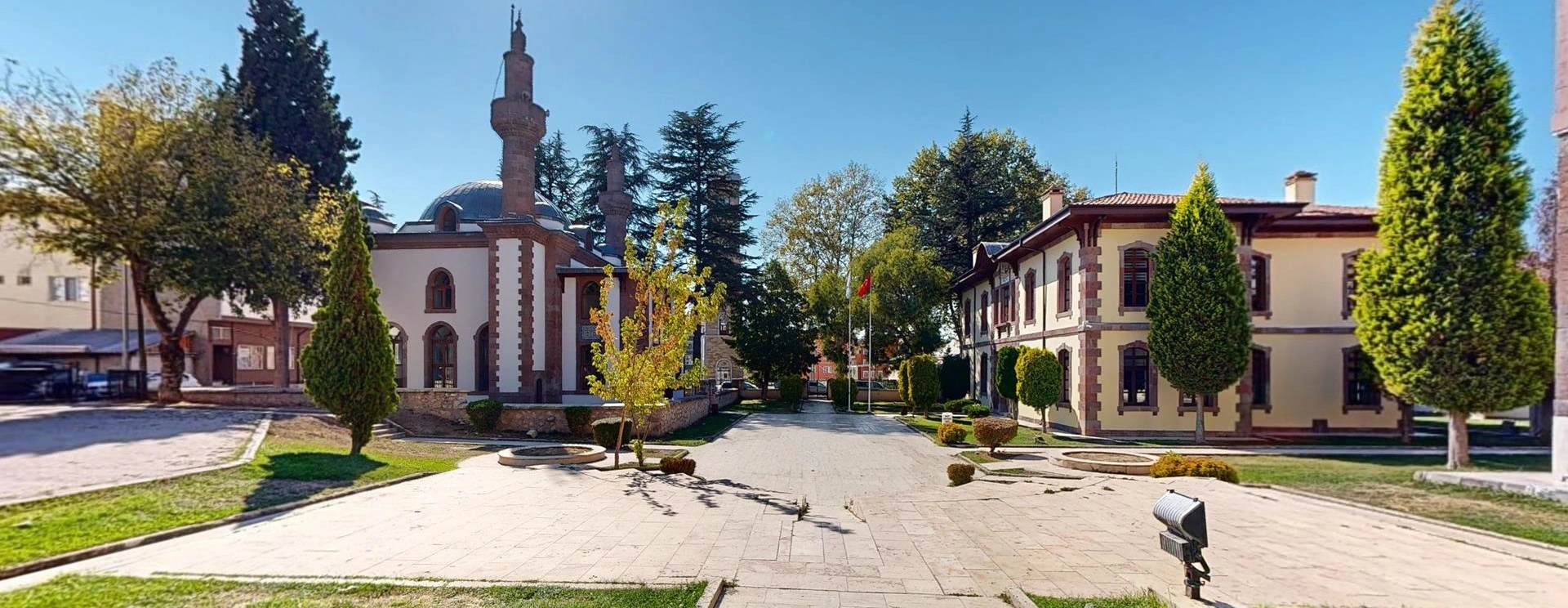
The mosque also forms part of a wider Abdülhamid-era setting. Directly associated with the same program is the nearby Hamidiye İdadisi, a late Ottoman school building completed in the same period and today used as a public library. Together they reveal how architecture, education and imperial memory were brought together in Söğüt at the beginning of the twentieth century.
Hamidiye Mosque remains an active place of Muslim worship. Visitors should experience it as both a historic monument and a living sacred space. For the strongest historical context, combine it with Çelebi Mehmet Mosque, Ertuğrul Gazi Tomb, Ertuğrul Gazi Kuyulu Mescit and Söğüt Ertuğrul Gazi Museum.
Official cultural sources date the construction of Hamidiye Mosque to the final years of Sultan Abdülhamid II’s reign.
The mosque is widely known as Çifte Minareli Camii because of the two slender minarets flanking its northern section.
Its distinctive warm-toned masonry gives the mosque a strong visual relationship with the nearby Hamidiye İdadisi.
Hamidiye Mosque continues to serve the local congregation and should be visited respectfully outside prayer.
Essential information about Sultan Abdülhamid II’s monumental mosque in Söğüt.
Ertuğrul Gazi Caddesi, central Söğüt, Bilecik Province.
Open on Google MapsLate Ottoman mosque and active place of worship.
Official tourism sources date the mosque to 1903–1905.
Sultan Abdülhamid II.
Late Ottoman neo-classical architecture with eclectic period details.
Distinctive red cut-stone walls.
A single central dome covered externally with lead.
Two minarets; hence the popular name Çifte Minareli Camii.
Closely associated with the nearby Hamidiye İdadisi, built in the same late Ottoman program.
Active mosque; sightseeing should always respect prayer times.
The mosque is one of the clearest architectural expressions of Sultan Abdülhamid II’s renewed interest in Söğüt as the symbolic homeland of the Ottoman dynasty.
For centuries after the early Ottoman period, Söğüt remained a comparatively small provincial town despite its enormous place in dynastic memory. That changed dramatically in the late nineteenth century, when the Ottoman government increasingly emphasized Söğüt as the ancestral landscape of the ruling house.
Under Sultan Abdülhamid II, monuments associated with Ertuğrul Gazi and the earliest generations of the dynasty were repaired, rebuilt or ceremonially emphasized. New public buildings were also commissioned, creating a visible connection between the medieval foundation story and the modern late Ottoman state.
Hamidiye Mosque belongs to this second group. Unlike monuments whose origins are attributed to the thirteenth, fourteenth or fifteenth centuries, Hamidiye Mosque was a new imperial foundation. Its location in Söğüt therefore carried a deliberate symbolic message: the contemporary Ottoman state was publicly reconnecting itself with the place remembered as its beginning.
The mosque’s association with the nearby Hamidiye İdadisi adds another layer to this story. Religion, education, public architecture and imperial identity were placed side by side, making this part of Söğüt one of the best places to understand Abdülhamid II’s vision for the town.
Sultan Abdülhamid II ruled the Ottoman Empire from 1876 to 1909. His reign coincided with intense political pressure, rapid modernization and a growing effort to strengthen imperial legitimacy through education, public works, religious institutions and symbolic links with Ottoman history.
Söğüt had exceptional value within that historical program. It was celebrated as the landscape associated with Ertuğrul Gazi and the beginnings of the Ottoman principality. By giving new attention to the town, Abdülhamid II connected his own reign with the dynasty’s foundation narrative.
Hamidiye Mosque was one of the most visible results. The building was not intended to imitate an early Ottoman mosque exactly. Instead, it used late Ottoman architectural language to create a new monument in the ancestral town.
This makes the mosque historically different from Çelebi Mehmet Mosque or the monuments traditionally connected with Ertuğrul Gazi. Hamidiye Mosque is best understood as a turn-of-the-twentieth-century statement about how the Ottoman dynasty remembered its own origins.
The Bilecik Provincial Directorate of Culture and Tourism and Türkiye Culture Portal date Hamidiye Mosque to 1903–1905 and attribute it directly to Sultan Abdülhamid II. For visitor information, this is the clearest principal construction date.
A separate official cultural-inventory record lists 1907 as the construction date. Rather than treating this as a simple contradiction, archival research helps explain why 1907 appears in the documentation.
Research using Ottoman archival material states that the mosque was originally planned with one minaret. Because of Söğüt’s importance, local authorities requested the addition of a second minaret in 1907, and the central government approved the extra expenditure.
The most responsible interpretation is therefore that the main mosque was built in 1903–1905 and the twin-minaret composition was completed or modified around 1907. This also explains why some heritage records emphasize the later date.
A TDV Encyclopaedia entry on Söğüt gives an earlier date of 1889 for a Hamidiye Mosque in the town. Because the local official cultural authorities consistently identify the surviving Çifte Minareli Hamidiye Mosque with the 1903–1905 construction campaign, this page uses 1903–1905 as the primary date while acknowledging the published discrepancy.
Official cultural descriptions identify Hamidiye Mosque as an example of late Ottoman neo-classical architecture. Its overall composition is compact and symmetrical, with a main prayer space focused beneath a single central dome.
The mosque is especially distinctive because of its red cut-stone masonry. The warm colour gives the exterior a strong visual identity and connects the mosque aesthetically with the nearby Hamidiye İdadisi, which was also built in red cut stone.
The cultural inventory describes a closed, windowed last-congregation space rather than the more familiar open arcade seen in many earlier Ottoman mosques. The two minarets rise at the corners where this northern section meets the main body of the mosque.
Above the main mass, the lead-covered dome is visually framed by four small weight towers. The side elevations also include pointed blind arches, some containing tile panels that introduce colour and ornament into the stone façade.
A single lead-covered dome defines the main prayer hall and gives the building a clear central emphasis.
The warm stonework is one of the mosque’s most immediately recognizable exterior features.
Two minarets create the famous Çifte Minareli silhouette associated with the building.
The last-congregation space is enclosed and lit by windows rather than formed as a conventional open portico.
Four small architectural towers frame the central dome and reinforce the mosque’s balanced roofline.
Decorative tile plaques appear in blind pointed arches along the side façades.
One of the most memorable characteristics of Hamidiye Mosque is its red cut-stone construction. The stone gives the monument a warmer and more dramatic exterior than the pale masonry associated with many Ottoman religious buildings.
The choice of material is important for another reason: the nearby Hamidiye İdadisi was also built with red cut stone. Seen together, the two buildings read as parts of a coordinated late Ottoman architectural ensemble.
The masonry also works strongly in changing light. Morning and late-afternoon sun can bring out the contrast between red wall surfaces, pale architectural trim, the lead-covered dome and the slender minarets.
The stone gives the mosque a distinctive appearance that changes noticeably with the direction of sunlight.
Regularly shaped stone blocks create a disciplined late Ottoman exterior.
The same material helps connect the mosque visually with the Hamidiye İdadisi nearby.
Side light is particularly effective for revealing stone texture and architectural depth.
Hamidiye Mosque is widely known in Söğüt as Çifte Minareli Camii, literally the Twin-Minaret Mosque. The paired minarets make the building easy to identify and distinguish it from the town’s other historic mosques.
The twin-minaret appearance also has a fascinating documentary history. Archival research indicates that the mosque was initially planned with a single minaret. In 1907, the local administration requested a second because of Söğüt’s special importance.
The central government approved the additional minaret and an expenditure of 30,175 kuruş for the work. This small administrative detail is unusually valuable because it shows how the monument’s most recognizable visual feature developed after the initial construction campaign.
Today the paired minarets frame the northern end of the mosque and, together with the central dome, create the balanced silhouette seen in most photographs of Hamidiye Mosque.
The prayer hall is covered by a single lead-clad central dome. Rather than spreading across a large multi-domed roof, the building concentrates visual attention toward one central volume.
The dome is accompanied by four weight towers that give the roofline additional vertical accents. Below, the red stone façades are articulated by windows, mouldings and blind arches.
On the northern side, the entrance is approached through the closed last-congregation section. Heritage documentation notes different window forms here, including lower openings with flatter arches and upper openings with pointed arches.
The result is a building that feels both traditional and unmistakably late Ottoman. The central dome and minarets preserve the visual language of a mosque, while the façade organization and decorative handling reflect the architectural experimentation of the period.
The exterior should not be read only as red masonry. The cultural inventory notes tile panels set within pointed blind arches on the side façades. These decorative inserts add colour and rhythm to otherwise strongly geometric stone surfaces.
The same inventory records the presence of historic inscriptions, reinforcing the mosque’s identity as an imperial-era religious monument. Visitors should view these elements carefully without touching the stonework or decorative surfaces.
Archival research also adds an important interior detail. In 1910, calligraphic panels were prepared for Hamidiye Mosque at the Yıldız workshop. The recorded group included panels naming Allah, the Prophet Muhammad, the four caliphs, Hasan and Husayn and other devotional inscriptions.
This documentary evidence connects the mosque not only with Söğüt, but directly with the artistic and administrative world of the imperial capital.
Decorative ceramic plaques appear within pointed blind arches on the side façades.
Heritage records identify historic inscriptions as part of the mosque’s documented fabric.
Archival research records devotional calligraphic panels being prepared for the mosque in the Yıldız workshop.
The decorative program strengthens the direct association between Söğüt and Abdülhamid II’s palace administration.
A visit to the mosque should include time to look at the nearby Hamidiye İdadisi. Türkiye Culture Portal states that the school was built together with Hamidiye Mosque under Sultan Abdülhamid II and dates it to 1905.
The idadi was a late Ottoman secondary-school institution. Its presence beside the mosque is significant because it brings together two central themes of Abdülhamid II’s reign: religious legitimacy and state-sponsored education.
Architecturally, the school reinforces the identity of the mosque precinct. It is a two-storey building constructed in red cut stone, creating a strong material relationship with Hamidiye Mosque.
The building was restored with support from the Ministry of Culture and Tourism in 2008 and has served as the district public library. Its entrance façade is especially notable for the large marble Ottoman coat of arms above the doorway.
Hamidiye Mosque is not a conventional museum. It remains an active Muslim place of worship used by the local community.
Sightseeing should therefore take place around religious use. If prayer is beginning, wait outside or remain quietly in a permitted area. Friday noon prayer is normally the busiest weekly period and is not a good time for casual interior sightseeing.
Shoes must be removed before entering the carpeted prayer area. Visitors should dress modestly, with shoulders and knees covered; women should be prepared to cover their hair inside the main prayer space.
This living function is part of the monument’s value. Hamidiye Mosque still connects early twentieth-century imperial architecture with everyday religious life in modern Söğüt.
Hamidiye Mosque is one of the most photogenic historic buildings in Söğüt because its main features can be understood clearly from the exterior: two minarets, a central dome and warm red masonry.
For a strong architectural photograph, step back far enough to include both minarets and the dome in a single composition. This communicates the reason behind the popular name Çifte Minareli Camii.
Side lighting can make the cut-stone texture and façade depth much more visible. The relationship between the mosque and nearby Hamidiye İdadisi is also worth documenting with wider contextual photographs.
Inside, photography should never disturb worship. Avoid flash, do not photograph worshippers closely without permission, and never block prayer routes for a better camera angle.
Use a wider composition that keeps both minarets visible instead of cropping the mosque too tightly.
Frame the lead-covered dome between the minarets to emphasize the building’s symmetry.
Low-angle sunlight helps reveal colour, joint lines and texture in the cut stone.
Look for the decorative panels set within pointed blind arches along the side façades.
Include the nearby school in your visit to document the wider Abdülhamid-era setting.
Ask before making identifiable photographs of local people inside the mosque.
Hamidiye Mosque stands in central Söğüt on Ertuğrul Gazi Caddesi and is easy to combine with the town’s main Ottoman heritage monuments. Most visitors will need around 20–30 minutes for a relaxed exterior and interior visit when access is appropriate.
There is generally no museum-style ticketing system because the building functions as a mosque. Visitor access can vary around daily prayer, Friday prayer, religious festivals, funerals, ceremonies or maintenance.
On-site instructions always take priority. If the prayer hall is crowded, return later rather than attempting to sightsee through a congregation.
Hamidiye Mosque is both protected cultural heritage and a functioning sacred space. Visitors of all backgrounds can appreciate its architecture, but worship always takes priority.
Leave footwear in the designated area before stepping onto the prayer carpets.
Cover shoulders and knees; women should be prepared to cover their hair inside the prayer space.
A calm atmosphere is appropriate even when formal prayer is not taking place.
If possible, explore the interior between prayers, especially outside the Friday noon congregation.
Never walk directly in front of someone who is praying.
Avoid flash and do not photograph worshippers closely without permission.
Do not touch tile panels, inscriptions, painted surfaces or architectural ornament.
Temporary access arrangements can change for worship, maintenance or special events.
The mosque’s position in central Söğüt makes the exterior relatively easy to include in a town visit without a long approach walk. Its main architectural features can be appreciated from the surrounding public area.
However, historic thresholds, steps, entrance arrangements and shoe removal may create difficulties for some visitors with reduced mobility. Current access conditions can also change after maintenance or landscaping work.
Visitors who require wheelchair access should confirm the easiest current entrance and closest practical vehicle drop-off locally before arrival.
Hamidiye Mosque stands in Söğüt district centre, Bilecik Province. Türkiye Culture Portal identifies the location as Ertuğrul Gazi Caddesi. For navigation, search for “Hamidiye Camii, Söğüt, Bilecik.”
Its central location makes it easy to include in a walking or driving route through Söğüt. Travelers exploring the wider province will find private car, taxi or private driver the most flexible options, especially when combining Söğüt with Bilecik city.
The mosque works particularly well in a route with Çelebi Mehmet Mosque, Söğüt Ertuğrul Gazi Museum, Kuyulu Mescit and Ertuğrul Gazi Tomb.
Search “Hamidiye Camii, Söğüt, Bilecik.”
Best for travelers combining Söğüt with Bilecik city and other provincial sites.
Useful for local transfers from accommodation or Söğüt’s outer districts.
The central location makes the mosque suitable for a walking route through Söğüt’s heritage core.
A comfortable option for a full-day Ottoman heritage route through Söğüt and Bilecik.
Pair the mosque with Hamidiye İdadisi, Çelebi Mehmet Mosque and the Ertuğrul Gazi monuments.
For a quick exterior view, 10–15 minutes may be enough. This allows time to see the red stone façade, twin minarets and central dome.
Allow around 20–30 minutes if the prayer hall is accessible and you would like to examine the exterior details, tile panels and interior respectfully.
A half day in Söğüt is ideal if you want to combine Hamidiye Mosque with the nearby school, Çelebi Mehmet Mosque, Söğüt Museum and the Ertuğrul Gazi monuments.
A full day works well for travelers continuing to Bilecik city for additional Ottoman heritage sites.
Quick exterior view, twin minarets and central dome.
Exterior plus a respectful interior architectural visit.
Combine the mosque with the principal heritage sites of Söğüt.
Add Bilecik city and its major early Ottoman monuments.
Begin outside with the full northern composition. Step back far enough to see how the two minarets frame the entrance zone and how the central dome rises behind them.
Move along the side façades and look at the red cut-stone masonry, pointed blind arches and tile panels. These details help explain why the mosque is described as a late Ottoman neo-classical monument rather than a revival of one single earlier Ottoman style.
Before entering, check whether prayer is taking place. If the interior is open to visitors, remove your shoes and enter quietly.
After the mosque, walk to the Hamidiye İdadisi and compare the materials and scale of the two buildings. This makes the imperial program of the area much easier to understand.
Then continue through Söğüt to Çelebi Mehmet Mosque and the monuments associated with Ertuğrul Gazi. The contrast between early Ottoman memory and late Ottoman commemoration is one of the most rewarding historical experiences in the town.
Hamidiye Mosque gains much more meaning when seen as part of Söğüt’s wider sequence of Ottoman foundation and dynastic-memory monuments. Several important sites can be combined in the same half-day or full-day itinerary.
Compare Abdülhamid II’s new Hamidiye foundation with a much older mosque whose institutional history reaches back to Mehmed I.
Visit Söğüt’s principal memorial monument associated with Ertuğrul Gazi and the dynasty’s remembered beginnings.
Explore the small religious monument traditionally connected with the earliest Ottoman settlement memory in Söğüt.
Add local ethnography and town history to your understanding of Söğüt’s cultural landscape.
See the red-stone late Ottoman school built in the same imperial program and today serving as the district library.
Continue beyond Söğüt to early Ottoman monuments, museums, historic settlements and natural attractions across the province.
Visitors to Söğüt are surrounded by names associated with the thirteenth, fourteenth and fifteenth centuries. For that reason, it is easy to assume that every historic mosque in town belongs to the foundation period of the Ottoman state.
Hamidiye Mosque is different. Its primary construction belongs to the beginning of the twentieth century. It was created more than five hundred years after the lifetime traditionally associated with Ertuğrul Gazi.
That later date is exactly what makes it important. The mosque shows how Sultan Abdülhamid II’s government actively shaped the memory of Ottoman origins through new architecture, restoration and public institutions.
In other words, Hamidiye Mosque is not simply a monument from Ottoman history. It is also a monument about Ottoman history: a building that demonstrates how the empire chose to remember and monumentalize its own beginning.
It is a late Ottoman mosque in Söğüt, Bilecik Province, commissioned during the reign of Sultan Abdülhamid II.
It stands in central Söğüt on Ertuğrul Gazi Caddesi.
Official cultural sources attribute the mosque to Sultan Abdülhamid II.
The Bilecik Provincial Directorate of Culture and Tourism and Türkiye Culture Portal date the main construction to 1903–1905.
Heritage documentation lists 1907, and archival research shows that a second minaret was approved in 1907. The main mosque is nevertheless officially dated to 1903–1905 by local cultural authorities.
Because the mosque has two minarets. The Turkish name means “Twin-Minaret Mosque.”
Archival research indicates that it was first planned with one minaret and that a second was approved in 1907.
Official cultural sources describe it as an example of late Ottoman neo-classical architecture.
Its walls are built from distinctive red cut stone.
The main prayer space is covered by one central dome, which is lead-clad on the exterior.
Heritage documentation records four weight towers framing the main dome.
Yes. Cultural-inventory documentation notes tile panels set within pointed blind arches on the side façades.
No. The inventory describes it as a closed, windowed volume rather than a conventional open arcade.
The nearby school was built in the same Abdülhamid-era program and is also constructed from red cut stone.
After restoration, the historic school building has served as Söğüt’s district public library.
Archival research records a group of devotional calligraphic panels prepared at the Yıldız workshop in 1910.
Söğüt was increasingly emphasized as the symbolic homeland of the Ottoman dynasty, and the sultan sponsored new buildings and work on older monuments there.
No. It is a late Ottoman monument whose significance comes partly from the way it commemorates the dynasty’s much earlier origins.
Yes. It remains an active mosque used by the local congregation.
Historic mosques in Türkiye can generally be visited outside congregational prayer when local access allows. Enter quietly, dress modestly and follow on-site instructions.
Yes. Shoes should be removed before entering the carpeted prayer hall.
Wear modest clothing covering shoulders and knees. Women should be prepared to cover their hair inside the prayer space.
Photography may be possible when it does not disturb worship. Avoid flash and never photograph worshippers intrusively.
The building functions as a mosque rather than a conventional ticketed museum. Follow any current information posted at the site.
Allow around 20–30 minutes for a relaxed visit when interior access is appropriate.
Yes, especially for travelers interested in Sultan Abdülhamid II, late Ottoman architecture, imperial memory and the heritage of Söğüt.
Continue to Çelebi Mehmet Mosque, Söğüt Ertuğrul Gazi Museum, Kuyulu Mescit and Ertuğrul Gazi Tomb.
Search for “Hamidiye Camii, Söğüt, Bilecik.”
Religious use always takes priority over sightseeing and photography.
Keep the prayer carpets and historic interior clean by following mosque shoe etiquette.
The interior remains a sacred space even outside formal prayer times.
Flash photography can be distracting inside a functioning mosque.
Worshippers and local residents should never become unconsenting tourist subjects.
Avoid touching historic masonry, tile panels, inscriptions or decorative finishes.
Keep doorways and circulation routes clear, particularly near prayer times.
Temporary restrictions may change for prayer, ceremonies, conservation or maintenance.
Combine Hamidiye Mosque with Söğüt’s dynastic monuments and Bilecik’s early Ottoman heritage through a private itinerary designed around your interests and travel pace.
Explore the places connected with Ertuğrul Gazi and the later Ottoman rulers who transformed Söğüt into a ceremonial landscape of dynastic memory.
Ask us about a tailor-made route combining Hamidiye Mosque, Çelebi Mehmet Mosque, Hamidiye İdadisi, Söğüt Museum, Kuyulu Mescit and Ertuğrul Gazi Tomb.
Request a Custom Tour
Discover early Ottoman monuments, Söğüt, museums, historic towns, War of Independence landscapes and natural attractions throughout Bilecik Province.
View Bilecik GuideConnect Hamidiye Mosque with the monuments that preserve both the town’s early Ottoman memory and its late imperial reinterpretation.
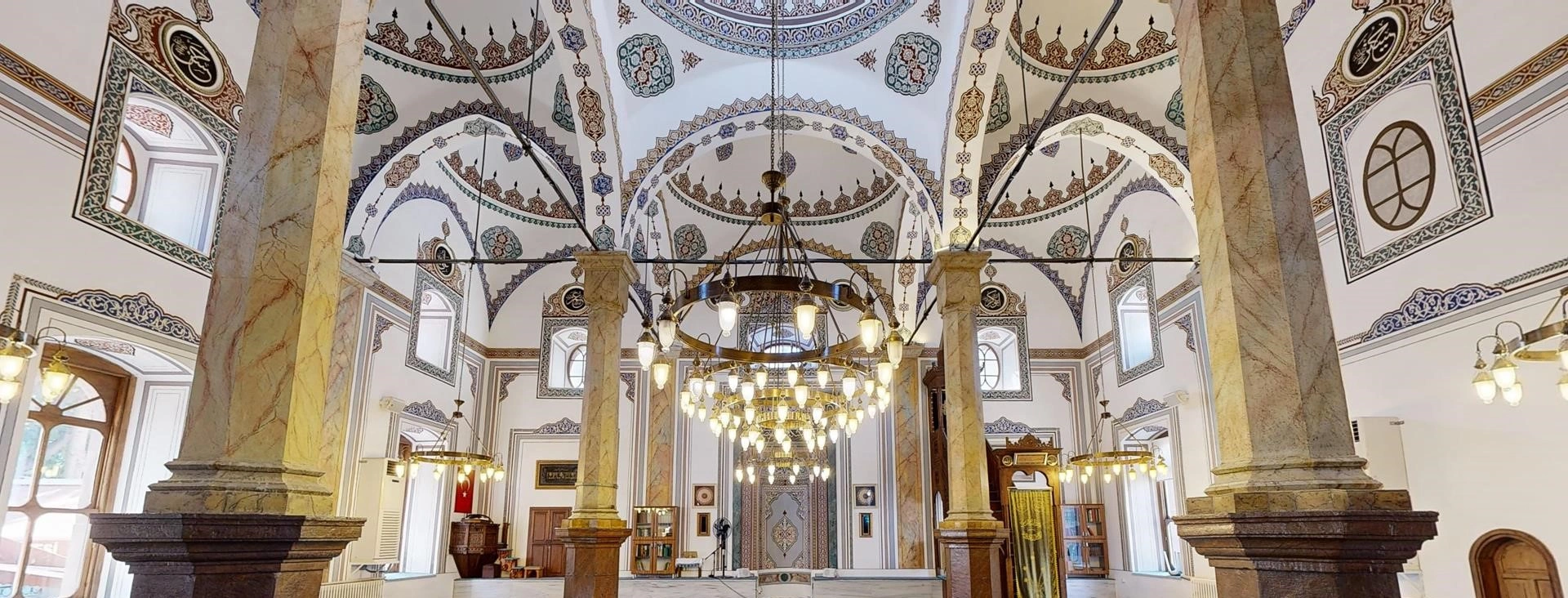
Compare Hamidiye Mosque with Söğüt’s historic Ulu Cami, whose foundation belongs to the reign of Mehmed I and whose visible form was also shaped by Abdülhamid II.
Explore Çelebi Mehmet Mosque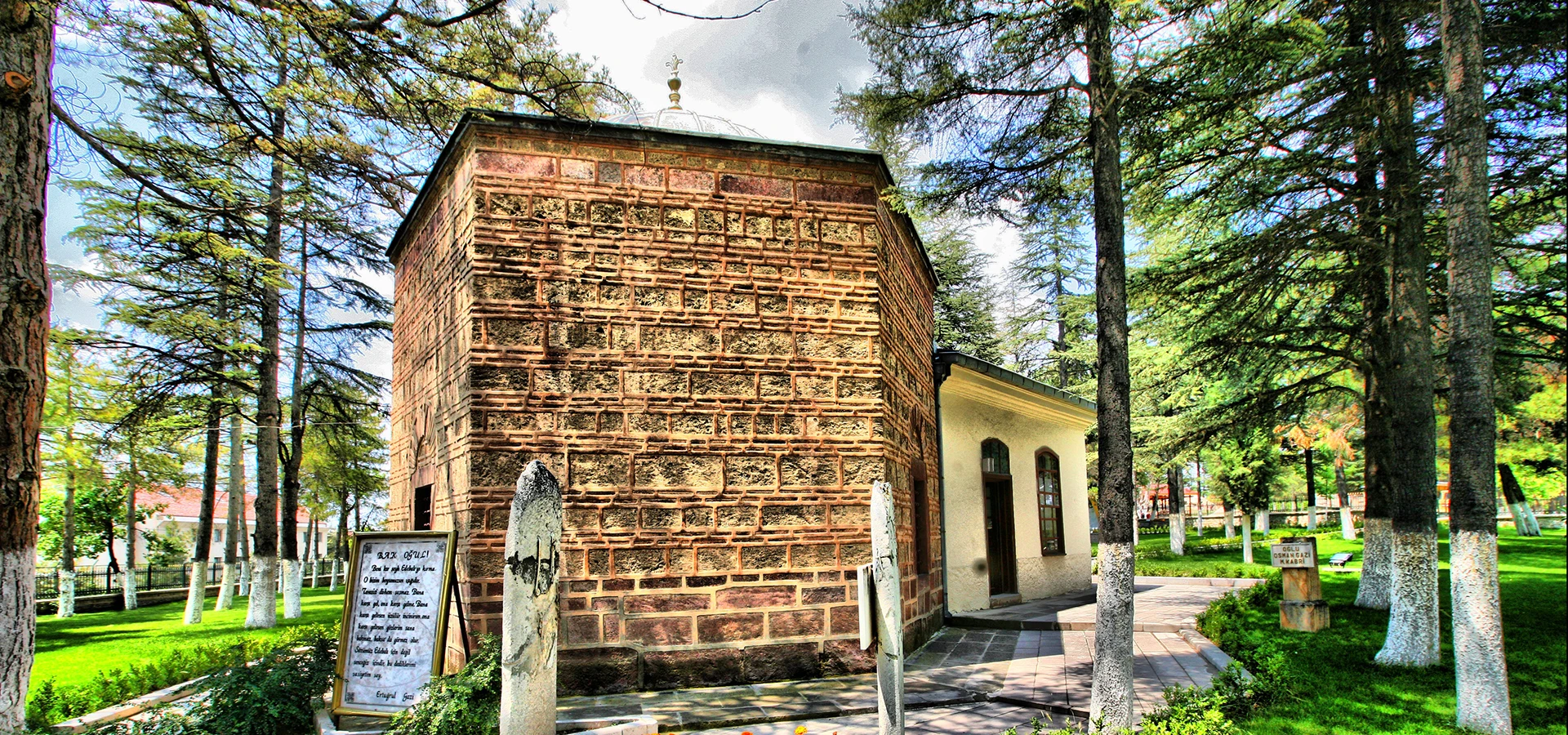
Continue to Söğüt’s principal memorial monument associated with Ertuğrul Gazi and the origins of the Ottoman dynasty.
Explore Ertuğrul Gazi Tomb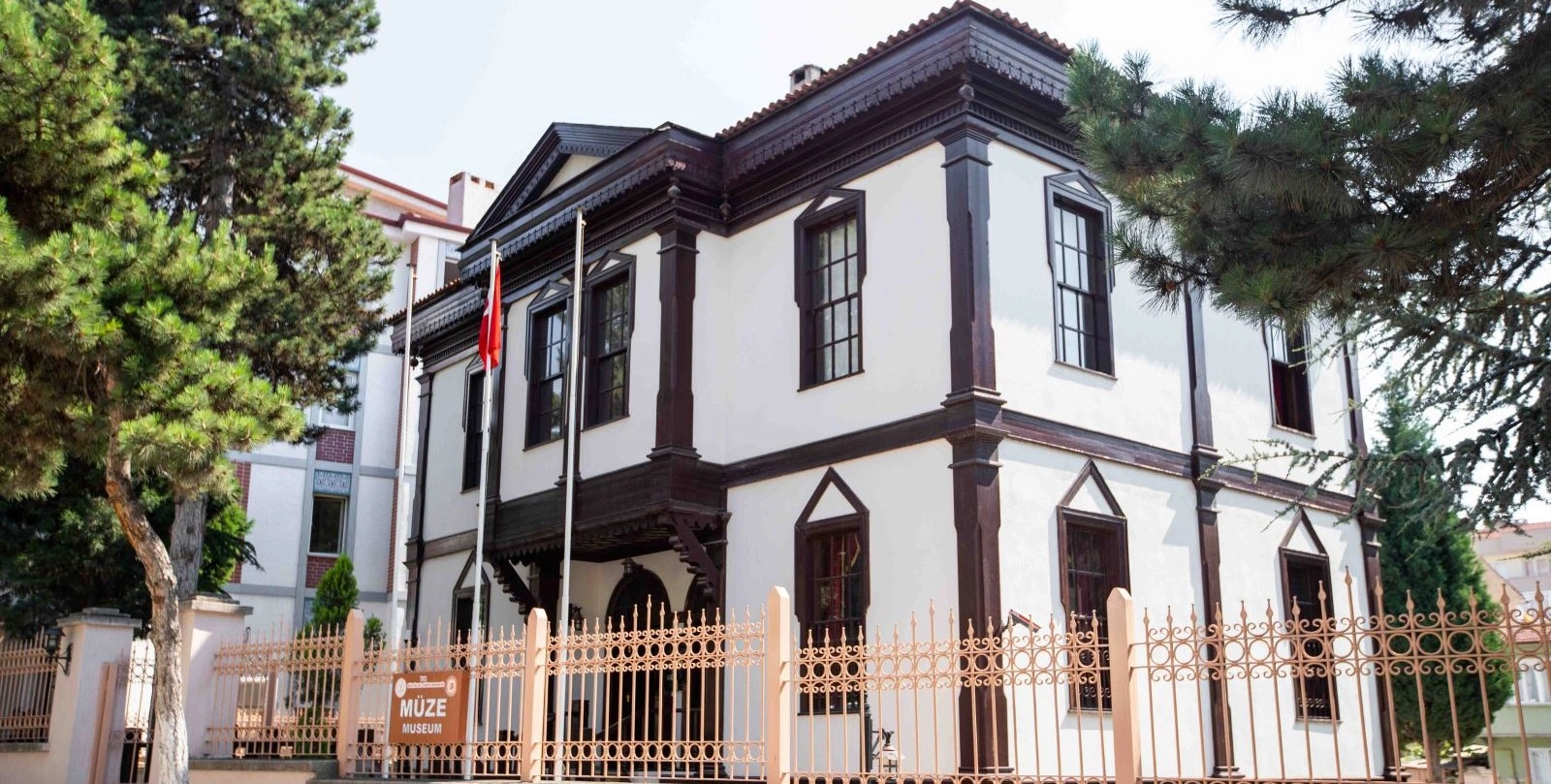
Explore ethnographic collections and the local identity of the town at the heart of the Ertuğrul Gazi story.
Explore Söğüt Museum