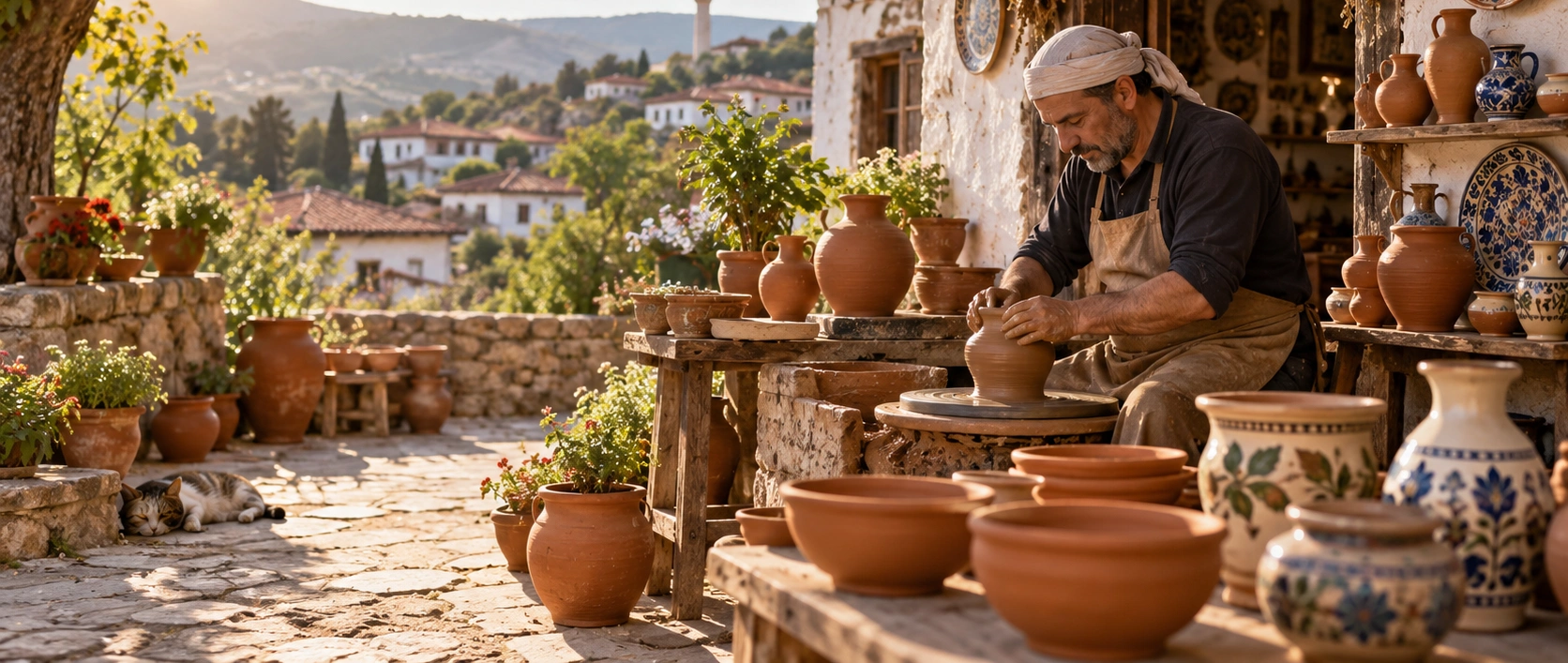
Private Kınık Pottery & Village Experience
Ask us about a tailor-made route combining Kınık’s pottery tradition, local workshops, Pazaryeri countryside and selected cultural and nature attractions.
Request a Custom Tour





Kınık Village, in the Pazaryeri district of Bilecik Province, is one of Türkiye’s distinctive traditional pottery centres. For more than a century, clay from the surrounding landscape has been shaped, fired and decorated in family workshops, creating a craft tradition closely connected with everyday village life.
The village is particularly known for Kınık pottery — Kınık Çömlekçiliği. Official cultural sources trace the development of the craft in Kınık to master potters who brought their knowledge from Bulgaria around the beginning of the twentieth century. The skills were subsequently passed from one generation to another, eventually becoming one of the village’s defining cultural traditions.
Kınık pottery is closely associated with locally available clay. After preparation and shaping, pieces can be decorated over cream or ivory-toned surfaces using colours such as beige, dark green, cobalt blue, navy, orange and brown. The resulting objects range from practical vessels to decorative ceramics.
Visitors can encounter small pottery workshops, terracotta vessels, traditional forms and the atmosphere of a working craft village. Depending on the workshop and the day, it may also be possible to watch craftspeople at work, purchase pottery directly from producers or learn more about the different stages of production.
Kınık is also easy to combine with the natural landscapes of Pazaryeri. A visit can be paired with Kınık Waterfall, Günyurdu Pond, Bozcaarmut Pond and other countryside destinations across Bilecik Province.
Kınık has maintained a pottery tradition extending for well over a century.
The village lies approximately 7 km from Pazaryeri district centre.
The surrounding clay deposits have played an important role in the craft’s development.
Kınık pottery continues a craft tradition passed between generations of village artisans.
Essential information for discovering the pottery workshops and traditional craft culture of Kınık near Pazaryeri.
Kınık Village, Pazaryeri district, Bilecik Province.
Open on Google MapsApproximately 7 km from the district centre.
Traditional pottery, ceramics and family craft workshops.
Pottery has been practised in Kınık for more than a century.
Clay deposits found around Kınık have historically supplied local pottery production.
Traditional pieces may use cream or ivory backgrounds with colourful painted decoration.
Jugs, pots, bowls, casseroles, vases, cups, planters and decorative ceramics.
Explore the village, visit workshops and observe pottery traditions where available.
Allow approximately 1–2 hours for a relaxed village and workshop visit.
Approx. 40.0108, 29.8283.
Kınık is not simply a place where pottery is sold — the craft forms part of the cultural identity and working history of the village.
What makes Kınık distinctive is the close relationship between landscape, raw material, craftsmanship and village life. Clay obtained from the surrounding area became the foundation for an industry that developed inside family courtyards and workshops.
For generations, pottery knowledge was transferred through practical experience. Children grew up around clay preparation, potter’s wheels, drying vessels and firing kilns, allowing specialised knowledge to remain rooted within the community.
The craft also evolved. Traditional vessels used for water, food storage and cooking were gradually joined by flowerpots, vases, decorative objects, tableware and souvenir pieces. Production techniques changed as electric wheels, presses and modern kilns became available, while hand-forming and hand-decoration remained important parts of the tradition.
For travelers, Kınık therefore offers something increasingly rare: the opportunity to experience a rural settlement whose identity is still visibly connected with a traditional craft. Pottery may appear in workshop yards, on shelves, beside houses and in displays throughout the village.
Kınık’s pottery tradition developed around the late nineteenth and early twentieth centuries. Cultural sources connect its beginnings with a master potter known as Şakir Usta or Şakir Ağa, who had migrated from Bulgaria and shared his pottery knowledge with local residents.
The village already possessed an important advantage: clay-rich soil suitable for ceramic production. Once pottery knowledge was introduced, the combination of local material and skilled labour allowed the craft to expand.
Production gradually became a significant part of the village economy. Workshops were traditionally established in courtyards and spaces associated with family homes, making pottery part of the physical appearance as well as the economic life of Kınık.
Historical sources record periods when dozens of workshops operated in the village. Workshop numbers and production methods have changed considerably over time, so visitors should not assume that every former pottery workshop remains active today.
The modern Kınık tradition developed through pottery knowledge brought from Bulgaria.
Clay deposits around the village provided suitable raw material for production.
Pottery developed within household and courtyard-based workshops.
Skills were traditionally transmitted through practical learning from experienced potters.
The development of pottery in Kınık was possible not only because of skilled craftspeople, but also because the surrounding land contains clay suitable for ceramic production.
Traditional descriptions explain that potters searched below the surface for the most suitable clay layers. The extracted material had to be cleaned, processed and prepared carefully before it could be placed on a wheel or otherwise shaped.
The quality of the clay became especially important when applying the cream or ivory-coloured background slips that became associated with decorated Kınık ceramics.
This connection between geology and craftsmanship is one of the most interesting aspects of Kınık. The objects seen in workshops are not simply manufactured goods: historically, they represent a transformation of the earth surrounding the village into functional and decorative objects.
Although individual workshops may use different equipment and techniques, traditional pottery production follows a sequence that begins with preparing the clay. Unwanted stones and other material must be removed before the clay reaches the consistency required for shaping.
The prepared clay is then formed. One of the most recognisable methods is the potter’s wheel, where the rotating clay is centred and gradually raised and shaped by the potter’s hands.
The newly formed vessel must then dry carefully. If moisture remains unevenly distributed, a pot can crack or deform during firing. Drying is therefore an essential stage rather than simply a waiting period.
After drying, the pottery is fired at high temperature. Depending on the intended design, pieces may also receive slip decoration, painted motifs or other surface treatments. Modern workshops can use electric or gas-fired kilns, while older production relied on more traditional firing systems.
One of the most recognisable characteristics of decorative Kınık ceramics is the use of light cream and ivory-coloured backgrounds combined with painted decoration.
Traditional descriptions mention colours including beige, dark green, navy, cobalt blue, orange and brown. The exact palette, motifs and degree of decoration vary between craftspeople and periods.
Decoration expanded the identity of Kınık pottery beyond purely functional household vessels. A clay object that once served primarily as a water container, cooking pot or storage vessel could also become a decorative object expressing local craftsmanship.
Visitors looking for locally distinctive souvenirs should therefore pay attention not only to shape, but also to surface treatment, brushwork, colour combinations and small differences created by hand production.
Light-toned surfaces provide a characteristic base for some decorated Kınık ceramics.
Deep blue is among the colours associated with traditional decorative work.
Beige, brown and orange naturally complement the warm tones of fired clay.
Minor differences in shape and decoration are part of the appeal of handmade pieces.
Kınık developed as a village of small-scale pottery workshops, many traditionally associated with family homes, gardens or courtyards.
A workshop visit can reveal far more than a finished souvenir. Visitors may see clay waiting to be shaped, potter’s wheels, fresh vessels, drying shelves, kilns and finished pieces ready for sale.
However, Kınık should not be approached like a conventional museum complex. Individual workshops are independent working spaces, and opening times, production schedules and visitor access can vary.
If watching a demonstration or trying pottery yourself is particularly important, advance arrangements are preferable rather than assuming a craft demonstration will always be available on arrival.
Among the best-known representatives of Kınık pottery was master potter Salim Yaşar, born in Kınık in 1942. He learned pottery from his father and devoted most of his life to the craft.
His work became important not only because of the pottery he produced, but because he helped teach, promote and transmit Kınık’s pottery knowledge to younger generations and audiences beyond the village.
In 2021, Salim Yaşar was selected within Türkiye’s Living Human Treasures programme in recognition of his mastery and contribution to preserving traditional pottery.
He died on 4 November 2025 at the age of 83. His story remains closely connected with Kınık’s cultural identity and illustrates how individual masters can play a central role in keeping an inherited craft alive.
Salim Yaşar was born in Kınık Village.
He learned pottery through the craft tradition of his family.
He was selected as a Living Human Treasure for pottery.
He died after a lifetime closely associated with Kınık pottery.
Kınık’s pottery tradition has also been celebrated through pottery festivals, workshops, exhibitions and demonstrations.
Official records document the Kınık Village Traditional Pottery Festival and describe events designed to promote the craft and bring ceramic artists, students, local residents and visitors together.
One particularly memorable event took place in 2012, when a pottery workshop associated with the festival produced an approximately 3-metre-high ceramic jar. The festival programme also included pottery exhibitions, craft displays and demonstrations.
Festival schedules can change from year to year. Travelers planning a journey specifically around an event should therefore confirm the current programme and dates locally before traveling.
Kınık workshops have produced a wide range of objects, from traditional household vessels to contemporary decorative ceramics.
Typical products can include jugs, water vessels, bowls, cooking pots, casseroles, cups, vases, flowerpots and decorative ceramics. Availability naturally depends on what individual workshops are producing at the time.
If you prefer handmade work, ask the craftsperson about how a piece was formed, decorated and fired. Some workshops may combine traditional hand-production with moulds, presses or more modern production methods.
Large pottery can be difficult to transport, so international travelers may find smaller bowls, cups, decorative vessels or compact pieces more practical as souvenirs.
Traditional earthenware forms remain closely connected with Anatolian food culture.
Classic vessel forms reflect the functional origins of village pottery.
Terracotta flowerpots are particularly attractive in village courtyards and gardens.
Painted pieces highlight the colour and visual character of Kınık craftsmanship.
Kınık offers unusually rich subjects for travelers interested in craft and documentary photography. Rows of drying vessels, potter’s hands working at a wheel, terracotta against white village walls and shelves filled with finished ceramics can all create compelling compositions.
The most meaningful images often focus on the relationship between people and craft rather than simply photographing finished products. Hands covered with clay, tools, old wheels, kilns and workshop interiors tell the story of the production process.
Always ask permission before photographing people, private courtyards or workshop interiors. Some craftspeople will be happy to be photographed, while others may prefer privacy.
For outdoor photographs, morning and late-afternoon light can give terracotta surfaces warmer colour and stronger texture.
Close-up photographs can reveal the skill involved in shaping spinning clay.
Rows of newly formed vessels create strong patterns and repetition.
Pottery displayed outside workshops connects the craft with the rural setting.
Respect craftspeople and private working spaces before photographing.
Kınık can be visited throughout much of the year, although weather, workshop activity and daylight can affect the experience.
Spring brings green countryside and comfortable conditions for combining the village with nearby nature attractions. Rainy periods can still produce wet or muddy rural areas.
Summer offers long daylight hours and is convenient for combining pottery workshops with Pazaryeri’s ponds, waterfalls and countryside. Midday can be warm, so morning visits are often more comfortable.
Autumn is especially attractive for photography, with softer light, harvest landscapes and changing colours around Pazaryeri.
Winter provides a quieter village atmosphere, but snow, frost and cold weather can affect local roads and workshop activity. Check conditions before traveling.
Kınık is a rural settlement belonging to the Pazaryeri district of Bilecik Province. The village lies approximately 7 km from Pazaryeri district centre.
Approximate navigation coordinates for the village centre are 40.0108, 29.8283. When using digital navigation, search for “Kınık Köyü, Pazaryeri, Bilecik”.
Kınık is a living village rather than a ticketed open-air museum. There is no reason to expect a single entrance gate, standardized attraction opening hours or every workshop to operate on identical schedules.
Bring suitable footwear, especially if you intend to combine the village with nearby countryside attractions. For emergency assistance in Türkiye, call 112.
Kınık’s appeal comes from the fact that it remains a real residential and working community. Homes, workshops, courtyards and village streets are part of daily life rather than a purpose-built tourist attraction.
Workshops and courtyards may be privately owned even when pottery is visible from outside.
Freshly shaped and drying pieces can be damaged with very little pressure.
Seek permission before photographing craftspeople or private interiors.
Buying directly from producers helps traditional workshops remain economically meaningful.
Working workshops can contain wheels, kilns, tools and fragile objects.
A craftsperson may be completing time-sensitive work and unable to stop for a demonstration.
Accessibility varies considerably because Kınık is a traditional village rather than a purpose-built visitor attraction.
Some streets can be approached by vehicle, but individual workshops may include steps, raised thresholds, narrow doorways, courtyard surfaces or uneven ground.
Wheelchair users and travelers with limited mobility should not assume that all pottery workshops have step-free entrances, accessible toilets or wide internal circulation areas.
If specific accessibility arrangements are essential, confirm the situation with the relevant workshop or local contact before traveling.
Kınık lies approximately 7 km from Pazaryeri district centre and is reached by local roads through the surrounding countryside.
The village lies along the broader route toward Küçükelmalı, making it convenient to combine the pottery workshops with nature destinations farther into the Pazaryeri countryside.
For navigation, search for “Kınık Köyü, Pazaryeri, Bilecik” or use approximately 40.0108, 29.8283 as a coordinate reference.
Private vehicle is the most flexible option, particularly if you intend to continue to Kınık Waterfall, Günyurdu Pond or other rural attractions.
Allow for a short countryside drive of approximately 7 km.
Search for Kınık Köyü, Pazaryeri, Bilecik.
The easiest option if combining several rural destinations in one day.
Check road conditions during periods of snow, frost or severe weather.
A quick visit of 45–60 minutes allows time for a short walk through the village and a look at pottery displays or an accessible workshop.
A more relaxed 1.5–2 hour visit is preferable if you want to explore several workshop areas, speak with craftspeople and shop for ceramics without rushing.
Allow a half day if a pottery demonstration or hands-on activity has been arranged or if you want to spend substantial time photographing the craft.
A full day can combine Kınık with Kınık Waterfall, Günyurdu Pond, Bozcaarmut Pond and other Pazaryeri countryside attractions.
A short village walk and one pottery stop.
Several workshops, shopping and relaxed photography.
Best when a pottery demonstration or craft experience has been arranged.
Combine Kınık with waterfalls, ponds and other Pazaryeri landscapes.
Begin with a slow walk through the village to notice how pottery appears naturally within the settlement. Look for terracotta vessels, workshop entrances, courtyard displays and shelves of finished pieces.
Continue to a pottery workshop where visitors are welcome. If production is underway, watch how the craftsperson controls the clay and how quickly a simple lump begins to develop into a recognisable vessel.
Take time to examine the differences between unfinished terracotta, functional pottery and decorated ceramics. Ask about production methods if the craftsperson has time to talk.
Before leaving, consider purchasing a locally produced object directly from a workshop. Then continue into the Pazaryeri countryside for a nature stop if daylight and weather allow.
Kınık works especially well as part of a craft and countryside itinerary through Pazaryeri. The village adds cultural heritage to a district otherwise particularly known for forests, ponds and rural landscapes.
Combine the pottery village with forest, rock formations and flowing water in the countryside around Kınık.
Discover reservoir scenery, birdlife and the unusual landscape connected with old Günyurdu village.
Explore pine-framed water, forest reflections and one of Pazaryeri’s most peaceful reservoir landscapes.
Continue through the district to a popular waterside recreation landscape surrounded by greenery.
Visit another popular Bilecik waterside destination near the provincial centre.
Discover Ottoman heritage, traditional villages, museums, waterfalls and landscapes throughout Bilecik Province.
Many visitors come to Pazaryeri primarily for its ponds, forests, waterfalls and rural scenery. Kınık adds an important cultural dimension to that landscape.
Instead of spending an entire day visiting only nature sites, travelers can begin with the human story of clay and craftsmanship before continuing into the surrounding countryside.
A particularly natural combination is Kınık Village and Kınık Waterfall, followed by one of the district’s reservoirs or recreation areas.
This mixture of craft heritage and nature makes Pazaryeri suitable for slow, small-scale itineraries that allow time for conversation, photography and locally rooted experiences.
When possible, purchase directly from the craftspeople who produce the pottery.
Do not enter homes, courtyards or workshops unless visitors are welcomed.
Always request permission before photographing craftspeople closely.
Fresh pottery can collapse or deform with a single touch.
Learning the story behind an object gives traditional pottery greater meaning.
Handmade work represents material, fuel, time, skill and many years of experience.
Take bottles, packaging and other rubbish with you.
Village streets are shared by residents, children, animals and agricultural traffic.
Kınık is a village in the Pazaryeri district of Bilecik Province in northwestern Türkiye.
The village is approximately 7 km from Pazaryeri district centre.
Kınık is particularly famous for traditional pottery and ceramics, a craft that has been practised in the village for more than a century.
The tradition is commonly referred to as Kınık Çömlekçiliği.
Official cultural sources describe a tradition extending for approximately 120 years or more, with its modern development beginning around the turn of the twentieth century.
The craft is associated with Şakir Usta or Şakir Ağa, a potter who migrated from Bulgaria and shared his ceramic knowledge with the village.
Yes. The clay deposits around Kınık played an important role in allowing pottery production to develop into a major village craft.
Traditional descriptions mention cream or ivory backgrounds with colours including beige, dark green, navy, cobalt blue, orange and brown.
Products have included jugs, water vessels, bowls, pots, casseroles, cups, vases, planters and decorative ceramics.
Some workshops may welcome visitors, but these are independent working spaces. Access and opening times can vary, so a specific workshop visit or demonstration is best arranged in advance.
It may be possible when a workshop is actively producing pottery and the craftsperson is able to receive visitors. A demonstration should not be assumed without prior arrangement.
Hands-on experiences may occasionally be available through workshops or organized activities, but they should be confirmed in advance.
Yes. Pottery and ceramic products can be purchased from participating local producers when workshops or sales displays are open.
Production methods vary. Traditional hand and wheel work continues, while some workshops have also used moulds, presses, electric wheels and modern kilns. Ask the producer if the production method is important to you.
Salim Yaşar was one of Kınık’s best-known master potters. He was selected as a Living Human Treasure in 2021 for his contribution to traditional pottery.
No. The master potter, who was born in Kınık in 1942, died on 4 November 2025. His legacy remains an important part of the village’s pottery history.
Kınık has hosted a Traditional Pottery Festival and other craft events. Because schedules can change, confirm current festival dates before planning a trip specifically around the event.
During pottery activities in 2012, a single-piece ceramic jar approximately 3 metres high was produced as part of the village’s pottery celebrations.
Allow approximately 1–2 hours for a relaxed visit. More time is useful if a pottery demonstration or workshop activity has been arranged.
Yes, particularly for children interested in crafts. However, children should be supervised closely around kilns, tools, potter’s wheels and fragile ceramics.
Village streets may allow relatively easy sightseeing in some areas, but individual workshops can have steps, thresholds and uneven surfaces. Full step-free access should not be assumed.
Kınık is a living village rather than a single ticketed attraction. Individual workshops, demonstrations or organized experiences may have their own arrangements.
Search for “Kınık Köyü, Pazaryeri, Bilecik” or use approximately 40.0108, 29.8283.
Combine the village with Kınık Waterfall, Günyurdu Pond, Bozcaarmut Pond, Küçükelmalı and other Pazaryeri countryside attractions.
It is especially rewarding for travelers interested in traditional crafts, ceramics, rural culture, photography and locally rooted experiences.
Combine Kınık’s pottery heritage with Pazaryeri countryside, waterfalls, forest landscapes and selected historical attractions through a private itinerary designed around your interests and pace.
Enjoy a tailor-made day combining traditional pottery, village culture, local craftsmanship and selected nature attractions around Pazaryeri.
Ask us about a tailor-made route combining Kınık’s pottery tradition, local workshops, Pazaryeri countryside and selected cultural and nature attractions.
Request a Custom Tour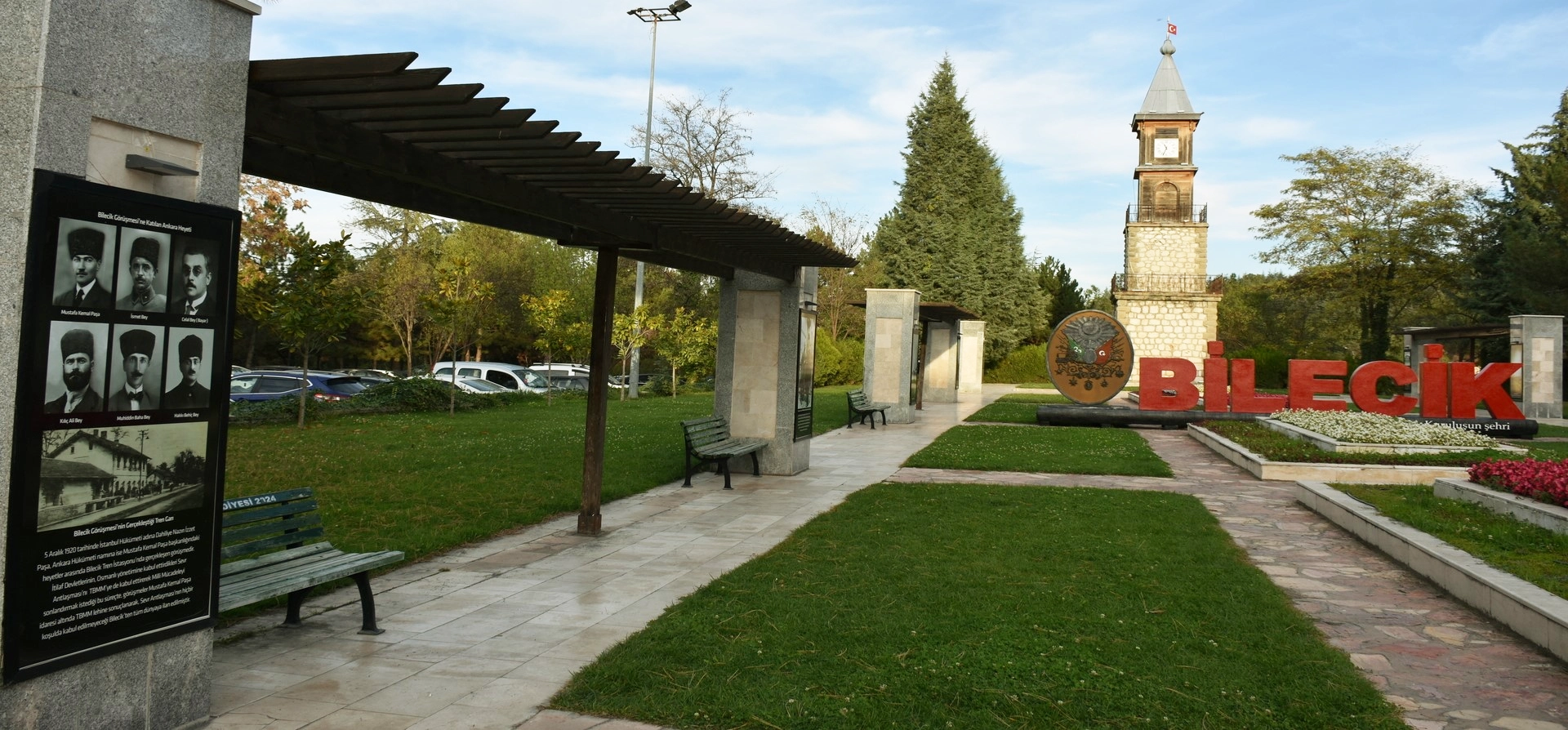
Discover Ottoman foundation history, traditional crafts, historic towns, forests, ponds and waterfalls throughout Bilecik Province.
View Bilecik GuidePair Kınık’s living craft heritage with waterfalls, forest reservoirs and peaceful countryside landscapes.
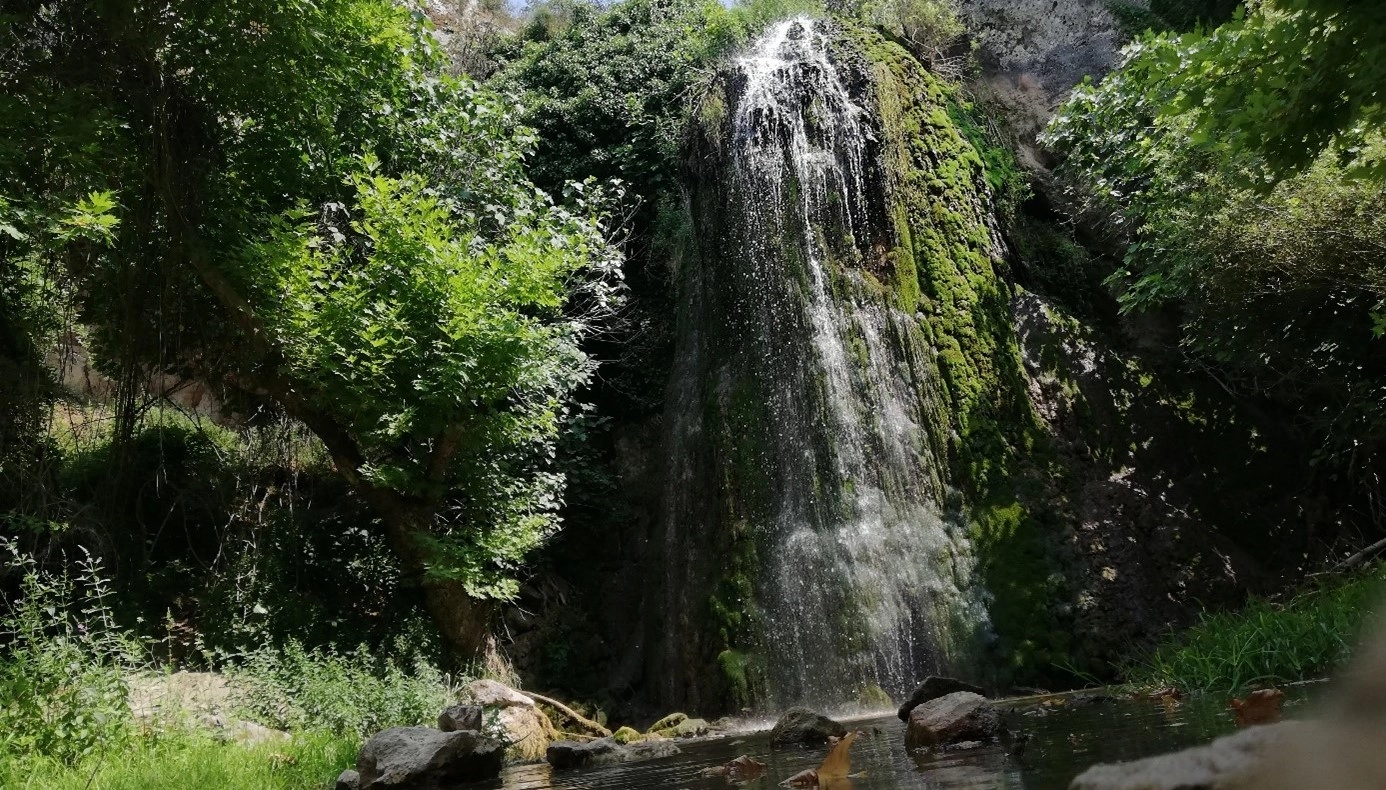
Continue from the pottery village into a contrasting landscape of forest, rock formations and flowing water.
Explore Kınık Waterfall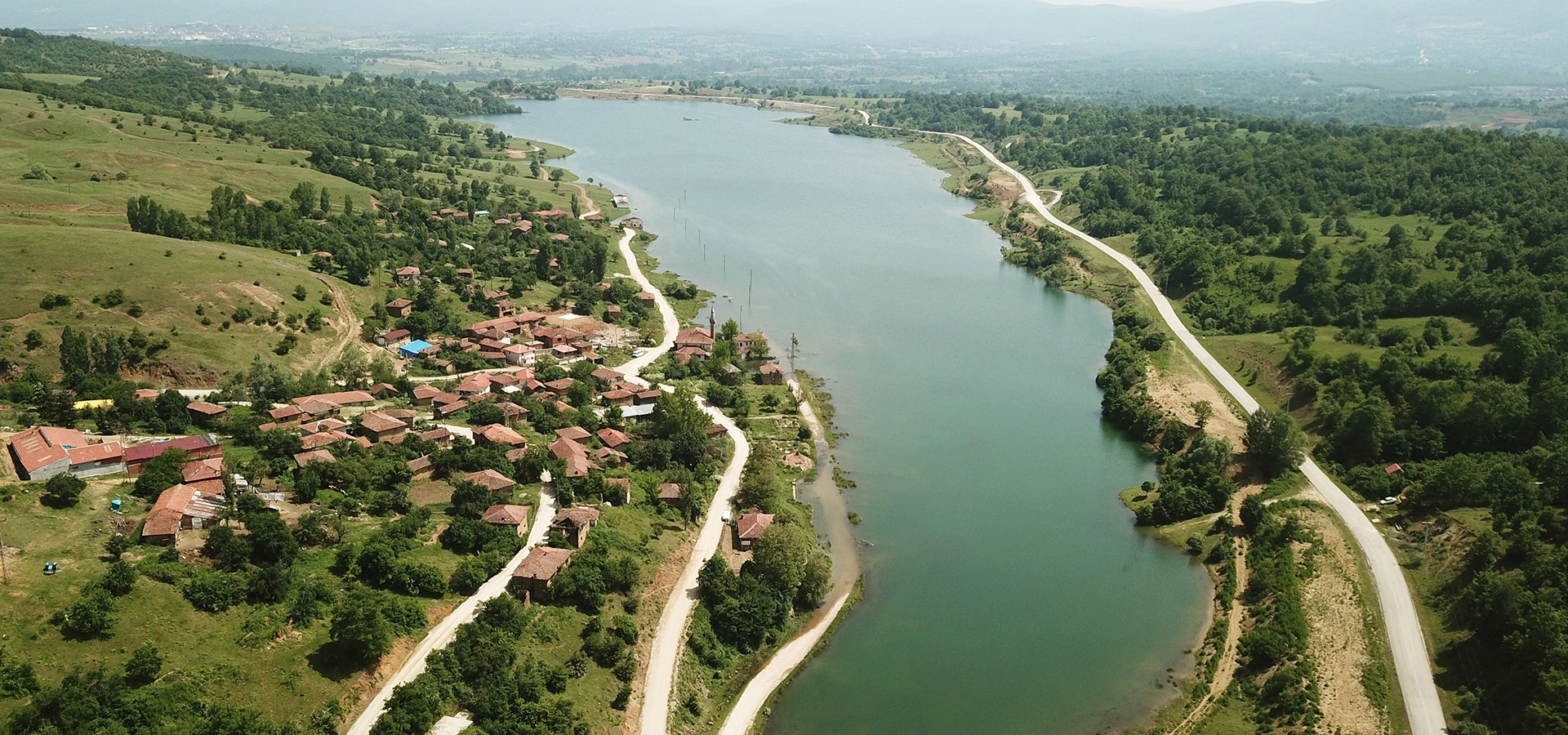
Discover reservoir scenery, birdlife, open countryside and the unusual story of the former Günyurdu village landscape.
Explore Günyurdu Pond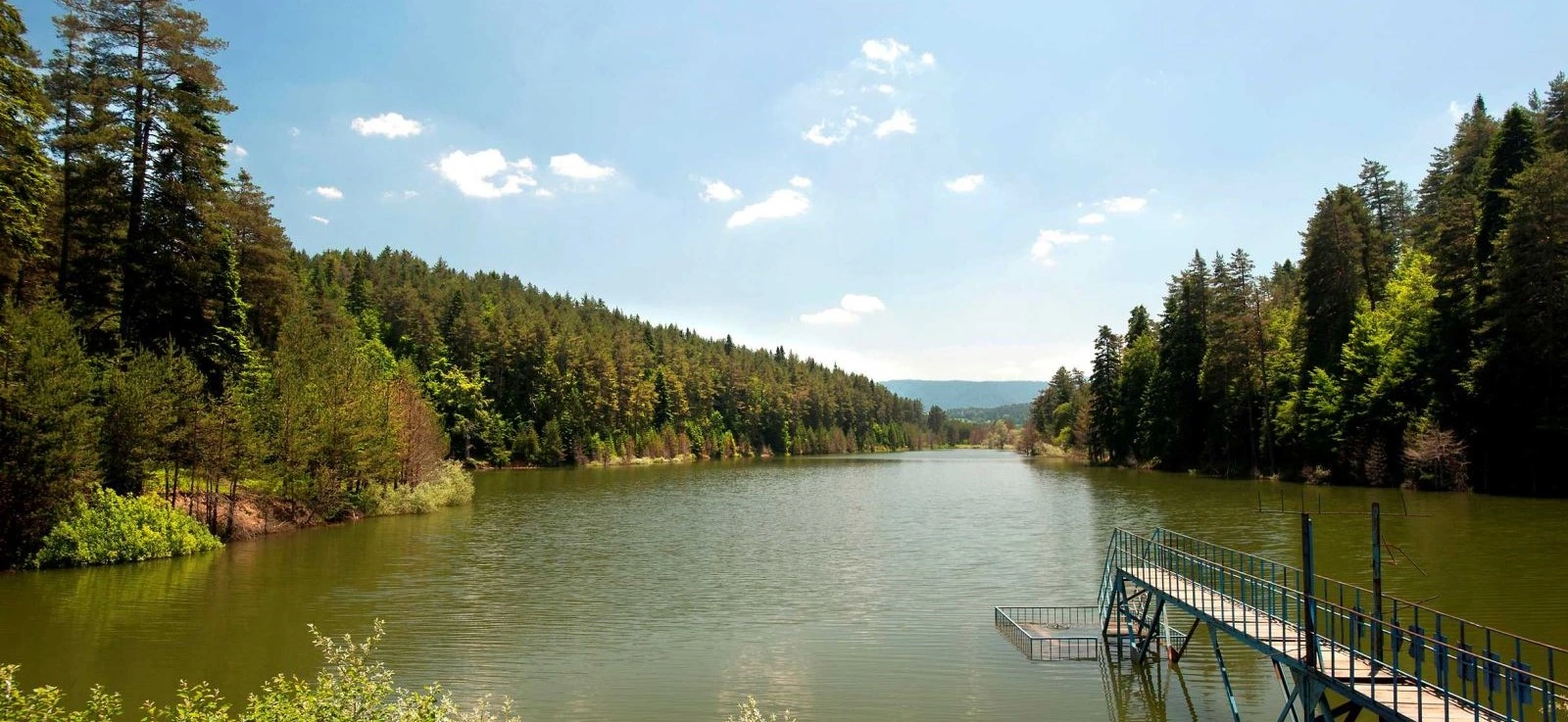
Finish the day among pine-framed water, forest reflections and one of Pazaryeri’s quietest reservoir landscapes.
Explore Bozcaarmut Pond