Private Hersek Lagoon & Birdwatching Experience
Ask us about a tailor-made excursion combining Hersek Lagoon, birdwatching, wetland photography, historic Hersek and selected natural and cultural places across Yalova Province.
Request a Custom Tour



Hersek Lagoon, known in Turkish as Hersek Lagünü, is one of the most important wetland environments on the southern coast of the Sea of Marmara. It lies in Altınova district in eastern Yalova Province, close to the Hersek Peninsula and the southern approach to the Osmangazi Bridge.
Although relatively compact, the lagoon supports an extraordinary concentration of birdlife. Official nature-conservation information records 255 bird species from the wetland, including resident birds, winter visitors, summer migrants, breeding species and birds passing through during migration.
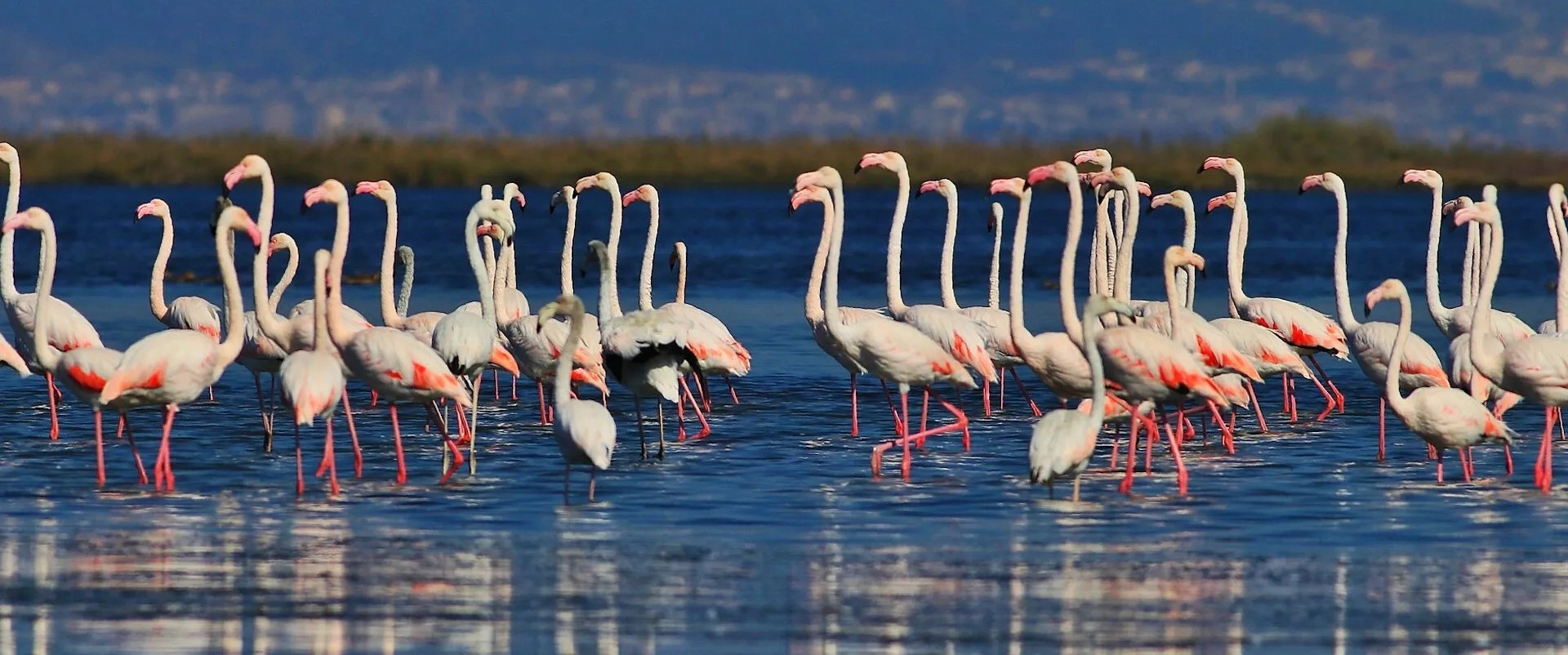
Hersek is especially famous for its flamingos, which can gather here in significant numbers during the colder months. Ducks, grebes, gulls, terns, waders, herons and birds of prey can also be observed depending on the season.
The lagoon is officially protected as a Mahalli Öneme Haiz Sulak Alan, or Wetland of Local Importance, and today includes a nature education centre, accessible bird-observation tower, walking areas and visitor facilities designed to introduce the wetland without disturbing its wildlife.
Official nature-conservation records list 255 bird species observed at Hersek Lagoon.
The officially designated Wetland of Local Importance covers approximately 167 hectares.
Hersek Lagoon was officially registered as a Wetland of Local Importance on 23 February 2016.
The accessible observation tower rises approximately 22 metres above the wetland landscape.
Essential information for discovering one of the Marmara Region’s richest birdwatching wetlands.
Hersek, Altınova district, Yalova Province.
Search on Google Maps255 bird species are recorded by official nature-conservation authorities.
Approximately 167 hectares within the official protected wetland designation.
Registered as a Wetland of Local Importance since February 2016.
A six-level, approximately 22-metre tower overlooking the lagoon.
The observation tower has an elevator and was designed for accessible birdwatching.
Winter is particularly important for concentrations of waterbirds and flamingos.
The lagoon lies on an important seasonal migration corridor between Europe and Africa.
Birdwatching, wildlife photography, nature education and quiet wetland scenery.
Shallow lagoon water, shoreline, marsh vegetation and surrounding terrestrial habitats.
Its importance comes not from enormous size, but from the concentration and diversity of wildlife it supports.
Hersek Lagoon is one of the clearest examples of why small coastal wetlands can have enormous ecological value. The protected area covers only a limited section of the Marmara shoreline, yet it provides feeding, resting, wintering and breeding habitat for a remarkably broad range of bird species.
Official monitoring has recorded 255 bird species at Hersek. That represents a very significant proportion of the bird species known from Türkiye and makes the lagoon one of Yalova’s most important biodiversity sites.
The wetland becomes particularly active during winter. In the official 2024 Midwinter Waterbird Census, 32 species and 10,297 individual birds were counted in the area.
The lagoon is also important during migration. Every spring and autumn, birds moving between Europe, Anatolia, the Balkans, the Caucasus, the Middle East and Africa pass through the wider Marmara region. Some stop at Hersek to rest and feed, while others continue their journey overhead.
This combination of wintering habitat, breeding habitat and migration stopover explains why Hersek has become known locally as a “Kuş Oteli” – Bird Hotel.
Hersek Lagoon is located in Altınova district in the eastern part of Yalova Province. It lies beside the Hersek Peninsula on the southern coast of the Sea of Marmara.
The wetland is approximately 27 km from Yalova city according to official nature-conservation information. Its position near Altınova also places it close to major road connections between Yalova, Kocaeli, Istanbul and Bursa.
The lagoon is separated from the Marmara Sea by a narrow coastal strip. Its shallow water, shoreline vegetation and surrounding terrestrial habitats together create the ecological conditions required by many different bird species.
The landscape is particularly striking because an important wetland survives here despite being close to modern transport infrastructure, coastal settlement and one of the Marmara Region’s busiest transportation corridors.
A lagoon is a shallow body of coastal water separated from the open sea by sand, sediment or a narrow coastal barrier.
Hersek Lagoon is separated from the Sea of Marmara by a thin coastal strip, creating calmer and shallower conditions than the open sea. These conditions encourage the development of wetland vegetation, aquatic organisms and feeding areas used by waterbirds.
Water reaches the lagoon through several processes. Official information identifies storm-driven seawater, rainfall, surface runoff and drainage from surrounding land among the sources influencing the lagoon.
Water depth, salinity, temperature and underwater biological diversity all affect which species can use the lagoon at different times of year.
These constantly changing conditions explain why Hersek should be understood as a living ecosystem rather than simply a scenic lake.
Hersek Lagoon was officially registered on 23 February 2016 as a Mahalli Öneme Haiz Sulak Alan, which can be translated as a Wetland of Local Importance.
The designation recognizes the lagoon’s ecological importance, bird diversity and natural character. Management and conservation activities are carried out within the framework of Türkiye’s Wetlands Protection Regulation.
Current official nature-conservation information gives the protected wetland area as approximately 167 hectares.
Older descriptions sometimes refer to a 152-hectare lagoon surface or approximately 200 hectares when surrounding natural habitats are included. These numbers describe different boundaries and should not be treated as contradictory measurements of exactly the same area.
Birdlife is the main reason Hersek Lagoon has become one of Yalova’s most important nature destinations. Official records currently list 255 bird species observed within the wetland and its surrounding habitats.
The species mix changes throughout the year. Some birds remain in the region, some arrive to spend the winter, others appear during the breeding season, and many use the Marmara corridor only during spring and autumn migration.
The lagoon can support ducks, grebes, cormorants, herons, gulls, terns, waders, flamingos and occasional birds of prey. Smaller passerines can also be found in the vegetation and terrestrial habitats around the water.
Because bird occurrence changes continuously, visitors should never expect to see every famous species during a single visit. Birdwatching is most rewarding when approached as an opportunity to discover whatever the wetland is supporting that particular day.
Ducks, grebes, cormorants and other waterbirds use the lagoon for feeding and resting.
Shallow edges provide feeding habitat for several species of shorebird.
The coastal strip supports several important breeding and visiting species.
Migrating birds of prey can sometimes be observed passing over the wider area.
For many visitors, greater flamingos are the birds most closely associated with Hersek Lagoon.
The shallow water creates suitable feeding conditions, and groups of flamingos can use the wetland particularly during the autumn and winter period.
From a distance, their pale bodies, pink wings and long legs can form striking lines across the lagoon, especially when dozens of birds feed together in calm water.
Official conservation information identifies Hersek as an important winter staging and resting location for flamingos in the Marmara Region.
Flamingo numbers vary considerably. Weather, water conditions, food availability and regional bird movements all influence how many are present on any particular day.
Hersek is not only a winter refuge. It is also an important breeding area during spring and summer.
Municipal bird-monitoring work has recorded close to 50 species breeding within the lagoon and surrounding habitats during the warmer months.
Particularly sensitive breeding areas occur along the coastal strip between the lagoon and the sea. Species recorded breeding in this wider zone include terns, Mediterranean gull, oystercatcher, little ringed plover and other wetland birds.
Breeding season is one of the periods when responsible visitor behaviour becomes especially important. Birds may abandon nests or chicks if people repeatedly approach too closely.
Remain within designated visitor areas, avoid entering shoreline nesting zones and always follow instructions from staff or nature-conservation authorities.
Hersek Lagoon lies within one of the world’s great geographical crossroads. The Marmara Region connects Europe and Asia and forms part of wider migration routes used by enormous numbers of birds travelling between northern breeding grounds and southern wintering areas.
During spring migration, birds move north toward breeding territories. During autumn migration, the movement reverses as many species travel toward the Mediterranean, Middle East and Africa.
Wetlands such as Hersek function like service stations along these journeys. Birds can stop to rest, feed and recover energy before continuing.
Storks, raptors and other soaring birds may also pass through the wider region, using rising columns of warm air known as thermals to reduce the energy required during long-distance migration.
One of the most distinctive visitor facilities at Hersek Lagoon is its bird observation tower.
Current official information describes the structure as a six-level steel tower approximately 22 metres high. Its height provides elevated views across the lagoon, allowing visitors to observe birds without approaching sensitive sections of shoreline.
The tower is equipped with an elevator system, making different observation levels accessible to visitors with reduced mobility. Official conservation authorities describe it as Türkiye’s first fully accessible bird-observation tower of its kind.
Elevated observation is especially valuable at Hersek because the lagoon is relatively open. From higher levels, visitors can scan the water surface, muddy edges, reed areas and coastal strip for different groups of birds.
Current official information gives the tower height as approximately 22 metres.
Multiple observation levels provide changing perspectives over the wetland.
The tower includes an elevator to support accessible birdwatching.
Use the elevated position to scan different sections of the lagoon with binoculars.
The birdwatching area includes a Nature Education and Visitor Centre created to help visitors understand the lagoon, its habitats and the birds that depend on them.
Educational facilities are particularly useful for school groups, families and visitors who have little previous birdwatching experience. Learning how different birds feed, migrate and breed can transform what initially looks like a simple body of water into a much more interesting landscape.
Current facilities within the wider protected area also include visitor buildings, a bird introduction facility, administrative areas, walking spaces and facilities connected with wildlife management and education.
Because operating hours and individual facilities can change, especially between seasons, visitors should check current information shortly before travelling.
A Medicinal and Aromatic Plants Garden has also been developed beside the wider Hersek nature complex.
Official conservation information describes the garden as covering approximately 3.06 hectares and containing a broad collection of trees, shrubs, climbers and ground-cover plants.
The wider complex includes walking routes and facilities connected with plant education and research, helping broaden the Hersek experience beyond birdwatching alone.
This makes the lagoon particularly suitable for families or mixed-interest groups: one visitor may focus on birds and photography, while another enjoys plants, walking and the wider coastal landscape.
You do not need to be an expert ornithologist to enjoy Hersek Lagoon. Even beginners can quickly begin separating birds into broad groups by looking at size, shape, colour, feeding behaviour and flight pattern.
A pair of binoculars makes an enormous difference. Many birds remain well away from visitor areas, and observing them from a respectful distance is better both for the birds and for the quality of the experience.
Move slowly, keep conversations quiet and spend time watching one part of the lagoon rather than constantly walking. Birds that were initially hidden often become visible after several minutes.
Experienced birdwatchers may also want a field guide, camera, spotting scope or bird-identification application.
Even compact binoculars will reveal much more detail across the lagoon.
Search the water, shoreline and sky systematically instead of looking only at obvious flocks.
Calls often reveal hidden birds before they become visible.
Lower noise levels reduce disturbance and usually improve wildlife observations.
Hersek Lagoon can be one of Yalova’s most rewarding locations for wildlife and nature photography.
Flamingos naturally attract attention, but photographers should also look for terns in flight, ducks on calm water, waders along shallow edges, silhouettes against the sky and reflections when wind conditions are light.
Early morning and late afternoon generally provide softer light. Cloudy weather can also be excellent for bird photography because strong highlights on pale plumage become easier to control.
A telephoto lens is particularly useful. Long focal lengths allow photographers to create detailed images while remaining far enough away to avoid disturbing the birds.
Never leave designated visitor areas, approach nests or attempt to make a bird fly simply to obtain a photograph. The wellbeing of the wildlife always comes before the image.
Look for groups feeding in shallow water during the cooler months.
Terns, gulls, raptors and migrating birds provide opportunities for action photography.
Calm water can create minimalist compositions with isolated birds and mirrored silhouettes.
Include water, coastal vegetation, sky and distant Marmara scenery for wider environmental images.
There is no single correct season for Hersek Lagoon. The best time depends on whether you want wintering waterbirds, migration, breeding activity or general nature photography.
Winter is particularly important. Official conservation information identifies it as the season when bird abundance is highest, and flamingos are among the species that can be particularly conspicuous.
Spring brings northbound migration and increasing breeding activity. It is an exciting period because new species can appear from one week to the next.
Summer offers opportunities to observe breeding birds and the lagoon’s warm-season ecology. Visitors should take extra care not to disturb nesting areas.
Autumn brings another major migration period, followed gradually by the arrival of wintering waterbirds.
Bird activity varies by species, weather and season, but early morning is often an excellent time for wildlife observation.
The air is cooler, visitor activity is usually lower and many birds are actively feeding. Morning light can also work particularly well for photography.
Late afternoon is another attractive period, especially when low sunlight illuminates flamingos, reeds and open water.
Midday can still be worthwhile, particularly in winter, but bright sun, heat shimmer and stronger wind can sometimes make distant observation and photography more difficult.
Accessibility is one of the most notable features of the modern visitor infrastructure at Hersek Lagoon.
The main observation tower includes an elevator system, allowing visitors with limited mobility to reach its observation levels without relying exclusively on stairs.
Official nature-conservation information also states that walking routes and facilities around both the Nature Education and Bird Observation Area and the Medicinal and Aromatic Plants Garden have been designed with accessibility in mind.
Nevertheless, outdoor surfaces, temporary maintenance and weather conditions can still affect individual routes. Visitors with specific mobility requirements may wish to confirm current access before travelling.
Hersek Lagoon can be an excellent introduction to nature for families. Children can learn that a wetland is not simply an empty stretch of water, but a complex ecosystem filled with birds, plants, fish, insects and seasonal natural cycles.
The observation tower makes birdwatching more exciting, while the nature education facilities can help younger visitors understand migration, habitats and conservation.
Bring binoculars if possible and encourage children to search for different bird shapes and colours rather than trying to memorize species names.
Children should remain with adults around water, elevated structures and wildlife-sensitive areas. Running toward birds or attempting to feed them should be avoided.
Allow approximately 1 hour for a simple visit focused on the observation tower and a first look across the lagoon.
Allow around 1.5–2.5 hours if you want to spend time birdwatching, taking photographs and exploring the visitor facilities at a relaxed pace.
Dedicated birdwatchers may easily spend half a day at Hersek, particularly during migration or winter when large numbers of birds are present.
A longer excursion can combine the lagoon with Hersek’s Ottoman heritage, Altınova and other attractions elsewhere in Yalova Province.
Observation tower and a general introduction to the lagoon.
Birdwatching, photography and visitor facilities at a relaxed pace.
A slower wildlife visit, particularly rewarding during migration and winter.
Combine Hersek Lagoon with historic Hersek, Altınova and additional Yalova attractions.
The most useful item for identifying birds while keeping a respectful distance.
A telephoto lens is useful for wildlife without approaching sensitive areas.
Bring drinking water, particularly during warm weather.
Open wetland landscapes can have limited shade and strong reflected sunlight.
The exposed Marmara shoreline can become breezy even on otherwise mild days.
A field guide or identification app can make a beginner birdwatching visit much more rewarding.
A successful bird sanctuary depends not only on legal protection, but also on the behaviour of every visitor.
Use binoculars and telephoto lenses instead of walking closer to birds.
Nesting birds can abandon eggs or chicks when repeatedly disturbed.
Do not enter sensitive shoreline, reed or breeding habitats.
Quiet observation protects wildlife and improves your own chance of seeing more species.
Human food can alter natural behaviour and may be harmful to wildlife.
Plastic, fishing line and other waste can be dangerous to wetland birds.
Spring and summer require particular care around shoreline nesting areas.
Temporary restrictions may be introduced to protect wildlife or maintain visitor facilities.
Hersek Lagoon lies in Altınova district on the eastern side of Yalova Province. Official nature-conservation information places it approximately 27 km from Yalova city.
From central Yalova, follow the main coastal transportation corridor east toward Altınova and then continue toward Hersek and the lagoon visitor area.
The location is also convenient for travellers arriving from Kocaeli and Istanbul or travelling between the northern and southern sides of the Marmara Region.
The Osmangazi Bridge is one of the most recognizable landmarks in the wider Hersek landscape, although the bird sanctuary itself should be approached using current local navigation.
A private car, taxi or arranged transfer normally gives the greatest flexibility, particularly if you intend to combine Hersek Lagoon with other places in Yalova.
Travel east toward Altınova and continue to the Hersek Lagoon visitor area.
Approach Altınova from the eastern Marmara coast and follow local directions toward Hersek.
The Osmangazi Bridge corridor provides rapid road access toward Altınova from the northern Marmara side.
Search for Hersek Lagünü or Hersek Lagoon Bird Observation Area using current navigation.
Begin at the Nature Education and Bird Observation Area and spend a little time learning about the wetland before concentrating on individual bird species.
Continue to the observation tower. Use binoculars to scan different sections of the water, shoreline and coastal strip rather than focusing only on the largest flock.
Allow additional time around the nature facilities and Medicinal and Aromatic Plants Garden if they are open during your visit.
After birdwatching, continue into the wider Hersek area, where the landscape also contains important Ottoman and archaeological heritage.
The historic Hersekzade Ahmed Pasha Mosque is one of the principal cultural landmarks nearby and provides a completely different perspective on the history of the peninsula.
Hersek Lagoon works particularly well as part of a route combining birdlife, Marmara scenery, Ottoman heritage and Yalova’s coastal attractions.
Discover one of Altınova’s most important surviving Ottoman monuments in historic Hersek.
Explore a peninsula associated with Ottoman heritage and ongoing archaeological research.
Continue through Yalova’s eastern district and its Marmara shoreline.
Visit Yalova’s famous Atatürk mansion beside the Sea of Marmara.
Combine nature with the historic thermal waters and spa heritage of Termal.
Discover early Republican history among the gardens and forests of Termal.
Add one of Yalova’s best-known forest waterfalls to a longer nature itinerary.
Discover more wetlands, forests, waterfalls, beaches, thermal springs and cultural attractions.
Hersek Lagoon is in Altınova district of Yalova Province, on the southern shore of the Sea of Marmara.
Official nature-conservation information places Hersek Lagoon approximately 27 km from Yalova city.
The officially designated protected wetland covers approximately 167 hectares. Older visitor information may use different figures for the lagoon water surface or the wider natural area.
Yes. It has been officially registered as a Wetland of Local Importance since 23 February 2016.
Current official conservation information records 255 bird species.
Yes. Flamingos regularly use Hersek Lagoon, particularly during the colder months, although wild-bird numbers vary from day to day.
Autumn and winter are generally the most promising periods, with winter particularly important for concentrations of waterbirds.
Winter is excellent for waterbirds, while spring and autumn provide opportunities to observe migration. Spring and summer are important for breeding birds.
Yes. Current official information describes a six-level observation tower approximately 22 metres high.
Yes. The tower has an elevator system designed to allow visitors with limited mobility to reach the observation levels.
They are not essential, but binoculars make birdwatching considerably more rewarding because many birds remain far from the visitor areas.
Yes. The lagoon offers opportunities to photograph flamingos, waterbirds, birds in flight, reflections and wider wetland landscapes.
Do not assume drone use is permitted. Drones can seriously disturb birds, especially during breeding and wintering periods. Check current aviation and protected-area regulations before any flight.
Yes. The lagoon, observation facilities and nature-education setting make Hersek particularly suitable for families interested in wildlife.
Yes. The Hersek complex includes facilities designed to introduce visitors to the lagoon and its birdlife.
Yes. The wider visitor complex includes a Medicinal and Aromatic Plants Garden and Hersek itself has important Ottoman and archaeological heritage.
Allow around 1.5–2.5 hours for a relaxed first visit, or longer if you are a dedicated birdwatcher or photographer.
Yes. Winter is one of the most important seasons at Hersek, with large numbers of waterbirds using the lagoon.
Yes, but summer is also an important breeding period. Remain within visitor areas and take extra care not to disturb nesting birds.
Yes. Hersek lies within the wider Marmara migration corridor, and spring and autumn can bring significant seasonal bird movement.
Numbers vary constantly. During the official 2024 winter waterbird census, 10,297 individual birds belonging to 32 species were counted.
No. Wild birds should obtain their food naturally. Feeding can alter behaviour, increase disease transmission and expose birds to unsuitable food.
No. Observe flamingos and other wildlife from designated visitor areas using binoculars or a camera lens.
Yes, but the species and numbers change considerably with migration, breeding seasons and winter movements.
Hersek Lagoon is officially protected in Türkiye as a Mahalli Öneme Haiz Sulak Alan – Wetland of Local Importance. Visitors should not confuse this national designation with Ramsar status.
For travellers interested in birds, wetlands, wildlife photography and quiet nature experiences, Hersek Lagoon is one of Yalova Province’s most distinctive natural attractions.
Combine Hersek Lagoon with historic Hersek, Altınova, Yalova’s Marmara coastline and selected natural and cultural attractions through a private itinerary designed around your interests and pace.
Discover Hersek Lagoon, its bird-observation facilities, wetland scenery and selected heritage sites in the surrounding Altınova area.
Ask us about a tailor-made excursion combining Hersek Lagoon, birdwatching, wetland photography, historic Hersek and selected natural and cultural places across Yalova Province.
Request a Custom Tour
Discover wetlands, forests, waterfalls, hot springs, historic mansions, coastal towns and cultural attractions throughout Yalova Province.
View Yalova GuidePair Hersek Lagoon with places that reveal Yalova’s Marmara coastline, Atatürk heritage, thermal history and forest landscapes.
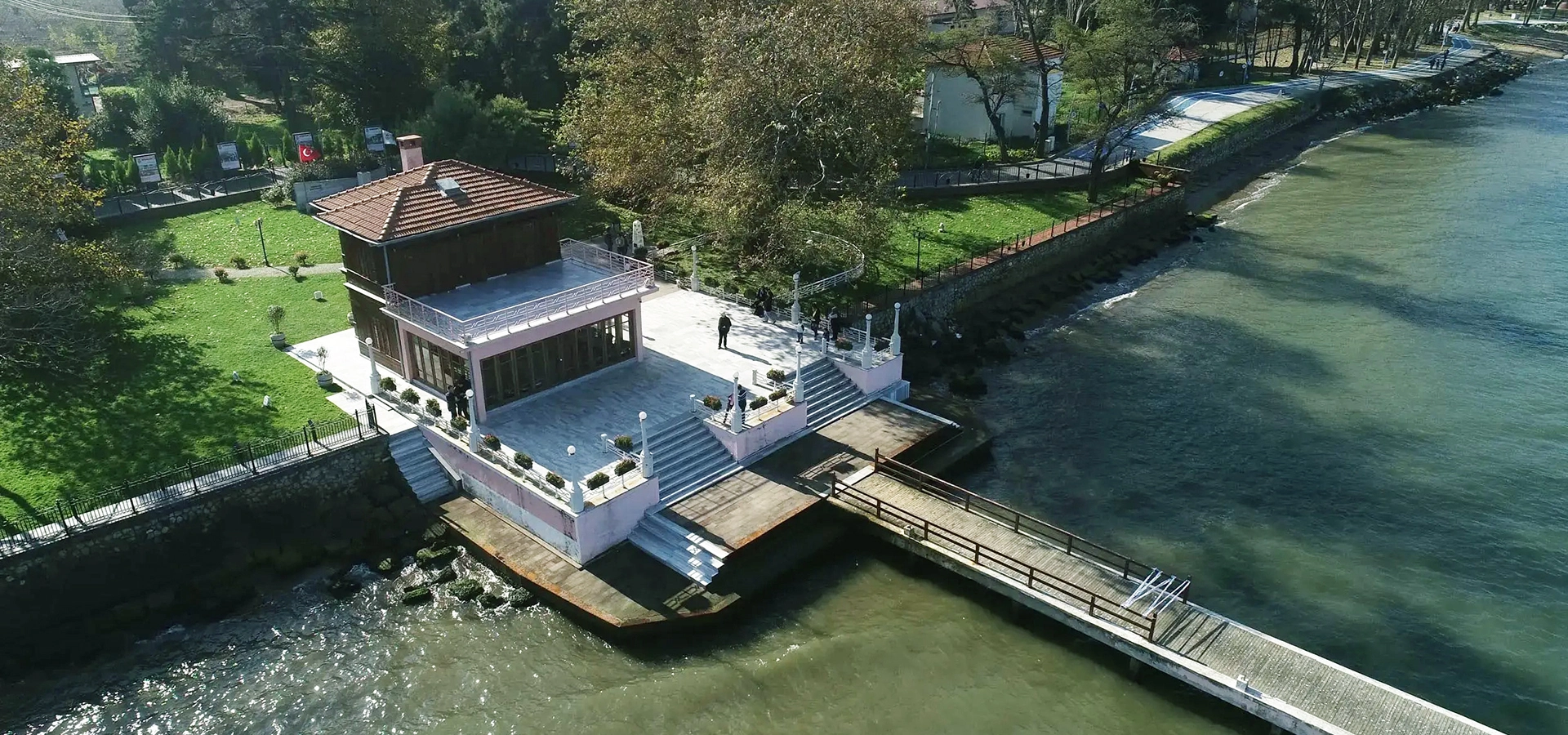
Discover the famous waterfront mansion associated with Mustafa Kemal Atatürk and one of Yalova’s best-known environmental stories.
Explore Yürüyen Köşk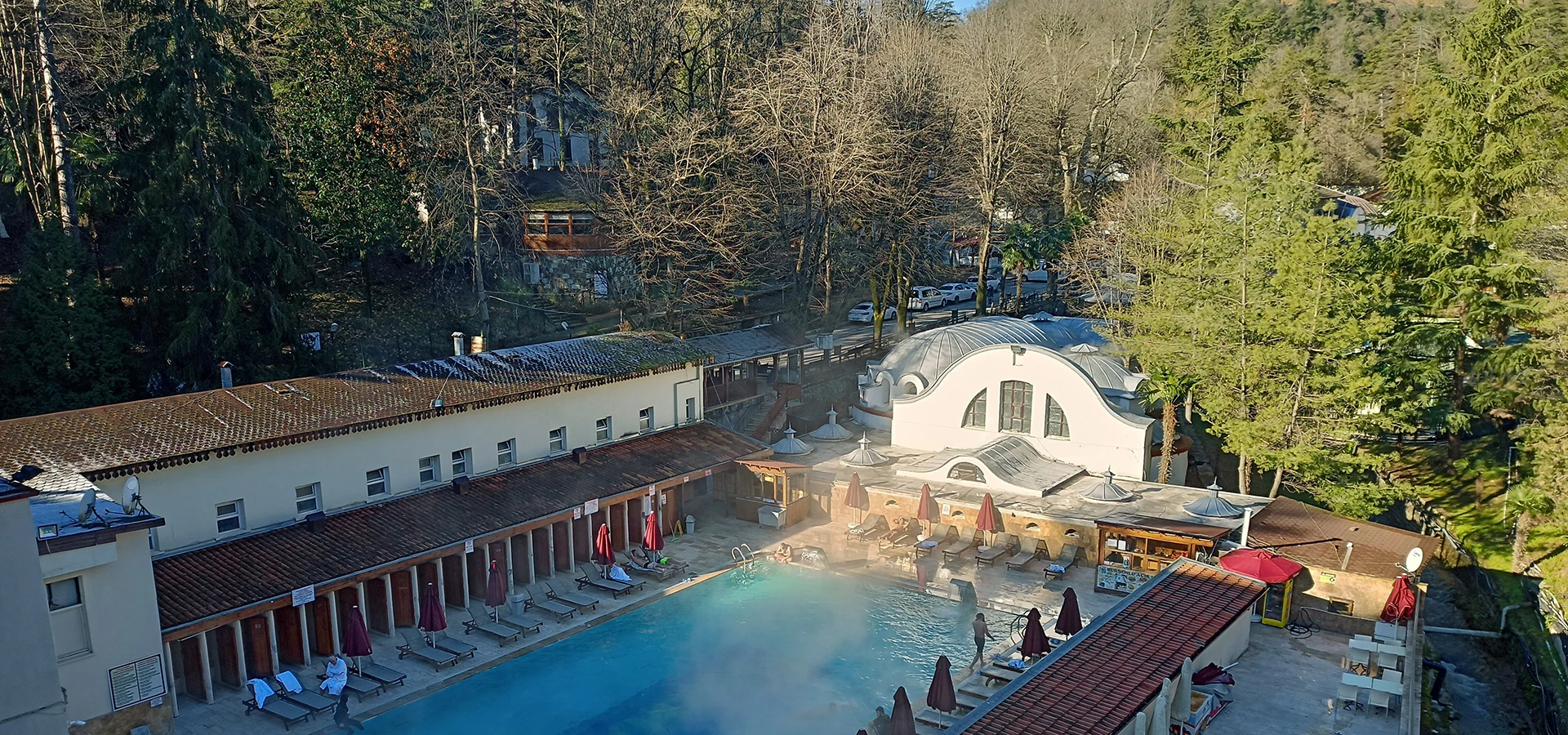
Continue from the Marmara wetlands to the historic thermal baths, forested gardens and mineral-water heritage of Termal.
Explore Yalova Termal
Continue exploring forests, waterfalls, beaches, thermal springs, historic buildings and natural landscapes across Yalova Province.
Explore Yalova