Ottoman Heritage, Mimar Sinan & Historic Yalova

Rüstem Pasha Mosque – Yalova Visitor Guide

Discover one of central Yalova’s oldest surviving Ottoman monuments,
traditionally attributed to the great imperial architect Mimar Sinan.

Explore the Mosque

Rüstem Pasha Mosque – Ottoman Yalova in the Heart of the Modern City

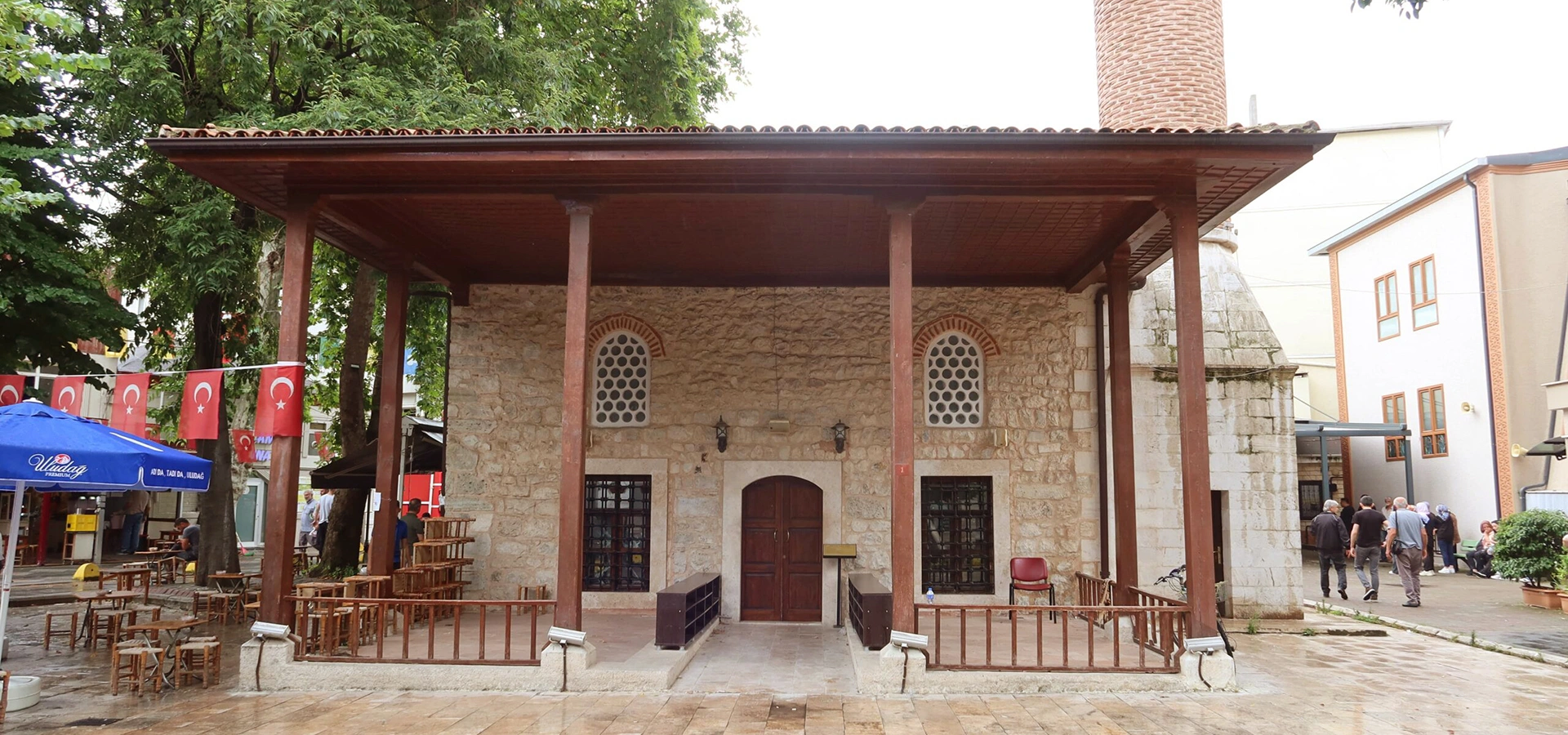
The Rüstem Pasha Mosque, known in Turkish as Rüstem Paşa Camii or Rüstempaşa Camii, stands in central Yalova in the historic neighbourhood that carries the same name. It is one of the city’s most important surviving Ottoman monuments and remains an active place of worship.

The mosque is associated with Rüstem Pasha, grand vizier of Sultan Süleyman the Magnificent, and is traditionally attributed in local official sources to Mimar Sinan, the celebrated chief architect of the Ottoman classical age. For travellers interested in Ottoman architecture, it provides a rare historic counterpoint to Yalova’s better-known twentieth-century Atatürk heritage.

The building visitors see today reflects a long and complicated history. Historical inventories describe an Ottoman mosque that changed over the centuries, suffered repeatedly in earthquakes and was seriously affected by the 17 August 1999 Marmara earthquake. A major restoration carried out in 2012–2013 repaired the structure, reconstructed damaged elements of the minaret and restored important architectural details.

The mosque is also linked with an older Rüstem Pasha complex that is thought to have included a mosque, han and hamam. The mosque and historic bath preserve part of that earlier urban story, while the surrounding district has become part of the busy modern centre of Yalova.

Ottoman Era

A historic mosque commissioned in the name of Grand Vizier Rüstem Pasha.

Mimar Sinan

Official local sources traditionally attribute the mosque to the great Ottoman architect.

1999

The Marmara earthquake seriously damaged parts of the mosque, including its minaret.

2013

A major restoration returned the historic building to active use.

Know Before You Go

Rüstem Pasha Mosque – Quick Facts

Essential information for visiting one of Yalova’s most important Ottoman heritage sites.

📍

Location

Rüstempaşa neighbourhood in central Yalova.

Search on Google Maps
🕌

Type

Historic Ottoman mosque and active place of worship.

🏛️

Patron

Associated with Grand Vizier Rüstem Pasha, one of the leading statesmen of Süleyman the Magnificent’s reign.

📐

Architectural Attribution

Local official sources attribute the mosque to Mimar Sinan.

📜

Period

Ottoman period; modern heritage sources commonly place the monument in the 16th century.

🧱

Historic Fabric

Stone masonry, timber architectural elements and a prominent minaret define the surviving building.

🌍

Earthquake History

The mosque has survived repeated earthquakes and was seriously affected in 1999.

🔨

Major Restoration

Comprehensive restoration work was carried out in 2012–2013.

🎟️

Entrance

Yalova Municipality states that entry is free.

⏳

Suggested Time

Allow around 20–40 minutes for a respectful architectural visit.


A Small Monument with a Long Story

Why Visit Rüstem Pasha Mosque?

The mosque connects Yalova with the Ottoman classical age, Mimar Sinan tradition and the city’s long history of earthquake damage and restoration.

Many visitors know Yalova for thermal springs, the Marmara coast, Atatürk’s Yürüyen Köşk and the city’s modern history. Rüstem Pasha Mosque reveals an older layer: the Ottoman town that existed here centuries before modern Yalova developed.

Its importance comes partly from its association with Rüstem Pasha and the architectural tradition of Mimar Sinan. Even though the building is modest compared with Sinan’s great imperial monuments in İstanbul, its presence in Yalova gives the city a direct connection with the artistic and administrative world of the classical Ottoman period.

The mosque is equally important as a story of survival. Repeated earthquakes altered the building over time, and the 1999 Marmara earthquake caused major damage. The restoration that followed reminds visitors that historic architecture is not frozen in one moment: it is preserved, repaired and sometimes reconstructed across generations.

Because the mosque is still used for worship, visitors encounter heritage and everyday life together. It is not simply a historical monument to observe from outside; it remains part of the religious and neighbourhood life of central Yalova.

The History of Rüstem Pasha Mosque

Rüstem Pasha Mosque is traditionally connected with Damat Rüstem Pasha, one of the most influential statesmen of the reign of Sultan Süleyman the Magnificent. Rüstem Pasha served as grand vizier and was also connected to the Ottoman dynasty through his marriage to Mihrimah Sultan.

Local heritage sources identify the Yalova mosque as an Ottoman foundation commissioned by Rüstem Pasha. The most commonly cited modern heritage dating places it in the 16th century, although some local tourism texts reproduce a 17th-century date. Because published local descriptions are not completely consistent, travellers should understand the monument primarily as a classical Ottoman-period foundation associated with Rüstem Pasha rather than rely on a single unqualified construction year.

The mosque stood within what became one of Yalova’s oldest urban quarters. Its continued presence gave the surrounding neighbourhood its name: Rüstempaşa Mahallesi. As modern Yalova expanded around it, the monument became an increasingly visible reminder of the city’s pre-modern past.

Today, the mosque survives as one of the central pieces of Yalova’s registered architectural heritage and continues to serve both religious and cultural functions.

Who Was Rüstem Pasha?

Rüstem Pasha rose to the highest levels of Ottoman government during the reign of Sultan Süleyman I. As grand vizier, he belonged to the political centre of one of the empire’s most powerful periods.

He is also remembered as an important architectural patron. Buildings connected with his name were commissioned in different parts of the Ottoman world, often combining religious, commercial and charitable functions. The famous Rüstem Pasha Mosque in İstanbul is the best-known example, but Yalova preserves a much smaller and more local expression of his patronage.

The Yalova monument is especially interesting because it demonstrates how high-level Ottoman patronage could reach smaller towns, roads and regional centres. A mosque, bath and accommodation or commercial structure could help organise both daily life and movement through a settlement.

For this reason, Rüstem Pasha Mosque is best understood not only as a religious building, but also as part of a broader Ottoman urban and charitable tradition.

Is Rüstem Pasha Mosque a Work of Mimar Sinan?

Yalova Municipality and several local heritage sources attribute Rüstem Pasha Mosque to Mimar Sinan, the chief Ottoman architect whose career transformed the architecture of the sixteenth-century empire.

The attribution is particularly important for Yalova because local educational and cultural sources describe the mosque as Sinan’s only work in the city. That makes the building an important stop for travellers tracing Ottoman architectural heritage beyond İstanbul, Edirne and the best-known imperial centres.

Visitors should also remember that the mosque has undergone centuries of repair, earthquake damage and restoration. The building visible today is therefore not a perfectly untouched sixteenth-century object. Its present appearance reflects both historic fabric and later conservation interventions.

This layered history is part of the value of the monument: it allows visitors to think not only about architectural authorship, but also about how an Ottoman building survives through changing urban conditions and repeated seismic events.

Architecture of Rüstem Pasha Mosque

Published descriptions of the mosque are not completely uniform. Some local tourism sources describe a square, domed structure, while more detailed heritage inventories describe the surviving building as a rectangular masonry mosque covered by a timber roof. The difference reflects the monument’s long history of alteration, repair and reconstruction.

The exterior is comparatively restrained. Stone walls, arched window openings, timber elements and the projecting entrance portico create an intimate scale very different from the monumental imperial mosques of İstanbul.

One of the most distinctive visual features is the minaret. Its form has been affected by earthquake damage and later reconstruction, making it one of the clearest places where the mosque’s architectural history and restoration history meet.

The son cemaat yeri, or entrance portico traditionally used before entering the prayer hall, also played an important role in the 2012–2013 restoration. Historic timber columns, column heads, stone bases and roof elements were among the architectural details examined and repaired.

The Lost Rüstem Pasha Complex

Heritage records indicate that Rüstem Pasha’s foundation in Yalova was probably conceived as a small külliye, or multi-building Ottoman complex. The ensemble is thought to have included a mosque, a han and a hamam.

A külliye could serve several needs at once. The mosque provided a place of worship; the bath supported hygiene and social life; and a han could accommodate travellers, animals or commercial activity. Together, such buildings helped structure everyday life in Ottoman towns and along important routes.

The original complex has not survived intact. Heritage inventories state that the mosque and historic bath survive, while the han was later used as a school and disappeared during the period of the First World War.

Knowing this larger context changes the way the mosque is read. What now appears as a small historic building among modern streets was once part of a wider Ottoman service complex with a much stronger presence in the townscape.

Earthquakes and the Survival of the Mosque

Yalova lies in one of Türkiye’s most seismically active regions, and Rüstem Pasha Mosque has experienced repeated earthquake damage during its long history. Heritage studies indicate that major earthquakes between the early modern period and the present contributed to significant structural change.

The most recent defining event was the 17 August 1999 Marmara earthquake. The disaster caused catastrophic destruction across the region and seriously affected Yalova. Rüstem Pasha Mosque was among the historic structures damaged.

The minaret suffered particularly serious damage, and later restoration documentation records that damaged sections were dismantled and reconstructed. Other parts of the building were also repaired as part of the conservation programme.

The mosque therefore provides a useful architectural parallel to the nearby 17 August Earthquake Memorial: one site records the human loss of 1999, while the other demonstrates how the same earthquake affected Yalova’s historic built heritage.

The 2012–2013 Restoration

A major restoration programme was undertaken by Bursa Regional Directorate of Foundations in cooperation with local authorities during 2012–2013. The project involved survey, restitution and restoration work designed to return the mosque to a historically appropriate condition.

Contemporary restoration reports describe work on the roof covering, water and thermal insulation, masonry joints, wall surfaces, the entrance portico, timber columns and capitals, windows, the mihrab and interior decorative surfaces.

The minaret, which had been heavily damaged in the 1999 earthquake, received particularly important intervention. Damaged masonry was dismantled and the minaret was reconstructed as part of the project.

Restorers also removed later additions that were considered inconsistent with the historic structure and worked to reveal or recover older architectural details. The completed work allowed the mosque to return to regular use while preserving it as one of Yalova’s most significant historic buildings.

Why the Mosque Is Important to Yalova’s Heritage

Rüstem Pasha Mosque is not simply an old neighbourhood mosque. It has long been recognised as a historic monument and is included in Yalova’s architectural heritage inventories.

Local cultural records state that the property was formally registered as a historic monument in 1973. That protected status reflects its significance as an Ottoman structure, its association with Rüstem Pasha and its traditional attribution to Mimar Sinan.

Its importance has increased as the surrounding city has changed. Modern buildings, commercial streets and urban traffic now frame a monument that once belonged to a much smaller Ottoman settlement.

For visitors, this contrast is part of the experience. The mosque is a surviving fragment of historic Yalova embedded directly inside the life of the contemporary city.

Rüstem Pasha Mosque and Evliya Çelebi

Yalova Municipality notes that Evliya Çelebi, the great seventeenth-century Ottoman traveller, described a domed mosque with a minaret in his account of the area. The municipality connects this description with the historical importance of Rüstem Pasha Mosque.

Evliya Çelebi’s travel writing is one of the richest narrative sources for understanding Ottoman towns, roads, shrines, markets, baths and religious buildings. His descriptions often reveal how places functioned within everyday life rather than only how they looked.

Because architectural descriptions, dating traditions and later alterations do not always align perfectly, it is best to treat the Seyahatname connection as part of the mosque’s historical tradition rather than as a substitute for architectural documentation.

Even so, the association gives visitors a vivid sense of the mosque’s longevity: the site belongs to a city landscape whose Ottoman history was already being recorded centuries ago.

Rüstem Pasha Mosque as a Living Place of Worship

Rüstem Pasha Mosque remains open for worship. This makes the visit fundamentally different from entering a museum, archaeological site or unused monument.

The building’s historical value and religious function coexist. Visitors may come to study Ottoman architecture, while local worshippers use the same space for prayer. The rhythm of the mosque therefore changes throughout the day according to the prayer schedule.

Non-Muslim visitors are generally best served by visiting between prayer times, when the prayer hall is quieter. Around Friday noon prayer, religious holidays or special occasions, the mosque can be considerably busier.

A respectful visit is usually brief and quiet. Architectural curiosity is welcome, but worship always takes priority over sightseeing.

Where Is Rüstem Pasha Mosque?

The mosque stands in Rüstempaşa Mahallesi in central Yalova. Its city-centre position makes it one of the easiest historic sites to include in a walking route through the city.

Unlike many rural monuments in Yalova Province, Rüstem Pasha Mosque does not require a dedicated vehicle excursion. Visitors staying near the centre, waterfront or ferry area can combine it naturally with museums, shopping streets and other central attractions.

The surrounding neighbourhood is fully urban, so the mosque appears almost suddenly among modern buildings. That contrast helps explain how Yalova developed around its surviving Ottoman core.

City Yalova
Neighbourhood Rüstempaşa Mahallesi
Setting Historic mosque within the modern city centre
Main Focus Ottoman architecture, Mimar Sinan tradition and Yalova’s urban history
Best Combined With Yalova City Museum, 17 August Earthquake Memorial and the central waterfront

Highlights of Rüstem Pasha Mosque

The Stone Walls

Look closely at the masonry and remember that the building has been repaired repeatedly after earthquakes and later alterations.

The Minaret

One of the mosque’s strongest visual features and an important element in the story of the 1999 earthquake and later reconstruction.

The Entrance Portico

Observe the timber supports, stone bases and shaded transition between the courtyard and prayer hall.

The Timber Work

Wooden architectural elements were carefully examined and restored during the 2012–2013 conservation project.

The Prayer Hall

When access is appropriate, enter quietly and notice the intimate scale of the historic interior.

The Mihrab

The prayer niche indicating the direction of Mecca was among the elements addressed during the major restoration.

The Urban Setting

Notice how the old mosque sits within a dense modern cityscape, preserving the memory of an earlier Yalova.

The Külliye Story

Imagine the mosque as part of a wider Ottoman complex that once included a bath and a han.

How Much Time Do You Need?

Rüstem Pasha Mosque is a relatively compact monument, so most visitors do not need a long visit. Allow around 20–30 minutes to see the exterior, courtyard, portico and prayer hall when access is appropriate.

Travellers with a strong interest in Ottoman architecture, Mimar Sinan, historic restoration or earthquake history may prefer 30–40 minutes to examine the building more carefully.

Because the mosque is active, the actual timing of a visit matters more than the length. If a prayer is beginning, wait outside or return later rather than attempting to continue sightseeing.

15–20 Minutes

Enough for the exterior, minaret and a brief look at the entrance area.

20–30 Minutes

Ideal for most visitors who want to see both the exterior and interior respectfully.

30–40 Minutes

Better for architecture enthusiasts interested in restoration details and the building’s historical layers.

Longer Route

Combine the mosque with nearby museums and the waterfront for a half-day central Yalova history walk.

Best Time to Visit Rüstem Pasha Mosque

The mosque can be visited throughout the year, but the easiest time for architectural sightseeing is generally between prayer times. This allows worshippers to use the prayer hall without interruption and gives visitors more freedom to observe the interior quietly.

Friday around midday is normally the busiest weekly period at a functioning mosque. If your main purpose is cultural sightseeing, choose another part of the day.

Morning can be especially pleasant because the centre is often quieter, while late afternoon can give the stonework and minaret attractive directional light for exterior photography.

Prayer times change every day according to the season. Check the current local schedule and remember that access arrangements can also change during religious holidays, funerals, maintenance or special community events.

What to Wear and How to Visit Respectfully

Rüstem Pasha Mosque is a functioning place of worship, so modest clothing is appropriate for all visitors. Shoulders and knees should be covered, and clothing should not be excessively revealing.

Women entering the prayer hall should generally cover their hair. If scarves are available locally they may be offered, but carrying your own light scarf is the most reliable option.

Shoes are removed before stepping onto the carpeted prayer area. Use the designated shoe storage or follow any instructions at the entrance.

Speak quietly, silence mobile phones and avoid walking directly in front of someone who is praying. If congregational prayer is underway, allow worshippers priority and postpone sightseeing until the prayer has finished.

Photography at Rüstem Pasha Mosque

The mosque is an attractive subject for architectural photography, particularly the stone walls, wooden portico and minaret. Exterior photography is straightforward from the courtyard and surrounding streets.

Inside, photograph quietly and avoid flash when it could disturb worshippers. Never photograph people closely while they are praying without clear permission.

A wide-angle view can be useful for the compact prayer hall, while detail photographs can focus on timber elements, windows, masonry and the restored architectural features.

If staff or worshippers indicate that photography is restricted at a particular moment, follow their guidance immediately. Religious use always takes priority over photography.

Accessibility at Rüstem Pasha Mosque

The mosque’s central urban location makes the general approach easier than many remote heritage sites. It can be reached by city streets and is close to the main pedestrian areas of central Yalova.

However, historic mosques can include thresholds, changes in floor level, narrow passages or entrance arrangements that may not meet modern accessibility standards.

Visitors using wheelchairs or anyone who requires step-free access should confirm the current entrance arrangement locally before making a special visit.

Because the building remains active and arrangements can change, temporary carpets, shoe areas or congregation layouts may also affect circulation inside.

How to Get to Rüstem Pasha Mosque

Rüstem Pasha Mosque is located in the central urban area of Yalova and is easy to include in a walking itinerary. Visitors already in the city centre can normally reach the mosque on foot.

Yalova Municipality also notes that the site is accessible using central city minibuses. A taxi driver will recognise “Rüstem Paşa Camii” or “Rüstempaşa Camii.”

If arriving by car, use current navigation and nearby city-centre parking. The historic core is better explored on foot than by trying to park directly beside every monument.

On Foot

The easiest option for travellers already exploring central Yalova.

By Minibus

Central Yalova minibuses provide access to the surrounding neighbourhood.

By Taxi

Ask for “Rüstem Paşa Camii” in Rüstempaşa Mahallesi.

By Car

Use nearby city-centre parking and continue to the mosque on foot.

Suggested Central Yalova Heritage Route

Begin at Yalova City Museum for an overview of the city’s long history, urban development and cultural identity.

Continue through the centre to Rüstem Pasha Mosque to encounter one of the city’s most important surviving Ottoman buildings and Yalova’s traditional connection with Mimar Sinan.

From the mosque, walk toward the seafront and visit the 17 August Earthquake Memorial. The two sites together create a powerful historical sequence: the mosque shows how centuries-old architecture has survived earthquakes, while the memorial records the human cost of the 1999 disaster.

Finish with a walk along the Marmara waterfront or extend the route to Yürüyen Köşk for one of Yalova’s best-known twentieth-century heritage stories.

1. Yalova City Museum Begin with the city’s long historical and cultural story
2. Rüstem Pasha Mosque Explore Ottoman Yalova and the city’s Mimar Sinan tradition
3. Central Yalova Walk through the modern city built around historic neighbourhoods
4. 17 August Earthquake Memorial Understand the human impact of the 1999 Marmara earthquake
5. Yürüyen Köşk Add Atatürk heritage and Yalova’s famous conservation story

What Makes This Mosque Different from a Museum Monument?

Rüstem Pasha Mosque is valuable precisely because it does not belong to only one historical moment. It began as an Ottoman religious foundation, became part of a larger neighbourhood, survived earthquakes, underwent repeated repairs and still functions as a mosque.

That means a visitor should not expect every visible element to date from the same century. Stonework, timber, roofing, minaret sections and interior surfaces may represent different phases of construction and conservation.

This layered character is common in historic buildings that have remained in continuous use. Survival often depends on adaptation. The mosque’s identity therefore lies not only in what is original, but also in the continuity of worship and community attachment.

Viewed this way, the building becomes an excellent introduction to the practical reality of architectural conservation: heritage is protected not by preventing all change, but by managing change carefully enough that historical significance survives.

Practical Tips for Visiting Rüstem Pasha Mosque

Check Prayer Times

Visit between prayers when possible, especially if your purpose is architectural sightseeing.

Dress Modestly

Cover shoulders and knees; women should have a scarf available for entering the prayer hall.

Remove Your Shoes

Follow the local shoe-storage arrangement before entering the carpeted prayer area.

Keep Your Voice Low

The mosque is an active religious space even when no formal prayer is taking place.

Notice the Minaret

Its history is closely connected with the damage caused by the 1999 Marmara earthquake and later restoration.

Look Beyond the Mosque

Remember that the surviving building was once part of a larger Ottoman complex including a bath and han.

Responsible Visiting at Rüstem Pasha Mosque

Prioritise Worship

If a prayer begins, allow worshippers full use of the space and continue sightseeing later.

Do Not Touch Fragile Details

Avoid leaning on, scratching or handling historic timber, stonework and decorative surfaces.

Photograph Discreetly

Never turn prayer into a photo opportunity or photograph worshippers closely without permission.

Follow Local Instructions

Respect any temporary signs concerning access, footwear, photography or maintenance.

Keep the Courtyard Calm

Avoid loud calls, music and behaviour that would disturb people using the mosque.

Support Heritage Awareness

Understanding the mosque’s restoration history helps visitors appreciate why careful conservation matters in earthquake-prone Yalova.

Frequently Asked Questions About Rüstem Pasha Mosque

Where is Rüstem Pasha Mosque?

The mosque is in Rüstempaşa Mahallesi in central Yalova. Its location makes it easy to include in a city-centre walking route.

Who built Rüstem Pasha Mosque in Yalova?

The mosque is associated with Grand Vizier Rüstem Pasha, one of the leading statesmen of Sultan Süleyman the Magnificent’s reign.

Was the mosque designed by Mimar Sinan?

Yalova Municipality and several local heritage sources attribute the mosque to Mimar Sinan. Local educational sources describe it as his only work in Yalova.

When was Rüstem Pasha Mosque built?

Modern heritage inventories commonly place the mosque in the 16th century. Some local tourism texts reproduce a 17th-century date, so it is safest to describe it as an Ottoman-period foundation associated with Rüstem Pasha rather than give an exact unsupported year.

Is this the same Rüstem Pasha Mosque as the famous mosque in İstanbul?

No. The famous tiled Rüstem Pasha Mosque in İstanbul is a different building. This page concerns Rüstem Pasha Mosque in Yalova.

Is the mosque still used for worship?

Yes. Rüstem Pasha Mosque remains an active mosque, so visitors should plan sightseeing between prayer times whenever possible.

Is there an entrance fee?

Yalova Municipality states that entry is free.

What happened to the mosque in the 1999 earthquake?

The 17 August 1999 Marmara earthquake damaged the historic structure, with the minaret among the elements that required major reconstruction and restoration.

When was the mosque restored?

A major conservation project was carried out in 2012–2013, including work on the minaret, roof, masonry, timber elements, entrance portico and interior.

Was Rüstem Pasha Mosque once part of a larger complex?

Yes. Heritage inventories indicate that it was probably part of a külliye containing a mosque, han and hamam. The mosque and historic bath survive, while the han no longer exists.

What should I wear?

Dress modestly with shoulders and knees covered. Women should have a headscarf available before entering the prayer hall.

Do I need to remove my shoes?

Yes. Shoes should be removed before entering the carpeted prayer area. Follow the shoe-storage arrangement at the entrance.

Can non-Muslims visit Rüstem Pasha Mosque?

As an active historic mosque, it can be visited respectfully outside prayer times, subject to any current local arrangements.

Can I take photographs?

Exterior photography is straightforward. Inside, photograph discreetly, avoid disturbing prayer and do not photograph worshippers closely without permission.

How much time should I allow?

Allow around 20–40 minutes, depending on your interest in Ottoman architecture, restoration and the building’s earthquake history.

What is the best time to visit?

Visit between prayer times when possible. Friday around midday is usually busier because of congregational prayer.

Is the mosque easy to reach?

Yes. It is in central Yalova and can be reached on foot, by taxi or by local minibus.

Is Rüstem Pasha Mosque accessible for wheelchair users?

The central location is convenient, but the historic building may include thresholds or changes in level. Visitors who require step-free access should confirm the current entrance arrangement locally.

What should I visit nearby?

Good combinations include Yalova City Museum, 17 August Earthquake Memorial, the central waterfront and Yürüyen Köşk.

Why is Rüstem Pasha Mosque important?

It preserves a rare surviving piece of Ottoman Yalova, is traditionally attributed to Mimar Sinan, and demonstrates how historic buildings in the Marmara region have been repeatedly repaired after earthquakes.

Is Rüstem Pasha Mosque worth visiting?

For travellers interested in Ottoman architecture, Mimar Sinan, local history or heritage conservation, the mosque is one of the most important historic stops in central Yalova.

Private Yalova Cultural Experiences

A private Yalova itinerary can combine Ottoman heritage, city museums, Atatürk landmarks, the Marmara waterfront and the story of the 1999 earthquake, creating a journey through several centuries of local history.

Custom Yalova History & Heritage Experience

Explore Yalova from the Ottoman era to the twentieth century, with Rüstem Pasha Mosque included alongside the city’s museums, memorials and waterfront landmarks.

Yalova Turkey coast museums hot springs forests and travel guide

Explore Yalova

Discover Yalova’s complete story through Ottoman monuments, museums, Atatürk heritage, thermal springs, waterfalls, forests, wetlands and the Marmara coast.

View Yalova Guide