Sweet, Not Savoury
The Tavas speciality is enjoyed as a sweet course rather than as a meat or cheese-filled main.
- Identity: Dessert-style pide
- Taste: Sesame-rich






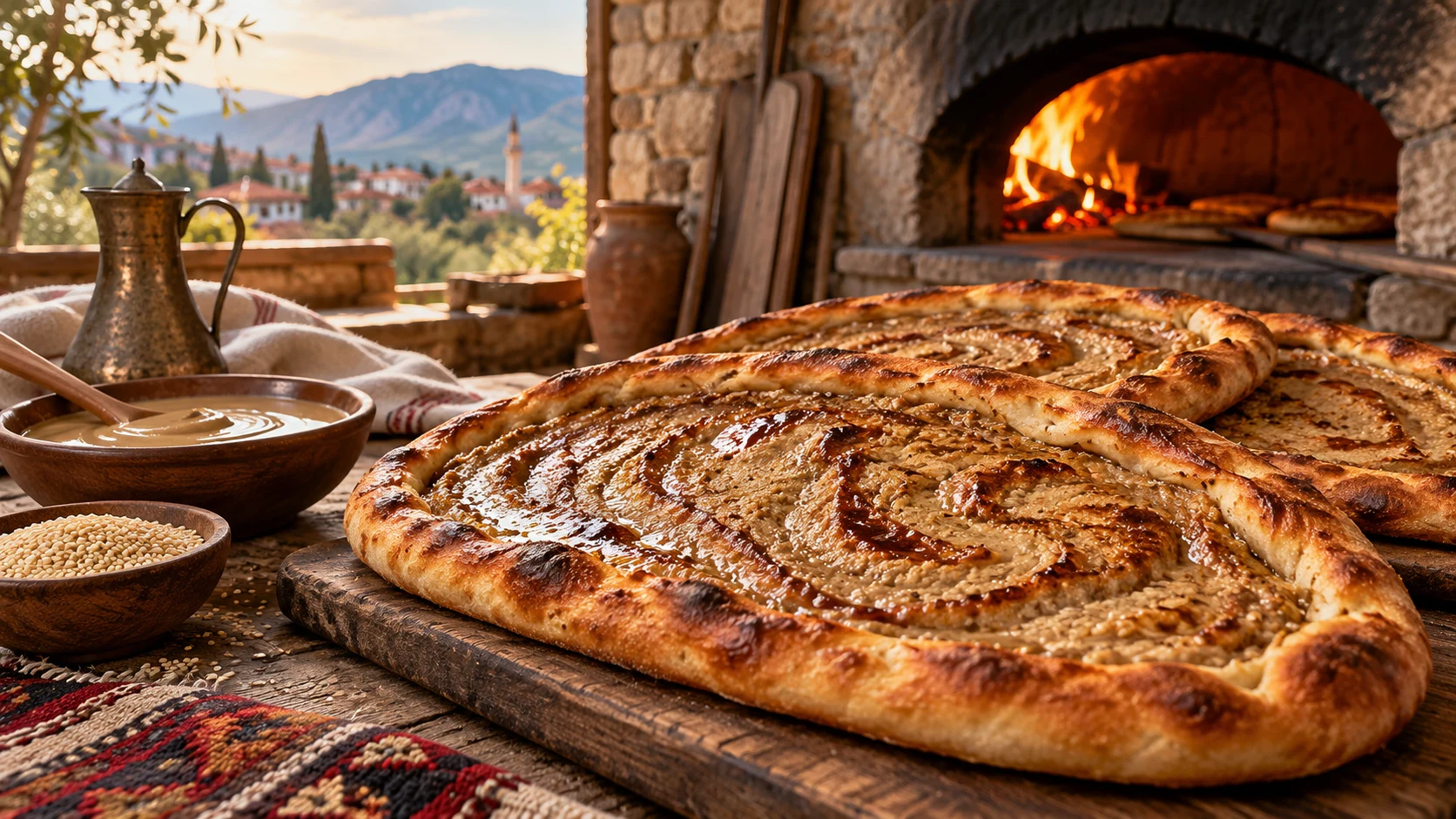
Tavas Tahinli Pidesi, also called Tavas Ballı Tahinli Pide, is a celebrated sweet bread from Tavas district in Denizli Province, southwestern Türkiye. Instead of minced meat or cheese, its central flavour is tahin (sesame paste). The Denizli Provincial Directorate of Culture and Tourism describes a yeasted dough worked by hand with a tahini mixture, allowed to rest, then baked in a wood-fired oven. Honey may be poured over it according to preference, and the pide is served hot.
Locally, the speciality is known as “içli-dışlı”. Its place in Tavas’s food culture is documented by both the provincial tourism authority and Türkiye’s GoTürkiye destination guide. You may also encounter versions finished with walnuts or butter, but those restaurant and modern-recipe additions should not be confused with mandatory ingredients in the short official description. This guide covers the documented tradition, the taste and texture, a carefully labelled home adaptation, ordering tips, allergens and a wider Tavas food itinerary.
A distinctive dessert-style pide rather than the usual savoury filling.
Tahin gives the dough its signature roasted-sesame aroma.
The documented local method relies on an oven heated with wood.
A local name that helps visitors ask for the right Tavas speciality.
The essentials of Tavas’s famous honey-and-tahini sweet bread.
Tavas district, Denizli Province, southwestern Türkiye.
Find Tavas on Google MapsA sweet, yeasted pide enriched with a tahini mixture.
Hand-shaped, rested and cooked in a wood-fired oven.
“İçli-dışlı”; offered hot, with honey added to taste.
Wood-fired ovens, skilled bakers and tahini-rich bread define a distinctive local tradition.
Tavas has a strong pide-making culture alongside its göveç, meat dishes and baklava. The Denizli Provincial Directorate of Culture and Tourism places tahinli pide at the centre of the district’s pide identity and explicitly records its local nickname, içli-dışlı. Its description evokes tahini meeting dough and baking slowly in a wood-fired oven, a natural companion to the district’s savoury meal traditions.
The sweet pide also appears in the authority’s wider guide to foods of Denizli as Tavas Ballı Tahinli Pide. Unlike savoury meat or cheese pide, it is eaten as a sweet course. The official process begins with dough that has been leavened, shaped by hand, coated with a tahini preparation and rested before entering the oven. Honey is optional at service, not an ingredient that every baker must add in exactly the same amount.
The surviving tourism descriptions do not establish a specific year, inventor or single historical occasion when the pide was created. It is more accurate to describe it as a well-recognised regional baked speciality rather than assign an unsupported Ottoman palace origin or an exact age. Its continuing popularity can be understood through local bakery practice and the district’s wider food culture.
The official descriptions document culinary heritage; they do not by themselves prove that Tavas Tahinli Pidesi carries its own registered geographical indication. Registration claims should be checked against the Turkish Patent and Trademark Office’s live registry rather than inferred from publicity.
Its identity comes from the sweet tahini filling, the handling of the dough and its wood-oven finish.
The Tavas speciality is enjoyed as a sweet course rather than as a meat or cheese-filled main.
A tahini-based preparation is worked into or onto yeasted dough.
Tavas residents call this local pide “içli-dışlı”.
The official guide specifies dough made with yeast and portioned into small pieces.
Each dough portion is opened by hand before it is coated in tahini mixture.
The official process includes a rest before baking.
Wood-fire baking is part of the recorded preparation in Tavas.
Honey may be poured over the cooked pide to taste, and it is served hot.
In Tavas, “içli-dışlı” is the traditional local name for tahinli pide, as recorded by Denizli’s provincial tourism authority. The phrase is also used colloquially in Turkish in other contexts, but travellers can simply use it as the name of this distinctive sweet pide.
Say “İçli-dışlı pide var mı?” to ask whether a bakery serves the local speciality.
The straightforward phrase “Tahinli pide” means tahini pide and may be easier to recognise on a menu.
Ballı means “with honey”; the provincial food guide uses the fuller name for the sweet version.
Tavas also has savoury pide varieties. Ask for the tahini version instead of assuming every Tavas pide is sweet.
The nickname does not specify one nationally standard filling percentage, shape or dough thickness.
You may see tahinli pide, ballı tahinli pide or içli-dışlı depending on the establishment.
Two useful public descriptions come from the Denizli Provincial Directorate of Culture and Tourism: its district page for Tavas and its “What to Eat” guide. They are the basis for the key traditional features throughout this article.
Both sources associate the sweet tahini pide with the Tavas district of Denizli.
The provincial food guide starts with mayalı hamur, or dough made with yeast.
Small dough portions are shaped by hand before coming together with the tahini mixture.
The published summary describes tahini coating the dough; it does not prescribe an exact universal tahini quantity.
A short rest comes before baking over wood fire. The guide does not specify one fixed oven temperature.
The pide is served hot, and the amount of honey is left to individual preference.
Read the Denizli tourism page for Tavas.
See “Ne Yenir?” from Denizli’s Culture and Tourism Directorate.
The official short description identifies yeasted dough, tahini mixture and optional honey. Wider contemporary Tavas recipes and some bakeries also mention butter and walnuts. Because formulas differ, the categories below distinguish the documented foundations from popular additions.
The customary base of pide dough; individual bakeries may use different flour blends.
Used to bring the flour into a workable bread dough.
The official guide specifically calls for mayalı, or leavened, dough.
The defining ingredient providing roasted-sesame aroma and richness.
The provincial tourism guide says honey is poured on according to preference after baking.
Exact amounts vary in home recipes; the brief official description does not provide a detailed formula.
Some published modern Tavas tahinli pide recipes and bakery versions include walnuts.
Butter may be brushed on hot pide in modern recipes, but it is not explicitly required in the official tourism summary.
Tahin is a paste made from sesame seeds. It brings a rich, slightly nutty taste that sets sweet tahinli pide apart from the more familiar tomato-, cheese- or meat-topped pides. Its quality and quantity can significantly affect the eating experience.
Tahin is produced by grinding sesame seeds into a smooth paste.
Its savoury, nutty depth keeps the dessert from tasting like plain sugary bread.
Tahini is rich in sesame oil, giving the dough or surface a substantial mouthfeel.
Separated sesame oil can be stirred back into the paste for an even consistency.
Uneven patches of thick tahini may make some sections considerably richer than others.
Tahin contains sesame, a major food allergen that must be disclosed when ordering or cooking.
Tavas Tahinli Pidesi depends on more than its topping. Yeasted dough needs enough time to develop and relax before it can be opened, coated and baked without turning dense or excessively tough.
The official guide explicitly mentions yeasted dough; this is a key distinction from unleavened flatbread.
The risen dough is divided into portions or bezeler for handling.
The tourism description says the portions are opened by hand, rather than requiring machine rolling.
A resting stage appears in the published method after tahini has been introduced.
Properly managed dough gives a balance of a tender middle and baked surface.
An experienced baker adjusts dough moisture, thickness and oven position to the batch and equipment.
The official tourism description explicitly records the use of odun ateşi (wood fire). The exact method at an individual bakery may differ, but the traditional oven is a major part of Tavas’s wider pide culture.
The oven is heated with wood; the heat must be controlled by its operator.
The contact surface can help cook the underside while radiant heat colours the top.
A properly baked pide should have coloured edges without a raw centre.
The provincial summary does not provide an exact temperature or number of minutes for every oven.
Fire strength, stone temperature and pide thickness can change baking time.
A kitchen oven can make a delicious similar bread without exactly duplicating the wood-fired result.
The provincial food description says the dough is allowed to rest for a while before being placed in the wood-fired oven. It does not give an exact number of minutes, so recipes assigning a universal resting time should be labelled separately.
A pause after working the dough can make it easier to handle and shape.
Rushing elastic dough can make it spring back or tear while it is being opened.
A short pause lets the baker check how the tahini mixture sits on or within the dough.
In home preparation, prevent the shaped dough from drying out while it rests.
Excessive rising in warm conditions can change the intended thickness and structure.
Timing depends on yeast, room temperature, hydration and how the pide is shaped.
These steps paraphrase the official Denizli tourism description. The authority does not publish a fully measured commercial recipe in this summary, so the sequence below deliberately avoids invented mandatory quantities, temperatures and oven times.
There is no single officially fixed preparation or baking duration in the Denizli tourism summary. Yeast rising time, any secondary rest, oven heat and dough thickness all matter. Published home adaptations often give specific schedules for their own equipment, but those figures are not universal traditional rules.
Prepare a smooth, pliable dough with enough development to hold its shape.
Allow time for the yeast to work; do not judge readiness only by the clock.
Work carefully so the dough is opened without tearing.
Even coverage prevents overly dry or excessively rich patches.
The official method includes a pause before the pide is baked.
The base and middle should be cooked through, while the edges are golden.
The optional honey finish takes place once the baked pide is ready to eat.
When ordering, ask whether fresh içli-dışlı is ready or whether a new batch must be baked.
Honey is closely associated with ballı tahinli pide, but the provincial cultural description is careful: honey is added according to preference. It is therefore misleading to claim that every traditional serving has to be equally sweet.
The word ballı identifies the honey-finished version.
A bakery may be able to adjust the amount added at service.
Even when honey is used, the characteristic sesame flavour remains important.
Warm bread carries the topping pleasantly, as noted in the regional description.
Customers avoiding honey should ask about both the dough and any sweetening mixture.
The finished pide can be substantial, especially when topped generously.
You may see ceviz (walnuts) and tereyağı (butter) in contemporary recipes and at some local bakeries. They pair well with tahini, but the short official provincial account specifically establishes dough, tahini, wood baking and optional honey; it does not set walnuts or butter as universal requirements.
Chopped or ground walnuts can add a contrasting crunch to soft, tahini-rich bread.
Some recipes brush butter onto the pide after baking.
The presence of these extras varies by baker and recipe.
A walnut-containing version is not safe for someone with a relevant tree-nut allergy.
Butter is not dairy-free; check even if a basic tahini version uses no milk.
Enjoy variations without assuming one contemporary garnish is part of every historical Tavas recipe.
A good Tavas-style sweet pide balances warm bread, generous sesame aroma and a pleasing level of sweetness. Expect something closer to a rich bakery treat than a conventional savoury pide or a syrup-soaked pastry.
Tahini creates the characteristic nutty and slightly earthy taste.
Optional honey changes how dessert-like the finished pide feels.
Freshly baked yeasted dough adds softness and satisfying chew.
The outer rim may have a firmer golden bite than the centre.
Tahini can make the centre moist and deeply flavoured.
Thickness, sweetness, added walnuts and oven technique are not identical everywhere.
Tavas is known for a broader pide tradition, not only a single sweet product. A menu item described as “Tavas pidesi” may be savoury, while “tahinli” or “içli-dışlı” directs you to the local sesame-rich speciality.
A sweet speciality centred on yeasted dough, tahini and optional honey.
A savoury variation with seasoned minced meat instead of a sweet tahini finish.
A savoury cheese-based option; cheese choice and preparation depend on the kitchen.
An egg-topped style associated with the wider Turkish pide family.
Tavas baklavası is a separate layered pastry with its own dough and syrup preparation.
If both sweet and savoury pides are on offer, confirm which one you want before placing the order.
The story of tahinli pide is also a story of local work and expertise: kneading, dividing, filling, heating and serving fresh bread. A traveller can learn much about Tavas simply by watching an ordinary working bakery from a respectful distance.
Experienced hands judge when a dough portion is ready and how much tahini mixture it can carry.
Wood-fired ovens require active heat management.
The nickname içli-dışlı distinguishes the product in local conversation.
The district tourism description connects tahinli pide with the experience of enjoying local göveç.
Tavas has strong savoury dishes and layered desserts alongside its tahini pide.
Trying local food offers a way to experience place beyond major monuments.
The following is a home adaptation rather than an official registered specification. A published 2026 Lezzet home recipe uses flour, warm water, instant yeast, salt, tahini, walnuts, honey and butter and cooks the pide in a preheated domestic oven. Use a tested recipe for exact quantities and safe baking instructions.
These are practical home-baking pointers, not additional mandatory rules from the provincial traditional-food description.
A dough made unnecessarily stiff can become heavy instead of tender.
Poorly risen dough may remain dense and resistant to shaping.
Thin and thick sections can bake at different rates.
A thick puddle of tahini can leave an oily, uneven centre.
Insufficient preheating may dry the bread before it is fully baked.
Look at the underside and centre as well as a recipe’s suggested minutes.
A home recipe may reserve honey for after baking to avoid scorching; follow the chosen method.
Sesame, wheat, optional walnuts and optional butter must all be considered.
Tavas tahinli pide may appear in different sizes or presentations. The official tourism summary describes hand-opening dough pieces but does not prescribe a universal diameter or a single approved geometric shape.
Some contemporary home recipes show round, sliceable pide.
Bakery forms can vary; do not assume one shape is compulsory.
A softer, thicker dough and a thinner, crisper version give different textures.
A large pide can be sliced for a table.
Some bakeries may offer smaller pieces or serving portions.
Ask about the tahini mixture, rested dough and baking method rather than judging the shape alone.
Sesame-rich baked goods are prepared in several parts of Türkiye. They can share familiar ingredients while differing in dough handling, sweeteners, finishing and serving customs. Tavas’s own official description is the appropriate starting point for its identity.
Denizli’s famous içli-dışlı, documented as sweet pide baked over wood fire and served warm with optional honey.
A separate local tahini-pide tradition from Manisa with its own documented preparation and identity.
A distinct tahini pide associated with Aydın; it should not be treated as identical to Tavas’s version.
Another regional tahini-pide tradition associated with Ankara Province.
Tahini rolls and layered pastries are related in flavour but not the same shape or method.
The correct description depends on the actual locality, maker and method being discussed.
The provincial food guide specifically describes the pide as served hot, with honey if desired. Everything else—from walnuts to the size of the plate—depends on the baker and the occasion.
The warm dough and sesame aroma are central to the experience.
Ask for little, normal or extra honey to suit your taste.
Pieces can be shared after a savoury meal or with tea.
A topping of walnuts can add crunch, but it is not mandatory in the official summary.
Freshly baked bread and drizzled honey can both be hot and sticky.
Tahini pide is particularly appealing before the bread cools and firms.
A rich, sweet pide works especially well after a savoury meal, with an unsweetened drink or as something to share. These are suggested pairings, not a rigid traditional menu.
The familiar black tea provides a simple counterpoint to sweet tahini.
A small, strong coffee can accompany a portion after lunch.
The district tourism description specifically evokes enjoying tahinli pide after the local meat dish; see our Tavas Göveci guide.
Share sweet and savoury varieties to experience different aspects of the local bakery tradition.
A sensible choice with a substantial dessert.
If you enjoy local sweets, compare it with our Tavas Baklavası guide on a separate occasion.
The natural place to look is Tavas district, where pide shops and local restaurants may offer içli-dışlı. Opening hours, stock, bakery methods and toppings vary, so confirm details directly before travelling.
Begin with established local pide bakeries and ask for içli-dışlı.
Look for menus that distinguish tahinli pide from the savoury options.
If traditional production matters to you, ask whether the pide is baked in a wood-fired oven.
Selected bakeries may offer regional versions, but not every tahini bread is made in Tavas style.
The bakery might prepare sweet pide at particular times or in limited quantities.
Confirm whether you are ordering plain tahini, honey-topped or walnut-topped pide.
A whole pide and a slice may be priced and served differently.
Use Google Maps for Tavas and verify the actual establishment separately.
A few short phrases are usually enough to confirm the local speciality and request your preferred sweetness.
There is no reliable universal price, weight or serving size for tahinli pide across every Tavas bakery. Use these practical checks to avoid misunderstandings.
Find out whether the quoted amount is for a complete pide or a single serving.
Honey, nuts or other finishing ingredients may affect how the item is described or priced.
Ask whether a warm pide is available now or will be made to order.
Fresh dough preparation and oven availability can create a wait.
The combination of dough and sesame paste can be filling.
Smaller establishments may have different card and cash practices; check before ordering.
The central ingredients involve wheat-based dough and tahini made from sesame. Contemporary toppings and bakery handling may introduce additional allergens. A guest with an allergy should verify the exact recipe and cross-contact practices with the establishment.
Contains sesame through tahin. This is a major allergy risk, not a garnish that can simply be scraped off.
Traditional pide dough usually contains wheat flour; it is not suitable for most people who must avoid gluten.
Some versions include walnuts, and nuts may also be handled elsewhere in the same bakery.
Butter appears in some modern versions; a restaurant must confirm whether dairy is included.
Honey is an animal-derived product, so even a dairy-free version finished with honey is not vegan.
An egg-free and meat-free version may be vegetarian, depending on its specific ingredients.
Eggs are not identified in the brief official method, but individual dough recipes can vary.
Honey, sesame paste and optional butter produce a substantial sweet item; enjoy with your own dietary needs in mind.
Traditional baked goods still benefit from modern ingredient-storage and food-handling practices. These suggestions are general precautions, not part of the official Tavas method.
Check product date and storage instructions, and stir if natural sesame oil has separated.
Clean work surfaces and keep flour and utensils free from unrelated contamination.
Avoid cross-contact with sesame, wheat, nuts, milk and eggs.
The centre must be properly baked; colour alone can be misleading.
Oven stones, pans and freshly baked pide can cause burns.
Use clean utensils and follow safe storage guidance for honey.
Honey should not be served to children under 12 months.
Promptly cover and refrigerate perishable topped products when necessary, rather than leaving them in the heat.
Fresh and warm is the preferred way to experience the local speciality. If you have leftovers, the correct storage method depends on whether the pide has butter or other perishable toppings.
The bread’s texture and sesame aroma are at their most inviting shortly after baking.
Protect leftovers from drying out and from contamination.
Butter, cream or other perishables may require refrigeration according to food-safety guidelines.
Brief, gentle reheating can soften plain bread without excessively drying the edges.
Honey-coated surfaces may heat unevenly and become very hot.
Warm only what you plan to eat and discard any food that has been stored unsafely.
An enjoyable local food experience comes from knowing what to ask and leaving enough time for a freshly prepared serving.
The words içli-dışlı can be especially useful with local bakers.
If the bakery offers honey separately, begin with a little and adjust.
Never assume toppings can be omitted safely in an allergy situation.
Check whether the bakery actually uses the traditional oven technique.
Baking and serving may take time, particularly if the pide is prepared fresh.
Trying a piece leaves room to sample other Tavas specialities.
Ask before taking photos or entering an active oven or preparation area.
Operating times and menus are not guaranteed by a historic tourism description.
A tahini-pide stop becomes even more interesting when paired with the broader food heritage of the district and province. These are distinct dishes, not ingredients of the pide itself.
The district’s traditional clay-pot lamb stew; explore our detailed Tavas Göveci guide.
A layered local sweet with a separate method; see our Tavas Baklavası guide.
Compare the sweet tahini version with meat or cheese pides in an established bakery.
A regional oven-roasted meat speciality; read our tandır guide.
The province’s traditional wheat-and-meat dish; continue with our keşkek guide.
Roasted chickpeas with a strong regional identity; see our Denizli leblebi guide.
The significance of içli-dışlı lies in the connection between a particular place, its bakers and a recognisable food tradition. Understanding that connection is more meaningful than inventing precise dates or unsupported origin legends.
Its nickname is included in official tourism writing about Tavas.
Hand-shaped dough and wood-fired baking depend on skill rather than industrial uniformity.
The province highlights ballı tahinli pide among Denizli’s dishes worth tasting.
Tavas offers sweet tahini pide alongside its meat and savoury bakery dishes.
Distinguishing official descriptions from modern variations helps preserve the story honestly.
Local food can encourage travellers to explore Tavas beyond the main Denizli tourism centres.
Tavas is south of Denizli city in southwestern Türkiye. Its bakeries can be a rewarding destination for people who enjoy local food, but the best route depends on where you are travelling from and which attractions you plan to visit.
For the local speciality, Tavas district is the most natural place to begin.
Distances to Pamukkale and other sights are meaningful; use current mapping before setting a schedule.
Confirm that the sweet tahini pide is being baked on your planned day.
Private transport can make it easier to combine a food stop with smaller towns and rural attractions.
Build in time for a freshly prepared serving rather than rushing through lunch.
See our Tavas, Denizli travel guide for local context.
A tahinli pide stop can fit within a larger western Türkiye journey. The following places are ideas for appropriately planned itineraries, not attractions guaranteed to be a short walk from a bakery.
Enjoy local streets, markets and a relaxed bakery stop; see the Tavas guide.
Discover another part of the wider Denizli area and its historic landscapes.
A heritage stop for a planned Kale visit; explore our mosque guide.
The world-famous white terraces in Denizli Province.
Archaeological remains overlooking the Pamukkale terraces.
Another important site for a longer cultural day in the Denizli region.
A major archaeological destination in neighbouring Aydın Province, appropriate for a longer route.
A useful base for exploring museums, food culture and multiple nearby districts.
The bread, the baker’s hands and the oven all make good subjects. Obtain permission before photographing staff, customers, preparation spaces or active ovens.
Photograph the finished bread in natural light just after it comes out.
A close-up can show the character of the sesame-rich surface.
With permission, capture the optional final touch as it is added.
A baker opening dough portions illustrates the craft.
Show the traditional oven only from a safe, approved position.
A pide beside tea and savoury dishes tells the wider culinary story.
A sweet, yeasted tahini pide associated with the Tavas district of Denizli, Türkiye.
It is a recognised local speciality of Tavas in Denizli Province.
The best-known tahini version is eaten as a sweet food, unlike meat- or cheese-filled savoury pides.
It is the local name for Tavas’s tahinli pide, recorded by the provincial tourism authority.
Yes. Tahin is Turkish sesame paste, the defining flavour of the dish.
It may be finished with honey, but Denizli’s tourism guide says this is according to preference.
No. Walnuts appear in some contemporary recipes and bakery versions, not as a universal ingredient in the brief official description.
Some modern recipes include butter, but the provincial summary does not specify it as a mandatory ingredient.
Yes. The official food description specifically identifies yeasted dough.
The local description says the dough portions are opened by hand.
That is the traditional method described by the provincial tourism authority.
The tourism summary gives no universal baking time. Heat, dough thickness and oven design all affect readiness.
No single required shape is established by the short official description; bakeries and modern recipes vary.
In Tavas, the celebrated ballı tahinli version is treated as a sweet course.
Yes. The provincial guide specifically says the finished pide is served hot.
The tahini version is sesame-rich and sweet, while many familiar pides contain savoury meat or cheese.
No. Baklava is a separate layered pastry with a different production process.
Official tourism recognition is not proof of registration. Check the live Turkish Patent and Trademark Office registry for any claimed status.
Yes, as a Tavas-inspired adaptation. A household oven will not reproduce every aspect of traditional wood-fire baking.
Not automatically. Honey and optional butter are animal-derived; ask the baker about every ingredient.
Traditional pide is generally made from wheat flour and is not gluten-free.
Yes. Tahini is sesame paste and is central to the speciality.
Ask bakeries and local pide shops in Tavas for tahinli pide or içli-dışlı; confirm availability before visiting.
Turkish tea, Turkish coffee or plain water are pleasant serving suggestions.
Yes. Local tourism writing describes tahinli pide as a sweet follow-up to the district’s meat dishes.
A customised itinerary can include a potential stop if the route, bakery hours and product availability are suitable.
Experience regional food and cultural landmarks at your own pace. A potential Tavas Tahinli Pidesi tasting can be requested when bakery availability and your private itinerary allow it; no specific bakery visit or tasting is guaranteed without confirmation.
Discover Tavas’s traditional sweet and savoury foods in a flexible, carefully planned visit.
Ask about a food-focused visit to Tavas. Bakery opening times, the availability of içli-dışlı and any tasting arrangements must be confirmed in advance.
Request This Experience
Combine a visit to the region’s major sights with local food where the route, available time and confirmed bakery arrangements permit.
Customise Your DayConnect western Türkiye’s ancient heritage with authentic regional food.
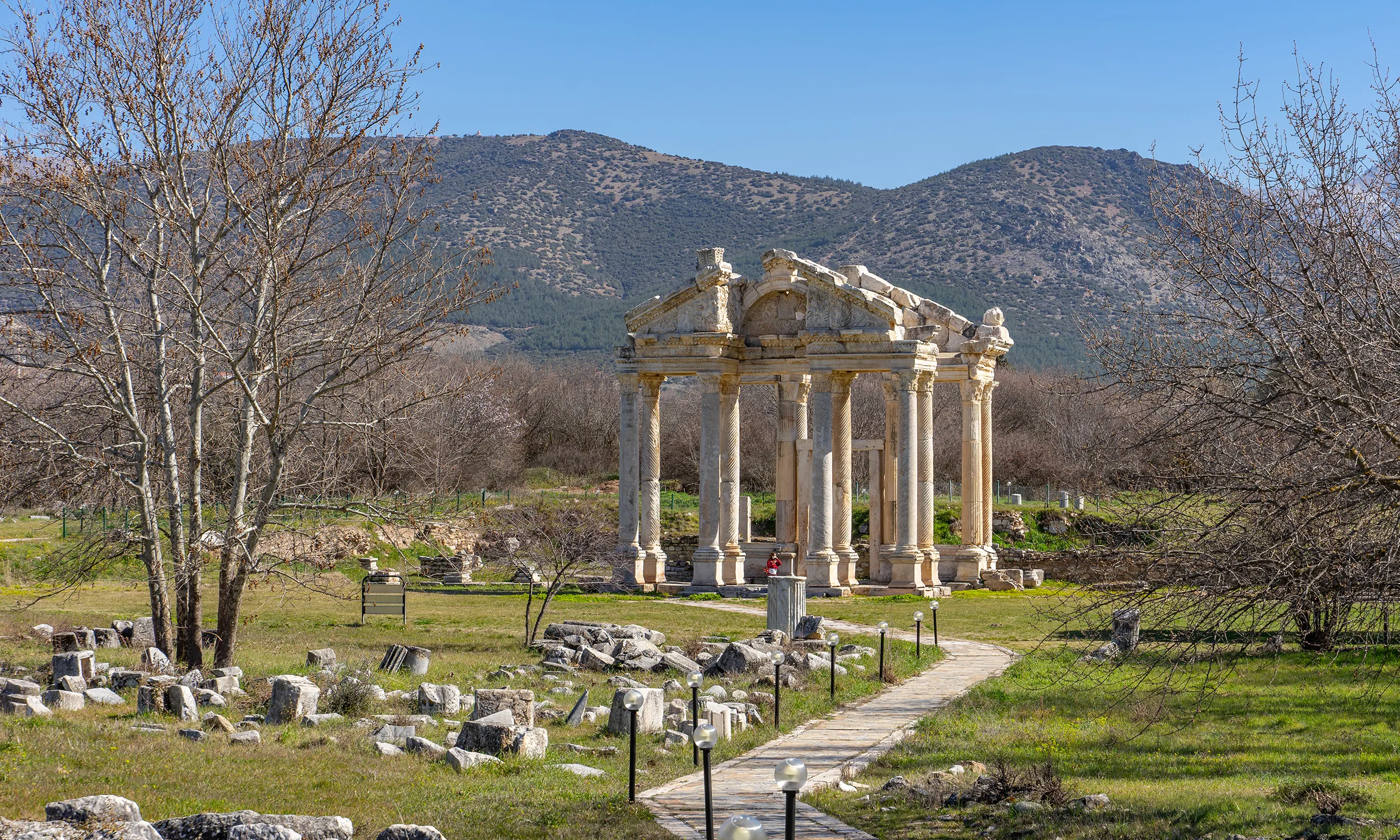
Explore three remarkable archaeological highlights and ask about regional food stops when the itinerary allows.
View Tour
Create a personalised route linking Istanbul, Ephesus, Pamukkale, Denizli, Cappadocia and regional food experiences.
Explore Private Tours