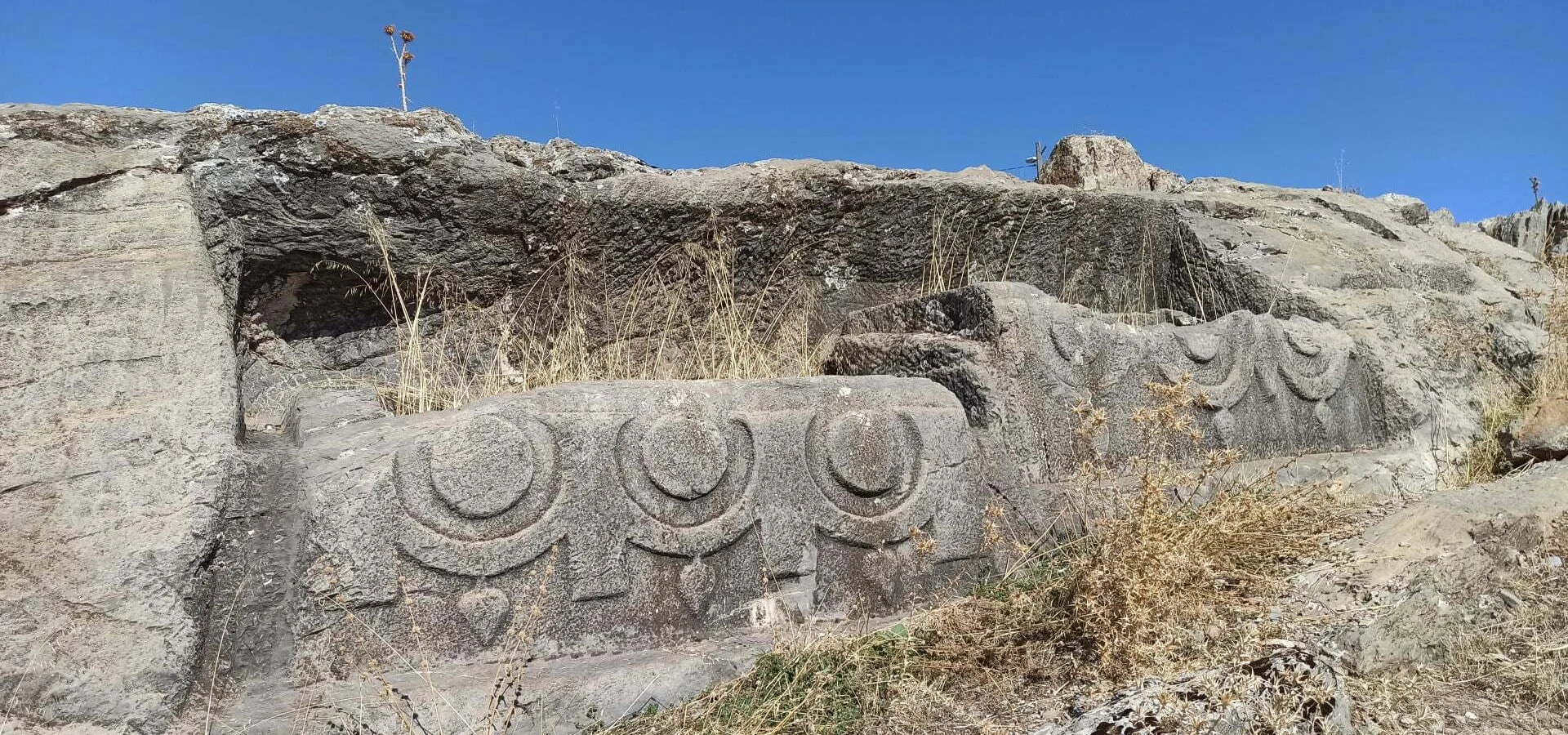
Apollonia Salbace Ancient City
Travel through the Bronze Age settlement mound and Roman-period Apollo sanctuary at Medet.
Explore This Guide →





Southwest of Denizli's busy urban centre, Tavas brings together a fertile plateau, villages with long craft traditions and archaeological places that still form part of everyday landscapes. Visitors can move from the loom workshops of Kızılcabölük to the ancient settlements of Apollonia Salbace, Herakleia Salbace and Sebastopolis, then sample desserts and dairy products distinctive to the district.
Tavas is also strongly connected with Zeybek music and dance, the dress and craftsmanship of the efe tradition, and the mountain environment of Nikfer and Bozdağ. The district rewards travellers interested in people, food, local history and quiet discoveries more than a single blockbuster monument.
This guide covers the modern town of Tavas and the wider Tavas district—a useful distinction because several important places are in outlying neighbourhoods. Distances, access, workshop visits, museum schedules and winter-sport operations should be checked before setting off.
Three fascinating archaeological landscapes, each with a different story.
Handwoven textiles, designs and a local craft museum.
Tavas baklava, sweet tahini pide and lightly caramelised sheep's-milk yoghurt.
High mountains and a seasonal winter-sports centre.
An easy starting point for exploring the town and surrounding Denizli countryside.
Denizli, southwestern Türkiye
Tavas town and wider district
About 50 km by road to Tavas town
Tavas Plain, foothills and uplands
Inland Caria and neighbouring cultural zones
Kızılcabölük weaving tradition
Apollonia, Herakleia and Sebastopolis
Historic Hırka Mosque
Tavas Zeybeği
Geographically indicated Tavas Baklavası
Tavas Yanık Koyun Yoğurdu
Ballı tahinli pide (içli-dışlı)
Denizli Ski Centre, Nikfer/Bozdağ
Çakıroluk protected landscape
Car or pre-arranged vehicle most flexible
Half day in town; full day or more for district
Tavas offers something different from the famous travertines and large excavated cities normally associated with Denizli. The principal experience is a living cultural landscape: local food businesses, textile traditions, villages and hills, with archaeological sites nearby rather than concentrated in one ticketed park.
Its appeal is strongest for travellers who enjoy regional history, craft demonstrations, rural photography, traditional music and food. An archaeology-focused trip can be combined with an everyday town visit rather than treating the surrounding communities as merely a drive-through.
Tavas also makes a practical thematic companion to Pamukkale and Hierapolis or Aphrodisias, although these are separate places and travel times must be allowed for.
Culture and regional history
Kızılcabölük weaving
Three less-visited sites
Nikfer–Bozdağ in winter
Baklava and tahini pide
Flexible, unhurried
Tavas is a district of Denizli Province in southwestern Türkiye. The town is on the regional road network linking Denizli with communities farther south and southwest, including Kale and the routes towards Muğla. The district contains the Tavas Plain, rural neighbourhoods and mountainous terrain.
A road distance of about 50 km between Denizli city centre and Tavas town is a useful planning reference; the actual journey depends on the starting point and chosen route. Travelling to specific places such as Kızılcabölük, Medet, Vakıf, Hırka or Nikfer adds local mileage.
For navigation, enter the specific neighbourhood or landmark, not simply “Tavas”. The town centre, textile museum, archaeological areas and ski facilities are not all within walking distance of one another.
Denizli
Tavas
Approximately 50 km
Tavas Ovası
Kale
Denizli–Tavas–Kale corridor
The Tavas Plain has long provided fertile land for settlement and cultivation. Archaeological mounds and the remains of classical communities around the plain suggest an enduring relationship between agriculture, routes and local centres.
Beyond the agricultural valley floor, the landscape rises toward higher ridges and wooded areas. These contrasts explain why Tavas offers both field-and-village scenery and cooler upland experiences such as Kızılcabölük’s Çakıroluk area and the slopes above Nikfer.
The terrain also shapes practical travel: an archaeological stop can involve open fields and rough ground, while mountain access may require a different route, vehicle preparation and weather check.
Cultivated plateau
Wooded slopes and mountains
Mounds and ancient towns
Farms and working villages
Different road and ground conditions
Historical sources use forms such as Davaz and Tavas for the wider area. The Denizli Provincial Directorate of Culture and Tourism also records Yarangüme / Yarengüme as a historical name for the location of the modern district centre.
Local historical accounts connect the regional name with the Tavaslıoğlu beylik, while other explanations link it with the ancient name Tabae. These are different kinds of evidence—recorded place-names, local tradition and proposed etymologies—and no single folk explanation should be presented as definitively proven.
Important distinction: the ancient city of Tabae is associated with present-day Kale, a neighbouring district. It should not be described as a fully excavated attraction in central Tavas.
Davaz
Yarangüme / Yarengüme
Tavaslıoğlu
Tabae at Kale
Etymology is debated
The district has evidence of much earlier occupation than its present streets suggest. Mounds and ancient settlements in the wider plain trace occupation back into prehistory, while named centres such as Apollonia Salbace, Herakleia Salbace and Sebastopolis document the Hellenistic, Roman and later periods.
Turkish settlement and political influence grew through the medieval centuries. Provincial and district heritage accounts describe a local Tavas beylik and later integration into Ottoman administration. The current district centre and the wider historical territory did not always share identical administrative boundaries.
Tavas became a district of the Denizli sanjak in 1883 according to the district governorship, with a municipality formed in 1890. Modern Tavas retains an agricultural and commercial character alongside textile production, food specialties and inherited social traditions.
Prehistoric settlement evidence
Caria and Roman Asia Minor
Turkmen settlement and beyliks
Local administration and village heritage
District status recorded
Municipality established
Ancient Caria occupied much of southwestern Anatolia, although historical boundaries varied and neighbouring cultural regions interacted over time. The Tavas area lay on inland routes linking communities between plains and mountains.
Apollonia and Herakleia Salbace, Sebastopolis, and the separate ancient settlement of Tabae help explain this connected landscape. Their known history comes from varying combinations of inscriptions, coins, survey evidence and surviving architecture.
Do not assume every ancient place offers a developed archaeological park. The best researched itinerary distinguishes visible monuments from historical sites that remain within villages, cultivated fields or protected land.
Inland Caria
Mounds, stone, coins and inscriptions
Some sites are fragmented
Research-led local guiding
The town centre is a place to observe everyday Tavas: bakeries, shops, markets and the social rhythm of a working inland community. It is best approached as a cultural walk, not as a promise of a continuous preserved old town with monumental buildings at every corner.
Try a local bakery, ask about the sweet tahini pide, take time for tea and look for opportunities to learn about local textiles, footwear or Efe traditions. Opening days, shop availability and any seasonal festivals may vary.
A central stop can also work as the orientation point for a wider heritage drive to Kızılcabölük, Hırka, Medet and other parts of the district.
Local walk and food stop
Working Anatolian town
One or two unhurried hours
Not all sites are in the centre
Choose local products with a clear connection to the district: traditional baked goods, textile work and practical handmade items. Kızılcabölük is particularly meaningful for those interested in how cloth is woven and decorated.
The district has a history of garment production, footwear and körüklü çizme—accordion-pleated boots associated with Efe dress. Workshops may be private production spaces, so visits and photographs should always be requested rather than assumed.
For food purchases, ask about freshness, ingredients, allergens and storage. Traditional items such as baklava, honey-and-tahini pide and sheep-milk yoghurt may not be available at every shop on every day.
Textiles and regional foods
Efe boots and weaving
Ask where an item was made
Permission before workshop photos
Kızılcabölük, a neighbourhood of Tavas, is one of Denizli’s long-established textile centres. Traditional weaving includes cotton, linen and silk fabrics, with decorative motifs and finishing techniques that express regional craftsmanship.
Official provincial descriptions mention floral patterns, birds, fruit and other motifs, along with embroidery and ornamentation. The weaving story includes both small-scale craft knowledge and modern textile production; not every textile for sale is necessarily made on an old handloom.
Travellers can combine a visit to the neighbourhood with the Hanife and Ahmet Paralı museum and, where access is agreed, a conversation with a maker or a look at a working loom. Buying directly from an identifiable producer can be a meaningful way to support the tradition.
Kızılcabölük, Tavas
Cotton, linen and silk
Weaving and embellishment
Floral and local motifs
Textile museum
Arrange working demonstrations
The Hanife and Ahmet Paralı Yöresel El Sanatları ve Tekstil Müzesi presents local textile-making and elements of regional daily life. Educational descriptions refer to historic clothing, weaving equipment, traditional fabrics and exhibits connected with rural and Yörük culture.
The museum makes a strong introductory stop because it adds context to cloth that can otherwise appear to be simply a market product. Visitors can learn how tools, patterns and skills relate to the wider social history of the area.
Contact the museum or municipality before travelling. Educational listings provide weekday hours, but special visits may be appointment-based, and any current schedule, entry arrangements or photography rules should be verified.
Kızılcabölük, Tavas
Textiles and local heritage
Understand weaving methods
Confirm hours or appointments
Craft and family history interests
The Hırka Mosque is a historical Ottoman-period mosque in the Hırka neighbourhood of Tavas. Official architectural descriptions record a square prayer hall, domed roof, minaret and distinctive entrance and porch elements.
Its architectural phases require care in dating: published heritage accounts contain conflicting or difficult-to-reconcile inscription dates, while stylistic analysis points to later alterations. It is best to describe the building as Ottoman heritage rather than assert one exact construction year as indisputable.
This is a working place of worship. Confirm visitor arrangements, avoid prayer times, dress modestly and photograph only where appropriate. The official Denizli route guide includes Hırka Mosque on a suggested regional circuit.
Hırka, Tavas
Ottoman
Domed prayer hall
Layered building phases
Worship and access rules apply
Local histories of Tavas place special emphasis on Hırka and the district’s changing centres of administration. The neighbourhood is also associated with accounts of Ottoman-period local notables and the Tavaslızâde family.
A historical mansion or former administrative building is mentioned in district publications, but it should not automatically be treated as an open public museum or accessible private house. A responsible visit focuses on the mosque and visible streetscape, and avoids entering private compounds.
For visitors interested in the beylik and Ottoman chapters of the region, Hırka helps connect the documentary history of Tavas with the places where communities actually lived.
Historical administration
Hırka
Tavaslızâde family
Respect lived-in buildings
District tourism materials identify the Sarı İsmail Sultan Türbesi in the Tekke area, associating it with a Türkmen religious figure whose local tradition places him in the 13th–14th centuries.
The site illustrates the way the cultural history of the region extends beyond archaeological temples and Ottoman mosques to include local devotional traditions and rural religious networks. Biographical details in popular accounts should be read as transmitted local history unless supported by independent contemporary documentation.
Anyone visiting a tomb or shrine should respect the customs of people using the place, avoid disruptive photography and check local access before including it in a fixed itinerary.
Tekke
Türbe / tomb
Medieval local tradition
Respectful and low-impact
Avdan Baba is another figure remembered in the district’s local heritage materials. The associated tomb and narratives form part of the story communities tell about migration, settlement and spiritual leadership in medieval southwestern Anatolia.
Traditional biographies often contain accounts passed down over generations. It is helpful to distinguish community memory from independently verifiable dates and events rather than turn every detail into a literal chronological fact.
A visit makes most sense as a contextual stop for travellers interested in local religious and cultural history, subject to current conditions and appropriate visitor behaviour.
Local oral and devotional history
Avdan area
Medieval Türkmen settlement
Tradition and documents differ
The region’s most rewarding archaeological route links Apollonia Salbace, Herakleia Salbace and Sebastopolis. They are distinct ancient communities, not three names for one archaeological park.
At Medet, Apollonia is especially associated with its Bronze Age mound and evidence for a sanctuary of Apollo. At Vakıf, Herakleia’s epigraphic, numismatic and monumental history has a different character. Near Kızılca, Sebastopolis has traces of an acropolis mound, stadium and necropolis.
All three require realistic expectations. Public interpretation and access can be limited, some remains occupy village or agricultural land and the attractions cannot be treated like completely excavated, ticketed sites.
Medet
Vakıf
Near Kızılca
Specialist history circuit
Check boundaries and access
Apollonia Salbace was an ancient settlement in the fertile Tavas Plain, now associated with the modern neighbourhood of Medet. Official cultural inventories identify Bronze Age occupation at Medet Höyüğü, a Hellenistic city name and Roman-era prosperity.
Its most important reported monument is the Temple of Apollo, with foundations and inscriptions connected in official accounts to Hadrian’s reign. The visitor experience, however, is a fragmented archaeological landscape rather than a complete temple complex.
Village life, protected archaeological material and agricultural plots coexist here. Read the dedicated Apollonia guide before planning a stop and seek local clarification about which areas can be approached legally and safely.
Medet
Bronze Age mound
Apollo sanctuary evidence
Especially important
Dispersed archaeology
Herakleia Salbace lies in the area of Vakıf, on the edge of the plain below the mountain landscape once associated with Salbakos. The provincial culture authority describes an ancient town whose name and coinage evoke the hero Herakles.
The historical remains are not presented in official descriptions as one entirely accessible restored city centre. Archaeological features overlap with the present settlement, and the area’s inscriptions and finds are part of a wider scholarly record.
The site is particularly worthwhile for visitors following the ancient cities of inland Caria and their religious, political and artistic connections.
Vakıf
Herakleia Salbace
Herakles
Salbakos foothills
Verify locally
The Tavas district governorship describes a Hieron, a monument in the Kızılcabölük area associated with the territory of Herakleia Salbace. Its published account refers to sculpted mythological figures including Apollo, Artemis, Dionysos, Pan and Herakles.
It is useful as an example of local Roman-era visual culture and links with the high-quality artistic traditions of the wider Carian region. However, the name of a monument in an inventory does not guarantee that its decoration remains fully visible or accessible at the reported spot.
For a meaningful visit, establish the present whereabouts of the pieces, current site conditions and any necessary permissions with an appropriate local heritage authority.
Herakleia Salbace
Kızılcabölük area
Mythological reliefs
Roman period
Must be confirmed
Sebastopolis is associated with the area near Kızılca in the Tavas district. The official Denizli archaeological inventory records visible traces of an elevated acropolis mound, a stadium and a necropolis.
Some of its remains are fragmentary or surrounded by worked land. The surviving archaeological evidence is important, but the site is not a promise of rows of complete columns or a restored grand Roman arena.
Combine Sebastopolis with other Tavas ancient sites only after confirming practical routes, available time and legal access to archaeological land.
Kızılca area
Mound, stadium and necropolis
Roman and Byzantine visible evidence
Partial, not monumental
The ancient city of Tabae is strongly connected with the wider regional history and names such as Davaz, but the archaeological location generally associated with Tabae is in present-day Kale district. It should not be merged with the archaeological remains of Apollonia, Herakleia or Sebastopolis.
Tabae provides useful context for a longer route across the inland Carian landscape, especially for travellers continuing west or south through Kale. It is a separate stop, so research and access planning are needed in addition to the Tavas itinerary.
In short, Tavas town, the wider historical Tavas region and ancient Tabae are related concepts, not interchangeable destinations.
Tabae
Kale
Regional history
Treating Tabae as central Tavas
Tavas Zeybeği is one of the best-known expressions of the district’s cultural identity. The Turkish Ministry of Culture describes it as a regional folk dance with distinctive melody, costume and slow, deliberate movements, often associated with weddings and festivals.
The wider Efe tradition shaped the imagery of strength, dignity and community memory in western Anatolia. In a performance, deliberate posture and measured movements are as important as the musical accompaniment.
Watching a performance can be a memorable cultural experience, but a visitor should not expect a scheduled public show every day. Ask in advance about festivals, local events or demonstrations rather than promising an on-demand performance.
Tavas Zeybeği
Efe identity
Weddings and festivities
Music, costume and measured steps
Event-dependent
Among the crafts associated with Tavas are körüklü çizme, traditional pleated boots linked with the distinctive clothing of Efe culture. Provincial descriptions still identify boot-making and the local footwear trade as part of the district’s economic and cultural history.
Bootmaking offers an engaging way to connect a practical trade with the image of the efe seen in dance, photography and festivals. Individual artisans, materials and styles differ, so do not assume every modern shoe business produces historic costume footwear.
If visiting a maker, agree on arrangements in advance; workshop access and production schedules take priority over casual sightseeing.
Körüklü çizme
Efe dress
Footwear and leatherwork
Ask before entering workshops
Tavas is particularly associated with Tavas Baklavası, ballı tahinli pide (a honey-and-tahini sweet bread) and Tavas Yanık Koyun Yoğurdu, a firm sheep’s-milk yoghurt with a characteristic toasted or caramelised flavour.
More broadly, the Denizli region offers oven-cooked meats, seasonal vegetable dishes, keşkek and traditional baked goods. Availability varies from one eatery to another; the most rewarding meals often come from asking what the establishment is especially known for preparing.
Do not confuse a recipe’s local reputation with a legal geographical-indication designation. Tavas Baklavası and Tavas Yanık Koyun Yoğurdu have registered geographical indications; sweet tahini pide is a celebrated local food without implying the same registration.
Tavas Baklavası
Ballı tahinli pide
Yanık koyun yoğurdu
Keşkek
Traditional bakery or local kitchen
Tavas Baklavası is a local walnut-filled syrup dessert traditionally made for major family and community occasions such as weddings, celebrations and holidays. Its production has a distinctive identity that goes beyond simply adding the name “Tavas” to ordinary baklava.
The official regional food account describes thin layers made with urga unu, a mixture of flours, and the use of a copper tray and wood-fired oven. The dessert is traditionally allowed to rest before serving, contributing to its texture and flavour.
The Turkish Patent and Trademark Office registered Tavas Baklavası in 2018 as a geographically indicated product. Ask local bakers about production days if you want to see the process rather than only buy a finished portion.
Tavas Baklavası
Walnuts
Urga unu
Wood-fired oven tradition
Geographical indication, 2018
Weddings and celebrations
A famous local speciality is ballı tahinli pide, often called içli-dışlı in Tavas. Unlike a familiar savoury Turkish pide, this is a sweet baked dough involving tahini and traditionally served warm, sometimes finished with honey.
The Denizli culture authority describes a dough preparation that rests before baking in a wood-fired oven. The result is rich rather than light, making it an appealing shared snack with tea or a simple dessert after lunch.
Try it fresh from a bakery when available. Ask about the ingredients if you avoid sesame (tahini), wheat or honey, and do not expect identical sweetness or presentation at every establishment.
İçli-dışlı
Tahini and optional honey
Warm and sweet
Bakery
Sesame and wheat
Tavas Yanık Koyun Yoğurdu is a traditional sheep’s-milk yoghurt noted for its firm body and distinctive toasted or lightly caramelised aroma and taste. It is also described locally with the term isli yoğurt.
Its character develops through controlled heat treatment and fermentation, not through adding sugar or a flavoured topping. The geographical-indication record identifies its production method as a characteristic part of the recipe.
The Turkish Patent and Trademark Office registered it in 2024. The officially defined geographical boundary is Denizli Province, even though the name refers to Tavas—a useful detail when discussing what a registration actually protects.
Tavas Yanık Koyun Yoğurdu
Sheep’s milk
Toasted / caramelised
Geographical indication, 2024
Denizli Province
The wider Denizli culinary tradition includes keşkek, a slowly prepared grain-and-meat dish associated with communal occasions, as well as local vegetables, soups and oven-cooked meats.
Tavas sources also mention foods such as local güveç and various forms of pide and kebab. Because recipe names and availability are not entirely standardised, it is better to ask what a specific restaurant makes that day than list every item as a guaranteed speciality.
Some of the most interesting experiences are small: finding a bakery preparing a local sweet or discussing the ingredients of yoghurt produced by a nearby dairy rather than seeking a large formal tasting experience.
Keşkek
Oven and long-cooked recipes
“What is your local specialty?”
Confirm lunch availability
The fertile Tavas Plain remains central to the district’s economic identity. The provincial cultural profile also describes a developed trade in garments, textiles and footwear.
Kızılcabölük, Vakıf and other local communities are associated with weaving and textile production; several neighbourhoods are known in official summaries for traditional rural craft techniques using wool, hair and wood.
These are not only heritage displays. They are elements of local work and livelihoods, and a visitor should approach a farm or workshop as a working place where permission matters.
Agricultural plain
Textiles and clothing
Footwear
Wool and woodworking
The Denizli Ski Centre is in the Bozdağ mountain area within Tavas district, reached through Nikfer. Government tourism resources place the centre around 2,420 metres above sea level, making it one of the district’s most distinctive seasonal attractions.
Public descriptions list multiple ski runs and lift installations for different abilities. Facilities and piste operations can change with weather, snow conditions, maintenance and staffing; neither a published number of pistes nor a previous season’s opening date guarantees a particular lift will run on your day.
For 2026–27 winter plans, check the latest official operating notice, road conditions, lift status, equipment rental availability and suitable clothing before leaving town. The ski trip deserves its own time budget rather than a rushed stop between archaeological sites.
Bozdağ, Nikfer (Tavas)
Approximately 2,420 m
Seasonal skiing and snow scenery
Snow-dependent
Mountain road through Nikfer
Lifts, rental and road conditions
Nikfer gives access to the high-mountain character of southern Denizli. Outside the ski period, the wider upland scenery is a contrast with the cultivated plain and textile villages nearer Tavas.
Attractions commonly described as Nikfer or Barza uplands may involve rural roads, limited on-site services and changing seasonal conditions. A road that works well in summer may be inappropriate in snow, ice or heavy rain.
Plan such a trip for mountain landscapes and a sense of place, not on the assumption that every meadow, picnic site or facility has a formal visitor operation year-round.
Nikfer
Mountain foothills and uplands
Bozdağ
Weather and road checks
The Çakıroluk landscape in the Kızılcabölük area is known in official Denizli tourism material for its wooded setting, cool mountain air, springs and picnic-area heritage.
Importantly, Çakıroluk Tabiatı Koruma Alanı has a protected natural area designation. Turkish nature authorities record protection status from 2020, including conservation interest in the endemic Tavas frog (Rana tavasensis). Protected habitat should never be treated as a general off-trail playground.
The wider wooded uplands can offer quiet scenery, but confirm the approved access points and local restrictions. Avoid disturbing water sources, fenced habitats or sensitive wildlife, and do not assume all parts of a conservation area are open for picnicking.
Çakıroluk / Kızılcabölük
Woodland and upland habitat
Designated nature conservation area
Endemic Tavas frog
Use permitted routes only
Neighbourhood routes around Tavas can reveal seasonal colour, cultivated fields, quiet village approaches and mountain views. District and regional sources mention rural picnic locations, while private farms and wooded land may have restricted access.
Outdoor activity should be matched to the weather and land conditions. In warmer months, protect yourself from sun exposure; in winter, prepare for cold, snow and potentially slippery mountain roads.
The most enjoyable countryside itinerary is often deliberately simple: a scenic stop, a village bakery, local conversations and a carefully chosen walk on established public access routes.
Village and upland scenery
Layered clothing
Short permitted walks
Respect crops and habitats
Spring and autumn are appealing for village walks and archaeological exploration, when the lower-lying landscape is often more comfortable for outdoor visits. Summer brings long daylight hours, but exposed sites can be hot.
Winter can be particularly interesting for the Nikfer–Bozdağ ski region when conditions allow operations. Snowfall and mountain-road safety need checking rather than assuming a fixed season.
For the weaving museum, mosques, bakeries or workshops, the right timing depends more on actual business and appointment schedules than on climate alone. Avoid promising a local festival date until it has been announced.
Pleasant heritage explorations
Long days; heat precautions
Town, villages and food
Possible skiing at Bozdağ
Local crafts and culture
Tavas is reached by road from Denizli on the southwest-bound regional route. The district governorship describes road connections with Kale and onward links to Muğla; the area is not served as a town-centre rail stop on a typical visitor itinerary.
Local public transport links Tavas and Denizli, but routes, fares, stopping locations and frequency need current verification. Visitors arriving at Denizli Çardak Airport generally need onward road transport or connections through Denizli.
If your plan includes several archaeological areas, the textile museum, Hırka and Nikfer, a pre-arranged vehicle or rental car is the most practical option. Budget travel time between places rather than only from Denizli to central Tavas.
Main road connection
Road transfer required
Check current bus/minibus schedule
Car or private driver
Use exact destination names
Yes, Tavas can be visited as a separate inland-Denizli excursion from a base in Pamukkale or Denizli. It offers a contrast to the travertines and the great monumental site of Hierapolis.
A good day-trip choice is to focus on one theme: textile heritage and food, or ancient cities of the Tavas Plain. Trying to include every ancient site, mountain road, museum and dining stop on a single afternoon will make the trip rushed.
Allow for variable road conditions, museum appointments and the difference between the built-up town and rural archaeological locations. The season also matters: Bozdağ is best handled as a separate winter-sport day.
Pamukkale or Denizli
Culture or archaeology day trip
Full day for multiple stops
Overloading the route
A traveller can enquire about minibuses or local buses between Denizli and Tavas town, but public-transport information changes and published older timetables are not reliable promises for a particular date.
The hardest part is normally the second leg: reaching Medet, Vakıf, Kızılca, Hırka or upland sites from the town, particularly if there is a long wait for the return journey.
If travelling without a vehicle, choose a town-centre visit or verify each local connection individually. Pre-arranged local transport may save considerable time for a multi-site itinerary.
Check local routes
Potentially limited
Confirm before departure
Different seasonal transport needs
Tavas itself is a town, not a single gated attraction, so there is no general “Tavas entrance ticket”. Shops, workshops, mosques and museums each follow their own arrangements.
The Kızılcabölük textile museum may require advance contact or an appointment; Hırka Mosque is an active religious site; the ancient landscapes may be unstaffed or have restricted land access. The Denizli Ski Centre is seasonal and dependent on operations.
No single confirmed 2026 ticket price should be applied to all of these locations. Check opening, permission, admission and practical facilities with the individual venue or competent authority before travel.
No general admission
Verify or reserve
Respect worship access
No uniform visitor setup
Seasonal operation
For the town and villages, take time to photograph streetscapes, details of tools and fabrics, bakery work and changing rural light—always with the consent of people who appear prominently in the images.
At archaeological areas, an image showing the surrounding landscape often explains the site better than an unlabelled close-up of a stone. Do not move pottery, climb fragile remains or cross into private cultivated land to get a shot.
In a weaving workshop or museum, ask whether photography is allowed, particularly when designs, working methods or private production areas are involved. At wildlife habitats, never approach or disturb protected species for pictures.
Looms, food and landscapes
Request consent
Never disturb objects
Follow local rules
Respect conservation
Families may enjoy the textile museum, bakery stops and short town walks, especially when children are curious about how local products are made. Plan plenty of flexibility and confirm whether a craft demonstration is suitable for your group.
Rural archaeological sites may have uneven surfaces, unprotected edges or farmland; careful supervision is essential. Upland roads and ski activities involve a completely different set of equipment and weather considerations.
For a family day, combining just two or three accessible cultural stops is usually more rewarding than completing a long checklist.
Food and craft learning
Uneven archaeological terrain
Snow and cold
Keep itineraries short
Tavas town includes ordinary urban pavements and businesses, but accessible facilities cannot be assumed at every older building. The village sites, protected natural areas and archaeological remains may have steps, loose ground or limited signage.
The Kızılcabölük museum and Hırka Mosque should be contacted separately regarding step-free routes, restroom access and assistance. A listed address or a tourism description is not confirmation of complete accessibility.
For visitors with mobility requirements, prioritise venues whose actual facilities have been confirmed and allow more time for short, comfortable visits.
Vary by venue
Often irregular
Ask in advance
Verify step-free approach
Working farms, active religious buildings, private weaving premises and archaeological land require different kinds of care. Ask permission, stay on approved access and leave every archaeological object where it is found.
Do not enter tombs, remove stones or pottery, disturb fields or step into protected breeding habitats. Such actions harm places that carry both heritage and ecological value.
Local spending can also make a difference: choose genuinely local producers where practical, agree in advance if a demonstration has a fee, and approach the district with curiosity rather than treating residents as a tourist attraction.
Do not touch or collect
Request access
Dress and behave respectfully
Stay outside restricted habitat
Support identifiable local makers
Half day — town and food: Start with a walk through the modern town, ask at a bakery for fresh ballı tahinli pide, and make a local lunch or tasting stop. If you can arrange a workshop visit or museum opening, use that as the main activity rather than rushing to distant sites.
One full day — textiles and history: Begin in Tavas, continue to Kızılcabölük for weaving and the museum by arrangement, then select one or two nearby historical stops such as Hırka Mosque, Medet/Apollonia or Vakıf/Herakleia according to access and interests.
One full day — specialist archaeology: Consider a carefully researched circuit focusing on Apollonia, Herakleia and Sebastopolis, with realistic time for travel and on-site interpretation. Winter alternative: devote a separate day to Nikfer–Bozdağ when the ski centre operates.
Town + bakery + one cultural stop
Town + Kızılcabölük + Hırka
Select ancient sites
Nikfer–Bozdağ
Morning: Arrive in Tavas and begin with local orientation and an opportunity to try something from the town’s baking tradition. Continue to Kızılcabölük for the museum or a pre-arranged loom visit.
Midday: Have lunch or a short snack in a local community rather than planning an unrealistic fixed restaurant opening. Choose one main historical stop—for example, Hırka Mosque or an interpretive visit focused on Herakleia Salbace.
Afternoon: Add another nearby destination only if the route, opening conditions and time allow; finish with a visit for local baklava or yoghurt. This outline is flexible and deliberately avoids invented appointment times, driving estimates and guaranteed access.
Town and Kızılcabölük
Food and historical stop
Optional second site
Book or confirm special access
Day one — living heritage: explore Tavas town, Kızılcabölük weaving and the museum; discuss the Efe tradition and see Hırka’s Ottoman architectural heritage if current access allows. Leave space for local food rather than viewing lunch as an interruption.
Day two — archaeology: explore selected remains of Apollonia Salbace, Herakleia Salbace and Sebastopolis with the benefit of accurate contextual information. If the sites are restricted, adapt the day to permitted vantage points and additional regional heritage stops.
If skiing is the main motivation, substitute a separate Bozdağ winter day for one of the themes; combining a ski outing with detailed archaeological visits is generally impractical.
Crafts, culture and cuisine
Ancient cities
Bozdağ
Slow, specialist travel
Tavas is best approached as a district-wide cultural and rural experience, built around local food, weaving, village history and scattered archaeology.
Pamukkale and Hierapolis are better suited to travellers seeking a famous natural landscape and a major developed ancient visitor site. Aphrodisias is an outstanding choice for monumental classical remains and sculpture.
These destinations complement rather than replace one another. Tavas adds a view of the inland communities and living practices that sit beyond the headline tourist sites.
Living heritage and small-scale discovery
Travertines and Hierapolis
Monumental archaeological remains
Combine themes on separate or carefully planned days
If your interests go beyond the standard Denizli highlights, Wow Cappadocia can help discuss a tailor-made day focused on weaving, traditional foods, Ottoman history or the archaeological landscape around Tavas.
A good private itinerary begins with your priorities: craft and cuisine, historical sites, landscape photography or a slower family-friendly route. Where a special site, museum, working workshop or ski facility is involved, actual availability and access need to be established first.
Explore the broader regional options or contact us with your date, starting location, group size and interests. We can discuss suitable guiding and transport subject to availability and any permissions required.
Crafts, food and archaeology
Denizli / Pamukkale by arrangement
Tailor-made on enquiry
Access and service availability apply
Planning answers for Tavas town, its villages, heritage, local foods and seasonal attractions.
Tavas is a town and district of Denizli Province in southwestern Türkiye, south-west of Denizli city.
The road distance between the city centre and Tavas town is commonly given as about 50 km; your actual route depends on the starting point.
Local weaving in Kızılcabölük, Tavas Zeybeği, traditional foods including Tavas Baklavası and Yanık Koyun Yoğurdu, ancient sites and Nikfer–Bozdağ.
Local streets, shops, bakeries and daily town life; the district’s most prominent historic and natural attractions are dispersed among other neighbourhoods.
Apollonia Salbace near Medet, Herakleia Salbace at Vakıf and Sebastopolis near Kızılca.
Tabae is historically connected with the wider region, but its archaeological site is associated with neighbouring Kale district.
Textile weaving, handwoven fabrics, local decorative motifs and the Hanife–Ahmet Paralı textile museum.
Visits may be possible; confirm current opening days, any appointment requirement and admission arrangements before setting off.
Potentially, with a pre-arranged workshop visit. Do not assume private production premises welcome walk-in visitors.
A regional folk dance associated with Efe culture, traditionally performed at celebrations and events.
Traditional pleated boots associated with the dress and craft heritage of the Efe tradition.
A locally distinctive walnut-and-syrup dessert, officially registered as a geographical indication in 2018.
A firm sheep’s-milk yoghurt with a distinctive toasted flavour; it received a geographical-indication registration in 2024.
The famous ballı tahinli pide (içli-dışlı) is a sweet preparation made with tahini and sometimes honey.
It is an active mosque. Visit arrangements and respectful access should be checked locally.
It is Ottoman-period architecture; published accounts differ over inscription dates and later building phases, so a single exact year is not asserted here.
The Denizli Ski Centre is on Bozdağ in the Nikfer area of Tavas district, operating seasonally according to snow and official announcements.
This guide does not confirm live lift operations. Check the latest official announcement, snow and road conditions before departure.
Yes. The Çakıroluk Tabiatı Koruma Alanı was designated in 2020; respect access controls and sensitive wildlife habitat.
Allow half a day for a town-focused visit and a full day or longer to explore dispersed villages and archaeological sites.
Yes, with road transport and a selective itinerary rather than trying to include every destination.
The usual visitor approach is by road. Check current regional transport services for alternatives.
No. The main archaeological locations are in separate neighbourhoods and generally require further transport.
Do not assume a single ticket, published opening schedule or complete visitor infrastructure; check each archaeological location.
Town food and museum visits can work well; use extra care around uneven archaeological ground and on mountain roads.
You can enquire about a custom itinerary, subject to guide, vehicle, venue availability and local access rules.
This guide draws its place identities and core historical background from official Denizli Provincial Culture and Tourism Directorate, Tavas District Governorship, Turkish public educational and cultural resources, and the Turkish Patent and Trademark Office. Individual venues and seasonal operations can change independently of these historical descriptions.
District identity and history: Denizli Culture Directorate – Tavas; Tavas Governorship – history; Tavas Governorship – tourism and historic sites.
Culture and food: Denizli regional food; Denizli crafts and textiles; Culture Portal – Tavas Zeybeği.
Geographical indications: Tavas Baklavası (registered 2018) and Tavas Yanık Koyun Yoğurdu (registered 2024).
Sites and visits: Apollonia, Herakleia, Sebastopolis, Hırka Mosque, Kızılcabölük textile museum.
Mountains and conservation: Denizli Metropolitan Municipality – 2026 ski-season notice and Çakıroluk Nature Conservation Area.
Continue from Tavas into the region’s fascinating archaeological and cultural landscape.
Explore the distinct histories of three archaeological centres connected to modern Tavas.
Travel through the Bronze Age settlement mound and Roman-period Apollo sanctuary at Medet.
Explore This Guide →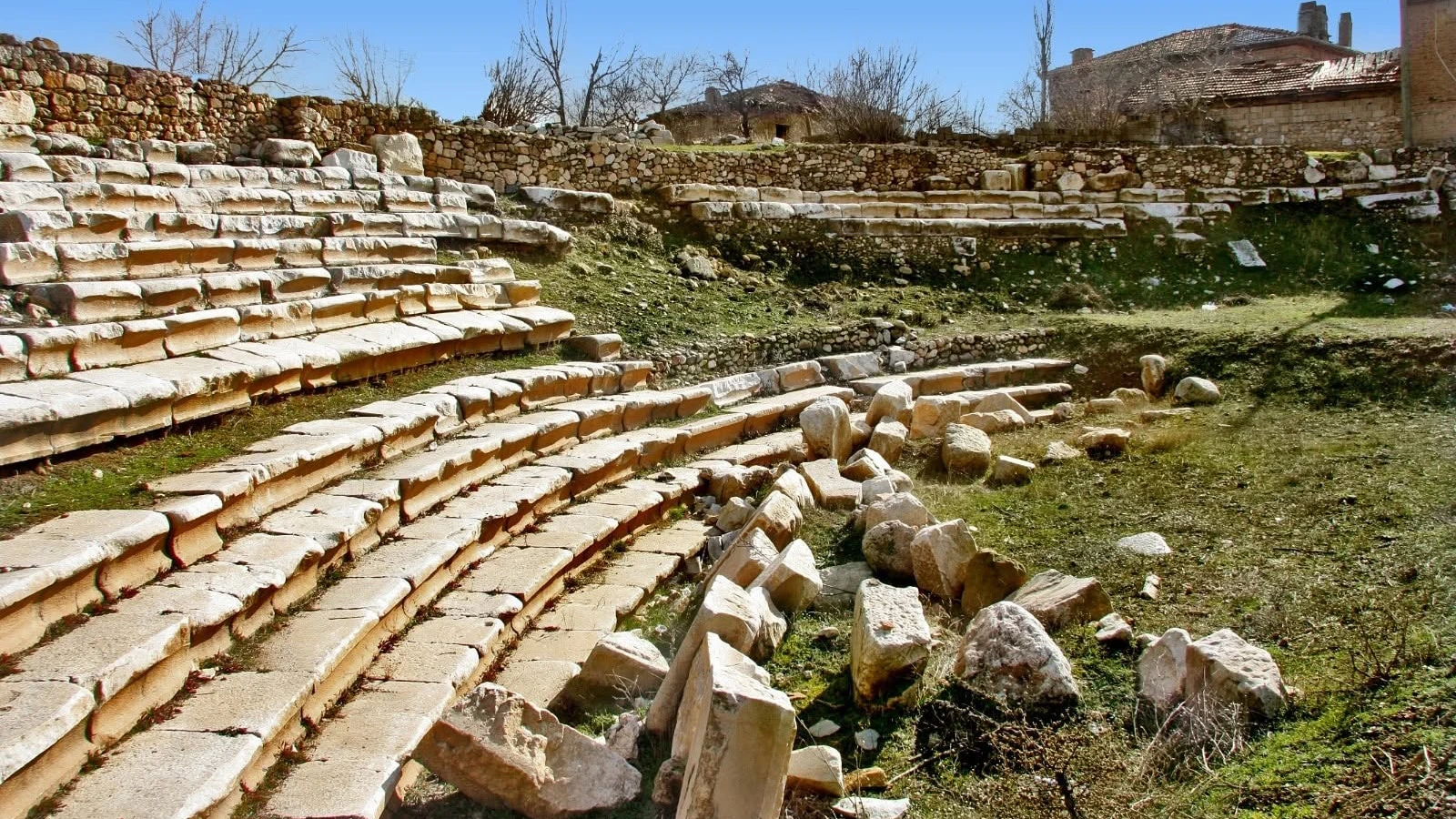
Explore the ancient city associated with Vakıf and the foothills of Salbakos.
Explore This Guide →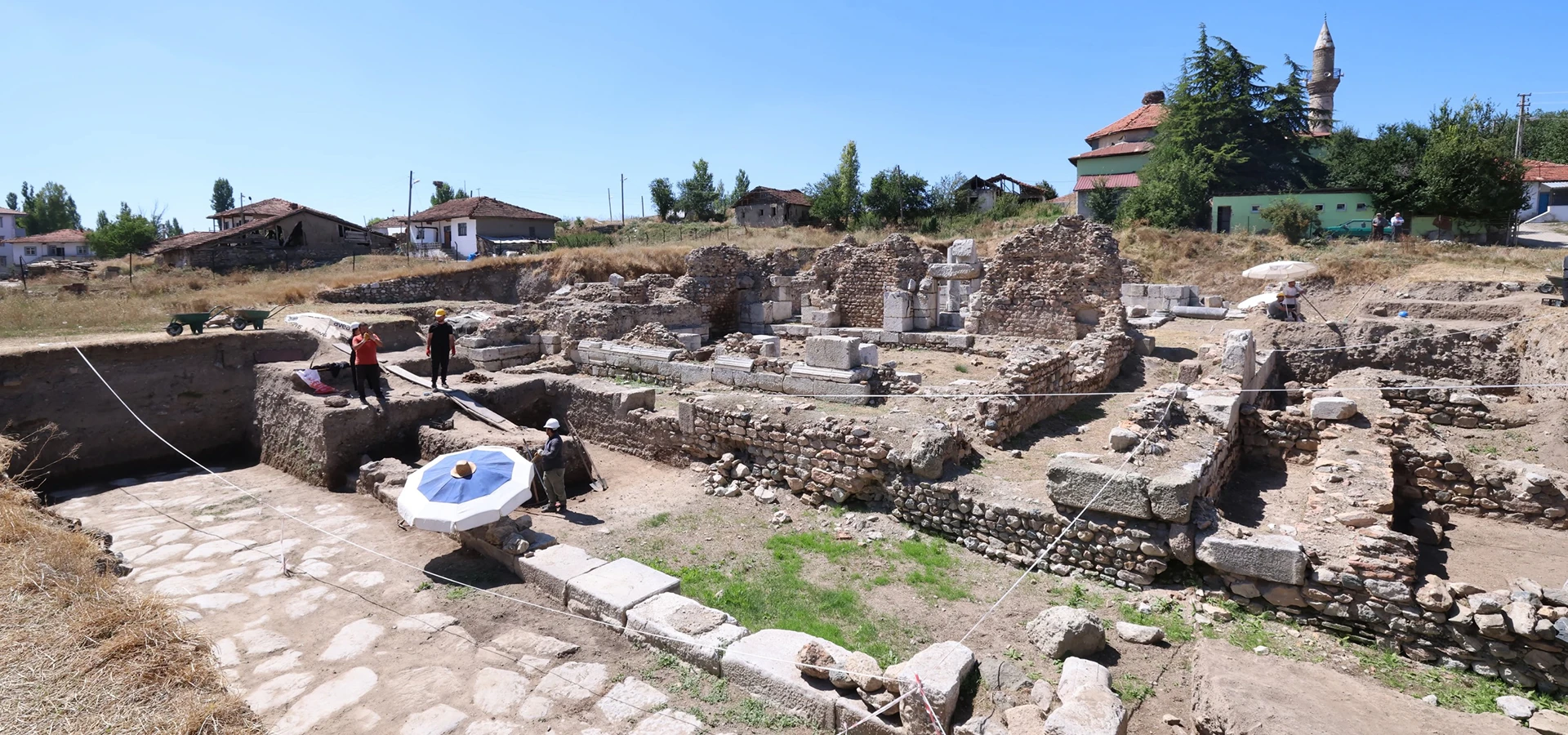
Discover the Roman and Byzantine traces near Kızılca, including the necropolis.
Explore This Guide →Combine local traditions with some of the great ancient landscapes of the wider region.
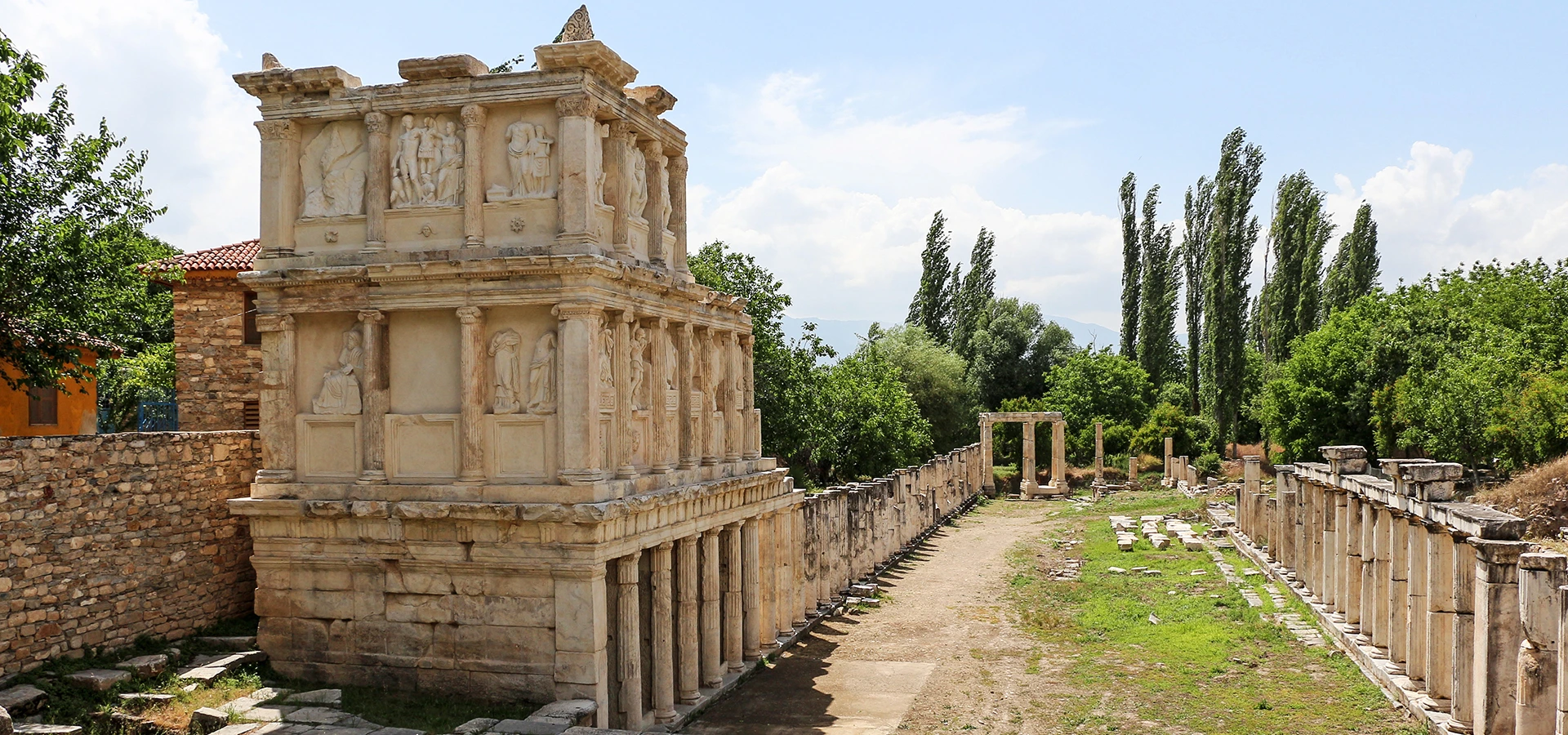
Monumental Roman architecture, sculpture and an extraordinary Carian past.
Explore This Guide →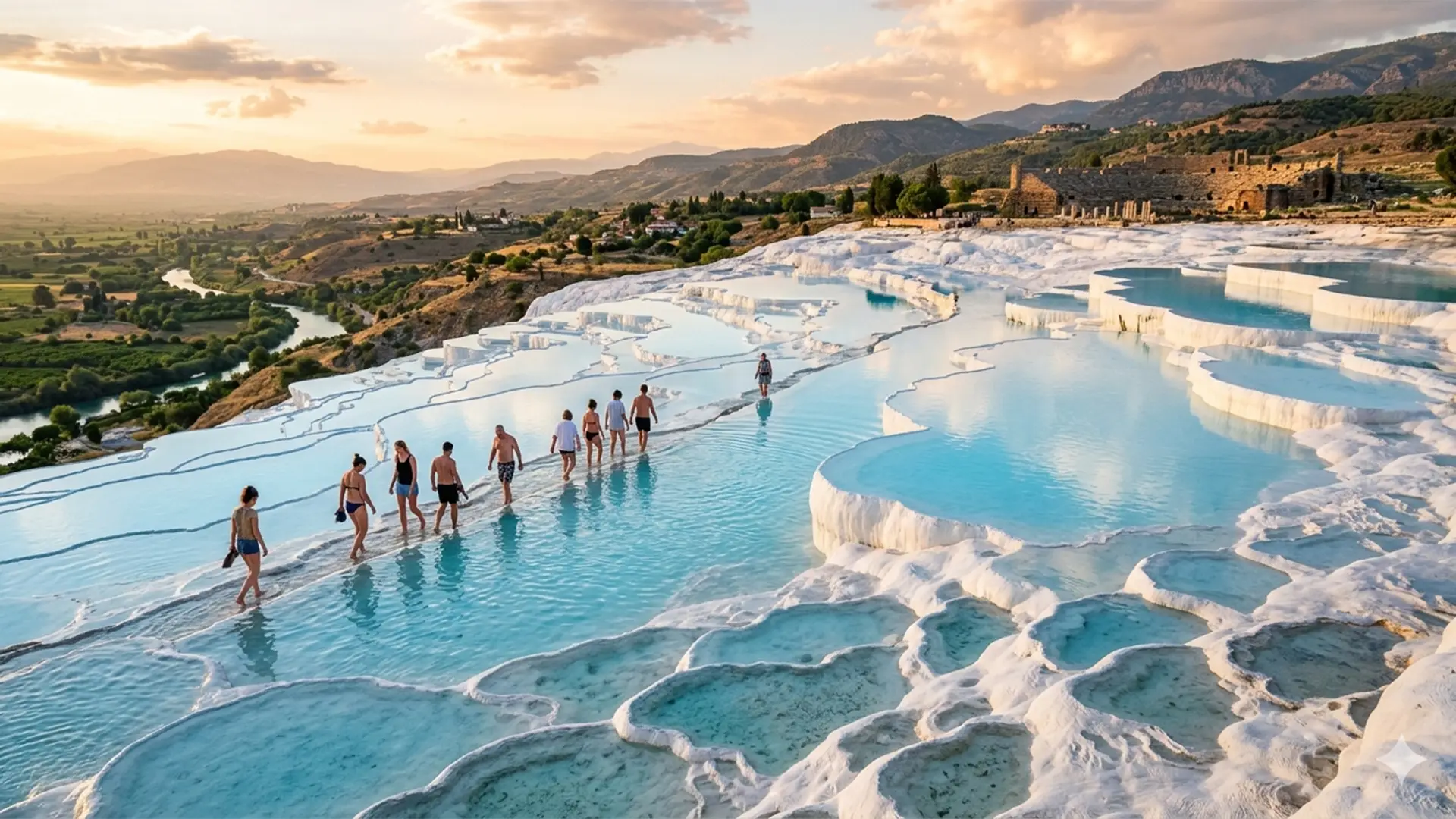
UNESCO-listed travertines and the great ancient city above them.
Explore This Guide →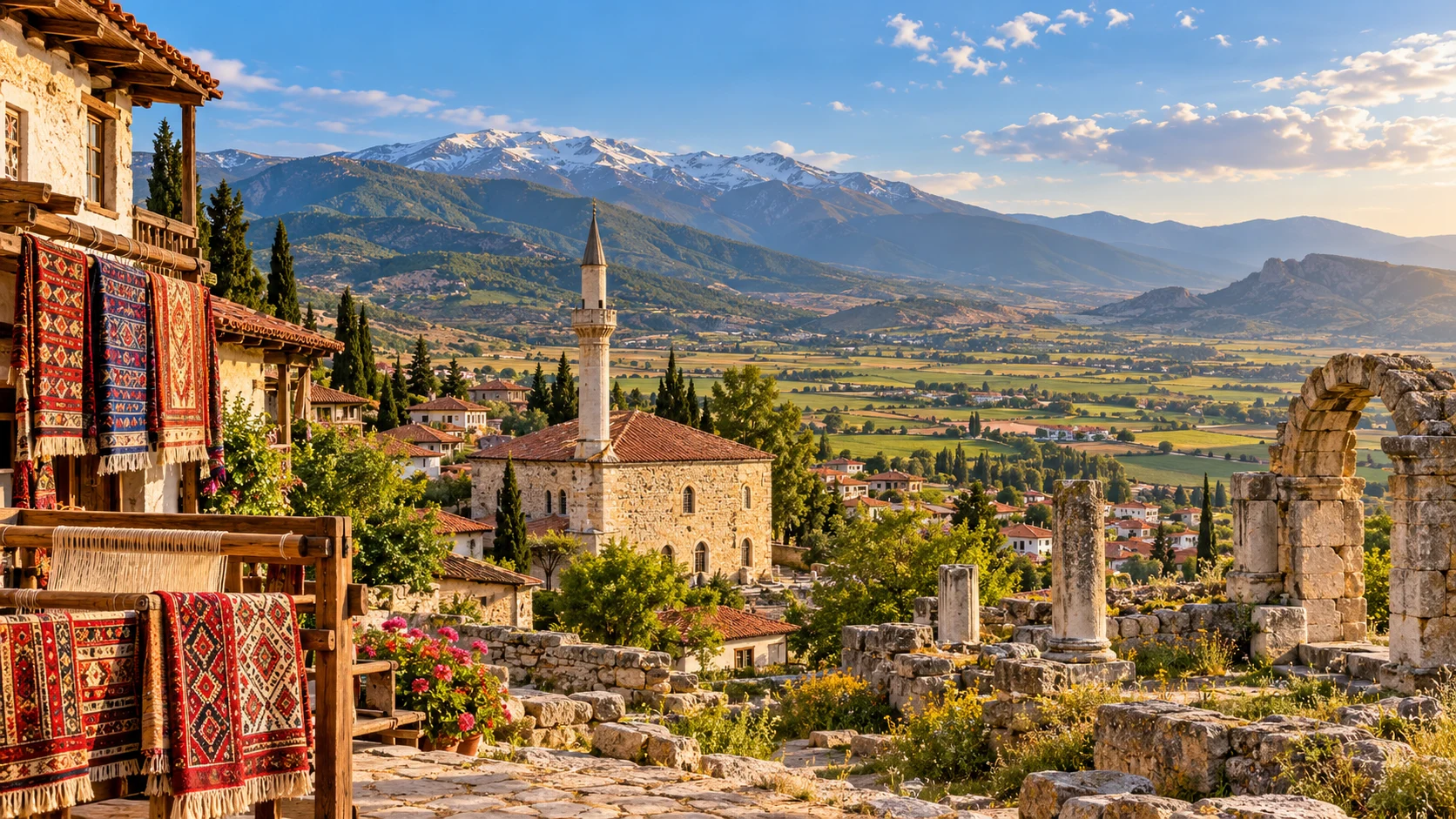
Discuss a tailor-made Tavas itinerary with archaeology, textiles or traditional food.
Send an Enquiry →