Forty Thin Pastry Sheets
The registered method uses 40 individual dough pieces rolled into fine layers.
- Turkish name: yufka
- Traditional target: 40 sheets
- Key skill: even, fine rolling






Tavas Baklavası is one of Denizli’s most distinctive regional desserts. Traditionally prepared for engagements, henna nights, weddings, religious holidays and other gatherings, it combines dozens of delicately rolled pastry sheets with walnuts, oil and sugar syrup. The defining work takes place long before anyone tastes the first piece: dough is kneaded, rested, divided, rolled, layered, cut and baked with considerable care.
This is not simply ordinary baklava with a different place name. The registered Tavas tradition uses a characteristic urga flour mixture containing baklava wheat flour, wholemeal flour and barley flour; applies an urgalama dusting technique; and specifies baking in a traditional kara fırın or wood-fired black oven. The official geographical indication is Tavas Baklavası, registration 375, dated 9 August 2018, and registered by Tavas Municipality. Below, explore its origins, ingredients, equipment, forty layers, syrup, cultural significance, how to taste it and where to look for it in Denizli.
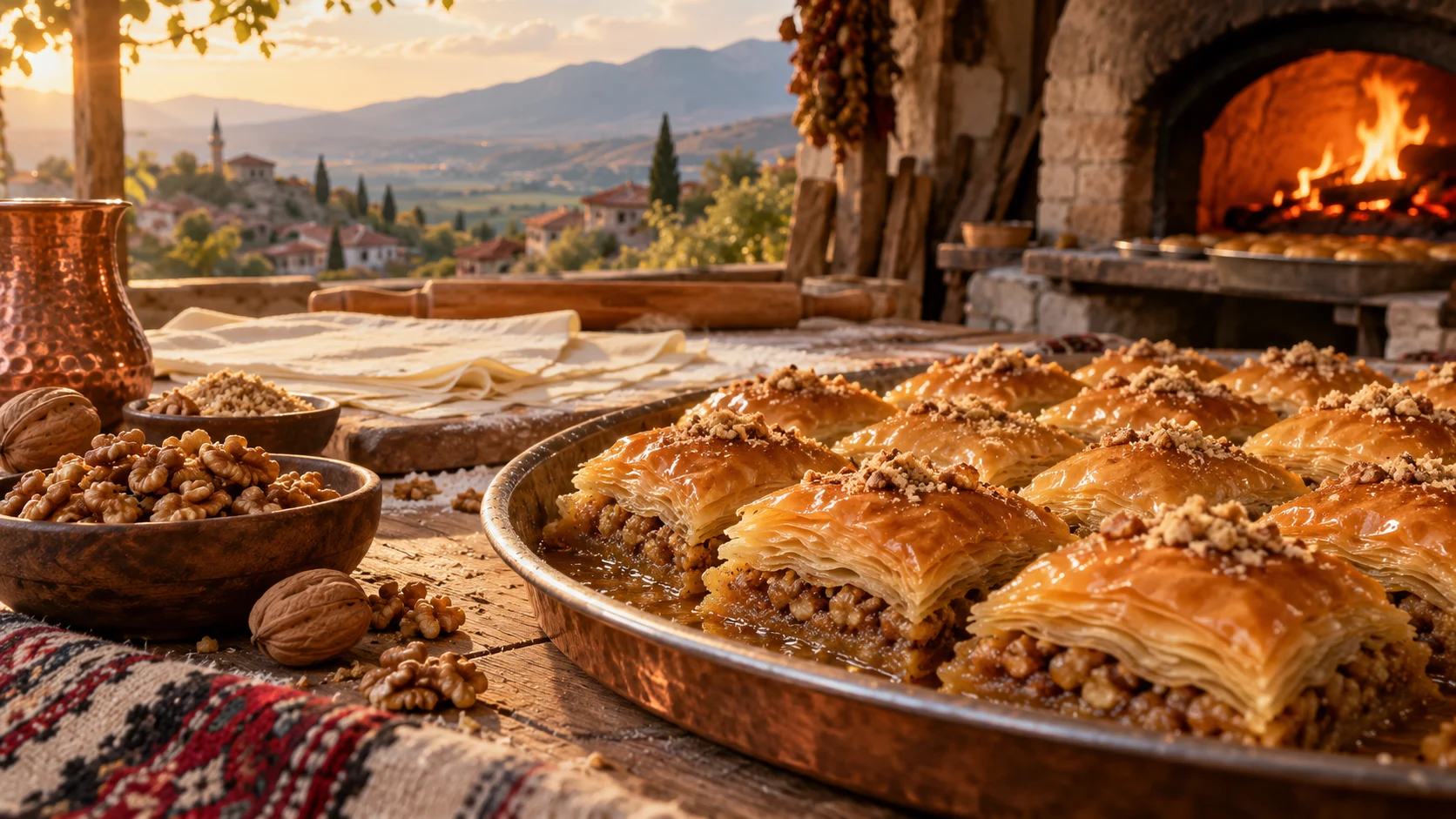
Hand-rolled yufka is arranged in a large tray, with generous walnut-filled middle layers.
A regional mixture of baklava wheat flour, wholemeal flour and barley flour.
Traditional production specifies a kara fırın heated with oak wood.
A Turkish geographical indication, registered in 2018 as a mahreç işareti.
The essential details of Denizli’s layered walnut pastry.
Tavas district in Denizli Province, southwestern Türkiye.
Locate Tavas on Google MapsTypically 40 fine layers with walnuts between the middle pastry sheets.
Prepared in a large copper sini and baked in an oak-fired kara fırın.
Registration no. 375; officially registered on 9 August 2018.
A regional pastry closely connected with hospitality, family celebrations and skilled hands.
In the Tavas district, baklava has long occupied an important place on special-occasion tables. Local accounts associate its preparation with nişan (engagements), kına gecesi (henna nights), weddings, bayram celebrations and visits between families. Preparing the dessert was often more than the responsibility of a single cook: neighbours, relatives and friends could contribute through the Turkish tradition of imece, or cooperative labour.
A large tray calls for time, coordination and skill. One person may prepare the dough, another crack walnuts and others roll the very thin sheets. This shared work helped baklava become a visible expression of generosity and local identity. The exact age of the recipe is not documented as a single invention date; it is safer to understand Tavas Baklavası as a long-established regional tradition rather than assign it an unsupported century of origin.
The pastry also reflects practical knowledge of local baking: choosing the right flour, dusting sheets with urga, working with copper utensils, cutting the layered tray and managing a wood-fired oven. These details distinguish it from more general descriptions of Turkish baklava.
9 August 2018 marks its formal recognition as a Turkish geographical indication. The registration recorded established characteristics and their connection to Tavas, Denizli. It is a national geographical-indication registration, not a separate UNESCO inscription and not evidence that every walnut baklava sold outside the district follows the registered process.
The identity of this dessert lies as much in its flour and method as in its rich walnut filling.
The registered method uses 40 individual dough pieces rolled into fine layers.
A flour mixture made with baklava wheat flour, wholemeal flour and barley flour.
Walnuts provide much of the pastry’s body, texture and aroma.
Traditional preparation uses a broad copper baking tray for an impressive shared dessert.
The registered production method specifies a traditional oven fired with oak wood.
Sugar syrup is added after the baked pastry has rested, according to the registered process.
The registered description calls for resting the finished baklava for a day before serving.
Tavas Baklavası is officially recognised as a regional speciality with prescribed characteristics.
Tavas Baklavası is listed by the Turkish Patent and Trademark Office under geographical-indication registration 375. The designation is a mahreç işareti, connected to the Tavas district of Denizli. The technical registration sets out ingredients, tools, production steps and the traditional relationship between the food and the region. These details matter when a seller describes a pastry as the registered regional speciality.
The exact name in the national registry is Tavas Baklavası.
375, as listed by TÜRKPATENT.
9 August 2018; application filed on 16 December 2016.
The registered geographical boundary is Tavas district, Denizli Province.
Mahreç işareti, the Turkish protected-geographical-indication category used for the pastry.
Tavas Belediyesi (Tavas Municipality).
The official definition addresses urga flour, urgalama, walnuts, layering, wooden tools, copper trays, baking and syrup.
Read the TÜRKPATENT Tavas Baklavası record to check its legal particulars.
The core flavour comes from relatively simple ingredients prepared with unusual care. The traditional registered specification is more precise than a generic home-baklava recipe; ingredients and techniques must be considered together.
A suitable hard-wheat baklava flour provides the foundation for the regional urga mixture.
Kepekli un adds a bran-containing component to the mixture.
Arpa unu is another characteristic part of the urga flour blend.
Walnut pieces are layered inside to create the rich, nutty centre.
Water and salt are used in the registered dough specification, with resting essential for rolling.
The registered description permits flower/sunflower-type, corn or sesame oil for layering, not only butter.
The syrup is a simple sugar-and-water preparation with a little lemon.
A bakery may offer variants, but a product marketed under the registered indication should be evaluated against the actual specification.
One of the most valuable details for food lovers is urga unu. The published specification describes a blend used for Tavas baklava dough and the dusting of the sheets. This regional practice is often missed when the dessert is described simply as “walnut baklava.”
The official urga-mixture example begins with 1 kilogram of baklavalık wheat flour.
The same published example includes 100 grams of wholemeal flour.
It also includes 200 grams of barley flour.
The technical description mixes these flours by hand, creating an even blend.
Urga flour is dusted between sheets during the rolling process to help prevent sticking.
Urga contains wheat and barley, both sources of gluten.
Urgalama is the process of applying urga flour during dough rolling. In the official production account, the flour is sprinkled evenly between pastry layers so the thin sheets do not adhere to one another. It is a practical technique that becomes part of the identity of the recipe.
The dusting helps delicate pastry surfaces separate when manipulated.
The registration describes approximately 35–40 g of urga flour per layer for dusting during rolling; this describes the specified production process, not a universal rule for all homemade baklava.
The flour is spread across the sheet rather than concentrated in a few patches.
The technique allows an experienced baker to keep working the dough without tearing or sticking.
The name of the technique derives from the local flour used in the process.
A flour blend alone cannot replace correct dough texture, resting, handling and rolling.
The registered product description records specific pieces of equipment. These are not decorative accessories: they reflect how a large tray of forty layers was traditionally prepared by experienced local cooks and bakers.
A broad tinned-copper baking tray; the technical description illustrates a traditional tray about 80 cm in diameter.
A wooden board or platform used as the pastry-working surface.
A long thin rolling pin used to turn dough portions into fine sheets.
A large copper basin associated with mixing and kneading the dough.
A local cutting implement used when dividing prepared dough into individual pieces.
The wood-fired oven that provides the distinctive traditional bake.
The completed tray requires deliberate, even portion cutting before baking.
Traditional utensils must be properly maintained and food-safe; home cooks can learn the technique without pretending household equipment is identical to the registered setup.
The following stages follow the registered regional method in broad outline. They describe the craft rather than promising that every home oven or bakery will produce identical results. The formal specification includes detailed measures and working methods.
The famous forty-layer construction is part of the registered preparation. Each thin sheet plays a role in forming a pastry that can hold substantial walnut filling while still being sliced and served as individual portions.
The formal method divides the rested dough into forty pieces.
The lowest layers form a pastry base before the walnut filling begins.
The registered sequence begins adding walnuts at the fifth sheet.
Walnuts continue through the middle layers, up to the thirty-fifth according to the description.
The final upper layers create a pastry covering before cutting and baking.
Very thin sheets and even walnut distribution help prevent dense, uneven patches.
Rolling so many sheets is one reason the dessert is associated with communal preparations.
A pastry with walnuts is not automatically Tavas Baklavası; the flour, structure, oven and registered process also matter.
Walnuts are one of the strongest flavours in this pastry. A generous filling spreads throughout much of the layered structure rather than appearing in a single thick band. The balance between nuts, pastry and syrup helps define the finished slice.
Ceviz contributes a warm, earthy fragrance that becomes more noticeable after baking.
The registered sequence places walnuts throughout many of the central pastry layers.
The pieces should be spread across the surface so one part of the tray is not much heavier than another.
Stale or rancid walnuts can overpower the delicate pastry and syrup.
Tavas Baklavası is associated with walnuts, rather than the pistachio filling typical of some other regional styles.
Walnuts are tree nuts and must be taken seriously by people with nut allergies.
Traditional registered production specifies a kara fırın, a wood-fired oven heated with oak. This is an essential distinction from many commercial baklava methods. Heat management depends on experienced bakers, the oven and the size of the copper tray.
The local term for the traditional black oven associated with the pastry.
The geographical-indication description refers to oak firewood.
A large sini is placed in the oven, so heat must reach the pastry reliably.
The specification records roughly 25–30 minutes in its traditional oven; baking time can differ in other documented home versions.
Proper oven management aims to bake the interior while bringing the upper layers to an appetising colour.
Do not assume that a domestic electric oven produces an officially identical result or requires the same bake time.
Şerbet gives Tavas Baklavası its final sweetness and moistens the baked layers. The registered method prepares sugar syrup with water and a small amount of lemon, then pours it over pastry that has rested after baking.
The syrup is based on ordinary sugar, not a compulsory honey topping.
Water is simmered with sugar to make the syrup.
A small amount of lemon juice appears in the registered syrup formula.
The registered technical account describes 3.3 kg sugar and 3 kg water with a little lemon for a traditional large tray; this is not a small-household recipe.
The registered process allows the baked tray to rest at room temperature before applying hot syrup.
The pastry is then left to absorb and settle, rather than served directly from the oven.
One of the charming details of the regional method is its final rest. Denizli’s provincial food guide and the registered description both highlight letting the syruped pastry settle for approximately one day before it is eaten.
Resting gives the sweet liquid time to move through the finished pastry.
The aim is a well-set slice with rich walnut layers, not a hurriedly drenched pastry.
The registered process includes about 60 minutes of rest after baking, followed by syrup and a final one-day rest.
Regional descriptions present it as a dessert enjoyed after cooling and resting.
Official cultural descriptions specifically recommend trying the finished baklava by hand.
A bakery’s hygiene guidance and product storage instructions take priority over any general advice about keeping sweets out.
Cutting a broad tray full of fine walnut layers is a skilled step. The regional method specifies portioning the baklava after arranging its layers and before oven baking, so the pieces have defined edges when finished.
The blade must pass through the stacked pastry without pulling the whole sheet arrangement out of place.
Even cuts create pieces that bake and serve more predictably.
The official method records pieces of about 8 × 4 cm in its described cutting procedure.
The assembled and cut tray is oiled as part of the pre-baking preparation.
Good baking gives the top a pleasing toasted colour without burning the walnut layers.
Sizes and final shapes can vary in commercial displays; appearance alone does not certify GI compliance.
The official description explicitly links the pastry with important family occasions. Making Tavas Baklavası is a way to show effort and care, especially when many guests will share food together.
An important gathering where specially prepared sweets express welcome and celebration.
Tavas Baklavası is associated with traditional pre-wedding events.
Large trays and shared preparations fit the social nature of wedding hospitality.
Sweet pastries are a familiar way of welcoming visitors during holiday celebrations.
Offering a well-prepared dessert is also an expression of courtesy in homes.
Rolling, layering and baking skills can be learned by younger generations during communal preparation.
İmece means neighbours or family members coming together to help accomplish a shared task. In descriptions of Tavas Baklavası, it refers to the cooperative work involved in preparing a dessert that would be difficult for one person to make in large quantities.
Different people can help with mixing dough, dividing portions, rolling sheets or preparing walnuts.
Cooperative cooking is particularly suited to gatherings where many guests must be served.
An experienced cook can teach subtle techniques that are hard to communicate through written measurements.
Working side by side turns baking into time spent with neighbours and family.
The practice helps explain why the pastry is valued as cultural heritage, not simply a commercial sweet.
Commercial bakeries can produce the pastry professionally even when no communal home preparation takes place.
Expect a rich, sweet walnut pastry with many layers, a toasted baked aroma and syrup that has had time to settle. Its texture is not necessarily identical to the very dry, ultra-crisp impression of some other baklava styles; preparation and freshness make a significant difference.
Nuts provide a satisfying roasted, slightly earthy centre.
The many fine sheets create delicate separations, visible when a slice is cut.
The syrup adds sweetness and moisture without replacing the walnut character.
A well-managed bake gives the upper pastry a warm, gently browned aroma.
Traditional serving follows a rest, which helps the piece hold together.
Try a small unadorned piece before pairing it with tea or coffee.
The Turkish baklava family includes many regional variations. Tavas belongs to that larger tradition but has its own registration, ingredients and production method. Comparing styles is a way to appreciate difference, not to declare one region superior.
A registered walnut baklava identified by urga flour, fine layers and wood-fired preparation.
Frequently associated with pistachios and its own separate regional production culture.
Walnuts appear in many Turkish pastries; their presence alone does not identify a tray as Tavas Baklavası.
Home adaptations may imitate layering and syrup but do not automatically reproduce the Tavas registered method.
Tavas’s documented method allows several vegetable oils, whereas other baklava recipes may focus heavily on clarified butter.
Each registered speciality has distinct specifications; a regional label should be interpreted with reference to the correct official record.
You can make a Tavas-inspired layered walnut dessert at home, but a simplified home version should not be presented as an identical reproduction of the protected traditional method. Authentic production requires attention to the specified urga flour, rolling, layering and oven technique.
Learn the urga proportions before choosing a dough formula.
The thinness and consistency of forty sheets demand patience.
Use fresh walnuts and spread the filling evenly across the middle layers.
A household baking pan is much smaller than a traditional large copper sini.
Follow a tested household recipe’s temperatures and timing, not the 25–30-minute commercial wood-oven window.
The Denizli Culture Directorate’s traditional desserts page gives a home-style Tavas Baklavası recipe; its ingredients and bake timing differ from the full registered production specification.
Tavas-inspired is a useful description when the exact geographical-indication method is not being followed.
Handle flour, equipment and finished sweets hygienically, especially when preparing food for guests.
Enjoying the pastry is straightforward, but a few steps help you appreciate the work behind it.
Denizli’s official Culture Portal identifies Tavas town and pastry shops in the wider region as places where visitors may find the dessert. Availability is not guaranteed at every bakery every day, especially for an elaborate traditional version.
Local bakeries and sweet shops are a natural first place to ask for the speciality.
Some patisseries in Denizli and nearby areas sell Tavas baklava or related walnut pastries.
A large traditional tray may require advance arrangement, especially outside major holidays.
Check whether the producer follows the registered method rather than assuming every label describes an identical product.
Some baklava is prepared for private events or by order rather than kept on permanent display.
Use Google Maps to locate Tavas and confirm the chosen shop before travelling.
Celebrations may increase interest in the pastry, but shop hours and supply can also change.
Professional kitchens are working spaces; tasting and production access must be confirmed separately.
A good purchase starts with clear information about the producer and the dessert. A beautiful cut alone cannot prove registered status, but sensible questions can improve your experience.
Use the exact regional name rather than simply asking for “baklava.”
A producer familiar with the tradition should be able to discuss the flour mixture.
Tavas Baklavası is known for walnut-rich middle layers.
If authenticity matters, ask whether the tray was baked in a kara fırın.
A GI claim should be supported by appropriate identification and compliance rather than assumed from advertising.
The traditional method requires resting, so the ideal question is not always “Was it baked this morning?”
Small boxes suit a tasting, while whole trays may need pre-ordering.
Confirm whether the price is per slice, kilogram, box or full tray before paying.
Tavas is a district of Denizli with a strong local food identity. A baklava tasting fits especially well into a broader cultural journey, though its location should be planned against your actual road route rather than assumed to be next door to Pamukkale.
Tavas lies to the south of Denizli, along the general Denizli–Muğla road corridor.
Consider Tavas baklava, Tavas pide or other local dishes during a relaxed visit.
Confirm the specific bakery has the traditional pastry in stock.
A tasting or bakery visit is often easier to arrange than a full pastry-making class.
Avoid entering kitchen areas without permission and follow food-hygiene guidance.
Explore more background and sightseeing options in our Tavas, Denizli guide.
Tavas is also known for hearty local preparations and distinctive sweet bread. A food-focused itinerary is an opportunity to try the baklava in its proper regional context.
A sweet sesame-paste bread that can be topped with honey; locally linked with the expression içli-dışlı.
The district’s broader oven-baked bread and pide traditions.
Locally associated meat and oven-cooked dishes.
A ceremonial wheat-and-meat dish. Read our Denizli keşkek guide.
An oven-roasted regional speciality explained in our tandır kebab guide.
Traditional roasted chickpeas; discover the craft in our Denizli Leblebisi guide.
Tavas baklava is rich enough to stand on its own. Drinks and other foods can accompany it, although these suggestions are not all specifically documented ceremonial Tavas pairings.
Unsweetened black tea provides a pleasant contrast to the syrup and walnuts.
A small coffee pairs well with a modest piece after a meal.
Simple and refreshing alongside a sweet, satisfying dessert.
A light choice when serving several desserts at a family gathering.
Try baklava after a local kebab or other regional dish, rather than treating it as a breakfast pastry.
The pastry is substantial; serving one or two pieces is often enough to appreciate it.
Tavas Baklavası is a flour-and-walnut dessert sweetened with syrup. Ingredient and allergen information should be checked with the specific producer, particularly for commercially packaged versions and home adaptations.
The documented urga mixture includes wheat flour and is not gluten-free.
The traditional flour mixture includes barley flour, another gluten-containing ingredient.
Walnuts are central to the filling and are an important allergy concern.
The official method includes sesame oil among the permitted oils; ask about the actual oil used if sesame is a concern.
Some home-style versions may contain eggs or other ingredients; the exact recipe must be checked.
Do not assume a pastry is vegan without confirmation, even if one production formula uses vegetable oil.
The syrup is sugar-based, making this a sweet dessert rather than a low-sugar snack.
Bakery equipment may also handle other nuts, milk, eggs and allergens.
Storage guidance depends on the ingredients, the amount of syrup, packaging, temperature and the producer’s preparation method. For a purchase, follow the bakery’s written instructions and consume the pastry within its stated period.
Transport the box flat to protect the many delicate layers.
Do not leave syruped pastry for prolonged periods in a hot vehicle.
Request a sturdy container with a secure lid for travel.
Follow the producer’s specific instructions; different commercial recipes and fillings may need different handling.
Keep boxes away from moisture, direct sunlight and exposure to other foods.
For international flights, check destination food-import restrictions and airline rules.
Fresh bakery baklava and sealed retail products may have different best-before guidance.
Inform recipients that the dessert contains walnuts, wheat and barley.
The value of this speciality extends beyond the finished pastry. It represents local knowledge passed through kitchens, community celebrations, food businesses and the development of regional recognition.
The district’s name is directly connected with a distinct preparation tradition.
Rolling, stacking and cutting forty fine sheets requires practice.
Imece-style preparations illustrate the social life of regional food.
Professional production can keep the dessert available outside family ceremonies.
The 2018 registration documents and promotes distinctive regional features.
Visitors interested in traditional cooking can discover Tavas through its local flavours.
The dessert adds to Denizli’s varied food scene beyond its famous travertines.
Respecting the name means distinguishing a registered regional recipe from loosely inspired commercial variations.
Tavas is one part of a broader Denizli region filled with cultural landscapes and historic places. The best combinations depend on your starting point, available time and road route.
Learn about the landscape and traditions in our Tavas travel guide.
Explore the Herakleia Salbace ancient-city guide for nearby regional archaeology.
Discover another site in the Apollonia Salbace guide.
Pair Denizli’s exceptional archaeology and travertines with a separate regional food exploration.
Browse our Acıpayam district guide for a wider inland journey.
Continue tasting with tandır kebabı, keşkek and leblebi.
Whether the dessert is your main goal or a delicious addition to a wider Denizli journey, these points help you plan realistically.
A traditional walnut-filled, layered syrup pastry associated with the Tavas district of Denizli, Türkiye. Its officially registered method describes forty thin layers, urga flour and wood-fired baking.
It comes from Tavas, a district in Denizli Province in southwestern Türkiye.
Yes. TÜRKPATENT lists it as a registered mahreç işareti geographical indication.
Its registration number is 375.
The official registration date is 9 August 2018; Tavas Municipality applied on 16 December 2016.
The registering organisation is Tavas Belediyesi (Tavas Municipality).
The registered production method divides the dough into 40 pieces and rolls them into layers.
No. The registered sequence starts the walnut filling from layer five and continues through the central layers, leaving the first four and upper final layers without walnuts.
A regional blend of baklava wheat flour, wholemeal flour and barley flour used in Tavas baklava production.
The documented example combines 1 kg baklava wheat flour, 100 g wholemeal flour and 200 g barley flour.
It is the technique of evenly dusting dough sheets with urga flour during rolling so they do not stick together.
Walnuts (ceviz) are the characteristic filling.
No. Traditional Tavas Baklavası is identified with walnuts, even though other Turkish baklava traditions use pistachios.
The registered procedure describes suitable vegetable oils, including corn, sunflower/flower-type or sesame oil. Never assume a particular seller’s ingredients without asking.
A large traditional tray, commonly made from tinned copper, used to assemble and bake the layers.
A traditional wooden working board used to roll pastry dough.
A cutting implement named in the registered equipment list, used for portioning the dough.
The wood-fired traditional oven specified for baking the registered Tavas pastry.
The geographical-indication method identifies oak wood.
The registered large-tray wood-fired method describes approximately 25–30 minutes; home-oven timings and some other recorded recipes differ.
In the registered process, syrup is poured over the baklava after the baked tray has rested and cooled for a period.
The prescribed final rest gives the syrup time to distribute through the layered pastry before serving.
It is traditionally served after the syruped dessert has rested and cooled, not immediately from the oven.
Official regional cultural descriptions recommend eating it by hand as part of the local serving tradition.
The registered description mentions engagements, henna nights, weddings, bayram holidays and other special occasions.
A tradition of cooperative labour in which relatives or neighbours help prepare food or complete another shared task.
Look in the Tavas district and selected patisseries around Denizli; check whether the pastry is available before making a special trip.
Yes, you can prepare a home adaptation, but the exact registered technique involves particular flour, equipment and a wood-fired oven.
Yes. The traditional urga flour contains both wheat and barley.
Yes. Walnuts are one of its signature ingredients.
Ask the producer about the actual recipe. Some documented methods use vegetable oil, but bakery and home variants may contain additional ingredients.
Usually, provided it is packed correctly and the producer’s food storage instructions and any destination import rules are followed.
Not necessarily. The registered speciality has defined regional ingredients, methods and production characteristics.
Yes. Tavas can be one part of a flexible private regional itinerary, subject to travel distances and the bakery’s availability.
The pastry and its setting offer rich visual stories. Always obtain permission to photograph people, shop displays and working kitchens.
A complete tray reveals the scale of traditional preparation.
A close-up of a cut side can show the pastry structure.
A detailed shot highlights the character of the centre.
The working board and dusted thin pastry illustrate a distinctive regional technique.
If access is authorised, photograph the kara fırın and the baker at work.
A simple plate with Turkish tea creates a natural food portrait.
Explore southwestern Türkiye at your own pace, combining history, landscapes and regional flavours. A possible Tavas baklava stop can be requested within a tailor-made itinerary; specific bakeries, tastings, demonstrations and availability must be confirmed in advance.
Enjoy traditional Denizli tastes alongside local culture.
Ask about a flexible Tavas food stop featuring local specialties. Bakery visits and tastings depend on availability, routing and advance arrangement.
Request This Experience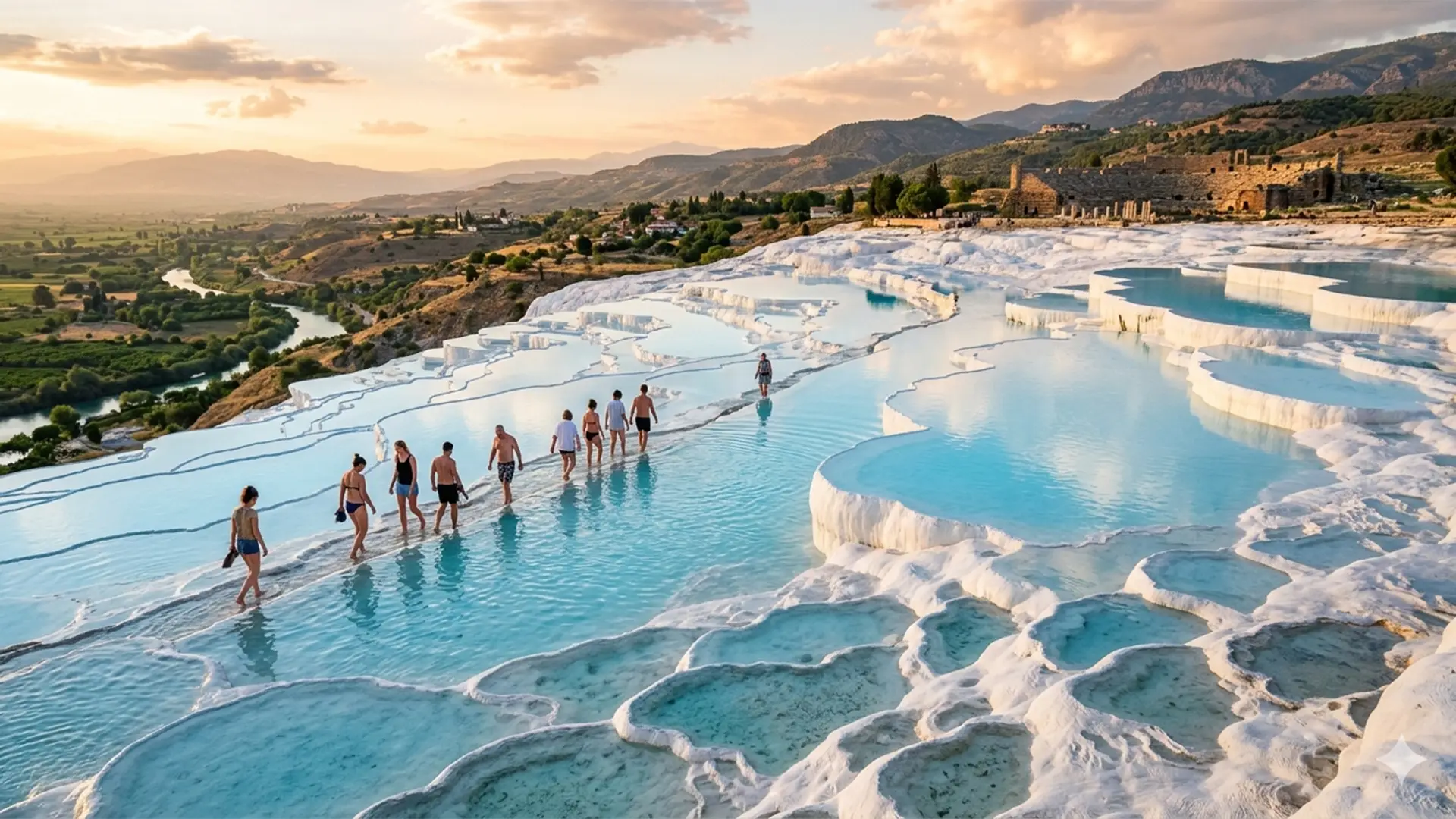
Discover Pamukkale and Hierapolis, with optional regional food experiences arranged when practical for the itinerary.
Customise Your DayFrom ancient cities to the everyday flavours of western Türkiye.
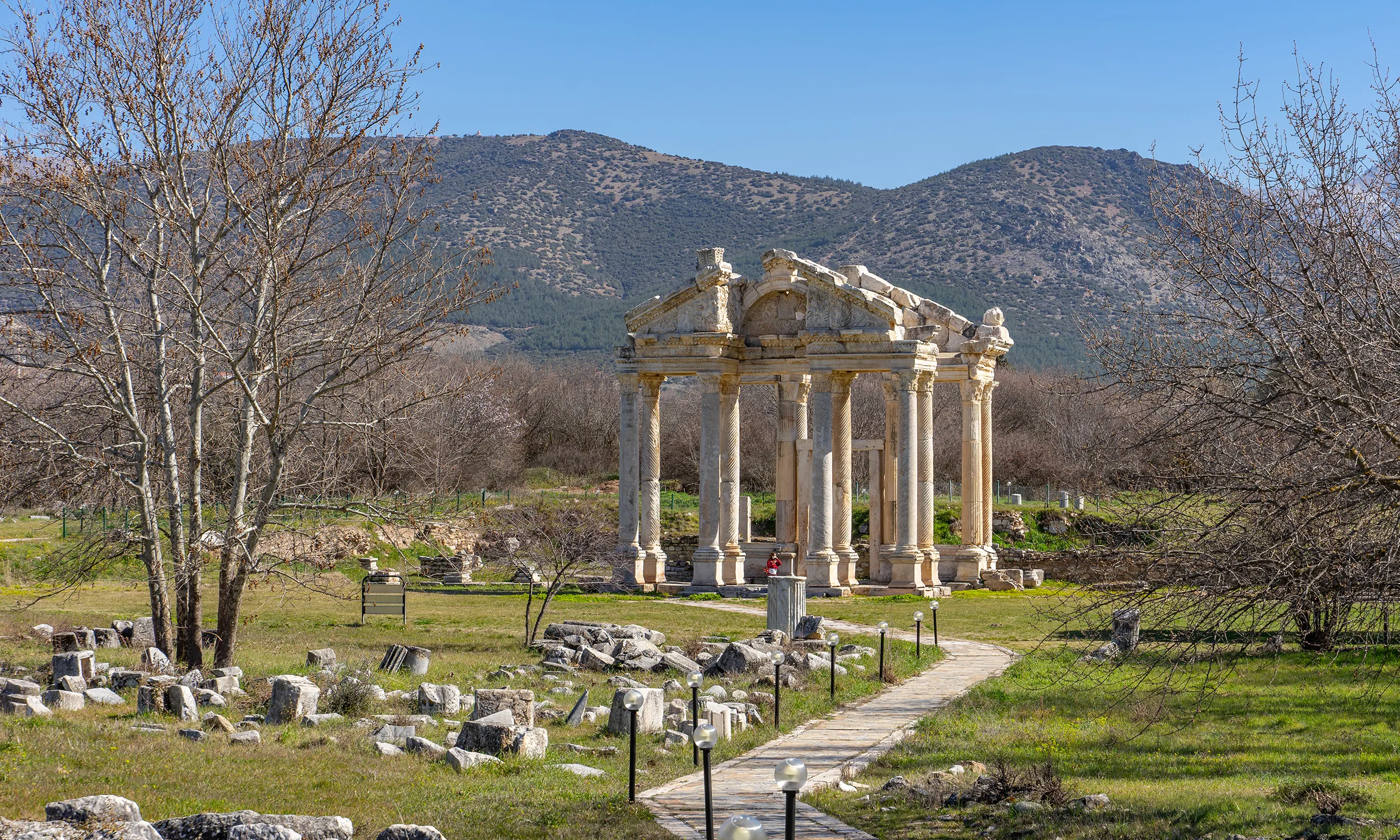
Visit major archaeological highlights and enquire about adding local culinary interests when the route permits.
View Tour
Design a private journey linking Istanbul, Ephesus, Pamukkale, Denizli, Cappadocia and other destinations, with regional foods along the way.
Explore Private Tours