Denizli’s Famous Roasted Chickpeas & Serinhisar’s Snack-Making Heritage

Denizli Leblebisi – Complete Traditional Food Guide

Discover crunchy roasted chickpeas, Serinhisar’s artisan producers,
traditional roasting, colourful flavours and an officially registered Denizli speciality.

Discover Denizli Leblebisi

Discover the Roasted Chickpea Tradition of Denizli

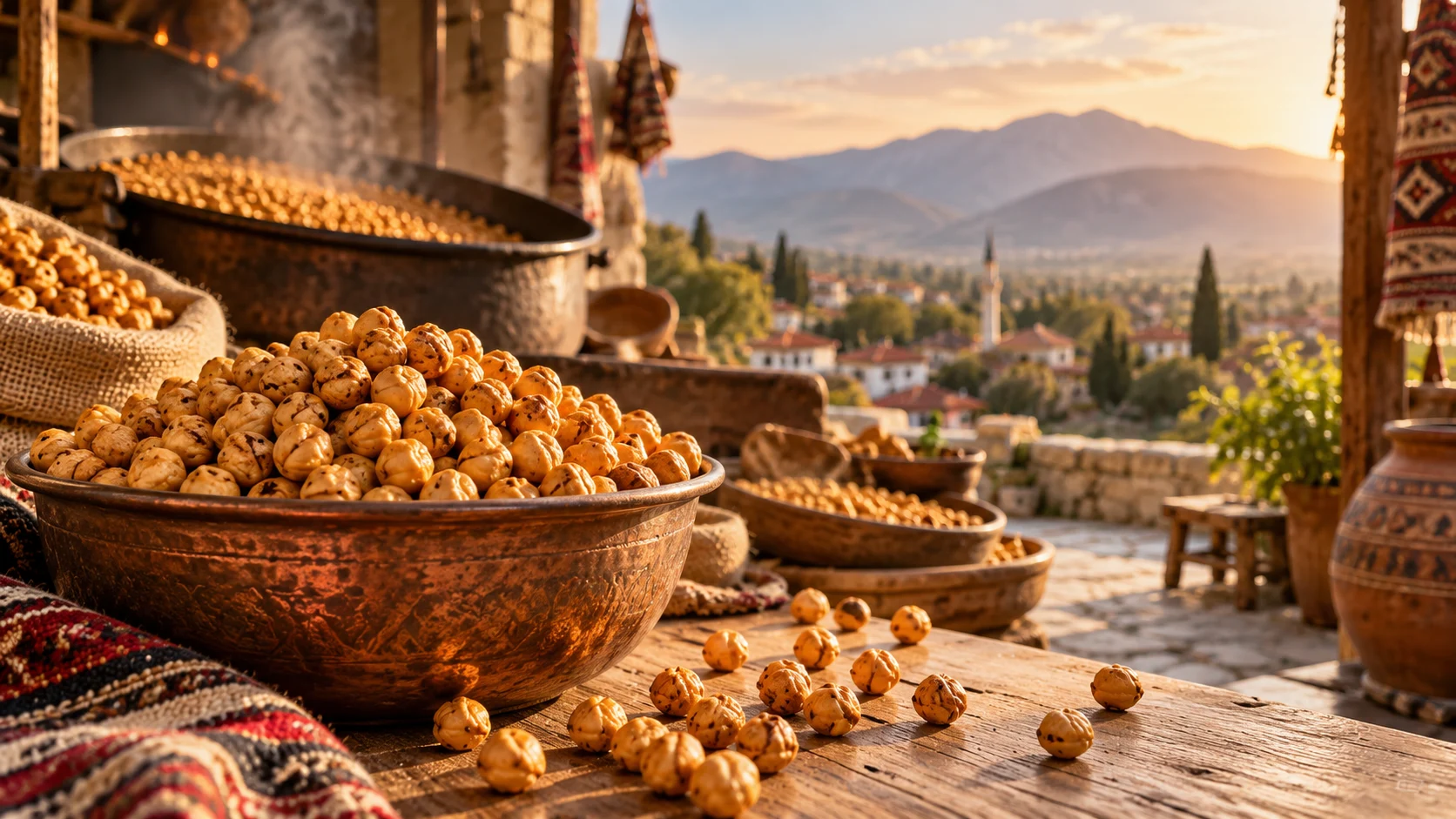
Denizli Leblebisi is one of western Türkiye’s best-known traditional snacks: carefully selected chickpeas transformed by repeated heating, tempering, resting and roasting into a crisp, aromatic bite. It may look simple in the bowl, yet the process depends on patience and a producer’s ability to judge heat, moisture and the behaviour of each batch. The Serinhisar district is particularly renowned for this craft, while Kızılca in Tavas preserves an older local production tradition.

There is an important distinction behind the familiar name. Denizli Leblebisi is the name of the officially registered Turkish geographical indication (registration 134, dated 25 May 2010, classified as a mahreç işareti). “Serinhisar leblebisi” is also a widely used description of the town’s celebrated product, but the name on that specific registration is Denizli Leblebisi. This guide explores the chickpeas, production techniques, flavour varieties, geographical indication, local history, where to buy freshly roasted leblebi, practical shopping advice and experiences to combine with a Denizli visit.

Roasted Chickpeas

A naturally savoury snack made from whole chickpeas through several careful stages.

Serinhisar Expertise

A major producer with workshops, factories and roadside speciality shops.

Registered Heritage

Denizli Leblebisi has a Turkish geographical-indication registration dating to 2010.

Fresh & Warm

Warm, newly roasted leblebi is one of the most memorable ways to taste the classic.

Know Before You Taste

Denizli Leblebisi – Quick Facts

The essentials of Denizli’s best-known roasted chickpea speciality.

📍

Main Production Centre

Serinhisar, on the Denizli–Antalya road; Kızılca in Tavas also has longstanding traditions.

Locate Serinhisar on Google Maps
🫘

Key Ingredient

Carefully graded, thick-skinned chickpeas; the registered specification emphasises suitably large grains.

🔥

Traditional Craft

Several stages of heating, tempering, resting, roasting and skin removal.

🏅

Geographical Indication

Registered as Denizli Leblebisi, no. 134, on 25 May 2010.


A Small Snack with a Long Regional Story

History and Cultural Heritage of Denizli Leblebisi

Understanding the people and places behind a familiar Turkish snack.

Across Türkiye, leblebi means roasted chickpeas, a snack enjoyed with tea, carried on journeys and sold in traditional kuruyemişçi shops. Different towns developed their own skills for selecting, conditioning and roasting chickpeas. Denizli’s reputation rests not on the invention of leblebi itself, but on the strength of its regional production culture.

Türkiye’s official Culture Portal traces longstanding traditional production to Kızılca in the Tavas district, describing a local heritage of approximately five centuries. The same account explains that Serinhisar expanded its leblebi industry particularly from the 1980s, combining established skills with machinery, factory production, product diversification and wider distribution. These are historical descriptions from the cultural source, not exact archaeological dates for the snack.

In Serinhisar, the work of transforming raw chickpeas into leblebi became a defining local industry. Families and skilled producers refined knowledge of roasting, moisture and rest periods, and the district developed retail outlets that travellers can readily encounter along the Denizli–Antalya road.

The snack became increasingly varied: beside classic yellow and white leblebi, shops sell spiced, sweet and coated versions. The expansion of colourful flavours does not erase the importance of the plain roasted chickpea, whose taste and crunch make the craft easiest to appreciate.

The regional speciality achieved formal recognition when the Turkish Patent and Trademark Office registered the geographical indication Denizli Leblebisi on 25 May 2010. The registration protects a specified regional product and method; it should not be confused with a UNESCO inscription or a claim that every flavoured leblebi on a shop shelf automatically meets the registered specification.

What Makes It Different?

Distinctive Features of Denizli Leblebisi

More than a quick roast: good leblebi depends on its raw materials, timing and the judgement of experienced makers.

Carefully Selected Chickpeas

The registered Denizli specification refers to large, thick-skinned chickpeas selected for processing.

  • Raw ingredient: dried chickpeas
  • Selection: size and soundness matter
  • Registered specification: grains retained by an 8 mm sieve

Repeated Heating

The chickpeas pass through controlled heat treatment rather than being roasted once from raw.

  • Core process: multiple heating stages
  • Skill: avoid scorching or underprocessing
  • Result: reliable texture inside and out

Tavlama – Tempering

Producers control moisture and temperature so chickpeas respond properly to the next stage.

  • Technique: tavlama
  • Related steps: heating and wetting as required
  • Judgement: follows batch conditions

Resting Periods

Chickpeas are allowed to rest between stages, sometimes in sacks or spread out in production areas.

  • Turkish term: dinlendirme
  • Influencing factors: humidity and heat
  • Purpose: steady, consistent processing

Skin Separation

The registered method uses equipment identified as a maflak to assist with removing loosened skins.

  • Goal: separate the outer skin
  • Finished classic: pale yellow kernel
  • Equipment: maflak-type skin remover

A Crisp Texture

The finished classic has a toasted, gently nutty taste and a firm but pleasant bite.

  • Taste: roasted, earthy and mild
  • Feel: dry and crunchy
  • Freshness: noticeable in the bite

Serinhisar Production

Serinhisar has become a recognised centre of manufacturing, packing and selling many varieties.

  • Place: Serinhisar district
  • Retail: shops along the main road
  • Speciality: traditional and flavoured styles

Protected Regional Name

The name on the TÜRKPATENT record is Denizli Leblebisi and the indication is a mahreç işareti.

  • Registration: no. 134
  • Date: 25 May 2010
  • Registrant: Denizli Commodity Exchange

Denizli Leblebisi and Its Geographical Indication

Denizli Leblebisi has a registered Turkish geographical indication. TÜRKPATENT records it as a mahreç işareti, rather than a menşe adı. Its registration identifies a regional speciality with a defined connection to Denizli and documented production characteristics. The formal registered name is significant when comparing packaging and producer claims.

Official Registered Name

Denizli Leblebisi — not a separately named “Serinhisar Leblebisi” registration in this particular record.

Registration Number

134, as shown in the Turkish Patent and Trademark Office geographical-indications register.

Registration Date

25 May 2010. The official application was filed on 20 February 2008.

Type of Indication

Mahreç işareti, a Turkish geographical-indication category for products connected to a defined region.

Registering Organisation

Denizli Ticaret Borsası (Denizli Commodity Exchange).

Geographical Area

The registration describes production in Denizli and its surrounding area; Serinhisar is the best-known manufacturing centre.

Production Specification

The registered account highlights thick-skinned chickpeas, graded size, heating, tempering, resting and careful peeling.

Read the Official Record

Consult the TÜRKPATENT Denizli Leblebisi registry entry for legal registration details.

Which Chickpeas Are Used to Make Denizli Leblebisi?

It starts with nohut (chickpeas), but producers cannot assume every chickpea will behave the same. The official regional description names thick-skinned varieties sourced from nearby chickpea-growing provinces and stresses minimum grain size. The location where a chickpea is grown and the location where leblebi is produced are not necessarily the same.

Chickpeas, Not Peanuts

Despite their crunchy snack role, leblebi is made from legumes: chickpeas, not tree nuts or groundnuts.

Uşak

Among the chickpea-growing areas explicitly named in the Denizli geographical-indication description.

Kütahya

Also mentioned as a source of chickpeas suitable for the region’s production method.

Balıkesir

Another named origin of the raw chickpeas used in the registered regional description.

Thick Outer Skin

The official document describes chickpeas with comparatively thick, textured outer skins suited to processing.

Sieve Requirement

The registered description specifies chickpeas that remain above an 8 mm sieve. This is a specification detail, not a universal rule for every Turkish leblebi.

How Denizli Leblebisi Is Traditionally Produced

Exact temperatures and waiting intervals vary by workshop and the conditions of the chickpeas. The steps below explain the registered method and common regional practice without inventing a single fixed timetable for every producer.

1. Select the Chickpeas Choose suitable dried chickpeas and separate damaged or unsuitable grains before processing.
2. Grade by Size Sort the chickpeas so batches are reasonably uniform; the registered description pays particular attention to the size of the raw material.
3. Begin the Heating Cycle Warm the chickpeas in suitable production equipment to begin changing their internal moisture and texture.
4. Adjust the Tempering Carry out the moisture-conditioning or tavlama stage as required by the workshop’s method.
5. Allow the First Rest Leave the chickpeas to settle under suitable conditions; a skilled producer monitors warmth and moisture.
6. Repeat Heat Treatment Apply additional controlled heating rather than depending on a single final roast.
7. Rest Again The traditional process includes resting intervals to prepare grains for later heating and peeling.
8. Condition the Batch Reassess the grains and adjust moisture and heat for the next roasting stage.
9. Roast to Develop Flavour Roast carefully to create the characteristic toasted aroma while avoiding burnt or insufficiently processed pieces.
10. Loosen and Remove Skins Separate outer skins using suitable handling and, for the registered process, maflak-type equipment.
11. Screen and Sort Remove loose skins and unsuitable fragments, and ensure the batch meets the intended presentation.
12. Cool and Package Allow the finished leblebi to cool in hygienic conditions, then package it to protect flavour and crunch.

Understanding Kavurma, Tavlama and Dinlendirme

Three Turkish words explain much of the traditional skill. Kavurma is roasting, tavlama is a controlled conditioning process, and dinlendirme means resting. Together they help makers turn a hard dried pulse into an enjoyable ready-to-eat snack.

Kavurma – Roasting

Heat creates the warm, toasted aroma and helps produce the final crisp bite. Producers must control both intensity and duration.

Tavlama – Conditioning

Moisture and temperature are managed so the chickpeas can withstand further processing and their skins respond appropriately.

Dinlendirme – Resting

Periods between treatments allow the material to settle; humidity and temperature affect what happens next.

Three Heat Treatments

The official Denizli description refers to three heating and tempering treatments as part of experienced local production.

Why Experience Matters

A skilled maker evaluates the batch rather than blindly repeating one temperature or interval for every load.

Not a Household One-Step Roast

Roasting canned or boiled chickpeas at home can be enjoyable, but it is not identical to the registered commercial production process.

What Is Maflak in Denizli Leblebisi Production?

The geographical-indication documentation refers to maflaklı kabuk soyma, meaning a skin-removal stage using specialised equipment. For a visitor, it explains why familiar yellow leblebi looks different from a raw chickpea and why machinery and careful preparation are linked.

Purpose

Separate loosened chickpea skins from the roasted grain.

Turkish Phrase

Maflaklı kabuk soyma is the terminology in the registered process.

Texture

Removing much of the skin helps give classic yellow leblebi its recognisable smooth look and mouthfeel.

Before Peeling

Earlier heating and conditioning are important; forcing unprepared grains can cause poor results or breakage.

After Peeling

Loose skins and fragments need to be separated from the saleable finished product.

Factory Visits

Operational equipment is not a public attraction by default; ask permission and follow safety rules if invited into a workplace.

How Denizli’s Climate Relates to Leblebi Making

The registered product description points to a yayla havası or highland-like climate: relatively warm days, cooler nights and changing humidity. These conditions matter especially when producers judge resting periods. Climate alone cannot guarantee the final quality; craft, equipment and hygiene are also essential.

Warm Days

Daytime warmth influences how grains and production spaces behave during preparation.

Cooler Nights

Cooler nights are identified as part of the environmental pattern valued by regional makers.

Humidity

Relative humidity can change how chickpeas condition and rest between stages.

Traditional Experience

Producers learn to adjust their process rather than treating weather as irrelevant.

Controlled Facilities

Modern equipment can help manage production, but cannot replace suitable raw chickpeas and careful monitoring.

A Regional Connection

The official specification links the local production environment to the character of the finished speciality.

Serinhisar: The Heart of Modern Denizli Leblebi Production

Serinhisar has become nationally associated with leblebi production, packaging and trading. According to the Ministry of Culture and Tourism’s account, the district’s industry expanded strongly from the 1980s and developed an extraordinary range of flavoured products. Its location along the Denizli–Antalya corridor makes local shops particularly convenient for travellers.

Where It Is

A district south of Denizli, situated along the main road toward Antalya.

Local Industry

Leblebi production, processing and sales are a distinctive part of the district’s economy.

Traditional Knowledge

Makers preserve knowledge of heating, conditioning and resting in a process that takes considerably more care than a quick roast.

Variety of Products

The Culture Portal describes roughly 30 varieties, including classic, sweet and spiced preparations; shop assortments change.

Direct Sales

Some producer and factory outlets sell packaged leblebi and offer opportunities to compare styles.

Combine a Visit

Serinhisar can fit into a road journey through southern Denizli, subject to route and timing.

Kızılca, Tavas and the Older Leblebi Tradition

Denizli’s story is larger than Serinhisar alone. The official Culture Portal describes Kızılca, in the Tavas district, as a longstanding centre where leblebi has been prepared by traditional methods for roughly 500 years. This is a historical statement attributed to the Culture Portal, not a precise dated origin of all Turkish leblebi.

District

Kızılca is associated with the Tavas district of Denizli.

Historical Account

The Ministry’s travel-souvenir entry reports a tradition of around five centuries.

Traditional Methods

Local memory includes manual skill and smaller-scale processing alongside modern production elsewhere.

A Different Local Story

Serinhisar’s modern industrial growth and Kızılca’s older heritage can both be understood as parts of Denizli’s identity.

Visiting Respectfully

Most production spaces are workplaces; public access and demonstrations cannot be assumed.

Explore More

Read our Tavas district guide when planning a wider cultural route.

Yellow Leblebi, White Leblebi and Other Classic Types

Leblebi is sold in numerous styles. The plain, roasted versions are especially useful for comparing producer quality because they do not hide the chickpea’s own flavour under sweet or spicy coatings. Terminology and finishes can vary between shops.

Sarı Leblebi – Yellow

The familiar golden-yellow, usually skinless roasted chickpea with a mild toasted flavour.

Beyaz Leblebi – White

A pale-coloured presentation offered by many sellers; ask about the precise preparation and ingredients.

Tuzlu Leblebi – Salted

Classic roasted chickpeas seasoned with salt; check if the salt level suits your taste.

Tuzsuz Leblebi – Unsalted

An easy way to appreciate the natural roasted chickpea without extra salt.

Kabuklu Options

Some snacks retain more skin than the familiar pale yellow version, giving a different appearance and bite.

Warm Fresh Roast

Newly roasted, gently warm leblebi is a regional favourite when a shop has a fresh batch available.

Popular Flavoured Leblebi Varieties in Serinhisar

Serinhisar retailers are well known for experimenting beyond plain roasted chickpeas. Product ranges are commercial offerings, not necessarily individually protected traditional recipes. Ingredients, coating thickness and availability differ by producer.

Spicy Leblebi

Seasonings may include chilli or mixed spices for a warmer, punchier snack.

Sugar-Coated Leblebi

A sweet coating transforms the savoury chickpea into a confectionery-style treat.

Chocolate-Coated Leblebi

A chocolate layer creates a sweet-and-crunchy contrast; milk and soy ingredients may be present.

Sesame Leblebi

Some shops offer sesame-coated pieces that combine roastiness and texture.

Coffee-Flavoured Leblebi

Coffee-inspired varieties are among the creative flavours associated with local retailers.

Fruit-Flavoured Coatings

Confectionery-style fruit flavours are marketed by some producers, with recipes varying widely.

Herb and Spice Mixes

Some savoury assortments add aromatic blends rather than a single spice.

Mixed Gift Packs

Assortments make it easy to compare several flavours, though ingredient lists should be checked.

How Flavoured Leblebi Differs from Plain Leblebi

Plain roasted chickpeas typically have a short ingredient list. Coated and seasoned products can contain added sugar, salt, flavourings, cocoa, dairy or other ingredients depending on the brand. These modern variations are part of Serinhisar’s retail identity but should not be confused with the technical definition of the classic geographical indication.

Plain Roasted

Best for judging the taste of the chickpea itself and the quality of the roast.

Salt and Seasoning

Spiced versions may have different sodium levels and additional seasonings.

Sweet Coatings

Chocolate, sugar and other confectionery flavours usually raise the added-sugar content.

Ingredient Labels

Read packaging for additives, allergens and actual flavour ingredients rather than relying on the colour.

Different Producers

Two similarly named products can taste quite different because each company has its own formula.

Geographical Indication

A GI registration for Denizli Leblebisi does not make every sweet or flavoured product automatically registered in the same way.

What Does Denizli Leblebisi Taste Like?

Well-prepared plain leblebi tastes mildly toasted, nutty and earthy, with a firm, dry crunch rather than the soft texture of cooked chickpeas. Its simple flavour makes freshness and roasting quality particularly noticeable. Coated varieties move toward sweet, salty, aromatic or spicy profiles.

Warm Roasted Aroma

Fresh batches give off a gentle, inviting toasted-legume fragrance.

Mild and Savoury

The chickpea base is naturally mild, allowing the roast to do much of the work.

Crisp Bite

The defining feature is a satisfying snap without a stale, damp or leathery feel.

Smooth Classic Grains

Traditional yellow leblebi usually has most of its outer skin removed.

Variable Seasoning

Salt, chilli, chocolate and other finishes can change the taste dramatically.

Best Comparison

Try plain yellow, plain white and one flavoured variety side by side.

Why Fresh, Warm Leblebi Is So Popular

The Ministry of Culture and Tourism recommends enjoying leblebi fresh and warm. At a producer outlet or specialist shop, that may be possible when a batch has recently finished roasting. Always confirm that a warm sample is available; it is not offered everywhere, every day.

Start with a Plain Sample Taste unsalted or lightly salted yellow leblebi before comparing heavily flavoured options.
Notice the Aroma A fresh toasted scent is part of the pleasure of a newly roasted batch.
Appreciate the Texture Crispness is often more memorable than sweetness or seasoning.
Buy a Small Portion First A small bag helps you assess quality before purchasing larger amounts as gifts.
Ask What Was Roasted Today A useful question in Turkish is “Bugün taze kavrulmuş leblebi var mı?”
Cool Before Sealing If the leblebi is genuinely warm, protect it from condensation when storing it for later.

How to Enjoy Denizli Leblebisi

Leblebi is usually eaten directly from a small bowl or bag, without cooking or elaborate preparation. It is practical for sharing and for travel, provided it is stored dry and handled hygienically.

Alongside Turkish Tea

Plain leblebi makes a pleasantly crunchy accompaniment to a glass of çay.

As a Road-Trip Snack

Its portability explains why it is a popular edible souvenir from a drive through Denizli.

Small Sharing Bowls

Offer a few styles side by side so guests can compare mild, sweet and spiced variations.

With Dried Fruit

A mix with raisins or other dried fruit gives a sweet-and-savoury contrast.

In Snack Mixes

Pair plain leblebi with other dry snacks if allergies and dietary needs permit.

As a Simple Gift

Sealed portions of classic yellow and one creative flavour make a compact regional present.

Is Leblebi a Healthy Snack?

Leblebi begins as chickpeas, which naturally supply protein, fibre and carbohydrates. However, exact values depend on the product, portion size, moisture, oil, salt and any coatings. It is better to read a product label than to assume a single nutritional figure for every type.

Plant-Based Protein

Plain chickpea leblebi contributes plant protein as part of a balanced diet.

Dietary Fibre

Chickpeas contain fibre, although the amount in a serving depends on processing and portion size.

Energy Density

Dry roasted snacks are compact foods; a handful can contain more energy than its size suggests.

Plain vs Coated

Chocolate or sugar coatings change the nutrition profile and may introduce dairy or other allergens.

Watch Added Salt

Salted and spicy mixes can vary significantly in sodium content.

Individual Needs

Those managing a medical condition or special diet should rely on the specific label and their clinician’s advice.

Allergens and Dietary Considerations for Leblebi

Plain leblebi is a chickpea product and does not inherently require wheat or dairy. That does not make every packaged variety gluten-free, vegan or allergen-free: flavourings, coatings and shared production equipment may change the picture.

Chickpea Sensitivity

Anyone allergic to chickpeas or other legumes should avoid leblebi unless their clinician says otherwise.

Gluten-Free Questions

Plain chickpeas do not contain gluten naturally, but cross-contact and seasoned coatings require label checks.

Dairy in Chocolate Coatings

Milk powder and other milk ingredients may be present in chocolate-coated styles.

Soy and Sesame

Some coated varieties or factories may handle soy or sesame; read the full allergen declaration.

Vegan Shopping

Plain leblebi is plant-based, while honey, dairy and certain coatings may not be.

Children and Choking

Whole hard chickpeas can be a choking hazard for very young children; choose age-appropriate foods.

How to Store Denizli Leblebisi Properly

Dry leblebi loses its pleasant texture when exposed to humid air. The geographical-indication description also favours cool storage out of direct sunlight. Follow the producer’s package instructions and the stated best-before date for the particular product.

Choose a Cool Location

Avoid hot windowsills and prolonged storage inside a sunlit car.

Keep Out of Sunlight

Light and heat can affect quality, especially in coated products.

Close the Package

Reseal the bag or use a clean, airtight food container after opening.

Avoid Humidity

Keep the snack away from moisture; condensation makes crisp foods go soft.

Check the Date

Follow the actual package date rather than assuming a fixed shelf life for all types.

Handle Warm Snacks Carefully

Let newly roasted pieces cool adequately before long-term airtight storage to prevent trapped moisture.

How to Choose Good Leblebi in Denizli

You do not have to buy the most colourful variety to enjoy the region’s speciality. Quality, freshness, trustworthy packaging and your own flavour preferences matter more than extravagant claims. Ask to compare plain and flavoured types when samples are offered.

Look at the Grains

A batch with reasonably even size and colouring is easier to assess than one full of broken fragments.

Try Plain Yellow First

An uncoated product reveals the roasting quality more clearly than a strongly flavoured one.

Check the Aroma

A clean toasted smell is more appealing than damp, stale or burnt odours.

Ask About Freshness

Inquire whether the batch was recently roasted or how often a shop replenishes stock.

Read the Label

Find ingredient, allergen, manufacturer, weight, date and storage information.

Compare Pack Sizes

Smaller sealed packages can be better for gifts or keeping an opened batch fresh.

Understand GI Claims

For products marketed under the registered name, check for transparent producer details and geographical-indication labelling.

Keep Your Receipt

Especially for large gift purchases or shipments, a receipt makes a later enquiry easier.

Where to Buy Denizli Leblebisi

Availability changes across stores, and not every outlet sells warm leblebi. The Ministry’s visitor information identifies roadside factory shops around Serinhisar and traditional nut sellers across Denizli as familiar places to look.

Serinhisar Roadside Shops

An accessible option along the Denizli–Antalya route for travellers passing through the district.

Producer Outlets

Factory-associated stores may offer large ranges and freshly packaged products; check opening hours before a special visit.

Denizli Kuruyemişçi Shops

Specialist nut and dried-fruit shops in the city can be useful for comparison and small purchases.

Town Centre Retailers

Local markets or confectionery stores sometimes stock regional selections; range and freshness vary.

Supermarkets

An option for sealed national or regional products if independent shops are not convenient.

Online Delivery

Packaged leblebi can be ordered from commercial sellers; confirm producer, ingredients, shipping and delivery conditions.

Buying Leblebi on the Denizli–Antalya Road

Serinhisar lies on a route many travellers use when moving between Denizli/Pamukkale and Antalya. A short stop can offer a pleasant introduction to a local industry. The roads and shop hours can change, so treat the stop as a flexible addition rather than a guaranteed scheduled attraction.

Best Reason to Stop

Try a traditional roasted snack and pick up an easy-to-pack regional souvenir.

Allow a Little Browsing Time

Comparing plain, spicy and sweet varieties is often more rewarding than rushing in for the first bag.

Ask Before Taking Photos

Producer and shop staff may be happy to explain their products, but photography is not automatically permitted.

Check Vehicle Access

Use a safe designated parking area; avoid stopping on busy carriageways.

Do Not Assume a Factory Tour

Retail access does not mean visitors can enter industrial processing areas.

Plan Around Your Route

Serinhisar can work especially well on a longer private transfer or cultural road journey.

Serinhisar Leblebi and Culture Festivals

Leblebi has become a visible symbol of Serinhisar’s local identity and community events. The district has hosted leblebi-themed cultural festivals, sometimes alongside the area’s knife-making heritage. Festival dates, names, locations and programmes are not fixed forever; check current local announcements before making a trip expressly to attend.

Leblebi as Local Identity

Cultural events celebrate a product closely linked to the livelihoods and skills of local families.

Food and Crafts

Leblebi and local knife-making can appear together in district festival programming.

Cultural Activities

Performances, stands, exhibitions and regional shopping opportunities may feature depending on the year.

Public vs Private

Not all production demonstrations or facilities are open to the public.

Annual Dates Vary

Avoid relying on a date quoted for a previous year or an old tourism article.

How to Verify

Check announcements from Serinhisar District Governorate and local organisers.

Why Leblebi Matters to Serinhisar’s Economy

Leblebi is more than a speciality bought by visitors. Processing, machinery, packaging, logistics and retail all form part of the local economy. Production and export figures quoted in articles vary by year and definition, so this guide avoids turning historical estimates into fixed current statistics.

Processing Skills

Workers and producers specialise in grading, conditioning, roasting, skin removal and packing.

Family Enterprises

Regional cultural descriptions emphasise the transmission of practical knowledge between generations.

Manufacturing

Industrial-scale production helps distribute the district’s products to markets well beyond Denizli.

Retail

Shops along the highway and in town connect manufacturers directly with travellers.

New Flavours

Innovation in packaging and coatings is part of how the industry has developed.

Exports and Recognition

Serinhisar’s national reputation has grown alongside wider commercial distribution of roasted chickpeas.

Denizli Leblebisi Compared with Other Turkish Chickpea Snacks

Türkiye has several well-known leblebi-making traditions. The core ingredient is shared, but the techniques, presentation, local brands and registration histories are not identical. A place name on a packet should be understood in context rather than treated as proof that another region’s product is inferior.

Denizli Leblebisi

The registered regional speciality, notable for its specified raw chickpeas and multi-stage processing.

Serinhisar Leblebisi

A familiar commercial and local description for leblebi produced in Serinhisar, the leading Denizli hub.

Kızılca Leblebi

Associated with the older Tavas district tradition described by the official Culture Portal.

Çorum Leblebisi

Another widely recognised Turkish leblebi tradition; origin, brands and production specifications should not be conflated.

Boiled Chickpeas

Soft cooked chickpeas are entirely different in texture and preparation from roasted leblebi.

Crispy Oven Chickpeas

A popular homemade snack, but not necessarily produced by the traditional multi-stage leblebi method.

What to Eat and Drink with Denizli Leblebisi

Leblebi is an everyday snack rather than a main course. During a food-focused day in Denizli, it can sit alongside other regional flavours, though not every pairing is itself a formal local tradition.

Turkish Tea

The classic companion for a bowl of plain leblebi during a pause in the day.

Coffee

Plain or sweet-coated leblebi offers a crunchy contrast to Turkish coffee.

Dried Grapes

Raisins can balance the roasted flavour with natural sweetness.

Fresh Fruit

A light, refreshing contrast for spicy or salted versions.

Plain Water

Useful during a long drive, especially if sampling saltier varieties.

A Denizli Food Trail

Treat leblebi as an afternoon tasting after a regional dish such as keşkek or tandır kebabı.

Other Denizli Foods Worth Discovering

Serinhisar leblebi is a memorable souvenir, but Denizli’s food culture stretches from special-occasion wheat dishes to oven-roasted meat and local desserts. Explore more during a journey through the province.

Denizli Tandır Kebabı

Tender slow-roasted meat associated with traditional ovens. Read our Denizli tandır kebab guide.

Denizli Keşkeği

A slow-cooked wheat-and-meat celebration dish linked to communal occasions. Explore our keşkek guide.

Tavas Baklavası

A traditional layered walnut pastry associated with ceremonies and festivals.

Ballı Tahinli Pide

The sweet tahini-enriched bread speciality associated with Tavas.

Kale Biberi

A distinctive regional pepper with an important local culinary identity.

Çameli Fasulyesi

A regional bean speciality that reflects Denizli’s varied agricultural landscapes.

Visitor Tips for Buying and Tasting Leblebi

A few small choices can make a roadside tasting more memorable and help you find a good gift to take home.

Know the Turkish Word

Leblebi is pronounced approximately “leb-leh-bee”.

Ask for Fresh Leblebi

Try “Taze leblebi var mı?” to ask whether there is fresh leblebi.

Taste Plain First

Start with yellow or white leblebi before heavily seasoned varieties.

Compare Several Shops

Brands and methods differ; sampling can help you find your favourite.

Check Flavoured Ingredients

Chocolate, sesame, spice mixes and confectionery coatings have different allergen profiles.

Use Sealed Bags for Travel

Airtight packaging keeps the snack away from moisture in a suitcase.

Confirm Shop Hours

Roadside and factory outlets may have different schedules on weekends or holidays.

Respect Workshops

Ask permission before entering production areas or photographing staff.

Frequently Asked Questions About Denizli Leblebisi

What is Denizli Leblebisi?

A regional Turkish roasted chickpea speciality produced through carefully managed heating, tempering, resting and roasting. It is officially registered as a geographical indication.

What is leblebi made from?

Leblebi is made from chickpeas (nohut). Different finished varieties may have additional salt, sugar, spices or coatings.

Where is Denizli leblebi especially famous?

Serinhisar is the province’s best-known contemporary production and sales centre. Kızılca in Tavas also has a longstanding tradition.

Is Denizli Leblebisi a geographical indication?

Yes. TÜRKPATENT lists Denizli Leblebisi as a registered mahreç işareti, registration number 134.

When was Denizli Leblebisi registered?

The official registration date is 25 May 2010; the application was filed on 20 February 2008.

Is the registered name Serinhisar Leblebisi?

The name of registration no. 134 is Denizli Leblebisi. Serinhisar leblebisi is also a widely used regional and commercial description.

Does every flavoured Serinhisar leblebi have the same GI status?

No. A geographical indication has its own specified product and conditions. Do not assume every novelty coating or flavour is covered in the same manner.

What is the difference between Denizli and Çorum leblebi?

Both belong to Türkiye’s roasted chickpea tradition, but come from different production cultures. Check their respective product and geographical-indication details rather than assuming they are identical.

Why are chickpeas heated more than once?

Traditional leblebi making uses controlled stages so the grains can be conditioned, rested, roasted and peeled without relying on a single quick heating.

What is tavlama?

Tavlama means conditioning or tempering: controlling moisture and heat during leblebi processing.

What does dinlendirme mean?

It means resting. Chickpeas are allowed to settle between stages under suitable conditions.

What is maflak?

The regional registered documentation refers to maflak-type machinery for separating loosened chickpea skins.

Which chickpeas are used for registered Denizli leblebi?

The registered specification refers to large, thick-skinned chickpeas from areas including Uşak, Kütahya and Balıkesir, with an 8 mm sieve-size criterion.

Are the chickpeas grown in Serinhisar?

Not necessarily. The official description identifies neighbouring provinces as sources of raw chickpeas while associating the processing method with Denizli.

What are the main leblebi varieties?

Popular categories include plain yellow, white, salted, spiced, sugar-coated and chocolate-coated versions; names and formulas vary by seller.

What does yellow leblebi taste like?

It has a mild, toasted chickpea flavour with a satisfying dry crunch.

Is leblebi spicy?

Plain roasted leblebi is not typically hot-spicy; some flavoured varieties contain chilli or other spices.

Can I buy warm leblebi in Serinhisar?

Sometimes, especially when a suitable producer or specialist shop has recently roasted a batch. Ask locally, since warm samples are not always available.

Where can I buy Denizli Leblebisi?

Try specialist shops in Denizli, producer outlets in Serinhisar and some shops along the Denizli–Antalya highway.

How long does leblebi stay fresh?

Shelf life depends on the product and package. Follow the best-before date, reseal after opening and protect from heat and moisture.

Is leblebi vegan?

Plain roasted chickpeas are plant-based. Coated products may contain milk, honey or other non-vegan ingredients, so check the label.

Is leblebi gluten-free?

Chickpeas do not naturally contain gluten. However, coatings and cross-contact may matter, so anyone who needs gluten-free food must check the individual product.

Does leblebi contain nuts?

Leblebi is a chickpea snack, not a tree nut. Shared handling and added nuts in mixed or coated products can still create an allergen concern.

Can young children eat leblebi?

Whole hard chickpeas can pose a choking risk to very young children; choose safe, age-appropriate snacks.

Does Denizli have a leblebi festival?

Serinhisar has hosted leblebi-themed cultural festivals. Confirm the specific year’s dates and programme with local authorities.

How old is the Kızılca tradition?

Türkiye’s Culture Portal describes traditional leblebi production in Kızılca, Tavas, as having a roughly 500-year local history.

Can I visit a leblebi factory?

Some producers have shops, but a factory tour requires advance permission and may not be available.

Is Serinhisar suitable for a stop en route to Antalya?

Yes, when your route passes through the district. Plan a safe parking stop and confirm that the shops you want to visit are open.

Can I bring leblebi home as a souvenir?

Sealed, clearly labelled bags are a convenient choice, but check your destination country’s food-import rules.

Can I combine this with Pamukkale sightseeing?

Yes. Pamukkale, Denizli and a possible Serinhisar stop can be considered in a flexible itinerary, depending on your route and travel time.


Best Photography Ideas for Denizli Leblebisi

Leblebi is a wonderful subject for detail photography, especially when colours, grains and the hands of a craftsperson tell a story. Ask permission before photographing staff or inside production premises.

A Bowl of Golden Leblebi

Capture the gently yellow grains in natural side light to emphasise their shape and texture.

Different Flavour Colours

Arrange a selection of plain, spiced and sweet-coated leblebi in separate small bowls.

The Roasting Process

With permission, photograph the equipment and movement involved in preparing a batch.

Hands at Work

A close-up of sorting, scooping or packing can communicate the local craftsmanship.

Shop Displays

Rows of beautifully packaged flavours show Serinhisar’s commercial creativity.

The Sense of Place

Combine leblebi photos with appropriate street or landscape scenes from Serinhisar and Denizli.

Pamukkale, Denizli and Private Culinary Experiences

Add a possible Serinhisar leblebi tasting or shopping stop to a flexible private road journey, or combine Denizli’s regional foods with Pamukkale, Hierapolis and nearby ancient cities. Visits, shop hours and tasting opportunities depend on routing, availability and advance arrangement.

Private Denizli and Regional Food Experiences

Make time for local flavours alongside history and landscapes.

Longer Cultural Journeys

Explore archaeology and everyday traditions across western Türkiye.