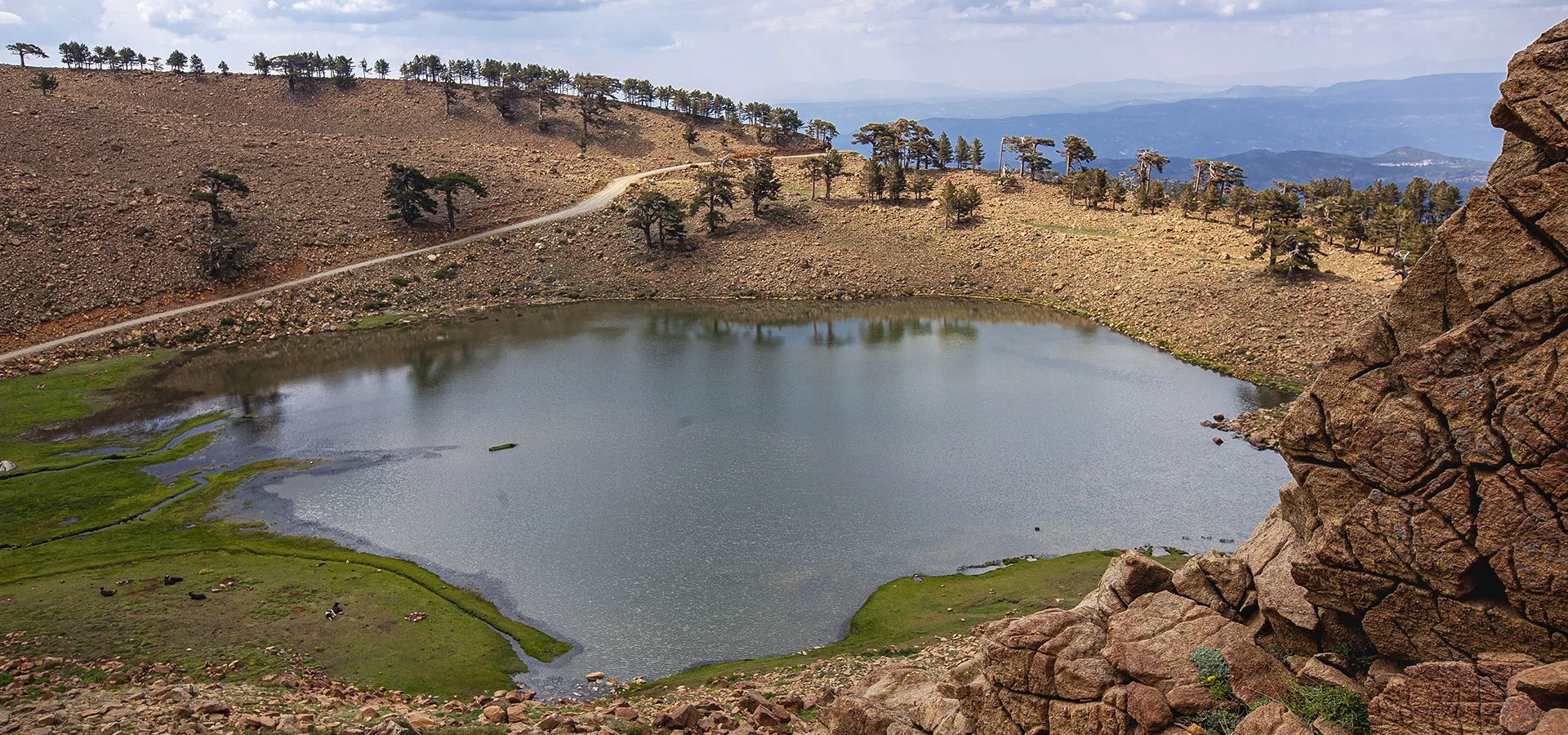
Sandıras Mountain
Discover glacial landscapes, old black pines and mountain traditions farther southwest.
Explore This Guide →





South of Denizli, Acıpayam offers a side of Türkiye that rewards slow, curious travel. Behind the everyday bustle of an agricultural highland town are the glittering limestone chambers of Keloğlan Cave, the vividly painted interior of Yazır Çarşı Mosque and the hands-on industrial heritage of Yeşilyuva.
The district also includes Ucarı Gölpark, the natural and historic landscape of Acıpayam Canyon and local devotional sites such as Oğuz Baba Tomb. These are varied experiences in different neighbourhoods; a good visit is an itinerary, not a single crowded tourist stop.
Current planning note: Acıpayam Municipality says the last 200 metres of its canyon are temporarily closed while works continue. Check the cave's opening arrangements, the mosque's prayer schedule and access to protected archaeological places before travelling.
Keloğlan’s 145-metre limestone visitor route.
Colourful murals in an 1801 timber mosque.
Ucarı Pond, farmland and mountain valleys.
Yeşilyuva’s renowned shoemaking workshops.
Where to go, what to see and which practical details matter for an enjoyable visit.
Denizli, southwestern Türkiye
Denizli–Antalya road
Approximately 60 km
Upland Acıpayam Plain
Roughly 900–1,000 m
Keloğlan Cave, Dodurgalar
Approximately 145 m
2003
Yazır Çarşı Mosque
1801
Ucarı Gölpark
Acıpayam / Çatak
Last 200 m temporarily closed
Yeşilyuva shoemaking
Alacain, protected
Payam means almond
Garbikaraağaç
Vehicle recommended
Check each site’s rules
Confirm directly before arrival
Acıpayam is a rewarding alternative to the better-known circuit around Pamukkale. Here, a broad agricultural plain meets mountains, underground limestone scenery, Ottoman religious art, working craft communities and the quiet everyday life of southwestern Türkiye. Its attractions are spread across the district rather than clustered around one tourist square.
The most recognisable landmark is Keloğlan Cave, a developed limestone cave near Dodurgalar. Art and architecture enthusiasts have a different reason to come: Yazır Çarşı Mosque, an 1801 Ottoman building filled with painted floral and architectural scenes. Around the district are Ucarı Gölpark, Acıpayam (Çatak) Canyon and the shoemaking workshops of Yeşilyuva.
This guide is designed for travellers who appreciate places with genuine local character. Some landmarks need careful planning: an active mosque must be visited respectfully, Alacain is an archaeological protection site rather than a conventional ticketed cave, and Acıpayam Canyon currently has a partial closure announced by the municipality.
Local culture, karst geology and Ottoman art
Keloğlan Cave and Yazır Mosque
Ucarı Gölpark
Check canyon closures and cave hours
Acıpayam is a district of Denizli Province, roughly 60 kilometres south of Denizli city by the main regional corridor. Its town sits in a large upland plain on the route toward Antalya and neighbouring inland Burdur. The district is often described as a meeting ground of Aegean and Mediterranean geography.
The centre lies at approximately 900–1,000 metres above sea level, depending on the measurement point and source. Surrounding valleys, mountain slopes and settlements differ in altitude. The Acıpayam Plain, also historically called the Karaağaç or Hamit Plain, gives the district its agricultural landscape.
Visitors should distinguish the district centre from sites in its outlying neighbourhoods: Keloğlan Cave is in the Dodurgalar area, Yazır Mosque is in Yazır and the canyon lies toward Benlik and Olukbaşı. The fact that two sites share an Acıpayam address does not mean they are within walking distance of one another.
Denizli, Türkiye
South of Denizli on the Antalya corridor
Highland plain and encircling mountains
Independent stops connected by road
The Acıpayam area belongs to an old Anatolian corridor with traces of successive ancient and medieval cultures. Official district historical accounts place the region in a broad sequence that includes antiquity, the Roman and Byzantine periods and later Turkish principalities. These accounts describe regional history rather than a single continuously occupied monument in the present town centre.
The highland plain was associated with Hamit Ovası and Karaağaç. Local narratives place particular importance on Türkmen and Avşar settlement and on the rivalries of the Hamidoğulları and Germiyanoğulları before incorporation into Ottoman administration. Such narratives mix documentary history with valued local oral memory; precise early dates should not be treated as archaeological proof without a specific source.
In Ottoman administrative records the area became known as Garbikaraağaç (‘Western Karaağaç’), distinguishing it from Şarkîkaraağaç. The district organisation dates to 1871, and it was connected to Denizli Sanjak in 1888. Today's Acıpayam carries those older place names in local history and identity.
Hamit Ovası
Garbikaraağaç
1871
1888
The most familiar explanation connects payam with a regional word for almond. In this interpretation, Acıpayam refers to ‘bitter almond’, reflecting the historical presence of almond trees. The account is repeated by local institutions and the district's chamber of commerce.
It is best presented as a traditional or probable explanation rather than as a definitively documented naming event. Local institutional histories themselves acknowledge that the exact origin of the modern place name is not known with certainty.
The word still has a practical connection to the landscape: a September 2026 almond-harvest event in Ucarı, reported by the Denizli Governorate, highlighted local almond cultivation and the Yörük–Türkmen use of payam for the nut.
Regional word for almond
Bitter almond
Local oral and institutional tradition
Almond growing in Ucarı
Acıpayam is built around a fertile upland basin rather than the steep streets of a coastal resort. Fields, rural roads and small neighbourhoods stretch between higher ridges, giving the visitor open horizons and a clear sense of the district's agricultural life.
The plain is an important agricultural resource. The Ministry of Agriculture and Forestry included the Acıpayam Plain among officially designated Great Plain Protection Areas in a 2018 announcement. This designation recognises productive farmland rather than creating a tourist park.
The broad landscape also explains Acıpayam's variety: some locations are level, cultivated and straightforward to explore, while others involve rocky valleys, limestone caves and hill roads. Respect fields and irrigation facilities; open land should not be assumed to be public access.
Highland agricultural basin
Great Plain designation
Rural panoramas and local life
Stay off working fields
Keloğlan Mağarası is the district's best-known nature sight. Located near Dodurgalar, to the east of Acıpayam town, it is a naturally formed cave in fractured Jurassic–Cretaceous limestone. Mineral-rich water has slowly built up an intricate collection of stalactites, stalagmites, flowstone and columns.
Official tourism descriptions give the accessible cave passage as approximately 145 metres. The cave lies around 1,110 metres above sea level and was prepared for visitor access after geological investigations, opening to tourism in 2003. The short route can nevertheless feel very different from an ordinary outdoor walk: the cave is humid, enclosed and may have slippery surfaces.
The site is appealing for families, casual nature enthusiasts and anyone interested in the geological process behind limestone caves. Check the day's opening time and ticket price before travelling; a school information page lists visiting hours, but its own seasonal notes differ, and such schedules can change.
Dodurgalar
About 145 metres
2003
Slippery floors; confirm hours and fee
The cave developed in limestone, a rock that slowly dissolves when slightly acidic water follows joints and fractures. Over long periods this process expands small openings into passages and chambers. As water drops from a cave ceiling, some of its dissolved minerals are redeposited as calcite.
That second process creates the formations travellers see: stalactites hang from the ceiling, stalagmites grow upward from the floor, and pillars form where the two meet. Thin ‘soda-straw’ formations and thicker flowstone curtains add further texture. The slow growth of these formations is one reason they must never be touched or broken.
Keloğlan is not the same natural phenomenon as Pamukkale's sunlit travertine terraces, but both provide memorable ways to discuss carbonate-rich water and mineral deposition. Inside a managed cave, stay on the designated walkway and follow the staff's rules about photography and flash.
Limestone
Stalactites, stalagmites and columns
Observe posted flash restrictions
Never touch formations
Wear shoes with good grip. The cave environment can be damp, and the access route may have steps or uneven areas. It is not safe to promise wheelchair accessibility or a completely step-free itinerary without checking current facilities with the operator.
Avoid counting on a fixed visit duration because it depends on the group, any queue, the condition of the route and visitor rules. The cave is reasonably paired with other Acıpayam sites, but allow time for the separate drive from Dodurgalar to Yazır or the district centre.
Do not treat anecdotal claims that cave air cures asthma or bronchitis as medical advice. Although such claims appear in some older visitor materials, they are not an established substitute for treatment. The reason to visit is the cave's extraordinary geology and scenery, not a promised health benefit.
Non-slip closed shoes
Enclosed, humid and potentially slippery
Confirm accessibility individually
Do not present cave visits as medical therapy
Yazır Çarşı Camii, also simply called Yazır Mosque, is a compelling reason for architecture lovers to visit Acıpayam. It stands in the Yazır neighbourhood, about 25 kilometres from the town centre, and its inscription attributes its foundation in 1801 to Hacı Ömer Efendi.
The prayer hall has a timber-supported plan arranged in three aisles, continuing an Anatolian tradition of wooden-column mosques. Its building methods and proportions differ from the grand stone-domed mosques more familiar to international visitors.
What makes it remarkable is the decoration: painted panels of flowers, plants, fruit, vessels and mosque imagery, together with inscriptions and ornamental woodwork. They provide an accessible introduction to the varied visual culture of Ottoman provincial religious architecture. It is an active place of worship, not a purpose-built museum.
1801
Hacı Ömer Efendi
Timber columns and painted decoration
Respect prayer times and community rules
Begin with the painted wall panels. Floral motifs, fruits and vases make the mosque particularly memorable because they turn a village religious interior into a rich example of early nineteenth-century Anatolian decorative art. The subjects are more varied than a visitor might expect from a restrained exterior.
Next study the wooden supports and ceiling. The Directorate of Culture records ten timber columns forming three sections, while the minbar and other surfaces display stylised plant motifs. The mihrab has an ornamental plaster treatment. The ensemble is more significant than any isolated painting.
When visiting, dress modestly, remove shoes where required and avoid interrupting worshippers. Interior photography should be requested respectfully. Published pictures do not guarantee the building will be open when you arrive, and conservation work or religious use may temporarily affect access.
Painted timber ceiling
Floral, fruit and architectural panels
Woodwork and mihrab details
Permission and quiet behaviour
Ucarı Gölpark offers an easy contrast to caves and historic buildings. Built around Ucarı Pond, a body of water that previously served an irrigation function, the area has been landscaped by Acıpayam Municipality as a recreational setting.
The municipality describes an approximately 35,000-square-metre recreation area with walking areas, places to sit, picnic facilities and a restaurant. Its lake setting is popular for casual photography and time outdoors. It works particularly well for visitors who want a slower break during a wider district drive.
As at any operated leisure area, details can change: check current access arrangements, opening hours and restaurant operation before making it a meal stop. Do not assume that fishing, boating or swimming is permitted simply because the site centres on water.
Ucarı neighbourhood
35,000 m²
Landscaped pond and walking areas
Facilities and activity rules
Acıpayam Kanyonu, also known locally as Çatak Canyon, lies within the Benlik and Olukbaşı neighbourhoods, approximately 40 kilometres from the district centre, according to the municipality. The landscape includes a narrow valley and the remains or setting of historic water mills.
Municipal work has aimed to improve the area for nature-based visits, with paths, landscaping and safety measures. Its appeal combines stream-valley scenery with a reminder of how water powered agricultural communities before modern milling and transport systems.
Important 2026 access notice: the Acıpayam Municipality visitor page states that the final 200 metres of the canyon are temporarily closed while maintenance and landscaping work continues. Check whether this restriction has changed before travelling, and do not enter closed sections or assume the entire route is accessible.
Çatak Canyon
Benlik–Olukbaşı
40 km
Final 200 metres temporarily closed
The old mills associated with Acıpayam Canyon are an important part of the district's lesser-known cultural history. They speak to a period when running water was harnessed to grind grain and serve the surrounding agricultural settlements.
When the setting is open and safe, a guide can use these features to explain everyday life: the movement of water, local cereal farming and the role of small production sites in the village economy. Historic mills should be interpreted as working heritage, not simply as picturesque ruins.
Conservation status, stability and access to the individual structures should be verified on site. A feature photographed beside a trail may be unstable or privately managed. Do not cross barriers or enter buildings without explicit permission.
Traditional water-powered milling
Benlik–Olukbaşı valley
Agriculture and village technology
Do not enter unsafe structures
Alacain is listed by Acıpayam Municipality among the district's heritage attractions. Its own description identifies Alacain Örenyeri as a protected archaeological area with first-degree archaeological site designation by the relevant cultural and natural heritage conservation board.
The name ‘Alacain Cave’ may lead visitors to expect an illuminated visitor cave like Keloğlan. That would be misleading: the municipal description concentrates on archaeological protection and does not publish ordinary tourist opening hours, a managed internal route or a ticket office.
This is a place to approach with special care. Seek current instructions from the local tourism or heritage authority before attempting to visit; do not remove objects, disturb deposits, climb across sensitive archaeological features or enter an unprepared cave on your own.
Alacain Örenyeri
First-degree archaeological protection
Not verified as a walk-in show cave
Respect archaeological regulations
Oğuz Baba Türbesi stands in Acıpayam's Oğuz neighbourhood. The municipality describes it as a locally respected sacred and cultural place, maintained through generations of community visits.
According to local tradition, Oğuz Baba was a dervish associated with the spiritual lineage of Hoca Ahmet Yesevi and the story of Turkish settlement in Anatolia. The same narrative links him with Karaağaç Baba. These are valuable expressions of local belief, but they should not be passed off as securely documented biographical dates or events.
The appeal of the site lies in its living cultural importance. Visitors should arrive quietly, follow local practice and ask before photographing people or ritual activities. It is a respectful short cultural stop rather than a theme-park attraction.
Oğuz neighbourhood
Local shrine and devotional tradition
Oğuz Baba
Distinguish legend from verified chronology
Yeşilyuva is one of the district's most distinctive communities because of its long association with shoemaking. Older official tourism accounts describe home workshops, leatherworking, footwear production and a village economy shaped by generations of craftspeople.
This tradition remains visible today, but historical claims about production scale should not be repeated as if they are current figures. During a September 2026 visit to Yeşilyuva's shoe-manufacturing industrial site, the Denizli Governorate reported that approximately 100 of its 254 units were active. That is a more useful contemporary snapshot than the much larger counts found in older tourism descriptions.
A thoughtful visit focuses on the people behind the craft: designing, cutting, stitching, shaping and finishing footwear. Workshops are workplaces, and not every site welcomes visitors. Arrange any demonstrations in advance, respect workers' time and ask before filming.
Shoemaking and leatherwork
Yeşilyuva workshops and industrial site
Approx. 100 active units of 254
Arrange workshop visits in advance
Yeşilyuva's story is not confined to shoes. The Denizli Provincial Directorate of Culture and Tourism also records a history of weaving in the area: runners, rugs, bags and other practical textiles woven on local looms, along with yarn preparation and dyeing.
These crafts illuminate the wider relationship between pastoral life, wool, leather, domestic work and market production. Some practices survive in new forms while others are recalled mainly in institutional accounts and family histories. It would be wrong to promise a regularly operating historic loom or daily craft performance without a confirmed local contact.
Visitors interested in material culture can combine a planned Yeşilyuva footwear visit with the visual art of Yazır Mosque. One represents working production heritage; the other preserves the decorative imagination of the Ottoman-period interior.
Leather and wool
Rugs, bags and local weaving
Footwear manufacturing
Prearranged cultural interpretation
Acıpayam's history is closely linked in local records to Türkmen and Yörük settlement. The Avşar name appears in historical narratives and local musical traditions, and cultural figures such as Karaağaç Baba and Oğuz Baba remain part of community memory.
Such heritage is best understood as a living network of families, occupations, foodways, music and personal stories, not as a display frozen in the Middle Ages. Every neighbourhood has its own experiences and present-day identity; visitors should not assume residents participate in the same customs.
For an interested traveller, the most rewarding moments may be conversations in small town businesses and an informed explanation of how upland farming, seasonal movement and craft trade shaped the area. Respect personal boundaries and request permission to photograph.
Türkmen and Yörük communities
Avşar settlements
Stories, music and everyday practice
Engage respectfully and ask permission
The fields around Acıpayam are not simply a scenic backdrop. Agriculture remains central to the district's landscape, supported by the plain's soils and by generations of farming knowledge. The mix of crops varies across valleys, elevations and seasons.
Almonds have a particularly memorable connection with the name Acıpayam. In September 2026 the Denizli Governorate reported an almond-harvest event in Ucarı. Markets may also offer seasonal fruit, vegetables, dairy products and other produce from the wider region, but availability depends on the day and harvest.
A good visitor experience is to support local producers without treating agricultural land as an open-access photo location. Ask before entering an orchard, follow food hygiene recommendations and avoid assuming that an item marketed as ‘local’ has a protected geographical indication.
Almond / payam
Agriculture and food production
Seasonal markets and small shops
Private farms and orchards
Acıpayam is better approached as a place for everyday regional food than as a district with a guaranteed menu of famous signature dishes. Depending on the restaurant, look for freshly prepared soups, grilled or slow-cooked meat, bakery products, village breakfasts and seasonal vegetables.
Across Denizli, travellers may encounter Denizli-style lamb kebab, gözleme, yoghurt-based dishes and local breads. These are regional possibilities, not a promise that every restaurant in Acıpayam serves them. The most satisfying choice is often a modest local establishment recommended for its current kitchen rather than an elaborate tourist set menu.
For a snack or edible souvenir, look for carefully labelled nuts or fresh regional produce. Acı/bitter almonds must not be eaten casually: bitter almond kernels can contain potentially harmful compounds. Choose commercially prepared, clearly food-safe products.
Local cafés and family restaurants
Gözleme, soups and lamb dishes
Farm produce and almonds
Do not eat raw bitter almonds
Acıpayam rewards the photographer who looks beyond postcard scenery. At Keloğlan Cave, focus on the geological forms and the way managed lighting reveals mineral textures, while following any posted bans on flash photography. At Yazır Mosque, the subject is colour, painted ornament and the rhythm of timber columns.
Ucarı Gölpark offers reflections and outdoor compositions, while landscapes around the plain show changing light on fields and ridges. Where safe and permitted, the Acıpayam Canyon area offers water, rock and traces of traditional milling.
These are not all unrestricted photographic locations. Respect worship, commercial workshops, private land, archaeological protection and temporary trail closures. For drones or organised commercial shoots, verify local legal and operational requirements before scheduling.
Yazır painted interior
Keloğlan and Ucarı
Acıpayam Plain
Permission matters more than the shot
The principal approach is the Denizli–Antalya road corridor, travelling south from Denizli through or near Serinhisar toward Acıpayam. Official tourism descriptions place Acıpayam about 60 kilometres from Denizli, but actual journey time depends on the start point, traffic and which district attraction you intend to visit.
Intercity or local buses can be useful for reaching the town, but do not assume the same service continues to the entrance of Keloğlan Cave, Yazır Mosque or the canyon. Smaller settlements may have a different timetable and limited onward transport; verify routes on the travel date.
A private car or prearranged local driver is usually the most flexible option for pairing dispersed sites. Keloğlan Cave has a local approach from the main highway; narrower roads, signs, seasonal work and parking arrangements still need checking.
Denizli toward Antalya
60 km to district area
Plan separate road legs
Flexible driver or rental car
Acıpayam's six best-known stops are not lined up along one pedestrian route. The cave is in the Dodurgalar area, Yazır Mosque is in another community, Ucarı Gölpark belongs to Ucarı and the canyon lies toward Benlik and Olukbaşı. Build your day around the stops you genuinely want to see.
Check local minibus schedules if travelling without a vehicle; information published in older guides may no longer reflect current routes. Taxis may be useful for a single site, but arrange the return trip rather than assuming a vehicle will be waiting at an isolated attraction.
Avoid planning every landmark in a single short afternoon. Cave operating hours, prayer schedules, canyon restrictions and the long distances between neighbourhoods can easily turn an attractive map route into a rushed day.
Car or planned driver
Verify per neighbourhood
Prearrange remote pickups
Select priorities rather than every site
Spring and autumn are often comfortable choices for combining cultural stops and short outdoor visits. The Acıpayam plain is higher than Denizli's lower basin, so evenings and winter days can be notably cool. Conditions in a canyon or cave may differ from those in town.
Summer can work well for a mixed itinerary, but allow for heat and sun outdoors. A cave visit may feel pleasantly sheltered, although the interior can be humid. Spring rainfall can influence streams, unpaved approaches and walking surfaces; after severe weather, verify access to natural sites.
In winter, ask about mountain-road conditions and cave or park opening schedules. Whatever the season, a visit to a functioning mosque should fit around prayer and local activity, and the municipal canyon closure must be checked independently from weather conditions.
Green landscapes; potential rain
Long days; sun protection
Often pleasant for mixed visits
Cooler highland conditions
Yes, especially if the day is designed around shorter, varied stops. Ucarı Gölpark offers a calm break outdoors, and Keloğlan Cave can be an excellent introduction to limestone geology for curious children able to handle enclosed spaces and the current walking route.
Families should check stroller access, steps and the cave's damp flooring before arrival. Near open water and valley edges, supervise children carefully. A canyon with construction or closed sections is not a suitable place to improvise access with children.
A stop at Yazır Mosque can be a brief lesson in colour, architecture and respectful cultural travel. It helps to explain in advance that it is a real place of prayer and that voices should be low. Build in time for meals and rest rather than treating the outing as a race between sites.
Ucarı Gölpark
Keloğlan Cave
Yazır Mosque
Check steps, closures and supervision
Accessibility varies greatly across Acıpayam. A landscaped recreation area, an operating historic mosque, a prepared cave and a canyon trail all present different practical conditions. They should not be grouped under a single ‘accessible’ label without checking the exact approach and facilities.
Keloğlan Cave has an underground visitor route, but its steps, gradients, slippery areas and current handrails should be confirmed directly with the operator. Historic Yazır Mosque may have threshold and flooring limitations, and archaeological Alacain should not be assumed visitor-ready.
If someone in your group needs step-free travel, ask about vehicle access, toilets, resting areas and the amount of walking required for each selected site. Ucarı may be the more straightforward candidate for a relaxed stop, subject to confirming the particular facilities.
Check steps and route conditions
Check entry and thresholds
Variable paths and temporary closures
Ask for site-specific access details
For a first-time visitor with limited time, make the outing about two attractions rather than six. One practical theme is Keloğlan Cave plus a relaxed stop in Acıpayam town, allowing enough time for driving, tickets and the cave visit.
Another half-day concept focuses on Yazır Mosque and local cultural life: see the interior when visitor access is appropriate, then stop at the district centre for a meal or café. This is a better choice for someone whose interests lean toward art history instead of nature.
Do not publish a fixed start-to-finish timing for these itineraries without checking the date-specific opening hours, road conditions and chosen pickup point. The purpose of a half-day plan is depth and comfort, not a promise that every landmark can be squeezed in.
Keloğlan Cave + town
Yazır Mosque + local lunch
Private or planned car
Confirm access before departure
A full day can bring together complementary experiences if the road order is checked. Consider beginning with Keloğlan Cave during its published visiting period, continuing to Yazır Mosque when worship schedules allow and finishing with a restful break at Ucarı Gölpark or the district centre.
Travellers particularly interested in cultural production might instead substitute a prearranged Yeşilyuva footwear workshop for one of those stops. A workshop visit needs consent and should not be described as an always-available drop-in attraction.
Acıpayam Canyon should only be inserted when the municipality confirms the relevant section is open and the route is suitable. Alacain should likewise remain a separate archaeological enquiry rather than a casual stop. Build a flexible plan and leave margin for changing conditions.
Keloğlan Cave
Yazır Mosque
Ucarı Gölpark
Prearranged Yeşilyuva workshop
Travellers crossing inland southwestern Türkiye can connect Acıpayam with places such as Serinhisar, known regionally for roasted chickpeas, and Yatağan, associated with knife craftsmanship. The Denizli Culture and Tourism Directorate lists these alongside Acıpayam's cave, mosque, lake and canyon on its suggested sightseeing route.
A broader heritage itinerary might continue to Tavas and Kale, or reserve a separate day for Pamukkale–Hierapolis. The attractions are very different: Acıpayam offers community culture, decorated mosque architecture and limestone caves, while Pamukkale is a major archaeological and travertine complex.
Do not assume that all these places fit into one efficient day. The right combination depends on where travellers sleep, the main direction of their journey, whether their priority is archaeology or nature and how much time they want to spend at each stop.
Serinhisar and Yatağan
Tavas and Kale
Pamukkale–Hierapolis
Choose a geographic theme
Wow Cappadocia can discuss a private itinerary built around Acıpayam's natural scenery, regional crafts and historic architecture as part of a wider Denizli or southwestern Türkiye journey. The appeal of a tailor-made outing is selecting meaningful places rather than repeating a generic circuit.
Tell us your travel date, number of guests, starting point and interests. A geology-focused group may prefer Keloğlan Cave; architecture enthusiasts may spend longer at Yazır Mosque; a family may want more time at Ucarı Gölpark. Any workshop introduction should be arranged in advance with the people concerned.
All arrangements remain subject to verification, including cave operation, mosque access, canyon restrictions, vehicle and guide availability. To discuss possibilities, use our contact page; no fixed product, entry permission or departure is implied by this destination guide.
Private and tailor-made
Nature, craft and architecture
Local access and availability
Share dates, guests and priorities
Straight answers about caves, painted mosques, canyon access, routes, crafts and travel timing.
Acıpayam is a district in southern Denizli Province, southwestern Türkiye, on the inland corridor linking Denizli with Antalya.
Official tourism material places the district about 60 km from Denizli. The exact distance to an attraction depends on your origin and destination.
Its best-known visitor sites include Keloğlan Cave, the painted Yazır Mosque, Ucarı Gölpark and Acıpayam Canyon. Yeşilyuva also has a distinctive shoemaking tradition.
Yes, especially for visitors who enjoy uncrowded local places, cave geology, Ottoman art and living craft heritage rather than a single large tourist attraction.
A commonly repeated local explanation connects payam with almond, making the name refer to bitter almonds. The precise naming history is not proven beyond doubt.
Local historical accounts record Hamit Ovası and Karaağaç, with the Ottoman administrative name Garbikaraağaç.
Official local histories give 1871 for its district organisation and 1888 for its attachment to Denizli Sanjak.
It is near Dodurgalar in Acıpayam district, on the regional Denizli–Antalya travel corridor.
Official tourism accounts describe approximately 145 metres of developed cave passage.
A school information site lists daily opening, but its seasonal hours vary. Confirm the current schedule and any holiday exceptions with the operator before setting out.
Visitor information indicates that admission is paid; fees may change, so check the current tariff locally.
Do not rely on medical claims in older tourism descriptions. A cave visit is not a proven substitute for medical treatment and can be unsuitable for some conditions.
It may suit children comfortable with enclosed spaces and a damp walking route. Check the present steps, surfaces and age-appropriate conditions.
The inscription and official inventory date Yazır Çarşı Mosque to 1801 and attribute it to Hacı Ömer Efendi.
Its timber-columned layout and painted panels of plants, fruits, vessels and architectural scenes distinguish it from many better-known Ottoman mosques.
Visits may be possible when permitted by those responsible for the active mosque. Dress respectfully, avoid prayer times and confirm local rules.
It is a municipally landscaped recreation area around Ucarı Pond, with walking and rest facilities described on the official municipal page.
Swimming should not be assumed permitted. Check the current activity rules with the municipality.
Not according to the municipal visitor notice checked in October 2026. It says the last 200 metres are temporarily closed for ongoing works. Check for updates.
The municipality places it in the Benlik–Olukbaşı area, about 40 km from the district centre.
Municipal visitor information identifies Alacain as a protected archaeological site. Do not assume it operates like a regular show cave.
Local tradition remembers Oğuz Baba as a revered dervish figure. The details belong to community belief and should not be treated as fully verified biography.
Yeşilyuva is known for shoe and leather production, with contemporary working workshops and an important local craft history.
Arrange permission in advance. These are working businesses, not automatically public demonstration sites.
A private or rented car is the most flexible option, because the attractions lie in different neighbourhoods; check local minibus services separately.
Spring and autumn often suit mixed visits. Summer can be warm, while the upland town can be cool in winter. Check individual site conditions.
Yes as part of a regional itinerary, but a substantial visit to both will usually need careful scheduling or separate days.
You can enquire about a tailor-made Denizli itinerary. Operation, access and any local specialist arrangements must be checked before confirmation.
Connect Acıpayam’s cave and craft heritage with other remarkable places across southwestern Türkiye.
Balance natural landscapes, painted architecture and regional traditions.
Discover glacial landscapes, old black pines and mountain traditions farther southwest.
Explore This Guide →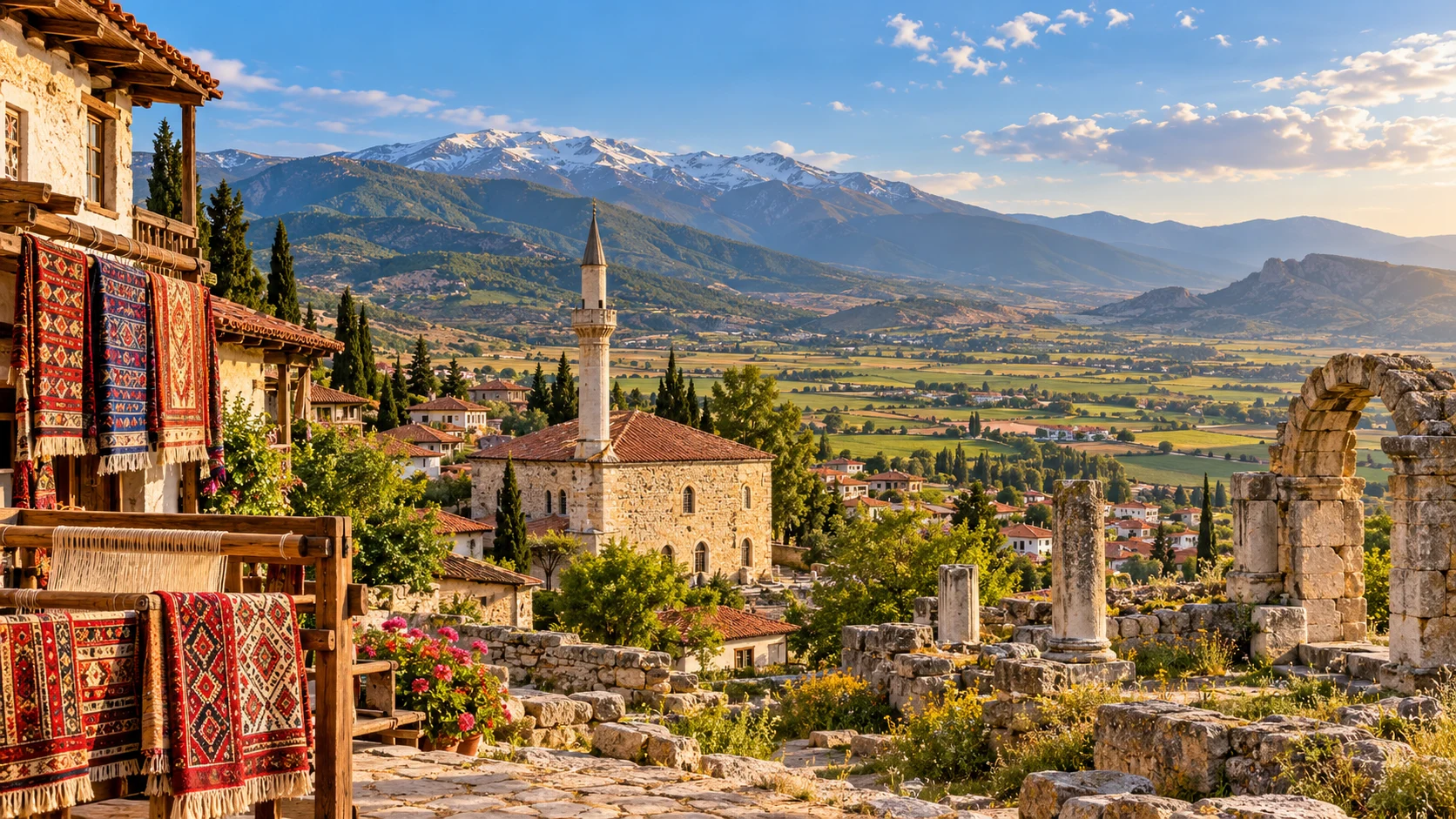
Discover the crafts, villages and inland heritage of neighbouring Tavas.
Explore This Guide →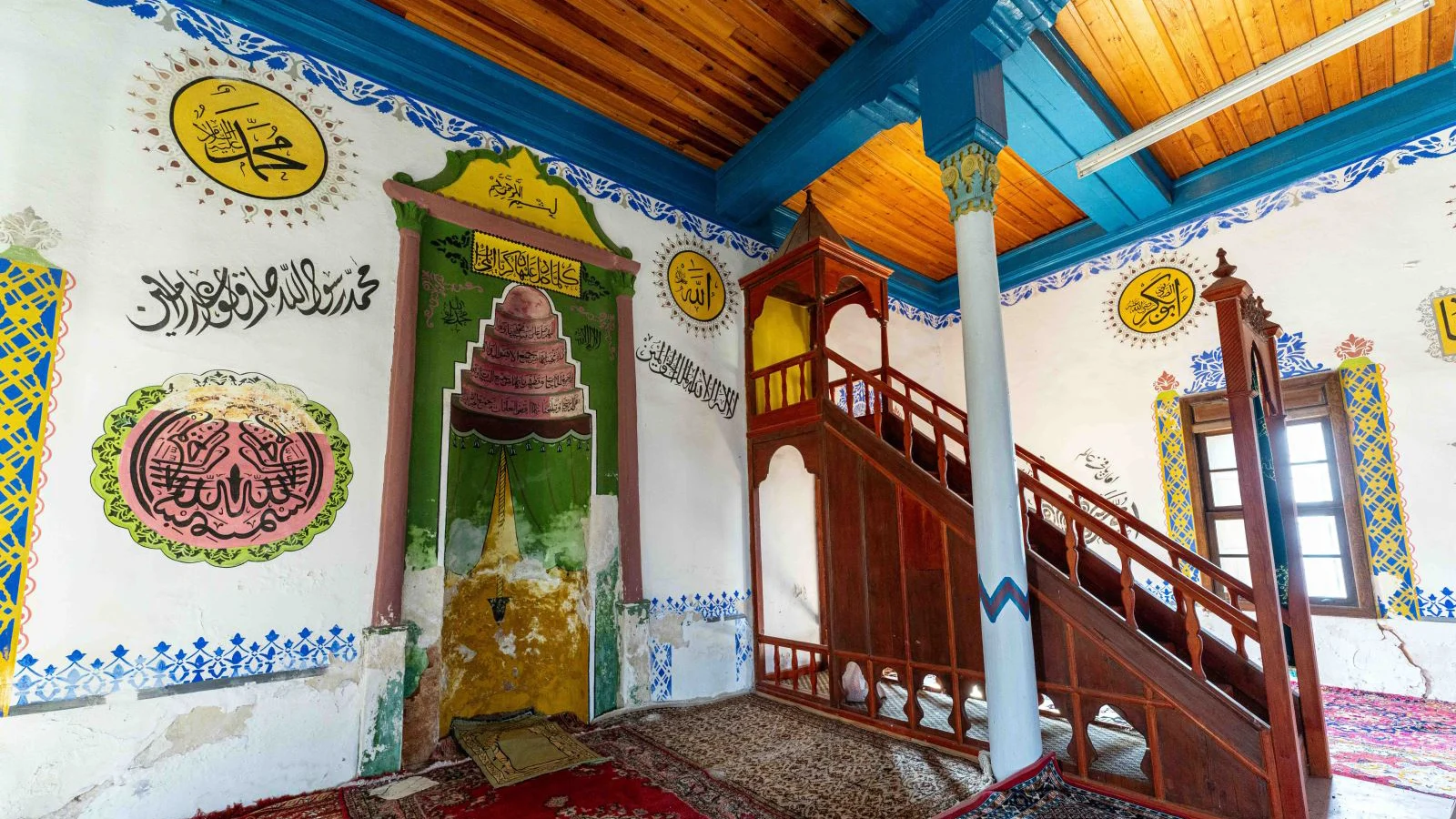
Continue exploring painted and timber-rich Ottoman religious architecture.
Explore This Guide →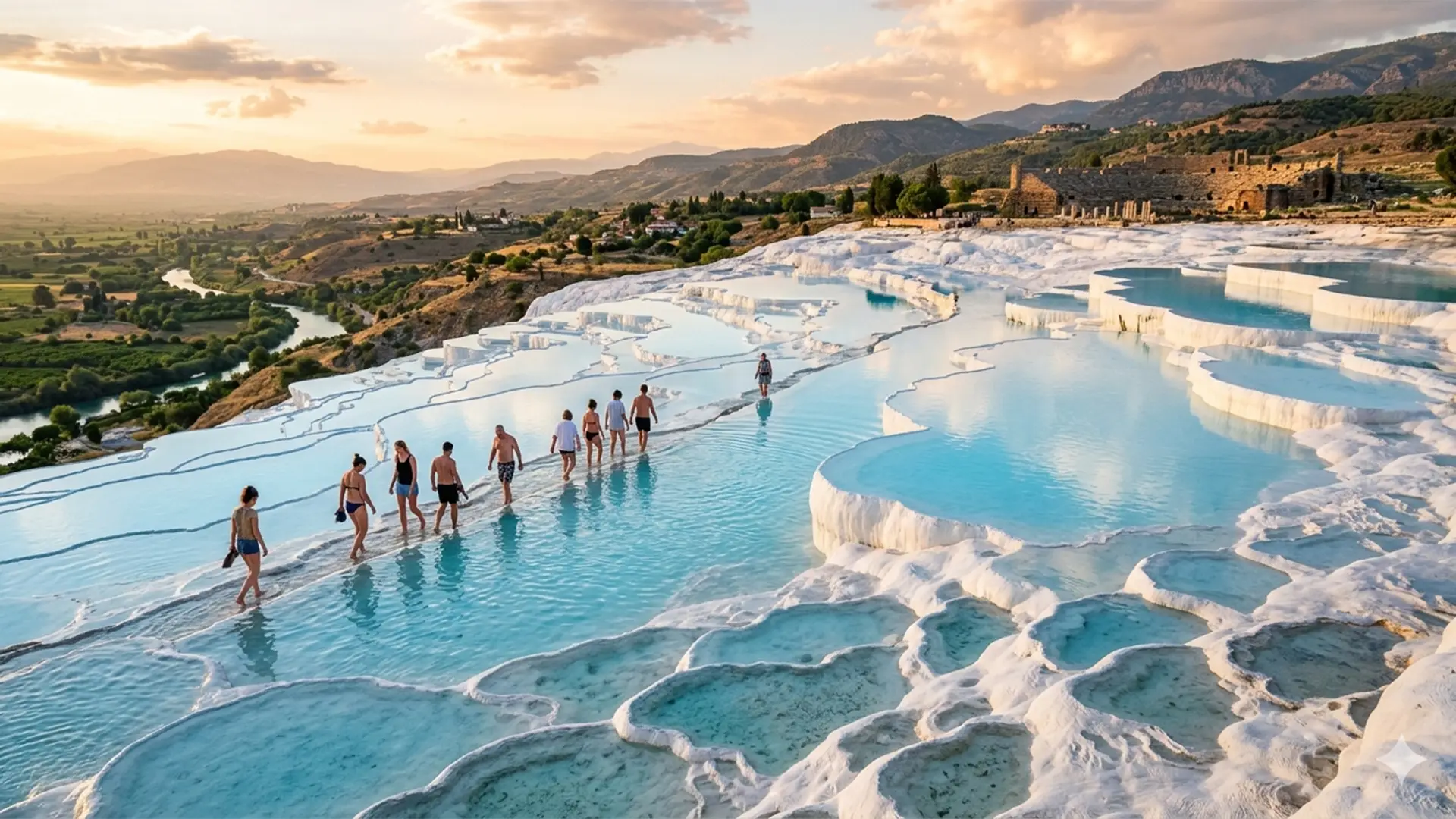
Compare Acıpayam’s limestone caves with Denizli’s famous travertines and ancient city.
Explore This Guide →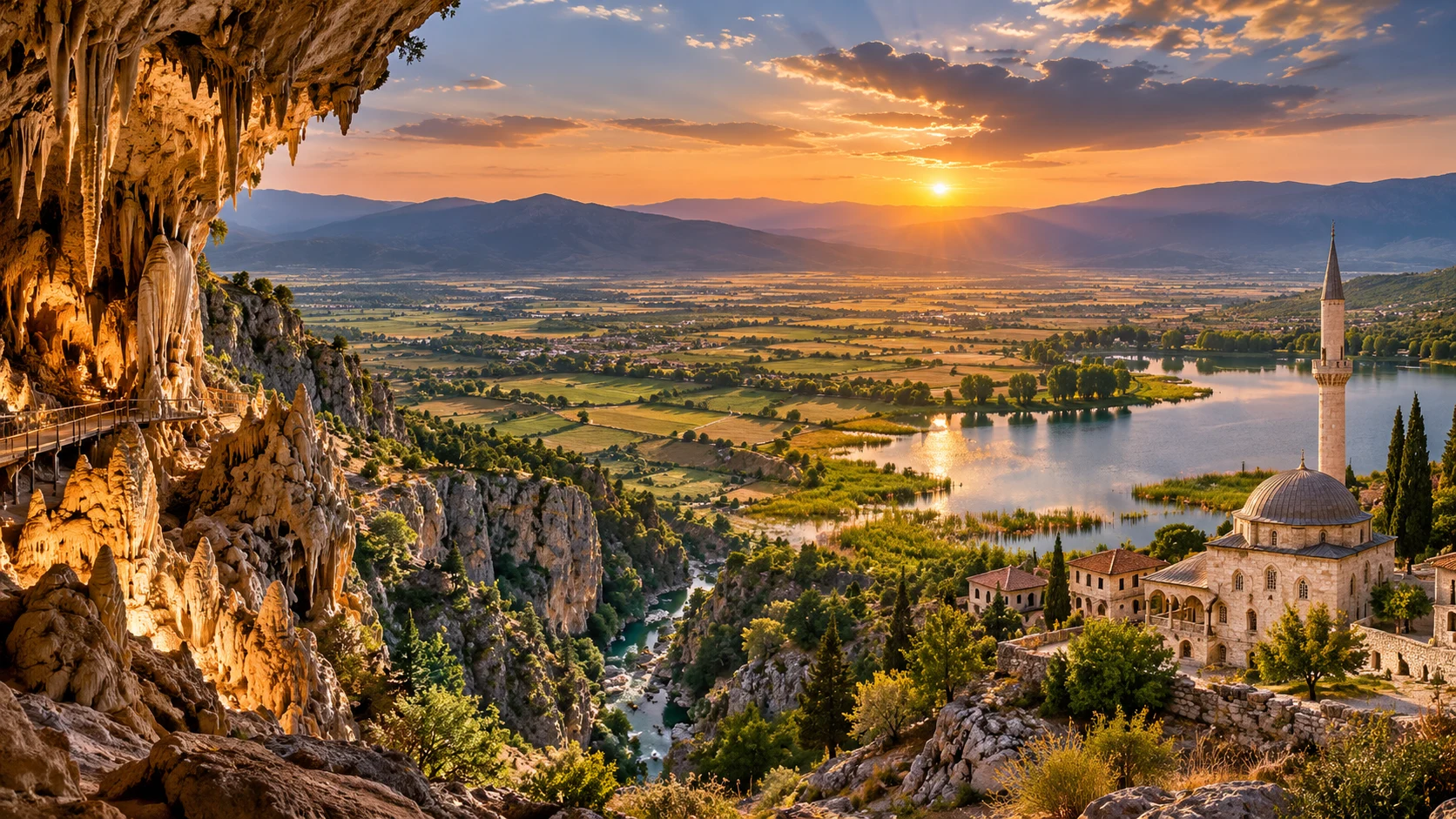
Ask about a tailor-made trip across caves, decorated mosques and regional culture.
Send an Enquiry →