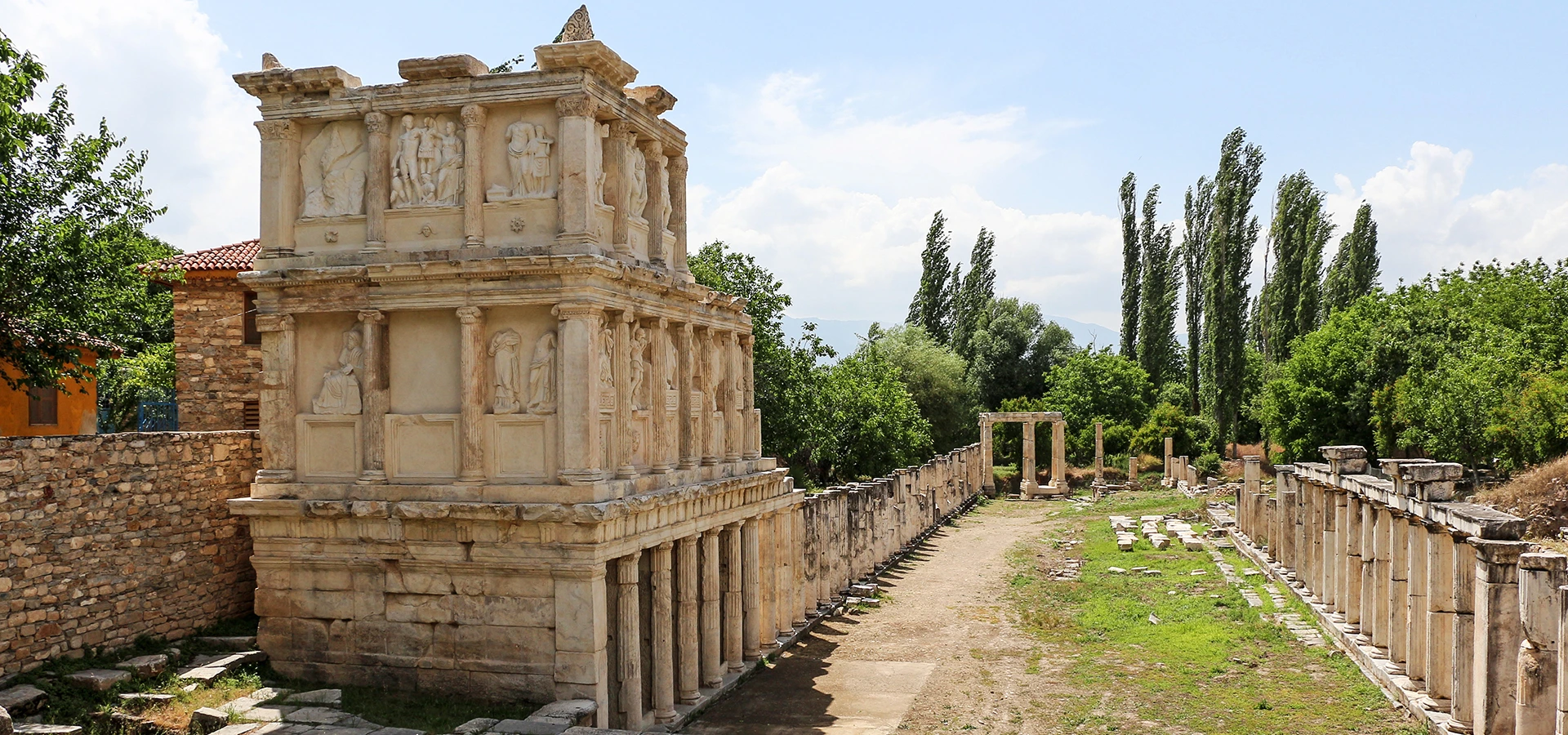
Aphrodisias Ancient City
Explore the extensive monuments of one of Caria’s great Roman cities.
Explore This Guide →





In the landscape of Vakıf neighbourhood near Tavas, Denizli, the remains of Herakleia Salbace reveal a less-visited chapter of western Anatolian history. Known also as Herakleia Salbake, the city stood on the ancient Caria–Phrygia frontier beneath the slopes of the Salbakos (Babadağ) range. Its ruins are modest compared with the great excavated monuments of Aphrodisias, yet its historical significance is considerable.
Herakleia is especially noteworthy for inscriptions recording physicians associated with the Roman imperial world, the cult of the healing deities Asklepios and Hygieia, surviving traces of a stadium and defensive walls, and inscriptions that continue to enrich our understanding of ancient religion and society. Another highlight, the sculptured Herakleia Hieron, is a separate ancient monument east of the city, near Kızılcabölük.
This detailed guide explains what can actually be seen, what remains uncertain, how the site differs from Aphrodisias, why recent epigraphic research matters, and how to plan a respectful visit without assuming that the ruins function like a fully excavated ticketed museum.
A frontier city beneath Mt. Salbakos.
Inscriptions name notable ancient physicians.
Visible traces within a living village landscape.
A separate monument with extraordinary carved reliefs.
The key historical and practical details for an archaeological visit in the Tavas area.
Vakıf neighbourhood, Tavas district, Denizli Province.
Caria, close to the Phrygian frontier.
Foothills of Salbakos / Babadağ above the Tavas Plain.
Official directions use about 10 km west and a 1.5 km turn to Vakıf.
Partly surviving east–west oriented stadium.
Defensive walls, blocks and scattered architectural elements.
Ancient physicians and healing-related cults.
Evidence for civic identity and the river god Timelos.
Selected sculptures in Hierapolis Archaeology Museum.
2021–2022 surveys; inscriptions published in 2024.
Separate monument roughly 4 km to the east.
Car or prearranged private vehicle.
Verify current site arrangements; no fixed fee claimed here.
Ancient history, epigraphy and quiet countryside archaeology.
Uneven, partly undeveloped archaeological landscape.
Confirm access locally before setting out.
Herakleia Salbace rewards visitors who enjoy understanding places rather than simply photographing reconstructed columns. Its importance lies in the combination of Roman civic life, medicine, religious belief and the continuity of settlement. A relatively small amount of surviving architecture connects with an unusually rich historical record.
It is also an opportunity to see what archaeology looks like beyond major visitor attractions. The city has not been presented as a fully reconstructed monumental complex: parts lie close to, or within, the area of today’s Vakıf community. Walls, stadium remains and carved stones require patient observation and informed interpretation.
Choose Herakleia if you are already exploring Tavas, Kızılcabölük or the wider Aphrodisias route. Come for the history and landscape, not for the expectation of a long, signposted archaeological circuit.
Medicine and inscriptions.
Quiet and relatively undeveloped.
Stadium remains.
Caria–Phrygia borderland.
Specialist culture and ancient history.
Research-led, not a monumental theme park.
Herakleia Salbace is in the Vakıf neighbourhood of Tavas district, in Denizli Province, southwestern Türkiye. The ancient settlement occupied land below the Salbakos (Babadağ) mountains, looking towards the Tavas Plain. Its ruins are interwoven with the modern village landscape.
The Türkiye Culture Portal gives a useful route: travel towards Tavas on the Denizli–Muğla road, continue approximately 10 km west on the Tavas–Karacasu road, then take the northward road towards Vakıf for about 1.5 km. These are route instructions, not a promise of the driving time from a particular hotel.
It is important to search for “Herakleia Salbace – Vakıf, Tavas”. The ancient world contained several cities called Herakleia, and another prominent archaeological site, Herakleia at Latmos, is in the Lake Bafa region and is not this city.
Vakıf, Tavas, Denizli.
Salbakos / Babadağ.
Tavas district town.
Tavas–Karacasu road.
Vakıf neighbourhood turnoff.
Herakleia at Latmos, near Lake Bafa.
The position of Herakleia helps explain its identity. Ancient Caria covered much of southwestern Anatolia, while Phrygia lay further inland. Their boundaries were not modern provincial lines: cities could participate in overlapping geographic, economic and political spheres.
Herakleia stood on the southern slopes of the Salbakos mountain system, in a landscape linked with the Tavas Plain and with cities on the route towards Aphrodisias. Regional accounts place Aphrodisias to the west, with Tabae and Apollonia further south and other settlements to the southeast.
Learning this geography makes the ruins more meaningful. Herakleia was not an isolated outpost; it belonged to a populated network of towns, farmland, sacred places and roads that shaped life in ancient inland Caria.
Caria.
Near ancient Phrygia.
Salbakos range.
Tavas Plain.
Aphrodisias.
Tabae, Apollonia and other Carian towns.
The Babadağ / Salbakos foothills form a dramatic geographical backdrop to Herakleia. The meeting of mountain slopes and cultivable plains offered different resources to ancient communities, including routes, water and agricultural land.
The city’s position on gently rising ground also influences what visitors see today. Some ancient structures are covered by later soil deposits, and the visible fragments may be separated by modern roads, homes and cultivated areas.
Enjoy the surrounding scenery from established public areas, but do not treat every hill, terrace or field as accessible archaeological land. Much of the district remains a working rural environment.
Mountain foothills.
Tavas Plain.
Some remains lie below later deposits.
Agriculture and homes.
Site-and-landscape compositions.
Stay on permitted ground.
The name Herakleia refers to Herakles, the heroic figure of Greek mythology known for his feats and extraordinary strength. “Salbace” or “Salbake” distinguishes this city from other settlements named in his honour and connects the name with the Salbakos region.
Official descriptions explain the name in connection with Herakles, while research published in 2024 adds unusually strong evidence: a newly studied inscription directly names Herakles Ktistes—Herakles as the city’s mythical founder.
Ancient coin legends use a form rendered Herakleoton, expressing the civic identity of Herakleia’s inhabitants. Spelling varies across ancient languages, modern Turkish transliterations and archaeological publications.
Herakles / Hercules.
Salbace / Salbake.
Herakleoton.
Herakles Ktistes dedication.
Heraklia, Heracleia and Herakleia.
Use “Vakıf, Tavas” when searching.
The exact foundation date is not securely established. Türkiye’s Culture Portal describes Herakleia as a city generally thought to have taken shape in the Hellenistic period, while stressing that the archaeological evidence is limited.
One often cited indicator is the earliest coinage identified in local accounts, which does not currently provide a secure date earlier than the first century BCE. This does not mean people were absent from the surrounding countryside before that time; it simply prevents a confidently precise founding date.
An accurate history distinguishes between the establishment of the city as a named civic community, older human activity in the region and later Roman-period evidence. There is no need to invent a foundation year or an unverified founding king.
Unknown.
Hellenistic period.
Earliest cited coins: 1st century BCE.
Strong later inscriptions and monuments.
Possible in the wider landscape.
Avoid false precision.
Hellenistic era: the city’s foundation is usually placed broadly in this period, although its earliest development remains unclear. Late Republic and Roman Empire: civic coinage, public structures, healing cults and inscriptions show the city participating in regional cultural and administrative systems.
Roman imperial centuries: medical figures associated with the city appear in inscriptions and historical accounts; the first-century CE Hieron belongs to its wider sacred and funerary landscape. Late Antiquity: official histories describe defensive walls associated with the fifth century CE.
Medieval and later periods: the surrounding area entered changing Byzantine and Turkish political worlds. Today’s settlement of Vakıf occupies part of the ancient urban area, which is one reason the remains are not arranged as an isolated excavation park.
Probable early city phase.
Late pre-imperial evidence.
Medicine, inscriptions and monuments.
Date assigned to Herakleia Hieron.
Fortification phase in official accounts.
Living settlement overlapping ancient remains.
Ancient cities were embedded in administrative networks. Turkish official summaries place Herakleia Salbace in the Alabanda conventus before its later connection with the Aphrodisias administrative district in the Roman era.
These terms refer to ancient judicial and provincial systems; they are not equivalent to modern Turkish districts. Their value for travellers is that they reveal how cities exchanged goods, legal obligations and cultural influences across a wider Roman landscape.
The administrative relationship helps explain why Herakleia and Aphrodisias are often discussed together, even though they were distinct cities with their own traditions and monuments.
A Carian city.
Alabanda conventus.
Aphrodisias administrative sphere.
Distinct civic community.
Travel, trade and administration.
Combine themes, not confuse sites.
Herakleia continued through the transformations of Late Antiquity. Official cultural sources associate substantial defensive construction in the region with the fifth century CE, as cities adapted to different security and settlement needs.
The surviving wall traces are therefore a useful reminder that the city was not simply a classical Roman settlement abandoned at the height of the Empire. Its landscape continued to change as political and religious structures changed across Anatolia.
Visible masonry cannot always be dated accurately by a casual glance. A visitor should not label every surviving wall “Roman” or “Byzantine” without a supporting excavation report or historical source.
Late Antique / Byzantine.
Defensive construction.
5th century CE.
Several phases may overlap.
Walls and reused stones.
Interpret with evidence.
Vakıf is not simply a modern village beside an empty archaeological site. Official tourism material explains that part of the ancient city is beneath or within the present settlement area. This long continuity of occupation makes the archaeological landscape less immediately legible.
Visitors may encounter ancient blocks, column fragments and architectural material incorporated into or lying near the village environment. These pieces offer clues, but they do not mean every street is a public excavation trench or that household property can be entered.
The coexistence of ancient remains and current village life is itself part of Herakleia’s story. Photograph people, homes, farm work and private yards only with appropriate permission.
Vakıf neighbourhood.
Partly overlapped by settlement.
Scattered architectural stones.
Homes, lanes and farmland.
Public areas and permitted locations only.
Privacy and heritage protection.
The stadium is the most commonly identified public monument at Herakleia Salbace. Official descriptions place it between the ancient defensive wall and modern Vakıf village, on an east–west alignment. Some seating steps survive against the slopes.
It is important to picture a partly damaged ancient sports ground rather than a monumental, fully preserved arena. The western seating is described as heavily damaged or destroyed, and the overall plan is not presented to visitors with the completeness found at Aphrodisias.
Stadium remains make an excellent subject for a guided explanation of Greek and Roman civic life, athletic culture and urban planning. Do not walk or climb on fragile masonry, and follow any current conservation barriers.
Ancient stadium.
East–west.
Between village and wall line.
Some slope-side steps.
Western steps extensively damaged.
Do not climb or move stones.
Traces of city walls mark part of Herakleia’s historic urban perimeter. They are important because defensive lines reveal the scale and changing organisation of a settlement long after its initial foundation.
Turkish heritage descriptions connect fortification works with the Byzantine period, while some English summaries describe the remaining wall material broadly as Roman-period. These labels reflect layered histories, not a licence to assign the same date to every surviving block.
Where walls remain visible, observe the masonry from permitted paths and consider how the city related to surrounding fields and mountain slopes. Avoid entering unstable gaps, scrambling over foundations or treating enclosed land as public access.
City perimeter walls.
Multiple possible phases.
Late Antique / Byzantine defenses.
Stone masonry.
Shape and protection of the city.
Keep off loose wall sections.
Alongside the stadium and walls, heritage inventories mention architectural blocks, column drums, capitals and pieces of inscriptions around the settlement. Some remain unidentified because the city has not received the same long-term monumental exposure as better-known archaeological sites.
A carved stone visible in a village setting can be just as historically informative as a large reconstructed building. Architectural decoration can hint at a lost public structure, while an inscribed block may preserve a name, dedication or burial formula.
Visitors should avoid naming an isolated stone a theatre, agora, temple or bath without published evidence. Photograph details without touching, chalking, rubbing or relocating the object, and report any threatened remains to the appropriate heritage authorities.
Columns and carved blocks.
Fragments of inscriptions.
Scattered or partly buried.
Context is essential.
Document without handling.
Take archaeological souvenirs.
One of Herakleia’s most fascinating claims to historical importance comes from physicians named in inscriptions and ancient accounts. Turkish official heritage material identifies the city as a notable medical centre in the Roman world and describes an established tradition of medical learning.
The names of practitioners linked with the settlement suggest that medical expertise could create connections beyond a small inland Carian community, reaching circles associated with Roman emperors. This is especially interesting for visitors comparing the healing cultures of Herakleia, Hierapolis and other Anatolian cities.
Visitor distinction: historical evidence for doctors is not proof that a surviving, excavated “medical school building” can be toured today. The story is primarily reconstructed from texts, inscriptions and artefacts rather than a complete public monument.
Ancient medical scholarship.
Inscriptions and historical accounts.
Especially Roman imperial era.
Medical careers beyond the city.
No verified visitor-ready school building.
Guided historical interpretation.
Official sources list several named medical figures associated with Herakleia: Archelaos, known from an inscription around the middle of the first century CE; Titus Statilius Kriton, connected with Emperor Trajan; Damokrates, described in connection with Antoninus Pius and Marcus Aurelius; and Statilius Attalos, associated with the reign of Lucius Verus.
Another name appearing in published regional summaries is Diogenianos. Some records preserve unusual spellings or abbreviated forms, so modern scholarship and contemporary translations should be consulted before drawing detailed family trees or making claims about individual treatments.
These figures are important as evidence of professional networks and elite patronage. They should be introduced as individuals known from historical testimony, rather than as physicians whose instruments, homes or clinics have been identified on the ground at Vakıf.
Physician attested in inscriptions.
Linked to Emperor Trajan.
Associated with imperial medicine.
Linked to Lucius Verus.
Named in regional accounts.
Ancient names and identifications vary.
Ancient Greek and Roman concepts of health combined practical medical knowledge with religious devotion. At Herakleia, officials describe representations of Asklepios, a deity of healing, and Hygieia, associated with health and wellbeing.
Sculptures and reliefs referring to healing deities help explain why Herakleia developed a strong medical reputation in the modern historical literature. The figures also show the cultural world in which physicians practised, where sacred traditions and healing knowledge were not always separated as they are today.
Some objects from Herakleia are preserved at the Hierapolis Archaeology Museum. However, a religious statue does not by itself prove the exact location of a school, hospital or functioning sanctuary inside the ancient city.
Ancient healing deity.
Associated with health.
Statues and reliefs.
Religion and medicine.
Herakleia area.
Hierapolis Archaeology Museum.
Coins issued by cities were important expressions of identity. Official accounts note that Herakleia and Aphrodisias both represented the river god Timelos in their Roman-period coin imagery.
The stream rendered Timelos or Tmelos, identified in some modern descriptions with a local watercourse, also functioned as a geographical boundary between areas connected with the two cities. This is a reminder that a modest river could have enormous significance in ancient politics and religious imagination.
When examining coin photographs, consider what the city chose to communicate: divine protection, natural resources, civic belonging and relationships with neighbouring communities. The exact coin type should be checked in a museum or numismatic catalogue before attributing it to a reign.
Timelos / Tmelos.
River deity.
Roman-period civic coins.
Aphrodisias.
Geographic and cultural marker.
Use securely identified examples.
A scholarly study published in PHILIA in 2024 presents inscriptions recorded during the 2021–2022 archaeological survey. One dedication names Herakles Ktistes, together with Dionysos Prokathegemon and the Roman emperor Lucius Verus.
The authors identify this as the first direct inscriptional confirmation of Herakles as the city’s mythical founder. It gives stronger support to an identity long suggested by the city’s name without establishing the city’s precise historical foundation year.
For a traveller, this is an exceptional example of how archaeology progresses. A single newly read text can sharpen the interpretation of a settlement already known for generations.
PHILIA (2024).
Survey in 2021–2022.
Herakles Ktistes.
Dionysos and Lucius Verus.
Dedication inscription.
Evidence for a civic foundation myth.
The same 2024 PHILIA article discusses several other inscriptions from Herakleia. They include a possible dedication to Aphrodite, honour-related material, burial inscriptions, a graffito and a memorial for a gladiator.
Together, these texts allow historians to explore religious practice, private commemoration and social status. An epitaph naming a husband and wife, for example, can reveal family identity and concerns about the protection of a tomb.
Research caution: a dedication does not automatically establish the exact position of a standing temple, and a gladiator’s epitaph is not evidence that a surviving amphitheatre has been located. Ancient texts are strong evidence only for the specific propositions they actually support.
Aphrodite dedication.
Names and remembrance.
Epitaph noted in new research.
Informal written trace.
2024.
Do not invent lost buildings.
An imperial-period epitaph identified in recent research commemorates a gladiator. This small discovery is valuable evidence that people connected with the world of Roman spectacle formed part of Herakleia’s historical landscape.
It should not be confused with proof of a preserved gladiatorial arena. The identified stadium and a gladiator’s burial inscription are two separate categories of evidence. Roman entertainment could take many forms, and cities often shared performers and travelling professionals.
A careful guide can use this inscription to introduce questions about social status, entertainment and funerary practice without promising visitors an amphitheatre that has not been securely documented at the site.
Gladiator epitaph.
Roman imperial.
Stadium attested.
Not established by this text.
Entertainment and social identity.
2024 epigraphic study.
Herakleia Hieron is one of the most extraordinary heritage features associated with the city, but it is not in the same village location as the stadium. Turkish Culture Portal descriptions place it approximately 4 kilometres east of Herakleia Salbace, near Ören Sırtı and Kocapınar, northeast of Kızılcabölük.
Official material describes a substantial rectangular monument with rich carved decoration, traditionally interpreted as the monumental tomb of a local elite figure. Some heritage inventories use the word “temple”, reflecting differing descriptive traditions and the monument’s religious imagery.
Treat Herakleia Hieron as a separately planned archaeological stop. Proximity on a map does not guarantee a maintained access road, current on-site admission or permission to approach every preserved relief.
Herakleia Hieronu.
Tavas, Denizli.
Kızılcabölük / Kocapınar.
Around 4 km east, in official sources.
Elite monumental tomb / sacred monument.
Confirm independently before visiting.
The sculptured blocks attributed to the Hieron feature scenes connected with Artemis, Apollo, Pan, Dionysos and Herakles. According to the provincial heritage descriptions, the monument dates to the first century CE and its decoration was made by craftsmen from Aphrodisias.
These gods represented different spheres of ancient life, from hunting and music to nature, wine and heroic power. Their gathering in one decorative programme can be understood as an elite attempt to express prestige through divine associations.
If the monument cannot be approached safely on the day, official photographs and specialist publications remain a valuable way to study the reliefs. Never reach across protective barriers or touch original carved surfaces.
Mythological reliefs.
Hunting and wilderness.
Music and divine order.
Pastoral nature.
Festivity and divine transformation.
Heroic strength.
Among the most memorable details of Herakleia Hieron are symbols representing the twelve zodiac constellations. Regional cultural authorities describe their appearance on triangular architectural panels associated with the monument.
Zodiac imagery in Roman art can express the ordered cosmos, time, fate and a person’s place within divine or celestial systems. The specific message of the Hieron’s sculptural programme, however, should be interpreted with the monument’s funerary context in mind.
The symbols are not a reason to describe the ancient building as a modern “astrology school” or observatory. They belong to its artistic and religious decoration, and interpretation benefits from the physical and scholarly context.
Twelve zodiac signs.
Hieron architectural panels.
Roman period.
Cosmos and divine symbolism.
Monumental funerary setting.
A proven ancient observatory.
Aphrodisias was a celebrated centre of Roman marble sculpture. The heritage account for Herakleia Hieron credits Aphrodisian craftsmen with its carved decoration, pointing towards artistic networks between neighbouring cities.
This link is especially rewarding for travellers who have visited Aphrodisias Ancient City and its sculpture museum. The two places offer different scales of preservation: Aphrodisias has extensively interpreted monuments and collections, while Herakleia preserves a quieter regional story.
It is sensible to talk of the spread of artistic techniques and workshops, rather than assuming every marble block around Vakıf was produced by the same sculptor or quarry.
Aphrodisias.
Herakleia Hieron.
Carved architectural stone.
Regional craft networks.
Aphrodisias Museum.
Attribution requires evidence.
Official descriptions note Neolithic stone tools recovered from the slopes of the mound associated with the Hieron area. These finds illuminate an earlier chapter of human activity in the surrounding landscape.
It is essential to keep their chronology separate from the surviving Roman-period monument. The presence of prehistoric tools near a later tomb does not mean the tomb was built in the Neolithic period or that the Hellenistic city already existed at that time.
Local heritage summaries report selected tools in the archaeological museum at Pamukkale. For an accurate encounter with objects, check museum displays and their labels rather than assuming all finds are on permanent exhibition.
Neolithic activity.
Stone tools.
Mound slopes near Hieron.
Roman, 1st century CE.
Long human use of the landscape.
Do not merge unrelated periods.
Although the ancient city has been known in scholarship for many years, it is not excavated on the scale of major western Anatolian sites. A scholarly study of local ceramics records early research in 1993, brief work at the stadium in 2002 and renewed field surveys in 2021–2022.
These surveys produced additional material for understanding Roman-period architecture and occupation. Researchers also discuss the effect of later alluvial accumulation, which has concealed substantial parts of the settlement beneath the present ground level.
The publication of new inscriptions in 2024 demonstrates why the site deserves attention even without a grand reconstructed visitor trail. Archaeological knowledge is cumulative, and the published record can advance well beyond what is visible on a casual walk.
Early documented modern research.
Brief stadium excavation work.
Field survey campaigns.
New inscriptions published.
Alluvial deposition.
Research may revise interpretations.
Herakleia’s archaeological landscape is legally protected in designated areas. Turkish conservation-board decisions document protected archaeological zones and earlier problems involving unauthorised digging. Such activity destroys the context that gives artefacts their historical meaning.
Even an apparently loose piece of ancient stone, pottery or metal has a location that matters to researchers. Moving objects or creating new holes damages the evidence and can also be dangerous in unstable ground.
Leave all finds in place, avoid climbing on ruins and follow any posted restrictions. If you encounter suspected damage or looting, inform appropriate local heritage authorities rather than attempting to intervene yourself.
Legally protected archaeological areas.
Unauthorised excavation.
Pottery, stones or coins.
Even small exploratory holes.
Hidden pits and loose ground.
Look, learn and leave undisturbed.
The official Culture Portal records sculptures and reliefs from Herakleia among the holdings of the Hierapolis Archaeology Museum at Pamukkale. Mentioned examples include a figure of Hygieia, material associated with Zeus Ktesios Patrios and fragments of marble statuary.
A museum visit helps complete the experience of an ancient city whose original sculptures are not all left exposed outdoors. Objects displayed in conservation conditions can preserve details that are easy to overlook among scattered foundations.
Display locations may change during loans, conservation or gallery rearrangements, so confirm that a specific piece is presently exhibited if it is essential to your trip. An entry ticket for the museum is separate from any site-access rules around Vakıf.
Hierapolis Archaeology Museum.
Pamukkale, Denizli.
Hygieia sculpture.
Zeus-related reliefs and marble fragments.
Current display arrangements.
Combine with a planned Pamukkale day.
Aphrodisias is a major excavated city with extensively preserved public buildings, sculpture and visitor facilities. Herakleia Salbace is a less-developed archaeological landscape where the stadium survives only in part and much of the settlement remains below or within later ground occupation.
Aphrodisias therefore suits visitors seeking an immersive several-hour walk through monumental ancient architecture. Herakleia better suits those who are curious about medicine, epigraphy, local history and the rural geography of Caria.
They complement rather than replace each other. Travellers with limited time and a preference for accessible major monuments may prioritise Aphrodisias, then add Herakleia only if the route and site conditions permit.
Major excavated city.
Smaller visible remains.
Ancient Caria.
Physicians and inscriptions.
Monumental sculpture and urban ruins.
Combine only with realistic routing.
Expect a landscape of modern village lanes, agricultural ground and scattered ruins, rather than a large formal archaeological entrance with an established circuit through reconstructed buildings. The most relevant remains are the stadium, fortification traces and individual architectural fragments.
Because site conditions can change, a precise starting point, current access instructions and local contact are worth establishing before your visit. A qualified guide with knowledge of Carian archaeology can make a major difference to how much you understand.
The ruins are historically meaningful even where the remains are subtle. Enjoy the encounter as an exploration of place, evidence and landscape, and allow time for unexpectedly limited visibility or restricted access.
Low-key and research-focused.
Do not assume one exists.
Stadium and wall remains.
Better with informed guiding.
Working village.
Confirm exact access.
No reliable, current 2026 ticket price or universal visitor-opening schedule has been established for the ruins in Vakıf from the official site descriptions reviewed for this guide. That does not mean every corner of the protected archaeological area is freely accessible at every hour.
Public village roads, fenced archaeological plots and active excavation or conservation zones may all have different conditions. Official materials identify Herakleia as an ancient site but do not provide the same operational details that travellers expect from larger state-run archaeological parks.
Before departing, check with the appropriate local tourism office, museum authority or an informed local guide. Do not assume the Museum Pass covers a specific arrangement unless it is officially confirmed, and never enter a closed area to avoid a potential fee.
Not verified for this guide.
Not verified.
Do not assume acceptance.
Possible restrictions.
Not guaranteed.
Check before setting out.
Official Turkish Culture Portal directions describe driving west from Tavas on the Tavas–Karacasu road for approximately 10 kilometres, before following a road north towards Vakıf for roughly 1.5 kilometres. The archaeological remains are in the neighbourhood area.
This is a practical orientation route, not a guarantee of exact distance from every point in Tavas or a continuously signposted approach to every ruin. Use an up-to-date map and confirm the specific location of the stadium or meeting point rather than setting the navigation to a broad district label.
If you also wish to see the Herakleia Hieron, plan another stop in the Kızılcabölük / Kocapınar direction. Do not treat it as a short internal stroll inside the same excavation park.
Tavas town.
Towards Karacasu.
Approx. 10 km west.
Approx. 1.5 km onward.
Hieron near Kızılcabölük.
Pin each destination separately.
From central Denizli, the normal regional approach follows the Denizli–Muğla route toward Tavas, before turning west towards Vakıf. This makes the site a dedicated excursion to the southern part of Denizli Province, not an attraction inside the city centre.
Actual travel time depends on your departure address, road conditions and whether you include other archaeological stops. A private vehicle is particularly useful when the programme includes the separate Hieron monument or further sightseeing near Tavas and Karacasu.
If arranging a tour, ask for the complete route in writing. The driver and guide should know that Herakleia Salbace in Vakıf and Herakleia Hieron by Kızılcabölük have separate locations and may have separate access constraints.
Denizli city.
Toward Tavas.
Car or booked driver.
Check live navigation.
Two separate Herakleia sites.
Agree on exact itinerary.
Yes, Herakleia Salbace can be considered as an independent road excursion from Pamukkale or Karahayıt. But the site is neither part of the Hierapolis archaeological area nor included simply by entering the Pamukkale travertine complex.
For visitors interested in ancient medicine, a thought-provoking contrast is possible: Hierapolis is well known for its thermal and healing landscape, whereas Herakleia is discussed for the medical figures recorded in its historical evidence.
Allow sufficient time for driving and consider whether the relatively limited visible ruins suit your interests. A full Pamukkale–Hierapolis sightseeing day is already substantial; adding Herakleia without removing other stops may create an unnecessarily rushed programme.
Pamukkale or Karahayıt.
Separate road excursion.
No general connection established.
Ancient approaches to healing.
A dedicated archaeology outing.
Avoid overloading the day.
The Türkiye Culture Portal mentions minibus connections from Tavas to Vakıf. It also describes service towards Kızılcabölük, the area relevant to the Hieron. These references establish a local transport possibility, not a verified operating timetable for late 2026.
Services, departure points and frequencies can change, and public transport does not necessarily deliver visitors to each archaeological feature. The existence of a local minibus does not mean that you can conveniently connect both Herakleia locations in one day.
If relying on public transport, verify both outbound and return departures before leaving Tavas. For a multi-stop archaeological trip, prearranged transport is generally easier.
Tavas–Vakıf minibus.
Tavas–Kızılcabölük service.
Not independently verified.
Confirm before departure.
Site features may be dispersed.
Private car or driver.
Herakleia is not presented as a continuously paved accessible heritage park. The visit may involve uneven earth, loose stones, gradients and village surfaces; visibility and approach depend on the particular ruins and any restrictions in place.
For people with reduced mobility, wheelchair users or travellers using walking aids, the decisive question is which locations can be reached from a legal parking point without steps or rough ground. That must be checked with a current on-site source.
It may be possible to enjoy a shorter, mostly vehicle-based heritage outing and see some features from permitted public areas. Do not promise a barrier-free route, accessible toilets or seating without confirming them.
Irregular / partly unprepared.
Steps and slopes.
Not confirmed site-wide.
Do not assume facilities.
Shorter customised visit.
Ask about exact walking conditions.
Spring and autumn are often comfortable seasons for exploring open archaeological landscapes in inland western Türkiye. They can offer softer light and milder temperatures than the middle of summer.
Summer visits call for water, a hat and sun protection, especially where ruins have limited shade. In winter, wet ground, cold spells and rural-road conditions can make outdoor exploration more demanding.
The best day is not defined solely by the calendar. Current weather, safe access, daylight and any active fieldwork are all more important than assuming the site always offers the same route.
Pleasant walking conditions often possible.
Hot and sun-exposed.
Often suitable for archaeology.
Check cold, rain and road conditions.
Comfortable daylight.
Weather and permitted access.
Herakleia offers an opportunity for documentary and landscape photography: surviving stadium steps, stone blocks, sections of wall, village approaches and the foothills of Salbakos provide a story very different from monumental postcard scenes.
Photographers should distinguish Herakleia Salbace from Herakleia Hieron in filenames and captions. A relief photographed near Kızılcabölük should not be labelled as lying in the middle of Vakıf village. The same care matters when using images on a tourism website.
Use public positions or authorised access, avoid moving stones or disturbing nearby homes, and observe Turkish rules for drone use and protected archaeological areas. Ask permission when people are recognisable in photographs.
Stadium and wall traces.
Babadağ foothills.
Hieron sculptural details.
Morning or late afternoon.
Verify photo rights and permits.
Do not stage or disturb finds.
A short, carefully planned look at the site can be enjoyable for history-loving families and older visitors who are comfortable with modest walking and a rural setting. It is particularly rewarding when children are encouraged to look for clues about ancient city life rather than expecting reconstructed buildings at every stop.
However, uneven ground, loose stone, possible excavation depressions and roads shared with local traffic require supervision. This is not a playground, and a preserved stadium step should never be treated as climbing equipment.
For visitors who need guaranteed facilities, easy parking and smooth walking paths, a major excavated site or museum may be a better primary activity. Herakleia can remain an optional addition when actual conditions suit the group.
Possible with adult supervision.
Explain archaeology, do not climb ruins.
Choose short routes.
Loose masonry and uneven ground.
Must be confirmed.
Adapt to the least-mobile guest.
Herakleia survives in a living community and protected archaeological landscape. Do not enter private gardens, follow construction or farm vehicles into restricted areas, or photograph household interiors without permission.
Do not collect pottery fragments, coins, tiles or carved stone. Even an insignificant-looking shard may be part of the archaeological record. Avoid climbing walls, stepping on decorated blocks or approaching open trenches.
Keep noise and parking considerate, carry away rubbish and use trained local professionals when specialised access or interpretation is needed. Responsible visits help preserve both the ancient site and the daily life around it.
Ask permission.
Never remove finds.
Do not climb or scratch.
Respect privacy.
Do not obstruct local access.
Protect heritage and community.
Start: travel to the Vakıf neighbourhood with a confirmed navigation point. Spend time understanding the site’s relationship to the Tavas Plain and identifying accessible traces of the stadium and walls with a knowledgeable guide or reliable local information.
Continue: explore the accessible village-side archaeological setting without entering private plots. Discuss the city’s link with ancient medicine, its coin images of Timelos and the new inscriptions that mention Herakles as founder.
Finish: return towards Tavas, or consider the Hieron near Kızılcabölük only if safe access has been verified beforehand. This is a flexible half-day heritage outing, not a guarantee of a fixed-duration official tour.
Vakıf archaeological setting.
Stadium.
Wall remains.
Physicians and inscriptions.
Hieron, if access is confirmed.
Tavas or onward route.
Morning: begin from Tavas, orient yourself in the local landscape and visit the Vakıf / Herakleia Salbace remains. A guide can explain how the city’s identity developed, why the stadium matters and what inscriptions reveal about Roman society.
Midday: take a prearranged lunch break in a verified restaurant in Tavas or another practical stop. Afterwards, continue towards Kızılcabölük if the approach to the separate Herakleia Hieron has been confirmed as safe and permitted.
Afternoon: use the Hieron’s mythological programme as a starting point for discussing the artistic influence of Aphrodisias. Finish the day with a realistic return route; do not add distant archaeological sites simply because they appear nearby on a regional map.
Ancient city at Vakıf.
Medicine, coins and inscriptions.
Confirmed local restaurant.
Hieron near Kızılcabölük.
Mythology and Aphrodisian art.
All access subject to confirmation.
Yes, a specialist archaeology-focused road trip can connect Herakleia with Aphrodisias Ancient City in neighbouring Aydın Province. The link is historically strong: official accounts mention connections through ancient administration, a shared river deity and sculptors associated with the Hieron.
However, the visitor experiences differ enormously. Aphrodisias merits substantial time for its monumental stadium, theatre, Tetrapylon, temple precinct, Sebasteion and museum, while Herakleia is a smaller and less accessible archaeological landscape.
A full itinerary should prioritise what you most want to see, calculate the actual driving distance and account for opening and access arrangements. Do not assume that Herakleia, the Hieron and the whole of Aphrodisias can be explored deeply in a short day.
Western Caria.
Art, medicine and Roman networks.
Smaller, more fragmentary.
Extensive excavated ruins.
Travel and site time.
Prioritise quality over stop count.
Tavas and Kızılcabölük are practical local reference points for Herakleia and its separate Hieron. The wider area has a complex ancient landscape, including the history of Tabae, but each site needs its own exact location and visitor-access plan.
The most natural larger archaeological counterpart is Aphrodisias near Karacasu, with its extensive Roman architecture and sculpture museum. The Pamukkale–Hierapolis area, meanwhile, is better planned as a separate major heritage excursion.
If you enjoy understanding the historical geography of inland Caria, build the route around two complementary themes rather than trying to include every named ancient settlement in one day.
Tavas.
Kızılcabölük and Hieron.
Tabae and the Tavas Plain.
Aphrodisias.
Aphrodisias Museum.
Pamukkale and Hierapolis.
Wow Cappadocia can help discuss a custom archaeology itinerary in the Tavas, Kızılcabölük and Aphrodisias region, with transport and an appropriate licensed professional guide subject to actual availability.
Our priority is an accurate and comfortable programme. If you wish to see the Herakleia Hieron, we would first verify the current access and approach. We would also explain when a location is an archaeological landscape rather than an excavated museum, so expectations remain realistic.
Private itineraries can focus on ancient medicine, Carian cities, Greek mythology, Roman inscriptions or historical photography. The quotation would specify the available route, guide, vehicle, meals and any applicable tickets. There are no compulsory shopping stops.
Private and customisable.
Medicine and Carian history.
Denizli or agreed local point.
Licensed professional, on request.
Checked before confirmation.
No compulsory shopping.
Herakleia Salbace is in Vakıf neighbourhood, in the Tavas district of Denizli Province, southwestern Türkiye.
No. Herakleia Salbace is near Tavas, Denizli; Herakleia at Latmos is a separate ancient site near Lake Bafa.
Yes. Salbace, Salbake and Heraklia are variant modern spellings used for the same city near Vakıf.
It is best known historically for its physicians and healing-related religious traditions, along with surviving stadium and wall remains.
Ancient authors and modern heritage authorities generally identify it as a Carian city near the Phrygian frontier.
The exact foundation year is unknown. Official tourism sources tentatively associate the city with the Hellenistic period.
The name refers to Herakles, the mythic Greek hero. A scholarly publication in 2024 describes a dedication explicitly naming Herakles Ktistes as the city’s mythical founder.
Official descriptions identify the partially preserved stadium, defensive walls and scattered architectural fragments. Actual access depends on local conditions.
Yes. Remains of an east–west stadium lie between the ancient wall line and the modern settlement of Vakıf.
No. Herakleia’s stadium is much more fragmentary; the surviving western seating is described as extensively damaged.
The city has a documented history of medical learning and physicians, but an excavated, visitor-ready medical school structure has not been established.
Official sources name Archelaos, Titus Statilius Kriton, Damokrates, Statilius Attalos and Diogenianos among notable medical figures.
The healing deities Asklepios and Hygieia feature in the city’s religious and artistic evidence, helping explain its association with medicine.
Timelos or Tmelos was a river deity represented in the Roman coinage of Herakleia and neighbouring Aphrodisias.
Yes. Inscriptions recorded in 2021–2022 were published in a 2024 academic study, including a dedication naming Herakles as mythical founder.
A recent scholarly study includes a gladiator’s epitaph. This does not by itself prove the existence of a surviving amphitheatre at the site.
It is a separate Roman-period sculptured monument, often interpreted as an elite tomb, located near Kızılcabölük east of the ancient city.
No. Official heritage descriptions place it approximately 4 km east, near Ören Sırtı and Kocapınar.
Official accounts describe scenes related to Artemis, Apollo, Pan, Dionysos and Herakles, together with zodiac imagery.
Yes. Official Turkish heritage descriptions identify relief elements representing the twelve zodiac signs on the monument.
Yes. Official descriptions mention finds such as a Hygieia sculpture and other marble works at the Hierapolis Archaeology Museum in Pamukkale.
The Türkiye Culture Portal describes about 10 km west on the Tavas–Karacasu road, followed by approximately 1.5 km north towards Vakıf.
The Culture Portal mentions service from Tavas to Vakıf, but current schedules and return transport should be confirmed locally.
A current, definitive fee and general opening schedule were not established for this guide. Check with local heritage authorities before travelling.
A continuous step-free route has not been verified. The surrounding terrain and individual archaeological features may be uneven.
A focused visit to the accessible ruins can be relatively short, but allow additional time for travel, interpretation and any separate visit to Herakleia Hieron.
Yes, as part of a planned archaeological road trip. Allow considerable time for Aphrodisias, which is a major excavated site.
Herakleia Salbace is not presented as a UNESCO World Heritage property. Nearby Aphrodisias has a UNESCO World Heritage inscription.
We can discuss an individually planned itinerary with transport and licensed guiding subject to route, site access and guide availability.
Extend your journey into Aphrodisias, Roman sculpture and the historic landscapes of Pamukkale.
These are separate sites requiring their own travel and visitor arrangements.
Explore the extensive monuments of one of Caria’s great Roman cities.
Explore This Guide →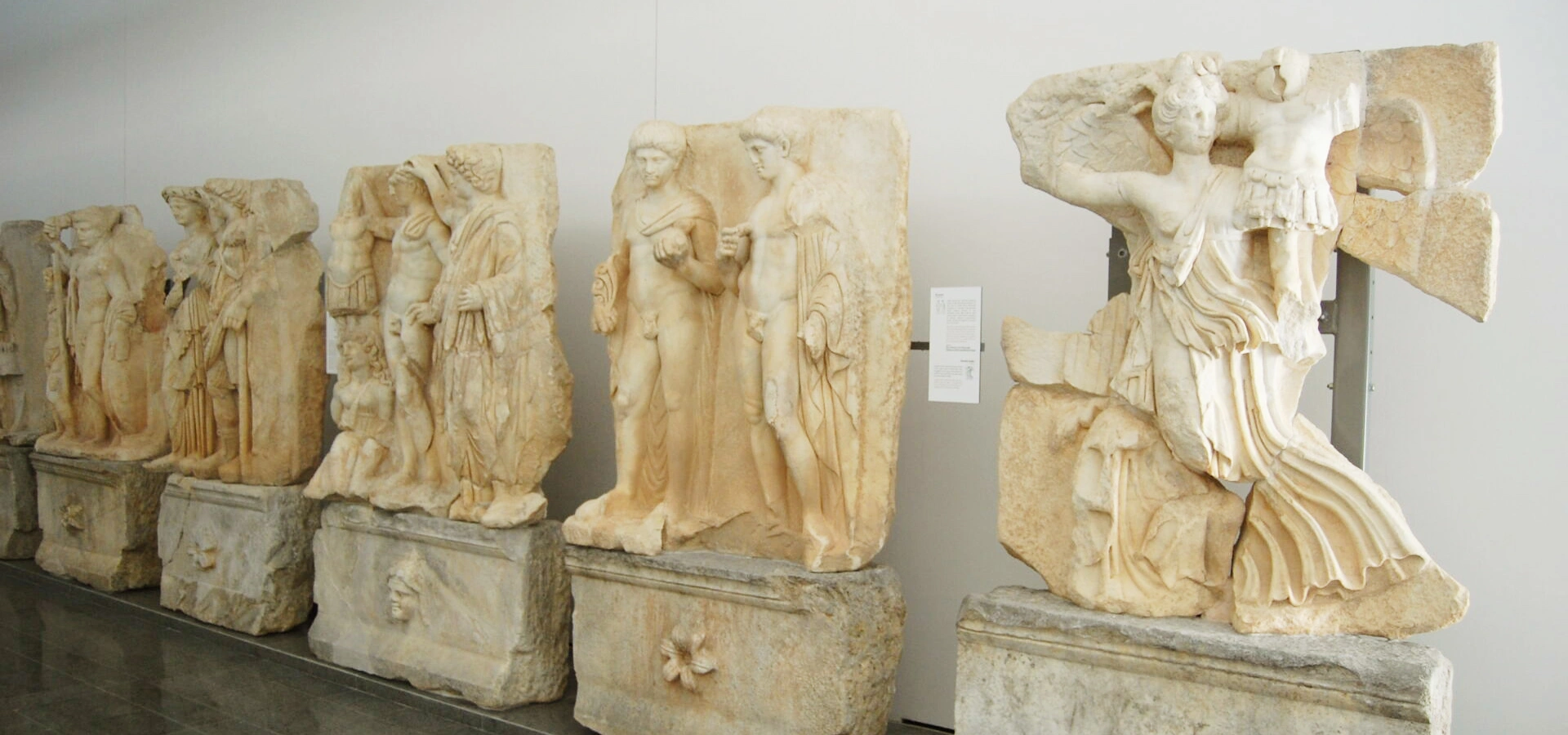
See the carving traditions that shaped Roman art in the region.
Explore This Guide →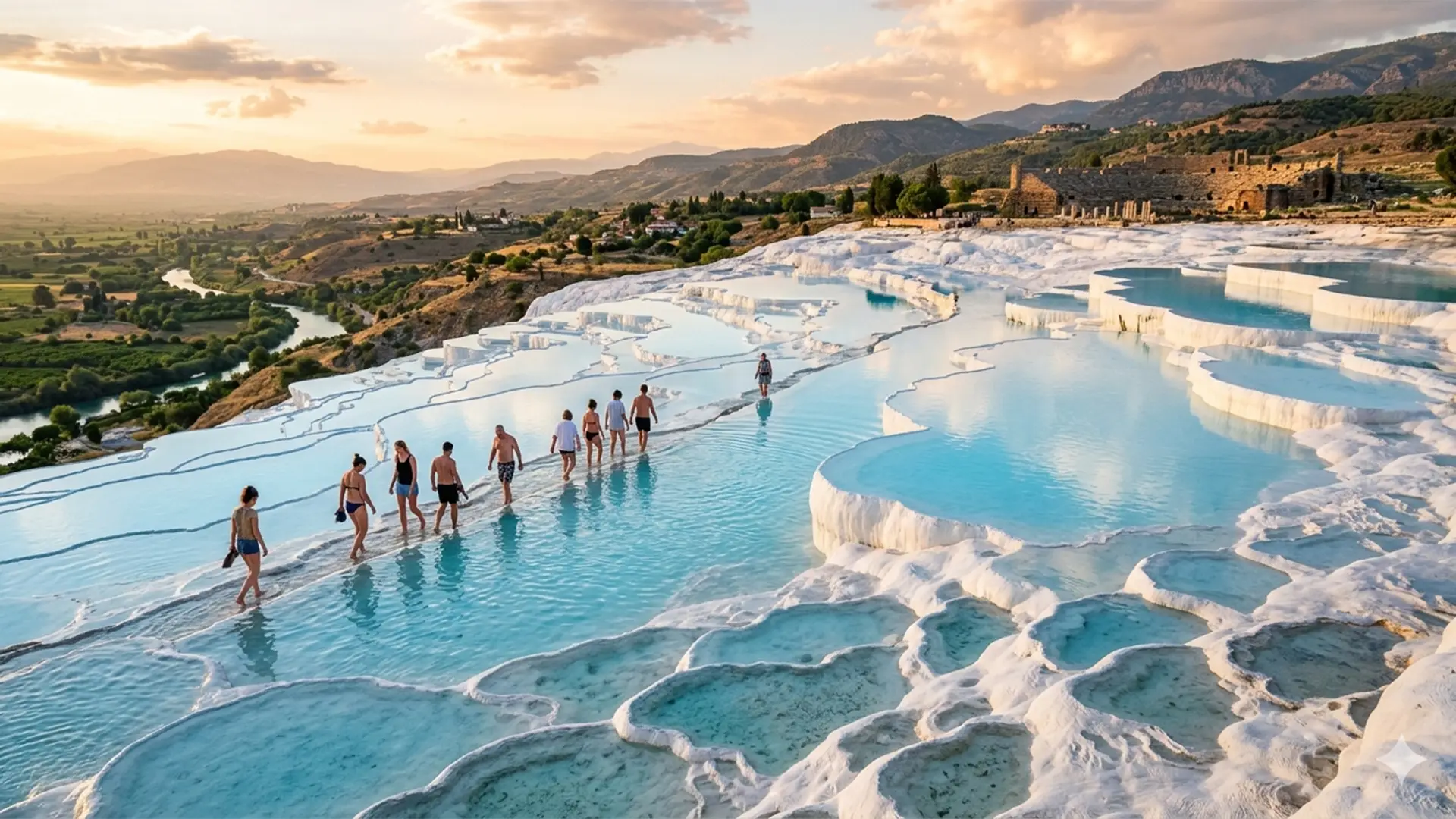
Discover the classical city and its long history of thermal healing.
Explore This Guide →Consider a custom route with expert guidance and clear site-access arrangements.
Combine two major archaeological destinations on a privately guided route.
View Private Tour →
Explore one of the country’s best-known archaeological landscapes at your own pace.
View Private Tour →