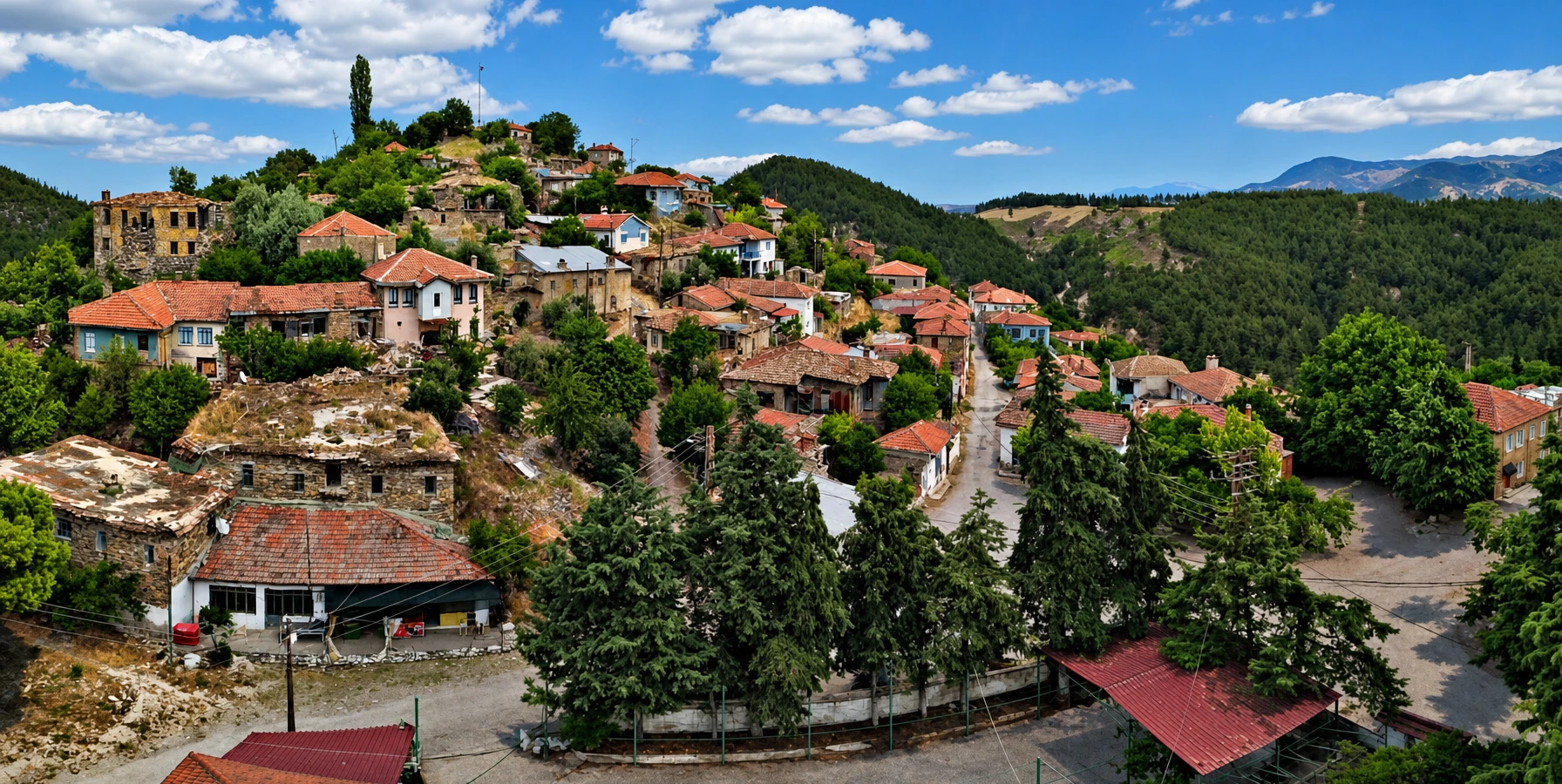
Attuda Ancient City
Discover a multi-period hilltop settlement and its connection with the historic Sarayköy region.
Explore Attuda





West of Denizli, in the fertile Büyük Menderes Valley, Sarayköy is known for a remarkable concentration of geothermal waters. This is not one single thermal pool: the district encompasses multiple thermal areas, particularly Tekke (Tekkeköy), İnaltı, Babacık (Kabaağaç) and Kızıldere, with distinct sources, temperatures and visitor arrangements.
Some waters have historically served bathing and local spa traditions, while others belong to one of Türkiye’s most important geothermal-energy landscapes. In the wider area, ancient Karura (Carura) was associated with hot springs long before modern resorts and electricity-generating facilities transformed the valley.
The region’s natural water can emerge far too hot for direct bathing. Thermal spring temperatures quoted in geographical reports describe raw source water—not the temperature of a guest-ready pool. Whether a hotel, family bath or public facility is operating must be checked individually before travelling.
This practical guide explains the major Sarayköy thermal zones, local history, geothermal science, health and safety considerations, transportation, potential facilities and nearby destinations. It helps you appreciate the region without confusing an industrial geothermal field with a public swimming or spa facility.
Discover Sarayköy’s best-known historic thermal bathing area.
Compare İnaltı, Babacık, Kızıldere and surrounding thermal localities.
Learn how geothermal waters shaped settlement and bathing traditions.
Understand the connection between deep faults, mineral water and energy.
The key details for planning a sensible and enjoyable geothermal excursion in Denizli.
Sarayköy district, Denizli Province, western Türkiye.
Sarayköy town is approximately 22 km from the provincial centre according to official tourism information.
Tekke, İnaltı, Babacık, Kızıldere and other documented geothermal sites.
Raw spring temperatures vary widely; published examples include 43–100°C or higher.
The nearby ancient settlement of Karura was known for hot springs.
Kızıldere became home to Türkiye’s first commercial geothermal power plant in 1984.
Historically documented thermal hotels and bath facilities; current operation must be verified.
Prices vary by facility and service; no unified Sarayköy thermal-springs ticket.
Road access via Sarayköy; private transport helps reach individual spring areas.
Use designated, temperature-controlled bathing pools only; never enter untreated source water.
Sarayköy offers another side of Denizli’s thermal landscape. Unlike the famous terraces of Pamukkale, the district reveals a network of bathing locations, rural geothermal fields and energy infrastructure in a productive river valley.
A well-planned thermal visit can combine a relaxing stay in an established, operating spa facility with the history of ancient bathing, agricultural life and the geology that makes Denizli so distinctive. The experience depends heavily on which facility you choose.
For travellers who enjoy culture as much as wellness, nearby Attuda, Tripolis and Buldan make Sarayköy a useful starting point for exploring western Denizli.
See how the Earth’s natural heat shapes the Menderes Valley.
Explore the heritage of mineral-water bathing in established facilities.
Connect local springs with the historical settlement of Karura.
Learn about Kızıldere’s pioneering geothermal electricity production.
Discover a less-publicised part of the Denizli region.
Combine thermal experiences with history and local culture.
Sarayköy lies on the Denizli–Aydın–İzmir road corridor, on the western side of Denizli Province. Official provincial tourism information places the district centre approximately 22 km from Denizli city.
The springs are distributed across the district rather than concentrated in one central complex. Tekke/Tekkeköy is a significant bathing locality, while Kızıldere and nearby Karataş are closely associated with high-temperature geothermal development.
Visitors should always navigate to the exact operating bath or hotel, not simply to “Sarayköy Thermal Springs.” A map pin for a geothermal borehole, spring vent or power plant does not establish safe public entry.
Roadside district centre for orientation and local services.
Historic thermal-bathing area reached by local roads.
A distinct thermal source near the Tekke area.
Thermal locality associated with Kabaağaç.
A highly active geothermal area also used for electricity production.
Another geothermal locality named by the Ministry of Culture and Tourism.
Sarayköy belongs to the Büyük Menderes graben, a geological depression formed by major faults in western Anatolia. Fractures in rocks create pathways for groundwater to descend, heat at depth and in some locations rise again as hot, mineral-rich water.
In the wider Kızıldere–Tekke geothermal system, temperatures can be high enough not only to support thermal-water use but also to produce steam for electricity. Different outlets and boreholes may tap different depths and water compositions.
The same geological processes have shaped nearby Denizli destinations for millennia, although Sarayköy’s springs are not identical in composition, temperature or appearance to the Pamukkale travertines.
Fractures create routes through rock for geothermal fluids.
Water gains heat as it moves through the subsurface.
Water-rock interactions affect dissolved mineral content.
Some hot water reaches the ground surface.
Boreholes can reach hotter reservoirs than surface springs.
Different sites support bathing, heating, agriculture or power generation.
You may encounter Sarayköy Termal Turizm Merkezi (Sarayköy Thermal Tourism Centre), Tekke Kaplıcaları (Tekke Thermal Springs) and Tekkehamam in Turkish sources. These descriptions overlap geographically but should not be read as the name of one universal hotel or swimming pool.
Similarly, Babacık is associated with the Kabaağaç locality, while Kızıldere denotes a geothermal field with significant industrial operations. The thermal area is therefore best explored by specific place and facility name.
Older administrative descriptions and road signs may use village names, modern neighbourhood names or broader district labels. Verify the exact map destination and contact details before departure.
The Turkish word for thermal.
A thermal spring or bathing establishment.
A warm or hot spring locality.
A bathing facility or bathhouse.
Local names associated with important Sarayköy springs.
Geothermal field; it may be industrial rather than recreational.
The region’s relationship with hot water reaches back into antiquity. The Denizli Provincial Directorate of Culture and Tourism links the Sarayköy–Tekke thermal area with the ancient settlement of Karura (Carura), whose hot springs were known in ancient historical sources.
This connection is important because it places Sarayköy within a broader Anatolian tradition of bathing, rest and mineral-water use—alongside other thermal settlements such as Tripolis and Hierapolis.
The surviving remains and precise accessible boundaries of Karura should not be confused with a fully developed archaeological park. A reference to an ancient spa does not guarantee an open Roman bathhouse or excavated structures available for tourist entry today.
Karura, also written Carura.
Associated with the Sarayköy–Tekke springs.
Hot springs noted in ancient geographical and historical accounts.
Part of a long history of bathing around Denizli.
Ancient settlement history is separate from operating spa facilities.
Do not assume a staffed, excavated Karura archaeological attraction.
Tekke Thermal Springs are a central part of Sarayköy’s spa identity. Historical regional descriptions locate Tekkeköy approximately 20 km from Sarayköy town; the precise drive will depend on the specific establishment and local road.
A government nature-tourism master plan documents multiple Tekke outlets with raw spring temperatures of approximately 55–99°C. These numbers refer to natural sources in the area and emphatically not to safe bathing-pool temperatures.
The Tekke area has been associated with traditional bathhouses and thermal accommodation. Some older government listings record particular facilities, but their current business names, hours, guest policies and operating status need direct verification.
Historically described around 20 km from Sarayköy town.
Approximately 55–99°C in a government nature-tourism report.
A long-established hot-spring locality.
Older official directories record thermal facilities in the area.
Never bathe directly at a source outlet or unregulated channel.
Confirm a currently open, licensed bathing establishment.
İnaltı is documented as a separate thermal locality close to Tekke. The Denizli nature-tourism master plan describes the İnaltı Hamamı approximately 500 metres from the Tekkeköy thermal spring, associated with water emerging from a cave setting.
That report gives an approximate source-water temperature of 72°C and describes the water as sulphurous. It is a useful historical and geographical reference, not a live reading of any bathing pool.
Do not treat the presence of a spring or cave as permission to enter it. Natural cavities, hot outlets and old bath structures can be unsafe. Seek a currently operated facility if your goal is to bathe.
Close to the Tekke thermal locality.
About 500 m from Tekkeköy springs in the source report.
Around 72°C at the source, not a pool.
Historically described as sulphurous.
A natural source associated with a cavity; entry is not guaranteed.
Only use designated, officially operated bathing facilities.
Babacık Thermal Springs are associated with Kabaağaç in the wider Tekke region. The Denizli nature-tourism master plan places the locality approximately 3 km from Tekke and records two distinct spring temperatures of around 43°C and 62°C.
Historical descriptions mention sulphur-bearing waters and local mud-bathing traditions. The raw temperature and mineral profile of one source should not be assumed to describe every pool, mud bath or hotel service in the area.
If interested in thermal pools or mud applications, check present-day operation, hygiene, access conditions and appropriate supervision. Natural mud, untreated water and deep geothermal areas should not be used as improvised self-treatment.
Kabaağaç / Babacık near the Tekke area.
Historically described as roughly 3 km from Tekkeköy.
Approximately 43°C in an older government report.
Approximately 62°C in the same report.
Traditional mud-bathing practices are documented.
Mud services and entry need individual confirmation.
Kızıldere is one of the most important names in Türkiye’s geothermal history. Older visitor descriptions place Kızıldere roughly 11 km from Sarayköy and describe very hot mineral-water outlets in a landscape that also supports major geothermal power development.
Government nature-tourism materials record source-water temperatures of about 65–100°C for parts of the Kızıldere spring area. Wells reaching deep reservoirs can be substantially hotter; those figures should not be compared with the temperature of a swimming pool.
Above all, the Kızıldere geothermal power plant is not a thermal spa. Industrial compounds, boreholes and pipelines are controlled environments. Visitors should not approach steam releases, vents, wellheads or energy installations without specific authorisation.
Natural hot-water localities associated with Sarayköy.
Older listings place the area about 11 km from town.
Some sources documented around 65–100°C.
Industrial geothermal fluids can be much hotter.
One of Türkiye’s pioneering geothermal power-generation fields.
A power station is not a bathing or sightseeing facility.
Geothermal energy is an important part of Sarayköy’s modern identity. Exploratory studies at Kızıldere began in the 1960s, and a small prototype turbine produced electricity in the 1970s before the first commercial geothermal power plant began operating in 1984.
Today, Kızıldere is associated with subsequent phases of industrial development and renewable electricity production. The turbines use energy from high-temperature geothermal fluids; this is a different activity from spa bathing and involves strict engineering and safety rules.
For interested travellers, the story adds fascinating context to the springs. However, public tours of power facilities have not been confirmed for this visitor guide, and roadside views should never involve entering restricted industrial land.
Geothermal exploration and early drilling.
Prototype geothermal electricity production.
Commercial Kızıldere plant enters service.
Subsequent Kızıldere power-station phases.
Industrial processes differ from thermal bath operation.
No visitor access assumed without explicit permission.
The Sarayköy thermal story extends beyond the springs most commonly named on tourist websites. The Denizli Provincial Directorate of Culture and Tourism highlights a geothermal area at Hamamaltı near Karataş and records thermal establishments in the Tırkaz–Tekke surroundings.
The Ministry also lists İnsuyu among Sarayköy’s designated thermal tourism areas, alongside Tekke, Babacık and Kızıldere. These designations describe a regional geothermal resource network rather than guaranteeing tourist services at each named point.
Because information for individual sources is less standardised than for major resorts, use these place names as research and location references. Do not plan an independent bathing stop based on an unverified Google Maps pin.
Village associated with the Hamamaltı geothermal area.
Geothermal locality noted in provincial sources.
Area mentioned in older thermal establishment records.
Part of the district’s designated thermal tourism geography.
A source may serve energy or other uses instead of tourists.
Do not assume water access, lodging or operational baths.
There is no single temperature for the entire Sarayköy geothermal region. Official and government-linked publications describe a range of sources: for example, 43°C and 62°C at Babacık, around 72°C at İnaltı, and much hotter water at some Tekke and Kızıldere sources.
Many of these temperatures are archived measurements from surveys or reports, and can vary by source, time and measurement method. They should not be used to predict the conditions of a commercial swimming or soaking pool.
A licensed bath operator should maintain bathing-water temperatures appropriate for customers. Never touch or enter raw spring discharge to test a temperature; severe burns can occur quickly in very hot water.
Reported around 43°C at source.
Reported around 62°C at source.
Reported around 72°C at source.
Published examples range roughly 55–99°C.
Published spring examples range roughly 65–100°C.
May operate at considerably higher reservoir temperatures.
Minerals dissolved in groundwater reflect the rocks and reservoirs that water has passed through. Regional geothermal reports classify different springs and boreholes as containing combinations of sodium, bicarbonate, sulphate, carbon dioxide and, at some locations, boron or fluoride.
Descriptions of sulphurous water are especially common around Tekke, İnaltı and Babacık. A characteristic odour may occur in some settings, but appearance or smell is not a substitute for current water-quality testing.
Not all geothermal water is suitable for drinking—or even direct skin contact without processing. Do not drink spring water merely because an old local description calls it an “içme,” and rely on the operating facility’s current official instructions for any approved use.
A commonly reported dissolved constituent.
Part of regional geothermal-water classifications.
Documented in several mineral-water analyses.
Some Tekke-area springs are described as sulphurous.
Reported in some geothermal classifications; not uniform everywhere.
Drink only water explicitly approved as potable by authorities.
The most practical option is usually a verified, operating thermal hotel or managed bath facility in the Tekke area. Historically, official listings describe indoor pools, family bathing units, accommodation and other spa services among establishments in the district.
Facilities can differ substantially: some may be day-use pools, others private family baths, and some may focus on overnight guests. Their range of services can also change with renovation, ownership, regulations or seasonal operations.
Before booking, ask the exact establishment about day-use entry, private-bath availability, water temperature, required swimwear, hygiene, child policies, accessibility and cancellation terms. Never assume there is a single entrance gate for all Sarayköy springs.
Accommodation may include managed thermal facilities.
Private-use bathing units may be offered by some operators.
A historically documented service at certain sites.
Saunas or other amenities depend on the property.
Ask each facility whether non-residents may enter.
Confirm today’s hours, admission and available services.
The region has a long history of mineral-water bathing. Traditional promotional and tourism descriptions associate the springs with relaxation and various therapeutic uses, but historical claims are not proof that a particular water source cures a disease.
For most travellers, thermal bathing is best considered a comfort and leisure activity, not a replacement for medical diagnosis or treatment. Prolonged immersion, very hot water, dehydration and sudden temperature changes can pose risks.
People who are pregnant, have cardiovascular problems, blood-pressure concerns, impaired temperature sensation or another relevant condition should seek personalised medical advice before hot-water immersion. Be especially cautious with children and older guests.
Warm-water bathing may feel pleasant when used appropriately.
A mineral source is not a guaranteed medical treatment.
Important for guests with relevant medical conditions.
Take breaks and drink ordinary safe drinking water.
Never expose skin to untreated thermal discharge.
Follow posted pool rules and recommended limits.
Only enter clearly designated pools at operating, supervised facilities. Test the managed pool water cautiously using your hand before entering, observe any posted maximum stay and step out immediately if you feel light-headed, unwell or overheated.
Very hot water can cause scalds, dizziness or strain on the cardiovascular system. Do not enter open springs, channels, industrial outlets or geothermal mud pools. A spring that looks inviting can conceal extremely hot water or unstable ground.
Children require continuous supervision, and anyone taking medication that affects circulation, alertness or heat tolerance should get appropriate medical advice. Never combine alcohol use with very hot bathing.
Enter designated, temperature-managed facilities.
Respect operators’ time limits and take breaks.
Drink water before and after bathing.
Provide direct adult supervision at all times.
Walk slowly on damp bath floors and steps.
Leave immediately if you feel weak, faint or nauseated.
The hot-water landscape of Denizli was attractive to communities well before the modern wellness industry. The provincial tourism directorate identifies Karura as an ancient settlement connected with the Sarayköy–Tekke springs and their historical use.
A government nature-tourism plan also refers to a Roman-period bath and changing area in its description of Tekkeköy. This provides historical context, but the report does not establish a modern visitor route or current safe public access to those structures.
For a wider understanding of Roman bathing culture, combine this subject with the architecture and history of Hierapolis and Laodicea, where the archaeological context can be interpreted more extensively.
Historically linked to regional hot springs.
Older government reports mention Roman-period bathing remains.
Modern hotel buildings are not ancient Roman baths.
Do not enter fragile historic buildings without permission.
Hierapolis and Laodicea provide broader ancient-city context.
Use established historical sources rather than invented bath details.
Geothermal energy in Sarayköy is also associated with agricultural uses. Official district information identifies agriculture as an important part of the economy and describes greenhouse activity around the Tekke bath area.
The wider Büyük Menderes Valley supports farming and industry, while heated greenhouses illustrate one way underground heat can contribute to local economic activity. This does not imply that every greenhouse is visitor-ready or uses the same heating system.
A scenic drive may reveal the interplay between farmland, geothermal infrastructure and settlements. Always stay on public roads and avoid entering working agricultural sites without permission.
Fertile landscape important for local farming.
Thermal-area horticulture is noted in district information.
Geothermal heat can be used for purposes beyond bathing.
Agriculture is a major part of Sarayköy’s local life.
Greenhouses and farms are working properties.
Enjoy the landscape from legal public areas.
A thermal spa manages water so guests can bathe under defined conditions. An industrial geothermal operation extracts and handles high-temperature fluids to produce power or usable heat. Both may rely on the same broad geothermal resource but have very different safety and access requirements.
At a licensed spa, guests may find pool attendants, changing rooms and managed water conditions. Around industrial fields, there may be pressurised pipes, hot discharge, heavy vehicles, sealed wellheads and areas where entering without permission is dangerous.
This distinction matters when searching for Kızıldere online. A geothermal landscape may be interesting to learn about, but it is not necessarily somewhere to swim, soak or walk freely.
Guest use at a managed bathing facility.
Amenities and water rules set by the individual property.
Naturally hot water, often unsafe for direct contact.
Controlled industrial energy-production environment.
Not a tourism route, pool or photo platform.
Book a spa rather than navigating to a power station.
Sarayköy town is around 22 km from Denizli city on the principal westbound road corridor. Provincial culture-and-tourism material notes that minibuses can serve the town from Denizli, although current routes and schedules should be confirmed locally.
The thermal areas are outside the principal urban centre. For Tekke, İnaltı or Babacık, you may need a separate local drive beyond Sarayköy. A private transfer or vehicle is generally the more straightforward choice when visiting a particular bath property or combining nearby attractions.
From Pamukkale, this should be treated as a separate excursion rather than a stroll from the white terraces. Travel time varies by exact destination, traffic, road conditions and your starting accommodation.
Reach Sarayköy by the westbound road corridor.
About 22 km from Denizli to Sarayköy town.
Allow for a separate drive to the desired spa.
Confirm services to Sarayköy and onward transport.
Practical for bath facilities and multiple regional stops.
Navigate to an operating property, not just a geothermal field.
A map search for the entire district can produce very different results: a town centre, a hot spring, an old hotel listing, a geothermal well or an energy facility. Search by exact establishment and location before attempting the last part of the journey.
The following links are convenient starting points for regional orientation. They are map searches, not guarantees that the place accepts bathers, is open today or provides tourist access.
Locate the district centre.
Find the Tekke / Tekkehamam region.
Orient yourself near İnaltı.
Find the Kabaağaç thermal locality.
View the broad energy-field location—no public access implied.
Locate the separate travertine and ancient-city destination.
There is no one opening time, price or ticket counter for “Sarayköy Thermal Springs.” The label refers to a regional group of geothermal locations; each hotel or bathing business sets its own reservations, services and visitor terms.
Historical government accommodation lists are useful evidence that facilities have existed here, but they do not confirm 2026 operating status or today's entrance prices. Some operators may require an overnight stay, advance booking or specific bathing sessions.
Before departure, confirm the exact property’s operating status, day-use availability, pool temperatures, adult and child prices, private-bath tariffs, changing facilities and accepted payment methods. For industrial fields, general tourist entry should not be assumed.
Set by each operating bath or hotel.
Property-specific; no confirmed universal rate.
Admission may differ from overnight-stay access.
Ask about separate pricing or session reservations.
Maintenance or renovations can alter service.
Not conventional ticketed thermal attractions.
Decide first whether you want an overnight retreat, a short day-use soak, a private family bath or simply to learn about geothermal history. These are different experiences, and the most suitable location may not be the one shown first in a web search.
Ask about the actual bathing setup: whether water is temperature-regulated, whether guests use shared or private pools, what swimwear rules apply, and whether a supervised pool is available for the ages and mobility needs in your group.
Older official directories list thermal accommodation names in the Tekke district, but rather than present them as confirmed open businesses, this guide recommends checking current licensing, contact details, recent guest feedback and booking terms before paying.
Confirm what the property sells today.
Ask about separate family-bathing rooms.
Confirm temperatures are monitored and controlled.
Check stairs, handrails and changing facilities.
Ask about maintenance and pool-management procedures.
Confirm what is included and how changes are handled.
Visitor infrastructure varies among Sarayköy’s geothermal locations. A modern managed spa may provide parking, restrooms, changing rooms and accommodation, while a natural source locality may have none of these and may not be an appropriate destination at all.
Accessibility must be checked at the property level. Ask about step-free entry, accessible toilets, pool lifts or handrails, non-slip surfaces and the distance between vehicle drop-off and changing rooms.
For guests with children, limited mobility or relevant health concerns, choose a facility with clearly stated conditions and adequate support. Avoid remote or unattended hot-water areas entirely.
Ask the chosen facility about access and availability.
Do not assume they exist at natural-source locations.
Availability depends on the establishment.
Confirm directly; not guaranteed district-wide.
Ask about handrails, steps or assisted entry.
Check age restrictions and supervision requirements.
A thermal experience can be attractive in many seasons if an appropriate indoor or managed facility is open. Spring and autumn may be especially convenient for combining a soak with local sightseeing, when outdoor travel is generally more comfortable.
Summer can be hot in the Büyük Menderes Valley; travellers should be especially mindful of overheating and hydration. In winter, cooler air can make warm-water bathing appealing, but outdoor routes, business hours and water comfort still need checking.
The best choice is not determined by climate alone. Book around the specific operating facility, local weather and your broader Denizli itinerary rather than relying on a generic 'springs open all year' assumption.
A comfortable time for cultural excursions and outdoor travel.
Plan around valley heat and sufficient hydration.
Often pleasant for combining spa and archaeology.
A popular idea for warm bathing when facilities operate.
Check whether reservations or limited sessions apply.
Confirm the individual property’s service status.
These destinations share Denizli’s remarkable geothermal setting, but they are not interchangeable. Pamukkale is famous for its white calcium-rich terraces and the archaeological remains of Hierapolis.
Karahayıt, in the Pamukkale area, is associated with iron-rich thermal deposits and a more familiar spa-hotel environment. Sarayköy, by contrast, is a broader thermal district encompassing traditional bathing areas and large-scale geothermal-energy resources.
Choose Pamukkale for the landmark terraces and ancient city, Karahayıt for its distinctive thermal-spa setting, or Sarayköy for a more specialised Tekke-area bath experience and deeper interest in the region’s geothermal geography.
A district-wide network of separate thermal and geothermal localities.
Important Sarayköy bathing locality.
Geothermal field and energy landmark; not a tourist spa by default.
White travertines and ancient Hierapolis.
Another thermal area associated with the Pamukkale region.
Treat each as a distinct destination with its own access rules.
Sarayköy’s landscapes combine river-valley agriculture, hills, traditional settlements and the evidence of deep geothermal energy. Depending on the location and conditions, the contrast between natural terrain and geothermal infrastructure can make interesting compositions.
However, hot-water outlets, steam vents and industrial sites require particular caution. Never step onto geothermal deposits, pipelines, restricted land or unstable ground to take a photo. Use safe public viewpoints and respect any photography restrictions.
At an operating spa, follow the property’s rules. Do not photograph other guests in pools, changing rooms or private bathing areas without clear permission. Drones and commercial filming may require additional authorisation.
Capture the agricultural setting from public locations.
Photograph accessible architecture without entering restricted areas.
Keep far from outlets, vents and steam plumes.
Observe safety signs and private-property boundaries.
Never photograph bathers without consent.
Check aviation and site-specific restrictions.
Thermal half-day: arrange a verified spa booking in the Tekke area, allow enough driving time from Denizli or Pamukkale, and enjoy a comfortable, unhurried bathing session at the operating establishment.
Culture and thermal day: begin with Attuda and historic Hisar Village if your route and access permit, then continue to a prebooked thermal facility. This balances the region’s archaeological and natural heritage without treating industrial locations as attractions.
Wider Denizli day: consider Tripolis, Buldan’s weaving culture or Laodicea, adding thermal time only when travel and opening schedules allow. Exact timings depend on road routes and the chosen businesses.
Thermal relaxation with a confirmed bath reservation.
Historic Attuda and a Tekke-area spa session.
Tripolis archaeology and thermal heritage.
Buldan culture with a relaxing spa stop.
Choose an appropriate town or facility for meals.
Flexible arrangements with no compulsory shopping stops.
The Sarayköy region sits within reach of important cultural and natural destinations, although they are not all adjacent to one another. Choose stops based on your actual thermal facility, road direction and available time.
These guides from Wow Cappadocia provide useful context for planning an itinerary with archaeology, traditional crafts, landscapes and food experiences across Denizli.
Ancient mountain settlement preserved within historic Hisar Village.
A major excavated Roman city near the Buldan region.
Traditional streets, architecture and weaving heritage.
Explore the region’s historic textile craftsmanship.
A significant Lycus Valley archaeological destination.
Iconic terraces and the ancient city.
Discover important collections from the ancient landscape.
Learn more about the region’s varied cultural heritage.
Further attractions for a wider regional itinerary.
Geothermal areas are both environmentally significant and potentially dangerous. Never alter spring outlets, enter sealed wells, discard items in hot-water channels or collect mud and minerals from sensitive locations.
At a managed spa, follow hygiene and water-use guidance. Outside bathing facilities, respect farms, homes, fenced utility corridors and energy plants. Keep your distance from natural vents even when no barrier is visible.
Respecting the region also means being accurate about its heritage: Karura is an ancient historical association; Kızıldere is an energy landmark; Tekke, İnaltı and Babacık are different thermal localities. Each deserves to be understood on its own terms.
Do not enter, block or modify geothermal outlets.
Stay away from hot vents, raw water and pipelines.
Do not enter farms, private gardens or utility compounds.
Leave no litter in bath or natural areas.
Observe hygiene, session and safety instructions.
Never advertise industrial sites as public spas.
The thermal history of Sarayköy is both ancient and modern. Historical accounts identify early use of the hot-spring landscape, while twentieth-century research transformed Kızıldere into a pioneering electricity-production site.
The milestones below highlight the better-documented periods without assuming that every thermal spring was continuously operated as a visitor attraction.
Karura associated with the Sarayköy–Tekke hot-spring landscape.
Bathing heritage documented for the wider Tekke area.
Modern exploration and drilling at Kızıldere.
Prototype geothermal electricity production.
First commercial geothermal power plant at Kızıldere.
Major decisions defining geothermal tourism areas.
Further industrial development and geothermal investment.
A region combining thermal traditions, energy and agriculture.
They are spread across Sarayköy district in Denizli Province, especially around Tekke, İnaltı, Babacık and Kızıldere.
No. The term describes several geothermal localities and separately operated or historical bathing facilities.
The district town is approximately 22 km from Denizli city according to provincial tourism information.
They are in the Tekke/Tekkeköy area of Sarayköy district; historical guides place the locality around 20 km from Sarayköy town.
It is a local name associated with the Tekke thermal-bath area; hamam means bath in Turkish.
A government tourism plan records raw source-water readings of approximately 55–99°C. These are not guest-pool temperatures.
No. Untreated outlets may be dangerously hot. Use a designated, managed bathing facility.
A documented sulphurous spring near Tekke, described in an older official plan as having water around 72°C at the source.
They are associated with Kabaağaç near Tekke. Older government material reports springs around 43°C and 62°C.
Traditional mud-bath facilities appear in historical descriptions, but current availability and hygiene arrangements must be verified with an operator.
Its geothermal springs and its pioneering role in Türkiye’s commercial geothermal electricity production.
A general public-visit programme is not confirmed here. Treat power facilities as restricted industrial sites.
No. Geothermal wells and industrial water systems are not recreational pools and may present serious burn and other hazards.
An ancient settlement associated with the Sarayköy–Tekke thermal area and its historical hot springs.
Historical reports mention Roman-period bathing remains, but an open, maintained visitor route or guaranteed access has not been established.
Regional classifications mention various combinations of sodium, sulphate, bicarbonate and other constituents; the chemistry varies by source.
Do not drink it unless the specific source is officially approved for drinking and the current operator explicitly authorises it.
No cure should be promised. Traditional uses and claims are not substitutes for personalised medical evaluation or evidence-based treatment.
Pregnant visitors should obtain medical advice before using hot-water baths, especially high-temperature pools.
Ask the operator about age limits and water temperature; children need direct adult supervision and may be more vulnerable to heat.
Managed facilities normally determine their own fees. There is no verified single ticket for all thermal sources.
They vary by business. Confirm your chosen property’s operating hours and current status before departure.
Older official records document thermal accommodation and family baths in the district, but present-day operating status must be checked.
Yes, by road with suitable planning, provided you verify the specific spa and leave enough time for travel.
No. Karahayıt is in the Pamukkale area, while Sarayköy is a separate district with its own thermal zones.
No. Pamukkale is famous for white terraces and Hierapolis; Sarayköy has separate hot-spring localities and geothermal-energy fields.
Spring and autumn are often comfortable for combined sightseeing; an operating indoor spa may be suitable in other seasons too.
Public transport can reach Sarayköy town, but onward service to your specific thermal facility must be checked separately.
Accessibility varies by individual facility. Ask about entrances, changing rooms, handrails and pool access before booking.
Only where lawful and permitted. Avoid energy plants, private property, bathing guests and restricted zones.
Attuda, Tripolis, Buldan, Laodicea or Pamukkale can complement the trip, depending on the route and available time.
We can help design a private route combining appropriate thermal experiences and cultural stops, with no compulsory shopping stops.
This guide draws its geographic and historical background primarily from Turkish public institutions, including the Denizli Provincial Directorate of Culture and Tourism, district authorities and a government nature-tourism master plan. Industry information is used for the development of Kızıldere’s electricity facilities.
Historical reports document resource characteristics, not today's service details. Thermal-water analysis, facility operation, bath temperatures and access can change. The references below are useful starting points for confirming the region’s identity and history.
Official overview of thermal-health tourism and Sarayköy sites.
District background, economy, baths and geothermal development.
Culture Portal entry on the district’s thermal geography.
Background on regional geothermal tourism designation.
Government PDF documenting source names and historical temperature readings.
Historic list of thermal accommodation; not proof of current operation.
Regional geothermal-water classifications and scientific context.
History of electricity production at Kızıldere.
Combine fascinating local heritage, carefully chosen thermal experiences and memorable landscapes with a flexible private itinerary and no compulsory shopping stops.
Explore the cities and cultures that grew around the thermal landscapes of western Anatolia.
Discover a multi-period hilltop settlement and its connection with the historic Sarayköy region.
Explore Attuda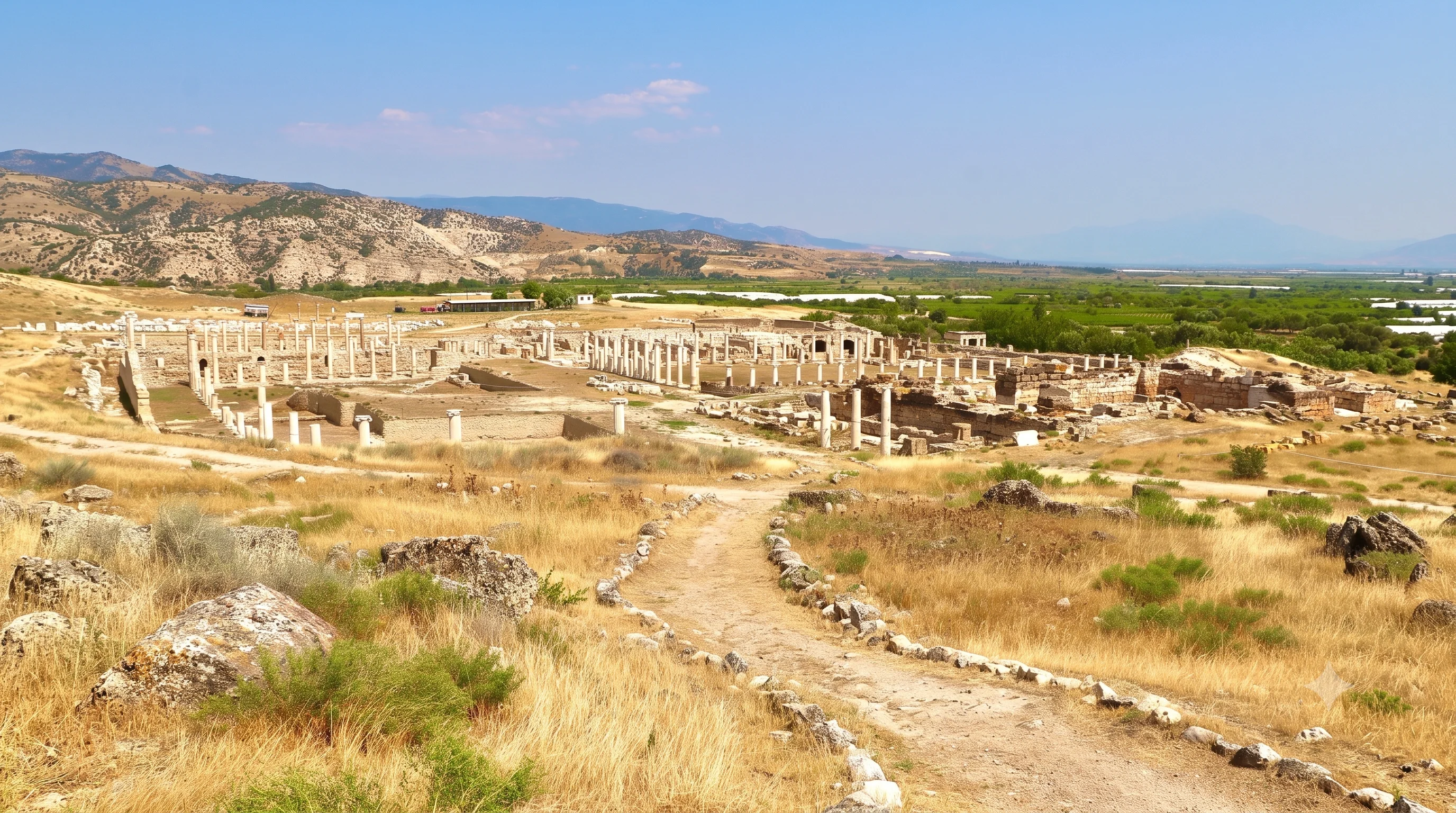
Explore a historic city near another notable thermal-water landscape in the Menderes region.
Discover Tripolis
Visit the monumental archaeological remains of one of the great Lycus Valley cities.
Explore LaodiceaBalance impressive landscapes, local traditions and a personalised day of discovery.
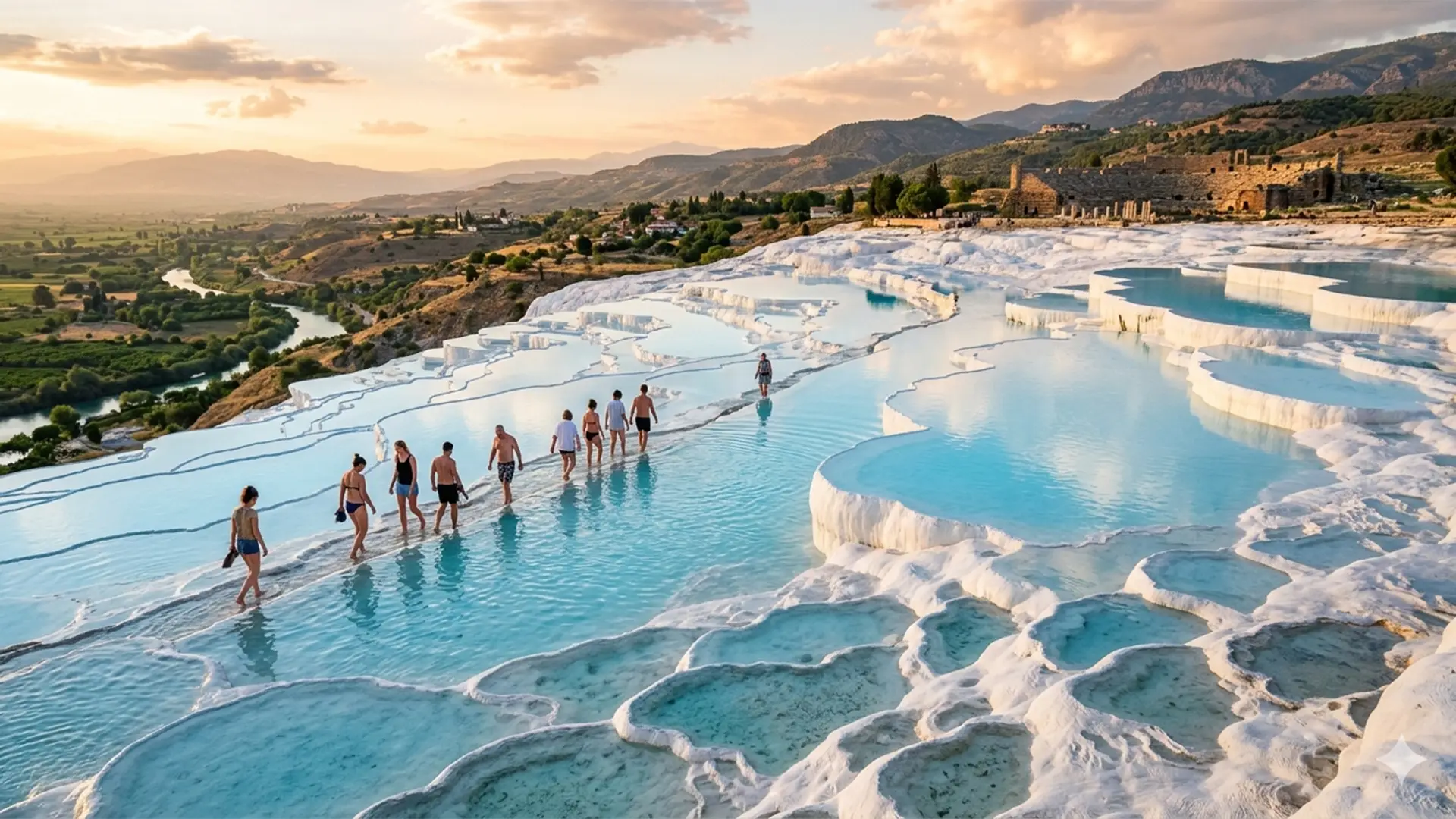
Enjoy the legendary terraces and ancient history of Pamukkale at your own pace.
Explore Private Tour
Explore a charming historical town celebrated for beautiful architecture and weaving traditions.
Discover Buldan
Build a wider itinerary with archaeology, thermal landscapes and memorable local experiences.
Plan Your Journey