
Private Denizli City Museum & Culture Visit
Explore nine galleries covering early history, textiles, commerce, music and painting, then discover the city at your own pace.
Request a Private Itinerary





Denizli City Museum (Denizli Kent Müzesi) is a cultural museum in central Denizli, Türkiye. Opened on 13 March 2024, it occupies carefully restored 1940s stone workshop buildings that once belonged to Yusuf Batur Vocational and Technical education facilities. The building itself is part of the exhibition: a tangible reminder of the Early Republican era.
Across approximately 2,500 m² of enclosed space, nine exhibition halls trace an extraordinary local journey—from the Denizli Man (Homo erectus) and ancient settlement to the Seljuks, the Ottoman period, trade, Buldan weaving, farming, the War of Independence, folk music, regional food and painting. Three themed interpretation corridors add stories of museums, flora and fauna, and influential local people.
Highlights include textile looms and traditional costumes, reconstructed shops, displays on Ahilik, presentations about Atatürk and Müftü Ahmet Hulusi Efendi, musicians Hayri Dev, Özay Gönlüm and Talip Özkan, and a gallery dedicated to painter İbrahim Çallı. This is a city-history museum—not the separate Hierapolis Archaeology Museum or Denizli Atatürk and Ethnography Museum.
Our guide explains the museum’s location, history, architecture, all nine galleries, exhibits, opening hours, ticket prices, MuseumPass / Müzekart information, family visits, accessibility, photography, nearby places and private itineraries. Visitor details are based on official public information available in October 2026 and should be checked again before travel.
Opened as Denizli’s city museum.
History, textiles, art, music and life.
Restored vocational-school workshops.
A cultural stop on your Denizli visit.
Everything you need before discovering the culture, art and everyday history of Denizli.
Gazi Mustafa Kemal Boulevard, central Denizli.
Open on Google MapsCity history, cultural heritage and ethnography.
13 March 2024.
Textiles, early history, music, traditions and art.
Nine halls; approximately 2,500 m² enclosed.
Tue–Sun 08:30–17:30; closed Monday, per provincial schedule.
Official list: €5 foreign ticket; Müzekart accepted for eligible Turkish visitors.
Allow roughly 60–90 minutes; longer if you enjoy exhibits.
Most travellers associate Denizli with Pamukkale’s white travertines and the ruins of Hierapolis. The City Museum offers a different and complementary perspective: the people, work, music, customs and stories that made the province what it is today.
Its nine themed halls combine historical objects, interpretive panels, dioramas and life-size reconstructions. Rather than concentrating on a single era, the displays follow a long cultural timeline and make local history accessible to visitors who are not archaeology specialists.
The most distinctive experiences are the connections between Denizli’s textile identity, community life and art, all presented within handsome rehabilitated stone school workshops. It is especially rewarding for guests interested in the history behind a destination—not simply its most famous photographs.
The story of Denizli beyond Pamukkale.
A broad, carefully themed exhibition.
From cotton to traditional weaving.
Recreations of people and workplaces.
Folk musicians and instruments.
1940s workshops preserved for new use.
The museum stands on Gazi Mustafa Kemal Boulevard in central Denizli. The Turkish Museums visitor profile gives the address as 15 Mayıs Mahallesi, Gazi Mustafa Kemal Bulvarı No:79, Pamukkale / Denizli.
A Ministry of Education directory also locates the museum on the same boulevard but records a different neighbourhood and district label. These address discrepancies do not refer to another museum; searching for Denizli Kent Müzesi on your map is more reliable than entering an administrative district alone.
Because it lies in the urban centre, the museum can be paired with a cultural walk, local food stops or a separate visit to Denizli Atatürk and Ethnography Museum. Allow additional driving time if arriving from Pamukkale and Hierapolis.
Denizli, Türkiye.
Gazi Mustafa Kemal Bulvarı.
No:79 on the tourism platform.
15 Mayıs in the visitor profile.
Search “Denizli Kent Müzesi”.
Use the entrance, not a district centre.
A city museum presents the history and identity of a particular place. Here, that means not only antiquities but also the social and economic lives of Denizli’s inhabitants: merchants, craftworkers, farmers, musicians, artists and families.
The museum moves between original cultural objects and recreated scenes. Historical coins, inscriptions, tools and costumes are interpreted alongside mannequins, models and display installations, helping visitors imagine how older practices worked.
It is not a substitute for all of Denizli’s archaeological sites. Instead, it provides a valuable orientation to the region before or after visits to ancient cities, villages and historic market quarters.
Denizli’s urban and regional identity.
Prehistory to modern life.
Objects, displays and recreations.
Trades, festivals and daily routines.
Painting and folk music.
Travellers seeking regional context.
The building began as a set of workshops for Yusuf Batur Endüstri Meslek Lisesi in the 1940s. At the time, vocational schools helped teach practical skills in a Türkiye transforming through industry, engineering and public education.
Long after their original educational use, the former workshops were recognised as a significant architectural and civic asset. A 2021 cooperation protocol between cultural authorities, Denizli’s governorate and municipality set a restoration and museum-conversion programme in motion.
The museum officially opened on 13 March 2024, giving the city a permanent institution for presenting its history and cultural memory. The Ministry of Culture and Tourism and the municipality both documented its opening and the transformation of the old stone buildings.
Vocational-school workshops erected.
Practical training and industry education.
Restoration partnership established.
Museum opened on 13 March.
Cultural displays and public education.
Historic workshops remain part of the story.
Museum documentation attributes the design of the 1940s workshop buildings to Selçuk Milar, a Turkish architect who worked with Paul Bonatz. The design reflects a restrained architectural language of the Early Republican period.
The complex has simple stone façades, long openings, restrained decoration and a combination of stone and reinforced concrete. Several parallel built volumes and courtyard spaces create a more intimate rhythm than a single enormous museum building.
This architectural history matters because the museum does not merely display twentieth-century Denizli—it occupies a surviving piece of it. Observe the former workshop scale, exterior masonry and the way new exhibitions inhabit historic rooms.
Selçuk Milar.
1940s / Early Republican.
Stone and reinforced concrete.
Restrained, functional modernity.
Multiple wings and courtyard voids.
Historic shell reused as a museum.
Transforming redundant workshop buildings into an exhibition centre required restoration and a new interior arrangement. The project retained the historic stone-building identity while providing galleries, administrative spaces and visitor functions.
The Ministry reported an exhibition programme with nine halls as well as areas for conservation, offices and collections storage. The project demonstrates adaptive reuse: giving a historic property a sustainable public purpose without erasing its original character.
Although the museum is new as an institution, its buildings are much older. For historical photographs and architecture-focused visits, keep the 1940s construction date separate from the 2024 opening date.
Conversion of disused school workshops.
Ministry, governorate and municipality.
Historic stone buildings conserved.
Nine permanent thematic halls.
Interpretation and collection support.
March 2024.
The permanent exhibition is organised into nine halls, with the first two presenting the city’s history across early and Turkish periods. Other halls explore trade and urbanisation, weaving, agriculture and industry, the independence struggle, music, everyday life and painting.
A good way to visit is to follow the numbered route in order. This creates a coherent story, beginning with the earliest human and settlement evidence and ending with the artistic and personal identities that make Denizli distinctive today.
Exhibition details may change as museum displays are refreshed, but the nine-hall structure is described in the official museum presentation and the visitor brochure.
City History: Early Periods.
City History: Turkish Periods.
Urbanisation & Trade.
Weaving & Textiles.
Agriculture & Industry.
National Struggle, Music, Daily Life, Painting.
The first hall introduces some of the oldest chapters of human presence in the Denizli region, including the remarkable fossil commonly known as Denizli Man or Denizli İnsanı, associated with Homo erectus.
Interpretation continues across prehistoric remains, the ancient world, Roman and Byzantine periods and the historical setting of later migrations and military encounters. It encourages visitors to see Denizli as a long-inhabited landscape rather than a modern city beside a famous geological attraction.
The exhibition uses scientific interpretation and museum displays; do not assume every model is an original fossil. For monumental ruins, combine this hall with field visits to Laodicea, Tripolis or Hierapolis.
Early human presence.
Denizli Man / Homo erectus.
Roman and Byzantine history.
Historic objects and interpretive material.
Local prehistory and settlement.
Hall 2: Turkish dynasties.
The name Denizli Man refers to an important prehistoric hominin discovery made in the Denizli region. It is linked with Homo erectus, a species that lived long before the classical civilisations for which western Türkiye is often celebrated.
The museum includes the discovery in its earliest-history interpretation, providing a dramatic opening to the region’s long story. Reconstructions based on fossil evidence are educational tools; a visitor should distinguish the scientific fossil discovery from a reconstructed face or model on display.
For families, this is an excellent starting point for explaining that local history begins far earlier than Roman cities or Ottoman buildings. The ancient landscapes of inland Denizli were part of the deeper history of humanity.
Denizli İnsanı / Denizli Man.
Associated with Homo erectus.
Early human evolution.
Prehistoric Denizli region.
Fossils and reconstruction.
Deep time before written history.
The second hall continues the story after antiquity, examining the arrival and activities of Turkish powers in the Denizli region. Displays address the Seljuks, İnançoğulları, Germiyanoğulları and Ottomans, among other developments.
Objects mentioned in the official catalogue include coins and important architectural inscriptions, notably material associated with Denizli Ulu Mosque and the Murad II Mosque at Honaz.
The gallery is especially valuable before visiting medieval regional sites such as Akhan and Çardak Han. It connects monumental buildings with political change, inscriptions and town life.
Early Turkish political period.
Regional historical dynasty.
Western Anatolian principality.
Later state and urban culture.
Coins and inscriptions.
Local mosques and caravanserais.
Denizli’s economic history is presented through urban development and everyday commercial life. Hall 3 features exhibits related to İlbadı Cemetery excavation finds, historic building models, merchant practices and traditional workshops.
Part of the story is Ahilik, the Anatolian artisan and trade tradition associated with vocational ethics, mutual support and organised craftsmanship. Reconstruction scenes help visitors imagine the local trades and transactions that shaped Denizli’s streets.
The official catalogue also identifies Ottoman coins and weights, as well as sailcloth woven in Buldan. These objects remind us that textiles were not only clothing: fabric production connected the region to practical commercial demand.
İlbadı Cemetery material.
Ahilik.
Coins and measures.
Historic urban buildings.
Traditional professions recreated.
Locally woven sailcloth.
The weaving hall is one of the most relevant sections for anyone curious about Denizli’s well-known textile heritage. It follows stages of production from cotton through spinning, weaving, sewing and the clothing people wore.
The displays feature equipment such as the kirman (spindle), çıkrık (spinning wheel), weaving looms and traditional garments and jewellery. Visitors can compare older hand production with later transformations in the textile economy.
The gallery also discusses efelik culture, animal husbandry and regional festive practices. Those living cultural connections make the exhibition much more than a display of antique tools.
Cotton and wool.
Spinning and hand weaving.
Spindles and spinning wheels.
Costumes, jewellery and tailoring.
Efelik culture.
Shepherd customs and festivals.
Buldan is an important name in the textile story of the Denizli region. The City Museum connects the town’s craft heritage with the broader history of trade, looms, cotton and skilled manual production.
One especially interesting reference in the trade hall is Buldan-made sailcloth, an example of textile production serving transport and commerce. In the weaving gallery, tools and traditional garments show the techniques behind such work.
Guests who enjoy the displays can add Buldan itself to a separate regional itinerary to experience local streets and workshops. Any hands-on demonstration or shopping visit should be optional, depending on interest, rather than a compulsory tour stop.
Buldan, Denizli.
Sailcloth in official exhibits.
Cotton and other fibres.
Loom weaving.
Skills and commercial context.
Buldan town and heritage streets.
One regional custom featured in the weaving hall is the Sudan Koyun Atlatma ve Çoban Bayramı of Aşağıseyit, Çal—a long-standing sheep-water-crossing and shepherd festival.
The museum uses this tradition to show the relationship between animal husbandry, wool, local identity and community ceremony. It is a reminder that craft production depends on both human skill and the surrounding rural economy.
Descriptions sometimes refer to a tradition of approximately 850 years. This is the cultural-history framing used in the official museum information; it should not be confused with a precisely dated single surviving written record for every annual celebration.
Aşağıseyit, Çal.
Sudan Koyun Atlatma.
Çoban Bayramı.
Shepherding and animal husbandry.
Wool and weaving heritage.
Living local tradition.
Hall 5 explores how people in the province have farmed, travelled, used natural resources and developed industry. It broadens the museum’s economic story beyond the weaving hall.
Official descriptions mention agricultural reconstructions, transport culture, industrialisation and interpretive material about the region’s thermal and underground resources, including stones and geological materials.
The combination makes this gallery useful for travellers who enjoy the connections between landscape and livelihood. From rural tools to manufacturing, the exhibits underline how local natural conditions shaped work and settlement.
Rural methods and farm life.
The movement of people and goods.
Technological and economic change.
Stones and subsurface resources.
Natural warm-water resources.
Exhibits and reconstructions.
The National Struggle gallery examines Denizli’s role in the period of the Turkish War of Independence and the city’s relationship with the founding of the Republic.
The museum presents Atatürk and Müftü Ahmet Hulusi Efendi through interpretation and life-size portrayals. Other documented exhibits include the Denizli banner and materials such as weapons, books, manuscripts and period records.
This is a contextual historical gallery rather than simply a commemorative photograph display. It is particularly rewarding to visit before the separate Atatürk and Ethnography Museum, where travellers can continue exploring the city’s modern history.
War of Independence.
Mustafa Kemal Atatürk.
Müftü Ahmet Hulusi Efendi.
Banner, books and documents.
Reconstruction and documentary history.
The city and the Republic.
The National Struggle hall brings national and local historical figures together. Mustafa Kemal Atatürk is represented in relation to his connection with Denizli, while the local religious leader Müftü Ahmet Hulusi Efendi appears in the story of civic mobilisation during the independence period.
Wax-like figures and historical panels can make the story more accessible, but visitors should distinguish reconstructed appearances from original period objects. The museum’s aim is to communicate the collective memory of a defining historical moment.
Travellers whose interests focus on Atatürk may also wish to explore the dedicated Denizli Atatürk and Ethnography Museum as a separate stop, with its own hours and admission arrangements.
National historical figure.
Denizli’s independence-era figure.
Hall 6.
Exhibition objects and archives.
Interpretive human figures.
Atatürk & Ethnography Museum.
One of the museum’s most atmospheric galleries celebrates Denizli’s musical heritage. The official catalogue names Hayri Dev, Özay Gönlüm and Talip Özkan, important figures associated with regional and Turkish folk music.
Their lives, instruments and music are introduced through figures and exhibit cases. The hall encourages visitors to think about the people who carried oral and musical traditions from local communities to a wider audience.
If you have time for only a few themed galleries, this room is a good choice because it gives the city a human voice—one that cannot be experienced through the classical ruins alone.
Regional traditional musician.
Denizli-associated folk artist.
Important Turkish folk musician.
Figures and objects.
Folk music.
Local sound and cultural memory.
For many people, the musical identity of Denizli is inseparable from Özay Gönlüm and the playful vitality of regional songs. Hayri Dev and Talip Özkan represent further dimensions of musical skill, memory and transmission.
The exhibition acknowledges the musicians as cultural figures rather than simply entertainers. Music preserves local expressions, social history and ways of telling stories; it is an important form of intangible heritage.
Visitors can use this hall as an invitation to discover Denizli folk music more deeply. Individual recorded performances or interactive audio facilities should not be assumed to operate continuously without checking on site.
Regional and Turkish folk music.
Özay Gönlüm.
Hayri Dev and Talip Özkan.
Music and oral traditions.
Figures, instruments and interpretation.
Culture-focused visitors.
The everyday-life gallery explores how people in Denizli cooked, ate, lived and maintained family traditions. Domestic objects and recreated situations give visitors a sense of practices that may no longer be visible in a contemporary city street.
The food displays are particularly useful because regional identity is often carried through recipes, seasonal ingredients, shared meals and rituals of hospitality. They form a cultural introduction rather than a working restaurant or cooking school.
If food is an important part of your visit, enjoy this hall first and then discover current examples of Denizli cuisine at local establishments. Museum illustrations do not establish that every depicted recipe is available at nearby restaurants.
Home and household life.
Regional foods and traditions.
Domestic objects and reconstructions.
Family and everyday customs.
Context before trying local dishes.
Interpretation, not food service.
Denizli’s wider culinary heritage includes local preparations of kebabs, soups, bread, vegetables and wheat-based dishes, shaped by both urban markets and rural village kitchens. The museum’s daily-life gallery helps explain the role of food in social traditions.
One widely recognised local speciality is Denizli kebab, a slow-cooked lamb dish served in a distinct regional style. Traditional food culture is also visible in the Buldan and Çal districts and throughout the province.
For an experience beyond the displays, ask your guide to recommend an independent meal stop appropriate to your tastes and itinerary. Our private tours can include optional local food experiences without compulsory shopping visits.
Denizli kebab.
Traditional food culture.
Village kitchens and seasonal produce.
Optional restaurant stop.
A central Denizli walking visit.
Local culture rather than staged shopping.
The final themed hall celebrates the visual arts and is associated with İbrahim Çallı, the celebrated Turkish painter born in the Denizli region. His name provides an entry point to the artistic currents of modern Turkish painting.
The museum describes a figure representing Çallı together with works by prominent painters associated with Denizli. The gallery introduces art as an important part of local cultural memory, alongside music, textiles and historical crafts.
Art-focused visitors can spend extra time here thinking about how painting reflects changing tastes and identities. As with other museums, individual works on view may change, so an exact current artwork checklist should be confirmed with the museum.
İbrahim Çallı.
Painting gallery.
Figure and artworks.
Artists connected with Denizli.
Modern Turkish painting.
Specific displayed works may change.
İbrahim Çallı was an influential Turkish painter associated with the modernisation of painting in Türkiye. His connection to Denizli makes him an appropriate focus of the museum’s arts section.
The gallery situates the painter within a broader community of regional artists. In a museum otherwise full of agricultural tools, historical documents and textile objects, paintings show another way that the city’s identity has travelled beyond its borders.
Visitors who enjoy modern cultural history should consider the painting and music halls together. Both reveal that Denizli’s heritage includes notable individual creators, not only places and products.
İbrahim Çallı.
Painter.
Denizli province.
Hall 9.
Artistic modernity.
Works by Denizli-linked artists.
Beyond the nine galleries, museum accounts identify three thematic corridors: museology in Denizli, local flora and fauna and leading people from Denizli.
These connecting exhibitions make the museum more comprehensive. They draw attention to the practice of preserving objects, to the natural landscape that supports regional life and to people whose work has influenced the city.
Allow time to read the corridor displays rather than treating them as mere passageways between rooms. For keen visitors, they are part of the museum’s interpretation even though the official gallery count remains nine.
Museology and local collecting.
Flora and fauna.
Prominent Denizli figures.
Context between main halls.
Nine main exhibition halls.
Read panels in transitions.
If your time is limited, prioritise Denizli Man in the earliest-history displays, then visit the textile hall for spinning and weaving equipment. These two themes provide a striking contrast between deep prehistory and the industries that made Denizli famous.
Next, see the Ahilik and old-market reconstructions, the gallery about the War of Independence and the figures of Denizli’s well-known musicians. The painting gallery completes a memorable first visit.
For visitors from abroad, the strongest approach is to follow the museum’s own sequence, allowing time for interpretation. The museum is not organised around one single blockbuster object; its appeal is the many connections across different chapters of local life.
Denizli Man and early settlement.
Handlooms and traditional textiles.
Ahilik and artisan scenes.
National Struggle hall.
Hayri Dev, Özay Gönlüm, Talip Özkan.
İbrahim Çallı gallery.
For a general visitor, 60–90 minutes is a sensible editorial planning estimate for seeing all nine galleries without rushing. An enthusiastic visitor who reads most of the explanatory panels may want closer to two hours.
Families with young children may prefer a 45–60 minute highlights visit, concentrating on the oldest-history displays, the reconstructed trades and the musician figures. Allow breaks and adjust the route to the interests of your group.
These durations are recommendations, not official timed entry slots. Add separate time for travel, ticket purchase, photography and any city-centre food stop.
Approximately 45–60 minutes.
Approximately 60–90 minutes.
Up to two hours or more.
Choose selected galleries.
Allow additional time.
Not included in museum duration.
The Denizli Provincial Directorate of Culture and Tourism publishes a seasonal schedule valid from 14 September 2026 to 1 May 2027. It lists Denizli City Museum open Tuesday–Sunday, 08:30–17:30, and closed on Mondays.
Some other official visitor profiles show slightly different opening times, including 08:30–18:00, and the education directory gives another time range. For an October 2026 visit, the date-specific provincial schedule is the most useful planning reference; still confirm if arrival is close to closing time.
Holiday timetables, public events, gallery works and ticket-office closing rules can affect a particular visit. Check the official sites shortly before travelling rather than treating any webpage as a live entry guarantee.
08:30–17:30 (province schedule).
08:30–17:30 (province schedule).
08:30–17:30 (province schedule).
Closed.
14 Sep 2026 – 1 May 2027.
Confirm with the museum before arriving late.
The current national museum-fee listing gives €5 for a foreign visitor to Denizli Kent Müzesi. The Turkish Museums visitor platform also lists 200 TL as the adult domestic ticket at the time of review. Prices and eligibility rules can change, so verify them before purchasing or quoting a tour.
For eligible Turkish citizens, the official listing indicates Müzekart is accepted. Certain age groups and other qualifying visitors may be eligible for free admission; conditions depend on citizenship and the current national museum regulations.
News of a one-month free entry period in March–April 2024 refers specifically to the museum’s opening promotion, not a permanent free-admission policy. Foreign visitors should not assume a domestic Müzekart gives the same admission benefits.
€5 listed by the national fee authority.
200 TL displayed on Turkish Museums.
Accepted for eligible Turkish visitors.
One month free in 2024 only.
Check current eligibility.
Verify shortly before your visit.
The official national museum fee table confirms Müzekart admission for eligible Turkish visitors to Denizli City Museum. This national card is not identical to tourist-oriented products sometimes advertised as MuseumPass Türkiye.
For international travellers, check the exact card name, coverage and validity on the official ticketing channel before relying on a pass. The foreign single-entry price is shown as €5 in the published national list.
If you are visiting multiple museums or archaeological sites in the region, compare the cost of individual tickets with any pass that explicitly includes the places you intend to enter. Do not assume that an admission arrangement for Hierapolis also covers this separate museum.
National listing confirms eligibility.
€5 on the official fee list.
Check specific product coverage.
Different from Hierapolis museum.
Review official ticket page.
Confirm policies in advance.
Unlike a hillside archaeological site, the City Museum occupies adapted buildings in an urban location. However, a complete step-free route, lift provision and accessible toilet specifications should be confirmed directly with the museum before travel.
The Ministry of Education visitor directory includes a reference to accessible access, but its brief listing is not enough to guarantee that every gallery, courtyard and facility suits every mobility requirement. The restored nature of the buildings makes practical details important.
Guests using wheelchairs, mobility aids or strollers should ask about vehicle drop-off, entrance thresholds, gallery circulation, seating and accessible washrooms. We can plan private transport accordingly once requirements are known.
Central urban museum.
Education directory has accessibility information.
Confirm directly.
Ask about step-free access.
Confirm accessible washrooms.
Can be planned around mobility needs.
The museum is a strong option for families because it presents history through recognisable objects, reconstructed people, tools and costumes. Children can compare an early human reconstruction with a traditional loom or old-fashioned market stall.
One simple activity is to ask children to find a weaving tool, a musical instrument, a historic vehicle, a painting and a household object. This turns the exhibition into a learning adventure without disturbing other guests.
Keep children together, supervise them around displays and follow gallery rules about touching objects, photography and food. For very young children, choose a shorter loop and confirm stroller access in advance.
Reconstructed shops and people.
Spot tools and instruments.
Adapt visit to children’s interests.
Stay together in galleries.
Confirm route and entrance access.
Allow a shorter highlights tour.
The historic stone façades and courtyard make attractive exterior photographs. Indoors, look for the visual variety of textile tools, colourful costumes, dioramas and musician figures, if photography is permitted in each display area.
Exhibition rooms may have dimmer lighting to protect sensitive artefacts. Avoid using flash, tripods or supplementary lights without permission and never touch or reposition objects to improve an image.
For commercial filming, editorial shoots and drones, obtain permission from the responsible authorities in advance. Photos of museum visitors should respect their privacy.
Stone workshop architecture.
Galleries and thematic displays.
Use a steady, flash-free approach.
Never touch or move exhibits.
Ask for permits.
Avoid photographing others without consent.
The education visitor directory notes the availability of toilets (WC) and a prayer room (mescit). Official museum accounts also refer to an information and ticket area, plus behind-the-scenes museum workspaces.
Facilities such as lockers, a café, drinking water, a shop and foreign-language guided tours should not be assumed without checking current arrangements. Exhibition access and services can change during maintenance or events.
If you are travelling as a group, call ahead to discuss group admission, educational visits and any necessary accessibility support. Published contact details are listed below.
Listed in education directory.
Listed in education directory.
On-site visitor admission arrangements.
Confirm current availability.
Confirm before arriving with luggage.
Ask about interpretation options.
The museum’s visitor information lists +90 258 241 08 66 as the telephone number. Published email addresses include [email protected] on Turkish Museums and [email protected] in the education directory.
For the most useful pre-visit confirmation, ask about the date you plan to visit, last admission, current ticket category, group arrangements, accessibility and any temporary gallery closures.
For official details, consult the provincial culture directorate for date-specific schedules and the national museum listings for admission. These are more reliable than relying solely on old travel-blog opening hours.
+90 258 241 08 66.
Provincial 2026–27 schedule.
National museum-fee authority.
Search the museum by name.
For most visitors staying in central Denizli, the simplest option is to navigate to Denizli Kent Müzesi on Gazi Mustafa Kemal Boulevard and walk or take a taxi from your hotel as appropriate.
Guests staying in Pamukkale village will need to arrange transport into Denizli’s centre. Local public transport may be an option, but routes and timetables should be checked for the travel date. A private vehicle is convenient when combining multiple attractions.
Visitors arriving via Denizli Çardak Airport (DNZ) can include the museum before heading toward Pamukkale or onward to another destination, subject to arrival time and luggage logistics. Do not assume airport shuttles stop directly at the museum.
Walk or taxi as appropriate.
Arrange road transport to the city.
Connect via road transportation.
Verify the current local route.
Check nearby parking restrictions.
Use the museum name and official map.
The museum is an indoor cultural attraction, so it works well in hot summer weather, cold winter days or when an outdoor sightseeing plan is interrupted by rain.
If you enjoy a relaxed visit, allow time earlier in the day rather than arriving close to the final admission period. The Monday closure is more important for planning than the season itself.
For a broader Denizli trip, pairing the museum with central-city sights on one day and Pamukkale’s outdoor sites on another can provide a comfortable balance of urban culture and archaeology.
Comfortable for a city walk.
Indoor alternative to midday heat.
Well suited to cultural itineraries.
Weather-independent exhibits.
Monday.
Avoid arriving shortly before closure.
Denizli City Museum offers the broadest overview of local urban life and identity, with displays on history, weaving, trades, music and painting.
The separate Denizli Atatürk and Ethnography Museum concentrates on a different historic building and ethnographic / Republican-era context. Hierapolis Archaeology Museum, located at the ancient city, focuses on archaeological collections and the classical heritage of the wider region.
These museums complement one another rather than duplicate the same exhibition. For travellers with limited time, choose the City Museum for Denizli’s people and culture and Hierapolis for a visit centred on antiquity and excavated monuments.
Nine halls of regional culture.
Separate ethnographic / Republican museum.
Archaeological collections at ancient site.
City Museum.
City Museum.
Hierapolis plus ancient sites.
In central Denizli, guests can combine the museum with a walk through the historic commercial areas and a visit to the separate Atatürk and Ethnography Museum, depending on their interests and opening times.
For archaeological exploration outside the centre, Laodicea Ancient City provides monumental Roman urban history, while Pamukkale and Hierapolis make an outstanding wider excursion. These are road trips, not all walkable neighbours of the city museum.
For medieval architecture, add Akhan Caravanserai. For the region’s textile culture, a separate visit to Buldan extends the museum story into a real town and living craft tradition.
Historic markets and urban streets.
Atatürk & Ethnography Museum.
Roman city and early Christian heritage.
Travertines and Hierapolis.
Seljuk caravanserai near the city.
Historic textile town.
A gentle half-day city programme can begin with a 60–90 minute visit to Denizli City Museum, followed by a guided walk through the centre and an optional lunch featuring local food.
For a full day, start with the museum in the morning and continue by private vehicle to Laodicea or another selected heritage site. If you wish to include Pamukkale and Hierapolis as well, the schedule should allow enough time for their much larger grounds.
This is an illustrative itinerary, not a fixed departure or guaranteed same-day admission. Wow Cappadocia can customise the day around your starting hotel, available hours and preferred pace, without compulsory shopping stops.
Denizli City Museum.
Around 60–90 minutes.
Walk or local lunch.
Laodicea.
Pamukkale / Hierapolis.
Private, flexible and no shopping stops.
A licensed private guide can connect the exhibits to the historical sites, festivals, villages and food traditions elsewhere in the province. This is especially helpful if you want a deeper explanation of Seljuk history, Denizli weaving or the early Republican period.
Museum policies may govern whether outside guides may lead tours, whether group reservations are required and how long a party may spend inside. Please confirm any special arrangements before the visit.
Through Wow Cappadocia / Venere Travel, we can help plan a private Denizli heritage itinerary with transportation and licensed guiding, customised to your interests and confirmed museum access. There are no compulsory shopping stops.
Custom heritage experiences.
History, textiles, art and gastronomy.
Licensed guide by arrangement.
Private vehicle options.
Subject to museum regulations.
No compulsory stops.
Comfortable walking shoes and light clothing are appropriate for a museum visit. Bring a phone for navigation and permitted photographs, as well as any ticket confirmation, ID or valid Müzekart needed to establish admission eligibility.
Large bags, food, drinks and photography equipment may be subject to museum rules. Carry only what you need and check with staff before using flash, tripods or filming devices.
For travellers joining a full-day excursion after the museum, sun protection and water are worthwhile for the outdoor archaeological sites later in the programme, even though this stop itself is primarily indoors.
Comfortable for gallery walking.
Needed for some ticket categories.
Bring it if eligible.
Follow gallery photography rules.
For onward travel, not displays.
Do not touch exhibited objects.
Current visitor hours: The Denizli Provincial Directorate of Culture and Tourism publishes date-specific visiting hours for the 2026–27 autumn–winter season. Check that listing before travelling.
Museum history and collection: The Ministry of Culture and Tourism and the Turkish Museums visitor profile document the historic building, nine halls and their principal themes.
Admission and practical planning: The national museum-fee authority publishes foreign visitor tariffs and Müzekart eligibility. The Education Ministry directory lists visitor facilities and museum contact information; schedules may differ across portals.
A museum devoted to the history, traditions, crafts, art and daily life of Denizli and its region.
Denizli Kent Müzesi.
On Gazi Mustafa Kemal Boulevard in central Denizli; the Turkish Museums address lists No:79.
It opened to the public on 13 March 2024.
Yes. Restored 1940s vocational-school workshop buildings.
Official museum information attributes them to architect Selçuk Milar.
The official visitor description gives approximately 2,500 m² of enclosed space.
There are nine main exhibition halls.
Early history, Denizli Man / Homo erectus and ancient Roman and Byzantine periods.
The name associated with an important Homo erectus fossil discovery from the Denizli region.
Yes. The early-history gallery interprets Roman and Byzantine periods.
Yes. The second hall discusses Seljuk and other Turkish dynastic history.
Yes. A dedicated weaving hall explains cotton, looms, garments and textile-making.
Yes. The official exhibition catalogue includes Buldan woven sailcloth and regional weaving.
Ahilik, old occupations, Ilbadı finds, coins, weights and commercial culture.
Yes. The National Struggle hall interprets Atatürk and Denizli’s independence-era history.
A prominent local historical figure represented in the National Struggle gallery.
Hayri Dev, Özay Gönlüm and Talip Özkan.
Yes. One gallery is devoted to painting and highlights İbrahim Çallı.
Yes. The everyday-life hall introduces regional culinary and domestic traditions.
Yes. Interpretation corridors cover museology, flora and fauna, and prominent local figures.
The provincial 2026–27 schedule lists 08:30, Tuesday through Sunday.
The date-specific provincial schedule lists 17:30; check before travelling as other online directories differ.
No. The official provincial schedule lists Monday as the weekly closure.
The official national fee table lists €5 at the time of review; check for changes.
Yes, for eligible Turkish visitors according to the official admission list.
Check coverage for the specific tourist pass; Müzekart eligibility does not automatically establish all tourist-pass coverage.
Yes, for one opening-month promotion in 2024; that does not describe permanent admission.
Allow approximately 60–90 minutes for a comfortable general visit.
Yes. Recreated trades, costumes, music and old tools provide engaging displays for children.
Accessibility is referenced in an official education directory, but confirm complete routes and facilities directly.
Follow rules in each gallery; confirm flash and commercial photography permissions before use.
Yes. The Ministry of Education venue directory lists WC facilities.
The education visitor listing notes a mescit.
+90 258 241 08 66.
No. They are separate museums with different exhibitions.
Yes, with suitable transport and sufficient time for the separate archaeological area.
Yes. We can design a private Denizli cultural itinerary with guiding and transport, subject to museum arrangements.
No. Custom heritage programmes can be organised without compulsory shopping stops.
Dial 112.
A personalised look at Denizli’s crafts, stories and ancient heritage with professional guidance, comfortable transport and no compulsory shopping stops.
Start with the museum, then connect the exhibits to places, food and crafts in the city and province.
Explore nine galleries covering early history, textiles, commerce, music and painting, then discover the city at your own pace.
Request a Private Itinerary
Continue the museum’s weaving story in historic Buldan, known for its traditional fabrics and regional craft culture.
Explore BuldanCombine city history with the region’s archaeology and extraordinary landscapes.
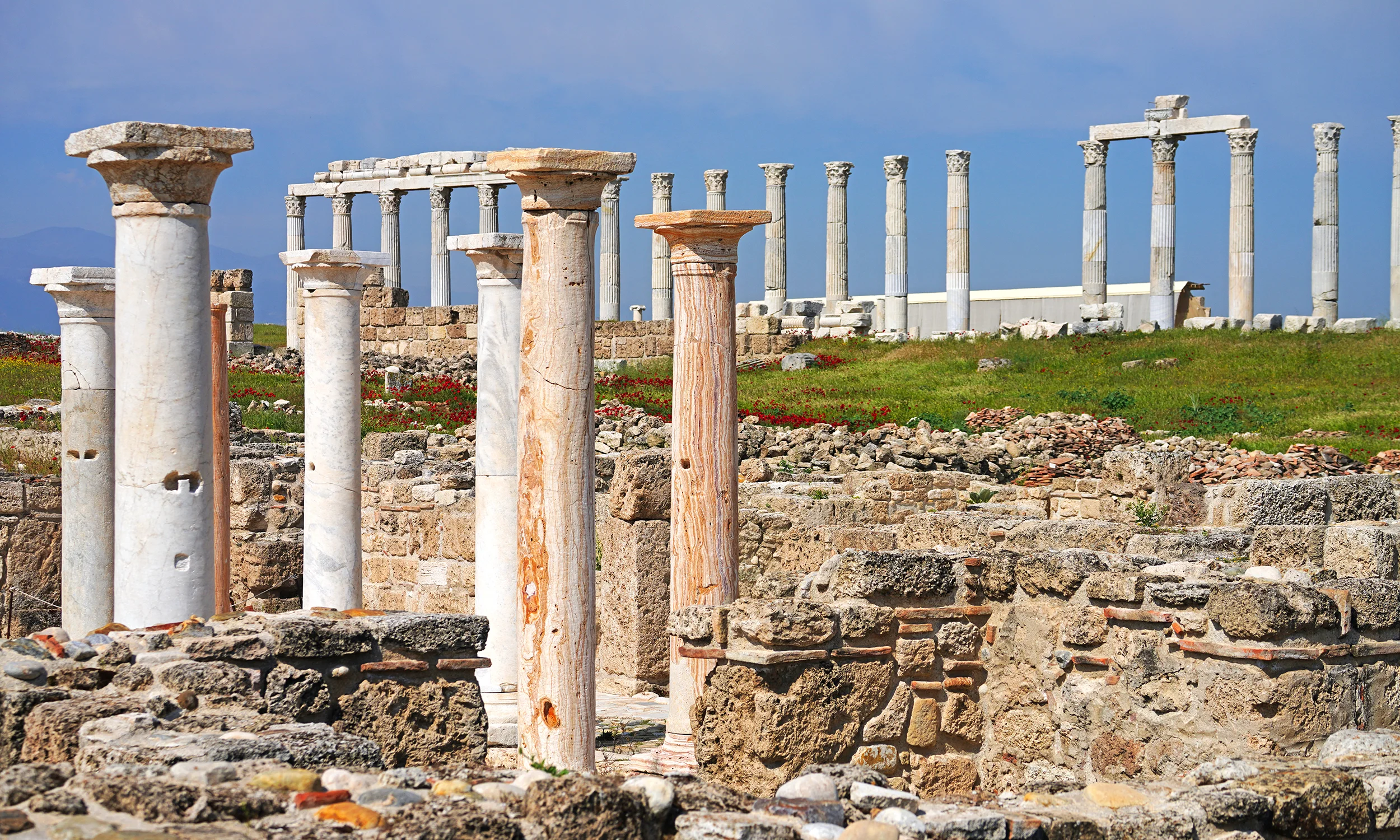
Discover the Roman streets, theatres and early Christian heritage of a city that brings ancient Denizli to life.
Explore Laodicea
Continue the medieval story with a historic Seljuk trading inn and remarkable sculpted stonework.
Explore Akhan
Combine Denizli’s urban culture with its world-famous travertines and the monumental remains of ancient Hierapolis.
Explore Pamukkale