The Famous Fluffy Sweet of İzmit

İzmit Pişmaniye – Complete Food Guide

Discover the delicate threads, roasted flour, buttery aroma,
traditional craftsmanship, and fascinating story of İzmit’s most famous sweet.

Discover İzmit Pişmaniye

Discover İzmit’s Famous Pişmaniye

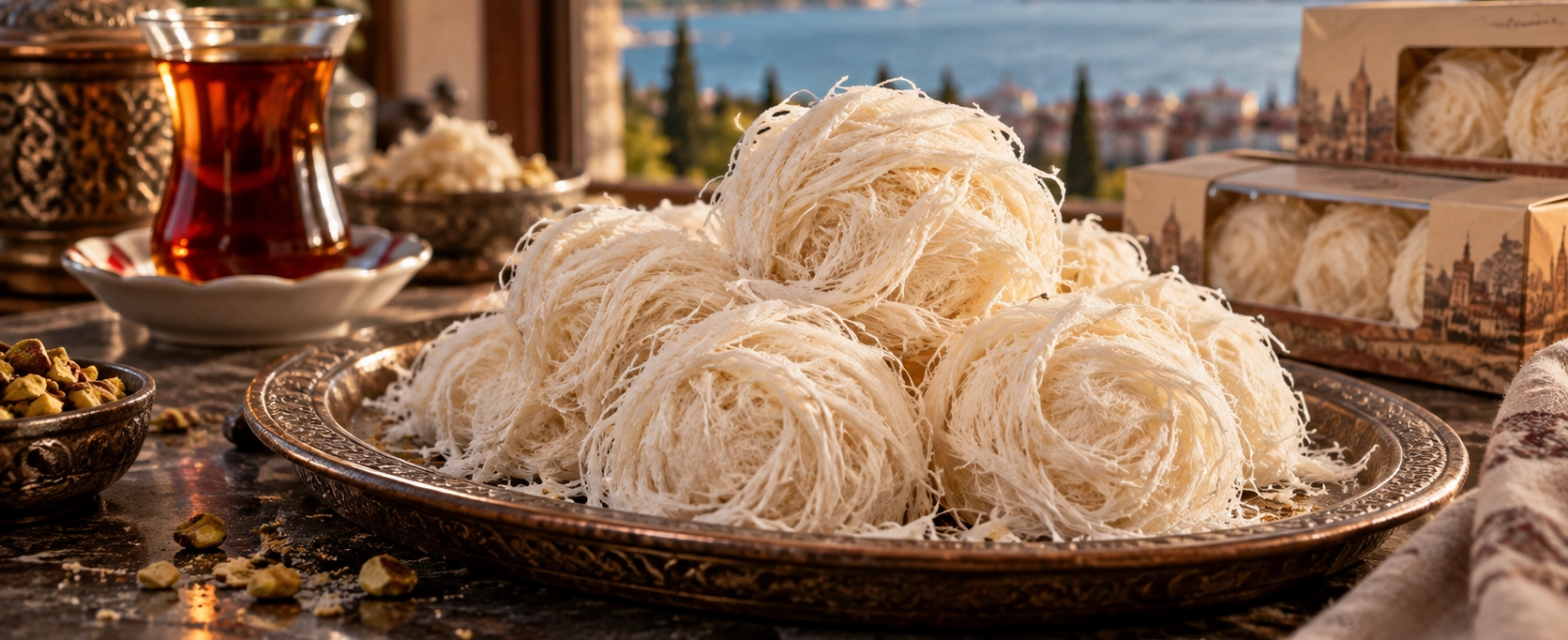
İzmit Pişmaniye is one of Türkiye’s most distinctive traditional sweets and one of the best-known culinary symbols of Kocaeli. At first glance, it resembles a bundle of fine white cotton or delicate strands of wool. Yet behind its seemingly simple appearance is a demanding confectionery technique requiring roasted flour, sugar, fat, careful temperature control, repeated pulling, and considerable experience.

The finished sweet consists of thousands of extremely fine strands that melt almost instantly in the mouth. Its delicate texture, lightly toasted aroma, subtle sweetness, and characteristic buttery flavour have made pişmaniye inseparable from İzmit’s identity. For generations, travellers passing through the city have purchased boxes of pişmaniye as gifts, turning the sweet into one of Türkiye’s classic edible travel souvenirs.

İzmit Pişmaniyesi is also officially protected as a geographical indication. Its designation of origin confirms the strong relationship between the product, its recognised production tradition, and İzmit.

Fine Sugar Threads

The finished sweet is formed from extremely thin strands created through repeated pulling and folding.

Roasted Flour

Carefully roasted flour provides the warm, nutty aroma that distinguishes pişmaniye from ordinary spun sugar.

Traditional Craftsmanship

Producing fine, even strands requires precise temperatures, timing, coordination, and experience.

A Symbol of İzmit

For generations, boxes of pişmaniye have travelled from İzmit to homes throughout Türkiye and abroad.

Know Before You Taste

İzmit Pişmaniye – Quick Facts

Essential information about Kocaeli’s famous fine-threaded traditional sweet.

📍

Origin

Closely associated with İzmit, the historic centre of Kocaeli in northwestern Türkiye.

Open İzmit on Google Maps
🧵

Texture

Extremely fine, delicate strands with a soft texture that quickly melts and separates in the mouth.

🥣

Key Ingredients

Traditionally based on flour, sugar, fat and water, transformed through roasting, boiling, pulling and folding.

🏅

Geographical Indication

İzmit Pişmaniyesi is registered by TÜRKPATENT as a protected designation of origin.


The Sweet Symbol of the City

The Pişmaniye Tradition of İzmit

Discover how an intricate confection became one of the strongest culinary symbols of Kocaeli.

Few foods are as closely identified with a Turkish city as pişmaniye is with İzmit. Its white, cotton-like appearance has become familiar to generations of travellers passing through Kocaeli between Istanbul and Anatolia.

İzmit occupies an important position along historic transportation routes connecting Istanbul with western and central Anatolia. As road and railway travel increased, local confectioners found an enormous travelling audience for their product.

Boxes of pişmaniye could easily be carried home as gifts. This transformed the sweet from a local speciality into one of Türkiye’s most recognisable travel souvenirs.

Traditional accounts preserved by official cultural sources associate the early development of pişmaniye in the region with Kandıralı Hayri Usta. Commercial production is later connected with an Armenian confectioner known as Hacı Agop, who learned the craft and began producing it for the market.

Another important figure in the İzmit tradition was İbrahim Çınar. He reportedly learned pişmaniye production while visiting Hacı Agop’s shop and later helped popularise the sweet in İzmit during the Republican period.

Production gradually expanded from individual masters and small confectioners to specialised workshops and larger manufacturers. Packaging improved, distribution widened, and İzmit pişmaniye eventually reached shops throughout Türkiye as well as international markets.

Despite modern production methods, the identity of good pişmaniye still depends on the same principles that guided earlier masters: carefully roasted flour, correctly cooked sugar, precise temperature, repeated pulling, patience, and the creation of extremely fine threads.


What Makes It Special

Distinctive Features of İzmit Pişmaniye

Pişmaniye may look simple, but its characteristic texture is created through several demanding stages of confectionery craftsmanship.

Extremely Fine Threads

The most recognisable characteristic of pişmaniye is its extraordinary network of delicate strands. Properly made pişmaniye separates into fine fibres rather than forming a solid or sticky mass.

  • Appearance: Cotton-like bundles
  • Structure: Thousands of fine strands
  • Texture: Light and delicate

Roasted Flour

Unlike ordinary spun sugar, pişmaniye incorporates flour that has been carefully roasted with fat. This provides its characteristic toasted aroma and softens the sweetness of the sugar.

  • Main role: Creates flavour and body
  • Aroma: Toasted and slightly nutty
  • Technique: Slow, controlled roasting

Cooked Sugar

Sugar syrup must reach the correct consistency before it can be cooled and worked. Small differences in temperature can dramatically affect the final texture.

  • Ingredient: Sugar syrup
  • Challenge: Precise consistency
  • Purpose: Forms the strands

Repeated Pulling

The sugar mass is repeatedly stretched, folded and worked together with the roasted-flour mixture. Each repetition multiplies the number of threads.

  • Process: Pull, stretch and fold
  • Result: Increasingly fine fibres
  • Requirement: Rhythm and coordination

Delicate Sweetness

Pişmaniye tastes sweet without having the dense character of many syrup-based Turkish desserts. Roasted flour and fat create a more balanced flavour.

  • Sweetness: Noticeable but balanced
  • Finish: Light and aromatic
  • Character: Different from syrup desserts

Fragile Structure

The very quality that makes pişmaniye special also makes it delicate. Moisture, pressure and poor storage can quickly damage its fine structure.

  • Main enemy: Humidity
  • Storage: Cool and dry conditions
  • Packaging: Keep sealed when possible

Gift Tradition

Attractive boxes of pişmaniye have traditionally been carried from İzmit as gifts for family, friends and colleagues.

  • Popular use: Travel souvenir
  • Packaging: Boxes and individual portions
  • Identity: Closely associated with İzmit

Mastery and Timing

Successful pişmaniye requires more than following a recipe. The maker must recognise the correct temperature and consistency at every stage.

  • Key skill: Temperature control
  • Challenge: Maintaining fine strands
  • Tradition: Knowledge passed between masters

İzmit Pişmaniye’s Geographical Indication

İzmit Pişmaniyesi is officially registered by the Turkish Patent and Trademark Office as a geographically indicated product.

Registered Name

The official geographical-indication name is İzmit Pişmaniyesi.

Registration Number

İzmit Pişmaniyesi carries geographical-indication registration number 34.

Registration Date

The geographical indication was registered on 21 May 2002.

Application Date

The application for protection was submitted on 11 September 2000.

Type of Protection

It is registered as a Menşe Adı, or protected designation of origin.

Registered Institution

The registration belongs to the Kocaeli Esnaf ve Sanatkârlar Odaları Birliği.


Designation-of-origin protection emphasises the particularly strong connection between İzmit Pişmaniyesi and its recognised geographical area and production tradition.

The registration also helps preserve the characteristics that distinguish authentic İzmit pişmaniye while protecting one of Kocaeli’s most recognisable culinary products.

The History of Pişmaniye in İzmit

The exact origins of thread-like sweets extend beyond İzmit, and similar confectionery traditions exist across a broad geographical area. What makes İzmit exceptional is the way the craft developed into a powerful local identity and commercial tradition.

Kandıralı Hayri Usta

Official cultural accounts identify Kandıralı Hayri Usta as an important early master associated with pişmaniye production in the Kocaeli region.

Hacı Agop

An Armenian confectioner known as Hacı Agop is traditionally credited with learning the craft and developing commercial production.

İbrahim Çınar

During the Republican period, İbrahim Çınar became another significant figure in promoting and establishing pişmaniye in İzmit.

Travellers and Transport

İzmit’s important position on road and railway routes helped transform pişmaniye into a nationally recognised travel souvenir.


As passenger traffic increased through İzmit, pişmaniye became almost inseparable from the experience of travelling through the city. Vendors, confectionery shops and roadside businesses offered distinctive boxes that passengers could easily take to their destinations.

What began as specialised local craftsmanship therefore developed into an important element of İzmit’s commercial and cultural identity.

What Is İzmit Pişmaniye Made From?

The ingredient list for traditional pişmaniye is relatively simple. The difficulty lies not in the number of ingredients but in transforming them into thousands of extremely fine strands.

Flour

Flour is slowly roasted to develop the characteristic toasted flavour and aroma of the sweet.

Sugar

Sugar is cooked with water to produce the elastic sugar mass that will eventually form the fine strands.

Fat

Fat is used while roasting the flour, contributing richness, aroma and the soft mouthfeel associated with pişmaniye.

Water

Water is required during preparation of the sugar syrup and must be carefully balanced during cooking.


Modern producers may also offer variations containing ingredients such as cocoa, pistachio, vanilla or other flavourings, but traditional plain İzmit pişmaniye remains the best introduction to the original character of the sweet.

How İzmit Pişmaniye Is Made

Traditional pişmaniye production combines two principal components: a carefully prepared sugar mass and roasted flour. They are brought together through repeated stretching and folding until the mixture separates into extremely fine fibres.

1. Roast the Flour The flour is slowly worked with fat until it develops the required aroma and consistency
2. Prepare the Sugar Syrup Sugar and water are heated until the syrup reaches the precise consistency required for pulling
3. Cool the Sugar The cooked sugar mixture is carefully cooled until it can be safely handled and worked
4. Form the Sugar Mass The sugar is stretched and manipulated until it develops elasticity and a pale appearance
5. Prepare the Working Surface The roasted-flour mixture is spread across the work area where the pulling process will take place
6. Combine Sugar and Flour The sugar ring is placed into the roasted flour so that the two components can gradually be incorporated
7. Stretch the Ring The sugar mass is gently stretched outward while being coated with the roasted-flour mixture
8. Fold and Double The ring is repeatedly folded so that the number of strands multiplies with every repetition
9. Continue Pulling The process continues until the strands become extremely fine, soft and evenly separated
10. Shape and Package The finished pişmaniye is gathered gently into portions and packaged without crushing its delicate structure

The repeated pulling stage is particularly impressive to watch. What begins as a relatively thick ring gradually divides into hundreds and eventually thousands of individual strands.

The process demands careful control. Sugar that is too hot, too cold, too hard or too soft can make successful pulling extremely difficult.

How Does Pişmaniye Become So Fine?

The spectacular fibre-like structure is produced by repeatedly doubling a ring of sugar while incorporating roasted flour.

First Stretch

The prepared sugar ring is stretched carefully without allowing it to break.

First Fold

The stretched ring is doubled, effectively multiplying the number of sugar strands.

Repeated Doubling

The stretching and folding process is repeated again and again while roasted flour prevents the strands from sticking together.

Thousands of Fibres

Repeated multiplication eventually transforms the original sugar ring into an enormous number of extremely fine threads.


This technique explains why pişmaniye cannot simply be described as ordinary candy floss. Its fibres are created mechanically through repeated pulling rather than by spinning liquid sugar through a machine.

Is Pişmaniye the Same as Cotton Candy?

No. Pişmaniye is frequently compared with cotton candy because both have a light, fibrous appearance, but their ingredients, production methods, texture and flavour are substantially different.

Pişmaniye

Combines pulled sugar with roasted flour and fat, producing fine strands with a toasted, buttery flavour.

Cotton Candy

Is primarily produced by melting and rapidly spinning sugar into very thin threads using centrifugal force.

Texture

Pişmaniye has slightly more body and separates into soft, flour-coated strands rather than dissolving immediately like spun sugar.

Flavour

Roasted flour gives pişmaniye a warm, lightly nutty aroma that ordinary cotton candy does not have.

What Does İzmit Pişmaniye Taste Like?

Traditional pişmaniye has a delicate sweetness accompanied by a warm, lightly toasted flavour from the roasted flour.

Sweet

Sugar provides the dominant sweetness, although the flour prevents the flavour from feeling as concentrated as hard candy.

Toasted

Roasted flour introduces subtle cereal and nut-like aromas.

Rich

Fat adds smoothness and a gentle buttery character to the finished sweet.

Light

The extraordinary thread structure creates an airy mouthfeel despite the richness of the ingredients.


The pleasure of pişmaniye comes as much from texture as flavour. A portion breaks into soft strands, compresses gently on the tongue and gradually dissolves.

Different Types of Pişmaniye

Plain pişmaniye remains the classic İzmit style, but modern producers prepare numerous variations for different tastes.

Classic Plain Pişmaniye

The traditional version highlights roasted flour, sugar and the characteristic fine-thread texture.

Pistachio Pişmaniye

Pistachios may be added to provide colour, crunch and a richer nutty flavour.

Chocolate Pişmaniye

Cocoa or chocolate can be incorporated to create a darker and more intense modern variation.

Chocolate-Coated Pieces

Small portions of pişmaniye are sometimes coated in chocolate to create individually served confectionery pieces.

Mixed Gift Boxes

Many shops sell boxes containing several different flavours so travellers can sample both traditional and modern varieties.

Individual Portions

Modern packaging may separate the sweet into small portions that are easier to serve and protect from humidity.

Why Is Pişmaniye the Symbol of İzmit?

Pişmaniye became associated with İzmit through the combined influence of local production, generations of confectioners and the city’s strategic position on major transport routes.

Local Craftsmanship

Generations of İzmit confectioners specialised in the demanding techniques required to produce fine pişmaniye.

Major Travel Route

Countless travellers passed through İzmit while travelling between Istanbul and Anatolia.

Portable Gift

Boxed pişmaniye could easily be taken home, introducing İzmit’s speciality to families across Türkiye.

Local Identity

Over time, the product became so strongly identified with Kocaeli that it developed into an informal edible emblem of the city.


Even today, purchasing pişmaniye remains one of the most characteristic things visitors can do before leaving İzmit.

Why Is It Called Pişmaniye?

The unusual name has inspired numerous folk explanations, jokes and local stories. One of Türkiye’s best-known sayings surrounding the sweet plays on the Turkish word pişman, meaning “regretful.”

The Famous Saying Local humour traditionally suggests that those who make pişmaniye may regret the difficult work — while those who never taste it may regret missing it.
Popular Legends Various romantic and humorous legends have developed around the name, particularly in İzmit.
Historical Connections Thread-like sweets have a wider history beyond İzmit, and the modern Turkish name should not be interpreted solely through folk legends.

The stories are best understood as part of the folklore surrounding pişmaniye rather than as certain explanations of its linguistic origin.

Buying Pişmaniye in İzmit

Pişmaniye remains one of the most popular edible souvenirs from Kocaeli, and visitors will encounter numerous producers and confectionery shops throughout İzmit.

Specialist Sweet Shops

Traditional confectionery stores generally offer the widest choice of plain and flavoured pişmaniye.

Gift Boxes

Boxed versions are designed for transport and are ideal for taking home to family or friends.

Mixed Selections

Mixed boxes allow visitors to compare plain, cocoa, pistachio and other contemporary varieties.

Check the Packaging

Choose properly sealed packaging, particularly when the product will be transported for several days.


For the most characteristic experience, taste a fresh piece before choosing your box. Fresh pişmaniye should have a pleasant roasted aroma and should separate easily into delicate strands rather than feeling damp or compact.

How to Store Pişmaniye

Humidity is one of the greatest enemies of pişmaniye. Because the sugar strands are extremely fine, they readily absorb moisture from the surrounding air.

Keep It Sealed

Close the package carefully after opening to reduce exposure to humid air.

Choose a Dry Place

Store pişmaniye away from steam, moisture and humid environments.

Avoid Crushing

Do not place heavy objects on the package because pressure can compress its delicate fibres.

Follow the Package

Commercial products may have specific storage instructions and best-before dates that should always be followed.


When travelling, keeping the box inside your hand luggage can help protect the sweet from being crushed by heavier baggage.

İzmit Pişmaniye Visitor Tips

Start with the Classic

Try traditional plain pişmaniye before moving to chocolate, pistachio or other modern varieties.

Look at the Threads

Good pişmaniye should appear light and fibrous rather than compressed into a dense mass.

Taste It Fresh

Fresh pişmaniye offers the best combination of delicate texture and roasted-flour aroma.

Watch Production

If you encounter a demonstration, watch carefully: the repeated stretching process is one of the most fascinating parts of the tradition.

Buy a Sealed Box

For travel, choose packaging that protects the sweet from humidity and accidental crushing.

Try Several Flavours

Mixed boxes are useful if you want to compare traditional plain pişmaniye with contemporary variations.

Pair It with Tea

The light sweetness of pişmaniye works particularly well with unsweetened Turkish tea or coffee.

Take Some Home

A box of İzmit pişmaniye is one of Kocaeli’s most characteristic culinary souvenirs.

Other Foods to Try in Kocaeli

İzmit pişmaniye may be the region’s most famous culinary symbol, but Kocaeli’s cuisine reflects the cultures, migration routes, agricultural traditions and coastal geography of the wider Marmara region.

İzmit Simidi

A local ring-shaped bread with its own regional identity and geographical-indication protection.

Kandıra Yoğurdu

Traditional yoghurt associated with Kandıra and the dairy culture of northern Kocaeli.

Kandıra Hindi

The Kandıra district has long been associated with turkey breeding and traditional poultry dishes.

Mancarlı Pide

A regional baked speciality prepared with leafy greens and associated particularly with local village cuisine.

Local Dairy Products

Kocaeli’s rural districts produce yoghurt, cheeses and other dairy foods connected with the region’s farming traditions.

Black Sea Influences

Northern districts such as Kandıra introduce fish, corn and vegetable traditions influenced by the nearby Black Sea.

Frequently Asked Questions About İzmit Pişmaniye

What is İzmit pişmaniye?

İzmit pişmaniye is a traditional Turkish confection made by combining a carefully prepared sugar mass with roasted flour and repeatedly pulling and folding the mixture until it forms thousands of delicate threads.

Where does İzmit pişmaniye come from?

The sweet is strongly associated with İzmit in Kocaeli, northwestern Türkiye, where generations of confectioners developed a celebrated local production tradition.

Is İzmit Pişmaniyesi geographically indicated?

Yes. İzmit Pişmaniyesi is registered by the Turkish Patent and Trademark Office as a geographical indication.

What is the registration number of İzmit Pişmaniyesi?

İzmit Pişmaniyesi carries geographical-indication registration number 34.

When was İzmit Pişmaniyesi registered?

Its geographical indication was registered on 21 May 2002, following an application dated 11 September 2000.

What type of geographical indication does it have?

İzmit Pişmaniyesi is registered as a Menşe Adı, corresponding to a designation of origin.

Who registered İzmit Pişmaniyesi?

The geographical indication is registered by the Kocaeli Esnaf ve Sanatkârlar Odaları Birliği, the Kocaeli Union of Chambers of Tradesmen and Craftsmen.

What is pişmaniye made from?

Traditional pişmaniye is principally based on flour, sugar, fat and water. Its distinctive character comes from the roasting, sugar preparation and repeated pulling technique.

Is pişmaniye the same as cotton candy?

No. Although the two sweets can look similar, cotton candy is made by spinning melted sugar, while pişmaniye combines pulled sugar with roasted flour and fat.

What does pişmaniye taste like?

It has a delicate sweetness with lightly toasted, buttery and slightly nutty flavours created by the roasted flour.

Why does pişmaniye look like cotton?

Repeated stretching and doubling separates the prepared sugar into thousands of extremely thin fibres, creating its characteristic cotton-like appearance.

Why is pişmaniye associated with İzmit?

Generations of local confectioners produced the sweet in İzmit, while the city’s position on important transport routes helped spread it throughout Türkiye as a popular travel gift.

Who first made pişmaniye in İzmit?

Official cultural accounts identify Kandıralı Hayri Usta as an important early master in the local tradition. Commercial production is subsequently associated with the confectioner Hacı Agop.

Who was İbrahim Çınar?

İbrahim Çınar is remembered as an important figure in the history of İzmit pişmaniye who learned the craft and helped popularise it in the city during the Republican period.

Is pişmaniye difficult to make?

Yes. Although the ingredients are relatively simple, correct sugar consistency, temperature control and repeated pulling require significant skill and experience.

Are there different flavours of pişmaniye?

Yes. In addition to traditional plain pişmaniye, shops may sell pistachio, cocoa, chocolate-coated and other contemporary variations.

What is the best pişmaniye to try first?

Traditional plain İzmit pişmaniye is the best choice for understanding the original balance of fine sugar threads, roasted flour and buttery aroma.

Can I take pişmaniye home as a souvenir?

Yes. Boxed pişmaniye is one of İzmit’s classic travel souvenirs and is specifically packaged so that visitors can transport it more easily.

How should pişmaniye be stored?

Keep it sealed in a cool, dry place and protect it from humidity. Always follow the storage instructions and best-before date printed by the producer.

Why is humidity bad for pişmaniye?

The extremely thin sugar strands easily absorb moisture, which can cause them to soften, stick together and lose their characteristic fluffy texture.

What should I drink with pişmaniye?

Unsweetened Turkish tea or Turkish coffee works particularly well because the slight bitterness of the drink balances the sweetness of the confection.

Where can I buy pişmaniye in İzmit?

Traditional confectionery shops and specialist pişmaniye producers can be found throughout İzmit. Choose established shops with fresh stock and sealed packaging when buying the sweet for travel.

Is İzmit pişmaniye worth trying?

Absolutely. It offers visitors both a distinctive Turkish confectionery experience and a direct connection with one of Kocaeli’s most celebrated culinary traditions.

Best Photos of İzmit Pişmaniye

The dramatic pulling process, thousands of delicate sugar strands, colourful gift boxes and traditional confectionery shops provide excellent opportunities for culinary photography.

The Pulling Process

Photograph the moment when several makers stretch the sugar ring across the flour-covered working surface.

Fine Threads

Use close-up photography to reveal the extraordinary network of individual strands.

The Master at Work

Capture the hands of an experienced confectioner folding, stretching and controlling the mixture.

Fresh Pişmaniye

Photograph freshly prepared portions before they are compressed into their packaging.

Traditional Gift Boxes

Colourful pişmaniye boxes help tell the story of the sweet as one of İzmit’s classic travel souvenirs.

İzmit Context

Combine food photographs with İzmit’s historic streets, railway heritage, Gulf views and Ottoman landmarks.


Always ask permission before photographing confectioners or production areas, particularly inside working kitchens and workshops.

İzmit & Kocaeli Private Experiences

Discover İzmit pişmaniye together with the Ottoman monuments, industrial heritage, Gulf landscapes, historic towns and Black Sea coast of Kocaeli.

Private İzmit & Kocaeli Tours

Custom-designed private journeys with professional guiding, comfortable transportation and flexible itineraries throughout Kocaeli.

Tailor-Made Türkiye Journeys

Add Kocaeli and İzmit to a private itinerary connecting Istanbul with Bursa, the Marmara region, Ankara, Cappadocia or the Black Sea.