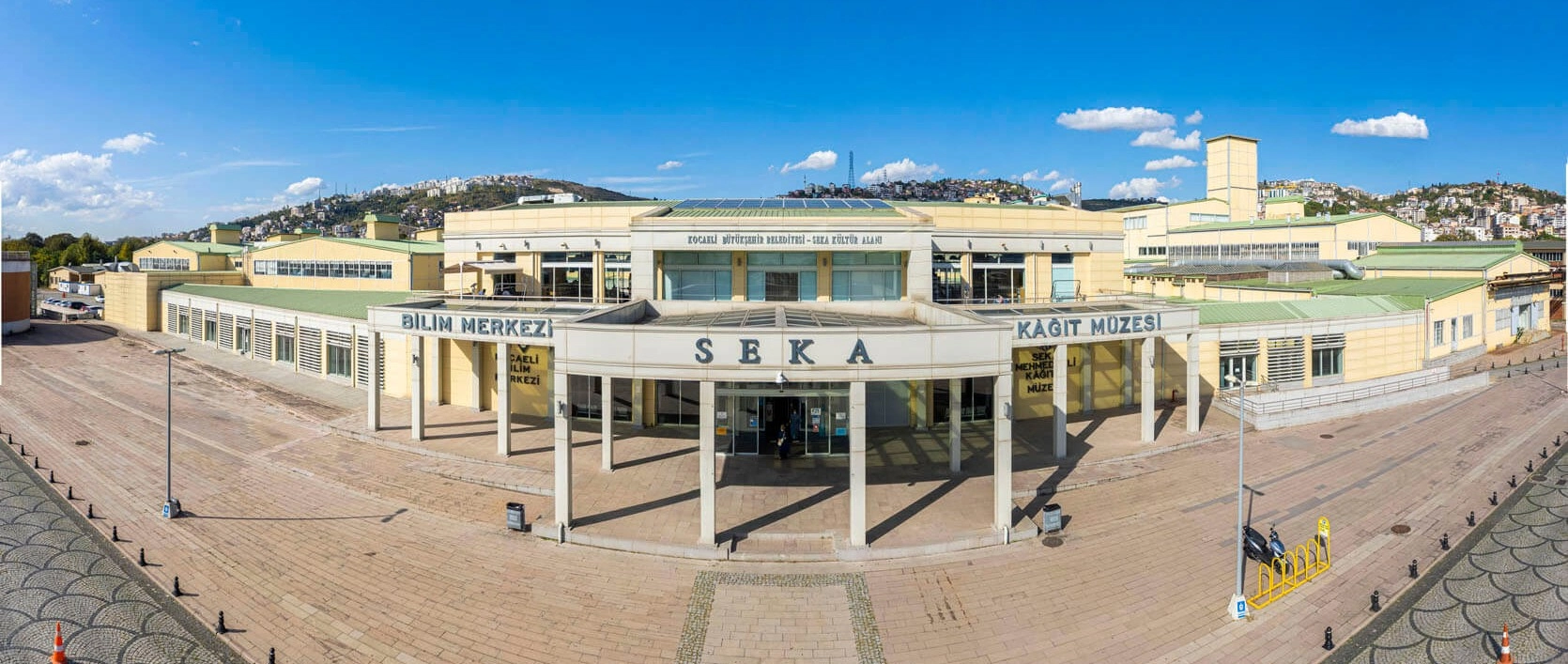
SEKA Paper Museum
Step into the industrial history of the same former factory complex and discover how paper was produced in İzmit.
Explore SEKA Paper Museum





Located within the historic SEKA industrial complex in İzmit, the Kocaeli Science Center is one of the city's most engaging attractions for families, students and anyone interested in understanding how the world works.
Known in Turkish as Kocaeli Bilim Merkezi, the center combines interactive experiments, science galleries, educational workshops, technology laboratories and live activities inside a former industrial environment closely connected with the history of modern Kocaeli.
Rather than presenting science as something to be observed behind glass, the center encourages visitors to touch, experiment, test, compare and ask questions. Many exhibits are designed around direct participation, making scientific principles visible through movement, sound, light, water, forces, natural phenomena and human perception.
The Science Center opened in 2015 through cooperation between Kocaeli Metropolitan Municipality and TÜBİTAK. Today it occupies approximately 8,500 square metres and contains around 250 interactive experiment installations together with specially designed galleries and learning areas.
Explore hundreds of interactive installations designed to make scientific ideas understandable through experimentation.
Experience modern science inside one of İzmit's most important former industrial complexes.
Discover physics, perception, nature, engineering, water, astronomy and technology by actively participating.
The Science Center is operated as a public educational attraction and is currently free to visit.
Essential information for visiting one of İzmit's most entertaining educational attractions.
SEKA complex,
İzmit, Kocaeli.
Interactive science center
Experiments, galleries & workshops.
18 April 2015
Science education complex.
Approximately
250 interactive installations.
Historic SEKA complex
Industrial heritage transformed.
Free
Current public visitor policy.
The center succeeds because it combines hands-on learning with one of İzmit's most meaningful examples of industrial regeneration.
The first reason to visit is simple: science here is interactive. Instead of moving past display cases filled with objects, visitors are encouraged to operate experiments, observe results and discover scientific principles for themselves.
This approach is especially effective for subjects that may feel abstract in books or classrooms. Concepts involving motion, pressure, sound, light, vision, weather, water and mechanical forces become easier to understand when visitors can see them happening directly.
The second reason is the center's location. Kocaeli Science Center stands within the former SEKA Paper Factory complex, one of the defining industrial landmarks of Republican-era İzmit.
The transformation of the factory grounds into museums, parks, science facilities and cultural spaces has allowed an area once associated with industrial production to take on a new educational role.
The third strength is its wide audience. Although the Science Center is understandably popular with children, it is not designed exclusively as a children's playground. Many experiments can be enjoyed by teenagers, adults, families, teachers and curious travellers who simply want to understand familiar phenomena in a different way.
Kocaeli Science Center officially opened on 18 April 2015 as a collaboration between Kocaeli Metropolitan Municipality and TÜBİTAK.
Its creation formed part of the broader transformation of the historic SEKA Paper Factory site, a major industrial complex that shaped İzmit's economy, workforce and urban identity during much of the twentieth century.
Instead of erasing the industrial landscape after manufacturing ended, large sections of the SEKA area were adapted for education, culture, museums, public recreation and green space.
The Science Center occupies approximately 8,500 square metres within this transformed environment. Its exhibition halls were designed to present science through experimentation rather than passive observation.
From its opening, the center was intended to bring people of different ages and educational backgrounds into direct contact with scientific thinking, observation and experimentation.
The wider site formed part of İzmit's historic SEKA paper-production complex.
Kocaeli Science Center officially opens to visitors.
Kocaeli Metropolitan Municipality and TÜBİTAK cooperate in creating the center.
The complex combines interactive science education with the industrial heritage of SEKA.
The setting is an important part of the visitor experience. For decades, SEKA was one of the most recognizable names in İzmit's industrial landscape.
The factory represented a period when large state industrial projects helped shape the economic and social development of the young Turkish Republic. Thousands of people worked within the complex, and entire generations of local families developed connections with SEKA.
After industrial production ceased, the site presented İzmit with an enormous opportunity: instead of losing an important part of the city's identity, the former factory grounds could be reused for public life.
Today the area includes green spaces, cultural institutions, industrial heritage buildings, the Science Center and the SEKA Paper Museum.
This makes the district particularly interesting because science, history and industrial archaeology exist side by side. A family can experiment with physics in the Science Center and then walk next door to learn how paper was once manufactured on an industrial scale.
Kocaeli Science Center contains approximately 250 interactive experiment installations alongside permanent galleries, workshop spaces, technology laboratories, exhibition areas and educational facilities.
The exact visitor experience can change as exhibits are updated and temporary programs are introduced, but the center's core philosophy remains consistent: scientific principles should be explored through direct interaction.
Explore vision, light, sound, illusion and the difference between physical reality and human perception.
Investigate natural processes, weather, biology, geology and phenomena that shape our planet.
Discover scholars, inventions and scientific traditions associated with the historical Islamic world.
Experiment with water, pressure, movement and engineering principles through interactive installations.
Join scheduled activities in which participants build, test and investigate scientific ideas.
Programs introduce areas such as design, coding, robotics and practical technological production.
Special demonstrations, talks and educational presentations are organized during selected programs.
Astronomy programs can introduce stars, planets and the wider universe through immersive projection.
One of the most entertaining areas of the Science Center explores the difference between what exists physically and what the human brain believes it sees or hears.
The gallery uses experiments involving optics, light, sound, vision, illusion and the brain to demonstrate that perception is not always a perfect representation of reality.
Our senses constantly collect information, but the brain must interpret that information extremely quickly. Optical illusions and unusual sensory experiences reveal how easily that interpretation can be influenced by context, movement, colour, perspective or expectation.
This makes the gallery particularly effective because visitors become part of the experiment. Rather than simply reading about an illusion, you experience it yourself and then try to understand why your senses reacted the way they did.
Test how eyes and brain work together to construct the world you believe you see.
Discover situations where shape, colour or perspective can mislead perception.
Explore reflection, colour and other properties of light through interactive experiments.
Investigate vibration, hearing and the physical behaviour behind everyday sounds.
The Dynamic World gallery moves from the human senses toward the larger natural systems surrounding us.
Interactive installations explore subjects connected with biology, geography, weather, natural processes and the physical environment.
Visitors may encounter experiments illustrating phenomena ranging from cloud formation and atmospheric movement to biological structures such as DNA and proteins.
The strength of the gallery lies in turning natural processes that may normally be too large, too small or too difficult to observe into experiments that can be examined at human scale.
It is an especially useful space for school-age visitors, because many subjects encountered in science, biology or geography lessons can suddenly be seen operating in front of them.
The Sultans of Science section adds an important historical dimension to a center otherwise dominated by interactive experiments.
It introduces visitors to scientific scholarship within the medieval Islamic world, when scholars studied, translated and expanded earlier knowledge from several civilizations.
Fields including astronomy, medicine, mathematics, optics, engineering and mechanics developed through the work of scholars active across a vast geographical area.
The exhibition is particularly valuable because it places scientific development within a long international history. Knowledge rarely develops within a single country or civilization. Ideas are translated, tested, improved and transmitted from one generation to another.
For visitors exploring Türkiye's historical sites, this section can also provide useful context for understanding the scientific and intellectual traditions visible in medieval observatories, hospitals, libraries and educational institutions.
Water provides an ideal material for interactive science because its behaviour can be seen, felt and manipulated directly.
The Science Center's water-themed experiments introduce visitors to principles involving flow, pressure, movement, forces and engineering.
A change in direction, height, speed or resistance can immediately alter what the water does, allowing visitors to observe cause and effect without needing complicated explanations.
These experiments are often among the easiest for younger children to enjoy, but the scientific principles behind them connect directly with hydraulics, mechanical engineering, fluid dynamics and technologies used throughout everyday life.
Astronomy forms another important part of the Science Center's educational program. The center currently promotes a 4K-resolution planetarium alongside astronomy workshops and special sky-observation events.
Planetarium experiences can introduce visitors to stars, planets, constellations, the Solar System and the wider universe in a way that is difficult to reproduce in a conventional classroom.
Kocaeli Science Center has also organized sky-observation nights in which telescopes, astronomy activities and other experiences allow families to connect indoor science education with the real night sky.
Planetarium sessions and astronomy activities are not necessarily identical every day, so visitors who consider this a priority should check the current event schedule before arriving.
The Science Center is not limited to permanent exhibits. A major part of its educational role comes from workshops and organized activities.
Programs vary throughout the year and may involve subjects such as physics, chemistry, biology, astronomy, robotics, coding, design, engineering and creative making.
Some workshops are created specifically for younger children, while other programs are designed for older students, school groups or different age categories.
Current public information indicates that regular children's workshop programs commonly serve the 4–13 age range, with separate programs sometimes arranged for other ages.
Because spaces can be limited, workshop participation may require online advance registration even though the activity itself is free.
Hands-on activities turn scientific ideas into experiments participants can perform themselves.
Coding, robotics and digital design help connect science with contemporary engineering.
Special activities introduce younger visitors to investigation through age-appropriate play.
Organized groups can combine exhibition visits with structured educational activities.
Modern science centers increasingly connect scientific understanding with design, engineering and technological production, and Kocaeli Science Center follows this approach through its laboratory programs.
Facilities and programs associated with areas such as the Project Production Factory laboratory and technology workshops introduce visitors to the idea that technology should not simply be consumed. It can also be designed, programmed, tested and improved.
Depending on the current activity schedule, participants may encounter subjects connected with coding, robotics, 3D design, electronics or engineering problem-solving.
The educational value lies as much in failure as success. A design that does not work immediately forces participants to ask why, change something and test it again — exactly the type of iterative thinking used in real scientific and engineering work.
Some scientific phenomena become much more memorable when demonstrated on a larger scale. For this reason, Kocaeli Science Center also organizes science shows, presentations, talks and special-event programs.
Programs vary considerably throughout the year and can become especially active during school holidays, science festivals, astronomy events and themed educational periods.
These temporary programs mean that two visits to the center can be quite different. A family arriving during a major science event may encounter workshops, stage demonstrations, interactive games and activities in addition to the permanent galleries.
If you are travelling specifically for one of these programs, check the current Science Center calendar rather than assuming that every activity operates every day.
Families are among the visitors who gain the most from Kocaeli Science Center. The exhibits are designed around curiosity and interaction, which means children do not need to spend an entire visit quietly reading display panels.
They can activate experiments, watch objects move, test visual illusions, observe water, investigate natural phenomena and repeatedly ask one of the most useful questions in science: “Why did that happen?”
Parents can make the experience even better by resisting the temptation to explain everything immediately. Allow children to predict the result first, then test the exhibit and compare what happened with what they expected.
The center is especially useful on rainy, cold or extremely hot days, when an indoor attraction can provide several hours of productive family activity.
Children learn more when they control an exhibit themselves instead of simply watching an adult use it.
Try “What do you think will happen?” before activating an experiment.
A smaller number of experiments explored properly can be more valuable than racing through every display.
A scheduled workshop can turn a normal museum visit into a much richer half-day activity.
Kocaeli Science Center is particularly well suited to school groups because many exhibits connect directly with subjects taught in science, physics, biology, geography and technology lessons.
Organized groups can use the center not simply as a recreational excursion, but as an opportunity to observe, experiment and reinforce concepts through direct experience.
Group visits and educational activities may require advance application through the Science Center's online system. Teachers and group leaders should arrange visits before travelling, particularly during busy school periods.
Workshop availability, group capacity and the exact format of a school visit can change according to the educational calendar.
Yes. Although many visitors arrive with children, the Science Center can also be surprisingly entertaining for adults.
Several experiments address phenomena that everyone encounters in daily life but rarely stops to investigate: why we see illusions, how sound behaves, why objects balance, how air moves or how pressure affects fluids.
Adults may also appreciate the unusual relationship between the modern exhibits and the industrial architecture of the former SEKA complex.
Travellers interested in science, engineering, industrial history, education or interactive museum design can easily combine the center with the neighbouring SEKA Paper Museum and SEKAPARK.
The Science Center offers very different photographic subjects from İzmit's historical monuments. Instead of stone architecture and ancient artefacts, the most interesting images often involve people interacting with experiments.
Optical installations, large scientific models, moving mechanisms and colourful educational displays can produce excellent photographs, particularly when the image captures the visitor's reaction as well as the exhibit itself.
Outside, the surrounding SEKA industrial architecture adds another visual layer. Old factory structures and contemporary public spaces reveal how radically this part of İzmit has changed.
Always follow current signs regarding photography and avoid interfering with workshops, school groups or other visitors using an experiment.
Unlike many historical monuments, the Science Center operates as a modern public educational facility within a converted industrial complex.
The wide exhibition environment may therefore be considerably easier to navigate than castles, historic houses, underground sites or museum ships.
Nevertheless, individual exhibition installations, temporary layouts or workshop spaces can have different accessibility conditions.
Visitors who require wheelchair access, step-free routes or other specific assistance should contact the center before travelling and confirm the current accessible visitor route.
Monday is currently the regular weekly closing day.
Workshops, planetarium sessions and special events may operate on their own schedules.
Interactive exhibits take longer than ordinary display cases because visitors need time to experiment.
The Sekapark tram stop makes the wider SEKA complex particularly convenient to reach.
Popular children's activities may have limited capacity even though participation is free.
SEKA Paper Museum and SEKAPARK are natural additions to the same visit.
Give younger visitors time to choose experiments that genuinely attract their curiosity.
Temporary exhibits and programs mean the experience can change throughout the year.
Kocaeli Science Center is located inside the historic SEKA complex in İzmit at:
Kozluk Mahallesi
Mehmet Ali Kağıtçı Sokak No: 77
İzmit, Kocaeli
Current official information lists the Science Center as closed on Mondays and open on the remaining six days of the week.
Regular visitor hours are currently: 09:00–17:30.
General visits, individual educational activities, school-group visits and public services at the center are currently offered free of charge.
Some workshops, group programs and special activities require advance online registration because participant numbers are limited.
Kozluk Mah. Mehmet Ali Kağıtçı Sok. No:77, İzmit
Monday
09:00–17:30
Tuesday–Sunday.
Free
8,500 m²
Approximately 250.
+90 262 325 75 59
Kocaeli Science Center is located in Kozluk Mahallesi inside the former SEKA industrial area, close to the waterfront west of central İzmit.
One of the easiest public-transport options is the Akçaray tram. Visitors can get off at Sekapark station and continue into the SEKA cultural and museum area.
Local buses also serve the district, with Orduevi listed among the nearby stops used for access to the center.
Taxi and private vehicle access are straightforward from central İzmit. The surrounding SEKA and SEKAPARK district is well known locally, so the Science Center is generally easy to identify.
Use Akçaray and get off at Sekapark.
Municipal services connect central İzmit with the SEKA area; Orduevi is a useful nearby stop.
Ask for Kocaeli Bilim Merkezi / SEKA.
Navigate to Kozluk Mahallesi, Mehmet Ali Kağıtçı Sokak No:77.
Begin at Kocaeli Science Center while everyone is fresh and ready to experiment. Allow enough time for the main galleries rather than rushing through them.
Next, walk to the neighbouring SEKA Paper Museum. The transition is fascinating: you move from interactive contemporary science into the industrial history of the factory complex itself.
After the museums, continue into SEKAPARK for open space, waterfront views and a completely different atmosphere.
If you still have time, continue toward central İzmit and add the Kocaeli Archaeology Museum or the preserved naval vessels around the Gulf.
Kocaeli Science Center – experiment with science and technology.
SEKA Paper Museum – discover İzmit's industrial and paper-making heritage.
SEKAPARK – relax beside the Gulf of İzmit after the indoor attractions.
Central İzmit – continue with archaeology, monuments or the city's waterfront.
The amount of time required depends heavily on age, curiosity and whether you attend a workshop or planetarium program. Interactive exhibits naturally take longer than displays you simply walk past.
A quick introduction focusing on the principal galleries and a selection of experiments.
A much better visit allowing children and adults to experiment without constant rushing.
Ideal for enthusiastic families who want to investigate the galleries more thoroughly.
Combine the Science Center with a workshop, special activity or the SEKA Paper Museum.
Add the SEKA Paper Museum, SEKAPARK and another central İzmit attraction.
Allow more time than expected — favourite experiments are often repeated several times.
Because most of the Science Center experience takes place indoors, it is a useful attraction throughout the year.
Excellent for combining the indoor center with a longer walk through SEKAPARK.
A useful indoor break during the hottest part of the day before returning to the waterfront.
Comfortable weather makes it easy to combine several attractions across the SEKA district.
One of the best times for an indoor family attraction, especially during cold or rainy weather.
Special programs can make the center particularly lively, but popular activities may fill quickly.
Outside organized school visits, weekdays can offer a calmer atmosphere than busy family weekends.
The Science Center stands in one of the easiest parts of Kocaeli for building a multi-attraction itinerary. Several worthwhile sights are either in the same wider complex or a short journey away.
For a broader regional itinerary, use our complete Kocaeli travel guide to continue through İzmit, Gölcük, the Gulf and the surrounding province.
Discover the history of Turkish paper production inside the former SEKA industrial complex.
Enjoy green space, walking routes and views across the Gulf of İzmit immediately beside the historic SEKA district.
Travel from modern science to the ancient history of Nicomedia and the wider Kocaeli region.
Step aboard a preserved Cold War destroyer and explore another side of twentieth-century technology.
Continue along the Gulf for parks, museums, cafés and views across one of Marmara's great natural harbours.
Discover one of İzmit's finest Ottoman monuments, designed by the great architect Mimar Sinan.
The center is located in the historic SEKA complex in Kozluk Mahallesi, İzmit, Kocaeli.
It is an interactive science and education center where visitors learn through experiments, exhibitions, workshops and technology programs.
Its Turkish name is Kocaeli Bilim Merkezi.
The center officially opened on 18 April 2015.
The center was developed through cooperation between Kocaeli Metropolitan Municipality and TÜBİTAK.
The Science Center occupies approximately 8,500 square metres.
Current official information describes approximately 250 interactive experiment installations and specially designed exhibition areas.
The best-known galleries include Perception and Reality, Dynamic World, Sultans of Science and the Water Area.
Children can operate experiments, explore illusions, investigate natural phenomena and participate in scheduled science and technology workshops.
No. Although it is particularly popular with families and school groups, the experiments can also be interesting for teenagers and adults.
Yes. Current official information states that the Science Center provides its public visitor services free of charge.
No. Monday is currently the regular weekly closing day.
Current 2026 visitor information lists opening hours as 09:00–17:30 from Tuesday through Sunday.
General admission is currently free, but some workshops, group programs and special activities may require registration.
Many organized workshops have limited capacity and use an online registration system, so checking before your visit is recommended.
Current information commonly lists regular workshop activities for children approximately 4–13 years old, with other programs sometimes arranged for different ages.
Yes. The center currently promotes a 4K planetarium, although individual programs and session times can vary.
Yes. School and organized group visits form an important part of the center's educational program and can be arranged through its registration system.
Allow around 1.5–3 hours for a comfortable independent visit. Workshops or special programs can extend this considerably.
Yes. Because most exhibits are indoors, it is one of İzmit's most useful year-round and bad-weather attractions.
It is located within the wider historic SEKA area beside the SEKAPARK district on İzmit's Gulf waterfront.
SEKA was an important Turkish paper-manufacturing enterprise whose large İzmit factory became one of the defining industrial sites of the city.
The best combination is the SEKA Paper Museum and SEKAPARK, both of which can be included in the same outing.
Use the İzmit Akçaray tram and get off at Sekapark.
The official address is Kozluk Mahallesi, Mehmet Ali Kağıtçı Sokak No:77, İzmit, Kocaeli.
The center's current contact number is +90 262 325 75 59.
Yes, particularly for families. It combines hands-on science, technology, educational activities and the industrial heritage of SEKA in one of İzmit's most interesting modern cultural attractions.
The most successful science centers make visitors forget that they are supposed to be “learning.”
At Kocaeli Science Center, a child might begin by turning a handle, watching water move or trying to understand an optical illusion. A few moments later, that simple action has become a question about physics, biology, engineering or the human brain.
That transition from “What happens if I do this?” to “Why did that happen?” is the real purpose of the center.
The surrounding environment adds another dimension. You are exploring science inside a district that once represented heavy industrial production and now contains museums, educational institutions, green space and cultural facilities.
Few places in İzmit demonstrate the city's transformation as clearly as SEKA. The machinery and factory buildings belong to one generation; the experiments, technology labs and young visitors of the Science Center belong to another.
Together, they tell a surprisingly coherent story about industry, knowledge, technology and change.
Kocaeli Science Center introduces the city's modern culture of science and discovery. Continue through the former SEKA complex for industrial history, archaeology and the Gulf of İzmit waterfront.
Science, industrial heritage and waterfront landscapes sit remarkably close together in this part of İzmit.
Step into the industrial history of the same former factory complex and discover how paper was produced in İzmit.
Explore SEKA Paper Museum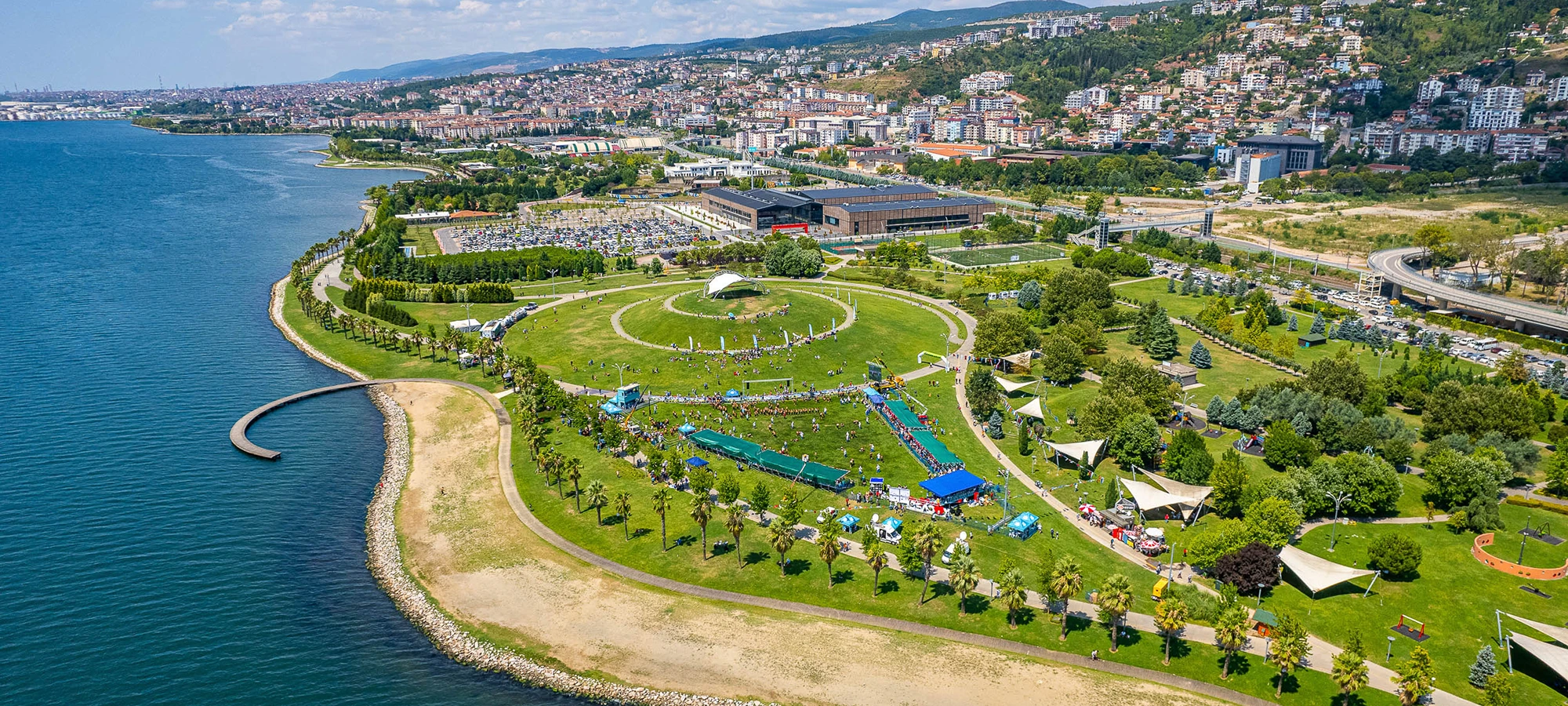
Leave the galleries behind and enjoy green spaces, walking routes and wide views across the Gulf of İzmit.
Explore SEKAPARK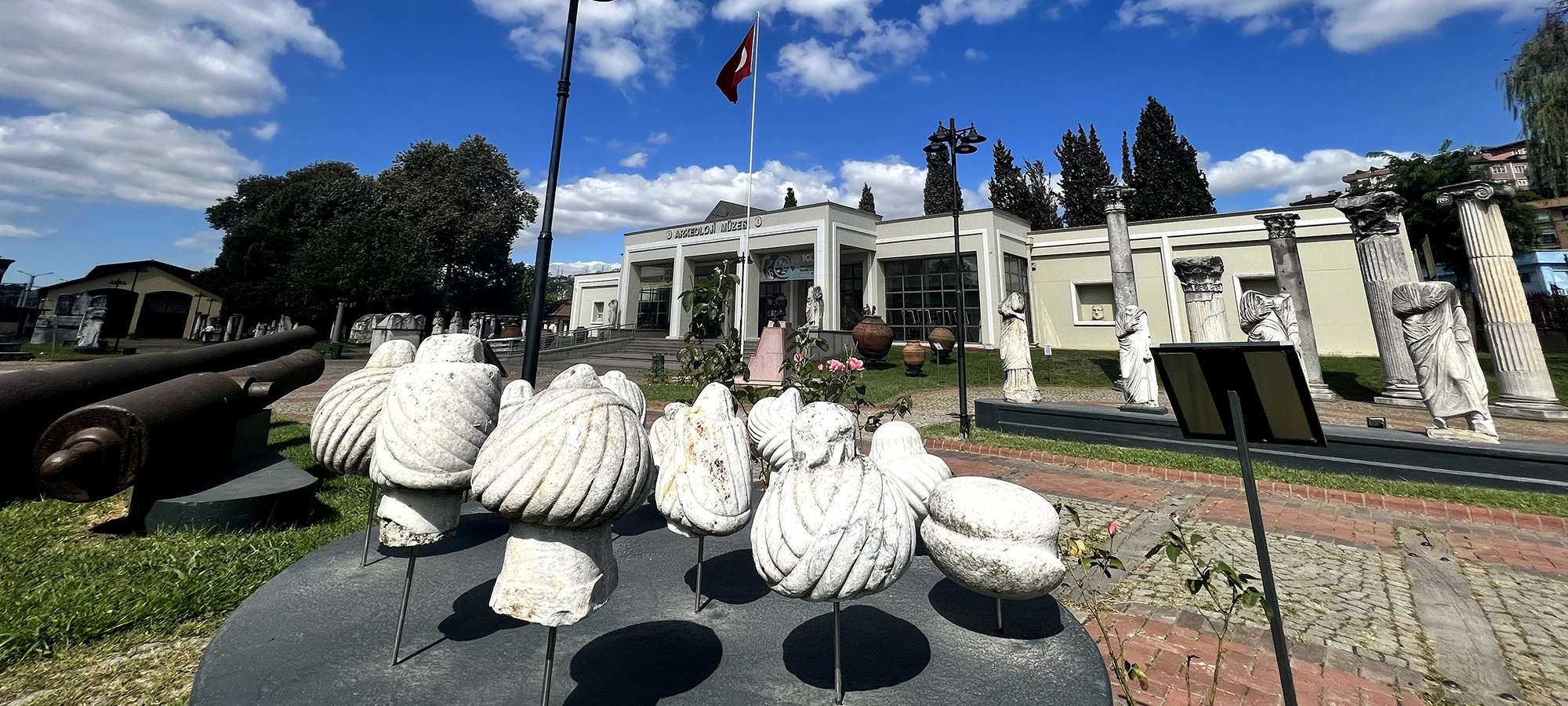
Move from modern science to Roman Nicomedia and thousands of years of archaeological history around İzmit.
Explore NicomediaContinue beyond SEKA to explore naval history, Ottoman architecture and the wider landscapes of the Gulf.
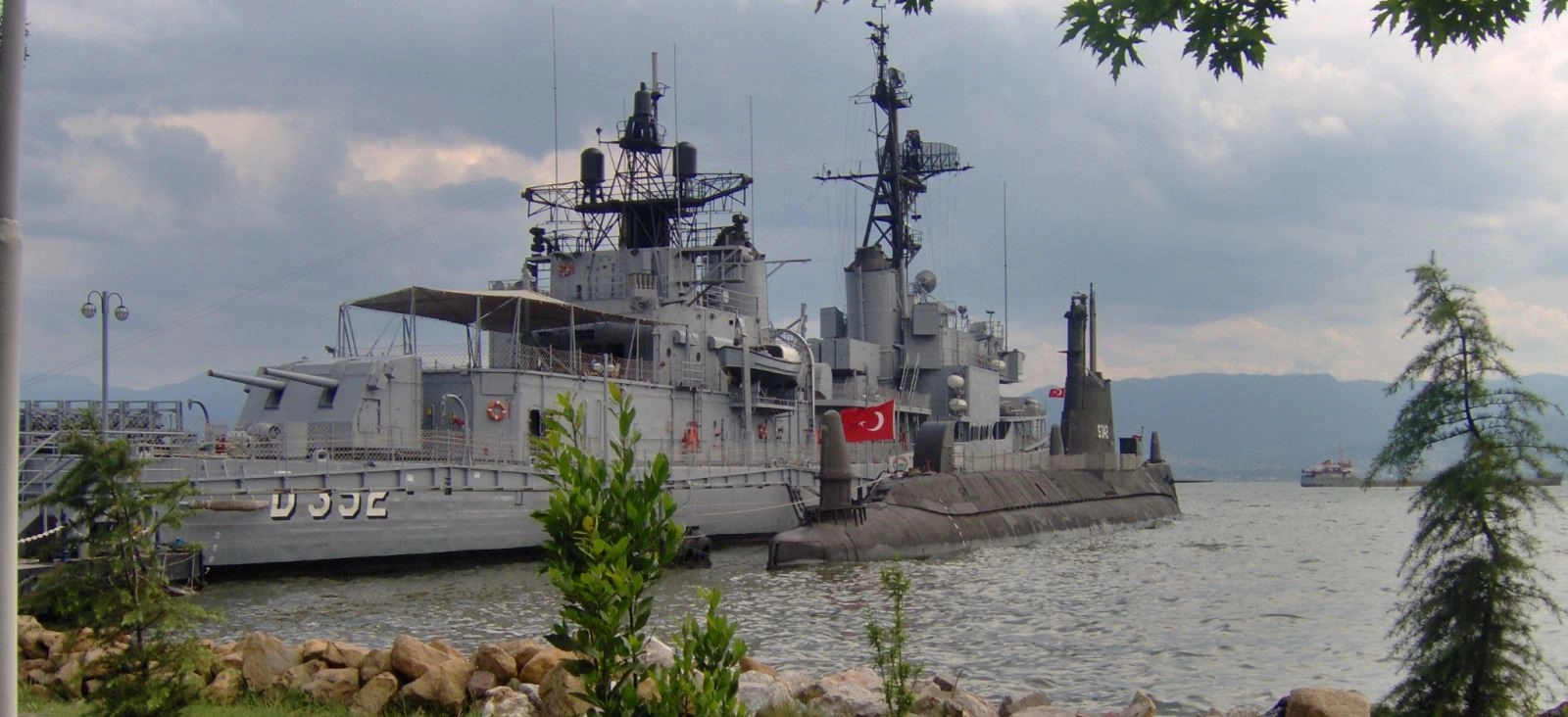
Explore twentieth-century engineering aboard a preserved Cold War destroyer on the İzmit waterfront.
Explore TCG Gayret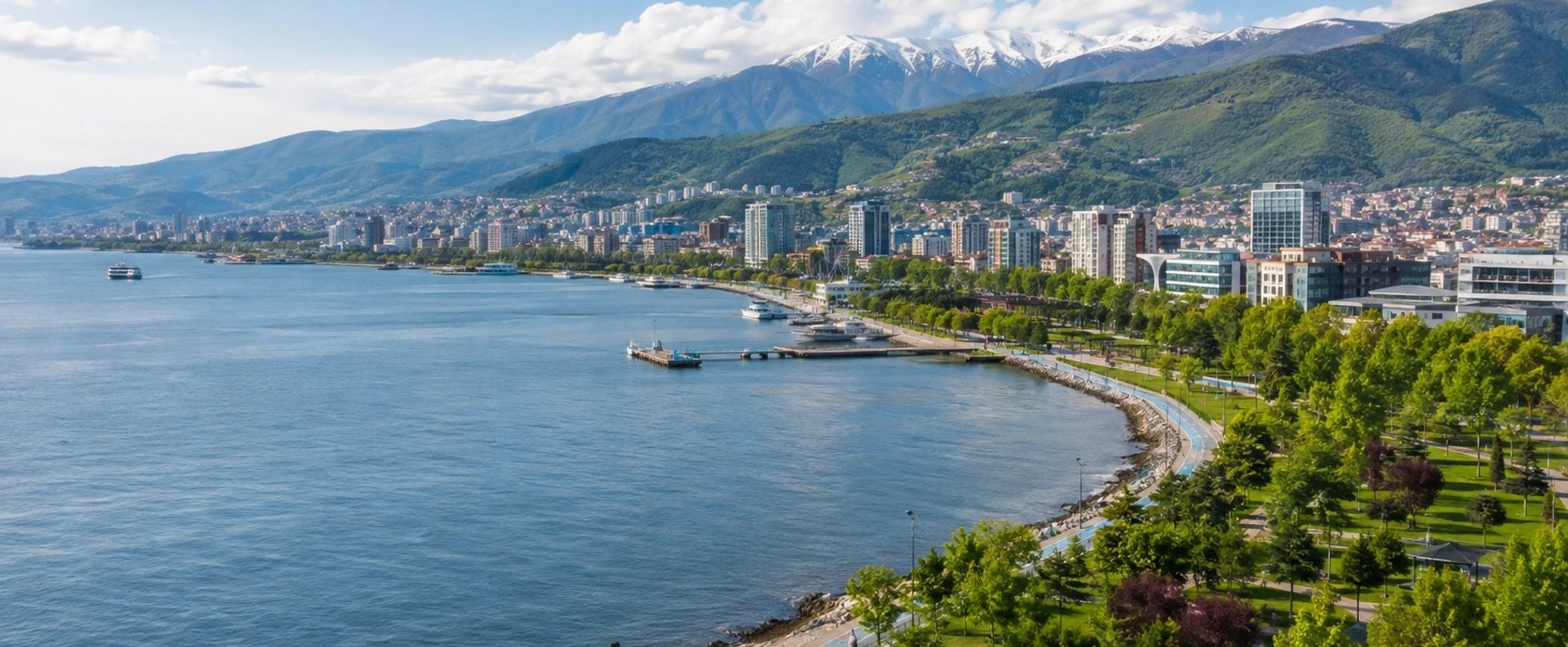
Discover Roman archaeology, Ottoman monuments, industrial heritage, museum ships, forests and Gulf landscapes.
Discover Kocaeli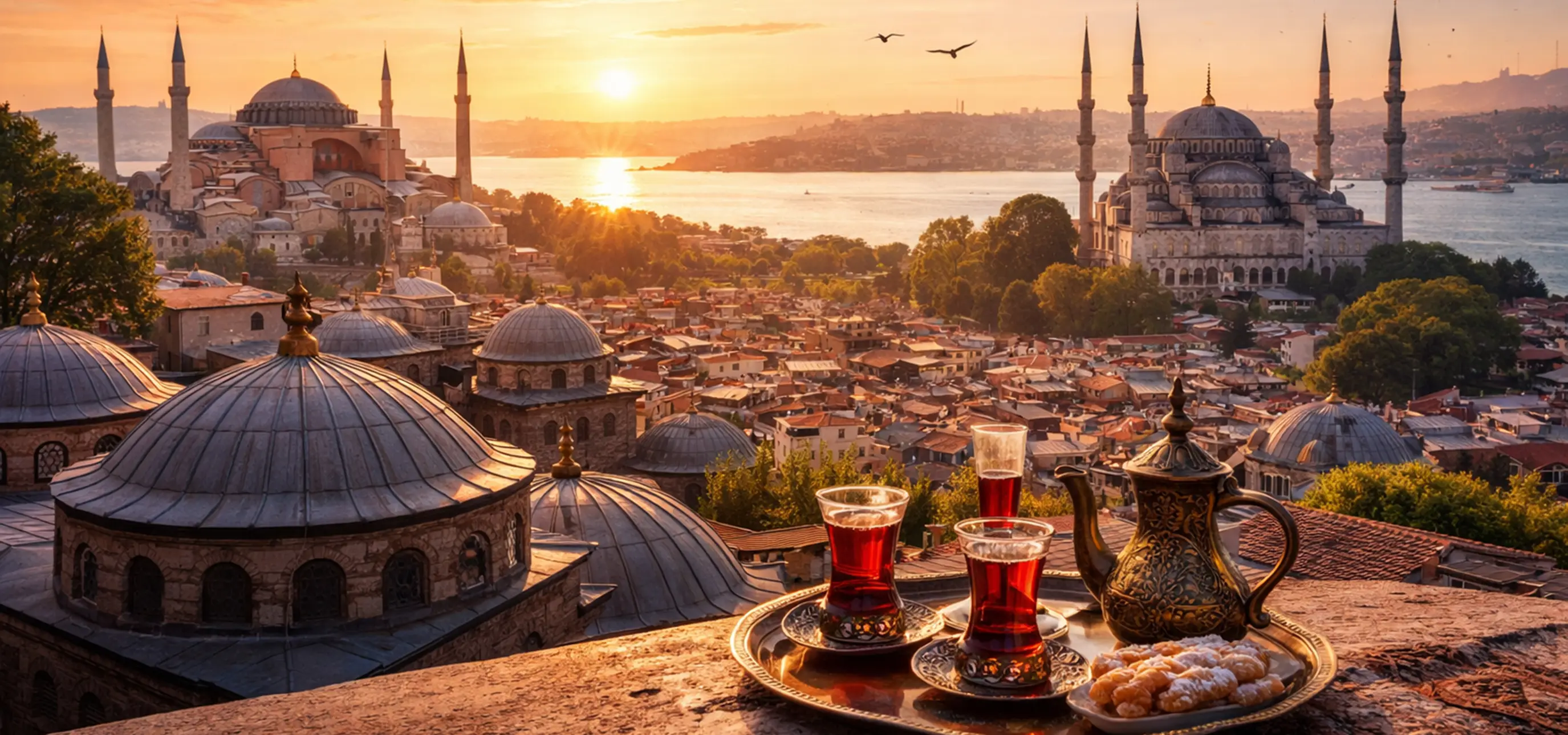
Continue across Türkiye through archaeological sites, historic cities, museums, landscapes and regional culture.
Explore Türkiye