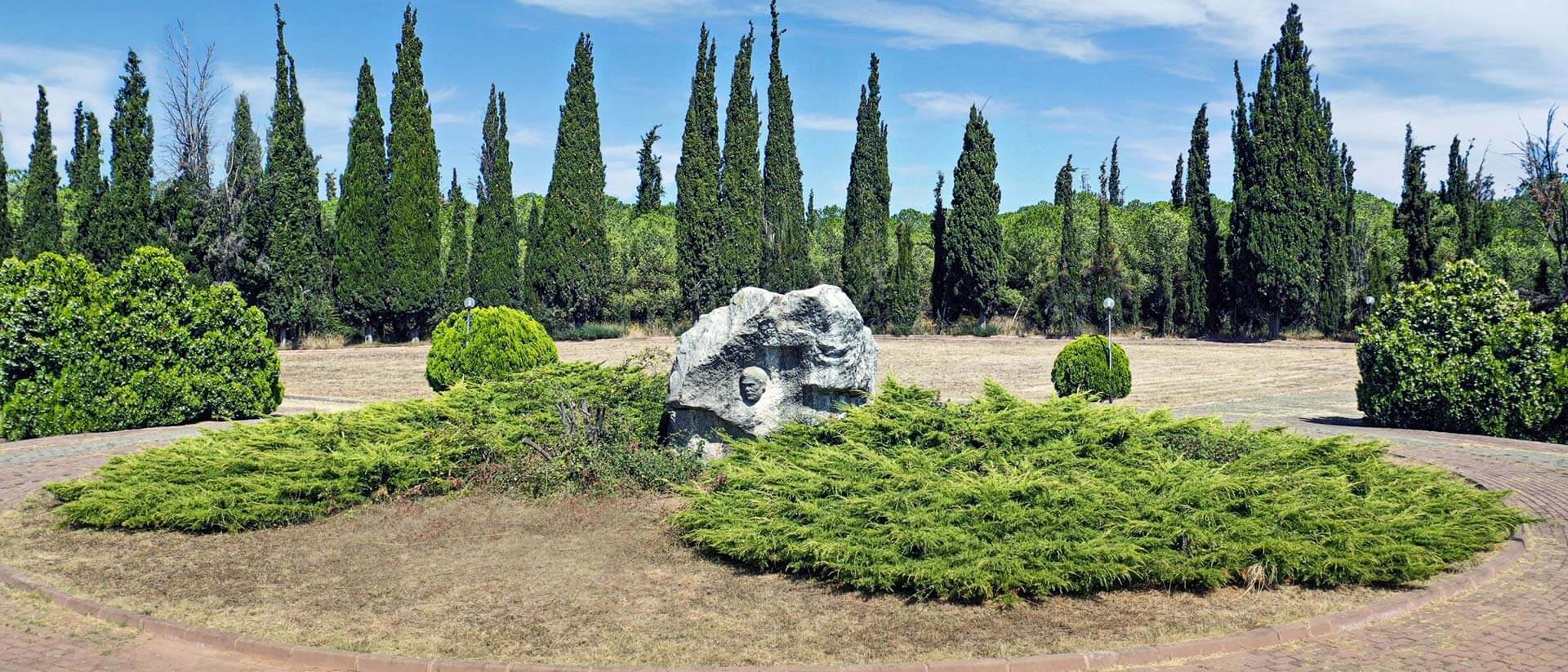
Hannibal Mausoleum
Travel west to Gebze and discover the symbolic memorial connected with the final chapter of Hannibal Barca's extraordinary life.
Explore Hannibal Mausoleum





Rising above the historic town of Hereke in Kocaeli's Körfez district, Hereke Castle occupies one of the most commanding positions on the northern shore of the Gulf of İzmit. From its restored walls, visitors can look across a landscape that for centuries formed an important corridor between Constantinople, Nicomedia and northwestern Anatolia.
The origins of the fortress are not entirely straightforward. Official tourism sources traditionally describe Hereke Castle as having been established during the Eastern Roman period, possibly as early as the 640s, while other archaeological and municipal interpretations associate the surviving medieval fortress more closely with the twelfth or early thirteenth century.
What is much clearer is the castle's importance during the Ottoman expansion into the İzmit region. In 1326, Hereke Castle was captured during the campaigns of Orhan Bey, helping complete Ottoman control over this strategic part of the eastern Marmara coast.
Centuries of earthquakes, abandonment and destruction eventually reduced much of the fortress to ruins. After a major restoration project, its walls, towers and landscaped interior were brought back into view, with the restoration and visitor facilities completed in 2023.
A medieval fortress whose precise construction date remains debated.
Hereke Castle passed into Ottoman control during the conquest of the İzmit region.
Approximately the length of the restored defensive walls.
The modern restoration, landscaping and lighting project was completed.
Essential information for visiting one of Kocaeli's most striking restored medieval fortifications.
Hacı Akif Mahallesi,
Hereke, Körfez, Kocaeli.
Restored medieval fortress
and archaeological heritage site.
Eastern Roman / Byzantine
with later Ottoman history.
1326, during the reign of Orhan Bey.
Approximately 300 metres of restored walls with towers and bastions.
Currently listed as
free to visit.
Hereke Castle brings together Byzantine military geography, Ottoman expansion, earthquakes, historical illustrations and modern heritage restoration.
The castle occupies a strategically valuable position above the northern shore of the Gulf of İzmit. Before modern motorways, railways and industrial ports transformed this landscape, the gulf formed part of an important movement corridor between Constantinople and the interior of Anatolia.
A fortified position at Hereke could therefore watch coastal movement, road approaches and maritime traffic along one of northwestern Anatolia's most important natural routes.
The fortress also belongs to the story of the Ottoman conquest of Bithynia. Its capture in 1326 formed part of the wider process through which Ottoman forces gained control of the İzmit region.
Today, Hereke Castle is equally important as an example of modern conservation and reconstruction. The visitor does not encounter an untouched medieval fortress. Much of what can be seen today reflects an extensive restoration project designed to make surviving remains understandable while reconstructing lost elements of the defensive complex.
The construction date of Hereke Castle is one of the most interesting questions surrounding the site. Visitors will encounter different dates in different official descriptions.
Türkiye's cultural tourism sources and Kocaeli publications traditionally state that the fortress is thought to have originated during the Eastern Roman period in the 640s. This interpretation gives the castle a history approaching fourteen centuries.
Other documentation associated with archaeological study and the modern restoration places greater emphasis on a later medieval Byzantine phase. The archaeological inventory compares Hereke with twelfth-century fortifications, while municipal material connected with the restored castle has also cited 1207.
The safest historical interpretation is therefore that Hereke was a Byzantine fortified site whose surviving architectural history developed through more than one phase. Earlier defensive activity, later construction, repairs and eventual Ottoman use may all have contributed to what became known as Hereke Castle.
Stand inside the restored fortress today and the reason for its location becomes immediately understandable. The castle rises above Hereke and the Gulf of İzmit, with long views toward the water and the surrounding hills.
In the medieval world, this was far more than a beautiful panorama. The eastern Marmara region connected Constantinople with Nicomedia and the major roads of Anatolia. Control of movement through this landscape had military, commercial and political importance.
The castle functioned as a watching and defensive position, allowing its occupants to observe routes approaching along the coast and through the surrounding terrain.
Modern development has dramatically changed the landscape below, but the relationship between fortress, hill and sea remains one of the strongest parts of the visitor experience.
For much of the Middle Ages, the region surrounding modern Kocaeli belonged to the defensive landscape of the Eastern Roman — or Byzantine — Empire.
Nearby Nicomedia, today's İzmit, had been one of the most important cities of the Roman world and remained strategically significant because of its position close to Constantinople and the routes leading into Anatolia.
Hereke occupied the coastal corridor west of Nicomedia. A fortress here could contribute to the protection and observation of the northern Gulf of İzmit and the routes approaching the imperial capital from the east.
The castle changed over time, and the precise relationship between its earliest phases and the later medieval walls remains debated. Nevertheless, its defensive character clearly belongs to the broader network of Byzantine fortifications in northwestern Anatolia.
The early fourteenth century transformed the political landscape of Bithynia. The expanding Ottoman principality steadily captured Byzantine towns and fortifications across northwestern Anatolia.
According to the historical tradition preserved in official accounts, people retreating during the fighting around İzmit took refuge inside Hereke Castle and strengthened its defences.
Orhan Bey then sent a commander identified in local historical accounts as Ali Bey — often remembered as Kara Ali Bey to take the fortress.
During the siege, Ali Bey was reportedly struck by an arrow and lost one eye, but the Ottoman forces eventually succeeded in capturing the castle.
The conquest of Hereke in 1326 became an important element in the wider consolidation of Ottoman power around the Gulf of İzmit.
Military conquest was not the only force to reshape Hereke. The eastern Marmara region lies within one of Türkiye's most active seismic landscapes, and major earthquakes repeatedly affected settlements around the Gulf of İzmit.
Local and official histories record that during the reign of Sultan Bayezid II, Hereke experienced a devastating earthquake sequence.
The event is traditionally described as lasting through repeated shocks for many days and causing extremely serious destruction. Hereke Castle was left in ruins, and the surrounding settlement also suffered heavily.
The disaster is generally connected with the great earthquake period that struck the Marmara region around the beginning of the sixteenth century. Afterward, the fortress never fully recovered its earlier military role.
Over succeeding centuries, collapsed masonry, vegetation, soil and later urban development gradually obscured much of the castle.
Two famous names in Ottoman cultural history help preserve the memory of Hereke Castle: Evliya Çelebi and Matrakçı Nasuh.
Hereke appears within the enormous geographical world described in Evliya Çelebi's Seyahatname, one of the most celebrated travel works of the seventeenth-century Ottoman world.
An even earlier visual connection comes from Matrakçı Nasuh, the celebrated sixteenth-century polymath, artist and chronicler.
During Sultan Süleyman the Magnificent's 1533–1536 Iraqeyn campaign, Nasuh produced remarkable illustrated representations of settlements and landscapes along the imperial route. The image associated with Hereke became an important visual source for understanding the historical fortress.
Centuries later, historic representations such as these became useful references during discussions about how the ruined castle might be conserved and reconstructed.
By the modern period, large portions of Hereke Castle had disappeared from view. The challenge was therefore not simply to repair standing walls, but to identify, excavate, conserve and interpret a heavily damaged archaeological site.
A long-term restoration program was developed with the participation of Körfez Municipality, Kocaeli institutions, heritage authorities, museum specialists and academic advisers.
The conservation proposal received a Success Award in the 2015 Historical and Cultural Heritage Conservation Project and Application Encouragement Competition organised by the Union of Historical Towns.
The award documentation is particularly useful because it explains an important conservation principle: newly completed sections were designed so that they could be distinguished from surviving historical masonry rather than simply creating the impression that every visible stone wall was medieval.
Work continued in stages for several years. The restoration, landscaping, visitor areas and architectural lighting were ultimately completed in 2023, allowing the castle to function again as a major cultural attraction in Hereke.
The restored fortress presents the visitor with the essential vocabulary of a medieval defensive enclosure: high curtain walls, towers, bastions, gateways and an interior courtyard.
Municipal documentation describes the restored complex as including four towers and two bastions. One of the reconstructed towers rises through two levels.
The restored walls extend for approximately 300 metres, while different sections reach heights of roughly 5 to 13 metres.
Their scale is best appreciated from both inside and outside the enclosure. From the courtyard, the walls create an enclosed defensive space; from the surrounding streets and viewpoints, the towers reveal how strongly the castle dominates its small hill above Hereke.
The restored defensive arrangement incorporates four principal towers.
Two bastion elements strengthen the reconstructed defensive perimeter.
The restored fortification line extends for approximately 300 metres.
Wall heights vary considerably according to the restored defensive section.
The interior of Hereke Castle today combines historic interpretation with landscaped public space. It is very different from walking through an untouched archaeological ruin.
Paths cross the grassy courtyard, allowing visitors to examine the restored walls, gate structures and towers from several angles.
Current visitor information also lists facilities including a small amphitheatre, café, prayer room and walking areas. The castle is therefore used not only as a historical attraction but also as a cultural and recreational space.
Concerts, ceremonies and other local cultural events can occasionally take place within the restored enclosure. This gives the fortress a living role in Hereke rather than leaving it as a static monument.
The panorama is one of the strongest reasons to visit. From the elevated castle grounds, the landscape opens toward the Gulf of İzmit and the urban coastline of Hereke.
The view immediately explains why this location was valuable for defensive purposes. Ships, coastal roads and approaches through the surrounding terrain could all be observed from the hill.
On clear days, the modern Osmangazi Bridge can also form part of the distant panorama, creating an unusual visual connection between medieval defence and twenty-first-century infrastructure.
For travellers interested in historical geography, spend a few minutes simply looking across the water. The view makes it easier to understand how Hereke fits into the much wider network linking Istanbul, Gebze, İzmit and the Marmara Sea.
Unlike many archaeological ruins, Hereke Castle now operates primarily as a restored municipal cultural and visitor space.
Current public visitor information lists the castle as free to enter, making it an easy addition to a day exploring Hereke and the northern Gulf of İzmit.
A current educational visitor listing gives opening hours of 09:00–17:00 every day of the week. Other Kocaeli tourism information describes the castle as freely accessible during the day.
Because cultural events, maintenance, seasonal schedules or municipal arrangements can occasionally affect access, travellers making a special journey should still check current conditions shortly before visiting.
Current local tourism information lists free entry.
A current visitor listing gives 09:00–17:00 daily.
Outdoor restored castle with landscaped courtyard and viewpoints.
A small café operates within the castle complex; operating hours may vary.
Walking areas, seating and a small amphitheatre are incorporated into the site.
Allow approximately 45–60 minutes for a relaxed visit.
Hereke Castle is easier to explore than many ruined mountain fortresses because its interior has been landscaped for modern visitors.
Nevertheless, it remains a historic hilltop environment. Visitors may encounter slopes, changes in level, stone paving and steps around parts of the fortification.
Visitors using wheelchairs, those with limited mobility or families with strollers should concentrate on the main courtyard and accessible paths rather than assuming every wall or tower level can be reached without steps.
If step-free access is essential, confirm the current arrangements locally before travelling.
Hereke Castle is one of the most photogenic historical locations along the Gulf of İzmit because it combines restored battlements, stone towers, green courtyards and broad sea views.
Wide photographs from outside the enclosure help show the scale of the fortress, while interior compositions work well around the gateways, crenellated walls and towers.
The strongest images often include the relationship between castle and coastline. From elevated sections, use the water and distant hills to provide geographical context rather than photographing only the masonry.
Late-afternoon light can soften the stonework, while evening illumination gives the restored walls a very different atmosphere.
Mild temperatures and fresh vegetation make this one of the most pleasant periods for walking around the castle.
Clear days can provide excellent Gulf views, although exposed areas may feel hot around midday.
Softer light and comfortable temperatures work especially well for photography and sightseeing.
The castle remains atmospheric, but wind and rain from the Marmara can make the exposed viewpoint feel cold.
Hereke Castle is located in Hacı Akif Mahallesi in Hereke, within the Körfez district of Kocaeli.
The official address is commonly given as Hacı Akif, Kale Sokak, 41800 Körfez/Kocaeli.
Hereke lies directly on the important Istanbul–İzmit transport corridor, so reaching the town by road is straightforward. The castle rises immediately above the urban area and is approached through local streets.
Because the final approach climbs toward the castle, follow current navigation rather than relying only on the visual position of the walls above the town.
Follow the Istanbul–İzmit corridor toward Hereke and continue locally to Kale Sokak.
Travel east along the northern side of the Gulf toward Hereke and Körfez.
Regional transport connects Hereke with surrounding districts; check current local schedules.
The castle occupies an elevated position, so expect an uphill approach near the site.
Hereke's location between Gebze and İzmit makes the castle possible to visit as part of a day trip from Istanbul, especially for travellers with a strong interest in history, architecture or Ottoman industrial heritage.
Driving is usually the simplest option because it allows the castle to be combined with other historical places around Hereke, Gebze and Eskihisar.
Travellers using public transport can travel toward Gebze and continue east using available regional connections, but schedules and connections should be checked for the actual travel date.
Rather than travelling from Istanbul only for the castle, build a wider heritage day around Hereke. Its fortress, imperial-era architecture, famous textile tradition and Gulf coastline together create a much richer excursion.
The history of Hereke did not end when its medieval fortress lost its defensive role. During the nineteenth century, the town gained an entirely different international reputation through Ottoman textile production.
The imperial factory established in the 1840s developed into one of the Ottoman Empire's most prestigious weaving centres. Hereke became particularly famous for silk fabrics and extraordinarily fine carpets.
Imperial commissions linked the name Hereke with the decoration of Ottoman palaces, while the town later became associated with the Kaiser Wilhelm Pavilion, built for the German emperor's visit.
That means a day in Hereke can move through very different chapters of history: Byzantine defence, Ottoman conquest, nineteenth-century industrialisation and imperial diplomacy.
Begin at Hereke Castle while the light is still soft. Walk around the restored walls, study the fortification layout and spend time at the viewpoints overlooking the Gulf of İzmit.
Continue toward the historical industrial quarter associated with the Hereke imperial weaving tradition. If currently open to visitors, explore the heritage connected with the famous Hereke carpets and silk textiles.
Next, discover the Kaiser Wilhelm Pavilion, one of Hereke's best-known late Ottoman landmarks and a reminder of the town's role in nineteenth-century imperial diplomacy.
Finish beside the Hereke waterfront, where the modern Gulf landscape provides a completely different perspective on the same coastline once watched from the castle.
Hereke Castle – medieval defences, restored walls and panoramic Gulf views.
Hereke textile heritage – discover the story behind the town's world-famous carpets and silk.
Kaiser Wilhelm Pavilion – explore Hereke's late Ottoman imperial history.
Hereke waterfront – finish the day beside the Gulf of İzmit.
Enough for a quick walk through the courtyard and a few photographs.
The best choice for most visitors who want to explore the walls and enjoy the viewpoints.
Ideal if you want to relax, photograph the castle carefully or stop at the café.
Combine the castle with Hereke's textile heritage, imperial architecture and waterfront.
Add Gebze, Eskihisar or other historical attractions along the northern Gulf.
Allow extra time to examine the contrast between surviving masonry and reconstructed sections.
Hereke Castle sits within one of the most historically varied parts of Kocaeli, making it easy to combine with imperial, Ottoman, Roman and modern cultural heritage.
Discover the weaving tradition that made the name Hereke internationally famous.
See the elegant imperial pavilion associated with the German emperor's visit to the Ottoman Empire.
Continue west to Gebze and explore the symbolic memorial connected with Hannibal Barca's final years.
Visit the Eskihisar home of the pioneering Ottoman painter, archaeologist and museum director.
Explore the historic coastal settlement and its strategic position overlooking the Sea of Marmara.
Travel east to ancient Nicomedia and discover Ottoman monuments, museums and Gulf history.
For travellers exploring Kocaeli, yes — especially when combined with the wider heritage of Hereke.
The castle is not a vast archaeological complex filled with excavated buildings. Its appeal comes instead from the combination of fortification architecture, historical storytelling and panoramic geography.
Standing on the hill makes the strategic logic of the site immediately understandable. The Gulf below is not simply scenery; it is the reason a defensive position here mattered.
The modern restoration also raises interesting questions about how ruined monuments are reconstructed and presented. Visitors can see an ancient and medieval landscape interpreted through twenty-first-century conservation.
Finally, the castle becomes much more rewarding when placed beside the textile factories, imperial pavilion and waterfront that tell the later story of Hereke.
Hereke Castle is in Hereke, Körfez district, Kocaeli, Türkiye, overlooking the northern shore of the Gulf of İzmit.
The official address is commonly listed as Hacı Akif, Kale Sokak, 41800 Körfez/Kocaeli.
The exact construction chronology is debated. Official tourism sources traditionally suggest origins in the 640s, while other archaeological and municipal interpretations emphasise a later Byzantine phase and sometimes cite 1207.
Yes. The fortress is fundamentally associated with the Eastern Roman / Byzantine defensive landscape of northwestern Anatolia, although it passed into Ottoman control in the fourteenth century.
Its position allowed control and observation of the Gulf of İzmit and important coastal routes linking Constantinople with northwestern Anatolia.
The castle was captured in 1326 during the reign of Orhan Bey.
Local historical accounts connect the conquest with a commander named Ali Bey, commonly identified as Kara Ali Bey, serving under Orhan Bey.
According to the traditional account, he was struck by an arrow and lost one eye during the fighting but continued the campaign.
Yes. Official local histories describe major destruction during a severe earthquake sequence in the reign of Sultan Bayezid II.
Yes. Hereke and its historical landscape appear in Evliya Çelebi's Seyahatname.
A sixteenth-century representation associated with Matrakçı Nasuh's illustrated account of Sultan Süleyman's Iraqeyn campaign is an important historical visual source for Hereke.
Both. Archaeological and historical remains survive, but the castle underwent extensive modern restoration and reconstruction. Visitors should not assume that every visible wall stands exactly as it did in the Middle Ages.
Restoration was carried out in stages over a number of years. The final landscaping and lighting works were completed in 2023.
Yes. The Hereke Castle restoration project received a Success Award in 2015 from the Union of Historical Towns' heritage conservation competition.
Municipal information describes approximately 300 metres of restored fortification walls.
The restored complex is described as containing four towers and two bastions.
Current Kocaeli tourism information lists admission as free.
A current educational visitor listing gives 09:00–17:00 daily. Hours can change, so checking current information before travelling is recommended.
Yes. Current visitor information lists a small café within the castle complex, although its operating hours may differ from the castle's visiting hours.
Yes under normal visitor conditions. The restored battlements and views across the Gulf of İzmit make the site particularly attractive for photography.
Yes. The panoramic view over the Gulf of İzmit is one of the castle's major attractions.
In suitable weather and visibility, the wider panorama can include the Osmangazi Bridge across the Gulf.
About 45–60 minutes is ideal for most visitors. Allow longer if you want to relax, take photographs or use the café.
Yes. Its position on the Istanbul–Kocaeli corridor makes Hereke suitable for a day trip, particularly when combined with other historical sites in Hereke, Gebze and Eskihisar.
Combine the castle with Hereke's historic textile heritage, the Kaiser Wilhelm Pavilion and the waterfront.
The most memorable moment at Hereke Castle often comes not from a particular tower or gateway, but from looking beyond the walls.
Below you lies a modern industrial and residential coastline. Ships move across the Gulf, roads follow the shoreline, and the distant bridge belongs unmistakably to the twenty-first century.
Yet the logic of the medieval fortress is still visible. This hill offered height, observation and control of movement. The geography that made Hereke strategically valuable centuries ago has not disappeared.
Behind you, the restored walls tell another story: not only of Byzantine soldiers and Ottoman conquest, but of earthquake destruction, centuries of abandonment and the modern decision to reconstruct a lost landmark.
Then, only a short distance away, Hereke changes identity again. Medieval military history gives way to imperial factories, silk, carpets and nineteenth-century diplomacy.
Few small towns on the Marmara coast contain so many distinct historical layers in such a compact landscape. That is what makes Hereke Castle more than simply another restored fortress.
From Hereke's medieval fortress, continue through Kocaeli to discover ancient history, Ottoman architecture, museums, science, art and the extraordinary landscape of the Gulf of İzmit.
Explore more stories from Gebze, Eskihisar, İzmit and the Gulf.
Travel west to Gebze and discover the symbolic memorial connected with the final chapter of Hannibal Barca's extraordinary life.
Explore Hannibal Mausoleum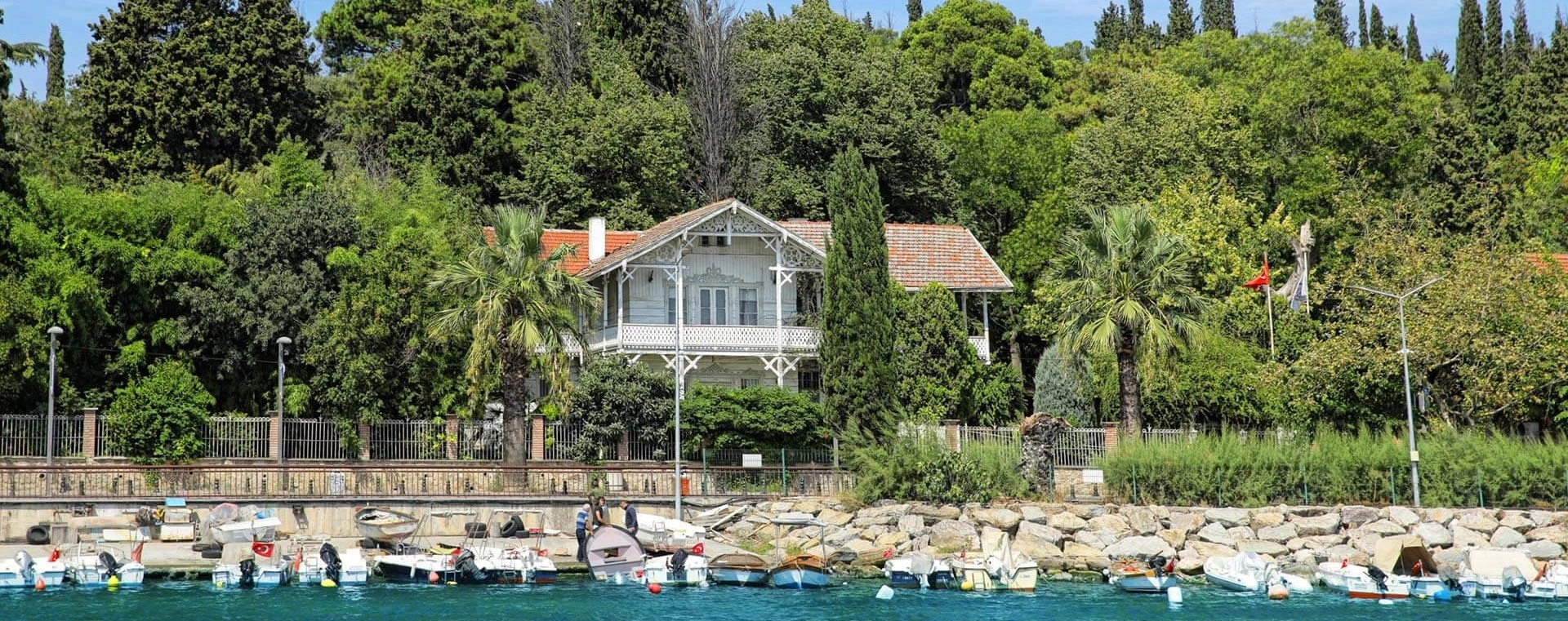
Continue to Eskihisar and explore the home of the pioneering Ottoman painter, archaeologist and museum director.
Explore Osman Hamdi Bey House Museum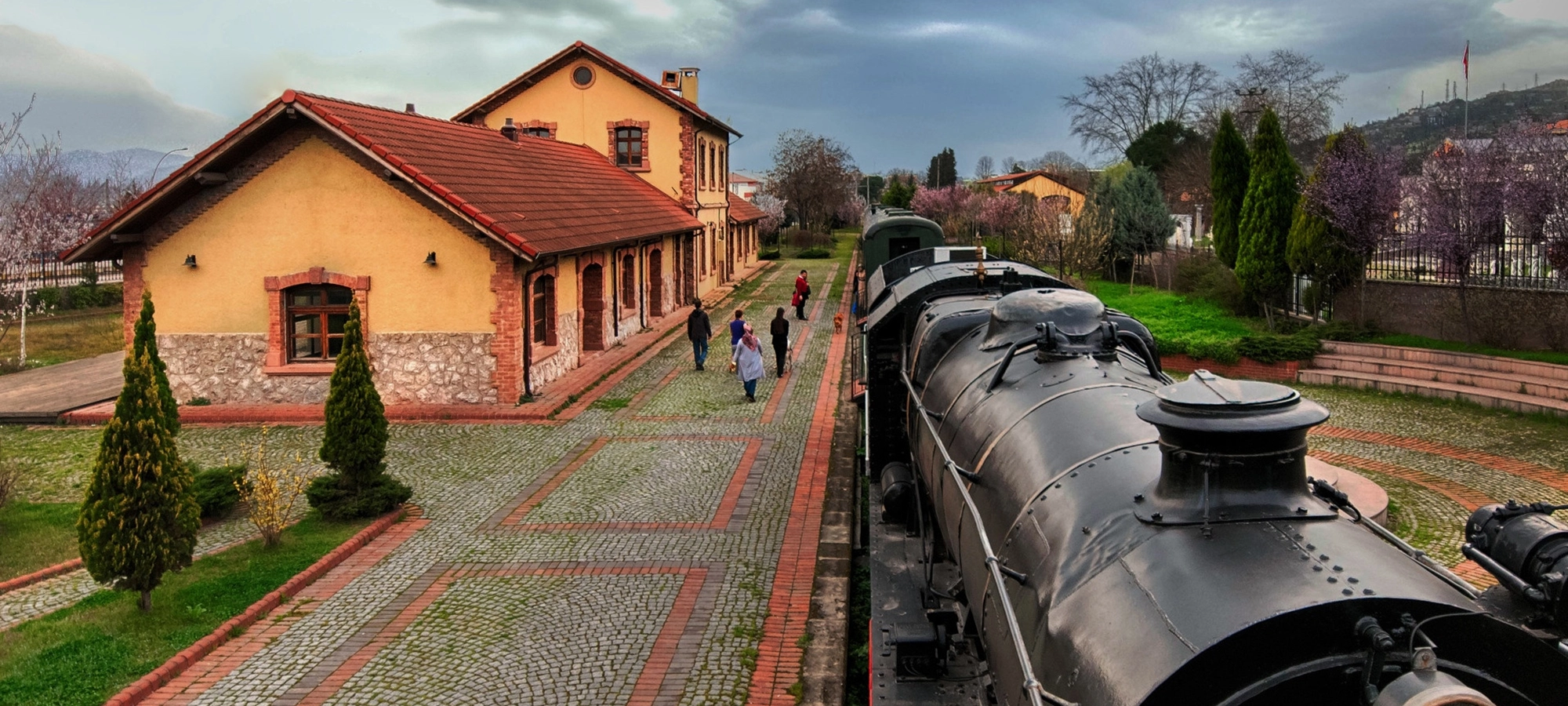
Follow the Gulf eastward and explore one of İzmit's most important surviving late Ottoman transport landmarks.
Explore Historical İzmit Train Station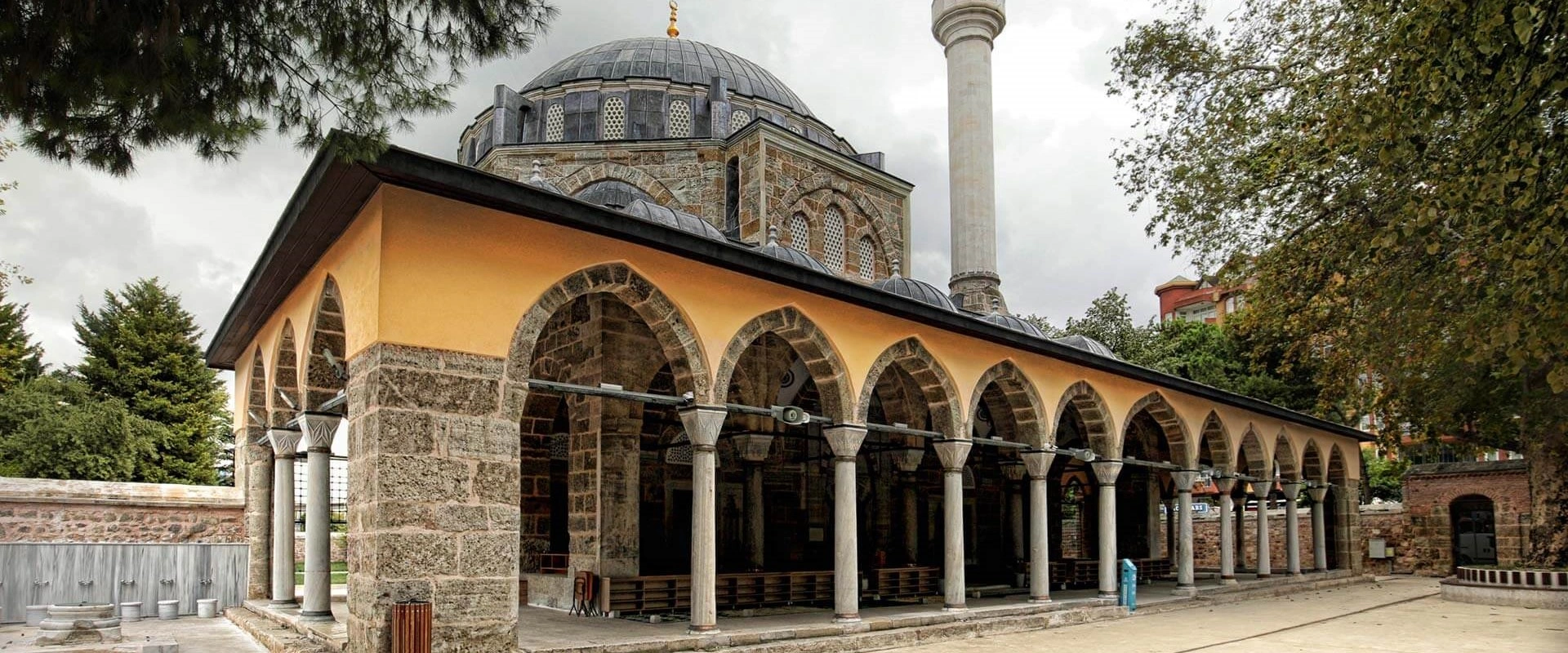
Discover one of İzmit's finest sixteenth-century Ottoman monuments, designed by the great imperial architect Mimar Sinan.
Explore Pertev Mehmet Pasha Mosque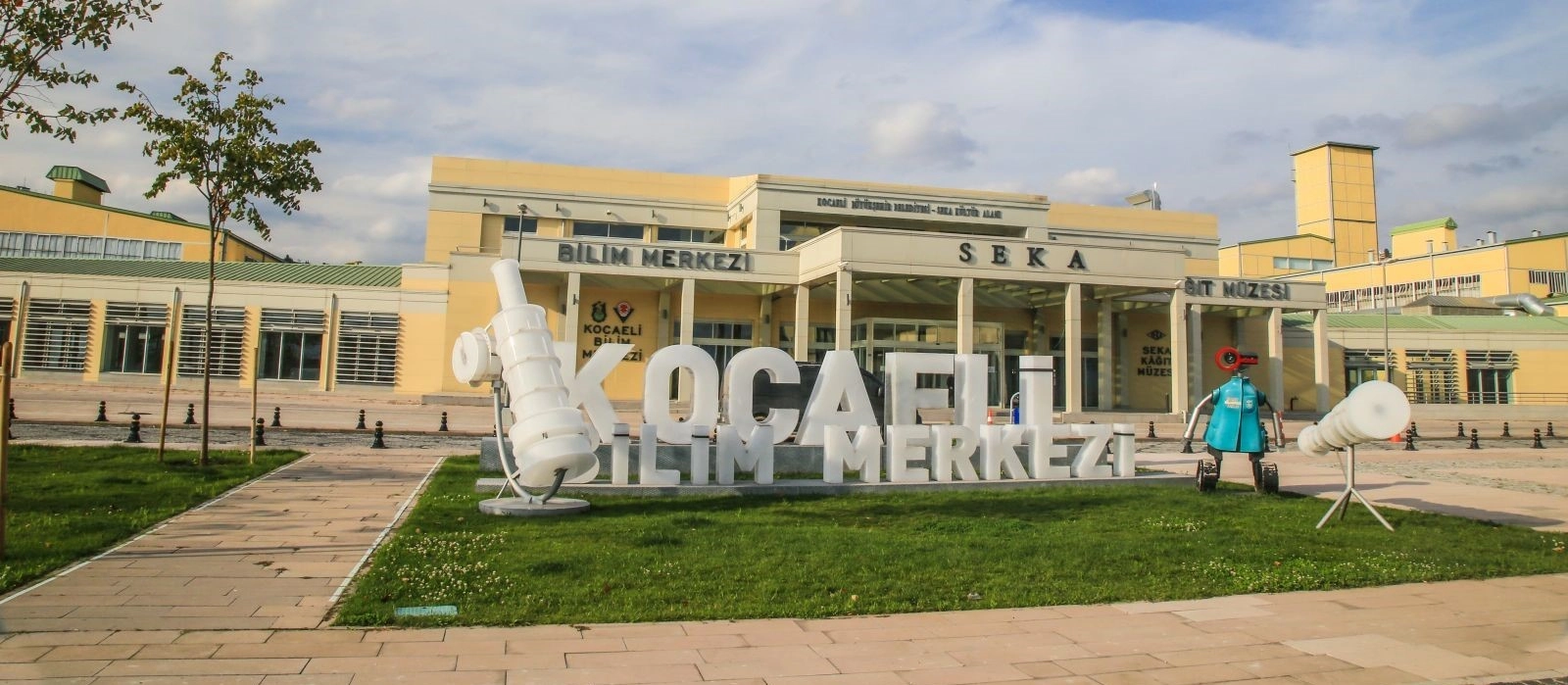
Shift from medieval history to modern discovery at one of Kocaeli's leading interactive science and technology attractions.
Explore Kocaeli Science Center
Discover ancient Nicomedia, Ottoman monuments, Gulf landscapes, museums, forests, beaches and mountain escapes across Kocaeli.
Discover Kocaeli