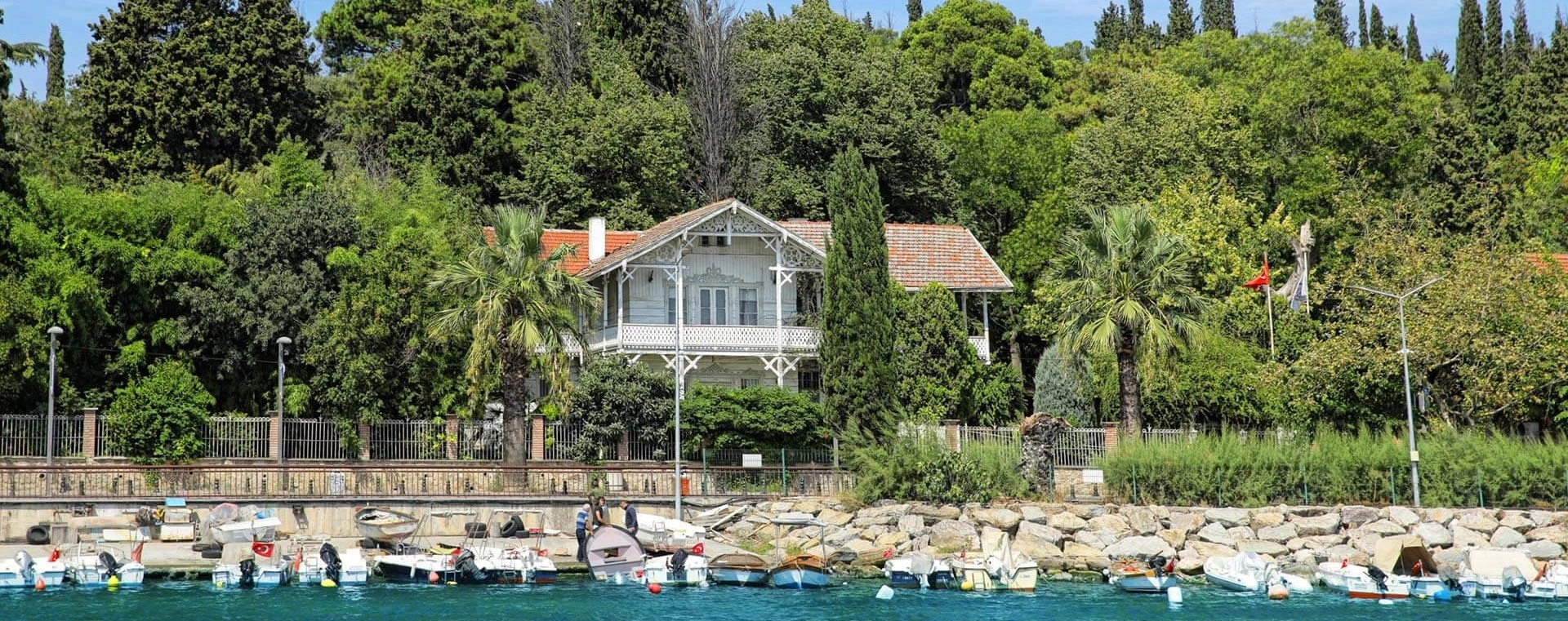
Osman Hamdi Bey House Museum
Continue to nearby Eskihisar and discover the home of the pioneering Ottoman painter, archaeologist and museum director.
Explore Osman Hamdi Bey House Museum



Hidden within the TÜBİTAK Gebze Campus in Kocaeli, the Hannibal Mausoleum is one of Türkiye's most unusual historical memorials. It commemorates Hannibal Barca, the Carthaginian commander whose campaigns against Rome made him one of the most famous military figures of the ancient Mediterranean world.
The monument is connected not with Hannibal's victories in Italy, but with the final stage of his extraordinary life. After years of political exile, Hannibal eventually took refuge in Bithynia in northwestern Anatolia. Ancient sources place his death and burial at a settlement called Libyssa, whose exact location has long been debated.
Modern Gebze became closely associated with that tradition. In 1934, Mustafa Kemal Atatürk ordered that Hannibal's burial place be investigated and that a memorial be created in his honour. Although the actual grave was never securely identified, the idea eventually resulted in the symbolic memorial opened on 24 July 1981.
Today the site combines ancient history, modern commemoration and historical mystery. Its circular arrangement of cypress trees, monumental stone, portrait of Hannibal and multilingual inscriptions create a quiet place of remembrance for a man whose story connects Carthage, Rome, the Alps, Anatolia and the shores of the Marmara Sea.
The traditional dates associated with the life of Hannibal Barca.
Atatürk ordered investigations into Hannibal's burial place and proposed a memorial.
The present symbolic memorial was officially opened on 24 July.
Hannibal's life is presented on inscriptions in Turkish, English, French, German and Italian.
Essential information for understanding and planning a visit to the Hannibal Memorial in Gebze, Kocaeli.
TÜBİTAK Gebze Campus,
Gebze, Kocaeli.
Symbolic memorial
rather than a confirmed ancient tomb.
24 July 1981.
Circular memorial landscape
framed by cypress trees.
A monumental stone of roughly
24 tonnes.
Hannibal's story is presented in
five languages.
The monument preserves the memory of one of antiquity's most famous commanders while marking Gebze's long association with the mystery of ancient Libyssa.
Few historical figures have travelled through landscapes as dramatically different as Hannibal. His life connects North Africa, Iberia, the Pyrenees, the Alps, Italy, the eastern Mediterranean and Bithynia. The memorial at Gebze represents the final geographical chapter of that story.
Its importance also lies in the distinction between history and remembrance. Ancient authors associated Hannibal's death with Libyssa, but archaeologists have never securely identified his actual grave beneath the present monument. The Gebze site is therefore best understood as a commemorative mausoleum, not an excavated tomb containing confirmed remains.
The monument also has a powerful connection with the history of the Turkish Republic. Atatürk's interest in Hannibal transformed an old local and scholarly debate into an official effort to honour the Carthaginian commander. The landscaped memorial completed decades later continues that idea.
For travellers, the site offers something rare: a place where ancient Mediterranean history, archaeological uncertainty and twentieth-century historical memory all occupy the same landscape.
Hannibal Barca was born in Carthage in the third century BC, traditionally around 247 BC. He was the son of Hamilcar Barca, one of the leading Carthaginian commanders of the First Punic War.
Hannibal grew up during an age when Carthage and Rome were competing for power across the western Mediterranean. His early military experience was closely connected with Carthaginian expansion in the Iberian Peninsula, where the Barcid family established a powerful base.
In 221 BC, Hannibal became commander of the Carthaginian forces in Iberia. Within only a few years, his actions helped trigger the Second Punic War, one of the defining conflicts of ancient Mediterranean history.
His fame rests not simply on one battle, but on an extraordinary combination of strategic imagination, speed, logistics, diplomacy and battlefield command. Even centuries after his death, Roman and later military writers continued to treat Hannibal as a model of generalship.
The Second Punic War began in 218 BC after growing tensions between Carthage and Rome. Rather than wait for Rome to attack Carthaginian territory, Hannibal launched one of the boldest strategic offensives of the ancient world.
He moved his army from Iberia, crossed the Pyrenees, continued through southern Gaul and then attempted the difficult crossing of the Alps into Italy.
The campaign stunned Rome. Hannibal had brought the war onto Italian soil from a direction the Romans had not expected, forcing the Republic into a long and costly struggle.
During the following years, he won major victories against Roman armies and remained active in Italy for more than a decade. Yet despite those victories, Rome survived, adapted its strategy and eventually carried the war back to North Africa.
Hannibal's Alpine crossing has become one of the best-known episodes of ancient warfare. His army entered the mountains with infantry, cavalry, pack animals and war elephants, attempting to reach northern Italy before Rome could fully respond.
The exact route remains debated, but the scale of the undertaking is not. Steep terrain, cold, hostile groups, shortages and the challenge of moving a large army through mountain passes caused major losses.
The elephants became the most memorable symbol of the expedition, although they were only one element of a much larger military force. The deeper importance of the crossing was strategic: Hannibal succeeded in appearing in Italy after approaching by land from Iberia rather than attacking directly across the Mediterranean.
That achievement permanently shaped his reputation. Even visitors who know little about the Punic Wars often know the image of Hannibal crossing the Alps with elephants.
After reaching Italy, Hannibal defeated Roman forces in a series of major engagements. His victories at the Trebia River and Lake Trasimene demonstrated his ability to exploit terrain, surprise and the movement of different troop types.
His most famous victory came at Cannae in 216 BC. There, a larger Roman army was enveloped and destroyed in one of antiquity's most studied battlefield manoeuvres.
Cannae became a reference point for later generations of military thinkers. Its importance lies not only in the scale of Roman losses, but in the way Hannibal controlled the shape of the battle and coordinated the movement of infantry and cavalry.
Yet tactical brilliance did not automatically produce strategic victory. Rome refused to surrender, raised new armies and gradually limited Hannibal's ability to convert battlefield success into the collapse of the Roman alliance system.
As Rome recovered, the strategic balance changed. The Roman commander Scipio Africanus carried the war into North Africa, forcing Carthage to recall Hannibal from Italy.
In 202 BC, the armies met at the Battle of Zama. Hannibal was defeated, bringing the Second Punic War toward its conclusion.
The peace that followed sharply reduced Carthage's military and political freedom. Hannibal later became active in Carthaginian politics, where he attempted reforms, but Roman pressure and internal opposition eventually pushed him into exile.
That exile would lead him eastward, away from Carthage and ultimately toward the Anatolian kingdom of Bithynia.
Hannibal did not disappear from history after Zama. He remained politically active in Carthage, but Roman suspicion followed him. Eventually, he left his homeland and sought protection in the eastern Mediterranean.
He spent time under the protection of Antiochus III of the Seleucid Empire, one of Rome's major rivals in the eastern Mediterranean. When Antiochus was defeated by Rome, Hannibal again had to move.
Ancient accounts connect his later travels with Crete and finally with Bithynia, a kingdom in northwestern Anatolia.
There he became associated with King Prusias and with Bithynia's conflicts against neighbouring powers. The man who had once commanded armies across Italy was now living under the protection of an Anatolian king while Rome continued to regard him as a dangerous enemy.
Ancient Bithynia occupied a strategically important part of northwestern Anatolia, including territory around the eastern Marmara region. Its capital, Nicomedia, stood at modern İzmit.
Hannibal's final years in this kingdom form the historical bridge between his Mediterranean career and the modern memorial at Gebze. Ancient writers place him near a settlement called Libyssa, close to the Sea of Marmara.
The surviving accounts describe a man who remained deeply suspicious of Roman intentions. According to Plutarch, Hannibal had prepared multiple hidden exits from his residence, apparently anticipating that he might eventually need to escape.
That precaution was not enough. When pressure was placed on Prusias to surrender him, Hannibal found that escape had become impossible.
The exact details of Hannibal's death vary among ancient sources, and even the precise year is disputed. 183 BC is the date most commonly used, although other ancient chronologies place his death slightly later.
The best-known tradition says that, rather than be captured and handed over to Rome, Hannibal took poison. Ancient authors describe the event as taking place at or near Libyssa in Bithynia.
The story fits the final decades of his life: even after the Second Punic War, Rome continued to see Hannibal as a symbol of resistance and a potential strategic threat.
His death in northwestern Anatolia created a remarkable historical contrast. A commander whose fame was built on Carthage, Spain and Italy ended his life far from home, near the eastern edge of the Sea of Marmara.
Ancient authors describe Libyssa as the place associated with Hannibal's death and burial. The major historical question is therefore not whether Libyssa mattered, but where exactly the ancient settlement stood.
For centuries, travellers and researchers connected Libyssa with Gebze, partly because of local tradition and historical attempts to relate ancient place names to the later settlement. That identification became deeply embedded in the story of Hannibal in Kocaeli.
Archaeological and topographical research, however, has challenged a simple identification of Libyssa with central Gebze. Scholars have proposed locations closer to the Gulf of İzmit and the Diliskelesi area, and the precise geography remains a subject of historical discussion.
This uncertainty is one of the most important things to understand before visiting the memorial. The modern monument does not claim to mark a scientifically proven grave. It represents the Gebze tradition of Hannibal's final resting place and the modern effort to preserve that memory.
The question of Hannibal's burial place attracted travellers, historians and archaeologists long before the modern memorial was created. The association between the eastern Marmara region and Libyssa encouraged repeated attempts to match ancient written distances with the modern landscape.
Investigations in the wider Gebze and Gulf area identified ancient settlement traces, roads, structures and later buildings, but no discovery has been accepted as Hannibal's authenticated grave.
One of the most important modern scholarly studies was carried out by archaeologist Arif Müfid Mansel, who examined the literary, topographical and archaeological evidence surrounding Hannibal's tomb and Libyssa.
The absence of a confirmed grave is not a weakness in the visitor experience. Instead, it makes the monument a useful place to think about how ancient geography is reconstructed and how historical traditions survive even when the archaeological evidence remains incomplete.
The modern history of the Gebze memorial begins with Mustafa Kemal Atatürk. In late 1934, Atatürk showed interest in the question of Hannibal's tomb and ordered that its location be investigated.
The idea was not simply to identify a grave. The proposed project also envisioned landscaping the area as a park and erecting a commemorative monument to honour Hannibal.
A commission involving local officials, the Istanbul Archaeological Museums and the Academy of Fine Arts met in February 1935. Although the attribution of the site to Hannibal could not be established with certainty, the commission supported the creation of a symbolic memorial.
A design was prepared in which a circular arrangement of cypress trees would frame the commemorative area. Atatürk approved a project in April 1935, but financial difficulties prevented the full monument from being completed at that time. The cypress planting nevertheless preserved the core landscape idea.
The commemorative project was finally realised decades after the original Atatürk-era initiative. Construction of the modern monument began around 1980 through cooperation involving public institutions and TÜBİTAK.
The completed memorial was formally opened on 24 July 1981. It occupies a landscaped circular setting on what is commonly known as Hannibal Hill within the TÜBİTAK Gebze Campus.
Official tourism descriptions present the memorial as covering roughly 900 square metres and divided into five parts. At the centre stands the large commemorative stone carrying a portrait representation of Hannibal.
The result is intentionally restrained. Rather than recreating an ancient Punic tomb, the design uses stone, geometry, cypress trees and inscriptions to create a modern place of memory.
The visual identity of the site comes from the relationship between the central stone monument and the circular arrangement of cypress trees around it.
Local official descriptions identify the main stone as weighing approximately 24 tonnes. A portrait or mask representing Hannibal is attached to the shaped stone, creating a strong focal point in the centre of the memorial.
The cypress trees are equally important. Across the Mediterranean, cypress has long carried associations with cemeteries, memory and mourning. Here, the trees also preserve the circular landscape concept developed during the Atatürk-era planning of the 1930s.
The openness of the site gives the memorial a different atmosphere from an enclosed museum. Visitors encounter Hannibal's story through landscape and inscription rather than through a large collection of archaeological objects.
A monumental stone weighing roughly 24 tonnes.
A representation of Hannibal is fixed to the shaped central monument.
The memorial is arranged around a formal circular landscape.
Tall trees give the site its distinctive commemorative character.
One of the most distinctive features of the memorial is its use of five languages to present Hannibal's life.
The inscriptions are written in Turkish, English, French, German and Italian. Together they reinforce the international character of Hannibal's historical legacy.
That multilingual approach is particularly appropriate for a commander whose life crossed so many modern national boundaries. Hannibal's story belongs simultaneously to the histories of Tunisia, Spain, France, Italy, Greece and Türkiye, as well as to the wider history of the Mediterranean.
Take time to walk around the memorial rather than viewing only the central stone. The inscriptions are an important part of the design and help explain why this is a commemorative historical landscape rather than simply a statue.
The safest answer is: the exact burial place has not been proven.
Ancient sources strongly connect Hannibal's death and burial with Libyssa in Bithynia, but identifying that ancient settlement precisely in today's geography has been difficult.
No archaeological discovery beneath the modern monument has established that Hannibal's remains lie at this exact point. For that reason, the site should be described as a symbolic mausoleum, memorial tomb or Hannibal Monument.
This distinction makes the history more interesting, not less. The site becomes a meeting point between ancient testimony, local tradition, archaeological debate and modern commemoration.
The Hannibal Mausoleum is located inside the TÜBİTAK Gebze Campus, not in a conventional municipal park or ticketed archaeological site. This is the single most important practical fact when planning a visit.
A current educational visitor listing gives published visiting hours of 10:00–15:00 from Monday to Friday and lists the site as closed on weekends. However, because the monument is inside an active research campus, entry arrangements can be affected by security procedures, institutional rules and temporary restrictions.
TÜBİTAK MAM publishes separate visitor rules for the campus, including restrictions concerning electronic devices in institutional areas. Visitors should therefore contact TÜBİTAK MAM before travelling and ask specifically whether public access to the Hannibal Monument is currently permitted and what identification or security procedures apply.
Do not plan the visit solely on the assumption that arriving at the campus entrance will guarantee entry. The monument may be historically open to visitors, but access takes place within a functioning scientific and research institution.
TÜBİTAK Gebze Campus, Gebze, Kocaeli.
Educational visitor information lists Mon–Fri, 10:00–15:00.
Published educational information lists Saturday and Sunday closed.
Contact TÜBİTAK MAM and confirm current public access.
Be prepared for campus security and possible ID requirements.
Do not assume cameras or phones are permitted inside the campus.
The unusual location of the monument means that visiting Hannibal is different from visiting most historical attractions in Kocaeli. The surrounding area is part of TÜBİTAK's Gebze research campus.
TÜBİTAK MAM publishes visitor rules stating that devices such as mobile phones, computers, cameras, video equipment, external memory devices and voice recorders may be restricted within the institution.
These rules exist for the security of active research facilities and may be applied differently depending on the nature of the visit and the areas being entered. Visitors should therefore follow current instructions from campus security rather than relying on older travel reports.
If photography is important to you, ask about it before arriving. A historical monument may normally invite photography, but its location inside a secure campus makes this a special case.
The monument itself stands in an open landscaped area, so the physical visitor experience is generally less demanding than a ruin, castle or mountain trail.
A Ministry of Education outdoor-learning listing identifies accessible access among the site's visitor features. Even so, the journey from the campus entrance to the monument and any security procedures should be confirmed in advance.
Visitors who require wheelchair access, step-free movement or vehicle assistance should mention this when contacting the campus before the visit.
The most important accessibility issue may therefore be arranging entry rather than navigating the memorial itself.
Visually, the memorial is one of the most distinctive historical sites in Gebze. The circular cypress arrangement, low landscaping, central stone and Hannibal portrait create strong symmetrical compositions.
Morning or late-afternoon light can bring out the texture of the stone and the vertical rhythm of the cypress trees. Wide views help explain the geometry of the memorial, while closer framing emphasises the portrait and inscriptions.
However, this is not an ordinary public park. Because the monument lies within the TÜBİTAK Gebze Campus, institutional rules concerning cameras and mobile devices may apply.
Always ask permission before taking photographs and never photograph research facilities, security points or restricted campus areas.
Mild weather and fresh vegetation make the landscaped memorial especially pleasant.
Clear weather is common, but midday sun can be strong in the open memorial area.
Comfortable temperatures and softer light can create excellent conditions for an outdoor historical visit.
The site remains visually striking, but rain, wind and cold can affect comfort.
The memorial is located in Gebze, Kocaeli, within the TÜBİTAK campus south of the main urban centre. Official sources identify the address with the Barış Mahallesi / TÜBİTAK Gebze Campus area.
Gebze is one of the most accessible districts of Kocaeli from Istanbul. It sits along the major Istanbul–Kocaeli transport corridor and is served by motorway, main roads and Marmaray suburban rail services.
Reaching Gebze itself is straightforward. The important extra step is entering the TÜBİTAK campus, which is subject to security procedures.
For that reason, confirm the correct entrance, visitor procedure and whether advance notification is required before starting your journey.
Drive to Gebze and follow current navigation toward the TÜBİTAK Gebze Campus.
Gebze is connected to Istanbul by Marmaray; continue locally toward the campus.
Official tourism information notes public transport connections from Gebze.
Allow time for campus security and follow current visitor instructions.
Gebze's position immediately east of Istanbul makes the Hannibal Memorial possible to include in a day trip from the city.
Travellers can reach Gebze by road or by Marmaray, then continue to the TÜBİTAK campus by local transport or taxi. Actual travel time depends strongly on the starting point in Istanbul and road traffic.
The monument itself does not require a full day. The better approach is to combine it with the historical landscape of Gebze and Eskihisar, especially the Osman Hamdi Bey House Museum and the Marmara coastline.
Because access to the Hannibal Monument must be confirmed, build the rest of the day around sites that remain useful alternatives if campus entry is unavailable.
Begin with the Hannibal Mausoleum if you have confirmed access in advance. Take time to read the multilingual inscriptions and understand the relationship between Hannibal, Libyssa and the Bithynian landscape.
Continue toward central Gebze for Ottoman heritage, then travel to Eskihisar, where the atmosphere changes from modern urban Gebze to a historic coastal settlement beside the Sea of Marmara.
Visit the Osman Hamdi Bey House Museum to connect the day with another figure of international historical importance: the pioneering Ottoman painter, archaeologist and museum director.
Finish along the Eskihisar waterfront, where the Marmara landscape helps place Hannibal's final years within the geography of ancient Bithynia.
Hannibal Mausoleum – begin with the ancient Carthaginian connection.
Central Gebze – explore the district's Ottoman historical monuments.
Osman Hamdi Bey House Museum – art, archaeology and late Ottoman cultural history.
Eskihisar waterfront – finish beside the Sea of Marmara.
Enough for a quick look at the central monument and surrounding memorial landscape.
A good minimum if you want to read inscriptions and examine the design carefully.
Best for visitors deeply interested in Hannibal, ancient warfare and the Libyssa debate.
Ideal when combining the memorial with other historical places in Gebze and Eskihisar.
Useful for a wider Gebze–Eskihisar–İzmit heritage itinerary.
Allow additional time for security procedures at the TÜBİTAK campus entrance.
The Hannibal Memorial works best as part of a wider exploration of Gebze, Eskihisar and the eastern Marmara coast.
Discover the Eskihisar home of one of the Ottoman Empire's most important painters and archaeologists.
Explore a historic coastal settlement overlooking the Sea of Marmara.
See one of Gebze's most important Ottoman architectural ensembles.
Connect the visit with the strategic history of the Marmara coastline.
Continue west toward coastal parks and the urban shoreline of the Gulf entrance.
Extend the ancient theme to Nicomedia, capital of Bithynia and later a major Roman imperial centre.
For travellers interested in ancient warfare, Carthaginian history, Roman history or historical geography, the Hannibal Mausoleum is one of the most intriguing places in Kocaeli.
The physical monument is not enormous, but the story surrounding it is. Few sites in Türkiye connect so directly with Carthage and the Punic Wars.
The Atatürk connection adds another dimension. The site shows how a twentieth-century republic chose to commemorate an ancient commander from a completely different civilisation because of his historical significance and military reputation.
Most importantly, the monument encourages visitors to think critically. The grave is not archaeologically confirmed, Libyssa's precise location remains debated, and the memorial itself is modern. Understanding those distinctions makes the visit far richer.
The memorial is inside the TÜBİTAK Gebze Campus in Gebze, Kocaeli, Türkiye.
Hannibal was a Carthaginian commander and statesman best known for fighting Rome during the Second Punic War and crossing the Alps with his army.
He is traditionally dated to approximately 247–183 BC, although ancient sources differ slightly over the exact year of his death.
Ancient sources place his final days and burial at Libyssa in Bithynia. Gebze became one of the locations traditionally identified with ancient Libyssa.
There is no archaeological proof that Hannibal's remains lie beneath the present memorial. It is best understood as a symbolic mausoleum.
Its precise modern location remains debated. Gebze has a strong historical association with Libyssa, while archaeological and topographical studies have also proposed locations closer to the Gulf of İzmit and Diliskelesi.
The best-known ancient tradition says Hannibal took poison rather than allow himself to be captured and surrendered to Rome.
In modern geographical terms, ancient accounts place his death in Bithynia in northwestern Anatolia, within present-day Türkiye.
In 1934, Atatürk ordered investigation of Hannibal's burial place and supported creating a landscaped memorial in his honour.
No. The project was discussed and designed in the 1930s, but the present memorial was completed decades later.
The present memorial was formally opened on 24 July 1981.
Official tourism information describes the landscaped memorial as covering approximately 900 square metres.
Local official descriptions generally give the weight as approximately 24 tonnes.
The circular cypress arrangement formed part of the commemorative landscape concept developed from the 1930s project and gives the site its solemn memorial character.
The memorial includes inscriptions in Turkish, English, French, German and Italian.
Visits may be possible, but the monument is inside an active TÜBİTAK research campus. Confirm current public access before travelling.
A current educational visitor listing gives Monday–Friday, 10:00–15:00, with weekends closed. Campus security arrangements can override published visitor information, so confirmation is essential.
Fee information is not consistently published as a standard tourist admission system. Ask TÜBİTAK MAM about current visitor arrangements when confirming access.
Do not assume so. TÜBİTAK publishes restrictions concerning cameras, phones and other electronic devices within institutional areas. Ask security for permission before photographing the monument.
About 30–45 minutes is enough for most visitors once inside the memorial area, excluding security procedures.
Yes. Gebze is easily reached from Istanbul by road and Marmaray, making the site suitable for a historical day trip when access has been confirmed.
Good nearby additions include Osman Hamdi Bey House Museum, Eskihisar, Çoban Mustafa Pasha Complex, Eskihisar Castle and İzmit.
The most remarkable thing about the Hannibal Mausoleum is the distance between the scale of the story and the quietness of the place.
Hannibal's life evokes enormous armies, elephants crossing mountains, Roman legions, Cannae and the struggle between two Mediterranean superpowers. Yet the story ends here in a restrained landscape of stone, grass and cypress trees.
The monument does not try to reconstruct Carthage or reproduce an ancient battlefield. Instead, it asks the visitor to remember the commander through a single symbolic centre, a portrait and words written in five languages.
Then comes the historical uncertainty. Is this the exact place where Hannibal was buried? The evidence does not allow that claim. Was Libyssa somewhere in this wider eastern Marmara landscape? Ancient sources make the connection important, but modern scholarship continues to debate the geography.
That combination of legend, evidence, uncertainty and remembrance is precisely what makes the site memorable. Hannibal's final chapter belongs not to Rome or Carthage, but to the complex ancient landscape of northwestern Anatolia.
From Hannibal's final chapter in Bithynia, continue through Kocaeli to discover Ottoman architecture, archaeology, museums, maritime history and the landscapes of the Gulf of İzmit.
Explore more stories from Gebze, Eskihisar, İzmit and the Gulf.
Continue to nearby Eskihisar and discover the home of the pioneering Ottoman painter, archaeologist and museum director.
Explore Osman Hamdi Bey House Museum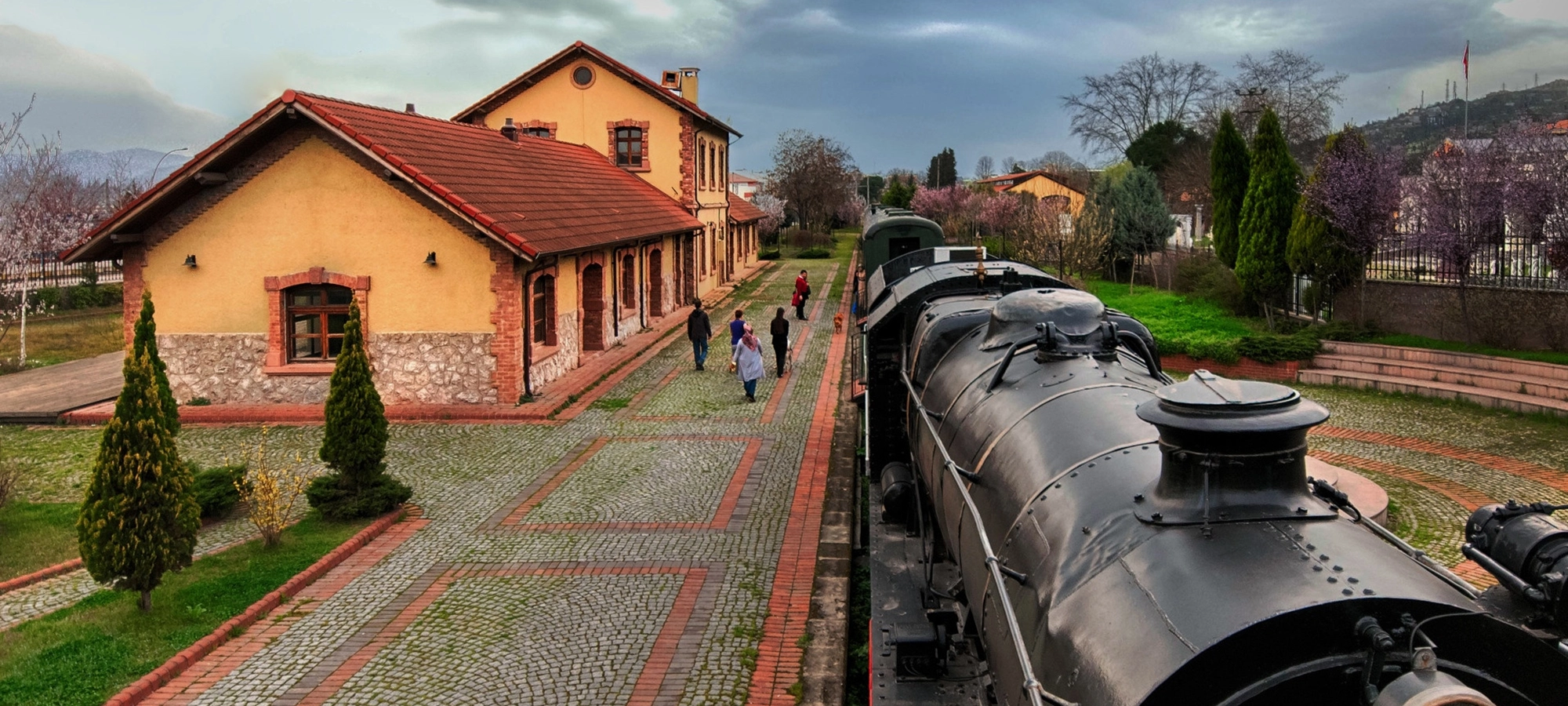
Follow the Gulf eastward to İzmit and explore one of the city's best-preserved late Ottoman railway landmarks.
Explore Historical İzmit Train Station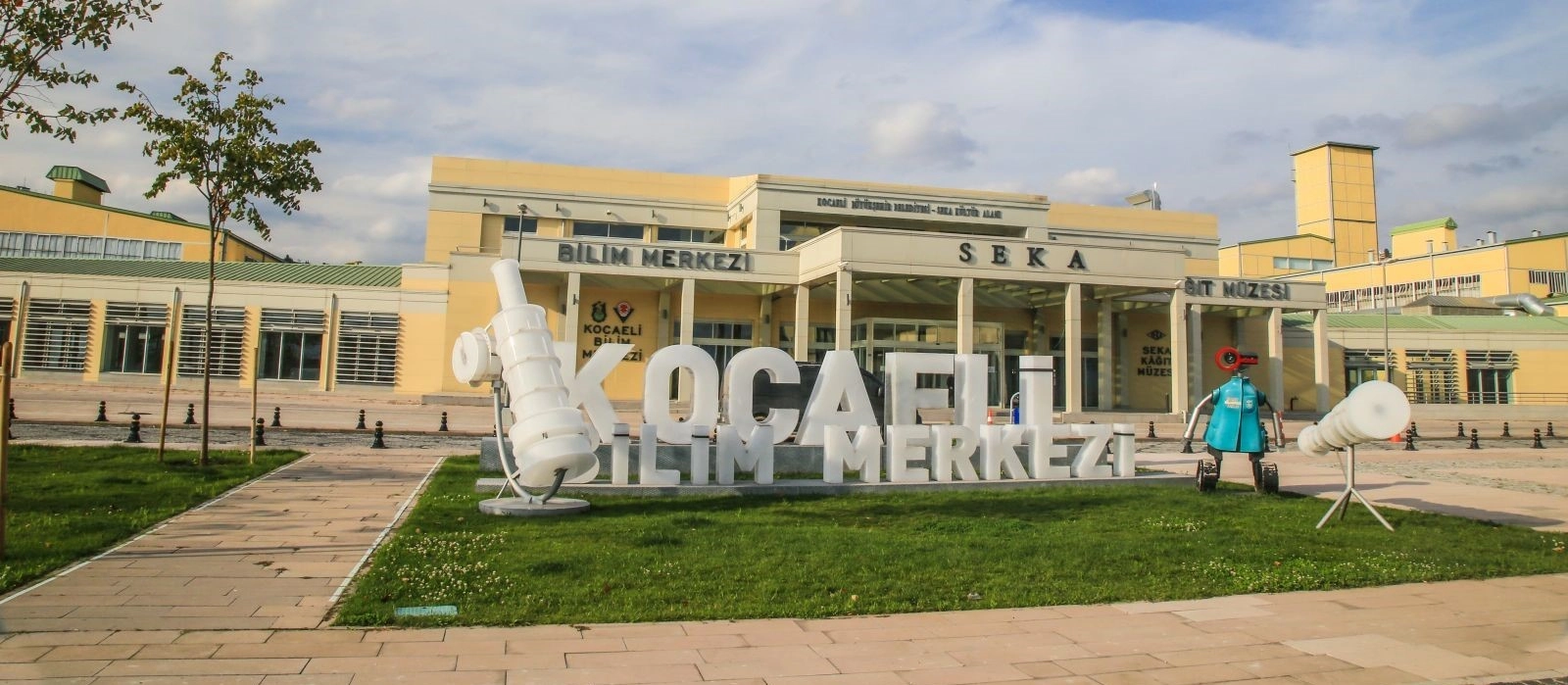
Continue from the TÜBİTAK connection in Gebze to one of Kocaeli's leading interactive science attractions in İzmit.
Explore Kocaeli Science Center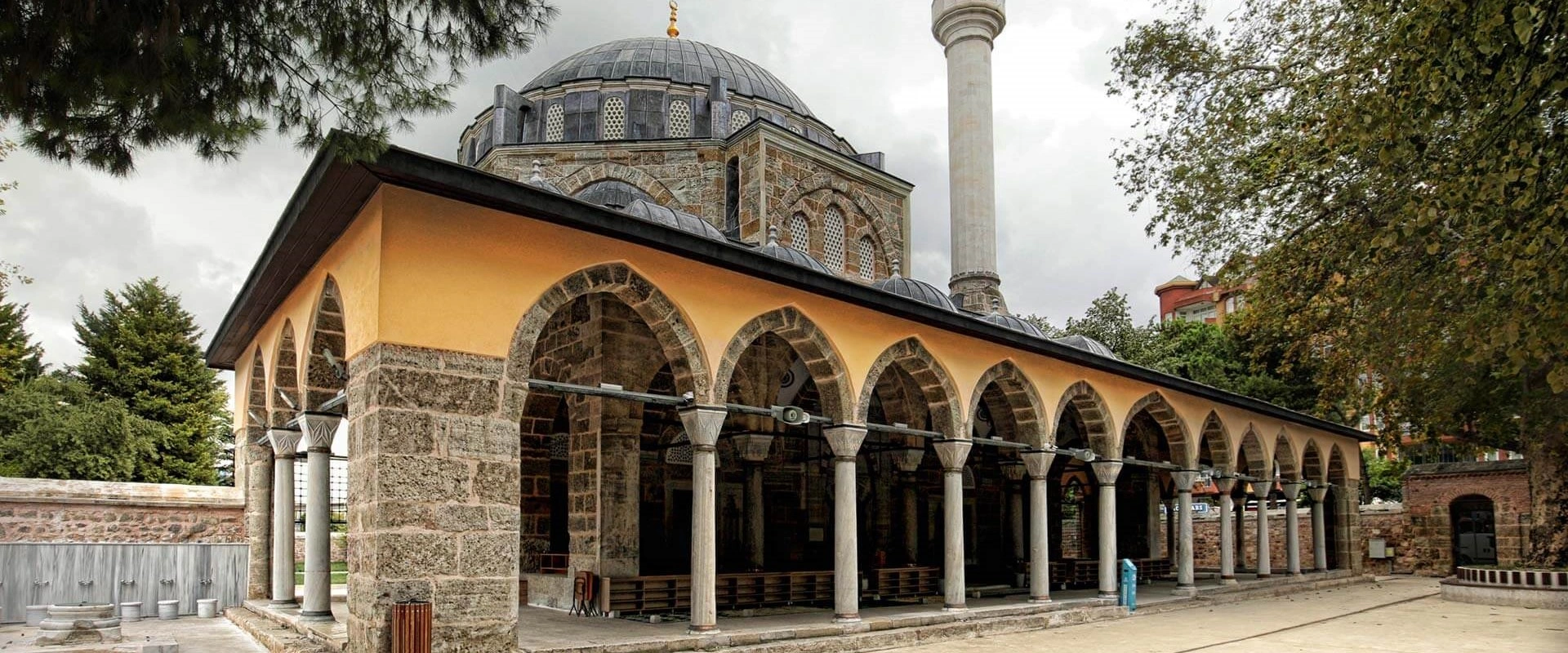
Discover a major sixteenth-century Ottoman complex in İzmit associated with the great architect Mimar Sinan.
Explore Pertev Mehmet Pasha Mosque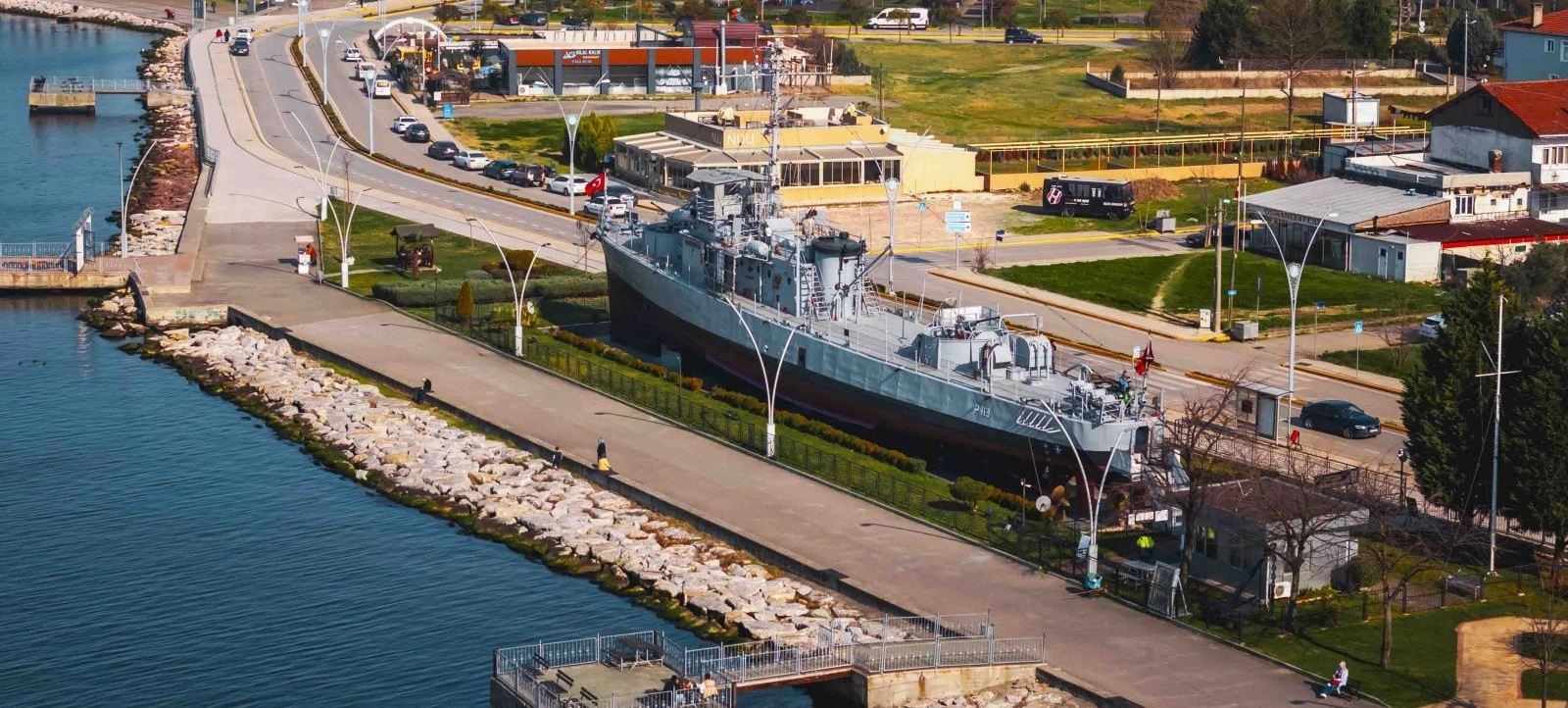
Cross to the southern side of the Gulf and explore Gölcük's modern naval heritage aboard a museum ship.
Explore Yarhisar Museum Ship
Discover ancient Nicomedia, Ottoman heritage, Gulf landscapes, museums, forests, beaches and mountain escapes across Kocaeli.
Discover Kocaeli