Living Plant Collections, Endemic Species & Biodiversity Research

Geofit Research Center Yalova – Complete Visitor Guide

Discover one of Türkiye's most remarkable living plant collections,
where rare bulbs, tubers, rhizomes and other geophytes are conserved, studied and displayed.

Explore the Geophyte Collection

Yalova Geofit Research Center – A Living Library of Türkiye's Native Plants

The Geofit Research Center in Yalova is a specialist plant conservation and research facility within the Atatürk Horticultural Central Research Institute. It protects, studies and propagates an extraordinary collection of geophytes — plants that survive unfavourable seasons through underground storage organs such as bulbs, corms, tubers, rhizomes and tuberous roots.

Opened in December 2014, the center grew out of years of nationwide collecting, identification and conservation work. Official and local institutional sources describe it as Türkiye's first specialist geophyte center and as holding one of the world's richest temperate-zone geophyte collections by species diversity.

Today, approximately 100,000 living plants representing around 1,000–1,100 species are maintained within the wider collection. More than 450 of the represented species are described in current local information as endemic, underlining just how important the center is for preserving plant diversity found naturally in Türkiye.

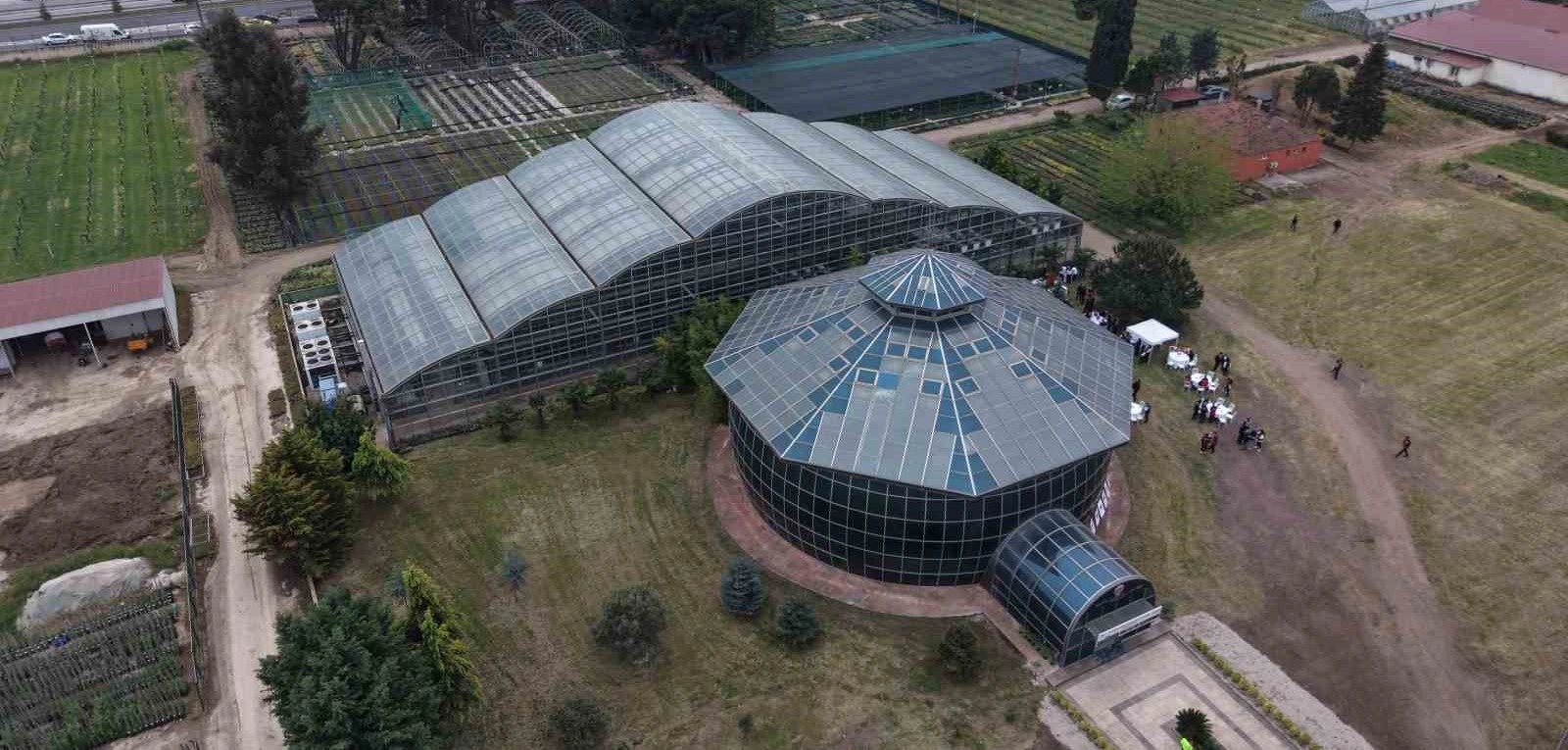
For visitors, the Geofit Research Center is much more than a flower garden. Its display areas, Alpine greenhouse, tropical greenhouse, propagation facilities, landscape areas and scientific infrastructure make it a rare opportunity to see how botany, conservation, horticulture and biodiversity research come together in one place.

2014

The Yalova geophyte garden officially opened on 19 December 2014.

~100,000 Plants

A vast living collection is maintained for conservation, research and propagation.

1,000+ Species

The collection represents an exceptional range of geophytes from Türkiye and abroad.

Türkiye's First Alpine Greenhouse

Special climate controls recreate conditions needed by high-altitude plants.

Know Before You Go

Geofit Research Center – Quick Facts

Essential information for visiting Yalova's specialist geophyte collection and biodiversity research center.

📍

Location

Atatürk Horticultural Central Research Institute, central Yalova.

Search on Google Maps
🌷

What Is a Geophyte?

A plant that survives seasonal conditions using underground organs such as bulbs, corms, tubers or rhizomes.

📅

Opened

19 December 2014.

🌱

Living Collection

Approximately 100,000 living plants are maintained for research and conservation.

🔬

Main Purpose

Conservation, taxonomy, propagation, cultivation, breeding and scientific research.

🏔️

Special Feature

An Alpine greenhouse recreates environmental conditions required by high-altitude plants.

🎟️

Admission

Current Yalova tourism information lists admission as free; confirm visitor arrangements before travelling.

🕒

Visit Planning

Public visiting days and hours can change because this is an active research institute.

🌸

Best Seasons

Spring is especially rewarding, but flowering periods vary greatly between species.

🌳

Combine With

Yürüyen Köşk, Yalova Bonsai Museum, Karaca Arboretum and other nature-focused stops.


Where Science Meets Living Plant Heritage

Why Visit the Geofit Research Center?

Few visitor attractions allow you to see conservation research, living collections and Türkiye's botanical diversity in the same place.

Yalova is well known for gardens, ornamental plants and horticultural research, but the Geofit Research Center reveals a less familiar side of that identity. It is a place where rare and economically important native plants are not simply displayed — they are documented, conserved, propagated, compared and studied.

The collection is particularly valuable because Türkiye is exceptionally rich in naturally occurring geophytes. Many familiar ornamental plants — including relatives of tulips, crocuses, lilies, irises, cyclamens and snowdrops — belong to this broader botanical world. Some are widespread; others have extremely restricted natural ranges.

Visitors can therefore experience the center at two levels. At first glance it is colourful and visually appealing, but behind the flowers lies a much larger story about genetic resources, endemic species, plant conservation, breeding and sustainable horticulture.

For travellers already planning to visit Yalova Bonsai Museum or Karaca Arboretum, the center adds a strong scientific dimension to a plant-focused day in Yalova.

What Exactly Is a Geophyte?

The term geophyte describes a plant that survives an unfavourable season through a protected underground storage organ. Instead of relying only on stems and leaves above ground, the plant stores energy below the soil and can re-emerge when temperature, moisture and daylight become suitable again.

This survival strategy is especially useful in climates with cold winters, dry summers or strongly seasonal rainfall. The visible part of a geophyte may disappear completely for part of the year, while the underground organ remains alive and ready to produce new growth.

Bulbs

Tulips, many lilies and daffodils are familiar examples of plants that store energy in bulbs.

Corms

Crocus species and some other flowering plants survive through compact underground stem structures called corms.

Tubers

Tubers are swollen underground organs used to store nutrients and support seasonal regrowth.

Rhizomes

Rhizomes are underground stems that can spread horizontally and produce new shoots and roots.

The word itself comes from Greek roots associated with the earth and plant life. For visitors, the important point is simple: geophytes are plants whose seasonal survival strategy is hidden underground. That is why a collection of these species can look completely different from month to month.

Türkiye's Exceptional Geophyte Diversity

The importance of Yalova's collection cannot be understood without the wider botanical geography of Türkiye. The country lies at the meeting point of major floristic regions and contains mountains, steppes, Mediterranean landscapes, forests, wetlands and highly varied local microclimates.

That combination has produced extraordinary plant diversity and a high level of endemism — meaning many species occur naturally in Türkiye and nowhere else. Geophytes form a particularly important part of this natural heritage.

Long-term projects supported by TAGEM and TÜBİTAK were established to identify, collect, conserve and evaluate this resource. Teams travelled hundreds of thousands of kilometres across Türkiye, recording populations and bringing carefully documented plant material into cultivation.

Current Yalova municipal information describes the living collection as containing approximately 1,000–1,100 species, including more than 450 endemic species. Numbers can change as taxonomy is revised, accessions are added and living collections are updated, so the center is best understood as a dynamic scientific collection rather than a fixed museum inventory.

How the Geofit Research Center Was Created

The center was the result of a long research process rather than a single landscaping project. National collection and conservation programs began years before the physical garden opened, with researchers travelling across Türkiye to document geophyte populations and bring representative material into controlled cultivation.

Official project summaries describe approximately 350,000 kilometres of field travel and the collection of plant material from thousands of natural populations. The work allowed researchers to build a living reference collection while also creating an inventory of Türkiye's geophyte diversity.

The purpose was not simply to collect attractive flowers. Researchers examined taxonomy, propagation, cultivation potential, ornamental characteristics, chemical composition and genetic variation, with the wider aim of both conserving native resources and developing sustainable horticultural value from them.

The purpose-built Geofit Garden in Yalova was officially opened on 19 December 2014 within the Atatürk Horticultural Central Research Institute. Government sources from the opening period describe a site of roughly 20,000 square metres, with specialized greenhouses, display zones, landscape areas and research infrastructure.

How Large Is the Yalova Geophyte Collection?

The most striking statistic associated with the center is the scale of its living material. Current institutional and educational sources describe approximately 100,000 living plants representing around 1,000 species or more.

These are not all placed together as a conventional ornamental garden. Plants are maintained in different conditions according to their ecological requirements, research status, conservation importance and propagation needs.

Opening 19 December 2014
Living Plants Approximately 100,000
Species Diversity Approximately 1,000–1,100 species in current summaries
Endemic Representation More than 450 endemic species according to current Yalova information
Approximate Site Scale About 20,000 m² in opening-period and current educational descriptions

Because this is a scientific collection, figures may differ slightly between publications from different years. Some sources count species, others count taxa or accessions, and the collection itself continues to change through research and conservation work.

The Main Sections of the Geofit Research Center

The original center was planned around several complementary zones, allowing both public display and scientific work to take place within the same complex. Official opening information lists the following principal components.

Exhibition Area

A visitor-oriented zone where representative plants and the diversity of geophytes can be presented more clearly.

Alpine Greenhouse

A specialized greenhouse designed to reproduce environmental conditions required by high-altitude species.

Tropical Greenhouse

A controlled environment supporting species that require warmer or more humid growing conditions.

Propagation Greenhouse

A working area used for cultivation, multiplication and research rather than only public display.

Landscape Areas

Outdoor plantings help show geophytes in more naturalistic or horticultural settings.

Laboratory & Herbarium

Scientific infrastructure supports identification, documentation, research and long-term botanical reference work.

Türkiye's First Alpine Greenhouse

One of the center's most unusual features is its Alpine greenhouse. Current Yalova municipal information describes it as the first facility of its kind in Türkiye.

High-mountain plants can be difficult to keep at low elevation because their natural habitats may involve cool temperatures, intense light, seasonal snow, mist, sharp day-night temperature differences and specific humidity patterns. Simply moving them into a standard warm greenhouse can be harmful.

The Alpine greenhouse therefore uses controlled systems to regulate environmental factors such as temperature, light, humidity and mist. The goal is to create conditions that more closely resemble the ecological requirements of mountain species.

For visitors, this is an excellent reminder that plant conservation is not just about moving a rare species behind a fence. Successful ex-situ conservation often requires recreating the physical conditions to which a species has adapted over thousands of years.

Why the Center Functions Like a Living Gene Bank

A major role of the Geofit Research Center is ex-situ conservation — protecting biological material outside the species' original natural habitat.

In-situ conservation keeps plants within their natural ecosystems. That remains essential because a species is connected with soil, insects, fungi, pollinators, climate and other organisms. However, a carefully managed living collection can provide an additional safeguard when natural populations are threatened by habitat loss, illegal collection, development, fire, climate pressure or other changes.

At Yalova, plants can be maintained, propagated and documented under controlled conditions. This creates material for scientific comparison and can help researchers develop methods for cultivation and multiplication without depending entirely on continued removal from the wild.

For that reason, the center is often described as having the character of a living gene bank. The plants are visually beautiful, but their deeper value lies in the genetic information they carry.

Rare, Endemic and Confiscated Plants

The collection includes many species that are rare, endemic or scientifically important. Some natural populations can be vulnerable because they occupy only a small geographic area or are attractive to collectors.

Turkish authorities have also transferred plant material confiscated during attempts to remove protected or valuable species illegally from the country. Historical reporting on the center describes hundreds of such plant types being brought into protection and cultivation rather than being lost after confiscation.

This role is important because geophytes are particularly vulnerable to over-collection. Removing the bulb, corm or tuber usually removes the whole perennial plant, unlike taking a fruit or a limited number of seeds. Repeated digging from small natural populations can therefore cause rapid decline.

Visitors should never collect wild bulbs or plants from natural areas unless an activity is specifically authorized and legally permitted. The whole purpose of a center like Yalova's is to show that biological richness is more valuable when it is studied, propagated and protected rather than depleted.

Scientific Research at the Geofit Center

The Geofit Research Center supports multiple branches of plant science. Research programs associated with the collection have examined both the basic biology of native species and their potential for sustainable horticultural use.

Taxonomy

Researchers identify, compare and document species, varieties and populations.

Cultivation

Trials determine how wild species can be grown successfully under controlled or horticultural conditions.

Propagation

Methods are developed to multiply plants reliably from seed or vegetative material.

Breeding

Promising native genetic resources are evaluated for ornamental characteristics and new cultivar development.

Phytochemistry

Plant chemical composition can be studied to understand useful compounds and biological activity.

Genetic Characterization

Molecular and morphological studies help reveal relationships and diversity within the collection.

This combination of conservation and applied research is one of the center's most important characteristics. The aim is not only to preserve plants but also to understand them well enough to reduce pressure on wild populations and create new opportunities for horticulture, science and education.

Geophyte Breeding and Ornamental Plant Development

Türkiye's natural flora has supplied ornamental plants to gardens around the world for centuries, yet the economic value created from those genetic resources has often developed elsewhere. One purpose of the Yalova program has been to change that relationship through scientific breeding and domestic cultivar development.

Research teams selected promising plants for characteristics such as flower colour, form, fragrance, adaptation and cultivation potential. Historical project publications report the development of more than 200 geophyte varieties and candidates, with a national ornamental plant variety catalogue produced from the work.

A 2021 scientific summary reported 13 registered geophyte cultivars from breeding programs involving plants such as peonies, lilies and irises, while further variety development remained ongoing.

The wider principle is important for conservation: if attractive native plants can be cultivated and multiplied commercially, there is less justification for removing them directly from natural populations. Research can therefore connect biodiversity protection with responsible economic use.

The Three-Volume “Geophytes of Türkiye” Publication

One of the major outputs associated with the long-running geophyte project was the publication of Türkiye Geofitleri — a three-volume illustrated scientific work produced by the Atatürk Horticultural Central Research Institute.

The institute's publication announcement describes the work as approximately 1,800 pages, containing thousands of original photographs and material covering hundreds of geophyte species, genera and families. The project combined field collection with identification, documentation and photography on a national scale.

For the general visitor, the importance of the publication is not the number of pages. It shows that the Yalova collection is backed by a systematic attempt to record Türkiye's geophyte diversity scientifically, rather than functioning as an ornamental display assembled only for tourism.

Together, the book, living collection, herbarium and research records form different parts of the same conservation archive: one preserves images and descriptions, another preserves dried scientific specimens, and the garden preserves living plant material.

Best Time to Visit the Geofit Research Center

A geophyte collection is highly seasonal. Many species spend part of the year dormant underground, so there is no single month when every important plant is visible or flowering at the same time.

Late Winter

Early bulbs and cold-season geophytes may begin appearing while much of the collection is still dormant.

Spring

Generally the most visually rewarding period, with many bulbs and other geophytes in active growth or flower.

Summer

Some spring species enter dormancy while warm-season plants and research collections continue through different growth stages.

Autumn

Autumn-flowering crocuses and other seasonal geophytes can make this an excellent second flowering period.

A visitor information notice published by the institute has previously provided a list of species and flowering periods, which reflects an important point: the best date depends on what you hope to see.

If your priority is simply to experience the collection at its most colourful, April and May are usually strong choices. For serious plant enthusiasts, however, a quieter autumn visit can be just as interesting because many Mediterranean and Anatolian geophytes have very different seasonal cycles.

Understanding Flowering Times

One of the most common misunderstandings about botanical collections is expecting constant flowers. Geophytes are particularly unsuited to that expectation because their underground survival strategy is built around strong seasonal rhythms.

A species may appear above ground for only part of the year. Some flower before their leaves fully develop, some produce foliage months before flowers, and others may remain dormant until a specific combination of temperature and moisture occurs.

This means that the same bed can look spectacularly colourful during one visit and almost empty at another, even though the plants below the soil are healthy. Dormancy is not absence — it is part of the biology the center is designed to preserve.

Visitors who have a special interest in tulips, crocuses, colchicums, lilies, irises, cyclamens, snowdrops or another group should contact the institute shortly before travelling and ask whether relevant collections are currently visible or flowering.

What to Expect During Your Visit

The Geofit Research Center should not be approached like a large commercial flower park with amusement facilities and staged displays. Its character is quieter, more scientific and more educational.

Depending on current access arrangements, you may see landscaped outdoor collections, specialist greenhouse environments and areas explaining or demonstrating the range of plants protected at the institute. Working propagation or research sections may have more limited access than public display zones.

Take time to look closely at plant labels, growth forms and differences between species. Many geophytes are small, and some of the most scientifically valuable plants are much less visually dramatic than large ornamental flowers.

The visit becomes much more meaningful when you focus on the idea that each accession represents a documented piece of botanical diversity — often linked to a specific place, population or research history.

Opening Days, Hours and Admission

The Geofit Research Center is located inside an active government research institute, so visitor arrangements can differ from those of a conventional municipal park or museum.

Current Yalova tourism information lists free admission and reports public visiting on Monday, Wednesday, Thursday and Friday, with hours of approximately 08:30–12:30 and 13:30–17:30. Other educational listings show slightly different weekday information, which is exactly why visitors should confirm the schedule before making a special journey.

Admission Currently reported as free
Reported Visitor Days Monday, Wednesday, Thursday and Friday
Reported Hours 08:30–12:30 / 13:30–17:30
Important Confirm directly with the institute because research activity, official holidays and group programs may affect access

For school groups, academic visits, photographers or travellers arriving from outside Yalova, advance contact is strongly recommended. A short phone call can prevent arriving during a research closure, lunch break, official holiday or restricted group session.

Geofit Research Center Contact Information

The center operates within the Atatürk Horticultural Central Research Institute (Atatürk Bahçe Kültürleri Merkez Araştırma Enstitüsü Müdürlüğü), which is part of Türkiye's Ministry of Agriculture and Forestry research network.

Institution Atatürk Horticultural Central Research Institute
Address Süleyman Bey Mahallesi, 77100 / 77200 Yalova Merkez, Türkiye
Telephone +90 (226) 814 25 20-21

Address formats differ slightly between official and tourism listings, but all refer to the Atatürk Horticultural Central Research Institute complex in central Yalova. For navigation, searching directly for “Geofit Araştırma Merkezi Yalova” or “Atatürk Bahçe Kültürleri Merkez Araştırma Enstitüsü” is usually the clearest approach.

Where Is the Geofit Research Center?

The center is located in Yalova Merkez, inside the grounds of the Atatürk Horticultural Central Research Institute. This makes it considerably easier to reach than many of the province's mountain, forest and waterfall attractions.

It can be incorporated into a city sightseeing day without travelling far into the countryside, and it combines especially well with other central or near-central attractions connected with horticulture and Atatürk heritage.

Province Yalova
District Yalova Merkez
Setting Government horticultural research institute campus
Best Navigation Search Geofit Araştırma Merkezi Yalova

How to Get to the Geofit Research Center

From Yalova Centre

Use a taxi, private vehicle or local transport toward the Atatürk Horticultural Central Research Institute.

By Taxi

Ask for “Geofit Araştırma Merkezi” or “Atatürk Bahçe Kültürleri Araştırma Enstitüsü.”

By Private Car

Use current navigation and follow institute signage on arrival; access and parking procedures can change.

With a Private Tour

The center fits naturally into a botanical route with the Bonsai Museum, Yürüyen Köşk and Karaca Arboretum.

Because the attraction lies within an institutional campus, do not assume that every entrance gate is open to visitors. Follow security instructions and use the designated visitor entrance when you arrive.

How Much Time Do You Need?

The ideal visit length depends on seasonal flowering, which sections are open and how interested you are in plants and botanical science.

45–60 Minutes

A useful introduction focused on the main visitor-accessible collections and greenhouse highlights.

1–1.5 Hours

A better choice if you enjoy reading labels, photographing plants and comparing different growing environments.

Half Day

Combine the center with Yalova Bonsai Museum and Yürüyen Köşk for a strong central Yalova theme.

Full Day

Add Karaca Arboretum and another heritage or nature attraction for a broader botanical itinerary.

A specialist visitor — botanist, horticulturist, photographer or researcher — could easily spend longer if guided access or a particular flowering collection is available.

Photography at the Geofit Research Center

The center can be excellent for close-up botanical photography, especially during peak spring flowering or autumn crocus periods. However, it remains a working research environment, so photography should never interfere with staff, experiments, plant labels or restricted areas.

Photograph the Details

Many geophytes are small; close views reveal markings, textures and structures that are easy to miss from standing height.

Do Not Move Labels

Scientific labels are part of the research record and should never be repositioned for a cleaner photograph.

Respect Restricted Zones

Propagation and research areas may contain sensitive or unpublished material not intended for unrestricted visitor access.

Ask About Tripods

If you plan professional photography or specialist equipment, request permission in advance.

Avoid touching flowers or bending stems into position. The plant you are photographing may represent rare genetic material, and even apparently small damage can affect flowering, seed production or research observations.

Is the Geofit Research Center Good for Children and Students?

Yes — especially for families and school groups interested in biology, ecology, agriculture or environmental science. Türkiye's Ministry of Education outdoor-learning platform lists the Yalova geophyte collection as an educational location for helping students understand biodiversity, endemism and plant conservation.

The center is particularly effective because abstract concepts become visible. Students can compare different plant forms, see how a greenhouse changes climate conditions and understand why rare species sometimes need conservation outside their natural habitats.

School groups should arrange visits in advance. Educational guidance also emphasizes close teacher supervision, careful movement inside greenhouse areas and strict protection of plants from touching, climbing or other accidental damage.

For younger children, the simplest theme is often the most memorable: many beautiful flowers spend much of their life hidden underground. That single idea can turn a visit into a practical lesson about seasons and plant survival.

Accessibility at the Geofit Research Center

Educational listings describe the Yalova Geophyte Museum / Research Center as offering accessible visitor facilities, but conditions can vary between outdoor landscape areas, greenhouse thresholds and working institute zones.

Visitors using wheelchairs or mobility aids should contact the institute before travelling and ask which parts of the current visitor route are step-free. This is especially useful if greenhouse access is the main reason for the visit.

Path surfaces may also be wet during irrigation or greenhouse work. Comfortable, non-slip footwear is useful for all visitors, particularly in cooler months when condensation and rain can increase moisture on hard surfaces.

A private vehicle or taxi can make the wider day easier for travellers combining the center with other Yalova attractions.

Responsible Visiting

Do Not Pick Anything

Flowers, leaves, seeds, bulbs and other plant material must remain exactly where researchers have placed them.

Stay on Visitor Paths

Avoid stepping into beds or propagation areas, even if a plant appears dormant or the soil looks empty.

Protect Labels

Never move, turn, remove or lean against scientific labels and accession markers.

Follow Greenhouse Rules

Temperature and humidity controls are part of plant care; do not interfere with vents, doors or technical equipment.

Keep Food Outside

Follow local rules regarding food and drink, particularly inside enclosed collection areas.

Ask Before Specialist Work

Professional photography, sampling, research or commercial use requires prior institutional permission.

Combine the Geofit Center with Yalova Bonsai Museum

For plant lovers, one of the strongest combinations in central Yalova is the Geofit Research Center with the Yalova Bonsai Museum.

The contrast is fascinating. At the Geofit Center, the focus is largely on biodiversity, conservation, underground storage organs, breeding and scientific collections. At the Bonsai Museum, the emphasis shifts toward long-term cultivation, artistic training and the miniature presentation of trees.

Together, the two sites show how plants can be valued in very different ways: as genetic resources, as scientific subjects, as living cultural material and as forms of visual art.

If you are building a botanical itinerary rather than a conventional sightseeing route, this pairing should be high on your list.

Combine the Geofit Center with Karaca Arboretum

Another natural companion is Karaca Arboretum, one of Yalova's best-known botanical attractions.

The two places have different purposes. The Geofit Research Center is closely connected with national agricultural research, plant genetic resources and specialist conservation, while Karaca Arboretum presents a broad curated collection of trees, shrubs and ornamental plants.

Visiting both gives you a wider understanding of botanical collections. One emphasizes a particular biological group and scientific program; the other demonstrates the diversity of woody and ornamental plants within an arboretum setting.

Because access arrangements at both sites can change, check opening days before designing a full day around them.

The Atatürk Horticultural Central Research Institute

The Geofit Research Center is not an isolated attraction. It forms part of the much larger Atatürk Horticultural Central Research Institute, a long-established agricultural research institution in Yalova.

The institute conducts work connected with horticulture, plant breeding, production systems and genetic resources. This scientific environment helps explain why Yalova — already known for ornamental plant production and garden culture — became the location for a national geophyte collection.

For visitors interested in Yalova's modern identity, this matters as much as the flowers themselves. The province is not only a spa and nature destination; it is also an important center for horticulture, plant production and agricultural research.

That wider context connects the Geofit Center with other Yalova attractions that focus on gardens, trees and landscape, including Karaca Arboretum and the Bonsai Museum.

Suggested Yalova Botanical Route

A practical day can combine the Geofit Research Center with some of Yalova's strongest plant-related and Atatürk heritage attractions. Always check opening days before fixing the order, especially because the Geofit Center and Karaca Arboretum may not follow standard museum schedules.

1. Geofit Research Center Begin with Türkiye's native bulbs, tubers, rhizomes and living conservation collections
2. Yalova Bonsai Museum Continue with living tree art and specialist bonsai displays
3. Yürüyen Köşk Connect Yalova's plant heritage with Atatürk's famous decision to protect a plane tree
4. Karaca Arboretum Explore a wider botanical collection of trees, shrubs and ornamental plants
5. Çınarlı Hıyaban / Termal Road Finish with Yalova's historic plane-tree landscape on the road toward Termal

For a more museum-focused alternative, replace the arboretum with Yalova City Museum or the Atatürk and Children Museum.

What Foreign Visitors Should Know

The Turkish name Geofit Araştırma Merkezi translates as Geophyte Research Center. In tourism material you may also see Geofit Bahçesi, meaning “Geophyte Garden,” or references to a “Geophyte Museum.” These names generally refer to the same research and collection complex within the horticultural institute.

English-speaking visitors should remember that the center is a working scientific institution, not a large tourist attraction designed around continuous English interpretation. Plant names are often scientific Latin names, which can actually make specialist identification easier across languages.

The key facts are simple: the center opened in 2014, it protects one of the richest temperate geophyte collections, and it exists because Türkiye has exceptionally important native bulbous and underground-storage plants.

A little botanical background before visiting will make the experience much stronger. Even if you are not a plant expert, look for the relationship between natural habitat, seasonal dormancy and the specialized greenhouse conditions used to keep different species alive.

Practical Tips for Visiting the Geofit Research Center

Confirm the Day

Do not rely only on generic map hours; the center follows institutional visitor arrangements.

Visit in Spring

April and May are strong general choices if flowering colour is your priority.

Expect Dormancy

Empty-looking beds may contain healthy bulbs or rhizomes resting below the soil.

Wear Comfortable Shoes

Greenhouses, outdoor plots and wet surfaces are easier to enjoy with practical non-slip footwear.

Do Not Touch Plants

Rare research material can be damaged by seemingly minor handling.

Contact Ahead for Groups

Schools, clubs and specialist botanical groups should arrange access in advance.

Frequently Asked Questions About the Geofit Research Center

What is the Geofit Research Center in Yalova?

It is a specialist plant conservation and research center within the Atatürk Horticultural Central Research Institute, focused on geophytes such as bulbous, tuberous, corm-forming and rhizomatous plants.

What does “geofit” mean?

“Geofit” is the Turkish form of “geophyte,” a plant that survives unfavourable seasons through an underground storage organ such as a bulb, corm, tuber or rhizome.

When did the Yalova Geofit Research Center open?

The purpose-built geophyte garden officially opened on 19 December 2014.

Is it really Türkiye's first geophyte center?

Official and municipal sources describe Yalova's facility as Türkiye's first specialist geophyte garden / research center of its kind.

How many plants are kept there?

Current institutional summaries commonly refer to approximately 100,000 living plants in the collection.

How many species does the collection contain?

Current descriptions generally give a figure of around 1,000–1,100 species. Exact counts can change as taxonomy and the living collection are updated.

How many endemic species are represented?

Current Yalova municipal information states that more than 450 endemic species are protected within the wider collection.

What is special about the Alpine greenhouse?

It recreates environmental conditions needed by high-altitude plants using controls for temperature, humidity, light and mist. Yalova municipal information describes it as Türkiye's first Alpine greenhouse.

Is the center only a tourist garden?

No. It is an active scientific facility used for conservation, taxonomy, cultivation, propagation, breeding and other plant research.

What research is carried out there?

Research associated with the collection includes taxonomy, cultivation, propagation, breeding, phytochemical studies and molecular or morphological characterization.

Why were plants collected from across Türkiye?

The goal was to document and conserve Türkiye's geophyte diversity, create a scientific living collection and develop sustainable cultivation and breeding methods.

How much fieldwork was involved?

Project summaries commonly describe approximately 350,000 kilometres of nationwide field travel during the long-term collection program.

Does the center protect rare plants?

Yes. Rare and endemic plants are an important part of the collection, and the center has also received plant material confiscated during illegal collection or attempted smuggling cases.

Is the Geofit Research Center a gene bank?

It functions as a living conservation collection with gene-bank characteristics, maintaining plant genetic resources under controlled ex-situ conditions.

Is there an entrance fee?

Current Yalova tourism information lists free admission, but visitor procedures should be confirmed before travelling.

What are the opening hours?

Current Yalova tourism information reports Monday, Wednesday, Thursday and Friday visits at approximately 08:30–12:30 and 13:30–17:30. Because the site is an active research institute, confirm directly before your visit.

Why is Tuesday sometimes missing from the visitor schedule?

Public visitor arrangements are controlled by the research institute and can differ from normal museum schedules. Do not assume weekday access without checking current information.

What is the best month to visit?

April and May are generally excellent for spring flowering, but the collection contains species with many different seasonal cycles, including important autumn-flowering geophytes.

Will everything be flowering when I visit?

No. Geophytes have strong seasonal dormancy cycles, so many species may be underground or not in flower at any given time.

Can children visit?

Yes. The center is used as an educational resource for biodiversity and plant science, but children should remain supervised and must not touch or damage collection material.

Do school groups need an appointment?

Advance arrangements are strongly recommended for school groups so that entry, guidance and group movement can be coordinated with institute activity.

Can I take photographs?

General visitor photography may be possible in permitted areas, but professional equipment, tripods or photography in working research zones should be cleared with staff first.

Can I collect seeds or bulbs?

No. Do not remove any plant material, seeds, bulbs, leaves or labels from the collection.

Is the center wheelchair accessible?

Educational information lists accessible facilities, but visitors with mobility needs should confirm the current step-free visitor route and greenhouse access before travelling.

What is the “Türkiye Geofitleri” book?

It is a three-volume illustrated scientific publication produced from the long-term national geophyte project, documenting Türkiye's geophyte diversity with extensive descriptions and photography.

What should I visit after the Geofit Research Center?

Plant lovers can continue to Yalova Bonsai Museum and Karaca Arboretum. For Atatürk heritage, add Yürüyen Köşk.

Is the Geofit Research Center worth visiting if I am not a botanist?

Yes. The greenhouses, seasonal flowers and conservation story can be interesting even without specialist knowledge, especially if you enjoy gardens, photography, nature or environmental topics.

Private Yalova Botanical & Heritage Experiences

A private Yalova itinerary can combine the Geofit Research Center with botanical collections, Atatürk heritage, historic landscapes and the thermal district according to your interests.

Custom Yalova Botanical Experience

Build a private day around Yalova's geophytes, bonsai, arboretum collections, Atatürk heritage and scenic landscapes with a route adapted to current opening days.

Yalova Turkey gardens museums thermal springs forests travel guide

Explore Yalova

Discover Yalova through botanical gardens, Atatürk heritage, museums, thermal springs, wetlands, waterfalls and the forested landscapes between the Marmara coast and the Samanlı Mountains.

View Yalova Guide