Private Söğüt Ottoman Heritage Experience
Ask us about a tailor-made route combining Çelebi Mehmet Mosque, Kuyulu Mescit, Ertuğrul Gazi Tomb, Söğüt’s museum and selected historical sites across Bilecik Province.
Request a Custom Tour





Çelebi Mehmet Mosque, also known as Çelebi Sultan Mehmed Camii, Ulu Cami or Çarşı Camii, stands in the centre of Söğüt, Bilecik Province, one of the places most closely associated with the beginnings of the Ottoman dynasty. The mosque occupies an especially important position in the town because its history links the early fifteenth-century recovery of the Ottoman state with the late nineteenth-century rediscovery of Söğüt as a dynastic heritage landscape.
Official cultural sources date the foundation of the mosque to 1414–1420 and attribute it to Sultan Mehmed I, commonly known as Çelebi Mehmed. This places its establishment in the period immediately after the Ottoman Interregnum, when Mehmed I reunited the territories divided after the Battle of Ankara and restored central authority.
The building seen today, however, should not be described as an untouched mosque from 1420. Architectural research and the TDV Encyclopaedia of Islam state that the earlier mosque was substantially replaced and enlarged during the reign of Sultan Abdülhamid II. The present structure therefore combines a fifteenth-century foundation and institutional history with major late Ottoman architectural fabric.
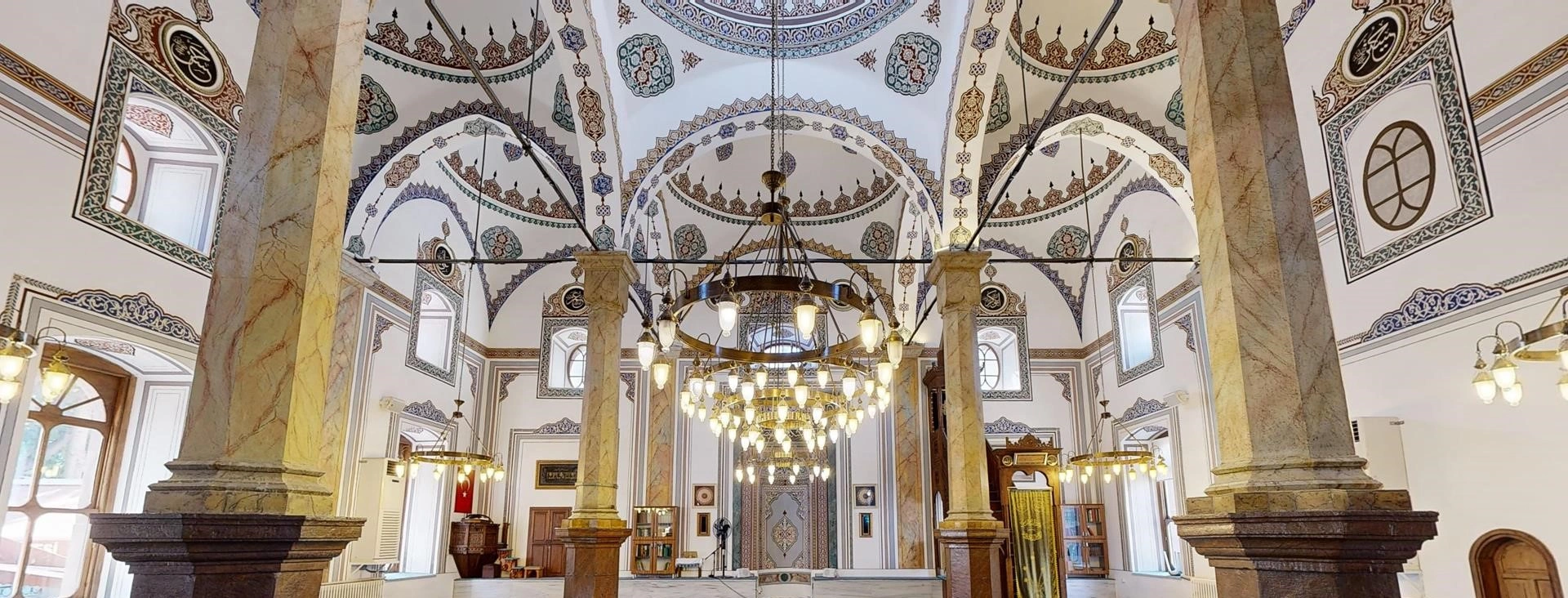
The mosque is especially memorable for its twelve-dome roof system. Its nearly square rectangular prayer hall is divided internally by columns and arches supporting a field of small domes. The larger central dome rises above the others and carries an aydınlık feneri — a roof lantern admitting light into the interior.
Çelebi Mehmet Mosque remains an active place of Muslim worship. Visitors should therefore approach it as both a historic monument and a living sacred space. For the strongest historical context, combine the mosque with Ertuğrul Gazi Tomb, Ertuğrul Gazi Kuyulu Mescit and Söğüt Ertuğrul Gazi Museum.
The mosque is traditionally and officially dated to the reign of Sultan Mehmed I, known as Çelebi Mehmed.
The present prayer hall is covered by twelve domes, creating one of Söğüt’s most distinctive historic interiors.
The mosque was rebuilt or substantially reconstructed and enlarged during the late Ottoman period.
Çelebi Mehmet Mosque continues to serve the local congregation and remains one of central Söğüt’s principal places of worship.
Essential information about one of the most important Ottoman religious monuments in Söğüt.
Söğüt town centre, Bilecik Province, opposite the traditional government-house area.
Open on Google MapsHistoric Ottoman mosque and active place of worship.
1414–1420, during the reign of Sultan Mehmed I.
Çelebi Sultan Mehmed, Ottoman Sultan Mehmed I.
Ulu Cami, Çarşı Camii and Çelebi Sultan Mehmed Camii.
Twelve domes, with the central dome larger and higher than the others.
The central dome contains an aydınlık feneri, or daylight lantern.
Substantially rebuilt and enlarged in the reign of Sultan Abdülhamid II.
One minaret; architectural scholarship identifies its historic base as the principal surviving element of the earlier mosque.
Open for daily worship; sightseeing should always respect prayer times.
The mosque tells two interconnected stories: the rebuilding of Ottoman authority under Mehmed I and the renewed importance of Söğüt under Abdülhamid II.
Çelebi Mehmet Mosque belongs to the generation after the earliest foundation monuments associated with Ertuğrul Gazi, Osman Gazi and Orhan Gazi. Its traditional construction period, 1414–1420, falls during the reign of Mehmed I, who emerged from the Ottoman civil war known as the Interregnum and reunited much of the state.
For that reason, the mosque is meaningful not only as a religious building but also as a monument connected with political recovery and renewed dynastic continuity. Söğüt, remembered as the ancestral landscape of the dynasty, was an especially appropriate place for such a foundation.
The present building also records a second historical turning point. During the reign of Sultan Abdülhamid II, Söğüt received renewed attention as the symbolic homeland of the Ottoman house. Historic monuments were repaired, rebuilt or visually strengthened, while new dynastic buildings transformed the townscape.
Çelebi Mehmet Mosque therefore allows visitors to read the Ottoman foundation story through two different periods: the early fifteenth century, when the dynasty was recovering from political crisis, and the late nineteenth century, when the imperial government deliberately emphasized the memory of its origins.
Mehmed I, usually called Çelebi Mehmed, ruled as Ottoman sultan from 1413 until 1421. He was one of the sons of Sultan Bayezid I and lived through the political fragmentation that followed Bayezid’s defeat by Timur at the Battle of Ankara in 1402.
The years that followed became known as the Ottoman Interregnum, a period in which Bayezid’s sons competed for power. Mehmed eventually defeated his surviving rivals and restored a single sultanate. Because of that achievement, he is sometimes described in historical writing as a second founder or restorer of the Ottoman state.
The traditional dating of the Söğüt mosque to 1414–1420 places it squarely within this period of reconstruction. A major religious foundation in the ancestral town of Söğüt would have carried both practical and symbolic importance.
The Bilecik Provincial Directorate of Culture and Tourism and the Bilecik Governor’s Office date the mosque to 1414–1420 and identify Sultan Mehmed I as its founder.
The building itself has no surviving foundation inscription that straightforwardly records the original construction. Architectural historians instead rely on archival and vakıf evidence, the mosque’s traditional identity and later documentation.
This distinction matters because the visible mosque is not simply the structure completed around 1420. Over the centuries the building underwent repairs and enlargement, and the late Ottoman reconstruction under Sultan Abdülhamid II changed its scale and appearance substantially.
The safest description is therefore: a mosque founded in the reign of Mehmed I between 1414 and 1420, later rebuilt or substantially reconstructed and enlarged during the reign of Abdülhamid II.
One of the most interesting questions surrounding Çelebi Mehmet Mosque concerns Orhan Gazi, the second Ottoman ruler. According to the TDV Encyclopaedia of Islam, archival information indicates that the expenses of the Çelebi Sultan Mehmed Mosque were paid from Orhan Gazi’s vakıf revenues.
This has led some architectural historians to propose that an earlier Orhan Gazi mosque may once have stood at or near this location, and that Çelebi Mehmed’s foundation replaced it or became attached to its charitable endowment.
The theory is historically plausible, but it should not be presented as an archaeologically proven sequence. The supposed earlier mosque has not survived in a form that allows visitors to reconstruct it confidently.
What can be said with greater confidence is that the vakıf connection ties this site into the longer institutional history of early Ottoman Söğüt, linking the generations of Orhan Gazi and Mehmed I.
The present mosque is nearly square but slightly rectangular in plan. Its most distinctive architectural feature is the roof: twelve small domes cover the prayer hall in a regular multi-bay arrangement.
Inside, arches carried on six freestanding columns together with supports in the walls divide the hall and support the domes. The arrangement recalls the multi-domed ulu cami tradition seen in several important early Ottoman mosques.
The central dome is higher and larger than the surrounding domes. At its summit is an aydınlık feneri, a small roof lantern that allows additional daylight into the centre of the prayer hall. Official regional sources specifically identify this as a feature associated with earlier Anatolian and Seljuk architectural traditions.
The exterior and interior visible today are strongly shaped by the late Ottoman rebuilding. According to specialist architectural research, the enlarged mosque preserved the idea of a multi-domed prayer hall while adopting details characteristic of the nineteenth century.
The building forms a broad rectangular prayer hall close to a square in overall proportion.
A field of twelve domes creates a rhythmic roofline and divides the interior into structural bays.
The middle dome is larger and higher than the others, giving the interior a clear central focus.
An aydınlık feneri above the central dome brings additional light into the prayer hall.
The mosque is entered from the north, east and west, improving circulation through the large prayer space.
A brick minaret rises along the western side of the mosque.
The roof system is the element most visitors remember. Rather than one monumental central dome dominating the entire building, twelve smaller domes cover the prayer hall in a multi-bay arrangement.
This type of organization belongs to the broader multi-domed mosque tradition of early Ottoman architecture. The best-known monumental example is the Bursa Ulu Cami, although the Söğüt building should not be treated as a miniature copy. Its visible form belongs substantially to the nineteenth-century reconstruction.
The domes are carried over arches and pendentive transitions. Because the supports divide the large interior into repeated bays, the visitor experiences the prayer hall as a sequence of connected spaces rather than one undivided volume.
The central bay is emphasized by the larger dome and roof lantern. This subtle hierarchy gives orientation to the interior without abandoning the repeated rhythm of the twelve-dome system.
The repeated domes create a strong sense of order across the broad prayer hall.
Columns and arches divide the interior into a regular system that supports the domes above.
A larger middle dome creates a visual centre within the otherwise repeated roof pattern.
The central roof lantern helps brighten the middle of the prayer hall.
The mosque’s appearance today is inseparable from the reign of Sultan Abdülhamid II. By the late nineteenth century, Söğüt had become increasingly important as a symbolic landscape of Ottoman dynastic origins.
Architectural scholarship states that the old Çelebi Mehmed mosque was replaced or very substantially rebuilt during Abdülhamid II’s reign. The new structure was larger than its predecessor, especially toward the north.
The reconstruction retained a multi-domed ulu cami scheme, but much of the exterior treatment and interior decoration belongs to the later Ottoman period. This explains why a visitor can encounter an early Ottoman institutional identity within a building whose visible architectural character is considerably younger.
The mosque fits into a wider Abdülhamid-era program that reshaped Söğüt. The sultan sponsored or encouraged work on monuments connected with the dynasty’s ancestors and commissioned new buildings that strengthened the town’s role as a ceremonial homeland of Ottoman memory.
The mosque has one minaret attached to the western side. Architectural historians consider its base especially important because it appears to preserve the principal surviving architectural element from the earlier mosque.
The high base is octagonal in section and uses alternating courses of brick and cut stone. Above it, the transition toward the cylindrical shaft is handled through traditional geometric forms.
The position of the old minaret base has also helped scholars understand how much the late Ottoman mosque was enlarged. Because the reconstructed prayer hall extends farther than the earlier building, the minaret provides a physical clue to the scale of the older footprint.
When viewing the exterior, spend a moment studying the difference between the historic lower masonry and the later architectural fabric above and around it. This is one of the clearest places where the mosque’s layered history becomes visible.
The interior is considerably more spacious than the compact exterior views from surrounding streets may suggest. A system of columns, arches and twelve domes organizes the prayer hall into a sequence of bays.
Architectural descriptions note painted kalem işi decoration on walls, arches, pendentives, dome surfaces, the mihrab surroundings and window areas. Much of this ornament reflects the decorative taste of the late Ottoman rebuilding rather than the restrained surface treatment expected from a surviving early fifteenth-century interior.
The combination of repeated domes and several levels of windows produces a bright, open interior. Lower windows are tall and round-arched, while upper openings contribute additional light around the upper walls.
The wooden women’s gallery occupies part of the interior and reflects the practical requirements of a working congregational mosque. Visitors should remember that the building is still used for prayer throughout the day.
Freestanding columns and wall supports carry the broad network of arches beneath the domes.
Painted ornament enriches the domes, pendentives, walls and architectural details.
Lower and upper openings bring natural light into the large prayer hall.
A wooden gallery forms part of the living worship arrangement of the mosque.
The mihrab, which indicates the direction of Mecca, is set within a stone-framed composition and surrounded by painted decoration. Its present appearance belongs primarily to the late Ottoman decorative program.
Beside it stands the wooden minbar, used for the Friday sermon. Architectural descriptions record pierced ornamental panels, vegetal motifs, rûmî forms and palmette decoration, all contributing to the mosque’s nineteenth-century interior character.
These elements are useful for understanding the mosque’s chronology. While the foundation reaches back to the age of Mehmed I, the decorative language experienced by today’s visitor is largely the language of later Ottoman restoration and rebuilding.
Photography of the mihrab and minbar may be possible when no prayer is taking place, but visitors should remain discreet and avoid blocking worshippers or crossing directly in front of anyone praying.
Çelebi Mehmet Mosque has undergone a number of conservation campaigns in the modern period. One important recent restoration was undertaken through the Bursa Regional Directorate of Foundations.
According to the Söğüt District Mufti’s Office, restoration work began on 3 November 2016 and was completed in early 2018. The mosque reopened for worship on 2 February 2018.
The intervention continued the long pattern of maintenance required by a building that is at once a protected cultural property and one of the busiest central mosques in Söğüt.
For visitors, the restoration history is another reminder that historic mosques are not frozen monuments. Their materials require repair, their roofs and drainage require maintenance, and their interiors continue to serve active communities.
Çelebi Mehmet Mosque is not operated as a conventional museum. It remains one of central Söğüt’s active congregational mosques and is used for the five daily prayers as well as Friday worship.
Sightseeing should therefore fit around religious use. If prayer is beginning, wait outside or remain quietly in a permitted area. Avoid walking directly in front of worshippers, speaking loudly or using intrusive camera equipment.
Shoes must be removed before stepping onto the carpeted prayer floor. Visitors should dress modestly, with shoulders and knees covered; women should be prepared to cover their hair inside the main prayer space.
The mosque’s significance is actually strengthened by this continuity. Visitors are not entering an abandoned historic shell but a building that still performs the purpose for which the site has been maintained for centuries.
The mosque offers several strong photographic subjects, particularly its brick minaret, layered domes, arched windows and historic masonry. A wider exterior composition helps explain how the building fits into the centre of Söğüt.
Inside, the repeated domes and arches create beautiful symmetrical views. The central daylight lantern is particularly effective when photographed from the prayer hall with the surrounding painted decoration included.
The interior is an active religious space. Never prioritize a photograph over prayer, do not photograph worshippers closely without permission, and avoid flash whenever it could be distracting.
Step back far enough to show the rhythm of the multiple domes rather than isolating only one roof section.
Side light can reveal the texture and alternating masonry of the historic minaret base.
Look upward from a respectful position to frame the larger central dome and daylight lantern.
Interior symmetry is strongest when the structural bays are photographed along their central axes.
Photograph only when the area is not being used and avoid obstructing the qibla side of the prayer hall.
Ask before making identifiable photographs of local people inside the mosque.
The mosque stands in the historic centre of Söğüt and is easy to combine with the town’s main Ottoman heritage monuments. Most visitors will need around 30–45 minutes for a relaxed exterior and interior visit when access is appropriate.
There is generally no museum-style ticketing system because the building functions as a mosque. Visitor access, however, can vary around daily prayer, Friday prayer, religious festivals, funerals, ceremonies or maintenance.
On-site instructions always take priority. If the main prayer hall is crowded, return later rather than attempting to sightsee through a congregation.
Çelebi Mehmet Mosque is both protected cultural heritage and a functioning sacred space. Visitors of all backgrounds can appreciate its architecture, but worship always takes priority.
Leave footwear in the designated area before stepping onto the prayer carpets.
Cover shoulders and knees; women should be prepared to cover their hair inside the prayer space.
A calm atmosphere is appropriate even when formal prayer is not taking place.
If possible, explore the interior between prayer times, especially outside the Friday noon service.
Never walk directly in front of someone who is praying.
Do not use flash or photograph worshippers closely without permission.
Avoid touching painted surfaces, woodwork, columns or architectural ornament.
Temporary access arrangements can change for worship, maintenance or special events.
The mosque is centrally located and its exterior can be appreciated without a long walking route. The surrounding town-centre setting is generally easier to approach than isolated monuments outside Söğüt.
However, historic thresholds, changes in level, entrance arrangements and shoe removal can create challenges for visitors with reduced mobility. Exact step-free access conditions may also change after maintenance or landscaping.
Visitors who require wheelchair access should confirm the easiest current entrance and closest practical vehicle drop-off locally before arrival.
Even where interior access is difficult, the mosque’s roofline, minaret and town-centre setting can still be understood from outside.
Çelebi Mehmet Mosque stands in Söğüt district centre, Bilecik Province. For navigation, search for “Çelebi Sultan Mehmet Camii, Söğüt, Bilecik”.
Official regional information places the mosque at approximately 40°00′50″ N, 30°10′60″ E. Its central position makes it straightforward to include in a walking or driving route through Söğüt.
Travelers exploring the wider province will find private car, taxi or private driver the most flexible options, especially if combining Söğüt with Bilecik city and monuments outside the town centre.
The mosque works particularly well in a route with Söğüt Ertuğrul Gazi Museum, Kuyulu Mescit and Ertuğrul Gazi Tomb. Travelers continuing to Bilecik city can add Şeyh Edebali Tomb, Orhan Gazi Mosque and Bilecik Museum.
Search “Çelebi Sultan Mehmet Camii, Söğüt, Bilecik.”
Best for travelers combining Söğüt with Bilecik city and other provincial sites.
Useful for local transfers from accommodation or Söğüt’s outer districts.
The mosque’s central position makes it suitable for a walking route through several Söğüt heritage stops.
A comfortable option for a full-day early Ottoman route through Söğüt and Bilecik.
Pair the mosque with Söğüt Museum, Kuyulu Mescit and Ertuğrul Gazi Tomb.
For a quick exterior view, 15–20 minutes may be enough. This allows time to see the domed roofline, minaret and the mosque’s relationship with the centre of Söğüt.
Allow around 30–45 minutes if the prayer hall is accessible and you would like to study the twelve domes, daylight lantern, painted decoration, mihrab and minbar.
A half day in Söğüt is ideal if you want to combine the mosque with the principal Ertuğrul Gazi monuments and the town museum.
A full day works well for travelers who also plan to continue to Bilecik city for Şeyh Edebali Tomb, Orhan Gazi Mosque and Bilecik Museum.
Quick exterior view, minaret and roofline.
Exterior plus a respectful interior architectural visit.
Combine the mosque with the major early Ottoman sites of Söğüt.
Add Bilecik city and its principal Ottoman heritage monuments.
Begin outside with the overall roofline. Try to identify the repeated domes and compare the larger central dome with the surrounding bays.
Move toward the western side and study the brick minaret and its older masonry base. This is the part of the monument most directly connected with the architectural fabric that preceded the late Ottoman reconstruction.
Before entering, check whether prayer is taking place. If the interior is open to visitors, remove your shoes and enter quietly.
Inside, look first at the structural rhythm of columns and arches. Then follow the domes overhead toward the larger central dome and its daylight lantern. This makes the organization of the mosque much easier to understand.
Finish at a respectful distance from the mihrab and wooden minbar, then continue into Söğüt to explore the older foundation landscape associated with Ertuğrul Gazi.
The mosque gains much more meaning when seen as part of Söğüt’s wider sequence of Ottoman foundation and dynastic-memory monuments. Several important sites can be combined in the same half-day or full-day itinerary.
Visit Söğüt’s most important memorial monument associated with Ertuğrul Gazi and the dynasty’s remembered beginnings.
Explore a much smaller religious monument traditionally connected with Söğüt’s earliest Ottoman settlement.
Add local ethnography and town history to your understanding of Söğüt’s cultural landscape.
Continue to Bilecik city for one of the most important spiritual monuments in Ottoman foundation memory.
See another major religious monument linked with the earliest generations of the Ottoman dynasty.
Place the Ottoman story within the much longer archaeological and cultural history of Bilecik Province.
Visitors sometimes encounter two apparently conflicting descriptions of Çelebi Mehmet Mosque. One source may call it a mosque built between 1414 and 1420, while another describes the visible monument as a nineteenth-century mosque. Both statements can be correct when their meaning is explained.
The foundation, name and institutional history belong to the reign of Mehmed I. The site therefore has a genuine early Ottoman identity.
The building fabric visible today, however, was substantially transformed when the earlier mosque was replaced, enlarged or reconstructed in the reign of Abdülhamid II. Only limited earlier fabric — most notably the historic minaret base identified by architectural scholarship — can be confidently separated from the late Ottoman work.
This layered history is not a weakness. It is precisely what makes the mosque so valuable: one monument records the way successive Ottoman generations remembered, repaired and reinterpreted the dynasty’s ancestral town.
It is a historic Ottoman mosque in Söğüt, Bilecik Province, founded in the reign of Sultan Mehmed I and substantially reconstructed in the late Ottoman period.
It stands in central Söğüt, traditionally described as being in the town’s bazaar area near the government-house square.
Official sources attribute the foundation to Sultan Mehmed I, known as Çelebi Mehmed.
The foundation is generally dated to 1414–1420.
No. Architectural research states that the earlier mosque was substantially rebuilt and enlarged during the reign of Sultan Abdülhamid II.
It takes its name from Mehmed I, commonly known as Çelebi Mehmed, the Ottoman sultan who ruled from 1413 to 1421.
Yes. The mosque is locally known by names including Ulu Cami and Çarşı Camii.
The present mosque has twelve domes.
It is larger and higher than the surrounding domes and carries an aydınlık feneri, or daylight lantern.
It has one minaret on the western side.
Architectural scholarship identifies the historic minaret base as the principal surviving architectural element from the earlier structure.
Some scholars have suggested this because the mosque’s expenses were connected with Orhan Gazi’s vakıf, but the theory should be presented as a scholarly proposal rather than a proven archaeological fact.
He reunified much of the Ottoman state after the Ottoman Interregnum and is often remembered as the ruler who restored dynastic unity after the crisis following 1402.
Its multi-domed plan recalls the early Ottoman ulu cami tradition, while much of the visible fabric and interior decoration reflects the late Ottoman rebuilding.
It is a roof lantern that admits daylight from above into the central part of the prayer hall.
Yes. The interior includes kalem işi painted ornament on architectural surfaces including arches, domes and the mihrab area.
The mosque contains an ornamental wooden minbar with pierced and vegetal decoration associated with the later Ottoman interior.
Yes. A modern restoration began in November 2016 and the mosque reopened for worship in February 2018.
Yes. It remains an active mosque used for daily prayers and Friday worship.
Historic mosques in Türkiye can generally be visited outside congregational prayer when local access allows. Enter quietly, dress modestly and follow on-site instructions.
Yes. Shoes should be removed before entering the carpeted prayer hall.
Wear modest clothing covering shoulders and knees. Women should be prepared to cover their hair inside the prayer space.
Photography may be possible when it does not disturb worship. Avoid flash and never photograph worshippers intrusively.
The building functions as a mosque rather than a conventional ticketed museum. Follow any current information posted at the site.
Allow around 30–45 minutes for a relaxed visit when interior access is appropriate.
Yes, especially for travelers interested in Ottoman history, mosque architecture, Mehmed I, Abdülhamid II and the heritage of Söğüt.
Continue to Söğüt Ertuğrul Gazi Museum, Kuyulu Mescit and Ertuğrul Gazi Tomb.
Yes. With a car or private driver, a full-day route can combine Söğüt with Şeyh Edebali Tomb, Orhan Gazi Mosque and Bilecik Museum.
Search for “Çelebi Sultan Mehmet Camii, Söğüt, Bilecik.”
Religious use always takes priority over sightseeing and photography.
Keep the prayer carpets and historic interior clean by following mosque shoe etiquette.
The interior remains a sacred space even outside formal prayer times.
Flash photography can be distracting and intrusive inside a functioning mosque.
Worshippers and local residents should never become unconsenting tourist subjects.
Kalem işi decoration and historic finishes should be viewed without physical contact.
Avoid leaning on or handling the minbar, gallery railings and other historic wooden elements.
Temporary restrictions may change for prayer, ceremonies, conservation or maintenance.
Combine Çelebi Mehmet Mosque with Söğüt’s dynastic monuments and Bilecik’s early Ottoman heritage through a private itinerary designed around your interests and travel pace.
Explore the places connected with Ertuğrul Gazi, Osman Gazi, Orhan Gazi and the later Ottoman rulers who preserved Söğüt’s dynastic memory.
Ask us about a tailor-made route combining Çelebi Mehmet Mosque, Kuyulu Mescit, Ertuğrul Gazi Tomb, Söğüt’s museum and selected historical sites across Bilecik Province.
Request a Custom Tour
Discover early Ottoman monuments, Söğüt, museums, historic towns, War of Independence landscapes and natural attractions throughout Bilecik Province.
View Bilecik GuideConnect Çelebi Mehmet Mosque with the monuments that preserve the town’s deeper early Ottoman memory.
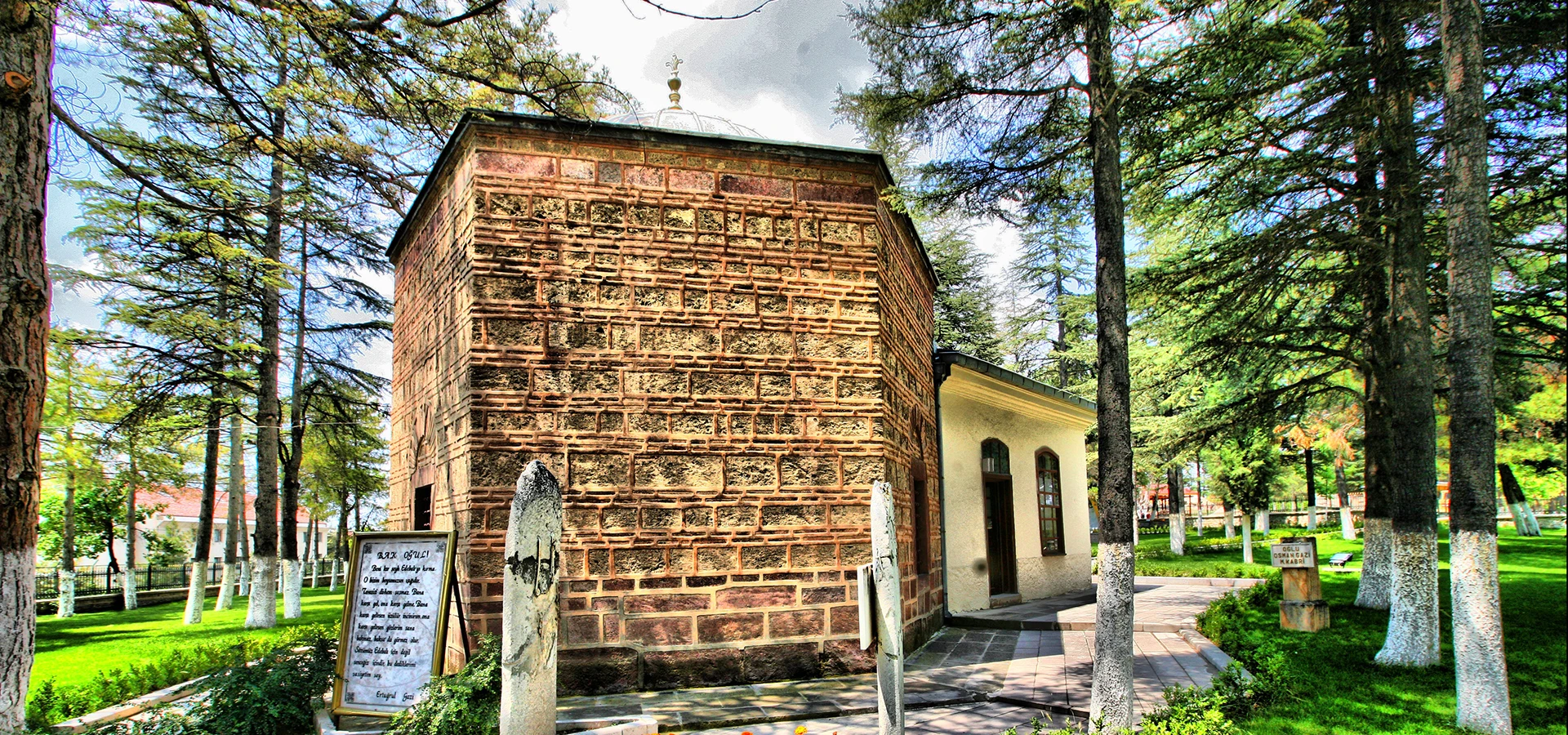
Continue to Söğüt’s principal memorial monument associated with Ertuğrul Gazi and the origins of the Ottoman dynasty.
Explore Ertuğrul Gazi Tomb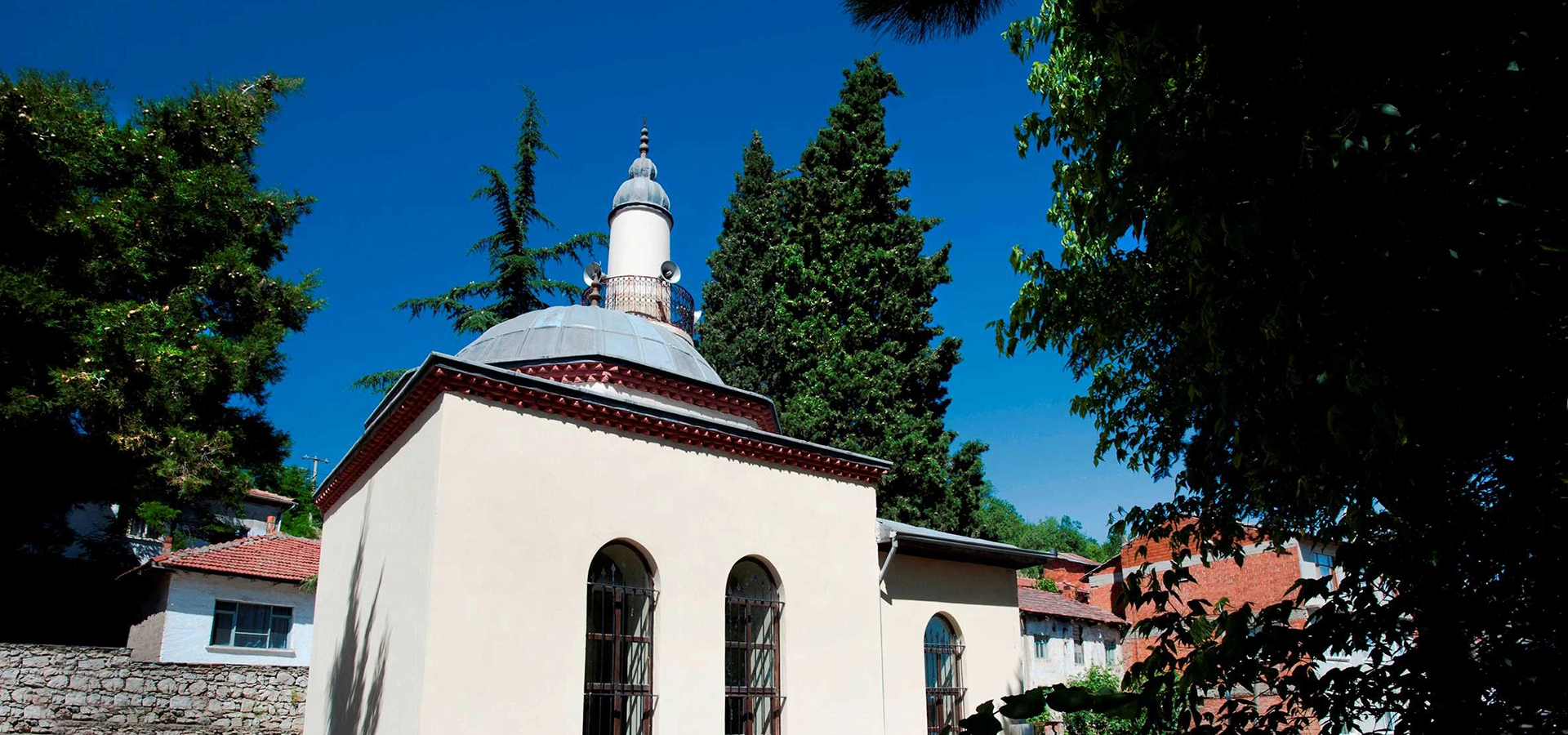
Explore the small historic prayer building traditionally associated with the earliest Ottoman settlement memory in Söğüt.
Explore Kuyulu Mescit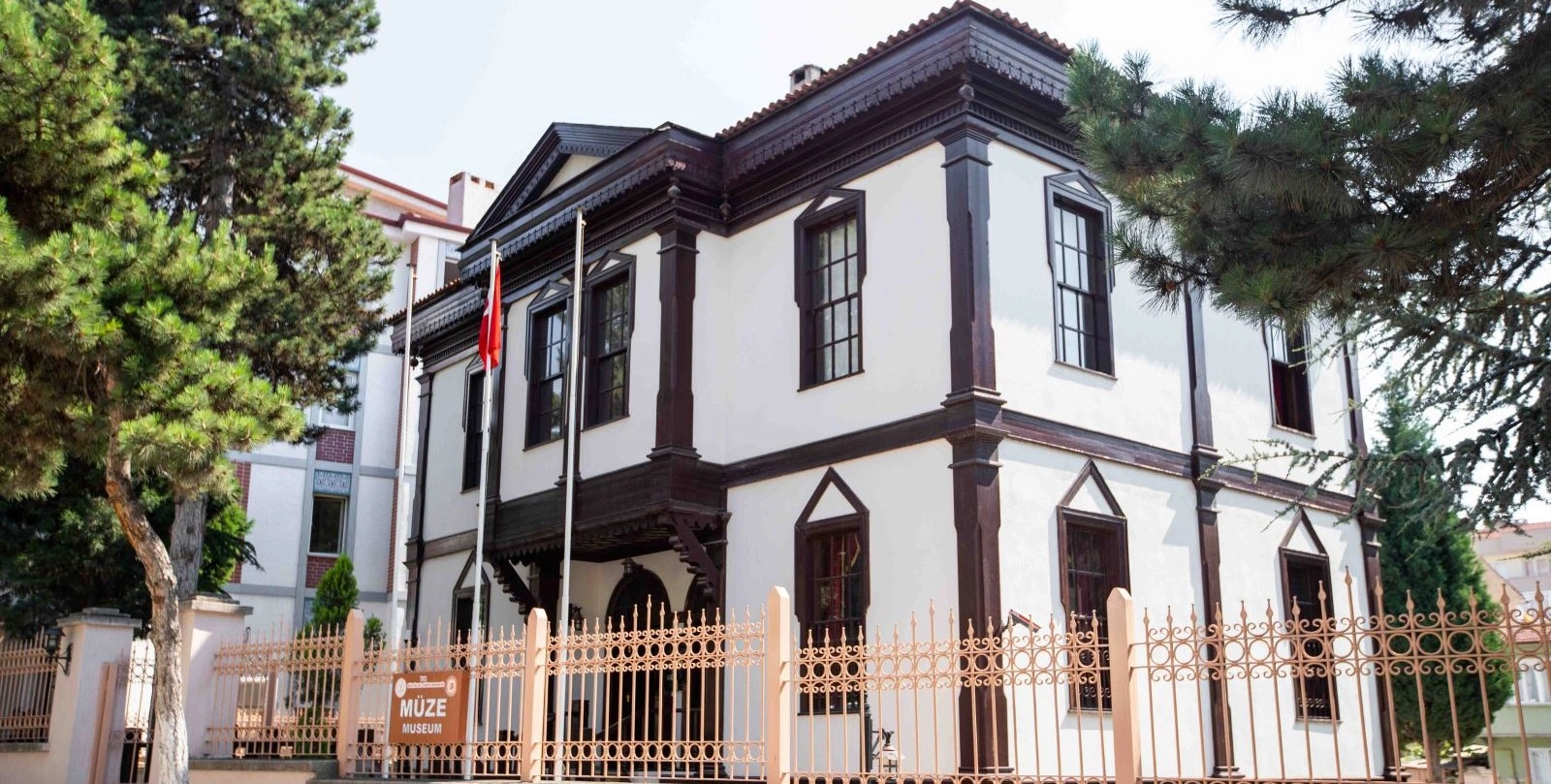
Explore ethnographic collections and the local identity of the town at the heart of the Ertuğrul Gazi story.
Explore Söğüt Museum