Emir Sultan Mosque
The present single-domed mosque is principally the result of the major reconstruction undertaken under Sultan Selim III.
- Rebuilt: 1804–1805
- Plan: Square prayer hall
- Feature: Large central dome






Rising on a hillside east of Bursa’s historic centre, Emir Sultan Mosque and Tomb form one of the city’s most beloved religious landmarks. The complex developed around the memory of Emir Sultan, the famous Sufi scholar and spiritual figure who became the son-in-law of Sultan Yıldırım Bayezid I.
Known originally as Şemseddin Muhammed and associated with Bukhara in Central Asia, Emir Sultan reached Bursa during the reign of Bayezid I. His reputation for scholarship, spirituality and personal charisma soon made him one of the most respected religious figures of early Ottoman society.
His marriage to Hundi Fatma Hatun, daughter of Sultan Bayezid I, connected him directly with the Ottoman dynasty. He remained highly respected during the reigns of Bayezid I, Mehmed I and Murad II, while later Ottoman rulers continued the tradition of visiting his tomb when they came to Bursa.
The religious foundation that developed around him was not simply an ordinary neighbourhood mosque. It became a major Sufi lodge and pilgrimage centre, with a mosque, tekke or dervish lodge, imaret, hamam, school, madrasa, fountains and other charitable institutions. A large cemetery gradually expanded around the sanctuary.
The architecture visible today reflects centuries of rebuilding. The earlier mosque was destroyed in an earthquake in 1795–1796 and reconstructed during the reign of Sultan Selim III in 1804–1805. Further restoration followed the devastating Bursa earthquake of 1855. The present tomb was substantially rebuilt under Sultan Abdülaziz in 1868.
Despite these changes, Emir Sultan remains one of the most atmospheric places in Bursa. The arcaded courtyard, central fountain, single-domed mosque, octagonal mausoleum, historic cemetery and constant flow of local visitors create a very different experience from the monumental imperial külliyes elsewhere in the city.
This complete visitor guide explores Emir Sultan Mosque, the mausoleum, the life of Emir Sultan, Hundi Fatma Hatun, Sufi traditions, architecture, the historic cemetery, lost buildings of the original complex, restoration history, visitor etiquette, transport, photography, nearby attractions and the best way to combine Emir Sultan with Yıldırım and the Green Complex.
Visit the resting place of one of the most revered spiritual personalities of early Ottoman Bursa.
Experience the elegant arcaded courtyard with its central fountain, mosque, tomb and distinctive late-Ottoman atmosphere.
Discover a religious centre that developed around a dervish lodge and became one of Bursa’s major pilgrimage destinations.
Learn how Emir Sultan became the son-in-law of Yıldırım Bayezid through his marriage to Hundi Fatma Hatun.
Explore one of Bursa’s great historic burial landscapes surrounding the mosque and sacred precinct.
Experience a living religious landmark that remains deeply important to the people of Bursa today.
Essential information for visiting one of Bursa’s most important religious and cultural landmarks.
Emirsultan neighbourhood, Yıldırım district, east of central Bursa.
Open on Google MapsEstablished during the first half of the fifteenth century around Emir Sultan’s religious community and tomb.
Substantially rebuilt in 1804–1805 during the reign of Sultan Selim III.
Allow approximately 45–75 minutes for the mosque, tomb, courtyard and cemetery surroundings.
Discover how the home of a celebrated Sufi scholar developed into one of Bursa’s greatest religious centres.
The history of Emir Sultan begins not with a monumental mosque, but with the arrival in Bursa of the Sufi scholar Şemseddin Muhammed, later universally remembered as Emir Sultan.
He was born in Bukhara, one of the great centres of Islamic scholarship and Sufi culture in Central Asia. After travelling through the Islamic world and Anatolia, he arrived in Bursa during the reign of Sultan Yıldırım Bayezid I.
The precise year of his arrival is uncertain. Traditional accounts frequently place it around 1391, while surviving historical evidence indicates that he must have reached Bursa before approximately 1394.
Emir Sultan rapidly became one of the city’s most respected spiritual figures. He developed relationships with leading scholars, religious personalities and members of the Ottoman court.
His marriage to Hundi Fatma Hatun, daughter of Sultan Bayezid I, gave him an extraordinary position: he was simultaneously a Sufi religious leader and a member of the Ottoman ruling family by marriage.
A tekke or Sufi lodge appears to have formed around him relatively early. After his death, Hundi Fatma Hatun became the principal patron behind the development of a more extensive religious complex.
The original foundation ultimately included a mosque, dervish lodge, cells, imaret, hamam, tomb, school, madrasa and various service buildings. Fountains, a library and a muvakkithane for calculating prayer times were added during later centuries.
The mosque suffered repeated damage and reconstruction. A powerful earthquake in 1795–1796 destroyed the earlier structure, after which Sultan Selim III commissioned the mosque largely responsible for the appearance visitors see today.
Another catastrophic earthquake struck Bursa in 1855. Repairs during the following decades, particularly work associated with Sultan Abdülaziz, substantially altered both mosque and mausoleum.
Yet the religious significance of Emir Sultan survived every architectural change. The sanctuary remained a major destination for prayer, remembrance and pilgrimage, while the neighbourhood around it became permanently associated with his name.
Explore the architecture, religious traditions and historic landscape surrounding one of Bursa’s most meaningful sacred places.
The present single-domed mosque is principally the result of the major reconstruction undertaken under Sultan Selim III.
The octagonal mausoleum contains the symbolic sarcophagi of Emir Sultan and close members of his family.
The mosque and tomb face one another across one of Bursa’s most distinctive historic mosque courtyards.
Twin stone minarets frame the mosque and contribute strongly to the monumental silhouette visible from the surrounding neighbourhood.
One of Bursa’s most important historic cemeteries developed around the sacred precinct because burial near Emir Sultan was considered particularly desirable.
A surviving bath associated with the wider Emir Sultan foundation preserves evidence of the complex’s broader charitable and social functions.
Several Ottoman fountains around the complex demonstrate the continued patronage received by Emir Sultan over successive centuries.
The sanctuary occupies an elevated position on Bursa’s eastern slopes, reinforcing its powerful visual and spiritual presence.
Emir Sultan was one of the most influential religious personalities associated with early Ottoman Bursa. His original name was Şemseddin Muhammed, and historical sources connect his family with Bukhara.
Emir Sultan came from the celebrated Central Asian city of Bukhara, an important centre of Islamic learning and Sufi spirituality.
He was traditionally regarded as a seyyid, meaning a descendant of the Prophet Muhammad, contributing to the title “Emir.”
His reputation combined religious learning, ascetic spirituality and a charismatic position among early Ottoman religious circles.
His marriage to Hundi Fatma Hatun made him the son-in-law of Sultan Yıldırım Bayezid I.
Bayezid I, Mehmed I and Murad II were all associated with traditions demonstrating respect for Emir Sultan.
His death is most commonly placed around 1429, probably during a plague epidemic affecting Bursa.
Historical evidence surrounding Emir Sultan often blends documented events with menakıb, the traditional miracle stories and devotional biographies associated with Muslim saints. These legends are themselves an important part of Bursa’s cultural history, but they should not always be read as literal historical records.
One of the most important relationships in Emir Sultan’s life was his marriage to Hundi Fatma Hatun, daughter of Sultan Yıldırım Bayezid I.
Hundi Fatma Hatun belonged to the early Ottoman dynasty as a daughter of Sultan Bayezid I.
The marriage connected the celebrated Sufi directly with the ruling Ottoman family.
Historical records identify Hundi Fatma Hatun as the principal patron behind the early mosque and religious complex.
Her sarcophagus stands inside Emir Sultan’s mausoleum together with those of other members of their family.
Later devotional traditions transformed their marriage into a celebrated Bursa legend, including stories of dreams, miraculous intervention and the initial opposition of Sultan Bayezid. Scholarly historical accounts, however, suggest that Bayezid ultimately respected Emir Sultan greatly.
Emir Sultan lived during an extraordinary period when the Ottoman state was rapidly transforming from a frontier principality into a major regional power.
Emir Sultan became the Sultan’s son-in-law and was remembered as an important spiritual adviser within Bayezid’s circle.
Respect for Emir Sultan continued after the Ottoman Interregnum when Mehmed I restored the unity of the dynasty.
Sources describe an especially close relationship between Emir Sultan and Sultan Murad II.
Contemporary Byzantine testimony records Emir Sultan appearing with hundreds of dervishes during Murad II’s unsuccessful siege of Constantinople.
Later traditions connected Emir Sultan with the ceremonial girding of Ottoman rulers before military campaigns.
Ottoman sultans continued visiting his tomb in Bursa generations after his death.
Visitors should be careful when describing Emir Sultan Mosque as a purely fifteenth-century building. The religious foundation is medieval, but the architecture visible today reflects extensive late Ottoman reconstruction.
The mosque was destroyed during the 1795–1796 earthquake and reconstructed under Sultan Selim III in 1804–1805.
The main prayer chamber measures approximately 15.2 × 15.2 metres and forms a compact square interior.
A large dome dominates the prayer hall, creating a unified interior unlike Bursa’s earlier reverse-T mosques.
The walls combine dressed stone with brickwork in a continuation of long-established Bursa building traditions.
Multiple rows of windows and openings in the dome drum bring significant natural light into the prayer hall.
Architectural details and painted ornament reveal the influence of Ottoman Baroque and later imperial decorative traditions.
The two stone minarets contribute strongly to the symmetrical appearance of the mosque from the courtyard and surrounding streets.
The result is one of Bursa’s most interesting architectural contrasts: an early Ottoman sacred institution expressed through a mosque whose appearance belongs largely to the late Ottoman period.
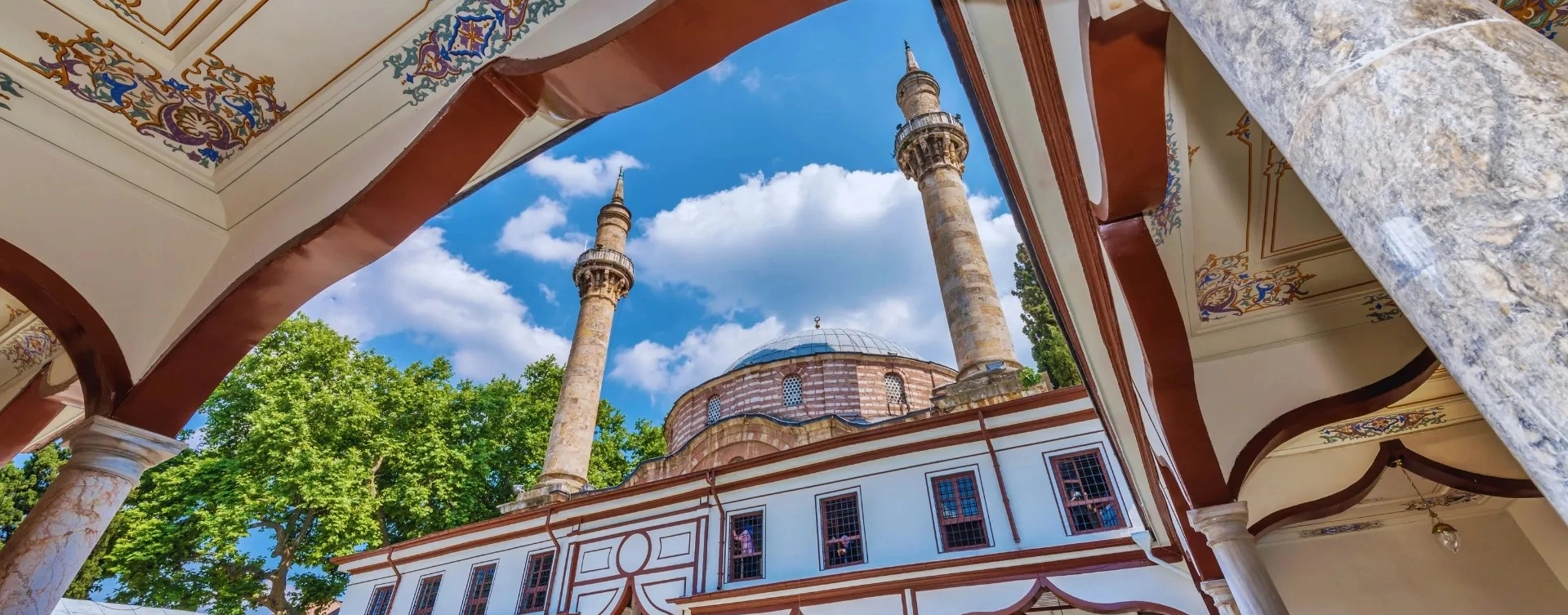
For many visitors, the most memorable architectural space at Emir Sultan is not the mosque interior but the courtyard between the mosque and tomb.
The mosque forms the principal southern side of the courtyard.
Emir Sultan’s mausoleum faces the mosque from the opposite side, creating a powerful architectural dialogue.
Marble columns and decorative arches create a sheltered perimeter around the courtyard.
An elegant historic şadırvan occupies the centre and reinforces the courtyard’s sense of symmetry.
The colonnades give the courtyard a lighter and more graceful appearance than many monumental Ottoman mosque complexes.
The courtyard remains a place of circulation, prayer, conversation and quiet reflection rather than a museum enclosure.
Take time simply to stand in the courtyard. From here, the architectural relationship between mosque, mausoleum, fountain, arcades and minarets becomes much easier to appreciate.
The Emir Sultan Türbesi stands directly opposite the mosque on the northern side of the courtyard. It remains one of Bursa’s most visited religious mausoleums.
The original tomb was altered repeatedly over the centuries. Sultan Abdülmecid sponsored repairs in 1845, while the present architectural form is largely associated with the major reconstruction carried out under Sultan Abdülaziz in 1868.
The mausoleum is organised as an eight-sided structure beneath a domed roof.
The tomb floor lies approximately one metre below the present courtyard level.
Broad arched windows illuminate the chamber and visually connect it with the courtyard.
The present architectural character belongs largely to Sultan Abdülaziz’s nineteenth-century restoration.
Interior and exterior decorative features reflect nineteenth-century Ottoman interpretations of European Empire aesthetics.
His large symbolic sarcophagus occupies the most prominent position and is surrounded by decorative wooden railings.
Historical descriptions indicate that earlier versions of the tomb were exceptionally richly decorated. Travellers described coloured tiles, precious lamps, calligraphic panels and elaborate devotional furnishings.
The current appearance is therefore only the latest architectural chapter in a shrine that has been visited continuously for centuries.
The mausoleum contains several symbolic sarcophagi associated with Emir Sultan and his immediate family.
The principal and largest sarcophagus represents the celebrated Sufi scholar around whom the entire sanctuary developed.
Emir Sultan’s wife and the daughter of Yıldırım Bayezid I rests within the same mausoleum.
The couple’s son Emir Ali is represented among the family burials.
The mausoleum also contains the sarcophagi of two daughters of Emir Sultan and Hundi Fatma Hatun.
Remember that Ottoman sandukas are symbolic sarcophagi positioned above the actual graves. Treat the mausoleum as a functioning religious sanctuary rather than simply a historical exhibition.
The exact year of Emir Sultan’s death is not absolutely certain, but the strongest historical tradition places it in 1429.
1429 is the date most commonly accepted, although medieval sources provide several alternatives.
Early accounts associate his death with a plague epidemic affecting Bursa.
Tradition records that the celebrated Anatolian Sufi Hacı Bayram-ı Veli led Emir Sultan’s funeral prayer.
He was laid to rest at the site that developed into today’s mausoleum and pilgrimage complex.
His death did not diminish his influence. Instead, visitation of his grave became increasingly important, transforming Emir Sultan from a respected living Sufi into one of Bursa’s enduring spiritual symbols.
Emir Sultan was already attracting visiting disciples during his lifetime. After his death, these journeys developed into a long-standing tradition of pilgrimage to Bursa.
Groups associated with Emir Sultan travelled considerable distances to receive his blessing while he was alive.
After his death the same tradition continued through visits to his tomb.
Members of the Ottoman dynasty were among the distinguished visitors who paid their respects at the mausoleum.
Religious communities historically visited the sanctuary in organised groups during important Islamic holidays.
Visitors traditionally prayed, recited Qur’anic verses and sought spiritual blessing at the shrine.
Emir Sultan remains an active religious destination rather than a monument remembered only by historians.
This living devotional character is one of the reasons a visit can feel very different from Bursa’s more museum-like historic attractions. Visitors should observe local customs carefully and give priority to people using the site for worship.
Beyond the mosque and mausoleum spreads the historic Emir Sultan Cemetery, one of Bursa’s most important burial grounds.
The desire to be buried close to the famous Sufi shrine gradually created an extensive cemetery containing generations of Bursa residents, religious figures, officials, artists and other prominent personalities.
The cemetery developed as the religious importance of Emir Sultan’s shrine increased.
Many surviving stones preserve Ottoman inscriptions, calligraphy, titles and funerary symbolism.
Gravestones record names, professions, families and social relationships that help reconstruct the history of the city.
Burial near Emir Sultan was traditionally valued because of the perceived spiritual significance of the location.
Different parts of the wider burial landscape contain graves from Ottoman and modern periods.
Walk quietly, remain on paths where possible and remember that families may be visiting graves.
Look closely at the older gravestones. Their carved headgear, floral motifs, calligraphy and inscriptions can reveal the status, gender, occupation and cultural world of the people buried beneath them.
The modern visitor sees only part of what was once a much larger religious and charitable foundation.
The Sufi lodge formed the spiritual nucleus of the foundation and included spaces for dervishes and religious gatherings.
Residential rooms accommodated members of the religious community associated with Emir Sultan.
A charitable kitchen provided food as part of the waqf-supported social services of the complex.
A later educational institution expanded the scholarly role of the sanctuary.
A mektep established by Hatice Hatun formed part of the complex’s educational network.
A library was added during later Ottoman centuries, reflecting the intellectual life connected with the foundation.
A timekeeper’s building assisted with the calculation of prayer times before modern clocks and electronic schedules.
The surviving bath and water structures remind visitors that Ottoman religious foundations also served practical urban needs.
Many of these structures disappeared or were substantially altered, particularly after the closing of Sufi lodges in the early Republican period and later urban redevelopment.
Across from the mosque precinct survives the historic Emir Sultan Hamam, traditionally associated with the charitable works of Hundi Fatma Hatun.
The bath belongs to the early development of the Emir Sultan religious foundation.
The building was designed as a traditional single bath rather than one of Bursa’s larger double hamams.
The traditional sequence began with a cooler entrance and changing area before progressing deeper into the bath.
Domed transitional and hot bathing spaces followed familiar principles of Ottoman bath architecture.
The hot section belongs to the long-established central-sofa and iwan family of Turkish bath plans.
The hamam demonstrates how hygiene, social life and charitable infrastructure were integrated into religious foundations.
Several historic fountains surrounding the complex preserve evidence of later Ottoman patrons who continued supporting the sanctuary.
Fountains associated with eighteenth-century restoration activity survive around the southern side of the complex.
A nineteenth-century fountain near the western approach preserves distinctive decorative details from the Mahmud II period.
Another fountain beside the western stairs represents continued charitable patronage immediately before the 1855 earthquake.
Providing public drinking water was considered a particularly valuable and enduring form of Islamic charity.
Few major monuments in Bursa have survived without significant earthquake damage, and Emir Sultan is no exception.
For this reason, visitors should distinguish carefully between the age of the religious foundation and the age of the visible architecture. The sanctuary dates back to the earliest Ottoman period, while much of its present appearance belongs to the nineteenth century.
Bursa’s historic centre forms part of the UNESCO World Heritage property “Bursa and Cumalıkızık: the Birth of the Ottoman Empire,” inscribed in 2014.
However, Emir Sultan Mosque itself is not one of the principal serial components individually inscribed as part of that property.
The UNESCO-listed Yıldırım Bayezid Külliye stands nearby and represents one of Bursa’s major imperial urban foundations.
Emir Sultan nevertheless belongs to the religious and cultural environment created during Bursa’s early Ottoman centuries.
Like the imperial külliyes, the sanctuary generated settlement and helped shape the surrounding neighbourhood.
Its importance comes from religion, Sufi history, Ottoman dynastic connections and living cultural traditions rather than UNESCO status alone.
Emir Sultan became one of the most respected spiritual personalities associated with early Ottoman Anatolia.
His marriage to Hundi Fatma Hatun tied the religious sanctuary directly to the family of Sultan Bayezid I.
The tomb attracted generations of visitors ranging from ordinary residents to Ottoman sultans.
Unlike an archaeological monument, Emir Sultan still performs essentially the religious function that made it important centuries ago.
The surrounding burial grounds preserve an extraordinary record of Bursa’s social and cultural history.
The complex demonstrates how an early Ottoman sanctuary could be repeatedly reshaped by later imperial architectural styles.
Its former tekke illustrates the importance of dervish communities in Ottoman religious and social life.
Emir Sultan is inseparable from Bursa’s long-standing reputation as one of Türkiye’s great cities of saints, shrines and Ottoman memory.
Emir Sultan is an active religious complex rather than a conventional museum or ticketed archaeological attraction.
Respectful visitor access is normally free outside restricted congregational prayer periods.
The mausoleum can generally be visited without purchasing a separate admission ticket when open.
The historic courtyard and fountain area are ordinarily accessible as part of the religious complex.
No conventional sightseeing admission ticket is normally required to walk respectfully through accessible cemetery areas.
Donations may be possible, but they should never be confused with a mandatory entrance fee.
Emir Sultan operates primarily according to its role as an active mosque and pilgrimage sanctuary rather than a fixed museum timetable.
For architectural sightseeing and photography, a weekday morning is usually the easiest choice. Always remain flexible around prayer, religious ceremonies, funerals and temporary access changes.
Emir Sultan is both an active mosque and an important place of pilgrimage. Visitors should therefore behave more carefully than they might at an ordinary historical monument.
Take off footwear before entering carpeted prayer areas and follow local shoe-storage arrangements.
Shoulders and knees should be covered and revealing clothing avoided.
Women should carry a scarf for mosque visits rather than relying entirely on coverings being available.
Especially inside the mausoleum, remember that many visitors are praying rather than sightseeing.
Avoid walking directly in front of worshippers or crossing prayer rows during services.
Avoid flash and never photograph worshippers or grieving families closely without permission.
Respect barriers and devotional objects inside the mausoleum.
Stay on established paths where possible and remember that burials and family visits may be taking place.
Emir Sultan stands in the Emirsultan neighbourhood of Yıldırım district, east of Bursa’s traditional commercial centre and a short distance from Yıldırım Bayezid Complex.
Municipal buses and local transport services connect central Bursa with the Emir Sultan and Yıldırım districts.
Ask simply for “Emir Sultan Camii.” It is one of the best-known religious landmarks in Bursa.
Road access is possible, although parking and traffic can become difficult around Friday prayers and important religious occasions.
Private transportation makes it particularly easy to combine Emir Sultan with Yıldırım, Green Mosque, Ulu Camii and Tophane.
The mosque is considerably easier to combine with Yıldırım Bayezid Complex than with attractions on Bursa’s western side, because the two sacred districts stand relatively close together.
Emir Sultan fits naturally into one of Bursa’s most rewarding historical routes, moving from Bayezid I’s imperial foundation toward the monuments created by his son Mehmed I.
This itinerary tells an exceptionally rich story: Bayezid I’s imperial architecture, Emir Sultan’s spiritual authority, Mehmed I’s restoration of Ottoman power and the commercial prosperity of the early capital.
Do not rush directly into the mosque. The architectural relationship between mosque, tomb and fountain is one of the highlights.
The mausoleum is still a devotional destination, so allow worshippers priority.
The mosque is older as an institution than its visible architecture; much of what you see belongs to later Ottoman rebuilding.
Historic gravestones add an entirely different dimension to the story of Bursa.
Friday congregational prayer can make both access and parking significantly more difficult.
A lightweight scarf is useful for women visiting Emir Sultan and several other Bursa mosques during the same day.
Combining the two sites helps explain Emir Sultan’s relationship with Bayezid I and the eastern expansion of Ottoman Bursa.
The Green Mosque and Green Tomb provide an excellent architectural contrast with Emir Sultan’s later Ottoman reconstruction.
The cemetery and mosque remain active religious spaces. Give funeral groups complete privacy.
The mosque itself is compact, but the tomb, courtyard and cemetery deserve additional time.
The historic sanctuary occupies sloping terrain and incorporates stairs, level changes, mosque thresholds and a mausoleum positioned below the present courtyard level.
The surrounding neighbourhood contains gradients that can be tiring for visitors with reduced mobility.
Traditional approaches include stairs and historical entrances, although local access arrangements may provide alternatives.
Shoe removal, carpets and thresholds can create additional accessibility considerations.
The mausoleum floor sits below the courtyard level, making completely step-free access more challenging.
Taxi or private transportation can reduce the amount of uphill walking required.
Large religious gatherings can make movement through narrow entrances and courtyard areas more difficult.
Visitors requiring guaranteed step-free access should verify current arrangements locally before travelling, as accessibility conditions at active historic religious buildings can change.
Emir Sultan stands in an excellent position for exploring Bursa’s eastern Ottoman monuments before continuing toward the historic commercial centre.
Explore the monumental imperial foundation of Emir Sultan’s father-in-law, Sultan Bayezid I.
Visit the magnificent early fifteenth-century foundation of Sultan Mehmed I with extraordinary tile decoration.
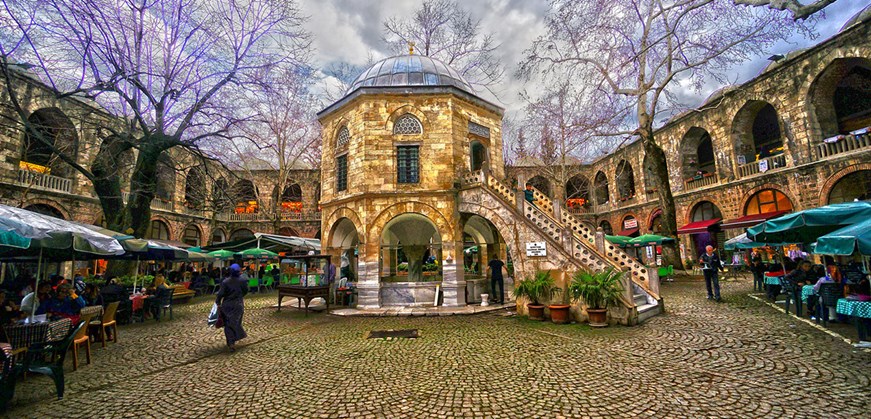
Continue into Bursa’s historic silk market and UNESCO commercial district.
See the enormous twenty-domed Great Mosque commissioned by Emir Sultan’s father-in-law Yıldırım Bayezid.
Visit Bursa’s citadel hill and the burial places of Osman Gazi and Orhan Gazi.
Explore Bursa’s remarkable collection of later Ottoman dynastic mausoleums surrounding the foundation of Murad II.
Discover one of Bursa’s most unusual imperial monuments with a madrasa integrated directly above the mosque.
Plan a complete visit covering imperial külliyes, bazaars, thermal baths, museums, Cumalıkızık and Uludağ.
Emir Sultan, whose original name was Şemseddin Muhammed, was a celebrated Sufi scholar associated with Bukhara who became one of the most influential spiritual personalities of early Ottoman Bursa.
No. He became closely connected with the Ottoman dynasty through his marriage to Hundi Fatma Hatun, daughter of Sultan Yıldırım Bayezid I.
He was born in or associated with Bukhara in Central Asia, one of the great centres of medieval Islamic learning and Sufi culture.
The precise date is uncertain. Traditional accounts frequently mention approximately 1391, while historical evidence indicates that he was established in Bursa before the mid-1390s.
He married Hundi Fatma Hatun, daughter of Ottoman Sultan Yıldırım Bayezid I.
The most widely accepted date is approximately 1429, although surviving medieval sources do not make the exact year completely certain.
Early historical accounts associate his death with a plague epidemic in Bursa.
Traditional historical accounts state that Hacı Bayram-ı Veli, another major Anatolian Sufi, led his funeral prayer.
The early religious complex is principally associated with the patronage of Hundi Fatma Hatun, Emir Sultan’s wife and the daughter of Bayezid I.
No. The earlier mosque suffered repeated damage and was destroyed in the earthquake of 1795–1796. The present building was substantially reconstructed under Sultan Selim III in 1804–1805.
The devastating Bursa earthquake caused further damage, leading to major repairs during the nineteenth century.
The mausoleum was repaired under Sultan Abdülmecid in 1845 and substantially rebuilt under Sultan Abdülaziz in 1868.
The mausoleum contains the symbolic sarcophagi of Emir Sultan, his wife Hundi Fatma Hatun, their son Emir Ali and two daughters.
It became one of Bursa’s most important pilgrimage destinations, visited for centuries by ordinary believers, religious communities and members of the Ottoman dynasty.
The present mosque combines Ottoman architectural traditions with strong late-eighteenth and nineteenth-century decorative influences, including features associated with Ottoman Baroque architecture.
The main prayer hall is approximately 15.2 × 15.2 metres and is covered by a large central dome.
The mosque has two stone minarets rising beside the main prayer hall.
The mosque and mausoleum face one another across an elegant arcaded courtyard centred on a historic fountain, creating one of Bursa’s most distinctive religious architectural spaces.
Yes. The historic foundation developed around a tekke or dervish lodge and became an important Sufi religious centre.
The wider foundation included a mosque, tekke, dervish rooms, imaret, hamam, tomb, school, madrasa and later structures such as fountains, a library and a muvakkithane.
No. Most of the historic Sufi lodge buildings disappeared during the twentieth century, although documentary records preserve considerable information about them.
A historic bath associated with the foundation survives near the mosque precinct and forms an important part of the complex’s architectural history.
For centuries, many people wished to be buried close to the revered Sufi shrine, causing one of Bursa’s major historic cemeteries to develop around the complex.
Emir Sultan is an important part of Bursa’s Ottoman cultural landscape, but it is not itself one of the principal serial components of “Bursa and Cumalıkızık: the Birth of the Ottoman Empire.” The nearby Yıldırım Complex is one of the UNESCO-listed imperial külliye areas.
The mosque and mausoleum are normally visited without purchasing a conventional admission ticket. They remain functioning religious buildings.
Respectful non-Muslim cultural visitors are normally welcome outside restricted congregational prayer periods, provided they observe mosque dress requirements and etiquette.
Women should carry a scarf for entering the mosque. Modest clothing covering shoulders and knees is appropriate for all visitors.
Respectful non-flash photography is generally possible where not otherwise restricted, but never photograph people praying or grieving at close range without permission.
Allow approximately 45–75 minutes for the mosque, mausoleum, courtyard and surrounding cemetery.
Weekday mornings usually offer the calmest experience. Avoid Friday midday prayer if your main purpose is architecture and sightseeing.
Yes. Because it remains an important spiritual destination, visitor numbers and religious activity can increase significantly during Ramadan and Islamic holidays.
The best nearby sites include Yıldırım Bayezid Complex, Green Mosque and Green Tomb, Koza Han, Ulu Camii, Tophane and Bursa’s historic bazaar district.
Absolutely. Its beautiful courtyard, historic mosque, major Sufi mausoleum, Ottoman dynastic connections, historic cemetery and continuing religious traditions make it one of the most meaningful places to visit in Bursa.
Emir Sultan offers excellent architectural and atmospheric photography, but its active religious character means visitors should always photograph discreetly.
Use a wide composition to capture the fountain, arcades, mosque and mausoleum within the same historic space.
The fountain creates excellent foreground compositions looking toward either the mosque or tomb.
Look upward from the courtyard to frame the minarets against Bursa’s changing skies.
Photograph the octagonal mausoleum from the courtyard while preserving enough surrounding architecture to explain its setting.
The rhythm of marble columns and decorative arches works particularly well for symmetrical compositions.
After rain, wet stone surfaces can create atmospheric reflections beneath the arcades and fountain.
Use respectful close compositions to record calligraphy, carved headgear and Ottoman funerary details without disturbing cemetery visitors.
Wider views showing the mosque, minarets, cemetery and surrounding urban slopes help communicate Emir Sultan’s place within Bursa.
Morning light often works particularly well within the courtyard. Late-afternoon light can be attractive from surrounding streets and elevated cemetery areas. Never use photography equipment in a way that obstructs prayer, funerals or devotional visits.
Emir Sultan can be included in private Bursa itineraries focusing on Ottoman history, Sufi traditions, Islamic heritage, architecture, pilgrimage sites and the development of the first Ottoman capital.
Flexible private routes with transportation and professionally licensed guiding.
Explore Emir Sultan, Yıldırım Bayezid Complex, Green Mosque and Green Tomb, Ulu Camii, Koza Han and Bursa’s historic Ottoman neighbourhoods with a private licensed guide.
Request This Tour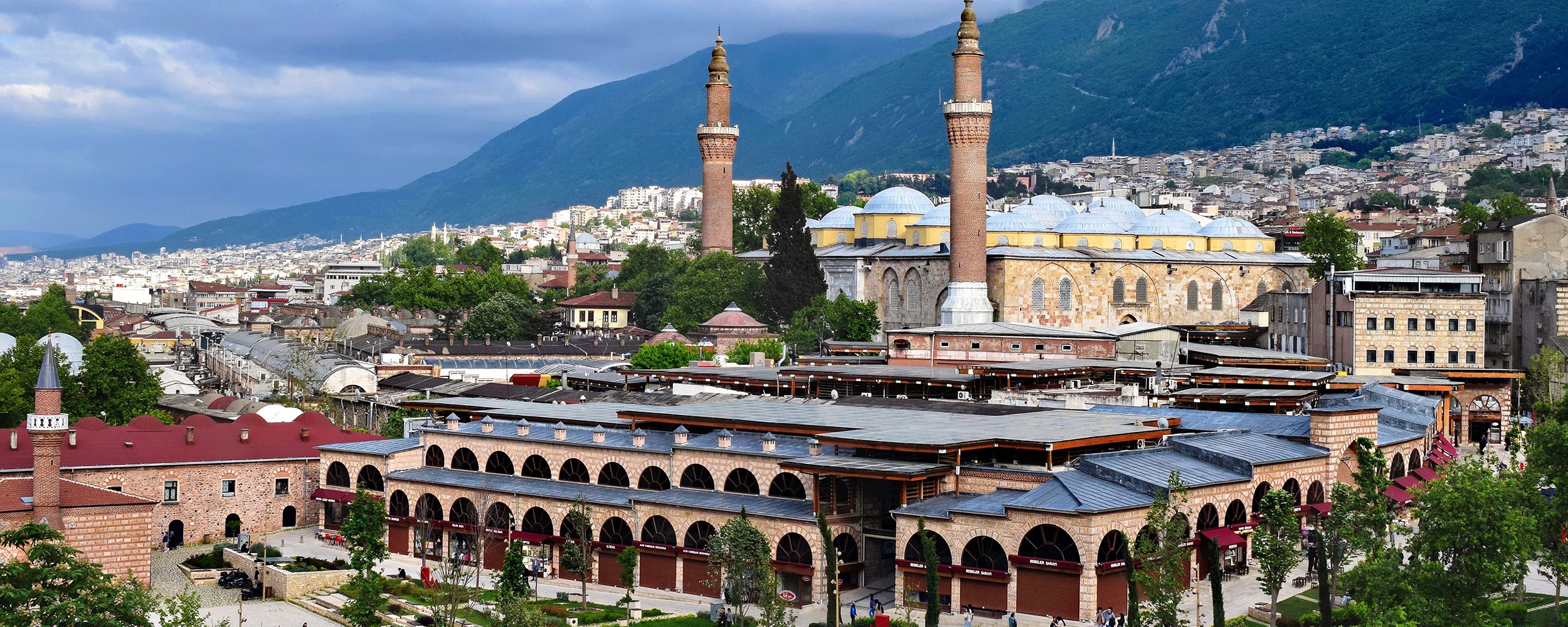
Discover Bursa’s Ottoman monuments, imperial külliyes, spiritual landmarks, historic bazaars and traditional neighbourhoods before continuing to the UNESCO village of Cumalıkızık.
Request This TourConnect Bursa with the great spiritual, imperial and archaeological landscapes of Türkiye.
Travel through Istanbul, Bursa, Safranbolu, Hattusha, Cappadocia, Mount Nemrut, Şanlıurfa, Ephesus, Pamukkale, Pergamon, Troy and Gallipoli.
View Tour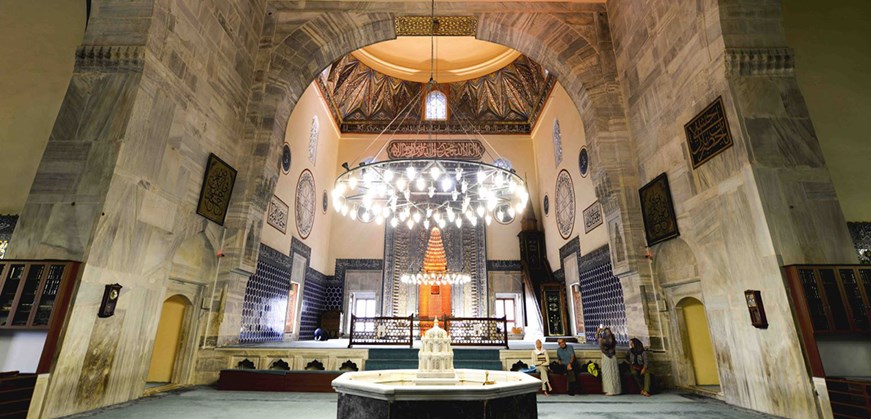
Build a private journey connecting Bursa, Edirne and Istanbul, following Ottoman architecture, Sufi heritage, imperial mosques, royal tombs and the evolution of the Ottoman capital.
Design Your Journey