A New Imperial Centre East of Bursa
History of the Yıldırım Bayezid Complex
Discover how Sultan Bayezid I transformed Bursa’s eastern hillside into a major Ottoman religious, educational and charitable centre.
The Yıldırım Complex was founded by
Sultan Bayezid I, the fourth Ottoman ruler,
who succeeded his father Murad I in 1389.
Construction of the complex began around 1390,
with the mosque and other principal structures largely taking shape during the first half of the 1390s.
The foundation deed associated with the külliye dates to 1400.
Bayezid deliberately placed his foundation on an elevated position east of Bursa’s established commercial and administrative centre.
Like the earlier royal complexes of Orhan Gazi and Murad I,
Yıldırım was intended to create a completely new urban focus rather than simply add another monument inside the existing city.
The location was carefully prepared.
Water was brought to the area from springs on the slopes of Uludağ,
helping sustain the religious foundation and encouraging residential settlement around it.
Houses, streets, workshops and neighbourhood life gradually expanded around the külliye,
helping push Bursa’s urban boundary eastward.
The foundation was unusually comprehensive.
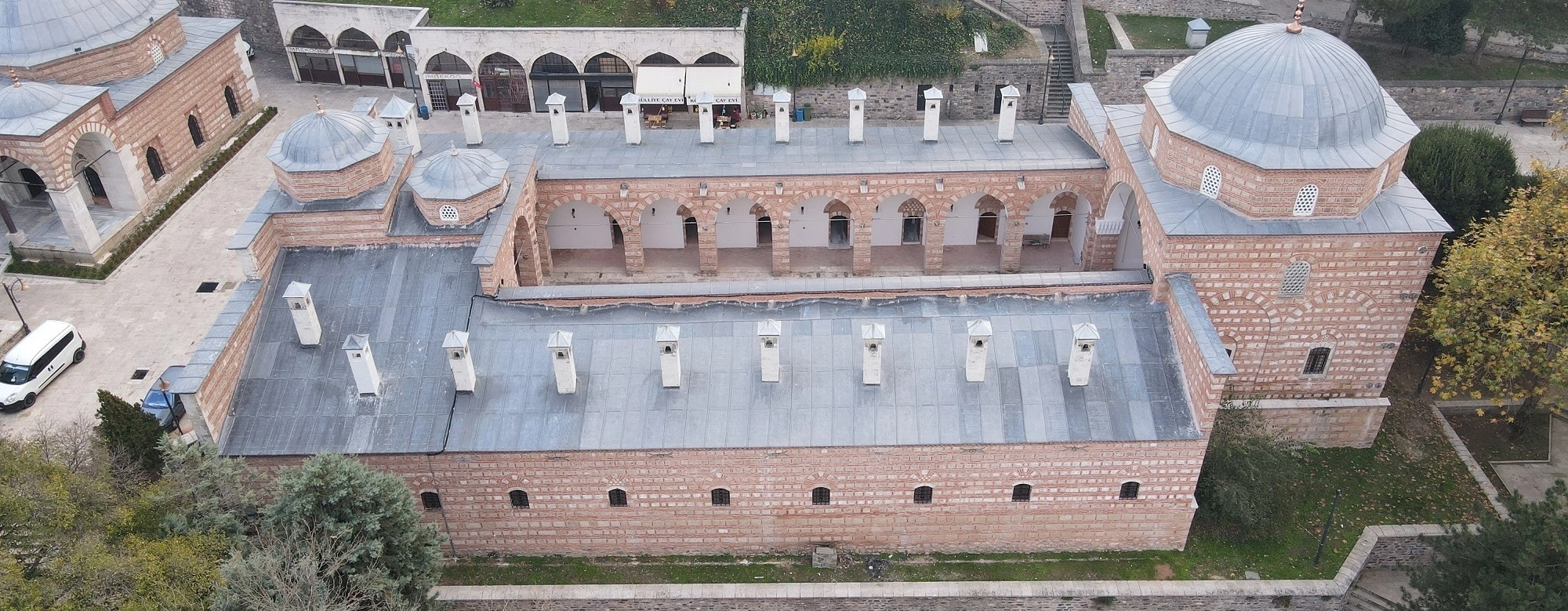
It included a mosque, madrasa,
imaret, hamam,
darüşşifa and other service buildings.
These institutions supported worshippers, scholars, students, travellers,
medical patients, employees and people receiving charitable assistance.
Its architecture also reflected the increasing resources and confidence of the Ottoman state.
Earlier Bursa buildings frequently relied on alternating brick and local stone,
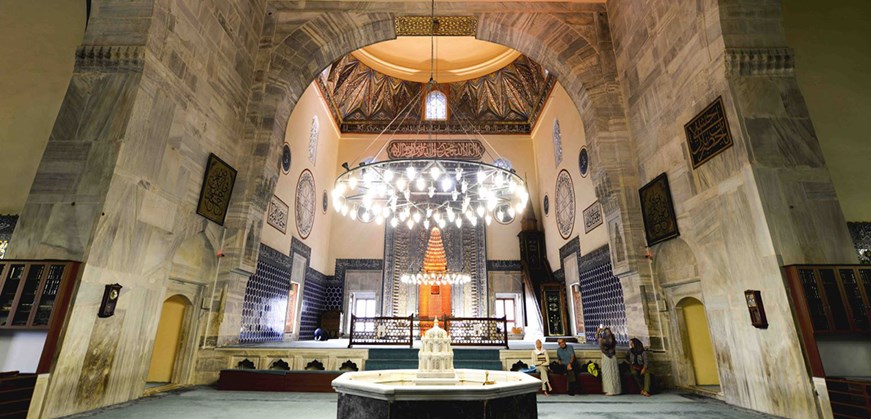
while Yıldırım Mosque displays extensive use of carefully dressed stone and highly refined architectural detailing.
The mosque therefore represents an important transition from the relatively modest monuments of the early principality
toward increasingly monumental Ottoman imperial architecture.
Bayezid’s own reign ended dramatically.
His army was defeated by Timur at the
Battle of Ankara in 1402.
Bayezid was captured and died in Akşehir in March 1403.
His remains were later transferred to Bursa,
where his son Emir Süleyman Çelebi
commissioned the surviving royal mausoleum in 1406.
Earthquakes, changing institutional uses and centuries of restoration altered parts of the complex.
The great 1855 Bursa earthquake caused serious damage,
including the loss of the mosque’s historic minaret structures.
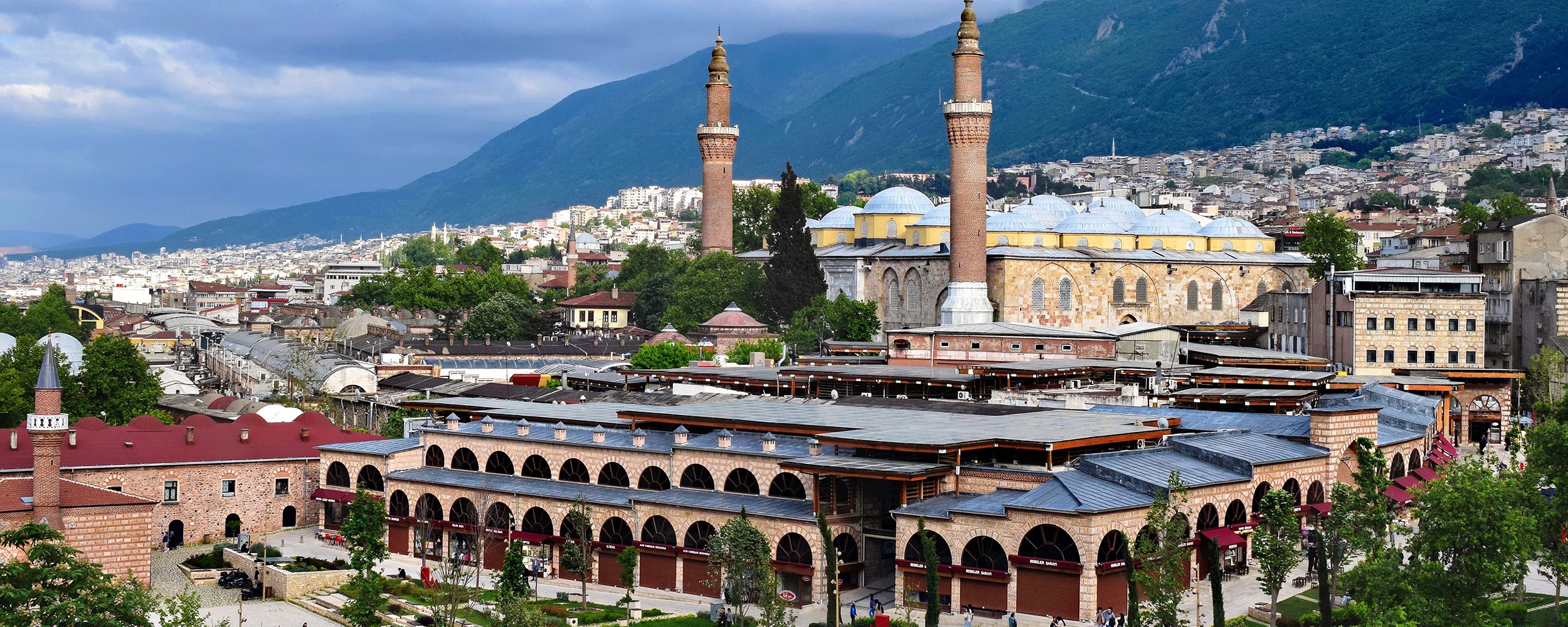
The two minarets visible today were reconstructed in 2011 according to restoration projects intended to restore the historical silhouette.
Despite these changes, Yıldırım remains one of the essential monuments for understanding the emergence of Ottoman Bursa.
In 2014, the complex became one of the component areas of the UNESCO World Heritage property
“Bursa and Cumalıkızık: the Birth of the Ottoman Empire.”