
Denizli City Museum
Understand how Denizli grew from a historic commercial settlement into a thriving city.
Explore the Museum





In central Denizli, the narrow lanes of Kaleiçi Bazaar (Tarihi Kaleiçi Çarşısı) preserve the commercial heart of a city whose history extends far beyond the famous white terraces of Pamukkale. The name Kaleiçi literally means “inside the castle”. This is the old market district associated with Denizli’s medieval fortifications, where merchants, artisans and neighbourhood shoppers have gathered across many generations.
The bazaar remains a working local market, not a recreated tourist village. Visitors will find clothing, shoes, household goods, textiles and jewellery, alongside businesses associated with the region’s traditional copperworking and ironworking trades. Some passages have modern translucent coverings and renovated shopfronts, while remnants of the historic walls recall the quarter’s fortified beginnings.
Official local heritage accounts trace the castle’s medieval development to the 13th century, though archaeological finds and reused older stones show that the story of the site is more complicated than one construction date. The later market grew into a network of streets named after the goods and professions once concentrated there: cloth sellers, mat makers, fruit merchants, locksmiths and blacksmiths.
This guide explores the castle and market history, the Ahilik tradition of artisan ethics, what to see and buy, the old gates and craft lanes, market hours, photography, directions and ways to combine Kaleiçi with the Atatürk & Ethnography Museum, Denizli City Museum and Pamukkale.
Walk the trading area that developed around the medieval Denizli citadel.
Discover a bazaar long associated with coppersmiths, ironworkers and local artisans.
Browse textiles, footwear, clothing, jewellery and practical household goods.
Explore at your own pace, with no general admission ticket for the public market lanes.
The essentials for exploring one of Denizli’s most historic urban districts.
Tuhafiye Caddesi and surrounding lanes, Saraylar Mahallesi, Merkezefendi, central Denizli.
Linked with the medieval fortified town; a commonly cited castle construction estimate is 1243–1250.
An active traditional commercial district rather than a ticketed museum or a single building.
Copperworking, ironworking, textiles, footwear and other long-established crafts.
Early 20th-century mapping records a former castle area roughly 280 by 160 metres.
No entry ticket to walk the ordinary public bazaar streets; shopping is optional and individually priced.
09:00–17:00 Monday–Saturday; Sunday closed in an official educational listing. Individual shops vary.
45–90 minutes for a relaxed walk; allow longer to browse and speak with craftspeople.
Kaleiçi links three chapters of Denizli’s development: its medieval defensive centre, the commercial streets that grew inside and around that stronghold, and the modern city’s continued dependence on local trade. This is why the bazaar matters even to travellers who do not intend to shop.
Its appeal lies in living heritage. A coppersmith’s workshop, a shoe shop or a fabric seller represents more than merchandise: each belongs to a history of professional knowledge, commercial relationships and neighbourhood routines. Unlike a museum display, those traditions are encountered in a commercial setting that changes throughout the day.
The surviving castle fabric adds archaeological interest. Regional cultural authorities describe medieval walls with reused stone, including material comparable to the travertine used at Laodicea. At the same time, the recent improvement of walkways and shopfronts reminds us that the bazaar is a functioning urban district, not an untouched medieval monument.
For visitors who know Denizli chiefly through Pamukkale and Hierapolis, Kaleiçi offers a very different perspective: the practical, social and artisanal life of the modern city.
The story begins with the settlement history of the Lycus Valley. The ancient city of Laodicea flourished nearby, and later populations increasingly occupied or developed other sites in the region. Official district and provincial descriptions mention Roman and Byzantine material found around Kaleiçi, suggesting a layered history rather than a settlement established from nothing in a single year.
As Turkish settlement expanded in the region during the medieval period, Denizli developed a fortified centre. Local heritage accounts associate the city’s defences with a Seljuk-era governor recorded as Karasungur bin Abdullah; another educational account refers to a regional commander named Seyfettin Sungur. Because the historical accounts differ in names and details, these associations should not be presented as a complete, universally agreed construction record.
An often-quoted estimate places the building of Denizli Castle around 1243–1250. That date is a historical estimate, not proof that every standing wall or commercial building is 800 years old. The outer fortifications are thought to have suffered destruction in the late 13th century; the inner castle and its associated commercial area remained meaningful to the town’s development.
Gradually, shops and workshops occupied streets along the former walls and at entrances. The result was an urban market area known as Kaleiçi Çarşısı, combining enclosed historical geography with continuing trade.
Roman and Byzantine finds indicate activity and reused materials predating the medieval market.
The 13th century is a central period in historical accounts of the old Denizli castle.
The old citadel area became associated with commerce and the town’s urban core.
Trades clustered in adjoining lanes and gave several market streets their names.
Historical mapping helps reconstruct the old enclosure and its former entrances.
Today's bazaar combines inherited trading patterns with modern retail and renovation.
One of Kaleiçi’s most intriguing features is the relationship between its shopping streets and the former castle walls. The provincial Directorate of Culture and Tourism describes a roughly rectangular inner enclosure, recorded on an early 20th-century plan as approximately 280 metres long and 160 metres wide.
In historical accounts, portions of the walls were exposed near the Dörtçeşme side of the old market. The heritage description identifies stretches rising to several metres, built with travertine stones, lime mortar, smaller stones and brick fragments. Some larger architectural pieces were reused in the masonry, a practice known as spolia.
Reused blocks and fragments connect the fortress with the older built landscape of the Denizli region. However, a reused stone from an earlier building does not mean the entire medieval wall is Roman. These layers are precisely what make an urban archaeological setting so interesting.
The visibility and access conditions of wall remains may change with conservation, construction or shop activity. Treat them as historic fabric within a working neighbourhood, not as a permanently open archaeological circuit with a designated ticketed entrance.
Historic survey drawings record an inner castle area of about 280 × 160 metres.
Local stone and lime mortar characterize the historic wall descriptions.
Fragments from earlier architecture were incorporated into later construction.
Heritage accounts identify exposed stretches on this side of the former enclosure.
Ceramics and other finds support a longer history of activity around the site.
Wall visibility is not identical to the historic plan; follow current signs and restrictions.
The old survey plan preserved by the provincial culture authority reveals how the marketplace was organized. Shops formed rows along the walls and around gateways, while names recorded the livelihoods of the people who worked there. These are historical plan references; they should not all be interpreted as intact gates standing at their original height today.
A southern entrance associated with a particularly busy shopping area.
A major historic shopping street named for haberdashery and textile-related trade.
A street name preserving the history of mat makers and woven household goods.
A historic market lane whose name points to fruit and provisions.
A historic entrance referenced beside neighbouring markets and the old wall line.
A northern entrance named in the early survey of the former castle.
A lane whose name recalls locksmiths and metal-related skilled trades.
An eastern entrance associated with the blacksmith-trade quarter.
A name recalling grain and agricultural provisions.
A smaller gate mentioned in relation to Çuhacılar Meydanı.
A market area recorded beyond the old walls, near the Dörtçeşme approach.
A former market designation reflecting the prominence of linen-related trading.
Ahilik was an Anatolian artisan and merchant tradition combining professional training, mutual support and expectations of fair conduct. It played an important part in the cultural memory of medieval and later Turkish marketplaces. In Kaleiçi, the concept helps explain why the bazaar is valued as a community of craftsmen, not merely as a collection of shops.
The Turkish Ministry of National Education’s heritage description specifically connects Kaleiçi artisans with Ahilik customs and names Ahi Evran, Ahi Sinan and Ahi Duman in local accounts. Ahi Evran is widely remembered as a foundational figure of the tradition and is associated with tanning and leatherwork.
Visitors will not necessarily encounter a formal demonstration of Ahilik. Its value here is interpretive: the old associations between trades, apprenticeship, product quality and neighbourly commerce help explain the bazaar’s long importance to Denizli.
Skills were traditionally learned through practical work and mentoring.
Craft ethics emphasized reliable workmanship and honest dealing.
Professional relationships also formed networks of cooperation and social responsibility.
Quality and mastery were closely tied to the identity of a craftsperson.
Traditional copperworking is one of the strongest reasons for craft-minded travellers to visit Kaleiçi. The Turkish Ministry of Culture and Tourism identifies the bazaar as a longstanding centre where artisans have produced hammered copper household articles.
Historically these included trays (sini), bowls, pans, kettles, ladles, strainers, large cauldrons and water vessels. The work combines functional design with techniques learned over time: shaping metal, hammering surfaces, finishing edges and, for many culinary items, applying or renewing a tin lining.
The craft has changed. As modern factory-made cookware replaced much everyday copperware, surviving makers increasingly turned toward decorative, presentation and specialist pieces. The Ministry also notes a decline in the number of practitioners. That makes it important not to promise visitors that every shop will be an active workshop.
When browsing, ask whether a piece is locally handmade, hand-finished or factory-produced. If the intended use is cooking, confirm that it is suitable for food contact and whether a proper lining is required. Buy only what you genuinely enjoy; an appreciative conversation with a maker can be a memorable part of the visit even without a purchase.
Wide metal serving surfaces traditionally shaped for meals and hospitality.
Traditional cookware; ask about food safety and the condition of any lining.
Water vessels reflect the craft’s decorative and domestic history.
Small vessels and accessories suited to traditional service.
Contemporary patterns and ornament inspired by regional techniques.
Ask permission before photographing a craftsperson or entering a work area.
The names Demirciler (blacksmiths) and Çilingirciler (locksmiths) reveal part of Kaleiçi’s older professional geography. These were skilled occupations important to a growing town: metal fittings, repair work, tools and locks all required craftspeople with specialist knowledge.
Today the mix of shops is different, and not all historic streets still house the trade that gave them their name. Nevertheless, metalworking businesses and household-goods sellers are part of the district’s traditional character. Looking closely at a street name or a small repair shop may tell visitors more about Kaleiçi than simply seeking a photogenic storefront.
The working bazaar deserves the same courtesy as any active place of business. Watch from public areas, avoid blocking deliveries or customers, and ask before observing a workshop in detail.
Kaleiçi is particularly rewarding because it is not exclusively a souvenir market. It serves local shoppers, which means the merchandise may range from everyday essentials to special-occasion clothing and handcrafted objects. Shop inventories change, but several broad categories characterize the district.
Explore clothing, fabrics, towels and household textile products; check labels for actual origin.
Look for traditional vessels, trays and decorative pieces; ask about how each is made.
Browse local retail shoe shops, one of the trades noted in official market descriptions.
Modern apparel and occasion outfits coexist with the older bazaar setting.
Find everyday accessories and specialist retail shops in some bazaar lanes.
A practical mix that reflects the district’s role in local daily life.
Fabric-related supplies recall the historic Tuhafiyeciler trading area.
Small artisan objects can be meaningful keepsakes when their maker and materials are known.
Textile making is central to Denizli’s identity. The wider province is associated with weaving towns such as Buldan and with the production of towels, fabrics and home textiles. Kaleiçi has historically provided a setting for fabric- and clothing-related commerce, visible even in street names such as Tuhafiyeciler and Keten Pazarı.
Modern market merchandise should not be confused automatically with locally woven handicrafts. A towel sold in Denizli may be regionally produced, nationally manufactured or imported. For an authentic purchase, ask the shopkeeper about the production location, fibre content and method of weaving rather than relying on a sign or a marketing label.
For travellers particularly interested in historic textile production, the bazaar pairs well with Buldan and the Atatürk & Ethnography Museum, where garments and embroidery provide another way to understand regional fabric traditions.
The bazaar seen today is the product of centuries of use and a series of municipal improvement projects. Denizli Metropolitan Municipality reported work in 2007 on infrastructure, paving, lighting, amenities and the presentation of historical wall sections.
A later initiative addressed street coverings and façade rehabilitation. In an April 2023 update, the municipality stated that a first phase had been completed and a second phase was underway. This helps explain the appearance of covered passages and renewed retail frontages in photographs of the market.
These projects aim to make an old commercial quarter more comfortable and usable, yet they are distinct from the original medieval architecture. A reconstructed-looking façade or roof should not be presented as an eight-century-old survival.
Because streets, commercial tenants and maintenance projects can continue to change, visitors should regard pictures and detailed shop descriptions as a guide rather than a guarantee of exactly what they will find on a particular day.
Past municipal works included improvements to basic public services in the market area.
Changes made the historic commercial lanes easier to navigate.
Sections of the old fortification gained attention in conservation and presentation efforts.
Recent overhead coverings provide shelter in some of the shopping lanes.
Selected shopfronts were rehabilitated as part of broader market renewal.
The aim is continued trade, not conversion into a closed historic exhibition.
Begin near Bayramyeri and orient yourself within the old commercial quarter.
Notice streets whose names preserve trades from earlier periods.
Search for copper objects and ask whether any specialist workshops are operating.
Discover the textile economy that made Denizli famous far beyond the province.
Where accessible, examine masonry associated with the original fortified district.
Capture the atmosphere of shopping passages without intruding on customers.
Pause at a suitable nearby café or tea spot if available.
Continue to the Atatürk House or Denizli City Museum for historical context.
Start at the Bayramyeri side of the historic market, where older plans place one of the main gates. Explore the shopping lanes around Tuhafiye Caddesi, following whatever shops and passages are open on the day. Look for evidence of trade specializations in the street names and business signs.
If interested in craftsmanship, seek out copperware and metalwork retailers and ask respectfully whether a workshop demonstration is available; such experiences should never be assumed. Then explore toward the Dörtçeşme side if your navigation map shows an appropriate public route, keeping an eye out for accessible historic wall remains.
After leaving the bazaar, add Atatürk & Ethnography Museum and Denizli City Museum as time permits. Distances, sidewalks and entry hours should be checked on the day rather than assumed from the historic street plan.
Earlier materials and archaeological finds document layers of activity in the area.
Turkish settlement and fortification shape medieval Denizli’s urban centre.
Frequently cited estimate for construction of Denizli’s medieval castle.
Historical accounts suggest damage to parts of the outer defensive system.
Commerce and artisan specializations continue to shape the old market quarter.
Detailed town mapping records gates, wall lines and market streets.
Municipal reporting describes a major phase of infrastructure and market improvements.
Municipal updates describe continuing covered-street and façade rehabilitation works.
Kaleiçi remains a functioning commercial area with a deep historical identity.
Denizli Kaleiçi is an open street-market district rather than a museum with one admission gate. Walking through publicly accessible bazaar lanes does not require buying a ticket. Individual shops operate as independent businesses, so their opening times, lunch breaks and holiday closures can vary.
A Turkish Ministry of National Education outdoor-learning listing for Tarihi Kaleiçi Çarşısı gives 09:00–17:00 Monday to Saturday and Sunday closed. Treat this as a planning guide to normal commercial activity, not a guaranteed opening schedule for every stall or an assertion that public streets are locked outside those hours. Before making a special journey for a particular shop, confirm its hours directly.
The same official listing places the bazaar at Tuhafiye Caddesi, Saraylar Mahallesi, Merkezefendi, Denizli 20010. Another convenient reference point is Bayramyeri, a historic focal area of central Denizli.
A good time to browse while many shops are opening and local commerce is underway.
Useful for a relaxed walk before the hottest part of a summer day.
Can feel livelier in a local shopping district, though individual businesses differ.
Less suitable for shopping: the official educational listing states Sunday closure.
Some covered alleys offer shade; outdoor routes can still be warm.
Covered passages help in places, but not every lane is protected from weather.
A brief look at the main commercial passages and historic atmosphere.
A satisfying first visit with photographs and a little browsing.
Ideal for travellers who enjoy market streets, artisan stories and unhurried observation.
Allow more time if comparing products or speaking with several merchants.
Combine Kaleiçi with an Atatürk House visit and Denizli City Museum.
Pair a city stop with Pamukkale or Laodicea, allowing for travel and entry times.
Kaleiçi operates mainly as an ordinary shopping district. A friendly greeting, genuine interest in a product and respect for a shopkeeper’s time will usually go further than aggressive bargaining. Do not assume that every shop negotiates prices or that credit cards will always be accepted.
Find out where and how a product was made if local craftsmanship matters to you.
Read textile labels and ask about metal linings, finishes or maintenance.
Look at several similar products, comparing workmanship as well as price.
Carry some Turkish lira; ask the merchant whether card payment is possible.
Get permission when photographing shop interiors, people or workshops.
A courteous thank-you is enough if you decide not to purchase anything.
One pleasure of exploring a Turkish city market is observing how shopping and social life overlap. Around Kaleiçi and the neighbouring central streets, look for modest cafés, bakeries or eateries for tea, a snack or lunch, according to what is operating on the day.
Denizli’s broader food heritage includes regional soups, meat dishes and traditional baked products, but it would be misleading to promise a particular local specialty at a particular bazaar vendor without current confirmation. Explore with curiosity, check displayed prices and choose a place that suits your appetite.
For a richer local experience, make Kaleiçi one stop in a city-centre cultural walk, rather than treating it solely as a souvenir-buying location.
Use the light filtering through modern roof coverings to photograph street depth.
Focus on signs, colourful fabrics, metal goods and the variety of market displays.
Look for visible old masonry where access is permitted.
Ask the craftsperson before photographing their hands, tools or workspace.
Seek permission for identifiable portraits and avoid obstructing customers.
A phone or small camera is more convenient than a tripod in narrow market lanes.
Although Kaleiçi is mainly a pedestrian-oriented market area, conditions differ from one lane to another. Paving joints, changes in level, shop thresholds, merchandise displays and crowds can affect wheelchair, stroller or mobility-aid access. The educational listing indicates accessibility-related information but does not provide a verified step-free route to every shop.
Families can enjoy the market as an introduction to old professions, shopping customs and urban history. Children should stay close to adults, particularly near tools, repair shops, loading areas and busy junctions.
Check your route and contact relevant businesses about step-free entry.
Allow extra time in narrow and crowded passages.
Do not approach machines, hot metal, tools or active repair equipment.
Keep pathways clear for customers, residents and deliveries.
Do not climb on, remove material from or damage old masonry.
Ask before touching merchandise and follow staff instructions.
Kaleiçi Bazaar is in central Denizli, in the Saraylar neighbourhood of Merkezefendi. For navigation, search for “Tarihi Kaleiçi Çarşısı” or enter the official educational listing address at Tuhafiye Caddesi. The Bayramyeri area is another useful local reference point.
Guests staying in Denizli city centre may be able to walk, depending on their hotel. Travellers arriving from Pamukkale village, Denizli Çardak Airport or other parts of the province should first arrange transport into central Denizli. Driving and public-transport choices vary with the departure point and traffic conditions.
Use a walking route or local taxi toward Tuhafiye Caddesi / Bayramyeri.
Continue into the central shopping district by an appropriate local route.
Travel to Denizli centre first; the bazaar is not within the travertine site.
Arrange airport-to-city transport and continue to the historic shopping quarter.
Use current maps to identify nearby legal parking; historic lanes may limit vehicle access.
These destinations range from city-centre cultural stops to archaeological sites requiring transport. Select according to your available time, museum hours and interests.
Explore the historic house associated with Atatürk’s 1931 visit and regional craft heritage.
Discover the city’s development, industries, everyday life and local history.
See the monumental remains of an ancient city linked to the wider settlement history of Denizli.
Explore UNESCO-listed ancient heritage and extraordinary white thermal terraces.
Discover sculptures and artefacts from the ancient Lycus Valley.
Discover a town especially celebrated for textiles and traditional weaving.
Continue the story of Seljuk-era trade routes and travel infrastructure.
Plan a wider itinerary through Denizli’s museums, ancient cities and natural landmarks.
It is the historic commercial district within and around the site of Denizli’s former fortified town, still used for local shopping and specialist trades.
It is commonly called Tarihi Kaleiçi Çarşısı or Denizli Kaleiçi Çarşısı.
The Turkish word Kaleiçi means “inside the castle” and refers to the old fortified quarter.
A useful navigation address is Tuhafiye Caddesi, Saraylar Mahallesi, Merkezefendi, Denizli 20010.
No. It is in central Denizli, separate from Pamukkale village, the travertine terraces and Hierapolis.
No. Denizli Kaleiçi Bazaar and Antalya Kaleiçi are different historic districts.
It is commonly described as an approximately 800-year-old market area, reflecting its medieval roots. The age of individual shops and structures varies.
A frequently cited historical estimate is 1243–1250, but the site includes earlier archaeological material and the chronology of its fortifications is complex.
Parts of the historic wall fabric have been documented and exposed, but there is no complete, intact medieval castle surrounding the modern market.
An early 20th-century plan described an area roughly 280 metres long and 160 metres wide.
Typical shopping categories include textiles, clothing, footwear, metal goods, copperware, jewellery and household products. Stock varies by shop.
Yes. The Turkish Ministry of Culture and Tourism identifies its historic hand-hammered copperware tradition.
No. Ask whether an item is individually handmade, hand-finished or factory-produced.
Possibly, depending on which workshops are operating, but live demonstrations are not guaranteed.
Textiles are an important shopping category, but confirm each product’s place of manufacture and materials with the seller.
Ahilik was an Anatolian tradition combining craft training, professional ethics, fair trading principles and mutual support among artisans.
Ahi Evran is remembered as a key figure in the Ahilik artisan tradition and is associated with historical leatherworking.
Early mapping records names such as Bayramyeri, Dörtçeşme, Hal and Demirciler gates, but not all exist as intact entrances today.
It is an important historic trading street associated with haberdashery and textile-related commerce.
Yes. Municipal programmes have improved infrastructure, paving, street coverings and shopfronts in different phases.
No general ticket is required to walk the ordinary public bazaar lanes. Merchandise and any separately offered experiences are individually priced.
An official educational listing gives 09:00–17:00 Monday–Saturday. Individual shop hours may vary.
The official educational visitor listing shows Sunday as closed. Some independent business hours may differ.
Plan approximately 45–90 minutes for the main lanes and leisurely browsing.
It is primarily a functioning city-centre commercial quarter serving local residents, with heritage interest for visitors.
Absolutely. You can enjoy the streets and their history without purchasing anything.
Some merchants may negotiate and others may use fixed prices. Ask respectfully and do not assume bargaining is expected everywhere.
Acceptance varies. It is sensible to carry some Turkish lira and check with each merchant.
Some routes may be usable, but paving, shop thresholds and crowded passages can create obstacles. There is no verified step-free route to every business.
Yes, with ordinary supervision around crowded streets, shop displays, traffic junctions and any active workshops.
Photography in public spaces is generally practical, but ask permission for portraits, shop interiors or workshop activity.
Denizli City Museum and Atatürk & Ethnography Museum are useful cultural additions; farther destinations include Laodicea and Pamukkale.
Yes. A flexible private city and region itinerary can include it by arrangement, depending on the day’s route and available time.
No. Our private itineraries are designed around your interests, with no compulsory shopping stops or sales demonstrations.
Ask thoughtful questions about materials and production rather than treating artisans as exhibits.
Do not climb walls, pull loose stone or enter restricted archaeological areas.
Leave space for local shoppers, deliveries, residents and shop entrances.
Request permission before taking identifiable portraits or workplace photos.
Prefer durable items you will use and be informed about where they were made.
Enjoy Kaleiçi as a real commercial neighbourhood, not a staged tourist attraction.
Discover Kaleiçi’s historic craft quarter as part of a personalised city exploration, or continue to Pamukkale and nearby ancient cities. Our private journeys include no compulsory shopping stops.
Choose authentic local history, traditional culture and world-famous archaeological landscapes.
Understand how Denizli grew from a historic commercial settlement into a thriving city.
Explore the Museum
Discover the UNESCO heritage landscape with a private itinerary tailored to your interests.
Explore Private Tour
Plan more museums, historic market streets, archaeological sites and natural attractions.
Explore the RegionLink market life with traditional crafts, Republican history and the ancient Lycus Valley.
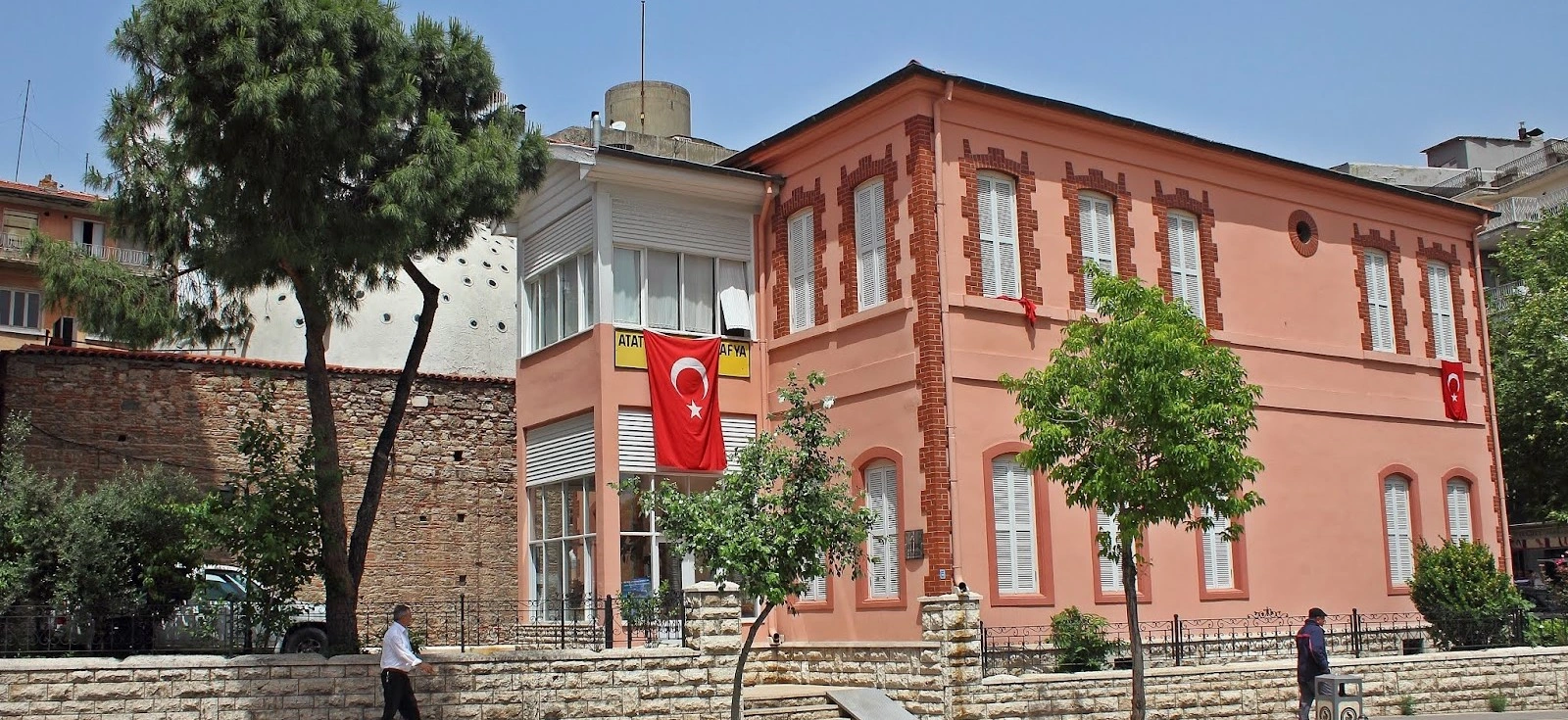
Explore regional clothing, crafts and the memory of Atatürk’s 1931 visit to Denizli.
Visit the Museum Guide
Discover the monumental predecessor within the region’s wider settlement story.
Explore Laodicea
Explore the broader textile heritage that helped shape Denizli’s commercial identity.
Discover Buldan