
Denizli City Museum
Discover the city’s culture and everyday history, complementing the Atatürk & Ethnography Museum.
Explore the Museum





In the heart of Denizli city centre, the Atatürk & Ethnography Museum—known locally as Denizli Atatürk Evi ve Etnografya Müzesi—occupies a distinguished two-storey historic house. The building is remembered as the place where Mustafa Kemal Atatürk stayed overnight on 4 February 1931 during his visit to Denizli. Today it offers much more than a memorial: its rooms tell the story of a city through clothing, handcrafts, household traditions and objects associated with the Turkish National Struggle.
The museum is especially rewarding because its collections can be explored within the architecture of the period. Downstairs are embroidery, garments, jewellery, traditional objects and historical exhibits. Upstairs, rooms associated with Atatürk stand alongside reconstructions of a traditional Denizli household, complete with period furnishings and scenes of everyday life.
The mansion itself is part of the attraction. Its symmetrical windows, projecting balcony, central hall and restrained ornamental details reflect a regional house type described by the Ministry of Culture and Tourism as Sakız-style architecture. Its exact construction date is not documented, although it is thought to have been built in the late 19th century.
This guide explains the museum’s historical significance, the events of Atatürk’s 1931 visit, the displays on both floors, the story of Denizli’s 1919 resistance meeting, opening hours, free admission and how to combine a visit with other museums and sites in the Denizli–Pamukkale region.
Explore the house where the founder of the Republic of Türkiye stayed on 4 February 1931.
Discover period household rooms, clothing, embroidery, copperware and regional crafts.
Learn the story behind the banner connected with Denizli’s May 1919 protest.
Enjoy an accessible-to-plan cultural stop in central Denizli, with free admission listed officially.
Essential details for visiting Denizli’s historic Atatürk House.
Saraylar Mahallesi, 459 Sokak No:8, Merkezefendi, central Denizli.
Two-storey, central-hall house, thought to date to the late 19th century.
He arrived in Denizli and stayed in this building on 4 February 1931.
Atatürk-related displays, historical clothing, local embroidery, jewellery and domestic life.
1 February 1984; later restored and reopened in February 1999.
Free according to the official Turkish Museums listing checked in October 2026.
08:30–17:30, Tuesday–Sunday; Monday closed. Ticket desk closes at 17:00.
About 30–60 minutes for the house and exhibitions, depending on your interests.
This museum connects three distinct histories: a late-Ottoman urban house, the early decades of the Turkish Republic and the material culture of Denizli families. Atatürk’s overnight stay gives the building national significance, while the ethnographic collection makes it a window into the region’s everyday lives.
The exhibits also help explain what Denizli was like beyond its famous ancient cities. Garments, jewellery, embroidery, domestic furnishings and weapons illuminate the skills, aesthetic choices and historical experiences of communities in the surrounding countryside and town.
A particularly important object is a banner associated with the 16 May 1919 protest gathering at Bayramyeri, a landmark of Denizli’s response to the occupation of İzmir. It connects national history with the public square and residents of the city.
Unlike Denizli City Museum, which presents a broader urban narrative, this museum tells its story through the setting of a historic house and the rooms linked to a specific moment in the Republic’s early years.
The exact year in which the house was constructed has not been established through a surviving building document. Turkish cultural authorities date it approximately to the late 1800s, using its design and local historical testimony. It belongs to a tradition of two-storey urban residences that combined a central circulation hall with rooms around it.
In the early Republican period, the building was used as a political party office. This function explains why it became an important stop during Atatürk’s visit to Denizli in February 1931. After the 1950s, the premises served the Ministry of Health as a tuberculosis dispensary, reflecting a very different phase in the life of the building.
Its architectural and historical value prompted official protection in 1977. Work on repairing the house and designing displays took place in the early 1980s, and it first welcomed museum visitors on 1 February 1984. A later restoration and exhibition renewal led to reopening in February 1999.
Probable construction period, although the exact date and original ownership are not conclusively documented.
Use as a political party building placed the mansion within the civic life of Denizli.
Atatürk visited the city and stayed overnight in the building.
The building served for a period as a tuberculosis dispensary.
The structure was registered for protection as a cultural monument.
Initial opening as a museum, followed by later repair and reopening.
Mustafa Kemal Atatürk arrived in Denizli by train on Wednesday, 4 February 1931, as part of a wider Aegean journey. Accounts maintained by the Denizli Provincial Directorate of Culture and Tourism place his arrival at the railway station at approximately 13:00. Crowds had gathered to welcome him, and he proceeded toward the city with his accompanying delegation.
The building that is now the museum was then being used as a party headquarters. Atatürk came here during his visit and spent the night, establishing the association commemorated by the present museum. The day also involved engagements outside the building, offering a picture of his interest in the city’s administration, education and public services.
The provincial historical account records visits to military units, a teacher-training school, the Denizli public hospital and the municipality. These stops are important to understanding the visit as more than a formal reception: they connected the head of state with local institutions and the city’s needs.
Photographs of Atatürk in Denizli displayed within the museum help visitors imagine the streets and public buildings of the period. The upper-floor rooms associated with his visit offer a particularly personal way to engage with this history.
The museum is an architectural heritage site in its own right. The Ministry of Culture and Tourism describes it as an example of Sakız üslubu, or Sakız-style architecture, evident in the exterior composition, proportions of the windows and decorative vocabulary. This term is a stylistic description and does not, by itself, establish the ethnic identity of the house’s original owner.
The house has two storeys, each organized around a central sofa—an internal hall connecting adjoining rooms. At the upper level, this hall leads toward the distinctive balcony projecting from the front elevation. The rear also contains an addition understood to be later than the principal structure.
Its walls and partitions combine traditional masonry and timber construction. Rectangular windows, external shutters, wooden doors and restrained plaster mouldings give the building a balanced appearance. Decorative supports and meander motifs provide more refined details without overwhelming the architecture.
The front-facing upper balcony gives the street façade its most recognizable feature.
Rooms open onto a shared hall on both floors, a practical house arrangement.
A construction tradition suited to the materials and techniques of the period.
Tall openings and exterior shutters contribute to the house’s characteristic rhythm.
Cornice-like mouldings and meander-patterned features reward closer observation.
Later changes to the rear and repeated adaptations reflect the building’s evolving function.
The ground floor is devoted principally to the ethnographic heritage of Denizli. Display rooms contain silver and nickel-silver jewellery, embroidered women’s jackets known as cepken, handwork, garments, cup holders and other household or decorative objects. Together, they show how practical objects also expressed identity, craftsmanship and social occasion.
The official exhibition description also identifies wood-carved calligraphic works, historic firearms and edged weapons, including the regional yatağan sword type. These objects should be read as parts of a local historical collection rather than evidence that every household owned them.
One room brings several strands of the past together: textiles, weapons and objects linked with the era of the Turkish National Struggle. Their proximity is useful because visitors can see daily life and political history not as separate stories, but as experiences shared by local communities.
Regional ornaments demonstrate metalworking traditions and the role of adornment in social life.
Decorated short jackets illustrate textile techniques and traditional dress.
Needlework and embroidered pieces preserve skills often passed between generations.
Decorative fincan zarfları evoke traditional drink service and domestic hospitality.
Examples of woodwork and calligraphic decoration connect writing and craftsmanship.
Firearms, swords and yatağan blades form part of the regional historical displays.
One of the museum’s most meaningful exhibits is a historical banner associated with the public protest meeting held at Denizli’s Bayramyeri on 16 May 1919. The demonstration followed the occupation of İzmir and belongs to the early local responses that became part of the broader Turkish National Struggle.
The Denizli Museums Directorate identifies the banner as a key collection object and associates it with Müftü Ahmet Hulusi Efendi, remembered for addressing local people and calling for resistance. According to the official account, the banner was donated to the museum in 1984 by Haluk Müftüler.
The ground-floor exhibition also includes attire attributed to Hüseyin Efe (Hüseyin Çavuş) of Selcen village in the Çal district, another individual remembered in the region’s National Struggle history. Such objects give names, places and visual details to events often encountered only through written histories.
This part of the museum offers an opportunity to connect the events of 1919 with those of 1931: the first concerned the struggle surrounding the foundation of the Republic, while the later visit belonged to its years of institution-building.
Upstairs, the atmosphere changes from museum cases to furnished rooms. The official visitor description distinguishes rooms connected with Atatürk from other spaces arranged to recreate domestic interiors of a traditional Denizli house.
As you move along the upper hall, consider how the same building can serve two interpretive purposes. The displays associated with Atatürk commemorate a particular historical visitor; the household interiors present typical arrangements and activities rather than claiming to preserve one complete family’s original home.
Desk, divan, photographs and other objects evoke the official visit.
A brass-headed bedstead, bedding, telephone and mirrored wardrobe are highlighted by the museum.
Figures and traditional clothing help interpret generational household life.
Domestic arrangements illustrate family routines and hospitality.
A principal room with seating, handwork and domestic metal objects.
The hall includes period furnishings and objects connected with local contributors.
The two rooms associated with Atatürk are likely to be the most anticipated part of the museum for visitors interested in Republican history. Official museum descriptions identify a study with a resting divan, desk, photographs taken during the Denizli visit and glassware in a cabinet.
The bedroom contains a distinctive brass-headed bedstead with traditional bedding, a telephone and a mirrored wardrobe. The provincial culture authority specifically describes the bedstead as having been used by Atatürk. The interiors invite visitors to picture the scale and atmosphere of the 1931 visit.
It is wise to distinguish between items explicitly identified by the museum as associated with Atatürk and period furnishings used to interpret the rooms. Not every decorative object should automatically be described as his personal possession, and displays can change during conservation or reorganization.
The other upper-floor rooms recreate aspects of domestic life. In the parents’ room, dressed figures represent family members and display embroidered garments. The daily room illustrates familiar activities around seating, a cradle, a shared eating tray and coffee preparation.
The baş oda, or principal reception room, presents domestic furnishings and objects such as a copper tray, vessels, a brazier and stove, while figures engaged in embroidery suggest the craftsmanship practiced within the household. These displays are interpretations of regional traditions, not necessarily intact rooms dating unchanged from the house’s construction.
The upper sofa—the connecting hall—also includes furnishings and works with documented local associations. The official description mentions a mirrored console belonging to former Denizli parliamentarian Necip Ali Küçüka and an oil painting donated by Yaşar Çallı.
Figures in traditional clothing show how dress could vary by age and household role.
A central tray and low seating evoke customary meal arrangements.
A baby’s cradle links the staged rooms with practical home life.
Embroidery scenes connect women’s domestic labour with artistic skill.
Objects and figures emphasize rituals of welcoming guests.
Metal vessels, braziers and stoves reflect material aspects of the home.
Probable date of the historic house’s construction; an exact year has not been established.
A protest rally takes place in Denizli’s Bayramyeri; an associated banner survives in the museum.
The building is used as a political party office during the early Republican period.
Atatürk arrives in Denizli and stays overnight in the building.
The former house becomes a tuberculosis dispensary under the health authorities.
The property receives formal protection as a historic monument.
Restoration and museum display preparations take place.
The building opens to visitors as a museum.
A further restoration period leads to reopening in February 1999.
The house serves as a cultural museum combining Atatürk history and Denizli ethnography.
Ethnography studies people’s cultures, practices and ways of life. In a museum, this can mean examining clothes, furnishings, tools, household arrangements, religious or decorative objects and the stories those objects help tell.
Denizli has a long reputation for textile production and skilled workmanship. The museum’s embroidered jackets, silver ornaments and handwork bring such traditions into a human setting, where visitors can imagine how these items were worn, displayed, exchanged or used.
The period-room scenes are particularly helpful for families and travellers unfamiliar with historical Turkish domestic interiors. They explain the uses of a sofa (central hall), sedir (built-in or low seating), sini (large serving tray) and baş oda (principal room) through visual arrangements rather than abstract definitions.
This makes the museum a worthwhile complement to nearby archaeological sites. Ancient cities tell us about Roman and earlier communities; the Atatürk & Ethnography Museum brings visitors closer to the daily culture and modern history of Denizli itself.
Photograph the two-storey house and the distinctive projecting balcony.
Look for the desk, resting divan and photographs connected with his visit.
See the brass-headed bedstead and the period furnishings.
Understand the connection between the Bayramyeri protest and local resistance history.
Study the craftsmanship of decorated regional jackets and textiles.
Notice decorative metalwork and personal accessories.
Explore staged scenes of childcare, food and needlework.
Appreciate the circulation plan and interior details of the historic mansion.
The official Turkish Museums listing, checked in October 2026, identifies the museum as free to enter. It lists 08:30–17:30 opening hours, a 17:00 ticket-desk closing time and Monday closure.
Some other government and educational pages retain different or seasonal opening-hour figures. For that reason, the main official museum listing is the most useful reference to check shortly before visiting, particularly near public holidays or during conservation work.
The listed address is Saraylar Mahallesi, 459 Sokak No:8, Merkezefendi, Denizli. Older descriptions also place the museum near Bayramyeri / Gazi Mustafa Kemal Boulevard. The published museum phone number is +90 258 262 00 66.
Begin outside with the house façade and balcony, then enter the ground-floor displays to understand Denizli’s clothing, metalwork and crafts. Spend additional time with the 1919 banner and other National Struggle material if modern Turkish history is one of your interests.
Continue upstairs to the Atatürk study and bedroom. After these memorial rooms, explore the reconstructed traditional Denizli interiors, paying attention to the everyday objects and family scenes. Finish with another look at the central hall: it is the thread connecting the old house to all of its later uses.
Pair the museum with central Denizli walks and sightseeing in pleasant temperatures.
An indoor heritage stop makes a welcome contrast with hot, exposed archaeological sites.
A comfortable time to explore both the historic house and the surrounding city.
The museum offers an indoor cultural alternative when rain affects outdoor plans.
A weekday outside the Monday closure may fit well into a city-centre itinerary.
The museum is educational; ask ahead if you need a particularly quiet visit or guided arrangements.
A brief introduction to the house, Atatürk’s rooms and the main display cases.
A comfortable standard visit covering both floors and the major historical exhibits.
More time to inspect garments, domestic scenes and the National Struggle displays.
Suitable if you enjoy reading interpretation, architecture and modern history in detail.
Combine the museum with Denizli City Museum and a local neighbourhood walk.
Visit the house as one part of a longer Denizli–Pamukkale programme with appropriate travel time.
The building is photogenic both outside and inside, but museum photography policies can change. Always follow posted rules and ask staff before using a flash, tripod or filming equipment.
Photograph the balcony and window symmetry; avoid blocking access to the entrance.
Look at shuttered windows, timber elements, mouldings and the central hall.
Use natural or available room light if indoor photography is permitted.
Work around glass reflections and be considerate of visitors studying the collections.
Show wider domestic arrangements rather than cropping away their interpretive setting.
No touching, moving objects, stepping behind barriers or using unauthorized lighting.
Because the museum occupies an older two-storey structure, stairs, thresholds and narrow passages may affect access to particular rooms. The available official information does not establish that a step-free route to every upstairs display is guaranteed; visitors who need wheelchair access or assistance should contact the museum in advance.
Families can make the most of the visit by comparing familiar modern objects with the traditional furnishings on display. Children may enjoy looking at period clothing, cradles and reconstructed family scenes, but adults should make sure fragile collections and display barriers are respected.
Ask museum staff about current access to the upper floor.
Confirm the exact available route directly with the museum before travelling.
Stay together in narrow areas and avoid running or touching exhibits.
Do not sit on the period furniture or enter display-room arrangements.
Check before using flash or professional equipment.
Allow other visitors space to study the rooms and historical objects.
The museum is in the Saraylar neighbourhood of Merkezefendi, within central Denizli, close to the area often called Bayramyeri. It is a city museum, not a building inside Hierapolis or the Pamukkale travertine site.
Visitors staying in central Denizli can check the walking route from their hotel. City buses, minibuses and taxis serve central districts; the most appropriate stop depends on your starting point. Travellers coming from Pamukkale can first reach Denizli city centre and then continue toward Saraylar Mahallesi.
Use a walking map or short taxi ride to Saraylar Mahallesi, 459 Sokak.
Continue toward the city centre by local transport, taxi or a planned walking route.
Travel into Denizli first; do not confuse this museum with the Hierapolis museum.
Arrange transport into Denizli city and continue to the museum address.
Combine the museum with other central Denizli attractions on a customized route.
The museum makes a thoughtful first stop for understanding modern Denizli before exploring the province’s archaeological and natural attractions. The sites below are not all within walking distance; choose according to your available time and transport.
Continue the city’s story through wider displays of urban culture, commerce and local history.
Compare Denizli’s modern heritage with Roman sculpture, sarcophagi and other ancient finds.
Discover the celebrated white terraces and UNESCO-listed ancient thermal city.
Explore an important Roman centre near Denizli with early Christian heritage.
See another major ancient settlement in the wider valley region.
Discover the Seljuk trading heritage of the historic regional road network.
Learn more about one of the region’s best-known traditions of woven textiles.
Plan further museum visits, archaeology and natural attractions around Denizli.
It is a historic house museum commemorating Atatürk’s overnight stay in February 1931 and exhibiting local Denizli clothing, crafts, domestic life and National Struggle heritage.
Its commonly used Turkish name is Denizli Atatürk Evi ve Etnografya Müzesi.
Saraylar Mahallesi, 459 Sokak No:8, Merkezefendi, in central Denizli.
Yes. Official Turkish museum and provincial history sources document an overnight stay on 4 February 1931.
No. It was used as a political party office at the time of his visit and was prepared to accommodate him during his stay.
He arrived by train on Wednesday, 4 February 1931, during a wider Aegean journey.
Historical accounts document his reception in the city and visits involving military units, a teacher-training school, a hospital and municipal officials.
Yes. The official Turkish Museums listing checked in October 2026 states that admission is free.
The official Turkish Museums listing checked in October 2026 showed 08:30–17:30, with ticket-desk closure at 17:00. Check again before your visit.
The main official museum listing identifies Monday as the weekly closing day.
Its precise construction date is not established; government heritage descriptions suggest the late 19th century.
The Turkish Ministry of Culture and Tourism describes it as Sakız-style, with a central-hall floor plan and projecting upper balcony.
Two. Ethnographic collections are mainly downstairs, while Atatürk-related rooms and traditional house displays are upstairs.
Regional jewellery, embroidery, traditional clothing, carved calligraphy, historical weapons and objects associated with local National Struggle history.
Atatürk’s study and bedroom, together with furnished rooms interpreting family life in an older Denizli household.
The official museum description lists a brass-headed bedstead associated with his stay in the upstairs bedroom.
Not necessarily. Some items are specifically linked to him; others are period furnishings or reconstructions illustrating traditional domestic life.
It is associated with the 16 May 1919 protest meeting at Bayramyeri and is an important object in Denizli’s National Struggle history.
A local religious and civic figure remembered for addressing the Bayramyeri gathering and encouraging public resistance in 1919.
A short jacket, often richly embroidered, represented among traditional garments on display.
A shared internal hall or passage connecting rooms, rather than the modern English word for upholstered seating.
Most visitors can plan around 30–60 minutes, with longer for detailed study of the collections.
No. It is in Denizli city centre, separate from the Hierapolis Archaeology Museum at Pamukkale.
Yes. They cover complementary aspects of local heritage and can form part of a city-centre cultural itinerary.
Yes, particularly for learning about historical homes, clothing and Atatürk. Children should follow museum rules and avoid touching exhibits.
Step-free access to all rooms is not confirmed by the published details. Contact the museum for current access arrangements.
Follow the museum’s posted policies and staff instructions; do not assume flash or professional filming is permitted.
It later served as a tuberculosis dispensary, was protected as a monument in 1977 and opened as a museum in 1984.
It opened on 1 February 1984 and reopened after later restoration in February 1999.
It is especially worthwhile for travellers interested in Atatürk, the early Republic, traditional Denizli culture and historic house architecture.
Observe room closures, visiting rules and requests from staff.
Do not touch historic textiles, furniture or architectural finishes.
Reconstructed living scenes are exhibitions, not interactive rooms.
Avoid flash photography if prohibited and keep bags clear of display cases.
Give other visitors room in narrow halls and on the staircase.
Treat the Atatürk memorial rooms and National Struggle exhibits with appropriate respect.
Combine the Atatürk House with Denizli’s cultural landmarks or expand your itinerary to Pamukkale and nearby ancient cities. Our private journeys are personalized and include no compulsory shopping stops.
Explore the city’s collections and continue to the extraordinary heritage of the surrounding region.
Discover the city’s culture and everyday history, complementing the Atatürk & Ethnography Museum.
Explore the Museum
Pair the ancient Roman city and white thermal terraces with a personalized cultural itinerary.
Explore Private Tour
Find inspiring museums, archaeology, traditional towns and scenic places throughout the region.
Explore the RegionContinue a rewarding journey through Roman heritage, art, architecture and local traditions.
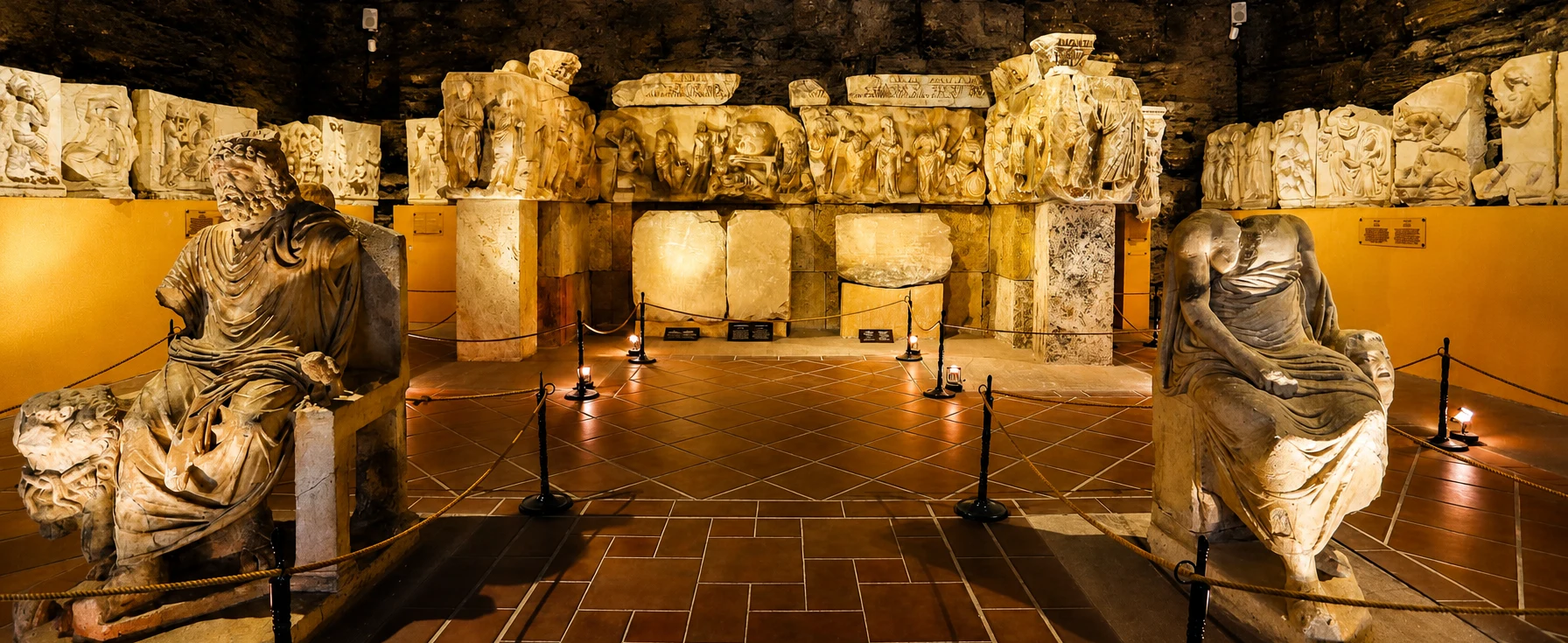
Explore exceptional sculpture and antiquities housed in the Roman bath complex at Hierapolis.
Visit the Museum Guide
Discover monumental Roman streets, religious heritage and an important city of the Lycus Valley.
Explore Laodicea
Continue the story of Denizli’s historic fabrics and workmanship in the weaving town of Buldan.
Discover Buldan