
Private Akhan Caravanserai Heritage Visit
Discover the 1250s caravanserai, its carved animal reliefs and Seljuk trade history, subject to prior interior access arrangements.
Request a Custom Visit





Akhan Caravanserai (Akhan Kervansarayı) stands in Akhan neighbourhood, Pamukkale district, Denizli Province, on the historic approach toward Afyon and inland Anatolia. One of the westernmost monumental examples of the Anatolian Seljuk caravanserai tradition, the building was commissioned by Governor Seyfettin Karasungur bin Abdullah during the reign of Sultan İzzeddin Keykavus II.
The principal Turkish heritage descriptions date the covered section to 1253 and the courtyard to 1254. This compact but finely made caravanserai covers approximately 1,100 m², bringing together a long, vaulted hall, an open courtyard, rooms and arcades. Its most memorable feature is the richly sculpted courtyard entrance, decorated with geometric patterns and images of real and imaginary animals.
Akhan is also named in the UNESCO Tentative List entry for Seljuk Caravanserais on the route from Denizli to Doğubeyazıt. The route was submitted in 2000; this is a tentative-list reference, not a claim that Akhan is an individually inscribed UNESCO World Heritage Site. Historic inscriptions, reused stone blocks and later restoration make the monument an illuminating stop for visitors interested in medieval Anatolia.
This detailed guide explains Akhan’s history, patron, architecture, portal sculptures, inscriptions, Silk Road connections, UNESCO status, restoration, nearby Seljuk bridge, visitor access, directions, photography, accessibility, places to combine and private tours. As the building has been used by private operators, arrange interior access in advance rather than relying on old opening-hour listings.
The commonly published completion dates.
Animals and intricate geometric carving.
A refuge for people, goods and pack animals.
Part of a proposed trans-Anatolian route.
The essential details for visiting one of Denizli’s most remarkable medieval monuments.
Akhan Mahallesi, Pamukkale district, Denizli.
Open on Google MapsAnatolian Seljuk, 13th century.
Covered section 1253; courtyard 1254 in official visitor texts.
Governor Seyfettin Karasungur bin Abdullah.
Approximately 1,100 m².
Carved courtyard portal with animal and geometric motifs.
Named in a caravanserai-route Tentative List entry.
About 20–45 minutes if interior access is available.
Akhan is an especially rewarding stop because Seljuk military strength, commercial infrastructure and artistic ambition meet in a single building. From outside, its heavy stone walls resemble a fortified complex; at the courtyard gateway, delicate sculpture changes the impression completely.
The contrast between the relatively restrained covered-hall entrance and the elaborately decorated courtyard portal is among its defining experiences. Look for stone-carved birds, lions, dragons, deer and sphinx-like creatures, along with geometric ornament. These images belong to a much older visual vocabulary than the modern meanings associated with some geometric shapes.
Because Akhan is close to the city rather than on an isolated highway, it can fit into a relaxed journey between Denizli, Laodicea and Pamukkale. Interior access is not guaranteed; the sculpted entrance and exterior should still be approached with respect for current property arrangements.
A surviving 13th-century monument.
Animal figures among geometric ornament.
Covered lodging hall and open courtyard.
Cut stone, marble and reused material.
A stop on inland Anatolian routes.
Pairs with Denizli archaeological sites.
Akhan Caravanserai is in Akhan Mahallesi of Pamukkale district, on the Denizli–Afyon–Ankara road corridor. Ministry of Culture material traditionally places it near the seventh kilometre of the old Denizli–Afyon highway, at the approach to the settlement that shares its name.
The building is in the wider Denizli urban area, so visitors should navigate to “Akhan Kervansarayı” rather than typing only “Pamukkale”, which could direct them toward the travertines. Roads and municipal layouts have changed since some older descriptions were published.
A Ministry of National Education directory associates the monument with the Akhan / Atatürk Bulvarı area and a private-operator address; use the heritage-site name for navigation and check the correct gate or entrance with the operator.
Denizli, Türkiye.
Pamukkale administrative district.
Akhan Mahallesi.
Denizli–Afyon / Ankara corridor.
Near the seventh kilometre in official accounts.
Search Akhan Kervansarayı, not only Akhan.
The caravanserai was founded in the middle of the 13th century, when the Anatolian Seljuk state invested in long-distance movement across the peninsula. Sturdy inns offered protected stopping points along busy routes carrying merchants, travelers, pack animals and goods.
According to the main government visitor accounts, Seyfettin Karasungur bin Abdullah commissioned Akhan during the reign of İzzeddin Keykavus II. The enclosed portion was finished in 1253 and the courtyard in 1254. Two dedicatory inscriptions preserve essential evidence about patronage and construction.
The TDV Encyclopaedia of Islam discusses a first inscription indicating work began in 1252 and a second indicating completion in 1254. Older official inventory wording gives some differing intermediate dates; it is most accurate to describe Akhan as a 1250s Seljuk monument completed around 1254 while explaining the source differences.
Sultanate of Rum / Anatolian Seljuks.
Mid-13th century.
Karasungur bin Abdullah.
İzzeddin Keykavus II.
Two historic dedicatory texts.
1252 start; 1253 hall; 1254 completion commonly cited.
Akhan combines Turkish ak (white) and han (inn / caravanserai). Explanations of the name traditionally associate it with the pale or light-coloured stone visible in the structure, though the naming history should not be treated as a precisely dated inscription.
The scholarly TDV Encyclopaedia also records Goncalı Kervansaray and Bozhan as names connected with the monument. These variants may appear in older historical publications; Akhan Kervansarayı remains the clearest name for a modern map search.
The neighbourhood of Akhan takes its local identity from this prominent monument. When building a regional itinerary, distinguish Akhan in Pamukkale district from Çardak Han, another Seljuk caravanserai located farther east in Denizli Province.
Turkish for white.
Historic inn and caravanserai.
Alternative historic name in scholarship.
Another recorded alternative name.
Modern neighbourhood.
A separate monument in another district.
A caravanserai was a purpose-built stopping place where people travelling with horses, mules, camels and merchandise could rest. In Seljuk Anatolia, such buildings supported movement across difficult terrain and formed part of a wider effort to safeguard routes and stimulate commerce.
Travellers needed more than shelter: they also needed water, storage, space for animals and a place to prepare for the next stage. Courtyards and vaulted halls addressed different practical needs, with enclosed areas offering protection in poor weather.
Descriptions of the broader Seljuk caravanserai system sometimes mention free or organised services for travellers. However, the daily operating rules of Akhan specifically should not be reconstructed from general caravanserai practices without direct documentary evidence.
A secure overnight stopping place.
Support for regional and long-distance commerce.
Space for beasts of burden.
Temporary protection for merchandise.
Open-air circulation and services.
Roofed shelter for more protection.
Akhan’s best-attested origins belong to the 1250s. It was erected during a period in which Seljuk authorities supported trade and transportation routes in the western part of their sphere of influence.
Subsequent centuries left their mark through wear, alterations and the reuse of architectural materials. Travellers and scholars documented the building in the modern era. The specialist TDV entry mentions observers including Pococke, Arundell, Hamilton and Sarre.
Official inventories record repairs during the 1970s and 2000s; other educational sources describe restoration and modern reuse in the 2010s. These references do not establish the present condition of every room or a guaranteed year-round public touring schedule.
Start of work discussed in scholarly inscription study.
Covered hall completion in visitor literature.
Courtyard and overall completion recorded.
Use, wear, alteration and scholarly attention.
Restoration or repairs in heritage inventories.
Modern management and adaptive use.
Akhan is especially valuable because it preserves references to two construction inscriptions. Rather than relying entirely on later local legend, historians can examine original written evidence when placing the building within Seljuk history.
The names Karasungur bin Abdullah and İzzeddin Keykavus II anchor the building in a specific political setting. The date formulas are expressed in the Hijri calendar, and translations into the modern calendar differ according to the historical account and the construction phase being discussed.
When visiting, look carefully at any accessible inscription above the portals. Do not touch, trace or rub engraved surfaces; inscriptions are irreplaceable records. For exact Arabic transcription or historical translation, consult the published scholarly study rather than an unsourced plaque interpretation.
The monument is traditionally described as having two inscriptions.
Karasungur bin Abdullah.
İzzeddin Keykavus II.
Hijri dates converted to the 1250s CE.
Inscriptions incorporated into architectural portals.
Avoid touching or rubbing carved text.
The commissioner named in official sources is Seyfettin Karasungur bin Abdullah, a high-ranking figure associated with Seljuk administration in the Denizli area. His title is translated in visitor materials as governor; older scholarship also discusses him within the region’s military and administrative elite.
The inscriptions locate the project in the reign of Sultan İzzeddin Keykavus II. This distinction matters: the caravanserai was constructed under a Seljuk sultan, but the named individual patron was Karasungur. It is misleading to state that the sultan personally supervised the building.
The TDV Encyclopaedia connects the patron’s name with inscriptions at historic Denizli mosques. This suggests a wider pattern of Seljuk-era local building activity, but a visitor itinerary should not assume all those associated buildings survive unchanged.
Seyfettin Karasungur bin Abdullah.
Seljuk provincial authority.
İzzeddin Keykavus II.
Mid-13th century.
Contemporary inscriptions.
Other medieval patronage in Denizli.
Akhan follows the general concept of a Seljuk sultan-han while remaining smaller than the best-known royal roadside complexes. Its published footprint is approximately 1,100 square metres. The two principal components are a roughly square open courtyard and a long, rectangular roofed hall.
The roofed hall has a more symmetrical arrangement, while the rooms surrounding the courtyard are asymmetrically organised. This difference is important: it shows how one monument could combine a regular sheltered space with more varied service areas.
Architectural interpretation is easiest when viewed as a sequence: outer portal → courtyard → inner hall. Do not confuse the richly ornamented gateway to the courtyard with the relatively restrained doorway to the enclosed hall.
About 1,100 m².
Approximately square in plan.
Long rectangular hall.
Barrel vaulting over hall bays.
Symmetry in hall; asymmetry in courtyard.
Decorated outer portal and simpler inner door.
The enclosed hall forms a rectangular chamber divided lengthwise by two rows of stone piers. Together they define three aisles or bays, with the central passage designed wider and higher than the side aisles.
Stone barrel vaults cover the interior. The ordered arrangement of supports and vaulted roofing provided durability and generous interior shelter, especially useful when conditions outside were uncomfortable.
The hall is one of the key spaces to understand, but interior access may depend on the current operator, event schedule or conservation restrictions. If access is unavailable, a good guide can still explain the plan from published drawings and exterior views.
Long rectangular hall.
Two parallel rows of supports.
Three longitudinal sections.
Wider and higher than the sides.
Stone barrel vaults.
Confirm permission before arriving.
Akhan’s courtyard offered a flexible working space for medieval caravans. Official architectural descriptions identify porticoes, vaulted rooms, an iwan and two-storey compartments arranged around the open area.
A typical account places the two-level rooms and iwan on one side of the courtyard, with arcaded or vaulted areas on the other. This is not a perfectly mirrored arrangement, and that deliberate or developed asymmetry adds to the building’s character.
When possible, look at the thresholds, vault springings and changes of level to understand how spaces connected. Today, any stairs, upper rooms or service areas may be off-limits; do not try to reach the upper parts without an authorised visitor route.
Open space for circulation.
Covered walkways / revaks.
Vaulted space opening toward the court.
Different enclosed functional chambers.
Two-storey spaces recorded in descriptions.
Some spaces may remain privately managed.
The courtyard entrance or taçkapı is the architectural showpiece of Akhan. Its stone surround carries dense ornament, with geometric patterns arranged beside highly expressive carved animals and fantastic creatures. This is why photographers and architectural historians often begin with the gateway.
There is an important contrast between the richly carved exterior courtyard portal and the simpler, recessed inner-hall door, described by official sources as a pointed-arch niche with a lower, flatter-arched doorway.
The portal is not simply decorative: it announced a patron’s investment, marked the protected threshold and projected the artistic language of Seljuk Anatolia to people arriving from the road. Appreciate the reliefs from close viewing distance without touching the stone.
Taçkapı – monumental portal.
Rich carved reliefs.
Geometric forms and animal figures.
More elaborate courtyard gateway.
Comparatively restrained hall entrance.
Avoid contact with relief surfaces.
The sculpted animals make Akhan particularly distinctive among Seljuk monuments. Turkish government descriptions identify images resembling deer, sphinxes, birds, eagles, lions and dragons, alongside geometric ornament.
These are not all straightforward wildlife illustrations. A sphinx combines features into a hybrid creature; a dragon belongs to an imaginative symbolic world. Seljuk stone carving regularly drew upon a complex repertoire of animals, power symbols and protective imagery.
Specific meanings assigned to an individual image should be offered as interpretations, not proven explanations for every carved square. Sunlight angle and stone wear affect visibility, so inspect the entrance patiently and never chalk, wet or rub the carvings for a photograph.
A recognisable animal relief.
A recurrent symbol of power in Seljuk art.
Avian figures in the carved programme.
A bird of prey in descriptions.
Mythical creature in the reliefs.
Composite creature in the sculptural programme.
Akhan’s portal combines the animal figures with interlocking geometric carving. One recurring motif is described in Turkish heritage accounts as gamalı haç, a hooked-cross or swastika-shaped geometric form.
It is important to understand chronology: the Seljuk-era use predates the 20th-century Nazi appropriation by hundreds of years. In this 13th-century artistic context, the motif is part of the broader geometric vocabulary of premodern Anatolian and Eurasian decoration; it should not be read as a modern political statement.
The portal’s artistic effect comes from the alternation of geometric pattern and figural panels. If taking close-up images, include enough of the historical stone setting to avoid removing the symbols from their architectural context.
Repeated patterned stone carving.
A premodern design later appropriated in modern politics.
Figural reliefs among geometry.
Interpret in 13th-century context.
Keep architectural context in frame.
Do not touch or mark sculptures.
Akhan’s masonry reveals impressive building skill. Official descriptions mention finely cut stone as well as original dressed marble facing on parts of the courtyard’s south and west sides. The materials create different tones and textures across the complex.
Close observation of the walls shows the relationship between shaped facing blocks, structural cores and the elaborate work around openings. The appearance of the monument has changed because some original external stone facing was lost or repaired over time.
Do not assume every light-coloured block belongs to a single original construction phase. Restored masonry and reused older pieces need separate study before attribution.
Carefully shaped masonry blocks.
Noted on parts of south and west courtyard walls.
Different materials visible behind facing.
Finely worked ornamental relief.
Loss and erosion of some surface material.
Later repairs may be visible.
Spolia is an art-historical term for stone, columns or carved elements reused from earlier buildings. The Türkiye Culture Portal explicitly notes a substantial amount of reused material in the interior and exterior masonry of Akhan.
Denizli lies in a region with extensive ancient settlement remains. Reusing suitable carved blocks could provide durable construction material, but not every reused piece can safely be assigned to Laodicea or another specific ancient city without proven documentation.
Look for changes in stone type, former mouldings or blocks that appear to have been refitted. The contrast tells a story of continuity between ancient and medieval building cultures.
Spolia – reused architectural material.
Explicitly recorded at Akhan.
Earlier structures from the broader region.
Exact origins of individual stones require evidence.
Re-cut blocks and mismatched decoration.
Never attempt to remove or disturb pieces.
The open courtyard is not an empty space surrounded by uniform walls. Architectural inventories describe vaulted side rooms, an iwan and two-storey spaces, allowing a range of activities around the main enclosure.
Some older scholarship proposes specialised functions for individual chambers. A space has been interpreted as a bath, and small vaulted compartments could have provided more private or specialised accommodation. These interpretations should be distinguished from unambiguous room labels found in an original plan.
Upper spaces are of particular architectural interest, but old stairways or elevated rooms are not necessarily open. Guests should follow current management instructions rather than searching for independent access.
Open-fronted vaulted architectural space.
Individual enclosed compartments.
Upper rooms described in published surveys.
Barrel-vaulted construction.
A scholarly interpretation for one room.
Only with operator permission.
Like other medieval Anatolian roadside inns, Akhan has spaces that scholars have considered in relation to prayer and religious needs. The TDV Encyclopaedia discusses an upper domed room reached from the courtyard and suggests it may have served as a small mescid.
The word may matters: not every elevated domed room has a securely established original function. Another external structure has likewise received competing interpretations in scholarly writing, including a bath or possibly a tomb.
A thoughtful tour explains the architectural evidence and the limits of interpretation. It should not advertise a fully functioning historic mosque or guarantee that the upper room can be entered today.
A small prayer space.
Discussed in academic descriptions.
Reached historically by steps.
Possible rather than definitively established function.
Scholars debate some ancillary spaces.
Do not presume the room is open.
Picture a merchant party reaching Akhan after travelling across inland Anatolia. Before continuing toward western markets, travellers needed to secure their cargo and animals, rest, and prepare the next section of the road.
The entrance, courtyard and covered hall worked together. A gateway could control access; the open court provided space for movement; the enclosed stone bays offered shelter. The different room sizes suggest that lodging, supplies and support tasks did not all occur in one space.
This reconstruction is a broad interpretation of caravanserai life, not a documented diary from Akhan. For a reliable historical experience, connect the visible architecture to general Seljuk trade practices without inventing menus, fees or a guaranteed number of merchants accommodated nightly.
Caravans entered through a controlled gateway.
Supplies and merchandise required protection.
Pack animals were vital to transport.
Sheltered hall supported rest.
Courtyard rooms served differing needs.
General historical scenario, not a daily record.
The name Silk Road is often used for a broad network of trading routes rather than a single unbroken road. Akhan belonged to the system of Seljuk caravanserais serving the commercial connections between western Anatolia and the interior.
The provincial cultural directorate includes Akhan in its historical Silk Road material alongside Çardak Han. Another regional source describes the Denizli route in the direction of Dinar and Konya, emphasizing how this western end connected with the inland trade network.
A well-planned visit places the monument within a wider landscape of transport, security, urban markets and fortified roadside architecture. The term “on the Silk Road” is useful shorthand; it should not imply the same exact international itinerary for every historical caravan.
Shelter along important commercial roads.
Western Anatolia toward interior routes.
Çardak Han in Denizli Province.
Routes reaching Dinar and central Anatolia.
Many linked roads, not one exclusive highway.
The road approach helps explain the site.
Akhan is not individually inscribed on the UNESCO World Heritage List. It is specifically named in a UNESCO World Heritage Tentative List entry entitled “Seljuk Caravanserais on the route from Denizli to Dogubeyazit”, submitted by Türkiye on 25 February 2000.
A tentative listing identifies a property or group of properties that a country may consider nominating for World Heritage status. It is not the same as inscription, and it does not guarantee any later decision.
The UNESCO entry discusses the historic caravanserai system across Anatolia and names Akhan among notable inns. This is a valuable part of the monument’s international significance, provided its status is described precisely.
Named in a route-based Tentative List entry.
25 February 2000.
Seljuk Caravanserais: Denizli to Doğubeyazıt.
UNESCO Tentative List no. 1403.
Tentative status is not World Heritage inscription.
Part of an Anatolian caravanserai network.
Akhan has undergone repairs and restoration as its historic function faded and the surrounding road landscape developed. The official Culture Portal inventory mentions work during the 1970s and the 2000s. An education-sector publication also describes restoration in the early 2010s.
The monument’s current appearance therefore reflects an interplay of surviving Seljuk masonry, later repairs and managed use. Differences in stone colour or surface finish may reflect conservation work; they should not automatically be described as original medieval design.
Visitors should follow all rules governing fragile reliefs, upper rooms and photography. Plans for exhibitions, private events or visitor services can change without the antiquarian sources being updated.
Documented in Turkish heritage inventories.
Repairs mentioned in official records.
Additional work listed.
Operating arrangements have changed over time.
Portal sculptures need careful protection.
Always check current authorised routes.
The heritage landscape extends beyond the caravanserai itself. The Türkiye Culture Portal identifies an Akhan Bridge (Akhan Köprüsü) near the old road, to the east of the historic inn.
The official inventory describes a bridge with three spans constructed from dressed stone, later altered or repaired. It connects the road corridor with both medieval and older transport history; the source suggests a date linked to Akhan’s 13th-century period, but does not establish an exact year through a surviving inscription.
The bridge is described as no longer used for ordinary traffic after newer road construction. It is not an invitation to cross or climb it; inspect from public, lawful and safe positions if the local route permits.
Akhan Köprüsü.
Near Akhan and the historic road.
Three-arched stone bridge in official inventory.
Likely tied to medieval route improvements.
Not a current traffic crossing in heritage records.
Check access and do not climb.
For most visitors, 20–45 minutes is a reasonable planning estimate when both the gateway and authorised interior areas are available. The monument is compact, but its sculpted surfaces and architectural plan reward attentive observation.
Allow additional time if you are travelling with an architecture enthusiast, photographer or licensed guide. If only the exterior can be viewed, the stop may be shorter. These are editorial planning estimates, not official tour durations.
Build flexibility into any itinerary that includes Laodicea or Pamukkale. A visit can depend on a private operator’s appointments or a special event occupying some spaces.
About 15–20 minutes for exterior appreciation.
20–45 minutes if authorised spaces are open.
Allow extra time for reliefs and planning.
Ask before expecting entry.
Extra time for facade and carving.
Separate from on-site time.
The Turkish Ministry of National Education’s outdoor-learning directory publishes visiting times of 09:00–17:00, Monday to Friday, and lists Saturday and Sunday as closed. The same directory notes that the property is privately operated and asks visitors to make contact for an appointment before visiting.
Those are published directory hours, not a live guarantee of entry for 2026 or assurance that every interior space is open. Private events, operating changes, holidays or conservation works can affect access.
For a reliable cultural visit, contact the operator or relevant local heritage authority before leaving your hotel. If you cannot verify an appointment, plan Akhan as a possible exterior heritage stop rather than the fixed centrepiece of your day.
The Ministry of National Education directory describes entry as free in its visitor notes, but that statement should be read as directory information rather than a confirmed 2026 fee policy. Access is also tied to private operation and advance contact.
No separately verified official museum ticket tariff for Akhan was established here. If a private programme or service is arranged on site, it may have conditions separate from general heritage viewing.
MuseumPass Türkiye is not something to assume is required or accepted at Akhan. Ask directly about admission, reservations, events, photography and any paid services before travelling.
Akhan is not simply an abandoned ruin. Different public sources document modern commercial or hospitality-related reuse. An older Culture Portal inventory classifies its then-current function as cafeteria, and an education publication describes restaurant operation following restoration.
The more recent education directory describes the building as operated by a private company offering herbal and natural products. These accounts are not identical because they describe different dates and uses; none alone guarantees what service will be running on the day you arrive.
For travellers, the practical point is to arrange a heritage-focused visit respectfully, observe business and photography rules and avoid assuming the courtyard is an unrestricted public square. Wow Cappadocia can help organise a heritage itinerary without compulsory shopping stops.
A historic Seljuk caravanserai.
Listed cafeteria use.
Restaurant use after restoration.
Describes private natural-product operation.
Confirm current operator and appointment.
Historical sightseeing, no compulsory shopping.
A restored caravanserai may be easier to approach than a remote archaeological hilltop, but a fully step-free route through Akhan has not been independently verified. Historic thresholds, stone paving, steps and any elevated rooms can still create barriers.
The education visitor directory includes accessibility-related information, but does not establish exact doorway widths, ramp gradients or suitable toilets for every visitor. Contact the operator about vehicle drop-off, entrances, courtyard access and facilities.
For a personalised private tour, mention wheelchair, walker or stroller requirements before the itinerary is finalised. It may be possible to appreciate parts of the exterior even when all rooms are not accessible.
Check drop-off and kerb access.
Historic door thresholds may present a challenge.
Confirm paving and step-free routes.
Do not expect lift access.
Confirm directly with operator.
Adapt to each guest’s mobility needs.
Akhan can be an engaging visit for families because children can compare stone animal carvings, arched rooms and the shape of an old roadside inn. The history is straightforward: caravans carried goods across Anatolia and needed safe places to rest.
Encourage children to look for carved birds, lions, deer and mythical animals from a safe standing position. Explain that the animals were part of a medieval artwork and that the walls and pillars are not play structures.
Follow the site’s published visitor etiquette: avoid running, loud shouting, touching carvings and leaving the authorised tour route. Private-business arrangements may also affect whether food or drinks are allowed inside.
A medieval place to rest on the road.
Identify carvings without touching.
Understand vaults and supports.
Keep children near adults.
Protect walls and steps.
A family-friendly brief heritage stop.
The best photographic subject is the ornamented outer gateway, especially the relief panels where mythical and real animals appear among geometric patterns. Wider views can show the imposing stone building against the modern neighbourhood.
Try photographing the portal when the light reaches the carving from the side; angled sunlight tends to reveal the depth of shallow reliefs. If interiors are accessible, the vaulted hall and courtyard arches can offer strong architectural compositions.
Respect operator rules for cameras and groups. Avoid flash when it could affect other visitors, and never use chalk, water or other materials to make inscriptions or reliefs stand out. Drone flights are subject to relevant airspace, property and heritage authorisations.
Carved outer portal.
Animal and geometric motifs.
Side-light helps reveal shallow relief.
Arches, thresholds and textures.
Request permission when necessary.
Check every relevant authorisation.
As Akhan has been used by private operators, the existence of a restaurant, café, retail service or toilet in an older record does not guarantee that those amenities are currently available to casual visitors. Confirm before making a special journey.
Because the building is in an urban neighbourhood on a main road corridor, ordinary town services may be accessible nearby. Still, visitors should check where they can park legally, meet an operator, use facilities and enter without interrupting a private function.
For any heritage stop arranged with Wow Cappadocia, we can plan the timing around your main activities. Our tour itineraries do not include mandatory shopping stops.
Use lawful parking permitted by local signage.
Availability not independently verified today.
Current outlet operation may differ.
The visitor directory recommends contacting ahead.
Ask about operator policies.
Denizli neighbourhood amenities may be available.
Akhan stands along the Denizli–Afyon / Ankara approach. From central Denizli, use a navigation search for Akhan Kervansarayı, Akhan Mahallesi, Pamukkale. Government descriptions use the seventh kilometre of the historic highway as a reference point.
The Culture Portal says that minibus transport from central Denizli can reach the Akhan area, but we have not verified a current route number, stop or timetable. If using public transport, check return services and the last walking segment.
From Pamukkale’s travertines, travel back toward the greater Denizli road network and then head to the Akhan area. Allow for real traffic and your particular hotel location; a simple straight-line distance is not a reliable driving-time estimate.
Use the Afyon / Ankara corridor.
Near kilometre seven in official descriptions.
Drive via greater Denizli roads.
Minibus possibility noted; schedule unverified.
Search the monument’s full name.
Practical for multi-site sightseeing.
Because Akhan is a largely stone-built architectural monument, its exterior is interesting in every season. Spring and autumn offer comfortable temperatures for combining it with other destinations; summer can be hot, particularly during midday.
Photographers may prefer the lower-angle light of morning or later afternoon. However, operator appointments and the building’s actual visiting schedule take priority over photographic preferences.
The education directory’s weekday schedule means that a proposed Saturday or Sunday interior visit should not be assumed possible. Check holidays and private events as well.
Comfortable for a multi-site heritage day.
Allow for heat and strong sunlight.
Pleasant conditions for outdoor viewing.
Check rain and opening arrangements.
Published directory lists weekday visits.
Confirm entry with the operator.
Comfortable walking shoes are useful for stone paving, thresholds and adjoining outdoor surfaces. Wear appropriate clothing for the season, especially if you will also visit Pamukkale or Laodicea on the same day.
Bring your phone for maps and photographs, and make sure you have confirmed any necessary appointment. A small pair of binoculars or a camera with moderate zoom can help examine upper sculptural details without touching the stone.
Observe any on-site rules about food, drinks and photography. The educational directory specifically advises avoiding physical contact with decorative reliefs and maintaining a quiet, respectful atmosphere.
Suitable for stone and uneven thresholds.
Adapt to seasonal conditions.
Capture portal details safely.
Important for private operation.
Avoid touching carvings.
Allow for a changed access arrangement.
Akhan can be combined with Laodicea Ancient City, famous for Roman urban architecture and early Christian heritage, or with the remarkable landscape of Pamukkale and the ancient city of Hierapolis. These are different types of sites, making for a varied historical narrative.
Visitors with a more specialised interest in Seljuk history can add Çardak Han, another medieval caravanserai in Denizli Province, with extra travel time. Kaklık Cave offers a natural contrast if conditions and the route allow.
The nearby Akhan Bridge is particularly relevant to the story of medieval roads, although access should be verified and it should not be treated as a safe pedestrian crossing without confirmation.
Roman city, monumental streets and church heritage.
White travertine terraces.
Ancient thermal spa city.
Another Seljuk caravanserai, farther east.
A natural site in the Denizli region.
Historic transport infrastructure.
Akhan is especially well known for its portal reliefs and location near Denizli city. Its two-part layout and animal sculptures make it an excellent choice for visitors interested in Seljuk decorative arts.
Çardak Han, also called Hanabat in some historical material, is another notable 13th-century caravanserai farther east, toward the Çardak area. It is worth considering if your route naturally continues in that direction.
Rather than ranking one as objectively better, choose according to your starting point, available time, current access and interest. Two caravanserais can make a focused Seljuk heritage itinerary, but expect additional driving and verify independent openings.
Near Denizli; especially noted for carved animals.
A separate medieval caravanserai farther east.
Akhan’s sculpted entrance.
Choose whichever suits onward travel.
Possible with sufficient driving time.
Check each property separately.
Short heritage stop: visit Akhan’s facade and, with permission, its courtyard and hall. Focus on the inscriptions, carved portal and two-part layout. Allow 20–45 minutes on site, plus travel and appointment flexibility.
Denizli history day: combine Akhan with Laodicea Ancient City and time in Denizli. The contrast between a Roman metropolis and a Seljuk roadside inn gives the day a clear story without rushing.
Pamukkale region private day: combine Akhan with Pamukkale and Hierapolis where the overall schedule permits. A dedicated Silk Road itinerary can instead include Çardak Han and, if access allows, Akhan Bridge.
Akhan architecture and carving highlights.
Akhan plus a selected Denizli monument.
Akhan, Laodicea and surrounding attractions.
Akhan and Çardak Han with driving time.
Flexible pick-up and return.
Historical exploration is the priority.
This guide uses the Türkiye Culture Portal, the Denizli Provincial Directorate of Culture and Tourism, the TDV Encyclopaedia of Islam, UNESCO’s official Tentative List and the Ministry of National Education visitor directory. They complement one another: government travel material describes the monument, scholarship explores its inscriptions and architecture, and UNESCO establishes the precise international-listing status.
Some documents give different construction-year sequences: the principal visitor pages state 1253 for the hall and 1254 for the courtyard, while TDV identifies a 1252 start and a 1254 completion. Older inventories also contain inconsistencies. These differences are stated openly rather than replaced by a false exact foundation day.
Editorial review: October 2026. The directory lists weekday 09:00–17:00 and free admission, but because Akhan is privately operated, current interior access, booking rules, operating hours and services must still be confirmed. A Tentative List entry does not make Akhan an inscribed UNESCO World Heritage Site.
In Akhan Mahallesi, Pamukkale district, Denizli, near the old Denizli–Afyon road corridor.
A 13th-century Seljuk roadside inn with an open courtyard and an enclosed vaulted hall.
The main tourism descriptions date its covered hall to 1253 and its courtyard to 1254; a scholarly account notes work beginning in 1252.
Governor Seyfettin Karasungur bin Abdullah during the reign of Sultan İzzeddin Keykavus II.
İzzeddin Keykavus II.
Yes. It is recorded as having two construction inscriptions.
Official heritage material gives approximately 1,100 square metres.
A protected roadside inn serving traders, travellers, merchandise and pack animals.
It formed part of a wider Anatolian medieval caravan route network commonly described as the historic Silk Road.
No. It is named within the UNESCO Tentative List entry for Seljuk caravanserais along the Denizli–Doğubeyazıt route.
25 February 2000.
An unusually rich group of geometric and carved animal reliefs.
Official descriptions include deer, sphinxes, birds, eagles, lions and dragons.
They belong to a medieval decorative vocabulary; specific meanings should be interpreted in their historic context.
A courtyard with various rooms and arcades and a covered hall divided into three longitudinal aisles.
Three, separated by two rows of supports.
Scholarship suggests a small upper domed room may have been a mescid; this is an interpretation rather than a certainty.
Yes. Official records identify reused stone material in the monument.
It is commonly understood from Turkish ak (white) and han (inn).
The TDV Encyclopaedia also mentions Goncalı Kervansaray and Bozhan.
It appears in visitor directories, but private operation means current access must be confirmed directly.
An Education Ministry directory lists Monday–Friday, 09:00–17:00, and weekends closed; confirm current arrangements.
The same directory describes admission as free, but the live 2026 policy was not independently verified.
The education directory recommends contacting the private operator before visiting.
No verified MuseumPass arrangement was established for Akhan; check directly.
Allow around 20–45 minutes when authorised areas are open, as an editorial planning estimate.
Complete step-free access has not been verified; ask the operator about thresholds, paving and facilities.
Follow the operator’s current rules, and never touch or mark the historic reliefs.
Different historical sources describe commercial facilities, but their current operation must be checked.
The Culture Portal mentions local minibus connections from Denizli; check current service and the nearest stop.
A separate historic three-span stone bridge near the old road, identified in a Turkish heritage inventory.
Both are Seljuk caravanserais in Denizli, but Akhan is closer to Denizli city and noted for its sculpted portal.
Laodicea, Pamukkale, Hierapolis and other Denizli heritage places are worthwhile combinations.
Yes. Contact us with your date, hotel, group size and interests to discuss a custom programme, subject to access.
Our custom heritage itineraries can be arranged without compulsory shopping stops.
Dial 112 for emergencies.
Discover Anatolia’s medieval trading routes, Roman cities and unforgettable landscapes in a flexible private programme—with no compulsory shopping stops.
Plan a comfortable history-focused excursion with a private licensed guide and driver.
Discover the 1250s caravanserai, its carved animal reliefs and Seljuk trade history, subject to prior interior access arrangements.
Request a Custom Visit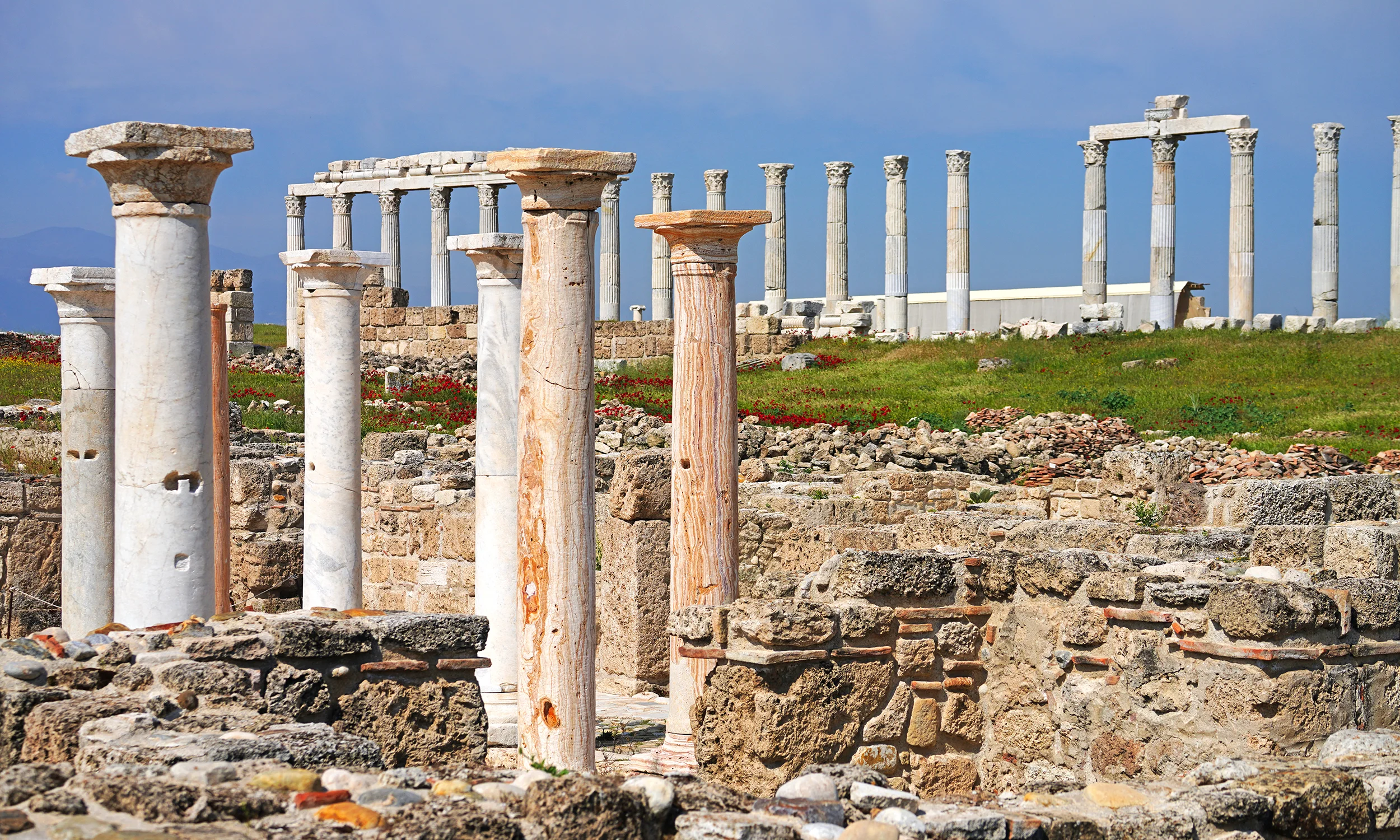
Compare a medieval Seljuk caravanserai with the extraordinary ancient streets and early Christian heritage of Laodicea.
Customise Your DayCombine the region’s fascinating historical layers and world-famous natural scenery.

Visit the celebrated thermal landscape and a magnificent ancient city in the same province.
View Private Tour
Explore Roman streets, monuments and the history of early Christianity in Anatolia.
Explore Laodicea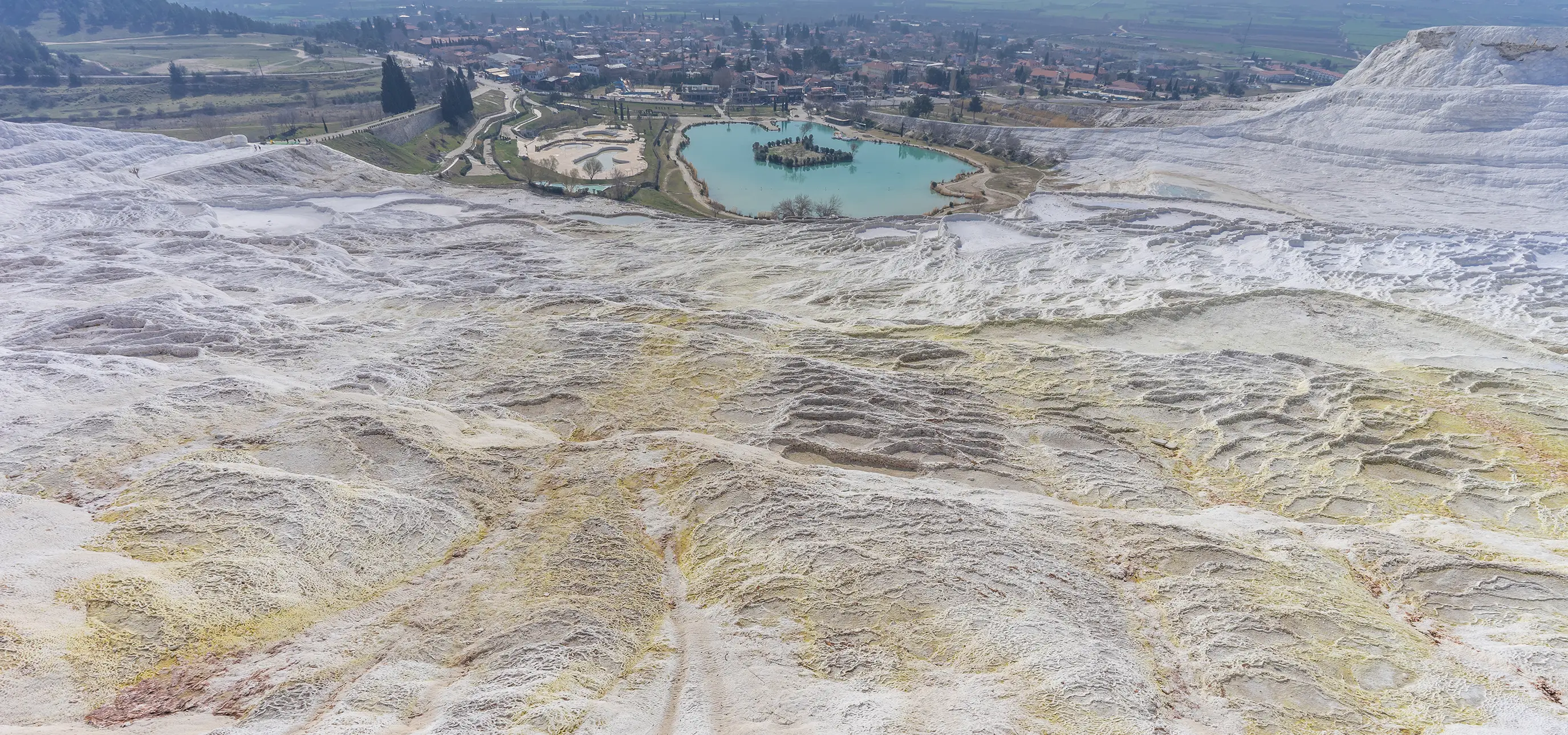
Plan around Seljuk heritage, ancient cities and natural highlights at your own pace.
Explore Regional Tours