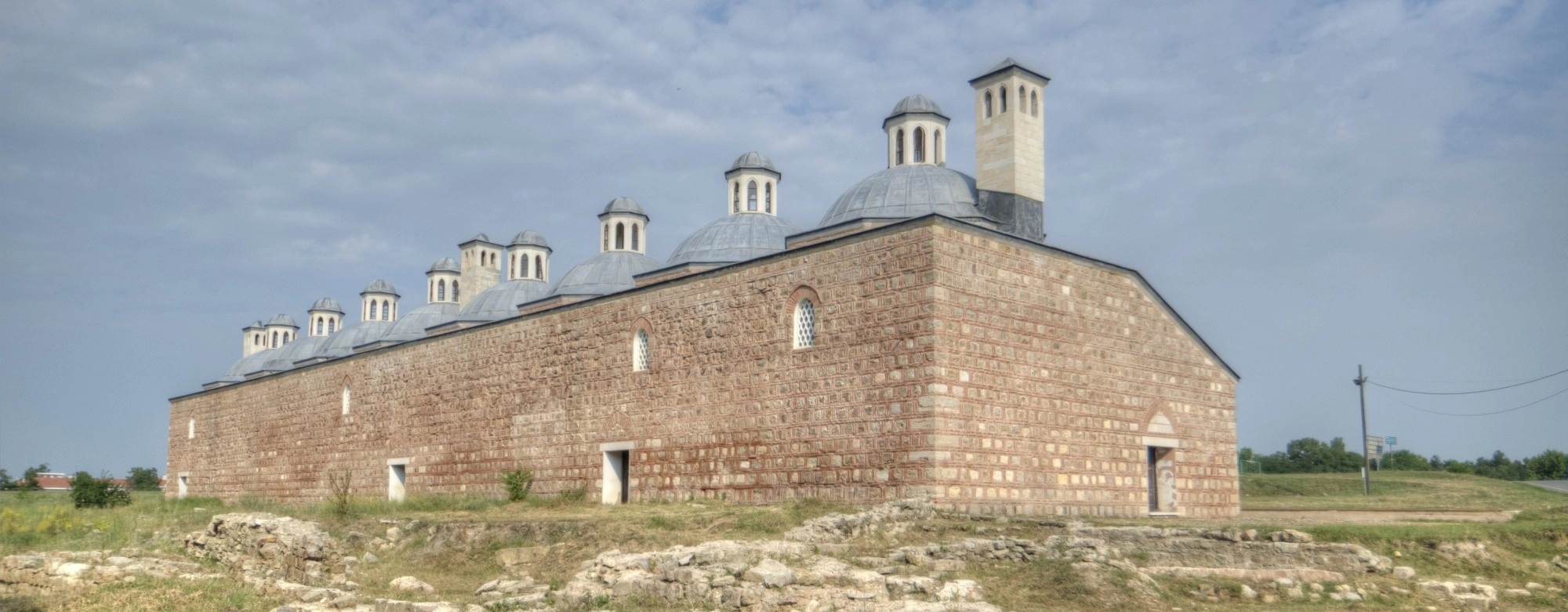
Sultan Murad II, Hadith Scholarship & Ottoman Royal Tombs

Darülhadis Mosque Edirne – Murad II's 1435 Hadith Complex & Şehzade Tombs

Discover one of Edirne's most intriguing early Ottoman foundations,
where religious learning, a historic mosque and the graves of Ottoman princes and princesses meet near the Tunca River.

Explore Darülhadis Mosque

Darülhadis Mosque – A 15th-Century Center of Learning and Royal Memory

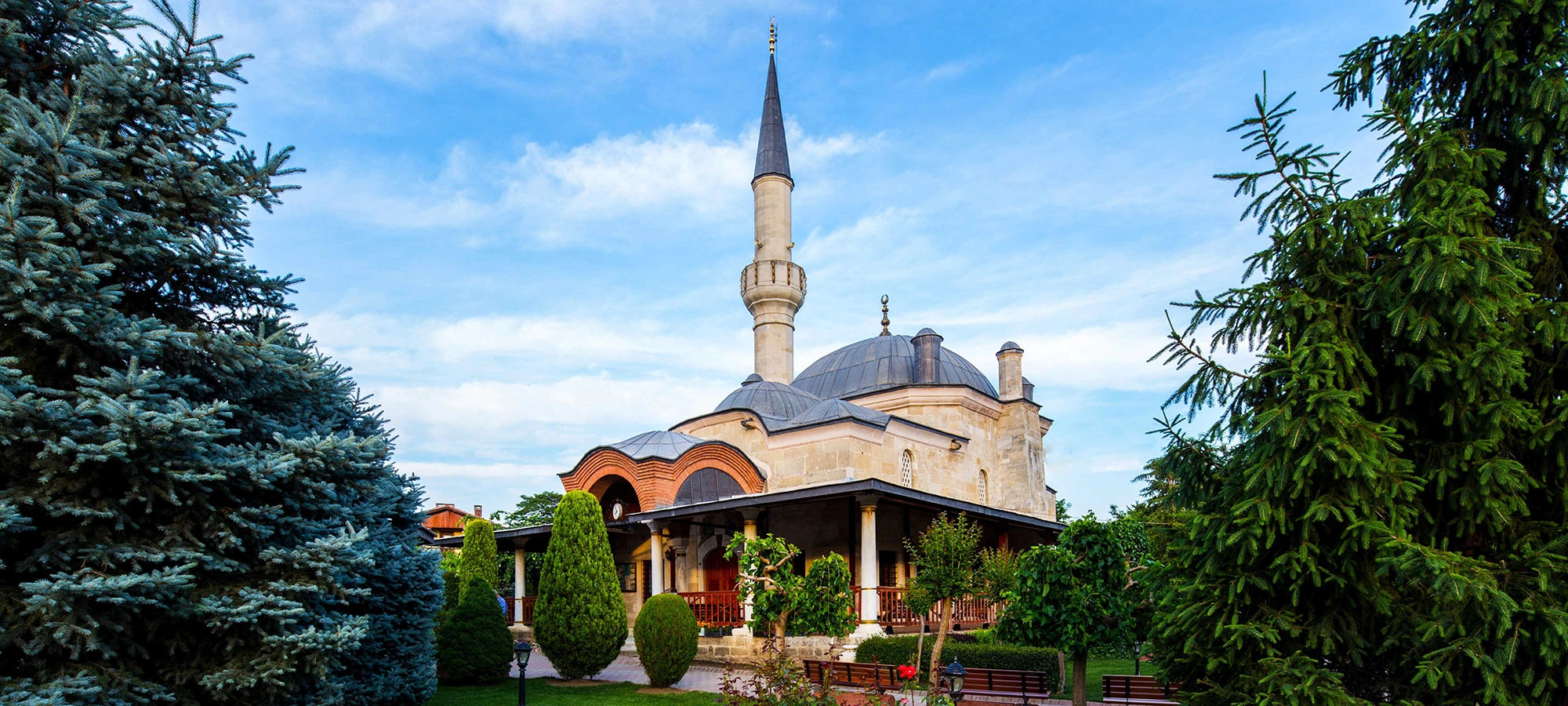
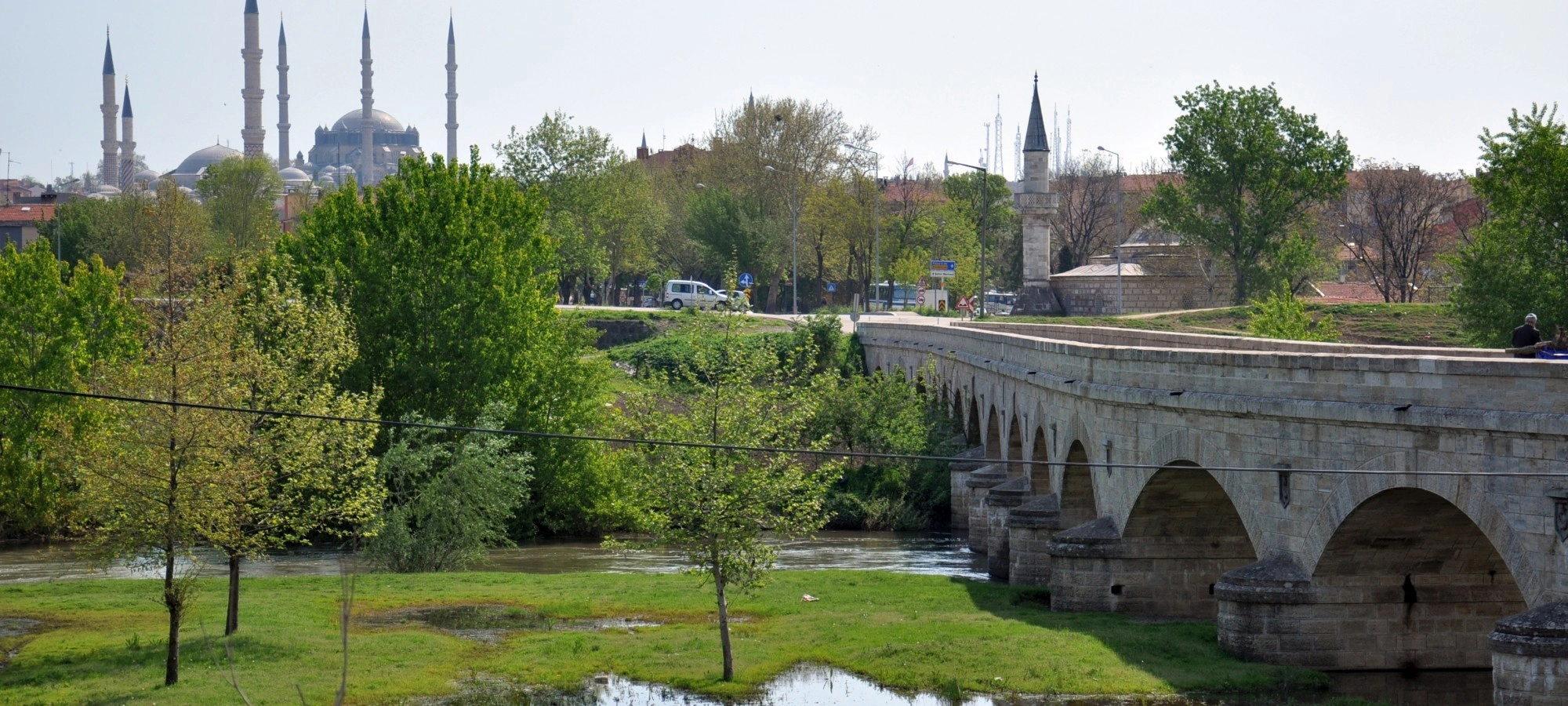
Near the historic walls of Edirne and not far from the Tunca River stands one of the city's most unusual early Ottoman monuments: Darülhadis Mosque, also written Dar'ül Hadis Camii or Dârülhadis Camii.

The foundation was established by Sultan Murad II and completed in 1435, when Edirne was one of the principal capitals and intellectual centers of the Ottoman state. Its name means a place devoted to the teaching of hadith—the transmitted sayings, actions and traditions associated with the Prophet Muhammad.

The surviving monument is more complicated than the simple label "1435 mosque" suggests. Historical sources describe a wider complex with a mosque or prayer-teaching hall, a medrese, two royal tombs and a fountain. Major repairs, fire, war damage and later restoration transformed the ensemble, and scholars have debated exactly how the original 15th-century building functioned and how much of its earliest appearance survives.

The most remarkable feature for many visitors lies behind the prayer hall: two Ottoman dynasty tombs containing graves associated with the family of Murad II and later princes and princesses. The site therefore connects religious scholarship with the private history of the Ottoman court in a way few monuments in Edirne can match.

Completed in 1435

A repaired inscription records the completion of Murad II's foundation on 24 March 1435.

Hadith Learning

The name Darülhadis identifies the complex with advanced study of the Prophet's traditions.

Royal Tombs

Two türbes preserve the memory of Ottoman princes and princesses from several generations of the dynasty.

Layered Architecture

The building combines an early Ottoman foundation with major later repairs, especially the transformation recorded in 1809–1810.

Know Before You Go

Darülhadis Mosque Edirne – Quick Facts

Essential information for understanding Sultan Murad II's historic religious and educational foundation.

📍

Location

Darül Hadis Caddesi in central Edirne, close to the old walled city and the Tunca River.

Open on Google Maps
👑

Founder

Sultan Murad II, one of the great 15th-century Ottoman patrons of Edirne.

📜

Completion

The repaired inscription records 23 Şaban 838 AH / 24 March 1435.

📚

Meaning

"Darülhadis" refers to an institution devoted especially to the study and teaching of hadith.

🕌

Today

The surviving main building functions as an active mosque rather than a ticketed museum.

⚰️

Royal Burials

Two tombs beside the qibla side contain graves connected with several generations of the Ottoman dynasty.


Learning, Worship and the Ottoman Dynasty

Why Is Darülhadis Mosque Important?

Darülhadis is valuable not only as a mosque, but as a surviving fragment of Edirne's role as an early Ottoman capital of scholarship and court life.

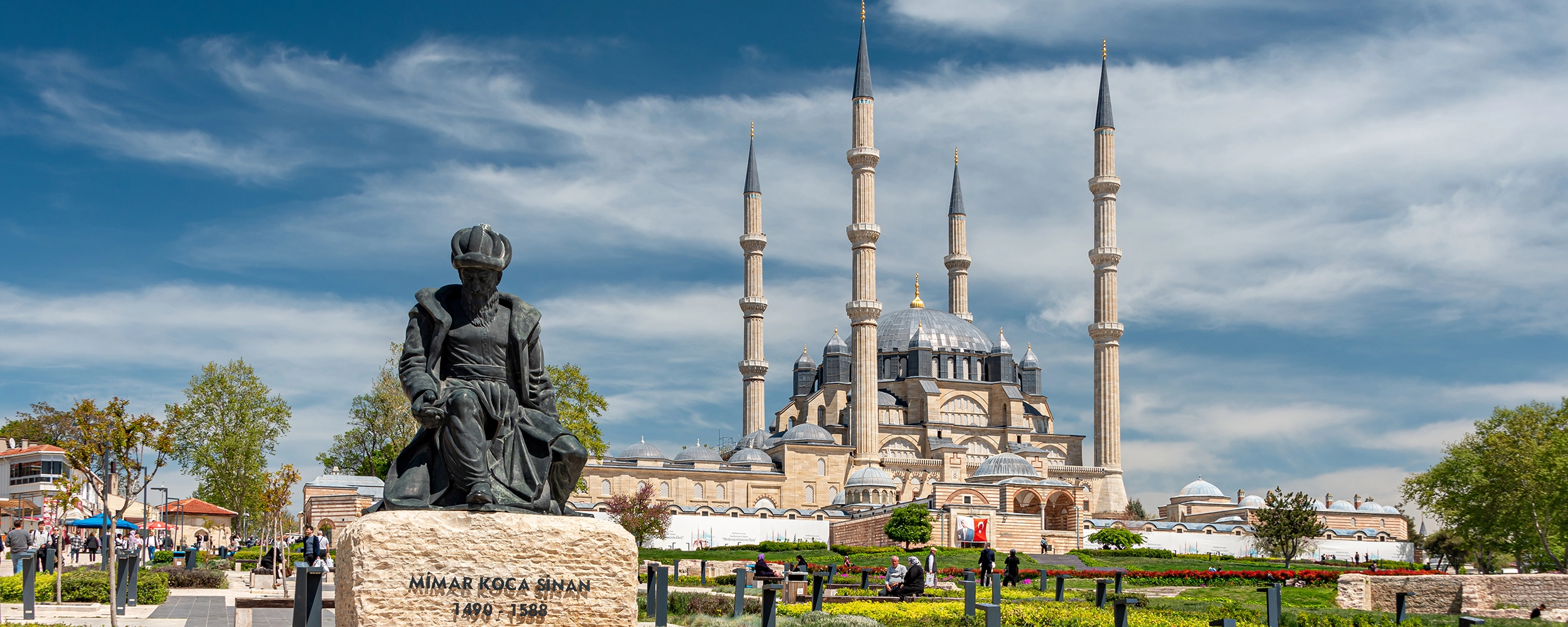
Visitors often associate Edirne with monumental imperial architecture such as Selimiye Mosque, Üç Şerefeli Mosque and the Old Mosque. Darülhadis reveals a different layer of the city's history: the development of religious education under Murad II before the conquest of Constantinople.

A darülhadis was a specialized institution in which the study of hadith held particular importance. Such schools belonged to the wider medrese tradition, but their name announced an advanced scholarly purpose connected with the transmission and interpretation of the Prophet's traditions.

The Edirne foundation is also significant because its physical history is unusually complex. The site has been altered by repairs, rebuilding, fire and warfare. Rather than presenting one perfectly preserved 15th-century structure, it shows how an important Ottoman institution continued to be reused and reshaped across nearly six centuries.

Most strikingly, the mosque grounds became a dynastic burial place. The presence of princes and princesses from different generations gives Darülhadis a courtly dimension that is easy to miss when looking only at the prayer hall.

For travelers following our complete guide to places to visit in Edirne, Darülhadis is especially rewarding when combined with Murad II's other monuments. It helps explain the city not merely as a collection of beautiful buildings, but as a center of government, education, religion and dynastic life.


What Does "Darülhadis" Mean?

The term dârülhadis literally refers to a "house of hadith." In the Islamic educational tradition, it was used for institutions in which the study, transmission and interpretation of hadith received special emphasis.

Hadith literature records reports about the words, actions and approvals associated with the Prophet Muhammad. Mastery of this material required careful study of texts, transmitters, legal interpretation and scholarly chains of authority.

Architecturally, darülhadis institutions did not necessarily form a completely separate building type. They generally developed within the same architectural world as medreses, with teaching rooms, student spaces, a courtyard and a dershane or prayer-teaching hall.

This helps explain why the Edirne monument has generated discussion. Some sources describe the surviving building as the central prayer and teaching space of a wider hadith school, while other architectural historians emphasize that the building itself has a mosque-like plan. The safest understanding is that Darülhadis was a religious-educational foundation whose surviving main building has long served as a mosque.

A useful distinction: The name Darülhadis describes the scholarly identity of the foundation. It does not mean that every surviving part of the complex was originally a classroom in the modern sense.

Sultan Murad II and the Foundation of Darülhadis

Sultan Murad II ruled during a crucial phase in Ottoman history, when Edirne served as a principal royal center and the state was consolidating its power in both Anatolia and the Balkans.

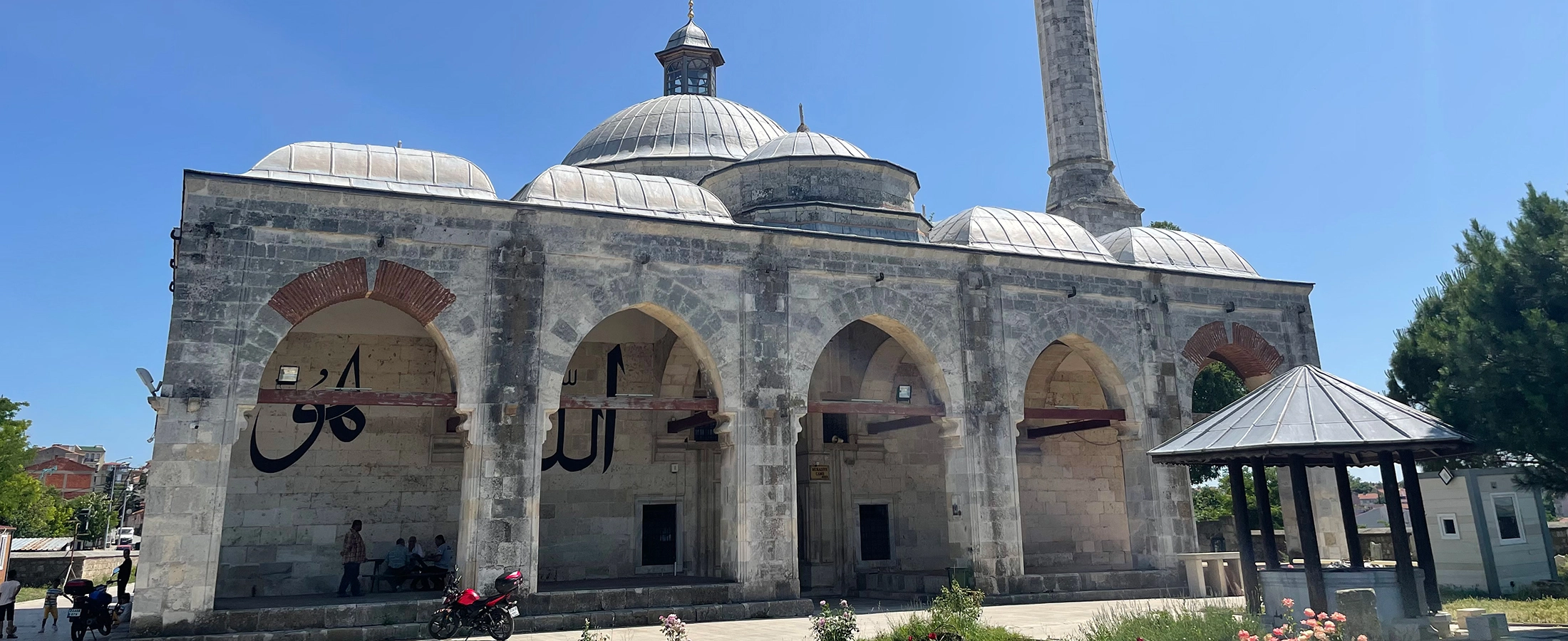
His reign transformed the architectural landscape of Edirne. In addition to Darülhadis, Murad II was responsible for major projects such as Muradiye Mosque and the monumental Üç Şerefeli Mosque, buildings that helped move Ottoman architecture toward the great centralized mosques of the following century.

Darülhadis was completed on 24 March 1435 according to the date preserved in a later repaired inscription. Its establishment reflects the importance Murad II placed on religious institutions and scholarly patronage in the capital.

A popular local tradition says that the sultan founded the institution after seeing the Prophet Muhammad in a dream and receiving a spiritual instruction to establish a darülhadis at this place. The story is an important part of the monument's cultural memory, but it should be understood as tradition rather than securely documented historical fact.

Royal Patronage

The foundation belongs to the ambitious building program of Sultan Murad II in 15th-century Edirne.

Religious Scholarship

Its name identifies the site with specialized learning centered on hadith.

Capital City

The complex was created when Edirne was one of the most important political and intellectual centers of the Ottoman state.

Living Tradition

The foundation legend linking Murad II with a dream remains part of the site's local historical memory.

The Darülhadis Complex – Mosque, Medrese, Tombs and Şadırvan

Darülhadis should be understood as a külliye, or religious-charitable complex, rather than as an isolated mosque. Historical descriptions associate the foundation with a main mosque or teaching-prayer building, a medrese, two türbes and a şadırvan.

Not all of these components survived equally well. The medrese was badly damaged in a 1903 fire, although records show that teaching activity continued for some years afterward. A 1914 record still lists the medrese as functioning, but the structure disappeared during the troubled early decades of the 20th century.

The mosque, two tombs and fountain area survived in altered condition and were restored at different times. The Ministry of Culture inventory records a major 2006 restoration by the General Directorate of Foundations.

The missing medrese is important when imagining the original site. Today's garden can feel quiet and spacious, but in the Ottoman period this was an educational environment populated by teachers, students, worshippers, attendants and visitors.

Main Building

The surviving prayer hall forms the architectural focus of the complex and continues to function as a mosque.

Medrese

The educational component survived into the early 20th century but no longer stands.

Two Türbes

An open hexagonal tomb and a closed octagonal tomb form the royal burial zone behind the mosque.

Şadırvan

The fountain recalls the practical infrastructure needed for worship and daily life in the complex.

Was Darülhadis Originally a Mosque or a Medrese?

One of the most interesting scholarly questions at Darülhadis concerns the original function of the surviving building.

The traditional interpretation sees the foundation as a hadith medrese and understands the present prayer hall as its dershane-mescid—a teaching hall that also served religious functions. This fits the name of the institution and the existence of a separate medrese component.

Other architectural historians have pointed out that the surviving building itself looks much more like a mosque than a conventional medrese. Its elongated prayer space, central dome and entrance arrangement have been compared with mosque architecture rather than the normal open-courtyard plans of Ottoman schools.

The disagreement is useful rather than problematic. It reminds us that Ottoman religious education did not always fit modern categories neatly. Teaching and prayer frequently occupied the same institutional world, and later repairs further blurred the appearance of the original 15th-century plan.

For visitors: You do not need to choose one side of the debate to appreciate the site. Read Darülhadis as a place where scholarship and worship were deliberately connected.

History of Darülhadis Mosque

The foundation was completed in 1435 under Sultan Murad II. Over the following centuries, Edirne experienced earthquakes, fires, military occupations and changing urban patterns, all of which affected its monuments.

The present appearance of Darülhadis is shaped heavily by later interventions. Architectural studies indicate that the building underwent important changes after the 1752 Edirne earthquake, one of the most destructive seismic events in the city's history.

A particularly significant repair took place in 1809–1810. The inscription was renewed at this time, and the name of an architect or master called Koç Ahmed appears in a damaged inscription associated with the work. The remodeling gave the mosque features belonging to the late Ottoman Empire style, making the surviving structure very different from a completely untouched Murad II building.

The complex suffered again in the early 20th century. A 1903 fire seriously damaged the medrese. During the Balkan Wars, artillery fire struck the mosque and destroyed its minaret. The minaret and other damaged elements were later reconstructed.

Further restoration eventually returned the monument to active use. A documented restoration by the General Directorate of Foundations was completed in 2006, helping preserve the building and its surrounding royal tombs.

1435 Darülhadis foundation completed under Sultan Murad II
After 1752 Major changes follow the devastating Edirne earthquake
1809–1810 Important repair and stylistic transformation; inscription renewed
1903 Fire badly damages the medrese
Balkan Wars Artillery damage destroys the minaret and affects the complex
2006 Restoration recorded by the General Directorate of Foundations

Architecture of Darülhadis Mosque

The mosque occupies a rectangular plan extending toward the qibla and is built primarily of carefully dressed stone. Its present form combines early Ottoman foundations with later repair campaigns.

The interior is divided into two main zones. Near the entrance is a transverse section covered by three vaults. Beyond this lies the principal prayer space, covered by a broad dome carried on pendentives.

Three arches separate the entrance zone from the main hall. The central supports include two columns, creating a distinctive interior sequence before the visitor reaches the domed prayer area.

The roofline steps upward toward the main dome, while small corner weight towers emphasize the central mass. A wooden gallery was added to the entrance section in a later phase.

Around the exterior, the present veranda-like portico reflects restoration and renewal of an older covered circulation zone. Historical evidence shows that covered arcades once played a larger role around the building than the surviving fabric alone suggests.

Rectangular Plan

The building stretches toward the qibla rather than forming a simple square prayer chamber.

Main Dome

A broad dome covers the principal worship space and rests on pendentives.

Three-Vault Entrance Zone

The front interior is divided into three covered sections before the main domed hall.

Two Interior Columns

Columns help define the transition between the entrance area and principal prayer space.

Cut-Stone Walls

Carefully dressed masonry gives the building a restrained monumental character.

Rebuilt Portico

The present wooden-covered circulation area recalls a more extensive historical revak system.

Mihrab, Calligraphy and Interior Decoration

The interior decoration belongs largely to later phases of the mosque's history and provides a strong contrast with the relatively plain exterior masonry.

The mihrab has a semicircular niche framed by vegetal ornament. Above it, painted decoration includes an elaborate curtain motif, a feature associated with later Ottoman decorative taste.

The walls and pendentives carry medallions with the names of Allah, Muhammad and the four Rightly Guided Caliphs, together with Qur'anic inscriptions.

These painted elements are useful evidence of the building's later life. They should not automatically be read as surviving decoration from 1435; Darülhadis is a monument whose interior appearance developed through successive restorations.

Look closely at the interior: The most interesting question is not simply "what is original?" but how different Ottoman periods left new layers on a much older sacred foundation.

The Minaret and the Balkan Wars

The slender minaret visible today is one of the clearest reminders that Darülhadis survived a violent 20th-century history.

Archival records note that the earlier minaret was struck by artillery during the Balkan War and collapsed. Edirne changed hands during the fighting of 1912–1913, and many historic structures suffered damage.

The minaret was later rebuilt. Its present polygonal shaft, single balcony and conical cap should therefore be understood as part of the monument's restored form rather than an untouched 15th-century survival.

This history makes Darülhadis especially valuable for interpreting heritage conservation. What visitors see is not simply "original" or "new"; it is a historic building whose identity survived even when individual components had to be reconstructed.

The Royal Tombs at Darülhadis Mosque

On the qibla side of the mosque stand two türbes that make Darülhadis exceptional among Edirne's smaller monuments.

One is an open hexagonal tomb constructed with alternating stone and brick and carried by pointed arches. The other is a closed octagonal tomb built of dressed stone beneath a dome.

The closed tomb preserves eight identified burials associated with Ottoman princes and princesses. Historical research identifies Hüseyin Çelebi, Orhan Çelebi, Rukiye Sultan, Hatice Sultan, Şehzade Ahmed, Şehzade Mehmed, Şehzade Selim and Zeyneb Sultan.

The burials span generations: the site includes children of Murad II as well as later members of the households of Mustafa II and Ahmed III. Their presence shows that Darülhadis continued to carry dynastic significance long after Murad II's reign.

The open tomb contains a single grave whose identity is not securely established today. Older writers connected it with different royal women, but the surviving evidence does not allow a confident identification.

Why the tombs matter: The royal burials turn Darülhadis from an educational and religious monument into a direct archive of Ottoman family history.

The Open Hexagonal Türbe

The smaller open mausoleum is one of the most visually distinctive structures in the garden. Its hexagonal plan is defined by piers connected with pointed arches, creating a baldachin-like form open to the surrounding air.

The walls and supports use an alternating arrangement of stone and brick, a construction technique strongly associated with early Ottoman architecture and the continuing architectural traditions of the Balkans and northwestern Anatolia.

A dome covers the central space. The lightness of the open arches creates a very different atmosphere from the enclosed royal tomb beside it.

Only one grave survives inside, and its identity remains uncertain. The uncertainty itself is historically important: monuments often preserve architecture more clearly than they preserve complete information about every person once commemorated there.

The Closed Şehzadeler Türbesi

The larger closed mausoleum has an octagonal plan and is built of finely dressed stone. Its façades are divided horizontally by molding, giving the structure a strong geometric order.

The lower windows are rectangular but framed within pointed-arched moldings. Above them are smaller round windows, sometimes described as "elephant-eye" openings in Ottoman architectural terminology.

The entrance is positioned on the northwest side in relation to the qibla axis. Inside are eight identified graves belonging to members of the Ottoman dynasty whose death dates range from the mid-15th century to the early 18th century.

For visitors, the tomb is a reminder that Edirne remained important to the Ottoman court long after the conquest of Constantinople. The city continued to serve as a royal residence, hunting center, military base and burial landscape for members of the dynasty.

Octagonal Plan

Eight sides create the classic centralized geometry of an Ottoman dynastic türbe.

Dressed Stone

The masonry contrasts with the alternating brick-and-stone character of the open tomb.

Lower Windows

Rectangular openings are emphasized by pointed-arched framing moldings.

Upper Round Windows

Small circular openings add a second rhythm above the lower window level.

Eight Identified Burials

The tomb preserves graves connected with several generations of the Ottoman ruling family.

Dynastic Memory

The burial group connects Murad II's Edirne with later 17th- and 18th-century Ottoman court history.

Religious Education at Darülhadis

The foundation belonged to a period when the Ottoman court was investing heavily in religious learning. Medreses trained scholars who served as teachers, judges, jurists and members of the learned establishment.

A darülhadis emphasized the study of prophetic traditions, but this learning existed alongside Qur'anic studies, law, theology, Arabic and other branches of the classical curriculum.

Later local traditions connect both Murad II and the young Mehmed II with study at Darülhadis. Such stories fit the intellectual importance of the foundation, but they should be presented cautiously because the surviving evidence for specific lessons attended by the sultans is not as secure as the building's foundation date.

What is certain is that the medrese remained part of Edirne's educational landscape for centuries. Records show that it was still active in the early 20th century, demonstrating the remarkable longevity of Murad II's foundation.

The 1809–1810 Restoration and Empire-Style Transformation

Darülhadis underwent a major repair in 1224 AH / 1809–1810. This campaign is essential for understanding why the mosque does not look exactly like Murad II's other surviving 15th-century buildings.

The foundation inscription was renewed during this repair, preserving the earlier completion date of 1435. A damaged inscription also records the name Koç Ahmed, apparently connected with the work.

Architectural historians describe the remodeled mosque as having acquired characteristics of the Ottoman Empire style, part of the broader late 18th- and early 19th-century transformation of imperial architecture.

As a result, Darülhadis is best read as a 15th-century foundation inside a later architectural shell. Its age lies not only in individual stones, but in the continuity of the institution, location and sacred function.

What to Look For at Darülhadis Mosque

Foundation Inscription

Look above the entrance for the inscription preserving the 1435 completion date through the later repair campaign.

Stepped Roofline

Notice how the roof rises from the entrance vaults toward the main domed prayer space.

Interior Columns

Two columns help divide the entrance zone from the principal domed hall.

Mihrab Decoration

Study the vegetal framing and painted curtain motif associated with later Ottoman decoration.

Calligraphic Medallions

Look for the names of Allah, Muhammad and the four caliphs on the walls and pendentives.

Open Türbe

Compare its alternating brick-and-stone arches with the solid masonry of the closed tomb.

Şehzadeler Türbesi

Observe the octagonal geometry and two levels of windows in the enclosed royal mausoleum.

Royal Gravestones

The burials provide a direct connection with Ottoman dynastic history from the 15th to the 18th century.

Rebuilt Minaret

Remember that the present minaret replaced one destroyed by artillery during the Balkan Wars.

Garden Setting

Use the open space to imagine the lost medrese and the larger educational environment that once surrounded the mosque.

Suggested Darülhadis Mosque Walking Route

Begin at the main entrance and study the portal, the repaired inscription and the relationship between the present wooden-covered portico and the stone body of the mosque.

Enter quietly outside prayer time and look first at the three-part entrance zone. Then move toward the main domed hall, observing the two interior columns, pendentives, mihrab and painted calligraphic decoration.

Return to the garden and walk to the open hexagonal türbe. Compare its brick-and-stone construction with the closed mausoleum beside it.

Continue to the Şehzadeler Türbesi and read the site as a royal burial ground rather than only a mosque garden. Finish by walking around the garden and imagining where the lost medrese once stood.

Start Main portal and 1435 foundation inscription
Stop 2 Entrance vaults and domed prayer hall
Stop 3 Mihrab, calligraphy and painted decoration
Stop 4 Open hexagonal türbe
Stop 5 Closed Şehzadeler Türbesi
Finish Garden and lost medrese footprint
Suggested Time Approximately 45–60 minutes
Best way to understand the site: Do not treat Darülhadis as only another historic mosque. Its real value comes from seeing education, worship, architectural change and dynastic burial in one compact complex.

Practical Tips for Visiting Darülhadis Mosque

Visit Outside Prayer Times

Sightseeing is easiest between congregational prayers, when the mosque can be explored without disturbing worship.

Dress Respectfully

Wear modest clothing and follow normal mosque etiquette; head coverings may be expected for women inside the prayer area.

Remove Shoes

Shoes should be removed before entering carpeted worship areas.

Keep Voices Low

The mosque remains an active religious space rather than a museum installation.

Respect the Tombs

Do not sit on graves, touch fragile stones or use the türbes as staged photography spaces.

Allow Time for the Garden

The lost parts of the complex make more sense when you pause outside and consider the original educational setting.

Check Local Conditions

Access to tomb interiors or individual areas can change because of maintenance, religious use or conservation work.

Combine with Murad II Sites

Muradiye Mosque and other early Ottoman monuments create an excellent thematic route through 15th-century Edirne.

Darülhadis Mosque Visitor Information

Darülhadis Mosque stands on Darül Hadis Caddesi in central Edirne, in a quieter area than the monumental zone around Selimiye. The site is easy to combine with other historic attractions by taxi, private vehicle or a longer city walk.

The mosque is an active place of worship. It is therefore different from a museum with fixed sightseeing sessions. Visitors should avoid prayer times and understand that access can occasionally be limited for religious services or maintenance.

There is normally no conventional monument ticket for entering the mosque. The two tombs and garden form part of the religious-historic complex, and access to individual structures may vary.

Location Darül Hadis Caddesi, central Edirne
Founder Sultan Murad II
Completion 1435
Original Identity Darülhadis religious-educational foundation
Current Use Active mosque
Ticket No conventional museum ticket
Suggested Visit 45–60 minutes

Best Time to Visit Darülhadis Mosque

Morning

Often the quietest time for seeing the garden, exterior and tombs in soft light.

Mid-Afternoon

A useful window between prayer times, although exact prayer schedules change daily.

Late Afternoon

Low light can emphasize the brick-and-stone masonry of the open tomb and the texture of the mosque walls.

Spring

Mild weather and a green garden make the complex especially pleasant.

Autumn

Comfortable temperatures and softer light are excellent for a walking route through central Edirne.

Winter

The site remains atmospheric and uncrowded, but Edirne can be cold, wet and windy.

How Much Time Do You Need at Darülhadis Mosque?

20–30 Minutes

Enough for a quick exterior view, short mosque visit and look at the two royal tombs.

45–60 Minutes

Best for understanding the mosque, inscription, interior decoration, tomb architecture and garden.

1–2 Hours

Ideal if you enjoy photography, inscriptions, Ottoman architecture and reading the site in historical depth.

Half Day

Combine Darülhadis with Muradiye, the historic bazaars, Macedonia Tower and additional early Ottoman sites.

Photography at Darülhadis Mosque

Darülhadis offers a more intimate photographic experience than Edirne's giant imperial mosques. The strongest images often focus on the relationship between the mosque, minaret, garden and two türbes.

Open Türbe Arches

Use a diagonal angle to emphasize the alternating stone-and-brick masonry and pointed arches.

Mosque & Minaret

Step back into the garden to frame the rebuilt minaret above the domed prayer hall.

Octagonal Tomb

Photograph the rhythm of lower pointed-arch window frames and upper round openings.

Entrance Portal

The inscription, arched entrance and covered portico create strong architectural detail shots.

Interior Details

If photography is permitted, focus quietly on the mihrab, pendentives and calligraphic medallions without disturbing worshippers.

Respect the Graves

Avoid staged portraits, tripods that block access or intrusive photography of people praying.

Accessibility at Darülhadis Mosque

Darülhadis is relatively easy to reach within Edirne, but the historic mosque and burial structures were not designed to modern accessibility standards.

Road Access

Taxis and private vehicles can approach the neighborhood more easily than remote heritage sites outside the city.

Mosque Entrance

Historic thresholds, level changes and shoe removal can make entry more difficult for some visitors.

Garden Surface

Paved and landscaped areas are generally manageable, but surfaces may be uneven in places.

Tomb Access

Doorways, steps and limited interior space can restrict access to the royal mausoleums.

Seating

The garden environment can provide opportunities to pause between sections of the visit.

Exterior Viewing

Travelers with limited mobility can still appreciate much of the mosque, minaret and türbe architecture from the garden.

How to Get to Darülhadis Mosque

Darülhadis Mosque is located on Darül Hadis Caddesi in central Edirne, close to the old city area and within the wider historic zone west of the monumental Selimiye district.

By Taxi

Ask for "Darülhadis Camii" or "Darül Hadis Caddesi"; this is the simplest option from central hotels.

Private Vehicle

The neighborhood can be reached by city streets, but park only in permitted areas and avoid blocking mosque access.

On Foot

Possible from central Edirne for travelers comfortable with a longer urban walk beyond the Selimiye and bazaar zone.

With a Guide

A guide is especially valuable here because much of the medrese has disappeared and the site's significance depends on historical context.

From Selimiye

Allow more time than for the tightly grouped Old Mosque, Bedesten and Ali Paşa Bazaar monuments.

Combine by Vehicle & Walk

A practical plan is to arrive by vehicle and then explore Darülhadis together with nearby central Edirne monuments on foot.

Frequently Asked Questions About Darülhadis Mosque Edirne

Where is Darülhadis Mosque?

Darülhadis Mosque is on Darül Hadis Caddesi in central Edirne, close to the historic walled city area and the Tunca River.

When was Darülhadis Mosque built?

The repaired foundation inscription records completion on 23 Şaban 838 AH / 24 March 1435.

Who built Darülhadis Mosque?

The complex was founded by Sultan Murad II, one of the most important Ottoman patrons of 15th-century Edirne.

What does Darülhadis mean?

Darülhadis means a "house of hadith," an institution devoted especially to the study and teaching of traditions associated with the Prophet Muhammad.

Was Darülhadis originally a mosque or a medrese?

Sources differ. The wider foundation clearly had an educational identity and included a medrese, while architectural historians have debated whether the surviving main building should be understood primarily as a mosque or as a teaching-prayer hall. Today it functions as a mosque.

Is the story about Murad II's dream true?

A popular tradition says Murad II founded Darülhadis after seeing the Prophet Muhammad in a dream. It is an important local legend, but it should not be treated as securely documented historical fact.

Did Mehmed the Conqueror study at Darülhadis?

Later traditions connect the young Mehmed II with study at the institution, but the evidence for specific lessons there is less secure than the documented foundation history.

What buildings were originally part of the complex?

Historical descriptions identify a mosque or teaching-prayer building, a medrese, two royal tombs and a şadırvan within the wider Darülhadis foundation.

What happened to the medrese?

The medrese was badly damaged in a 1903 fire. Records show that it was still functioning in 1914, but it disappeared during the early 20th century.

Why does the mosque look later than 1435?

Darülhadis underwent major repairs, especially in 1809–1810, when its appearance was substantially transformed in a later Ottoman architectural vocabulary.

What happened to the minaret?

The earlier minaret was destroyed by artillery fire during the Balkan Wars and was later rebuilt.

How many royal tombs are at Darülhadis?

There are two türbes on the qibla side of the mosque: one open hexagonal mausoleum and one closed octagonal mausoleum.

Who is buried at Darülhadis?

The closed tomb contains identified graves including Hüseyin Çelebi, Orhan Çelebi, Rukiye Sultan, Hatice Sultan, Şehzade Ahmed, Şehzade Mehmed, Şehzade Selim and Zeyneb Sultan, connecting the site with several generations of the Ottoman dynasty.

Are sons of Murad II buried there?

Yes. Historical sources identify two sons of Murad II among the dynastic burials at Darülhadis.

What is special about the open tomb?

It has a hexagonal baldachin-like plan with pointed arches and alternating stone-and-brick construction. One grave remains inside, but its identity is not securely known today.

What is special about the closed tomb?

The enclosed mausoleum is octagonal, domed and built of dressed stone, with lower windows framed by pointed-arched moldings and smaller round openings above.

Is Darülhadis Mosque open to visitors?

It is an active mosque. Sightseeing is generally best outside prayer times, but access can change for worship, maintenance or religious events.

Do you need a ticket for Darülhadis Mosque?

It is not a conventional ticketed museum attraction. Visitors should enter respectfully and understand that individual tomb areas may sometimes have restricted access.

How long should I spend at Darülhadis?

Around 45–60 minutes is ideal for the mosque, garden, two tombs and architectural details.

Is Darülhadis Mosque worth visiting?

Yes. It is one of Edirne's best smaller monuments for understanding Murad II, Ottoman religious education, later architectural restoration and the burial history of the imperial family.

Responsible Visiting at Darülhadis Mosque

Respect Worship

Keep voices low, avoid prayer times for sightseeing and never interrupt people who are praying.

Dress Appropriately

Follow normal mosque standards for modest clothing and head covering where required.

Protect the Graves

Do not sit on tombs, touch fragile stones or step carelessly around historic burial areas.

Ask Before Close Photography

Interior photography rules can vary, especially during worship or conservation work.

Do Not Enter Closed Areas

Respect any barriers around tombs, restoration zones or parts of the mosque not open to visitors.

Leave the Garden as You Found It

Take all waste with you and treat the historic landscape as part of the monument itself.

Private Darülhadis Mosque & Early Ottoman Edirne Experiences

Connect Darülhadis, Muradiye Mosque, the historic bazaars, Ottoman royal tombs, river landscapes and Edirne's imperial architecture through a private route designed around your interests.

Custom Murad II & Early Ottoman Heritage Route

Explore Darülhadis as part of a deeper journey through the architecture, religious scholarship, dynastic history and urban landscape of 15th-century Edirne.

Edirne Turkey Selimiye Mosque Ottoman monuments historic bazaars bridges and palaces

Explore Edirne

Discover Selimiye Mosque, early Ottoman foundations, covered bazaars, royal tombs, historic bridges, palace remains and one of Türkiye's richest imperial cities.

View Edirne Guide

Continue Exploring Early Ottoman Edirne

Follow Sultan Murad II's city from scholarly foundations and tile-covered mosques to frontier monuments, river crossings and the later imperial landscape.