Private Historic Edirne Tour
Ask us about a tailor-made route connecting Macedonia Tower, Üç Şerefeli Mosque, Eski Cami, Selimiye, traditional bazaars and other monuments with your own private guide.
Request a Custom Tour





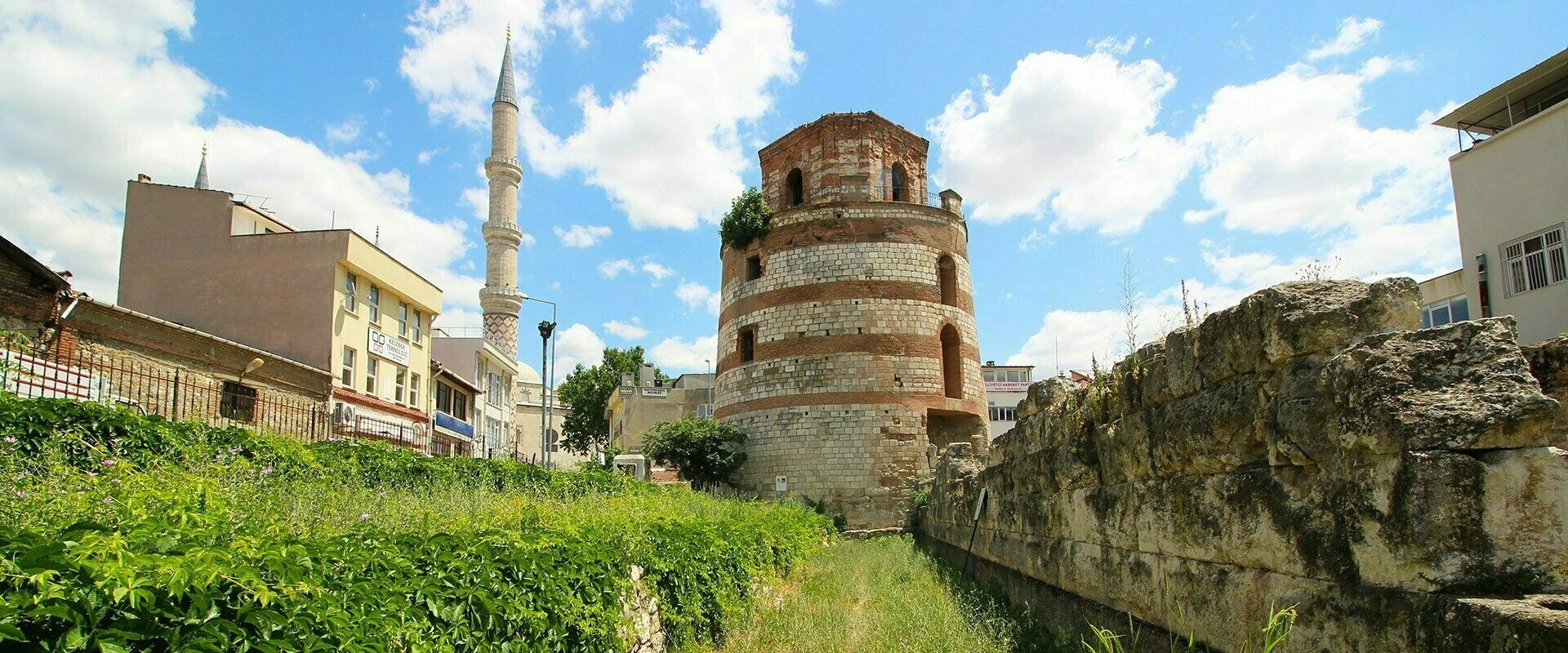
The Macedonia Tower Museum, known in Turkish as Edirne Makedonya Kule Müzesi or Makedon Kulesi, is one of the most fascinating places to understand the layered history of Edirne. The surviving tower formed part of the fortified city of Hadrianopolis, created during the reign of Roman Emperor Hadrian in the 2nd century AD.
Unlike Edirne's famous Ottoman mosques, this monument tells a much longer urban story. Its masonry preserves evidence of Roman, Byzantine, Ottoman and Republican-era Edirne, while excavations around the tower have uncovered fortification walls, ceramic kilns, a Byzantine chapel, an Ottoman icehouse and later urban structures.
The tower itself also lived several different lives. It was repaired during the Byzantine and Ottoman periods, adapted into a clock and fire-watch tower in the late Ottoman era, damaged in the 1953 earthquake, and later became the focus of archaeological excavation and conservation.
Following an extensive restoration, archaeological landscaping and new museum installation, the complex reopened as the Edirne Macedonia Tower Museum in July 2026. Today visitors can travel upward by lift, enjoy panoramic views from the terrace, and descend through exhibition levels explaining Edirne's history from antiquity to the modern period.
The surrounding archaeopark is just as important as the tower. Instead of presenting history only inside display cases, the museum allows visitors to see archaeological remains in the place where they were discovered.
Stand beside the surviving tower of the fortified city associated with Emperor Hadrian.
See objects and in-situ remains representing many centuries of Edirne's urban history.
Explore Roman kilns, Byzantine religious remains, Ottoman structures and ancient fortifications.
Climb above the archaeological site for an exceptional view across historic Edirne.
Essential information for visiting one of Edirne's newest and oldest attractions at the same time.
Çavuşbey Mahallesi, Banka Aralığı Sokak No:9, central Edirne.
Open on Google MapsPart of the Roman fortifications of Hadrianopolis, associated with Emperor Hadrian in the 2nd century AD.
Roman, Byzantine, Ottoman and Republican-period phases can be explored within one compact site.
The ancient tower was adapted into a prominent Ottoman clock and fire-watch tower in the late 19th century.
More than 100 archaeological objects and in-situ remains are presented across the museum and archaeopark.
A terrace at the upper level offers panoramic views across Edirne.
Allow approximately 60–90 minutes for the exhibitions, tower, terrace and archaeopark.
The restored visitor route includes ramps and a lift, although parts of the archaeological area may remain uneven.
Few places in Edirne reveal the city's pre-Ottoman past as clearly as this surviving fortification tower and its archaeological surroundings.
Modern Edirne is internationally famous for Selimiye Mosque, Ottoman bridges, bazaars and imperial architecture. Yet long before the city became an Ottoman capital, it was an important Roman and Byzantine settlement known as Hadrianopolis.
Macedonia Tower is important because it is the best-preserved monumental survivor of the ancient fortified city. The Roman walls once enclosed a roughly rectangular urban core, with major towers reinforcing the defensive circuit. Most of those fortifications disappeared as Edirne expanded, especially during the 19th century.
The surviving tower therefore acts almost like a vertical timeline. Roman construction, Byzantine repair inscriptions, Ottoman alterations, the clock-tower phase, 20th-century damage and 21st-century conservation all belong to the same structure.
The archaeological zone around it adds another dimension. Here visitors can see evidence not only of military architecture but also of ordinary urban life: production, religion, storage, housing and infrastructure.
For travelers following our complete Edirne visitor guide, Macedonia Tower is the place that explains what existed before the great Ottoman monuments rose around the city.
The ancient settlement that became Edirne grew dramatically during the reign of Roman Emperor Hadrian, who ruled from AD 117 to 138. During his travels through the eastern provinces, Hadrian sponsored extensive urban development, and the settlement was transformed into a more important city bearing his name: Hadrianopolis.
The city was protected by a substantial fortification system with a plan approaching a square or rectangle. Massive walls and corner towers created the appearance of a fortified Roman urban center or castrum-like enclosure.
Macedonia Tower belonged to this defensive circuit. Although the structure visible today contains repairs and additions from later centuries, its importance begins with the Roman city wall system that shaped the historic core of Edirne.
Hadrianopolis later became an important regional center. Under the Roman administrative reforms of late antiquity, the city served as the capital of Haemimontus, one of the provinces of the Diocese of Thrace.
Hadrian's urban development transformed the settlement into the Roman city of Hadrianopolis.
Walls and powerful towers enclosed the ancient urban core and protected important approaches.
Stone and brick construction formed the basis of the defensive architecture later repaired by successive civilizations.
Hadrianopolis later became an important administrative center within Roman Thrace.
For many centuries, Edirne's ancient walls remained an important part of the city's defensive system. They were repaired repeatedly through the Byzantine and Ottoman periods, adapting the Roman fortifications to changing military needs.
Historic descriptions record several large defensive towers around the circuit. Over time, however, the walls lost their military importance and were increasingly dismantled as the city changed.
During the 1860s, substantial parts of Edirne's old fortifications were demolished. Stone from the walls was reused, new streets and buildings expanded, and the ancient defensive circuit became difficult to trace above ground.
Macedonia Tower survived this transformation. Today it is the most visible monumental reminder of a fortification system that once defined the boundaries of ancient and medieval Edirne.
The Roman city was enclosed by strong masonry walls strengthened by major towers.
The fortifications remained strategically important and were repaired during the Eastern Roman period.
Parts of the older defensive system continued to survive and receive repairs after the Ottoman conquest.
Large stretches of the old walls disappeared as Edirne modernized and expanded.
Excavations around the tower have exposed surviving foundations and stretches of the old fortification system.
The site shows how ancient walls can remain hidden beneath the streets of a continuously inhabited city.
Hadrianopolis remained strategically important throughout the Byzantine, or Eastern Roman, period. Its location in Thrace placed the city on major military and communication routes between the Balkans and Constantinople.
The ancient fortifications were therefore not simply abandoned. They were repaired, reinforced and modified over many centuries. Macedonia Tower preserves visible evidence of this long process.
One of its most remarkable features is a Byzantine brick inscription running around the upper part of the historic masonry. The inscription is part of the evidence that the ancient defensive structure continued to be maintained long after the Roman imperial period.
Archaeology around the tower has also revealed a Byzantine chapel and associated architectural remains. These discoveries demonstrate that the neighborhood surrounding the fortifications was not only military: it also contained religious and domestic activity.
Hadrianopolis remained important because it controlled routes between the Balkans and Constantinople.
A Byzantine inscription incorporated into the tower is one of its most unusual surviving historic details.
Older Roman defenses were reused and strengthened instead of being completely rebuilt from scratch.
Excavations revealed Christian religious architecture close to the defensive walls.
After Edirne entered the Ottoman world, the ancient fortifications continued to form part of the urban landscape. For centuries, the city expanded around and beyond the old defensive circuit, while surviving towers acquired new functions.
Macedonia Tower was repaired during the Ottoman period and eventually became much more than a remnant of military architecture. By the 19th century, when clock towers were becoming important symbols of municipal modernization across the Ottoman Empire, the ancient bastion offered an ideal elevated platform.
The tower was transformed into a public clock tower and was also used for fire observation. This was especially important in a city containing many timber houses, where early detection of smoke could help protect dense neighborhoods.
The result was a striking combination: a Roman defensive base, medieval repair phases and a late Ottoman civic monument rising above the city.
The ancient fortification continued to be maintained after Edirne became an Ottoman city.
The tower gradually became part of the everyday urban identity of Edirne rather than merely a military ruin.
The late Ottoman clock transformed the ancient bastion into a symbol of modern civic timekeeping.
Its commanding height made the tower useful for monitoring fires across the city.
The best-known transformation of Macedonia Tower occurred during the late 19th century. Historical and scholarly sources record an initial wooden clock-tower addition in the 1880s, associated with Edirne Governor Hacı İzzet Paşa.
The first upper structure did not survive for long. In 1894, it was replaced by a more substantial masonry clock tower, creating the tall landmark remembered in old photographs of Edirne. The clock mechanism was imported from Europe, and the tower became a familiar reference point in daily city life.
The structure was also known as a fire tower, combining practical observation with civic timekeeping. Its height allowed watchmen to survey neighborhoods far beyond the old Roman walls.
The clock-tower phase is important because it shows how Ottoman cities could reuse much older architecture instead of simply demolishing it. A Roman fortification tower was transformed into an unmistakably modern 19th-century municipal symbol.
A wooden clock-tower structure was erected above the ancient bastion during the governorship of Hacı İzzet Paşa.
The wooden upper structure was replaced by a more durable masonry clock tower.
The upper tower carried public clock displays visible from different parts of the city.
The elevated structure doubled as a watch point for detecting fires in Edirne.
In 1953, an earthquake damaged the upper clock-tower structure. The condition of the building, its relationship with Edirne's historic skyline and the cost of repair became subjects of official discussion.
On 6 July 1953, the upper masonry floors of the clock tower were demolished with explosives. The ancient lower bastion survived, but the tall late Ottoman clock-tower silhouette disappeared from Edirne.
The event remains one of the most dramatic episodes in the modern conservation history of the city. Today, old photographs help visitors understand how different Macedonia Tower looked during the late Ottoman and early Republican periods.
The surviving ancient structure later underwent partial restoration, and archaeological attention gradually shifted from the lost clock-tower addition to the much older Roman and Byzantine fabric beneath it.
The upper clock-tower structure suffered significant damage.
The damaged upper floors were demolished, leaving the ancient bastion below.
A major element of Edirne's late Ottoman skyline disappeared.
The earlier fortification tower remained and eventually became the focus of archaeological conservation.
The area around Macedonia Tower became one of the most important urban archaeological zones in Edirne. Excavations led by the Edirne Museum Directorate were carried out in 2002–2003 and again during the recent conservation program, including work in 2024.
Because the site lies within a city occupied continuously for centuries, archaeologists encountered overlapping remains from very different periods. Ancient walls sit near medieval religious architecture, production areas, Ottoman infrastructure and later domestic foundations.
Rather than removing everything to a distant museum, the recent project incorporated many discoveries into an open archaeological park. This allows visitors to understand the tower as part of a living urban neighborhood.
Excavated masonry helps reconstruct the line and scale of ancient Hadrianopolis.
Production installations reveal an industrial and everyday dimension of ancient city life.
Religious remains illustrate the Christian life of medieval Hadrianopolis.
A later storage structure demonstrates how the same urban area continued to be reused.
Drainage and service systems offer evidence of the practical organization of later Edirne.
Late Ottoman building remains show how dense urban life gradually surrounded the ancient tower.
The garden surrounding the museum has been arranged as an archaeopark, turning the excavated remains into part of the visitor experience. Walkways allow visitors to move above and around archaeological features without losing the relationship between the tower and the ancient city.
The archaeopark is especially valuable because it presents more than one civilization. The remains are not reconstructed into a single artificial period. Instead, the visitor sees how one neighborhood of Edirne was repeatedly occupied, rebuilt and adapted.
See ceramic-production installations associated with the ancient city and its material culture.
Explore the footprint of a medieval Christian religious building and its associated spaces.
Discover an ice-storage structure that reflects pre-modern methods of preserving cold and food.
Follow surviving sections and foundations of the defensive system around Hadrianopolis.
Later walls, services and house foundations reveal the transformation of the district over time.
Modern walkways and museum interpretation help visitors distinguish the different archaeological phases.
After approximately four years of restoration, excavation, site organization and exhibition work, Macedonia Tower reopened as a museum in July 2026.
The exhibition is designed around the chronological development of Edirne. Rather than treating the tower as a single Roman monument, the museum follows the city's transformation through Roman, Byzantine, Ottoman and Republican periods.
Recent opening information describes 76 archaeological objects displayed inside the tower, with more than 100 objects and archaeological remains presented when the surrounding site is included.
The experience is unusual because the museum building itself is one of the principal exhibits. Visitors are constantly moving between objects in display cases, historic masonry, reconstructed narratives and views through the openings of the tower.
Learn how Hadrianopolis developed as a fortified Roman city in Thrace.
Follow the survival, repair and Christian history of the city through the medieval period.
See how the ancient fortification became part of an expanding Ottoman capital and later civic city.
Historic photographs and interpretation explain the clock tower, 1953 demolition and modern conservation story.
Objects from the tower, Kaleiçi and surrounding excavations connect the displays directly with the city.
Modern museum presentation helps visitors visualize Edirne's changing urban form through time.
Among the objects attracting particular attention since the museum's 2026 opening is an approximately 2,000-year-old sculpted head identified as Odysseus, the legendary Greek hero of the Odyssey.
The work provides an excellent reminder that Roman-period art in Thrace was deeply connected with the wider classical Mediterranean world. Mythological subjects, Greek literary traditions and Roman artistic culture were all part of the visual language of the region.
For visitors, the sculpture also creates a useful contrast with the massive military architecture surrounding it: Macedonia Tower is not only about walls and warfare. The museum also introduces the artistic, religious and cultural world of the people who inhabited ancient Thrace.
The restored museum uses the tower's vertical form to create a memorable visitor route. Visitors can use the lift to reach the upper level, then continue through the exhibition while descending by stairs.
This arrangement allows the story of Edirne to unfold level by level. Different parts of the tower introduce Roman Hadrianopolis, the Byzantine city, Ottoman Edirne, the clock-tower period and modern conservation.
At the top, the panoramic viewing terrace provides a visual connection between the ancient monument and the city that grew around it. Afterward, the archaeopark completes the visit at ground level.
Begin with the orientation displays and the architectural history of the ancient tower.
Use the restored vertical circulation to reach the upper levels of the tower.
Step onto the terrace and identify the major monuments of the historic city.
Follow the museum displays downward from period to period.
Notice how the tower itself preserves different construction and repair phases.
End outside among fortification walls, kilns, chapel remains and later urban structures.
One of the strongest reasons to visit the restored museum is the upper viewing terrace. The elevation of the ancient tower provides a broad view over central Edirne and helps visitors understand the relationship between the archaeological site and the later city.
From above, the contrast between historical periods becomes especially clear. Ancient Hadrianopolis survives beneath and around the tower, while Ottoman domes and minarets define the skyline beyond.
The terrace is also useful for orientation. After identifying the direction of Selimiye Mosque, the historic bazaars and the older neighborhoods, visitors can continue their walking route with a much clearer sense of the city.
See how Ottoman monumental architecture rises above the compact urban center.
Look down over archaeological remains surrounded by contemporary streets and buildings.
Use the terrace to understand the relative positions of central Edirne's major monuments.
Wide city views make the terrace one of the most distinctive photography points in central Edirne.
The museum rewards visitors who divide their attention between the tower, the displays, the archaeology and the surrounding cityscape.
Study the alternating stone and brick construction and later repair phases visible in the walls.
Look for the historic brick inscription incorporated into the upper part of the tower.
Compare historic images of the tall Ottoman clock tower with the surviving ancient structure.
Explore archaeological objects connected with the tower, Kaleiçi and the wider history of Edirne.
See one of the museum's most discussed classical sculptures, subject to current exhibition arrangements.
Enjoy the panoramic skyline and identify Edirne's major monuments from above.
Inspect excavated ceramic-production installations preserved in the archaeopark.
Follow the footprint of medieval Christian architecture exposed beside the tower.
Discover a later urban structure that illustrates everyday life beyond monumental architecture.
Trace surviving sections of the defensive system that once enclosed Roman Hadrianopolis.
Macedonia Tower is easiest to understand when each historical layer is treated as part of a continuous story rather than as a separate monument.
The Roman layer explains the creation of Hadrianopolis and the fortified city. The Byzantine layer shows centuries of repair, Christian life and the strategic importance of Thrace.
The Ottoman layer reveals how the ancient tower survived inside a new imperial capital and eventually became a clock and fire-watch tower. The Republican layer includes earthquake damage, demolition, archaeological rediscovery and modern conservation.
Use the lift first if the current visitor route directs you upward, then descend through the exhibition levels.
Do not treat the archaeopark as an afterthought; many of the site's most important discoveries remain outdoors.
Stone surfaces, stairs and archaeological walkways are easier with stable footwear.
Different brick and stone phases are part of the monument's history, not simply background to the displays.
Old images make the lost Ottoman clock-tower phase much easier to understand.
Clear weather makes the upper viewpoint one of the highlights of the museum.
The museum is newly opened and ticket arrangements can change; confirm the current policy before visiting.
The tower fits naturally into a walking route with Selimiye, Eski Cami, Üç Şerefeli and the historic bazaars.
Begin at Macedonia Tower Museum to understand the Roman and Byzantine city that existed long before Edirne became an Ottoman capital. Allow enough time for the exhibitions, terrace and archaeopark.
Continue toward Üç Şerefeli Mosque, where 15th-century Ottoman architects experimented with a large central dome, monumental courtyard and four extraordinary minarets.
Walk onward to Eski Cami and the Edirne Bedesten to experience the religious and commercial core of early Ottoman Edirne.
Finish at Selimiye Mosque, where Mimar Sinan created one of the supreme monuments of classical Ottoman architecture. The route therefore travels through nearly two thousand years of city history within a compact central area.
The restored Edirne Macedonia Tower Museum opened to visitors in July 2026 after a major conservation, archaeological excavation and exhibition project.
Opening announcements in summer 2026 reported daily visiting hours of 09:00–19:00. Because this is a newly opened museum, seasonal hours, ticket prices and museum-pass arrangements may be updated.
For this reason, travelers should verify the current admission policy and latest opening hours before making a special journey.
The museum can be visited throughout the year, but the combination of indoor exhibitions, open archaeology and a panoramic terrace means that weather and light can strongly influence the experience.
A good choice for quieter galleries, cooler archaeopark conditions and clear architectural photography.
Warm light can make the brick-and-stone masonry especially attractive and improve skyline photography.
Mild weather is ideal for combining the museum with a long walking tour of central Edirne.
Comfortable temperatures make the outdoor archaeological sections easier to explore slowly.
Use the earlier or later parts of the day if you plan to spend significant time in the archaeopark.
The indoor museum remains rewarding, but wind and rain may reduce time spent on the terrace and outside.
Enough for a very quick tower visit and short look at the terrace or archaeopark.
A good minimum for the main exhibition levels, historic masonry and panoramic viewpoint.
Ideal for most visitors who want to explore both the museum and the archaeological garden carefully.
Recommended for archaeology enthusiasts, photographers and visitors who enjoy detailed interpretation.
Add Üç Şerefeli Mosque, Eski Cami, Bedesten and Selimiye for a chronological historic-center walk.
Continue into the wider Edirne heritage route with bazaars, bridges, the Grand Synagogue and Sultan Bayezid II Complex.
Macedonia Tower is one of Edirne's most unusual photographic subjects because the monument combines archaeological detail, tower architecture, urban context and elevated city views.
Use angled light to emphasize the texture and changing construction phases of the tower.
Photograph upward from the archaeopark to emphasize the scale of the ancient bastion.
Include excavated walls or kilns in the foreground to show the tower as part of a larger historic site.
Look for inscriptions, brick patterns, openings and repairs rather than photographing only the overall structure.
Use the upper viewpoint for wide images connecting the ancient tower with Ottoman Edirne.
Warmer directional light often gives the most depth to the tower's alternating masonry.
The 2021–2026 restoration program included accessibility improvements, with ramps and lift systems incorporated into the visitor route. This makes the tower significantly easier to experience than many historic vertical monuments.
Nevertheless, the complex remains an archaeological site. Historic paving, outdoor surfaces, level changes and preservation zones may affect access to every individual feature.
A lift allows visitors to reach upper levels as part of the museum circulation system.
Accessible route planning was included in the recent museum and archaeological-site design.
Some excavated areas are viewed from walkways rather than entered directly.
Expect some uneven ground and changes in level around the ancient remains.
The standard interpretive route may involve descending exhibition levels by stairs after using the lift.
Visitors with specific mobility needs should ask staff for the most suitable current route.
Macedonia Tower Museum stands in central Edirne, close to the historic core and within walking distance of several major monuments. Its official address is Çavuşbey Mahallesi, Banka Aralığı Sokak No:9.
Walk through the central historic district toward Kaleiçi and the Macedonia Tower archaeological zone.
The tower can be incorporated easily into the same walking route through central Edirne.
Continue toward the historic core and Kaleiçi district; the museum is best approached on foot once central.
Ask for “Makedonya Kule Müzesi” or “Makedon Kulesi”; both names are widely recognized locally.
Use municipal transport to central Edirne, then complete the final section on foot.
Walking is the best option for linking the tower with Edirne's mosques, bazaars and historic streets.
The museum lies close to many of Edirne's most important monuments. Use our complete Edirne visitor guide to plan a broader route through the city.
See one of the decisive transitional monuments in the development of Ottoman mosque architecture.
Explore an early 15th-century nine-domed mosque famous for monumental interior calligraphy.
Continue to Mimar Sinan's masterpiece and one of the defining landmarks of Edirne.
Walk through the historic commercial heart that developed beside the city's great mosques.
Explore the long covered Ottoman market designed by Mimar Sinan.
Experience central Edirne's pedestrian shopping street, cafés and everyday local life.
Discover the city's important Jewish heritage and another major layer of its multicultural history.
Continue the archaeological story with finds from Edirne and the wider Thrace region.
Macedonia Tower Museum is a restored historic tower, archaeological museum and archaeopark in central Edirne. It preserves one of the most important surviving elements of ancient Hadrianopolis.
The official contemporary museum name is Edirne Makedonya Kule Müzesi. The monument is also commonly called Makedon Kulesi or Makedonya Saat Kulesi.
Its origins belong to the Roman fortification system of Hadrianopolis, although the visible monument also contains Byzantine, Ottoman and modern restoration phases.
The city was greatly developed and named for Roman Emperor Hadrian during the 2nd century AD.
Yes. It formed part of the fortified circuit that enclosed ancient Hadrianopolis.
It is the most prominent surviving monumental remnant of Edirne's ancient fortifications and preserves evidence from Roman, Byzantine, Ottoman and Republican periods.
During the late Ottoman period, a clock-tower structure was built above the ancient bastion, turning it into one of Edirne's major civic landmarks.
A wooden clock-tower addition was created in the late 19th century, and a masonry replacement was constructed in 1894.
Yes. Its elevated position was used for observing the city and detecting fires.
The upper clock-tower structure was damaged by an earthquake. On 6 July 1953, the damaged upper floors were demolished, while the older fortification tower below survived.
A major modern restoration and museum project began in 2021 and was completed in 2026, together with archaeological excavation and site landscaping.
The restored museum began welcoming visitors in July 2026.
The exhibition explains Edirne's development from Roman Hadrianopolis through Byzantine, Ottoman and Republican periods using archaeological objects, interpretation and the historic tower itself.
Opening information reported 76 archaeological objects inside the tower and more than 100 objects and in-situ remains when the wider archaeological site is included.
It is an approximately 2,000-year-old sculpted head identified as the mythological hero Odysseus and displayed as one of the museum's notable classical works, subject to current exhibition arrangements.
The outdoor archaeological area includes fortification remains, Roman ceramic kilns, a Byzantine chapel, an Ottoman icehouse and later urban structures.
Yes. A historic Byzantine brick inscription is incorporated into the tower's masonry.
Yes. The restored upper level includes a panoramic terrace with views across central Edirne.
Yes. A lift forms part of the restored visitor route and provides access toward the upper level of the tower.
The restoration included ramps and lift access. Because the complex also contains an archaeological park with historic surfaces, visitors with specific mobility requirements should ask staff about the most suitable route.
The museum's 2026 opening announcements reported daily visiting hours of 09:00–19:00. Because seasonal schedules may change, check the current official information before visiting.
The museum offered free admission during its initial opening period in July 2026. Current ticket prices and pass arrangements may change, so verify the latest admission information before visiting.
Approximately 60–90 minutes is ideal for most visitors, including the indoor museum, viewing terrace and archaeopark.
Photography is generally part of the visitor experience, especially from the terrace and outdoor archaeological area, but follow current museum rules regarding flash, tripods and individual artifacts.
Yes. Both are in central Edirne and can be combined comfortably as part of a historic walking route.
A rewarding chronological sequence is Macedonia Tower Museum, Üç Şerefeli Mosque, Eski Cami, Edirne Bedesten and Selimiye Mosque.
Absolutely. It is one of the best places in Edirne to understand the city's Roman and Byzantine past before continuing into its famous Ottoman heritage. The combination of museum, archaeology and panoramic views makes it especially distinctive.
Use designated routes through the archaeopark and do not step onto excavated walls or fragile remains.
Historic masonry, inscriptions and museum objects can be damaged by repeated contact.
Respect temporary closures, conservation barriers and instructions from museum staff.
Observe current rules regarding flash, tripods and photography within exhibition rooms.
Do not leave food, bottles or litter among the archaeological remains.
Keep narrow stairways and viewing areas clear so everyone can experience the tower comfortably.
Discover Roman Hadrianopolis, Macedonia Tower, Selimiye Mosque, Ottoman bazaars, historic bridges and the extraordinary layered heritage of Edirne through a private route shaped around your interests.
Choose a focused city-history walk from Roman Hadrianopolis to Ottoman Edirne, or a full-day private exploration of the city's monuments, museums, religious heritage and local culture.
Ask us about a tailor-made route connecting Macedonia Tower, Üç Şerefeli Mosque, Eski Cami, Selimiye, traditional bazaars and other monuments with your own private guide.
Request a Custom Tour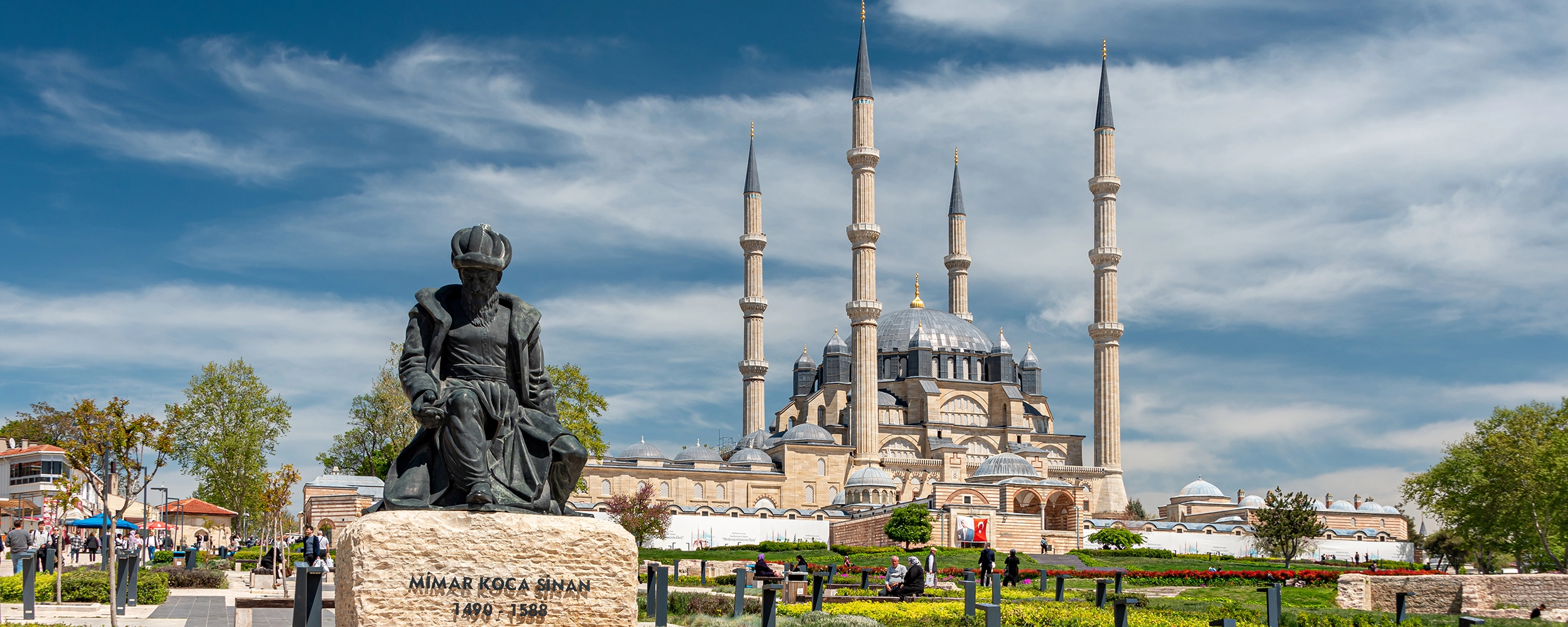
Discover Roman archaeology, monumental mosques, Ottoman medical history, covered bazaars, historic bridges, traditional food and the layered heritage of one of Türkiye's most fascinating cities.
View Edirne GuideUse Macedonia Tower as the starting point for a journey from ancient Hadrianopolis through Byzantine Thrace and into the architecture of the Ottoman capital.
Begin with Macedonia Tower and the remains of Roman and Byzantine Edirne before moving into the later Ottoman city.
Explore Historic Edirne
Continue through Üç Şerefeli, Eski Cami, Selimiye and the historic bazaars to follow Edirne's transformation into an imperial capital.
Discover More
Create a private route focused on Roman fortifications, Byzantine archaeology, Ottoman architecture, urban history and Edirne's changing skyline.
Plan Your Private Experience