Mecidiye Bridge, Sultan Abdülmecid, Meriç River, Ottoman Stone Architecture, Karaağaç Road, Historic Pavilions & Sunset Views

Meriç Bridge Edirne – Complete Mecidiye Bridge Visitor Guide

Walk across one of Edirne's most beautiful Ottoman stone bridges,
where monumental arches, river history and unforgettable sunsets lead toward Karaağaç.

Explore Meriç Bridge

Meriç Bridge – Edirne's Monumental Ottoman Crossing

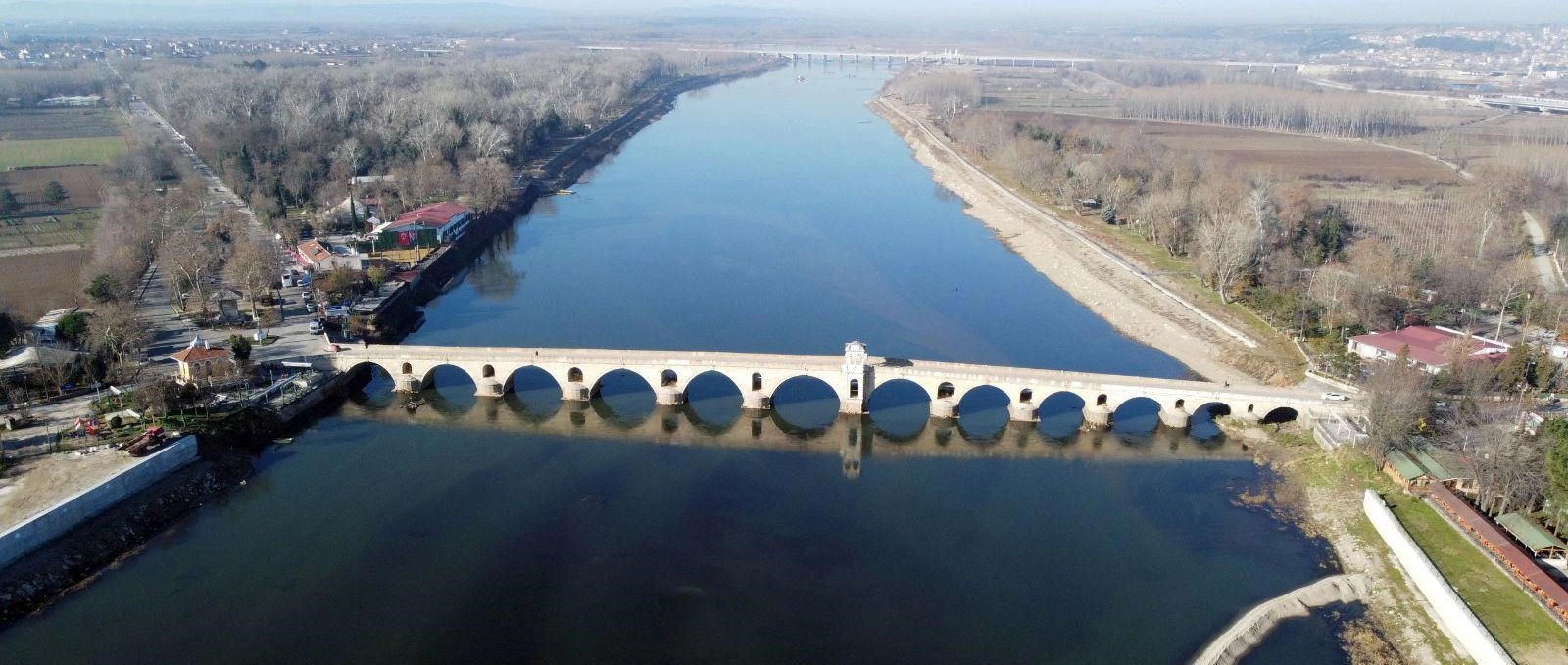
Southwest of the historic center of Edirne, the broad waters of the Meriç River flow beneath one of the city's most recognizable landmarks: Meriç Bridge.

Also known as Mecidiye Köprüsü – Mecidiye Bridge, the monumental stone crossing was constructed during the reign of Sultan Abdülmecid between 1842 and 1847.

With its long sequence of stone arches, marble inscription pavilion, opposite viewing balcony and panoramic river setting, the bridge is considerably more than a historic transportation structure.

For generations, it formed part of the traditional route between central Edirne and Karaağaç, leading travelers across the river landscape toward the railway station and eventually Türkiye's western frontier.

The bridge also preserves traces of a much older story. Before the present stone structure, a wooden crossing occupied this part of the Meriç, while the river itself served for centuries as a transportation corridor connecting Edirne with Enez and the Aegean world.

Today, Meriç Bridge remains one of the best places to experience Edirne beyond its monumental mosques: a landscape of rivers, historic bridges, trees, cafés, walking routes and spectacular evening light.

Ottoman Stone Bridge

Cross a magnificent 19th-century bridge constructed under Sultan Abdülmecid and traditionally known as the Mecidiye Bridge.

12 Great Arches

See the rhythmic sequence of pointed stone arches carrying the historic roadway across the broad Meriç River.

Marble Pavilions

Discover the unusual inscription pavilion and opposite viewing balcony positioned near the center of the bridge.

Sunset on the Meriç

Experience one of Edirne's classic evening landscapes as warm light falls across the river, arches and historic bridge.


Know Before You Go

Meriç Bridge Edirne – Quick Facts

Essential information for visiting one of Edirne's most impressive Ottoman bridges and most atmospheric river landscapes.

📍

Location

On the Meriç River along the historic road between central Edirne and Karaağaç.

Open on Google Maps
🏛️

Also Known As

Mecidiye Köprüsü, Mecidiye Bridge, Yeni Köprü and historically by several additional local names.

👑

Patron

The surviving monumental stone bridge was constructed during the reign of Sultan Abdülmecid I.

📜

Construction

1842–1847, following an earlier attempt to replace the wooden crossing during the reign of Sultan Mahmud II.

🌉

Structure

A monumental cut-stone Ottoman bridge with 12 principal arches resting on 13 piers.

📏

Dimensions

Approximately 260 meters long and around 7 meters wide.

🌊

River

The bridge crosses the Meriç, one of the great rivers shaping the geography and history of Edirne.

⏱️

Suggested Visit

Allow 30–60 minutes for the bridge itself, or several hours when combined with Karaağaç and the neighboring river landscape.


Architecture, Transportation and the Landscape of the Ottoman Capital

Why Is Meriç Bridge Important?

Meriç Bridge is important not simply because of its age, but because it preserves the relationship between Edirne, its rivers, historic roads, commerce and monumental Ottoman engineering.

Edirne is often introduced through its mosques, palaces and bazaars.

But the city's bridges are equally important for understanding how the Ottoman capital actually functioned.

The Tunca and Meriç rivers created natural barriers around the southwestern approaches to the city.

Bridges therefore controlled how people, animals, carts, merchants, officials and eventually motor vehicles moved between Edirne and Karaağaç.

Meriç Bridge represents the monumental final phase of this long Ottoman bridge-building tradition.

Constructed in the middle of the 19th century, it was built at a time when the Ottoman Empire was undergoing enormous administrative, military and technological transformation.

Yet the bridge itself continued an ancient solution: carefully shaped stone piers, arches, flood openings and a roadway designed to negotiate one of the region's most powerful rivers.

Its central marble pavilion and viewing balcony also remind visitors that Ottoman bridges could be both infrastructure and architecture.

For travelers using our complete Edirne visitor guide, Meriç Bridge is also the natural gateway toward Karaağaç Old Train Station and the Lausanne Monument.

Meriç Bridge or Mecidiye Bridge?

Today, the bridge is most commonly known as Meriç Köprüsü – Meriç Bridge, taking its name from the river it crosses.

Its principal historical name, however, is Mecidiye Köprüsü, referring to Sultan Abdülmecid, during whose reign the present structure was completed.

Historical sources record several additional names used at different periods.

Meriç Köprüsü

The modern name most widely used today, derived directly from the Meriç River.

Mecidiye Köprüsü

The principal historical name commemorating Sultan Abdülmecid, who completed the stone bridge.

Sultan Mecid Bridge

Another historical reference connecting the structure directly with its imperial patron.

Yeni Köprü

Meaning “New Bridge,” distinguishing it from older bridges on the traditional Karaağaç route.

İkinci Köprü

Meaning “Second Bridge,” reflecting its position after the Tunca crossing when approaching from Edirne.

Dış Köprü

A historical expression meaning the “Outer Bridge,” referring to its position farther from the historic city.

For modern visitors: searching for either “Meriç Köprüsü” or “Mecidiye Köprüsü” will normally identify the same historic bridge.

The Earlier Wooden Bridge Across the Meriç

The present stone bridge was not the first crossing at this location.

Historical accounts indicate that an important wooden bridge previously carried the road across the Meriç.

Such wooden crossings were practical but vulnerable.

Floods, river currents, ice, heavy traffic and ordinary deterioration could damage wooden structures, creating a constant need for repair and reconstruction.

The growing importance of the road toward Karaağaç eventually encouraged a much more ambitious solution: the replacement of the wooden bridge with a permanent masonry structure.

Sultan Mahmud II and the First Stone Bridge Project

The history of Meriç Bridge begins before the reign of Sultan Abdülmecid.

During a visit to Edirne, Sultan Mahmud II supported the replacement of the older wooden crossing with a permanent stone bridge.

Work connected with this project began during the 1830s.

The ambitious undertaking, however, encountered financial difficulties and was not completed during Mahmud II's lifetime.

When the sultan died in 1839, the bridge project remained unfinished.

Responsibility for completing the crossing would therefore pass to his son and successor, Sultan Abdülmecid I.

Older Period A substantial wooden crossing exists across the Meriç.
Mahmud II A permanent masonry replacement is planned during the final years of his reign.
1830s Early construction efforts are undertaken but the project cannot be completed.
1839 Sultan Mahmud II dies and the unfinished project passes into the reign of Abdülmecid.
1842–1847 The surviving monumental bridge is constructed under Sultan Abdülmecid.

Sultan Abdülmecid and the Construction of Meriç Bridge

The present bridge is fundamentally associated with Sultan Abdülmecid I, who ruled the Ottoman Empire from 1839 until 1861.

Construction of the surviving Meriç Bridge began in 1842.

The project continued for approximately five years and was completed in 1847.

Unlike many of Edirne's great Ottoman monuments, the architect responsible for the bridge is not securely known.

Nevertheless, its scale, engineering and monumental appearance demonstrate the importance the Ottoman administration attached to this crossing.

The bridge also represents an interesting moment in Ottoman architectural history.

Railways, steamships and modern industrial technologies were beginning to transform transportation, yet monumental stone bridge construction remained essential to the functioning of the empire's traditional road network.

Architecture of Meriç Bridge

Meriç Bridge is one of the largest historic stone crossings in Edirne.

Official descriptions place its total length at approximately 261–263 meters, with a roadway around 7 meters wide.

The bridge is supported by 13 main piers and crossed by 12 principal pointed arches.

Its roadway rises gradually toward the central area before descending toward the opposite bank.

This gently changing profile gives the bridge a particularly graceful appearance when seen from the riverside.

12 Main Arches

A rhythmic sequence of pointed openings carries the long stone roadway over the Meriç River.

13 Piers

Massive stone supports divide the water flow and carry the weight of the historic crossing.

Cut Stone

The bridge was constructed from carefully worked stone suitable for an important imperial transportation route.

Flood Openings

Smaller openings through the piers allow additional water to pass when river levels rise.

Central Pavilion

An elegant marble inscription structure introduces a ceremonial architectural element into the practical bridge.

Viewing Balcony

A projecting marble balcony opposite the inscription pavilion creates one of the bridge's most unusual features.

The Twelve Arches of Meriç Bridge

The most immediately recognizable feature of Meriç Bridge is its long sequence of twelve stone arches.

Rather than creating one enormous opening, the bridge distributes its considerable length across multiple spans.

This allowed the structure to cross the wide river landscape while transferring loads through a sequence of strong masonry piers.

The pointed arches also create the visual rhythm that makes the bridge so attractive from a distance.

When viewed from the riverbank, the repeated arches produce alternating areas of stone, water and reflected sky.

During calm conditions, their reflections can transform the openings into almost complete oval forms on the water.

The Flood Relief Openings in the Bridge Piers

Visitors concentrating only on the twelve main arches can easily overlook another important engineering feature.

Several of the bridge piers contain smaller arched relief openings.

These openings provide additional routes for water to pass through the structure when the Meriç rises.

Reducing the hydraulic pressure against massive bridge piers was particularly important on a river known historically for significant seasonal flooding.

The openings therefore demonstrate how traditional bridge architecture combined visual elegance with practical understanding of the river environment.

The Marble Inscription Pavilion

Near the center of Meriç Bridge stands one of its most distinctive features: a small marble inscription pavilion.

The structure projects outward from the bridge and transforms the crossing from purely functional infrastructure into a monumental architectural composition.

Its rounded arches rest on marble supports, while the upper section creates a framed surface for the bridge inscription.

The pavilion originally celebrated the construction of the bridge under Sultan Abdülmecid.

Its position at the center of the crossing ensured that travelers could not pass without encountering the imperial message associated with the new structure.

Look carefully while crossing: the pavilion is relatively small compared with the full 260-meter bridge, so visitors concentrating on the river view can easily walk past its architectural details.

The Viewing Balcony on Meriç Bridge

Opposite the inscription pavilion is another remarkable feature: a projecting marble viewing balcony.

Its presence reveals that the center of the bridge was conceived as more than a point travelers simply hurried across.

The balcony created a place where visitors could pause and look along the river.

From this central position, the Meriç landscape opens both upstream and downstream, while the long roadway stretches back toward Edirne and forward toward Karaağaç.

It remains one of the best points for appreciating how the bridge connects architecture with the surrounding natural landscape.

The Inscription of Meriç Bridge

The bridge originally carried a construction inscription celebrating its completion during the reign of Sultan Abdülmecid.

The historical text was composed by Ziver Bey and written in elegant ta'liq calligraphy.

The original inscription, however, did not survive the turbulent history of 20th-century Edirne.

It was destroyed during the period of Greek occupation.

The inscription visible today is a later recreation dating from 1966, prepared in a form intended to reproduce the historical text.

The modern calligraphic version was written by Mustafa Uğur.

Original Period Reign of Sultan Abdülmecid
Original Text Associated with poet Ziver Bey
Script Ta'liq calligraphy
Original Inscription Lost during the occupation period
Present Version Recreated in 1966
Calligrapher Mustafa Uğur

Dragon, Crescent and Other Carvings on Meriç Bridge

Meriç Bridge contains decorative details that many visitors never notice.

Among the most unusual are carved motifs on the bridge's stonework.

One particularly remarkable example has been interpreted as a double dragon or paired serpent-like figure.

The motif is especially interesting because figurative decoration of this type is unusual on a 19th-century Ottoman bridge.

Another carved element takes the form of a crescent and star, one of the most recognizable symbols associated with the Ottoman and later Turkish visual tradition.

Rows of small projections interpreted as bird perches also appear on parts of the structure.

Double Dragon

One of the bridge's most unusual relief motifs and an easily overlooked detail in the stonework.

Crescent & Star

A relief motif adding a recognizable Ottoman visual symbol to the bridge architecture.

Bird Perches

Small projecting elements provide another distinctive detail for visitors examining the masonry closely.

Marble Elements

The pale marble pavilion and balcony contrast visually with the heavier stone structure of the bridge.

Slow down: Meriç Bridge rewards close observation. Its most unusual details are not necessarily visible when driving across the bridge or taking only a distant photograph.

The Meriç River

The bridge cannot be understood without the river beneath it.

The Meriç River, known internationally as the Maritsa or Evros, is one of the great rivers of southeastern Europe.

It rises in Bulgaria, flows through the historic region of Thrace and eventually reaches the Aegean Sea near Enez.

Around Edirne, the Meriç, Tunca and Arda river systems have shaped settlement, agriculture, transportation and international borders for centuries.

The wide floodplain around Meriç Bridge creates a very different impression from the dense historic streets surrounding Selimiye Mosque.

Here, Edirne opens outward into an expansive landscape of water, fields, trees and distant horizons.

River Trade Between Edirne, Enez and the Aegean

Long before modern roads and railways, the Meriç itself was an important transportation corridor.

Historical evidence indicates that river navigation was actively encouraged after the Ottoman conquest of the region.

For centuries, boats could transport goods between the Edirne area and locations farther downstream.

The river eventually connected with Enez, the historic port near the Aegean coast.

Commercial goods arriving at Enez from the Aegean islands, İzmir, the eastern Mediterranean and other regions could be transferred onto smaller vessels and carried inland toward Edirne.

The area around the bridge was therefore once connected not only with overland travel, but also with river commerce.

İskelebaşı and Edirne's River Port

Historical accounts refer to an area known as İskelebaşı near the Meriç crossing.

The name itself recalls a riverside landing or quay.

During earlier centuries, this part of Edirne participated in a commercial network linking the inland Ottoman city with Enez and the Aegean Sea.

Stone quays were constructed near the banks so boats and smaller river craft could approach the shore.

Grain, fruit, commercial goods and imported merchandise could move through this transportation system.

The modern visitor sees a peaceful river landscape.

Historically, however, the area could also be a place of movement, trade, loading, unloading and transportation.

Meriç Bridge and Karaağaç

Meriç Bridge forms an essential part of the historical route between central Edirne and Karaağaç.

Traveling from the historic city, visitors first cross the Tunca river landscape before reaching the broader Meriç.

After crossing Meriç Bridge, the road continues westward toward Karaağaç.

Today, this route leads to Karaağaç Old Train Station , the Lausanne Monument, university museums and the leafy streets of the historic neighborhood.

The bridge therefore connects two very different layers of Edirne.

On one side stands the historic Ottoman capital.

On the other lies the railway landscape and 20th-century frontier history of Karaağaç.

Meriç Bridge and Tunca Bridge

Visitors approaching Karaağaç from central Edirne encounter not one but two major historic river crossings.

The first spans the Tunca River.

After passing through the landscape traditionally known as İki Köprü Arası – Between the Two Bridges, the road reaches Meriç Bridge.

The result is one of Edirne's most atmospheric historic approaches.

Rather than treating the two bridges as isolated monuments, it is much more rewarding to understand them as a connected route through the city's river landscape.

Historic Center Begin in central Edirne
First River Cross the Tunca
River Landscape Explore İki Köprü Arası
Second River Cross Meriç Bridge
Continue Follow the road toward Karaağaç

Meriç Bridge within Edirne's Ottoman Bridge Tradition

Edirne possesses an extraordinary collection of historic bridges.

This is not accidental.

The city developed around several major rivers, making bridge construction essential to everyday life.

Ottoman rulers, officials and charitable foundations therefore invested in durable crossings that connected roads, settlements, palaces, gardens and commercial districts.

Meriç Bridge, completed in the 19th century, belongs to the later phase of this long architectural tradition.

It is generally regarded as the latest of Edirne's great Ottoman stone bridges.

Its relatively late date makes it particularly interesting: it demonstrates how monumental masonry bridge construction remained important even as the Ottoman Empire entered the modern industrial era.

Meriç Bridge and the Floodplain

The Meriç is not a static landscape.

Its water level can change considerably according to rainfall, snowmelt and conditions throughout the wider river basin.

Historically, flooding has repeatedly affected the low-lying areas surrounding Edirne's rivers.

The bridge's architecture therefore developed in direct response to a dynamic natural environment.

Its multiple arches and smaller relief openings help water move through the long structure.

Even today, unusually high river levels can occasionally lead to temporary restrictions around the historic bridges and İki Köprü Arası.

After periods of heavy rain: check local conditions before planning a walk across the river district. Temporary traffic or pedestrian restrictions may occasionally be introduced when water levels are unusually high.

Restoration of Meriç Bridge

Like every historic bridge that remains part of a living transportation network, Meriç Bridge has required repeated maintenance.

A significant modern restoration was completed in 2019.

The project followed conservation principles intended to respect the historical construction methods and materials.

Traditional materials, including lime-based mortars, stone dust and sand, were used instead of ordinary modern cement in sensitive restoration work.

Sections of the bridge pavement were also renewed.

The restoration demonstrates the challenge of preserving an important historical monument while allowing it to remain part of Edirne's contemporary transportation landscape.

What to See at Meriç Bridge

The bridge deserves more than a quick photograph.

Walk slowly and look at the structure from several different viewpoints.

Full Bridge Profile

Step away from the bridge to appreciate its exceptional length and gently rising central profile.

12 Stone Arches

Follow the repeating sequence of pointed arches stretching across the river.

Massive Piers

Notice how the substantial stone supports divide the water and carry the historic roadway.

Flood Openings

Look for smaller arched passages incorporated into the bridge piers.

Inscription Pavilion

Examine the elegant marble structure positioned near the center of the crossing.

Viewing Balcony

Look across from the inscription pavilion to find the projecting marble viewing area.

1966 Inscription

See the recreated inscription replacing the original historical text lost during the occupation period.

Decorative Reliefs

Search the stonework for unusual motifs including the celebrated serpent or dragon-like carving.

Crescent & Star

Look for another symbolic relief incorporated into the architectural decoration.

River Reflections

When the water is calm, the arches and their reflections create beautiful geometric compositions.

Karaağaç View

Look westward along the historic road continuing from the bridge toward Karaağaç.

Sunset

Return in the late afternoon when warm light transforms the stone bridge and Meriç landscape.

How to Understand Meriç Bridge

Meriç Bridge becomes much more interesting when visitors recognize that several historical stories overlap here.

Transportation The bridge carried the traditional road between Edirne and Karaağaç.
Engineering Twelve main arches and flood openings respond to the width and changing waters of the Meriç.
Imperial History The project connects the reigns of Mahmud II and Abdülmecid.
Architecture The marble pavilion and viewing balcony transform practical infrastructure into monumental design.
Commerce The surrounding river once participated in trade linking Edirne with Enez and the Aegean.
Landscape The bridge remains one of the finest places for experiencing Edirne's rivers and floodplain.

Sunset at Meriç Bridge

For many visitors, the most memorable time to experience Meriç Bridge is shortly before sunset.

As the sun lowers, the pale stonework takes on warmer colors and the arches cast longer shadows across the river.

Reflections of the sky can turn the Meriç gold, orange, pink or deep blue depending on weather conditions.

The broad landscape also provides a much more open horizon than visitors find inside the densely built historic center.

This combination of water, stone, sky and distant trees has made the bridge one of Edirne's classic photography locations.

Best approach: arrive 30–45 minutes before sunset. This gives you time to photograph the bridge in daylight, walk across it, and then return to a riverside viewpoint as the light changes.

Best Time to Visit Meriç Bridge

Early Morning

A peaceful period for walking and photography with softer light and fewer visitors.

Late Afternoon

Excellent directional light begins to emphasize the arches, stonework and river reflections.

Sunset

The classic time to visit, especially when the sky reflects across calm sections of the Meriç.

Spring

Green vegetation around the river makes the surrounding landscape particularly attractive.

Summer

Long evenings are ideal for sunset visits, although midday can be hot with limited shade on the bridge.

Autumn

Softer light, changing vegetation and comfortable temperatures often create excellent photographic conditions.

Winter

The bridge can be atmospheric and quiet, but the open river corridor may feel cold and windy.

After Heavy Rain

Exercise caution and check current river conditions because the Meriç floodplain can occasionally experience high water.

How Much Time Do You Need at Meriç Bridge?

15 Minutes

Enough for a quick stop and several photographs, but too short to appreciate the architectural details properly.

30 Minutes

Walk across part or all of the bridge and examine the central pavilion and river views.

45–60 Minutes

Recommended for crossing the bridge, exploring both banks and taking photographs from different viewpoints.

1½ Hours

Add Tunca Bridge, İki Köprü Arası and a relaxed walk through the surrounding riverside landscape.

Half Day

Continue across the bridge to Karaağaç Old Train Station, Lausanne Monument and the neighborhood.

Full Day

Combine the river route with Selimiye Mosque, central Edirne, museums, bazaars and additional Ottoman monuments.

Photography at Meriç Bridge

Meriç Bridge is among the most photogenic locations in Edirne because the monument can be photographed in many completely different ways.

Full Bridge Panorama

Move along the riverbank until the entire sequence of arches becomes visible in one composition.

Arch Reflections

On calm days, position yourself low enough to include both the stone arches and their reflections in the water.

Central Pavilion

Use a tighter composition to isolate the elegant marble pavilion against the river and sky.

Bridge Perspective

Photograph along the roadway to emphasize the extraordinary length and repeating stone parapets.

Sunset Silhouette

From the appropriate riverbank, the arches and pavilion can create a powerful silhouette against the evening sky.

Stone Details

Use close photographs to record inscriptions, marble elements, relief carvings and construction details.

River Landscape

Include trees, reeds, water and open sky to show how strongly the monument belongs to its natural setting.

Blue Hour

Remain briefly after sunset when the sky deepens in color and lights around the river landscape begin to appear.

Photography safety: remember that the bridge can carry vehicle traffic. Do not step into the roadway or block traffic while composing photographs. Use pedestrian areas and safe riverside viewpoints.

Meriç Bridge Visitor Information

Meriç Bridge is an outdoor historic monument rather than a ticketed museum or archaeological site.

There is therefore normally no separate entrance ticket required simply to see or walk across the bridge.

Because the structure continues to participate in the local transportation network, visitors should remain alert to traffic.

Temporary restrictions can also occasionally occur because of flooding, restoration, public events or traffic management.

Turkish Name Meriç Köprüsü / Mecidiye Köprüsü
Location Meriç River, Edirne–Karaağaç road
Construction 1842–1847
Patron Sultan Abdülmecid I
Architect Unknown
Length Approximately 261–263 meters
Width Approximately 7 meters
Main Arches 12
Main Piers 13
Admission No conventional sightseeing ticket
Suggested Time 30–60 minutes; longer when combined with the river district

How to Get to Meriç Bridge

Meriç Bridge lies southwest of central Edirne on the traditional route toward Karaağaç.

It can easily be combined with the Tunca Bridge, İki Köprü Arası and Karaağaç within the same excursion.

From Central Edirne

Travel southwest from the historic center toward the Tunca and Meriç river corridor and follow signs for Karaağaç.

By Taxi

Ask for “Meriç Köprüsü” or “Mecidiye Köprüsü.” The landmark is well known locally.

By Car

Follow the Karaağaç direction. Modern roads provide alternative crossings, while the historic bridge remains part of the traditional route.

By Local Transport

Local transportation toward Karaağaç serves the wider corridor; current routes should be checked locally.

By Bicycle

The relatively flat river landscape makes the bridge and Karaağaç an attractive cycling route in suitable weather.

On Foot

Walking from central Edirne is particularly rewarding because the journey incorporates both historic bridges and the riverside landscape.

Walking from Central Edirne to Meriç Bridge

Travelers who enjoy walking can turn the journey to Meriç Bridge into an attraction in its own right.

Leave the dense monumental core of Edirne and move gradually toward the river district.

The atmosphere changes as streets open into greener, lower-lying landscapes.

Cross the Tunca Bridge and continue through İki Köprü Arası.

Meriç Bridge then appears ahead across the broader river channel.

After crossing, continue toward Karaağaç for the old railway station, Lausanne Monument and tree-lined neighborhood.

Ideal combination: the historic-center-to-Karaağaç walk allows visitors to experience Edirne as a complete landscape rather than moving only between isolated monuments by vehicle.

Accessibility and Walking Conditions

Meriç Bridge was constructed long before modern accessibility standards.

The surface, roadway arrangement and historic stone elements should therefore be approached with reasonable care.

Historic Surface

Expect a traditional bridge environment rather than perfectly smooth modern pedestrian paving.

Vehicle Traffic

The bridge may carry vehicles, so remain within safe pedestrian areas and pay attention when stopping for photographs.

Gentle Incline

The roadway rises gradually toward the center and descends again toward the opposite bank.

Summer Heat

There is little shade directly on the open bridge, making mornings and evenings more comfortable in hot weather.

Winter Conditions

Cold winds, rain and occasional slippery surfaces can make the exposed river crossing less comfortable.

Flood Conditions

Follow local warnings whenever unusually high river levels or temporary access restrictions are announced.

Cafés and Riverside Stops Near Meriç Bridge

The Meriç river district is popular with local residents as well as visitors.

Several cafés, restaurants and recreational facilities can be found around the wider river corridor.

This makes the bridge particularly pleasant as an early-evening stop.

Visitors can explore the monument, walk beside the river and then remain for tea, coffee or a meal while waiting for sunset.

The experience is very different from sightseeing inside Edirne's monumental center.

Here, the attraction is as much about landscape and atmosphere as individual historical monuments.

Places to Visit Near Meriç Bridge

Meriç Bridge fits naturally into a broader Edirne itinerary. Use our complete Edirne visitor guide to continue exploring.

Tunca Bridge

Cross Edirne's other great historic river on the same traditional route between the city center and Karaağaç.

İki Köprü Arası

Explore the atmospheric river landscape lying between the historic Tunca and Meriç crossings.

Karaağaç Old Train Station

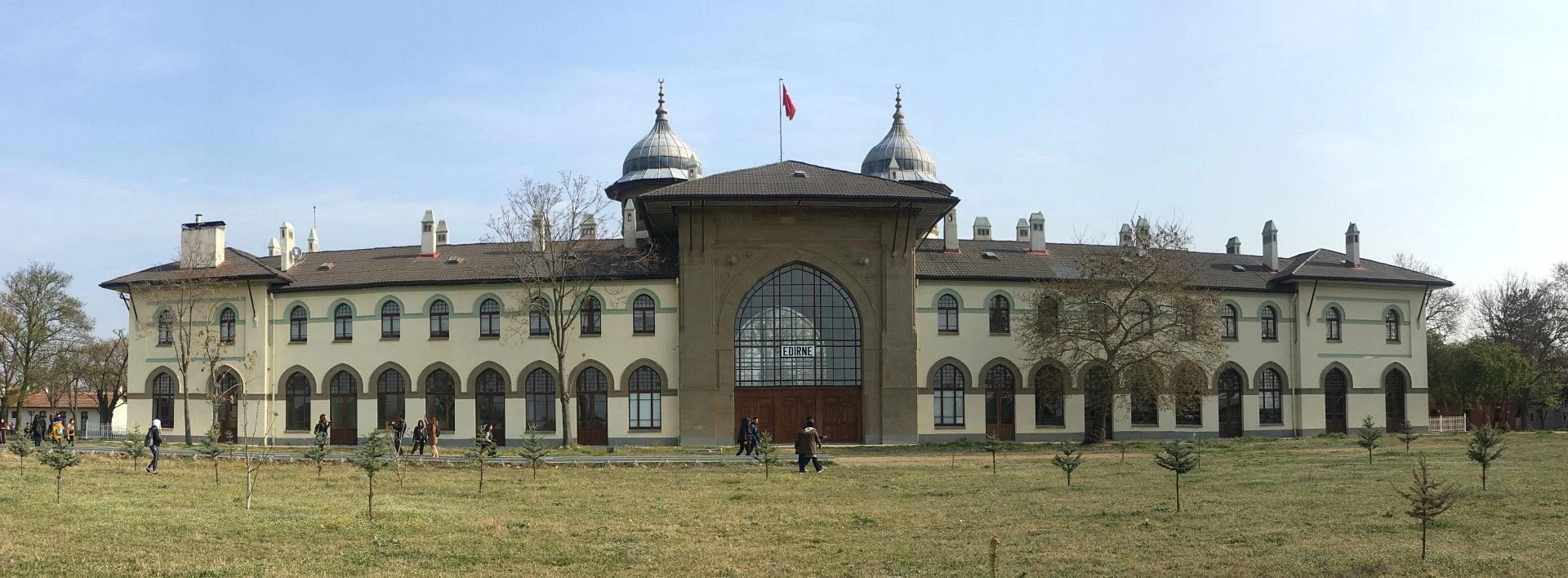
Continue west to Mimar Kemalettin's monumental railway station and Edirne's fascinating railway heritage.

Lausanne Monument

Discover why Karaağaç became closely associated with the diplomatic settlement defining Türkiye's modern western frontier.

Karaağaç Neighborhood

Walk through leafy streets containing historic houses, cafés and reminders of the district's railway past.

Hacı Adil Bey Fountain

See an elegant late Ottoman fountain positioned along the historic road between the bridge and Karaağaç.

Selimiye Mosque

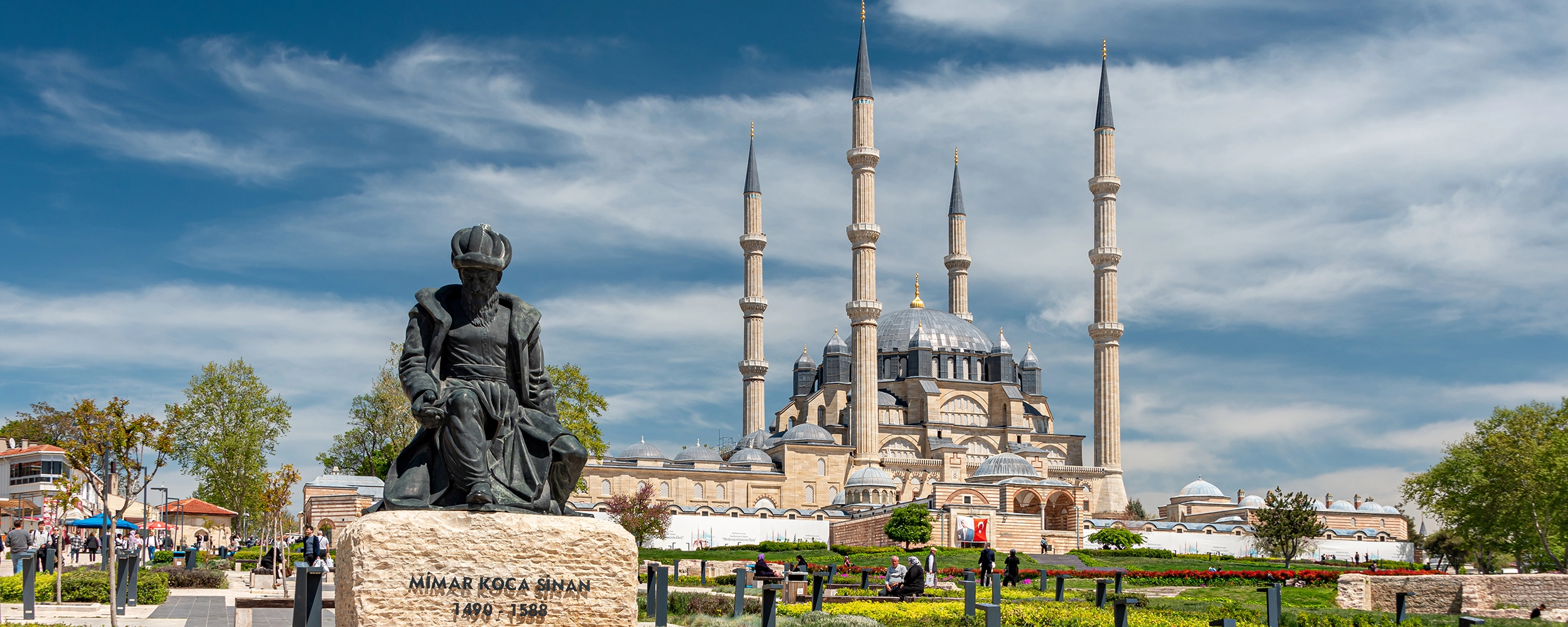
Return to central Edirne for Mimar Sinan's monumental masterpiece and the city's greatest architectural landmark.

Macedonia Tower Museum

Explore Roman and Byzantine Hadrianopolis and surviving evidence of Edirne's ancient fortifications.

Muradiye Mosque

Discover one of Edirne's most beautiful early Ottoman interiors and its extraordinary historical tile decoration.

Suggested Meriç Bridge & Karaağaç Route

Begin in central Edirne and travel southwest toward the historic rivers.

Cross the Tunca Bridge and explore the open landscape of İki Köprü Arası.

Continue to Meriç Bridge and take time to walk across the structure, examine the marble pavilion and enjoy the river views.

After crossing, follow the traditional road toward Karaağaç.

Stop at the Hacı Adil Bey Fountain before continuing to Karaağaç Old Train Station .

Explore the station architecture, historic locomotive, Lausanne Monument and National Struggle and Lausanne Museum.

If time allows, finish with a walk through the leafy streets of Karaağaç before returning toward the river for sunset.

Start Central Edirne
First Bridge Tunca Bridge
River Stop İki Köprü Arası
Main Monument Meriç / Mecidiye Bridge
Ottoman Detail Hacı Adil Bey Fountain
Railway Heritage Karaağaç Old Train Station
Modern History Lausanne Monument and museum
Finish Karaağaç neighborhood or sunset beside the Meriç
Allow approximately half a day for the complete route at a relaxed pace. A full day works even better when combined with Selimiye Mosque and central Edirne.

Meriç Bridge – Where Edirne Opens into the Landscape

Central Edirne is defined by domes, minarets, bazaars and monumental masonry.

Meriç Bridge reveals another side of the city.

Here, architecture spreads horizontally across open water.

The skyline becomes lower, the horizon becomes wider and the surrounding landscape takes equal importance with the historical monument.

This contrast is precisely what makes the river district so valuable within a complete Edirne itinerary.

Visitors move from the monumental imperial architecture of the Ottoman capital to bridges, floodplains, railway heritage and international frontier landscapes within only a few kilometers.

Frequently Asked Questions About Meriç Bridge

Where is Meriç Bridge?

Meriç Bridge crosses the Meriç River southwest of central Edirne on the historic road leading toward Karaağaç.

Is Meriç Bridge the same as Mecidiye Bridge?

Yes. Meriç Köprüsü and Mecidiye Köprüsü are the two most common names for the same historic Ottoman bridge.

Why is it called Mecidiye Bridge?

The name refers to Sultan Abdülmecid I, during whose reign the surviving bridge was constructed.

When was Meriç Bridge built?

The surviving monumental stone bridge was constructed between 1842 and 1847.

Who built Meriç Bridge?

The present bridge was commissioned and completed during the reign of Sultan Abdülmecid I.

Did Sultan Mahmud II have anything to do with the bridge?

Yes. The replacement of the earlier wooden crossing with a masonry bridge was initiated during the reign of Sultan Mahmud II, but the project was not completed before his death.

Was there a bridge here before the present one?

Yes. Historical sources describe an earlier wooden bridge at this location before construction of the monumental stone crossing.

Who was the architect of Meriç Bridge?

The architect of the surviving bridge is not securely known.

How long is Meriç Bridge?

Official descriptions vary slightly, but the bridge is approximately 261–263 meters long.

How wide is Meriç Bridge?

The bridge is approximately 7 meters wide.

How many arches does Meriç Bridge have?

The historic stone bridge has 12 principal arches.

How many piers does Meriç Bridge have?

The main bridge structure is supported by 13 piers.

What are the smaller openings in the bridge?

Smaller relief or flood openings within the bridge structure allow additional water to pass through when river levels rise.

What is the small building in the middle of Meriç Bridge?

It is a marble inscription pavilion associated with the historical construction of the bridge.

Is there a viewing balcony on Meriç Bridge?

Yes. Opposite the inscription pavilion is a projecting marble viewing balcony overlooking the river.

Is the inscription original?

The original inscription was lost during the 20th-century occupation period. The version visible today was recreated in 1966.

Are there carvings on Meriç Bridge?

Yes. The bridge contains several unusual decorative motifs, including a double dragon or serpent-like relief, a crescent-and-star motif and other carved details.

Was the Meriç River once used for trade?

Yes. Historically, the river formed part of a transportation system linking Edirne with Enez and the Aegean, and smaller vessels carried commercial goods along the waterway.

What is İskelebaşı?

İskelebaşı was a historical riverside area associated with landing places and the movement of goods between river transport and Edirne.

Can you walk across Meriç Bridge?

The bridge can normally be explored on foot, although visitors should remain aware of vehicle traffic and any temporary local restrictions.

Do I need a ticket to visit Meriç Bridge?

No conventional sightseeing ticket is normally required. Meriç Bridge is an outdoor historic monument and transportation structure.

Can Meriç Bridge close during floods?

Temporary restrictions can occasionally be introduced when river levels become unusually high or when safety conditions require them.

When was Meriç Bridge last restored?

A major restoration campaign was completed in 2019, including work on the historic masonry and bridge surface.

What is the best time to visit Meriç Bridge?

Late afternoon and sunset are especially beautiful, while early morning is excellent for quieter walking and photography.

How long should I spend at Meriç Bridge?

Allow approximately 30–60 minutes for the bridge itself. A half day is better if you also explore Tunca Bridge, Karaağaç and the Lausanne Monument.

Is Meriç Bridge close to Karaağaç Old Train Station?

Yes. The bridge lies directly on the traditional route toward Karaağaç, making the two attractions very easy to combine.

Is Meriç Bridge worth visiting?

Absolutely. It combines Ottoman architecture, river engineering, historic transportation, beautiful landscapes and some of the best sunset views in Edirne.

Responsible Visiting at Meriç Bridge

Respect the Stonework

Do not climb on parapets, pavilions, relief carvings or other historic architectural elements.

Watch the Traffic

Remember that the bridge remains part of a transportation corridor and may carry vehicles.

Protect the River

Do not leave litter beside the Meriç or throw waste from the bridge into the water.

Follow Flood Warnings

Respect temporary closures or safety barriers when river levels are unusually high.

Photograph Safely

Use pedestrian spaces and riverside viewpoints rather than stepping into traffic lanes for photographs.

Explore Slowly

Give the monument enough time to notice its pavilion, reliefs, arches and relationship with the surrounding river landscape.

Private Meriç Bridge & Historic Edirne Experiences

Combine Meriç Bridge, Tunca Bridge, Karaağaç, Selimiye, Ottoman bazaars, historic mosques, museums and Edirne's extraordinary river landscape through a private route shaped around your interests.

Custom Historic Edirne Experience

Discover the monumental architecture of the Ottoman capital together with the historic bridges, river routes and frontier landscapes that connected Edirne with the wider Balkans.

Historic Edirne Selimiye Mosque Ottoman bridges Meriç River Karaağaç and heritage monuments

Explore Edirne

Discover Selimiye, early Ottoman mosques, Roman archaeology, historic bridges, Ottoman medicine, Sufi heritage, traditional bazaars, Karaağaç and the multicultural history of Türkiye's former Ottoman capital.

View Edirne Guide

Continue Exploring Edirne's River & Karaağaç Heritage

Meriç Bridge is an ideal starting point for discovering the quieter western side of Edirne, where Ottoman bridges, river landscapes, railway history and the story of Türkiye's modern frontier all come together.

Edirne Ottoman architecture Selimiye Mosque historic bridges and Meriç River Turkey

Ottoman Edirne

Continue from the river landscape to Selimiye, Eski Cami, Üç Şerefeli, historic bazaars, palace remains and centuries of imperial architecture.

Discover More